2025-09-24 10:10
SEC's new standards streamline crypto ETF approvals Grayscale's multi-coin ETF benefits from revised rules Uncertainty lingers over demand for diverse crypto ETFs Sept 24 (Reuters) - Asset managers are lining up to launch cryptocurrency exchange-traded funds, capitalizing on growing excitement around digital assets while getting a boost from looser regulatory requirements to bring products to market. The U.S. Securities and Exchange Commission's updated standards for ETFs, announced last week, could encourage demand for exchange-traded products tied to cryptocurrencies ranging from solana to dogecoin. Sign up here. ETFs around the more traditional cryptocurrencies bitcoin and ethereum were launched in 2024 under prior rules that had stricter standards for issuers and exchanges. There are 21 U.S. ETFs that own either bitcoin or ethereum, or a combination of both, and scores of filings with the SEC for new products tied to other coins. Analysts said they expect the first products approved under the new rules - likely ETFs tied to cryptocurrencies solana and XRP - to debut in early October. "We've got about a dozen filings with the SEC now, and more coming," said Steven McClurg, founder of Canary Capital Group, a digital assets investment management firm that designs and launches ETFs. "We're all getting ready for a wave of launches." Since the SEC first unveiled the proposed new listing standards in July, firms have scrambled to update their new product filings and respond to specific comments and questions from the SEC. A final wave of amendments could be filed by the end of this week, said three people familiar with the matter, who asked not to be named. "Those filings are pretty far along in the review process," said Teddy Fusaro, president of Bitwise, a crypto asset manager. "These are the rules we had been anticipating." The SEC did not respond to a request for comment. The vote last week by the SEC to adopt new listing standards eliminates the need for individual regulatory review of each crypto ETF application, allowing products that meet predetermined standards to launch without a lengthy case-by-case approval process. That will slash the approval time for new crypto products to 75 days or less, from up to 270 days previously, industry sources said. The fourth quarter of 2025 is shaping up as boom time for crypto ETF issuers, said Jonathan Groth, a partner at DGIM Law. Grayscale Investments was first out of the gate, rolling out its new Grayscale CoinDesk Crypto 5 ETF (GDLC.P) , opens new tab less than 48 hours after the SEC last week allowed its conversion from a private to publicly traded fund. The Grayscale ETF owns bitcoin and ethereum, the two coins for which spot ETFs already exist, and also XRP, solana and cardano. Peter Mintzberg, CEO of Grayscale, said its new ETF approval reflected Grayscale's advocacy for "public market access, regulatory clarity and product innovation." SPEED TO MARKET To benefit from the new, speedier process, an ETF must meet at least one of three principal criteria. If the coin underpinning the proposed ETF already trades on a regulated market or has futures contracts regulated by the U.S. Commodity Futures Trading Commission that have traded for at least six months, it qualifies. Alternatively, the existence of another ETF tied to that coin that has at least 40% of its assets invested in the cryptocurrency itself rather than options or swaps would open the door to approval. The CFTC declined to comment. "Not all of our existing filings qualify," said Kyle DaCruz, director of digital assets product at asset manager VanEck. "The next step is to talk to our lawyers to see which products can move forward and how rapidly will they get onto the market." What remains unclear is the appetite for dozens of crypto ETFs on lesser-known coins and how they might fit into investor portfolios. "There will be a flood of tokens that many folks have never heard of, and instead of years as with bitcoin, there will be weeks or months to provide that education," said DaCruz. https://www.reuters.com/legal/government/crypto-etfs-set-flood-us-market-regulator-streamlines-approvals-2025-09-24/

2025-09-24 10:07
LONDON, Sept 24 (Reuters) - The pound fell against the dollar on Wednesday, after Federal Reserve Chair Jerome Powell offered a cautious view on the need for more rate cuts, which gave the U.S. currency a modest lift. Sterling was last down 0.35% at $1.34795, having lost 1% in value in the last week. It was steady against the euro , which traded at 87.31 pence. The euro is close to its strongest against the pound in nearly two months and has gained 5.5% versus sterling this year. Sign up here. A preliminary survey of UK business activity on Tuesday painted a sombre picture for the pound, with general momentum slowing in both the factory and services sectors in the early part of this month. Investors are not pricing much of a chance of rate cuts until at least March, given the persistence of price pressures throughout the UK economy, which limits the Bank of England's ability to deliver any stimulus in the form of lower borrowing costs, undermining the pound. The BoE's chief Economist Huw Pill, one of the Monetary Policy Committee members who has been most concerned about inflation, said on Tuesday that he was more comfortable with the outlook for price pressures in Britain than he was earlier this year. Meanwhile, BoE member Megan Greene is set to speak on supply shocks and monetary policy later in the day. "We'll hear from a BoE rate setter today but the chances of major adjustments in rate expectations are more likely to be driven by data rather than central bankers' remarks at this stage" said Francesco Pesole, FX strategist at ING. "GBP/USD continues to trade near the critical upside trendline at 1.3498, with a daily or weekly close below this level potentially leaving sterling vulnerable against the dollar, said Piotr Matys, Senior FX Analyst at InTouch Capital Markets. He noted that sterling is affected not only by the Fed, President Donald Trump's policies, and geopolitics, but also by weak domestic factors. Matys added that if markets start pricing in a faster pace of Bank of England rate cuts amid escalating concerns over UK public finances, the risk of a sharp decline in GBP/USD would increase. https://www.reuters.com/world/uk/sterling-falls-powell-takes-cautious-tone-rate-cuts-2025-09-24/

2025-09-24 07:56
KARACHI/SINGAPORE, Sept 24 (Reuters) - Pakistan's largest oil refiner Cnergyico (CNER.PSX) , opens new tab has ordered a second shipment of U.S. crude after finding its debut purchase commercially viable, its vice chairman said on Wednesday, paving the way for more imports. Vitol will deliver a 1 million-barrel cargo of West Texas Light (WTL) crude in November under Cnergyico's term supply arrangement with the European trader, Vice Chairman Usama Qureshi said. Sign up here. "This is our second cargo, our trading team evaluated various crude for November and found WTL's gross refining margin to be slightly better than (Gulf) crude," Qureshi said. "If economics remain favourable, we intend to keep importing." The decision comes weeks after the first-ever U.S. crude cargo for Pakistan set sail from Houston on the Suezmax tanker Pegasus, chartered by Vitol, ship-tracking data from Kpler showed. The ship is due to dock in Karachi in late October. Pakistan signed a landmark trade deal with Washington in August that paved the way for U.S. energy imports in exchange for lower tariffs on Pakistani exports. President Donald Trump has pushed foreign partners to boost U.S. oil purchases under such agreements. The country has until now sourced almost all its crude from Middle Eastern suppliers. Cnergyico, which operates Pakistan's only single-point mooring terminal capable of handling large tankers, is considering more U.S. purchases of at least 1 million barrels if market conditions stay supportive, Qureshi said. However, a rise in shipping costs and higher spot premiums for West Texas Intermediate crude, a benchmark U.S. crude stream, have threatened to shut the arbitrage for November-loading U.S. crude cargoes to Asia. Cnergyico also plans to expand capacity with a second offshore terminal and long-term upgrades, Qureshi said, betting on a rise in domestic fuel demand. https://www.reuters.com/business/energy/pakistans-cnergyico-orders-second-us-oil-cargo-eyes-more-2025-09-24/

2025-09-24 07:48
To invest 58 billion euros through 2028, 2/3 in power grids Additional 45 billion of investments expected by 2031 Targets adjusted net profit of 7.6 billion euros by 2028 MADRID, Sept 24 (Reuters) - Spanish utility Iberdrola (IBE.MC) , opens new tab is planning more than 100 billion euros ($117 billion) of investments through 2031 as it intensifies its shift towards the more regulated business of power grids in countries such as Britain and the United States. Europe's largest utility presented on Wednesday its strategic update through 2028 and an outlook of what to expect until 2031: a big increase in power network investments and a more selective approach to renewable energy generation projects. Sign up here. The plan is in line with its previous pledge to increase annual investments to around 15 billion euros from around 12 billion euros and builds on a strategic shift launched in 2022. Iberdrola will invest 58 billion euros through 2028 - two thirds of which in power networks mainly in Britain and the U.S. - and expects additional investments of around 45 billion euros between 2029 and 2031. On renewables, the largest share of investments will fund offshore and onshore wind projects, mostly already under construction. "This plan aims to transform Iberdrola's profile into a more regulated company, with networks as a vector for growth," Executive Chairman Ignacio Sanchez Galan said. Iberdrola is targeting an adjusted net profit of 7.6 billion euros per year by 2028, about 2 billion euros more than in 2024. Financial goals include 52 billion euros in cash flow generated during the period and 13 billion in asset sales and partnerships, three quarters of which have been completed. It will hire 15,000 people. Shareholders will see rewards grow in line with returns, with some 20 billion euros in dividends between 2025 and 2028, equivalent to between 65% and 75% of earnings and with a floor of 0.64 euros per share. As a result of the investments, the value of Iberdrola's grid assets, whose returns are regulated and guaranteed, is expected to reach 70 billion euros in 2028 and top 90 billion euros by 2031. In its 2031 outlook, the firm sees earnings growth of at least a mid-to-high single-digit percentage. ($1 = 0.8480 euros) https://www.reuters.com/sustainability/climate-energy/europes-top-utility-iberdrola-invest-68-bln-with-growing-focus-us-uk-grids-2025-09-24/
2025-09-24 07:38
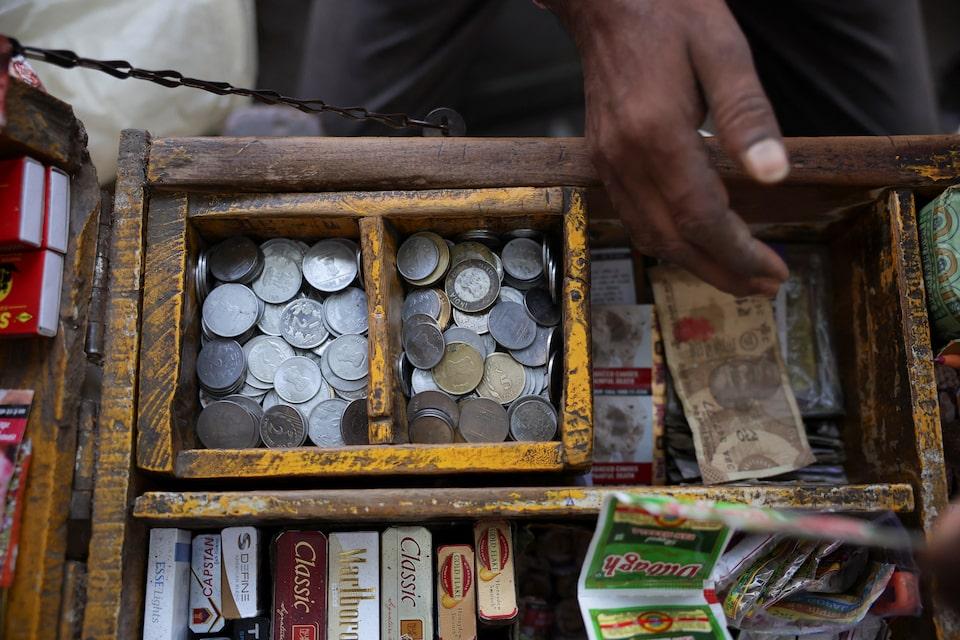
MUMBAI, Sept 24 (Reuters) - The Indian rupee is coming under increased strain with rising dollar demand linked to gold imports coinciding with concerns over the impact of a U.S. visa fee hike, according to bankers. Dollar demand from jewellers has risen nearly three times the normal level in recent days, a banker at mid-sized private sector lender said. Others noted that the spike reflects heavy gold buying during the ongoing Dusherra festival, a celebration traditionally marked by jewellery purchases. Sign up here. Additionally, demand is being driven by stockpiling ahead of Diwali next month, a major Hindu festival when gold buying typically peaks across India. The import duty on gold is set fortnightly. Since gold prices have risen since the last revision, the duty is expected to increase next week. Therefore, to avoid higher duties, jewellers are front-loading imports ahead of Diwali, a banker said. "Individually, the size of this demand will not sway the market," the banker added. "However, when you stack it against the U.S. visa fee news and the broader stress (on the rupee), the flows have a bigger impact than they would on their own." The United States has imposed a $100,000 fee for new H-1B visas, a move that may slow the deployment of Indian IT workers and weigh on services exports and remittances. "Remittances are an important source of foreign currency receipts for India, equal to $120 billion or 3.4% of GDP." Capital Economics said in a note, adding that a quarter of these remittances originate in the U.S. The rupee had already been under pressure before the visa fee increase, weighed down by steep U.S. tariffs on Indian goods and subdued portfolio inflows. "We were already forecasting a widening in the current account deficit and further weakness in the rupee over the coming quarters on account of the punitive tariff on goods exports to the US.," Capital Economics said. "A fall in remittance flows (relative to GDP) would exacerbate both trends." The rupee hit a record low of 88.7975 to the dollar on Tuesday and was set to fall further on Wednesday before the central bank intervened to provide support. It was quoting at 88.7325 at 12.52 am IST. https://www.reuters.com/world/india/gold-linked-dollar-demand-meets-us-visa-fee-jolt-piling-pressure-indian-rupee-2025-09-24/
2025-09-24 06:58
Wall Street, MSCI index fall Fed Chair Powell gives no new direction on rate cuts European defence stocks jump after Trump's comments on Ukraine US new home sales show upside surprise Gold falls while oil and Treasury yields rise NEW YORK/LONDON, Sept 24 (Reuters) - MSCI's global equities gauge fell on Wednesday while the dollar rose and gold prices dipped, as investors digested cautious comments from Federal Reserve Chair Jerome Powell about when the central bank might next cut U.S. interest rates. In his first remarks since the Fed meeting ended with a rate cut last week, Powell on Tuesday underlined the need for policymakers to balance the competing risks of high inflation and a weaker jobs market in their next monetary policy decisions. Sign up here. Traders were still pricing in a rate cut in October, according to CME Group's FedWatch , opens new tab tool. "Despite a fairly quiet day in terms of major directional market drivers, equities have trended lower on anxiety over whether or not the Fed cuts rates at each meeting for the balance of this year," said Gene Goldman, chief investment officer at Cetera Investment Management in El Segundo, California. He pointed to Powell's comments along with economic data released on Wednesday and anxiety ahead of an inflation reading due Friday. Wednesday's data showed sales of new U.S. single-family homes surged in August by 20.5% to a seasonally adjusted annualized rate of 800,000 units. Economists polled by Reuters had forecast a drop to 650,000 units. July sales were revised upward to 664,000 units from the 652,000 previously reported. The stronger-than-expected housing market data could suggest an economy where the Fed would not need to cut rates, Goldman said. Investors will have to wait until Friday for the Personal Consumption Expenditures August report, which includes the Fed's preferred inflation measure. With some investors also pointing to Powell's comment on Tuesday that asset prices appeared fairly highly valued, Wall Street marked its second straight day of declines on Wednesday after pushing to record highs on Monday. The Dow Jones Industrial Average (.DJI) , opens new tab fell 171.50 points, or 0.37%, to 46,121.28, the S&P 500 (.SPX) , opens new tab fell 18.95 points, or 0.28%, to 6,637.97 and the Nasdaq Composite (.IXIC) , opens new tab fell 75.62 points, or 0.33%, to 22,497.86. MSCI's gauge of stocks across the globe (.MIWD00000PUS) , opens new tab fell 3.21 points, or 0.33%, to 978.95. Earlier, the pan-European STOXX 600 (.STOXX) , opens new tab index closed down 0.19%. In contrast, European defence stocks (.SXPARO) , opens new tab closed 1.5% higher after U.S. President Donald Trump said he believed Ukraine could retake all its land occupied by Russia, marking a sudden shift in rhetoric in Kyiv's favour. Gold prices eased from the previous session's record highs as the U.S. dollar firmed while investors hunkered down for the upcoming economic data releases, seeking further cues on the Fed's policy path. Spot gold fell 0.86% to $3,731.62 an ounce. U.S. gold futures fell 0.36% to $3,767.10 an ounce. In currencies, the U.S. dollar gained against the yen, the Swiss franc and the euro after struck a cautious tone, while the New Zealand dollar eased following the appointment of a new central bank chief. The dollar index , which measures the greenback against a basket of currencies including the yen and the euro, rose 0.66% to 97.87. The euro was down 0.66% at $1.1737 while against the Japanese yen , the dollar strengthened 0.83% to 148.85. Against the Swiss franc , the dollar strengthened 0.54% to 0.795. New Zealand's kiwi weakened 0.77% versus the greenback to $0.5811. In government bond markets, U.S. Treasury yields inched higher, driven by an increase in corporate and government bond supply, while investors were still digesting Powell's comments. The yield on benchmark U.S. 10-year notes rose 2.9 basis points to 4.147%, from 4.118% late on Tuesday while the 30-year bond yield rose 1.5 basis points to 4.7517%. The 2-year note yield, which typically moves in step with interest rate expectations for the Federal Reserve, rose 3.4 basis points to 3.604%. Oil prices surged to a seven-week high and settled up more than 2%, as a surprise drop in added to a sense in the market of tightening supplies amid export issues in Iraq, Venezuela and Russia. U.S. crude settled up 2.49%, or $1.58, at $64.99 a barrel and Brent settled at $69.31 per barrel, up 2.48%, or $1.68, on the day. In cryptocurrencies, bitcoin gained 1.36% to $113,558.60. https://www.reuters.com/world/china/global-markets-wrapup-1-2025-09-24/