2025-09-23 10:45
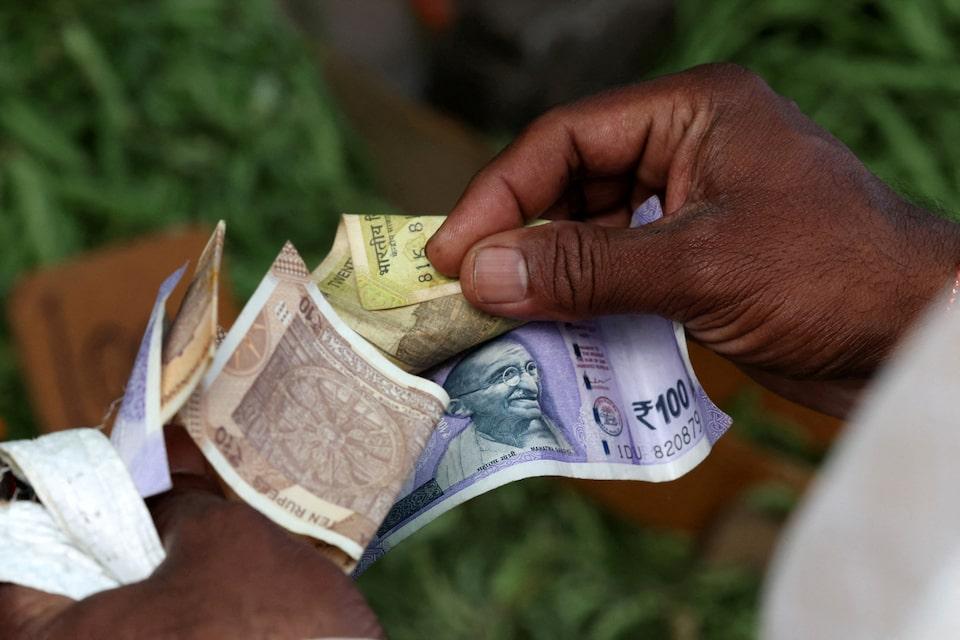
MUMBAI, Sept 23 (Reuters) - The Indian rupee hit a record low on Tuesday, hurt by lingering concerns over the impact of steep U.S. tariffs and a sharp jump in H-1B visa fees, though likely central bank intervention helped limit the losses. The currency slid to 88.7975 per dollar before closing at 88.7550, down 0.5% on the day in its steepest drop in nearly a month. Sign up here. The rupee has fallen more than 3.5% this year, making it one of the region's worst performers. Its latest slide followed a sharp hike in H-1B visa fees that threatens profits in India's IT sector, adding to pressure from 50% U.S. tariffs on Indian goods, the highest in Asia. Economists at HSBC estimate that the 5.4 million Indians in the U.S. cumulatively send back about $33 billion in remittances to the country each year. There are about 80,000 new visa applicants each year, and if they were to not get entry, remittance inflows could fall by about $500 million, they said in a Tuesday note. "The risk is that more restrictions on services exports follow, and the lowering of the 50% tariff takes longer than markets are factoring in." India's benchmark equity indexes, the BSE Sensex (.BSESN) , opens new tab and Nifty 50 (.NSEI) , opens new tab, were little changed on the day but IT stocks (.NIFTYIT) , opens new tab declined 0.7%, adding to a 18% fall over the year so far even as the broader stock gauge has risen 6.5%. On Tuesday, the central bank likely stepped in to support the rupee but did not appear inclined to defend a specific level, traders said, adding that its measured approach suggests it may allow a gradual weakening of the currency. "The rupee appears to be reflecting the pressure on India's external sector even as domestic cues, such as recent tax cuts and strong business activity data, offer a positive impluse, said Dilip Parmar," a foreign exchange research analyst at HDFC Securities. The local unit was consistently cited as a currency with a weaker outlook in a September emerging market sentiment survey conducted by HSBC. "Brazil and India, which were highlighted as the top economies in the previous survey, lost prominence after both were targeted with a 50% tariff rate," the survey said. Despite persistent headwinds facing the currency, market expectations for sharp swings remains subdued due to the increased participation of companies in the options market and subdued offshore demand for options that bet on its fall. https://www.reuters.com/world/india/rupee-hits-record-low-us-tariff-visa-policies-heap-pressure-2025-09-23/
2025-09-23 10:44
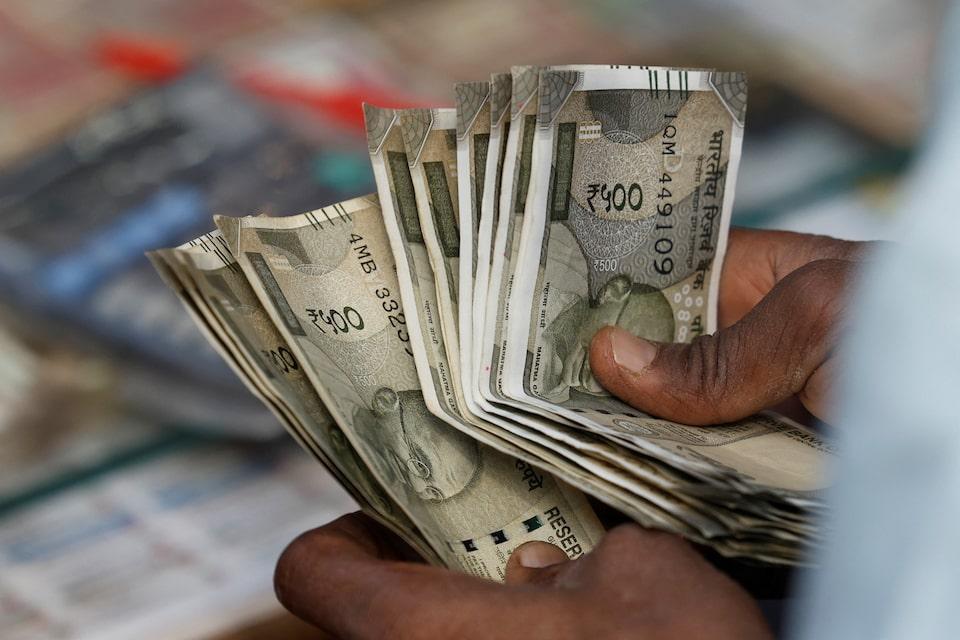
MUMBAI, Sept 23 (Reuters) - Market expectations for swings in the Indian rupee remain subdued despite the currency slipping to an all-time low on the back of steep U.S. tariffs and an increase in H-1B visa fees that could disrupt services exports. The rupee fell 0.52% to 88.7925 per U.S. dollar on Tuesday to a record low. Volatility expectations, however, barely budged. Sign up here. Three-month dollar/rupee implied volatility was at six-month lows, and one-year volatility at a year-to-date low. Implied volatility, a key metric for pricing options, typically rises when emerging market currencies hit lifetime lows, reflecting expectations of wider fluctuations. However, this has not been the scenario for the rupee, thanks to the increased participation of companies in the options market and subdued offshore demand for options that bet on a rupee decline. By hedging dollar exposure with options that cost little or nothing, companies are effectively supplying volatility to banks, contributing to subdued expectations for rupee swings. The sustained corporate supply of volatility marks a major transformation in India's options market, a portfolio manager at a Singapore-based hedge fund said. A foreign bank's head of FX and rates trading said that corporate hedging has effectively anchored volatility and cited a recent trade where a major public-sector firm hedged dollar exposure with forwards and sold dollar/rupee call options. Corporate activity in dollar/rupee options has surged 70% to $73 billion between January and August, compared with the same period last year, clearing platform data showed. The market was valued at less than $20 billion in 2020. Meanwhile, reluctance among offshore traders to position for a steep fall in the rupee — which would lift implied volatility — underscores the Reserve Bank of India's role in keeping volatility expectations subdued. The RBI's regular interventions have curbed expectations of disorderly swings, while memories of past losses from bets of a big rupee decline dampen offshore appetite for buying volatility, bankers said. The bankers did not want to be named since they are not authorised to speak to media. The RBI, under Governor Sanjay Malhotra, has allowed the rupee to trade within a wider band compared to his predecessor Shaktikanta Das. Despite this, expectations for currency volatility remain muted, reflecting changes in the options market structure and the effectiveness of the central bank's strategy, the foreign bank's head of trading said. The RBI maintains its exchange rate policy is focused on ensuring orderly market conditions and limiting excessive volatility. https://www.reuters.com/world/india/india-rupee-record-low-options-market-is-not-sweating-swings-2025-09-23/
2025-09-23 10:38
LONDON, Sept 23 (Reuters) - What matters in U.S. and global markets today By Amanda Cooper, Editor, Markets Breaking News, Europe Sign up here. Markets are digesting mixed signals this morning: Wall Street cooled after hitting record highs, Asia is riding an AI-driven surge, and gold has smashed through $3,750 an ounce, as investors hedge against uncertainty. Meanwhile, the Fed’s messaging remains split ahead of Powell’s remarks, keeping rate-cut bets alive, but looking more fragile. * The S&P 500 and Nasdaq paused after hitting record highs, with the Dow down 0.21%, S&P 500 off 0.02%, and Nasdaq up 0.11%. Apple surged 2.4% on strong iPhone 17 demand, while Tesla and Nvidia extended gains. But Trump’s proposed $100,000 H-1B visa fee rattled tech and banks that rely on foreign talent. Shares in Tylenol-maker Kenvue look set to recover some of Monday's losses on the back of the Trump administration's claim that use of the painkiller by pregnant women is linked to autism in children. * Asian markets extended gains as AI optimism drove tech stocks higher. Nvidia pledged a $100 billion OpenAI investment, fueling momentum. Gold hit a fresh record above $3,750 an ounce, up nearly 9% this month, as investors hedge against uncertainty. Japan’s Nikkei was shut for a holiday but remains up 6.5% in September; Taiwan and Korea also posted strong monthly gains. * Markets still price a 90% chance of an October rate cut, but Fed speakers urged caution. Yields climbed, with the 10-year at 4.15%. The dollar index hovered near 97.33, while the euro held at $1.18 and yen at 147.77. Oil eased, with Brent crude futures at $66.24 and WTI at $61.98. Gold’s rally contrasts with hawkish Fed remarks as Powell prepares to speak later today. Today's Market Minute * Nvidia (NVDA.O) will invest up to $100 billion in OpenAI and supply it with data center chips, the companies said on Monday, marking a tie-up between two of the highest-profile players in the global artificial intelligence race. * Disney (DIS.N) said on Monday it would return comedian Jimmy Kimmel to late-night television on Tuesday, six days after his show was threatened with a regulatory probe and suspended over comments he made about conservative activist Charlie Kirk's assassination. , opens new tab * The United States is considering imposing sanctions as soon as this week against the entire International Criminal Court, putting the court's day-to-day operations in jeopardy in retaliation for investigations of suspected Israeli war crimes. , opens new tab * U.S. pension funds and households have never held more equities as a share of their overall assets, by some measures, raising questions about whether the long-term shift towards stocks has run its course or whether investors have truly undergone a paradigm shift. Read the latest from ROI markets columnist Jamie McGeever. * Asia dominates the global thermal coal market, but, writes ROI columnist Clyde Russell, the future is looking increasingly split between robust domestic markets in the three heavyweights of China, India and Indonesia and a gradually fading seaborne market. Chart of the day Gold has hit yet another record high, bringing gains for this year to nearly 45%, set for its largest annual rally since 1979. Bitcoin has been described as "digital gold" by its fans and last year, its burst above $100,000 looked almost certain to consolidate its reputation as modern-day bullion. That's not been the case so far this year, however. Even with all the fanfare in Washington DC around crypto, bitcoin is only up 20%, meaning gold, once called a "barbarous relic" by economist John Maynard Keynes, is suddenly looking like a sparklier option. Today's events to watch * U.S. PMI surveys (9:45 AM EDT) * Fed Chair Powell speaks on economic outlook (12:35 PM EDT) * UN General Assembly meetings Want to receive the Morning Bid in your inbox every weekday morning? Sign up for the newsletter here. You can find ROI on the Reuters website , opens new tab, and you can follow us on LinkedIn , opens new tab and X. , opens new tab Opinions expressed are those of the author. They do not reflect the views of Reuters News, which, under the Trust Principles , opens new tab, is committed to integrity, independence, and freedom from bias. https://www.reuters.com/business/finance/global-markets-view-usa-2025-09-23/

2025-09-23 09:17
Bessent, Trump to speak with Argentina's Milei on Tuesday Exchange Stabilization Fund has about $30 bln in liquid assets Treasury fund backed Fed crisis facilities in 2008, 2020, 2023 ESF's biggest foreign exchange intervention was Mexico in 1994 WASHINGTON, Sept 23 (Reuters) - U.S. Treasury Secretary Scott Bessent's pledge of "large and forceful" actions , opens new tab to stabilize Argentina's wobbling currency by using a 91-year-old U.S. crisis fund could help the peso find its footing, at least for a while. Bessent's backstop for Argentina with Treasury's occasionally used $219.5 billion Exchange Stabilization Fund sent the peso and other Argentine assets soaring after major losses last week. But he said decisions on any U.S. intervention would come after he and President Donald Trump meet with Argentine President Javier Milei in New York on Tuesday. Sign up here. "U.S. support for Argentina will provide a short-term boost both to the peso and the government’s standing in the midterm elections," said Martin Muehleisen, a former International Monetary Fund strategy chief who is now a senior fellow at the Atlantic Council. Muehleisen said any conditions Treasury adds to a loan or intervention could compound an already complicated debt situation for Argentina. Such a loan from Washington might also push other creditors such as China back in the repayment line, experts say. Treasury's Exchange Stabilization Fund is a powerful tool that has helped ease numerous crises, backing Federal Reserve lending facilities during the 2020 COVID-19 pandemic and the 2008-2009 global financial crisis. It was also deployed to ease financial crises in Mexico and Brazil in the 1990s and Uruguay in 2002. It was created in 1934 to stabilize the dollar's value during the Great Depression after a reduction in the greenback's gold weighting. With authorization from the Treasury secretary, it can be used for the purchase or sale of foreign currency, issuing loans or credit to foreign governments or entities or acquiring and using Special Drawing Rights (SDRs), the IMF's reserve asset. Bessent’s pledge to support Milei partly reflects Trump’s affinity for the right wing leader, who attended Trump’s inauguration in January and who has embarked on a range of private sector reforms to try to revive Argentina’s economy. Washington's support also contrasts sharply with the Trump administration’s treatment of Brazil's leftist government over its prosecution of former right-wing President Jair Bolsonaro. BACKSTOP OF CHOICE As of July 31, the ESF had total assets of $219.5 billion, but the readily available liquid assets are far lower since $173.7 billion of the total is in IMF SDRs. Brad Setser, a trade and currency expert with the Council on Foreign Relations, estimates that the readily available firepower in the ESF is just under $30 billion, comprising $21.9 billion in Treasury securities, $1.6 billion in cash and $5.7 billion in foreign currency holdings. That's likely more than enough to stem a crisis for a country like Argentina, which is not a systemically critical part of the global financial system. The Treasury last pledged ESF funds in March 2023 - $25 billion - to back a new Fed bank emergency liquidity program after Silicon Valley Bank and Signature Bank failed. The Fed's Bank Term Funding Program shut down after a year. As the COVID-19 pandemic erupted in March 2020, the Treasury pledged $10 billion in ESF capital to back a new Fed commercial paper funding facility to help businesses manage their liquidity during the sharp economic downturn. In September 2008, the Treasury pledged $50 billion from the ESF to backstop money market mutual funds that were seeing unprecedented withdrawals. The Treasury also has occasionally dipped into the ESF during U.S. debt ceiling crises to avoid breaching the limit. FOREIGN INTERVENTIONS The ESF was last used to intervene in foreign currencies in 2011, when Treasury joined a coordinated action by G7 countries to stem the rise of Japan's yen after a deadly earthquake. The fund's biggest foreign currency intervention took place after Mexico's 1994 peso crisis when President Bill Clinton authorized $20 billion from the ESF to guarantee loans to Mexico. The loans were also backed by future Pemex oil revenues and were repaid early in 1997. Similar actions were taken in 1998 on behalf of Brazil and in 2002 for Uruguay, which received a $1.4 billion bridge loan that was repaid with IMF and World Bank funds. USES FOR ARGENTINA Demand for such bridge loans has faded in recent years due to improvements in IMF and World Bank processes and programs, analysts said, but the Treasury could use the ESF to set up a stabilization credit facility for Argentina, or intervene directly in markets to buy up pesos or dollar debt. Although Bessent said that a central bank swap line is among tools that could be deployed, the Treasury does not have direct control over swap lines. That remains the purview of the Federal Reserve and its swap lines have been designed more to avoid global contagion and blow-back from foreign crises into the U.S. economy. Bessent on Monday said he did not expect contagion from the Argentine crisis. A Fed spokesperson declined to comment on the possibility of a U.S.-Argentina swap line. Bessent's offer of support without conditions such as fixing the problem of an over-valued peso may be "a way of just financing capital flight for little purpose," said Mark Sobel, a former U.S. Treasury and IMF official who is now U.S. chairman of the Official Monetary and Financial Institutions Forum think tank. Sobel added that it will be a challenge to overcome investors' long-embedded urge to flee Argentina during a crisis. "Markets have had over 100 years of Argentine over-borrowing, hyperinflation and serial defaults, and so when Argentina hits the skids, investors remember that," he said. "And they're not going to go, 'Milei is different.'" https://www.reuters.com/world/americas/us-treasurys-support-argentina-gives-peso-milei-friendly-leg-up-now-2025-09-23/

2025-09-23 09:09
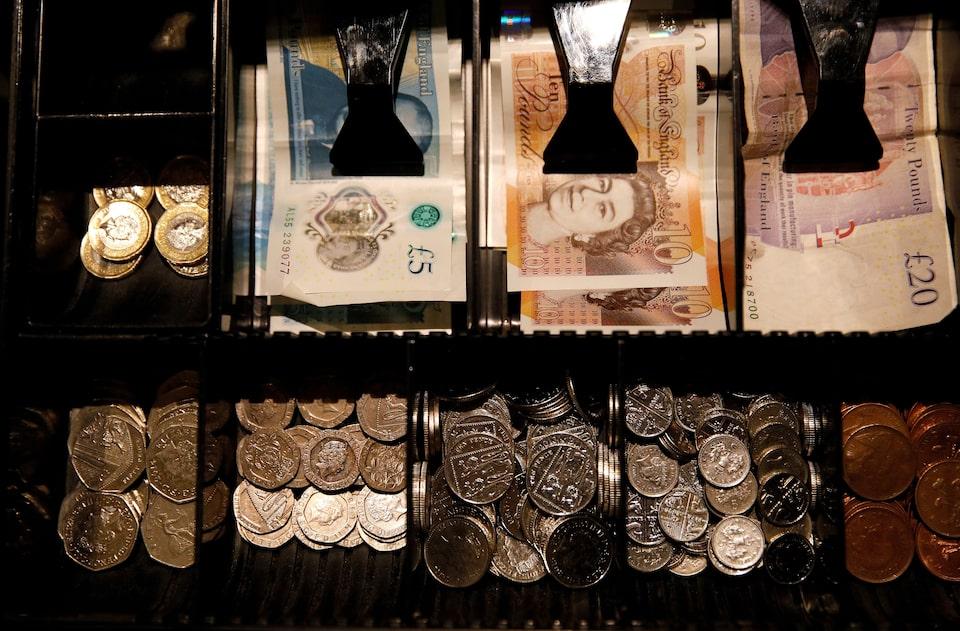
UK business activity slows, PMI drops to 51.0 from 53.5 Sterling falls 0.2% after survey, remains up 8% against dollar BBVA strategists see potential for sterling weakness LONDON, Sept 23 (Reuters) - The pound sagged on Tuesday after a survey showed British business activity slowed in early September, as companies reported a loss of momentum and confidence given the rising risk of tax increases later this year. S&P Global's preliminary UK Composite Purchasing Managers' Index, covering the services and manufacturing sectors, slowed to 51.0 in September from 53.5 in August, not far above the 50.0 level that separates growth from contraction. Sign up here. Economists polled by Reuters had forecast a more modest fall to 53.0 in Tuesday's survey. Sterling fell as much as 0.2% on the day to a session low of $1.34885 immediately after the survey, before tracking back to around $1.35. It is still up around 8% against the dollar this year and nearly 5.5% against the euro , which on Tuesday traded 0.13% higher at 87.41 pence. Strategists at BBVA noted the pound is struggling to gain much traction, even with upbeat investor sentiment and UK equities near record highs. "We continue to see scope for sterling weakness: with markets pricing in just 7 basis points of BoE cuts by year-end, euro/sterling has upside potential. We think a BoE rate cut in the next two meetings is likely," they said. Part of the pound's relative resilience against the dollar in the face of deteriorating UK data is the expectation that the Bank of England will take longer to lower rates than the Fed, given British inflation is running at almost 4%, nearly twice the central bank's target. Currency volatility generally was muted ahead of planned remarks later from Federal Reserve Chair Jerome Powell. Powell is expected to reiterate the need for caution in cutting rates, a view a number of Fed officials expressed on Monday, in contrast to new Fed Governor Stephen Miran - a pick by President Donald Trump for his views on the need for lower rates - who said the central bank is misreading how tightly it has set monetary policy and risks undermining the labour market. Back in the UK, finance minister Rachel Reeves is under growing pressure to keep Britain's finances in check, which could result in new tax rises in her budget in November. https://www.reuters.com/world/uk/sterling-dips-after-gloomy-pmi-surveys-2025-09-23/
2025-09-23 07:57
Sept 23 (Reuters) - Exxon Mobil Corp (XOM.N) , opens new tab has started production at new facilities at its Singapore oil refinery complex to produce base stocks from residue fuel, it said on Tuesday, boosting the plant's intake of high-sulphur crude. The technology combines processes to convert fuel oil and other bottom-of-the-barrel crude products into higher-value lube base stocks and distillates, Exxon said in a statement. Sign up here. The new facilities expand its Group-II base stocks production capacity by 20,000 barrels per day, Exxon added. Crude imports at Exxon's Singapore refinery hit an all-time high of 541,000 barrels per day in August, according to data from analytics firm Kpler since 2016, driving high-sulphur crude demand in the region. The refinery has halted low-sulphur U.S. crude imports since April, switching to buying only high-sulphur oil, the data showed. In August, the United Arab Emirates was the top supplier with Murban and Upper Zakum crude while Qatar was second, with al-Shaheen oil, according to the data. The refinery also imported in August Arab Light crude from Saudi Arabia for the first time since November 2023, according to the data. Other suppliers include Oman and Iraq. Exxon's Jurong Island crude processing capacity is 592,000 barrels per day. The base stocks, designed for commercial vehicles and industrial applications, are used in engine oils, gear oils, marine oils, and greases. https://www.reuters.com/business/energy/exxon-mobil-begins-production-new-base-stock-facilities-singapore-2025-09-23/




