2025-09-23 07:56
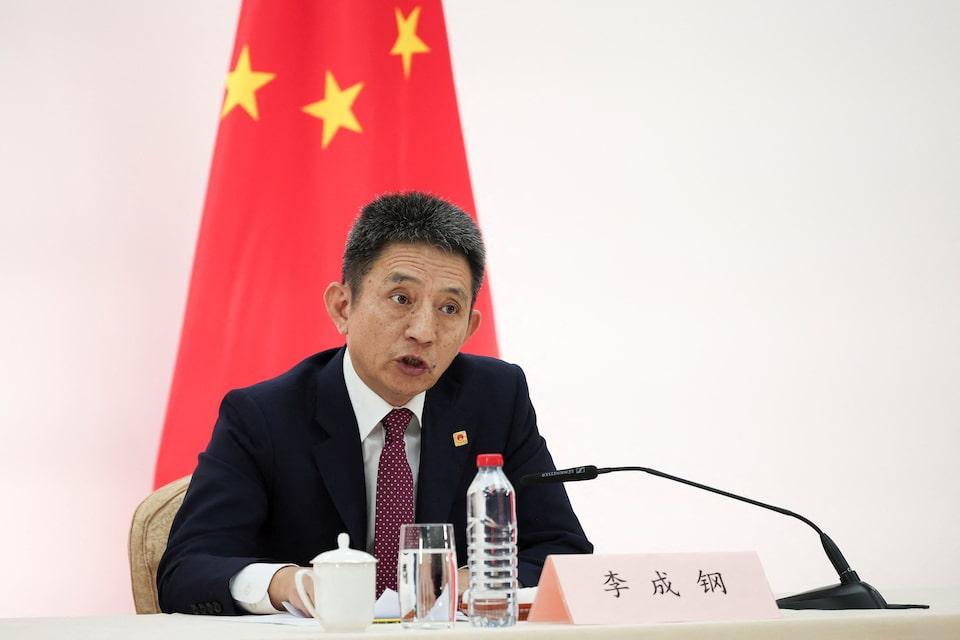
BEIJING, Sept 23 (Reuters) - Senior Chinese trade negotiator Li Chenggang met political and business leaders from the U.S. Midwest, the commerce ministry said on Tuesday, with analysts speculating the region's food exports will be key to any U.S.-China trade deal. U.S.-China commercial ties had featured in Monday's talks, the ministry said in a statement, without giving details. Sign up here. China, the world's biggest buyer of soybeans, has yet to buy any U.S. soybean cargoes from its autumn harvest, traders have said, the bulk of which come from the Midwest. Trade analysts anticipate U.S. President Donald Trump will want China to commit to buying more American agricultural goods and Boeing (BA.N) , opens new tab jet planes, among other items, as part of any deal to end the two largest economies' current tariff war. But Chicago soybean futures, already near 5-year lows, fell further on Friday, after neither side reported any update on agriculture, following Trump's telephone call with Chinese President Xi Jinping. On Tuesday, U.S. Ambassador to China David Purdue told reporters he thought negotiations over China buying more Boeing aircraft had entered their last days or weeks. https://www.reuters.com/business/aerospace-defense/china-trade-envoy-meets-us-midwest-delegation-agriculture-exports-loom-large-2025-09-23/
2025-09-23 07:47
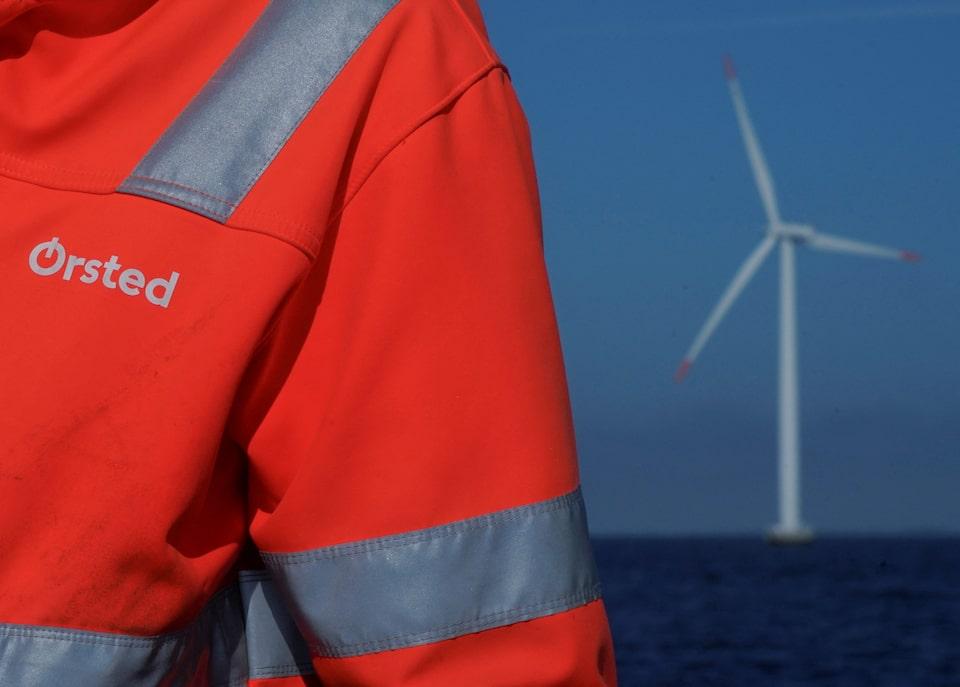
US ruling offers temporary relieve for Orsted Risk of credit downgrade reduced, analyst say Project was 80% complete at time of work-stop order Orsted incurs weekly cost of $15.7 million for project COPENHAGEN, Sept 23 (Reuters) - Orsted (ORSTED.CO) , opens new tab shares rose on Tuesday after a U.S. federal judge ruled it could resume work on an almost completed offshore wind project in the United States, delivering a win for an industry under sustained attack from President Donald Trump. But the victory may prove short-lived, as analysts warn the White House could appeal the decision or take further regulatory action against other projects as part of the administration's broader campaign to dismantle the renewable energy sector. Sign up here. Orsted has been losing $2 million a day since the U.S. Bureau of Ocean Energy Management issued its work-stop order , opens new tab for its Revolution Wind project on August 22. "While the judge's injunction should provide near-term relief to Orsted shares, this does not protect Revolution from the outcome of the ongoing legal case, nor possible further actions," Citi said in a note to clients on Tuesday. RISK OF CREDIT DOWNGRADE REDUCED Attorneys for the Trump administration had argued that the project failed to comply with the conditions of its permit related to conflicts with national security and scientific ocean surveys. Revolution Wind disputed those claims. Monday's legal ruling, which is temporary, blocks the enforcement of the stop-work order while the case remains under review. The Danish company, already grappling with inflation, higher interest rates, and supply chain delays, is in the process of completing a $9.4 billion capital injection from shareholders to stave off a potential credit rating downgrade. The ruling reduces the immediate risk of a downgrade, according to brokerage Sydbank, though they cautioned of "high political risk in the U.S. market." Orsted shares were up 6.45% at 118 Danish crowns by 0926 GMT, after rising as much as 12% at market open. WORK TO RESUME AS SOON AS POSSIBLE The Revolution Wind project, located 15 miles (24.14 km) off the coast of Rhode Island, was 80% complete with all offshore foundations in place and 45 of 65 wind turbines installed when Orsted received the work-stop order. Orsted said it would resume work "as soon as possible", but declined to elaborate further. The Danish company and joint venture partner Skyborn Renewables have already spent or committed about $5 billion to the project, according to U.S. court filings by the companies. They would incur over $1 billion in breakaway costs if it were to be cancelled. Orsted CEO Rasmus Errboe has warned that costs could rise significantly by October if specialised vessels contracted to install the remaining substation and cables are no longer available within their contracted period and Orsted is forced to re-enter the market at potentially much higher rates. ($1 = 6.3333 Danish crowns) https://www.reuters.com/sustainability/climate-energy/orsted-shares-jump-12-after-us-judge-lifts-trump-ban-revolution-wind-project-2025-09-23/
2025-09-23 07:30
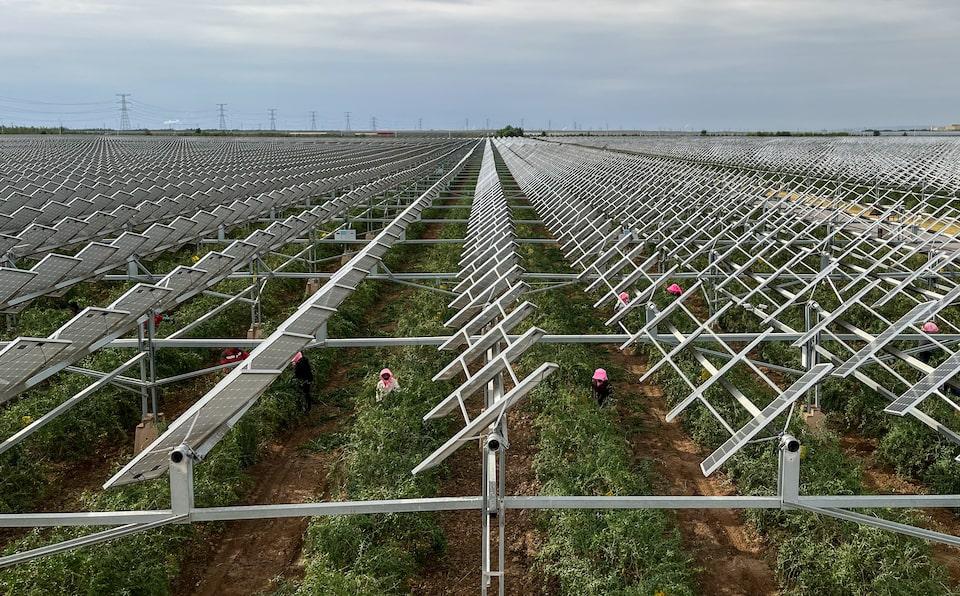
YINCHUAN, China, Sept 23 (Reuters) - In arid northern China, dozens of workers prune goji berry bushes that stretch out under the protective shade of thousands of solar panels. The 1 gigawatt (GW) facility in the northwestern region of Ningxia is part of a network across northern and western China that use the bulk and shade of solar panels to stop and reverse the spread of deserts. Sign up here. Owner Ningxia Baofeng (600989.SS) , opens new tab, a major participant in the coal chemical industry, plans to build 30 GW of solar generation, some of which will be used to stop desertification, according to Liu Yuanguan, the company's vice chairperson. A similar 1 GW project in nearby Majiatan is already active, he added. "All of the panels above are like mini umbrellas," Liu said during a tour of the facility organised by the Chinese government. "They are casting shadows on the plants and soil so there will be less evaporation of moisture." Roughly a quarter of China is classified as "desertified" and campaigns to contain and reclaim the sands stretch back to the 1970s. Solar panels installed over the empty, sun-baked deserts are a recent and growing part of the arsenal. Solar was included in a September revision , opens new tab to the country's flagship "Three Norths" anti-desertification program, which began in 1978 and will run until 2050, although the concept has cropped up in other planning documents going back to 2021. The standard approach is to use panels to provide shade for desert-hardy seeds and shrubs introduced underneath while barriers around the sites slow wind speeds and stop the sand shifting. It can take up to five years to get results, according to the Ningxia government. Projects like Baofeng's remain a tiny portion of the hundreds of gigawatts of solar panels China installs each year, but Beijing has announced plans to rapidly grow the number of projects which use solar to fight desertification. The construction of solar panels in deserts also preserves farm land. In 2023, China issued rules barring solar panels from arable land and state media has criticized the construction of solar panels on prime farm land. Between 2025 and 2030, China plans to install 253 GW of solar to rehabilitate roughly 7,000 square km (2,700 square miles), about four times the size of Greater London, according to state media citing plans from the National Development and Reform Commission (NDRC) and two other agencies. By comparison, the United States installed 50 GW of solar last year. The NDRC did not respond to questions about the plan from Reuters. Whether using solar panels or other methods like tree planting, progress is hard-won. Desertified land was 26.8% of all China last year, down from 27.2% a decade earlier despite massive tree planting programs. At the Baijitan nature reserve several hours away from Baofeng's site, decades of work has reclaimed about 800 square km. Completely wiping out deserts is not the goal, according to the site's director Wang Xiaoling, instead they hope to minimise harm. "It is a protracted war to control the desert," he said. "We can't say that we can wipe it out completely." https://www.reuters.com/sustainability/climate-energy/china-enlists-solar-panels-war-halt-desert-sands-2025-09-23/
2025-09-23 07:11
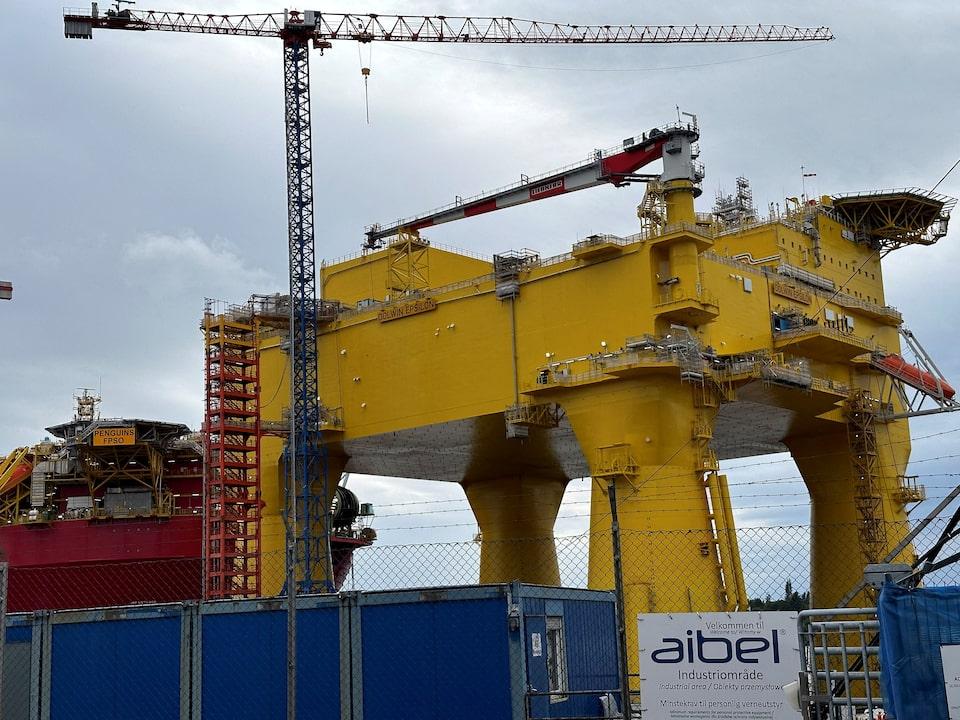
OSLO, Sept 23 (Reuters) - Norway's combined oil and gas production exceeded an official forecast by 2.6% in August, the Norwegian Offshore Directorate (NOD) said on Tuesday. Norway is Europe's largest supplier of natural gas and a major producer of oil. Output varies from month to month depending on maintenance needs and other stoppages at close to 100 offshore fields. Sign up here. Overall oil, condensate, natural gas liquids and gas output stood at 0.670 million standard cubic metres per day, equivalent to 4.21 million barrels of oil equivalent, an increase of 0.4% year-on-year. Natural gas production in August fell to 332 million cubic metres (mcm) per day from 349 mcm a year earlier, but exceeded a forecast of 328.3 mcm by 1.2%, the regulator said on its website. Crude oil output rose to 1.92 million barrels per day (bpd) in August from 1.78 million bpd in the same month last year, and came in above a forecast of 1.80 million bpd, NOD's preliminary data showed. https://www.reuters.com/business/energy/norways-oil-gas-output-beats-forecast-august-2025-09-23/
2025-09-23 07:07
JIMBARAN, Indonesia, Sept 23 (Reuters) - Asia dominates the global thermal coal market but the future is looking increasingly split between robust domestic markets in the three heavyweights of China, India and Indonesia and a gradually fading seaborne market. The three countries account for just over 70% of global coal production and they have been rapidly expanding output in recent years to meet rising energy demand. Sign up here. Outside of these three, production is concentrated in Australia, Russia, the United States and South Africa, and all four of those nations are exporters to the seaborne market. However, while domestic thermal coal demand in China, India and Indonesia is expected to increase in coming decades, the same cannot be said for the seaborne market. The divide was in evidence at this week's CT Asia conference, formerly known as Coaltrans Asia, held on the Indonesian island of Bali. Speakers representing the governments of India and Indonesia painted bullish pictures of how coal consumption will increase in coming years, even going so far as to float new domestic uses for the fuel, such as gasification in order to produce chemicals. Analysts at the event were also comfortable in predicting that China, which produces about 60% of the world's coal, will also continue to use the more polluting fuel as part of its efforts to reduce reliance on expensive imported fossil fuels such as crude oil and liquefied natural gas (LNG). China's production of all grades of coal hit a record high of 4.04 billion metric tons in 2024, according to official data, having doubled from just over 2 billion in 2006. Output may notch a fresh record this year, with production in the first eight months rising 3% from the same period last year to 3.17 billion tons. India's output exceeded 1 billion tons for the first time in 2024, and given the expansion of private mining blocs, it is expected to reach 1.2 billion to 1.4 billion in the next few years. Indonesia's total coal output also hit a record high in 2024 of 836 million tons, exceeding a government target of 710 million as miners took advantage of record Chinese imports. However, production in Southeast Asia's biggest economy is expected to slip this year, largely because China's imports are falling amid higher domestic production and the increasing deployment of renewables such as solar and wind. IMPORT REPLACEMENT The problem for seaborne coal exporters is that the two biggest buyers, China and India, are also the two biggest miners and both have informal policies to maximise domestic output and minimise imports. While it's unlikely that imports will drop to zero, they look to be on the way down as more domestic coal is produced and the infrastructure to move it is improved. Outside of China and India there are further concerns for seaborne thermal coal exporters. A reliable market for higher energy coal has been Japan and South Korea, but these markets are also likely to see declining demand in coming years. Japan is restarting nuclear plants and building renewables such as solar, and coal could be further constrained by LNG, which is likely to become cheaper by 2027 dragged down by a wave of new supply from Qatar and the United States. At a presentation on Tuesday, S&P Global Commodity Insights analyst Pritish Raj showed forecasts that coal would drop from around 28% of Japan's electricity generation in 2025 to just 9% by 2050. South Korea is also planning on increasing nuclear generation, and similar to Japan will be able to burn more LNG in preference to coal should LNG prices decline as expected. There are a few bright spots for seaborne thermal coal, such as increasing imports in Vietnam, Thailand and Malaysia. Vietnam's seaborne imports of thermal coal hit 43.33 million tons in 2024, according to data compiled by commodity analysts Kpler, which was a record high. They are on track to set a new high this year but after that they are likely to plateau as the pipeline of new coal-fired generation eases. The lack of new coal-fired plants outside of China, India and Indonesia is the major issue facing seaborne thermal coal exporters. According to the Global Energy Monitor those three countries account for 95% of the coal-fired electricity plants currently under construction worldwide, with a combined total of 262 gigawatts out of a total global build of 274.5 GW. Indonesia will be able to divert coal from exports to its domestic market, and if China and India continue boosting their local production, the outlook for the seaborne thermal coal market becomes one of a slow, but steady decline. Enjoying this column? Check out Reuters Open Interest (ROI), your essential new source for global financial commentary. ROI delivers thought-provoking, data-driven analysis of everything from swap rates to soybeans. Markets are moving faster than ever. ROI can help you keep up. Follow ROI on LinkedIn , opens new tab and X , opens new tab. The views expressed here are those of the author, a columnist for Reuters. https://www.reuters.com/markets/commodities/big-three-asias-thermal-coal-look-healthy-others-pale-2025-09-23/
2025-09-23 07:05
Russia attacks Ukraine's railways using long-range drones Railway a lifeline for people moving around wartime Ukraine Strikes on substations, trains add to costs and disruption Head of railway network says the aim is to 'sow panic' KYIV, Sept 23 (Reuters) - Russia has unleashed a massive wave of attacks on Ukraine's railways since the summer, using new tactics to hit key nodes with long-range drones, but the network is holding up for now, the CEO of the state railway company told Reuters. "Their first aim is to sow panic among passengers, their second aim is to hit the overall economy," Oleksandr Pertsovskyi said in an interview held in a rail carriage at Kyiv's central station. Sign up here. There did not appear to be a particular focus on targeting military cargo. "These are all, in essence, strikes on civilian infrastructure," he said. RAILWAY ATTACKS HAVE INTENSIFIED Ukrzaliznytsia, the vast state-owned railway company, employs 170,000 people and has been the target of Russian attacks since the start of Russia's invasion three-and-a-half years ago, but attacks have intensified, causing regular delays. Since the start of the war in February 2022, the railway network has been a lifeline for people moving around Ukraine and out of the country, as all civilian flights have been grounded. World leaders, from French President Emmanuel Macron to Indian Prime Minister Narendra Modi and former U.S. President Joe Biden, have arrived in wartime Ukraine by train. The rail company's popular sleeper carriages are seen as a reliable way to travel overnight and arrive early in the morning in cities many hundreds of miles away, until the latest Russian onslaught began to delay passengers by several hours. The railway is also crucial for transporting military equipment and commercial cargo, although volumes of the latter have dropped significantly in wartime, denting the company's finances , opens new tab. Pertsovskyi said the attacks, which have hit dozens of substations, were linked to the dramatic increase in long-range drones that Russia's military-industrial complex is producing. "Previously, they simply did not have sufficient resources for a single combat drone, such as a Shahed, to hunt down a locomotive. Now they can afford to use Shaheds to hit individual locomotives rather than strategic targets." QUICK RECOVERY BUT AT A COST For now, the railway is recovering from each blow, he said. The immediate disruption to trains after an attack usually lasts six to 12 hours and electric locomotives are switched out for diesel while power is restored. Pertsovskyi said disruption had been minimised and the transit of military cargoes had not been impacted. "It's a marathon ... They strike us, we recover," he said. "They strike us, we recover." Since the middle of summer, Russia has attacked railway electricity substations and other infrastructure nodes with an average of six to seven long-range Shahed kamikaze drones most nights, according to Pertsovskyi. "They are ... acting systematically, knocking out one substation after another or key rail hubs in order to stop passenger trains and sow panic and distrust among the people." Five or six key rail hubs have been bombarded since the summer, he said. Reuters could not independently verify the reports. Russia denies targeting Ukrainian civilians. The railway also faces sabotage from agents recruited by Russia in Ukraine. Ukraine's security services regularly announce the detention of people they accuse of plotting to blow up vulnerable points on the network. This is less of a threat than Russian airstrikes, but sabotage is on the rise with dozens of cases recorded this year, Pertsovskyi said. And diesel locomotives are about five times more expensive to run per kilometre than their electric equivalents - an additional headache for a company with deep financial issues. The World Bank estimates that roughly 30% of Ukraine's railway is in a "damage-repair" cycle. Some bridges had been hit many times over by Russian forces throughout the war and repaired each time, but Pertsovskyi declined to specify which ones, citing security reasons. The company would keep up the pace of repairs, he said. "If we slow down a little and let the enemy strike and destroy, then they will be even more drawn to the smell of blood." https://www.reuters.com/business/aerospace-defense/russia-targets-ukraines-lifeline-railways-with-systematic-attacks-ceo-says-2025-09-23/