2025-09-22 20:41
LONDON, Sept 22 (Reuters) - The governments of Britain and the United States will set up a body to reduce red tape for firms seeking to access capital markets on both sides of the Atlantic and improve cooperation on crypto assets, Britain's finance ministry said on Monday. The Transatlantic Taskforce for Markets of the Future will report back within 180 days on ways to enhance collaboration in the short term and on longer-term options, including in wholesale digital markets, the Treasury said. Sign up here. Creation of the taskforce was approved by British finance minister Rachel Reeves and U.S. Treasury Secretary Scott Bessent last week when President Donald Trump made a state visit to Britain. U.S. and UK finance ministry officials will chair the new body that will also include regulators from both countries. Britain's financial services industry has struggled to maintain its pre-eminence in Europe after the Brexit vote in 2016, and many companies have moved their primary stock market listing to the United States. To try to boost its digital assets industry, Britain has sought to align its approach to crypto to that of the U.S. by using existing regulation to regulate the sector instead of creating new rules, as the European Union has done. https://www.reuters.com/sustainability/boards-policy-regulation/uk-us-smooth-capital-markets-access-crypto-cooperation-2025-09-22/

2025-09-22 20:30
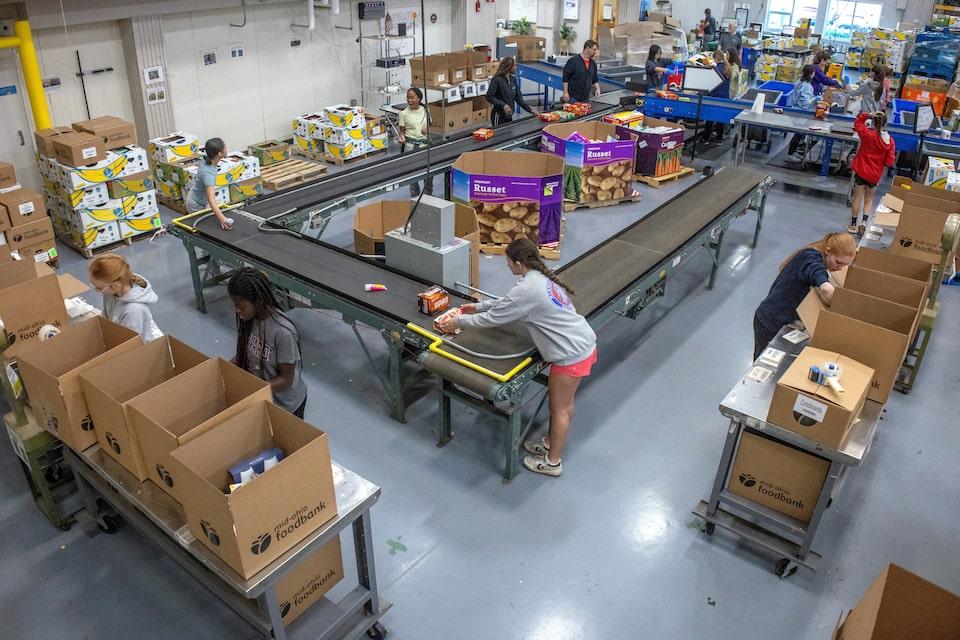
Food security experts say USDA report is most comprehensive data source available Cuts to SNAP include expanded work requirements, state cost-sharing USDA says report was redundant and costly, with better data sets available WASHINGTON, Sept 22 (Reuters) - The U.S. Department of Agriculture's decision to end its annual food insecurity survey , opens new tab will make it harder to measure the impact of the Trump administration's cuts to nutrition programs such as food stamps, anti-hunger advocates said on Monday. The USDA on Saturday announced it was canceling the Household Food Security report because it was redundant, costly and politicized. It said it would instead use "the bevy of more timely and accurate data sets available." Sign up here. But the report, which gathers data through the Census Bureau's Current Population Survey and has been published since 1998, is the only data set with state as well as national statistics, and is crucial to assessing the efficacy of government programs, according to food security experts. "To say it's duplicative is a little misleading because this is the most comprehensive source we have," said Megan Lott, deputy director for the Healthy Eating Research program at Duke University. President Donald Trump's tax cut and spending bill passed in July included significant cuts to the nation's largest food aid program, the Supplemental Nutrition Assistance Program, including expanded work requirements for recipients and state cost-sharing requirements that state governments will likely struggle to afford. Without the hunger report, it will be more difficult to determine whether those cuts cause food insecurity rates to rise, said Eric Mitchell, president of the Alliance to End Hunger. "There's no way to determine what that impact will look like if the government isn't tracking the data," Mitchell said. The lack of data will also make it harder to ensure the efficacy of existing federal programs, including the Special Supplemental Nutrition Program for Women, Infants, and Children, said Georgia Machell, president and CEO of the National WIC Association. The USDA did not respond to a request for comment. About 13.5 percent of U.S. households were food-insecure during some point in 2023, according to the most recent USDA report. Hunger has risen in the U.S. since 2021, driven by rising food costs and the end of temporary programs that expanded food aid during the COVID-19 pandemic. Food banks have struggled to keep up with demand. https://www.reuters.com/business/healthcare-pharmaceuticals/impact-trump-cuts-will-be-harder-track-without-usda-hunger-survey-advocates-say-2025-09-22/
2025-09-22 20:29
Denmark's Copenhagen Airport reopens after halting take-offs, landings for nearly four hours Norway's Oslo Airport shut airspace from midnight local time (2200 GMT) Denmark and Norway will investigate whether incidents linked-Copenhagen police COPENHAGEN, Sept 23 (Reuters) - Copenhagen Airport (KBHL.CO) , opens new tab, the busiest in the Nordic region, said it reopened early on Tuesday after drone sightings halted all take-offs and landings for nearly four hours, while Norway's Oslo Airport said it had shut its airspace over a drone. "The police have launched an intensive investigation to determine what kind of drones these are," Copenhagen Police Deputy Assistant Commissioner Jakob Hansen told reporters. "The drones have disappeared and we have not taken any of them," he added. Sign up here. Hansen said authorities in Denmark and Norway would cooperate to determine whether there was a link between the two incidents. Oslo Airport shut its airspace from midnight local time (2200 GMT) due to a drone observation, a spokesperson for Norwegian airport operator Avinor said in an emailed statement, adding that all flights were diverted to the nearest airport. Danish police said earlier on Monday that two or three large drones had been seen flying near Copenhagen's airport, closing it to all traffic. The airport halted operations at 8:26 p.m. (1826 GMT) on Monday, according to flight tracking service FlightRadar. Around 50 flights were diverted to alternate airports, FlightRadar said on X. After it reopened, Copenhagen Airport said on X that delays and some cancelled departures would persist and urged passengers to check with their airlines. The airport shutdowns came after a string of disruptions at European airports in recent days. A cyberattack last Friday knocked out check-in and boarding systems supplied by Collins Aerospace, a unit of RTX (RTX.N) , opens new tab, affecting operations at London's Heathrow and the Berlin and Brussels airports. Over the weekend and into Monday, the fallout continued to snarl travel across the region. In 2018, drone sightings over the runway at Gatwick near London stranded tens of thousands of passengers and disrupted hundreds of flights at the height of the holiday season. https://www.reuters.com/business/aerospace-defense/copenhagen-airport-halts-traffic-due-drone-sightings-police-says-2025-09-22/

2025-09-22 20:03
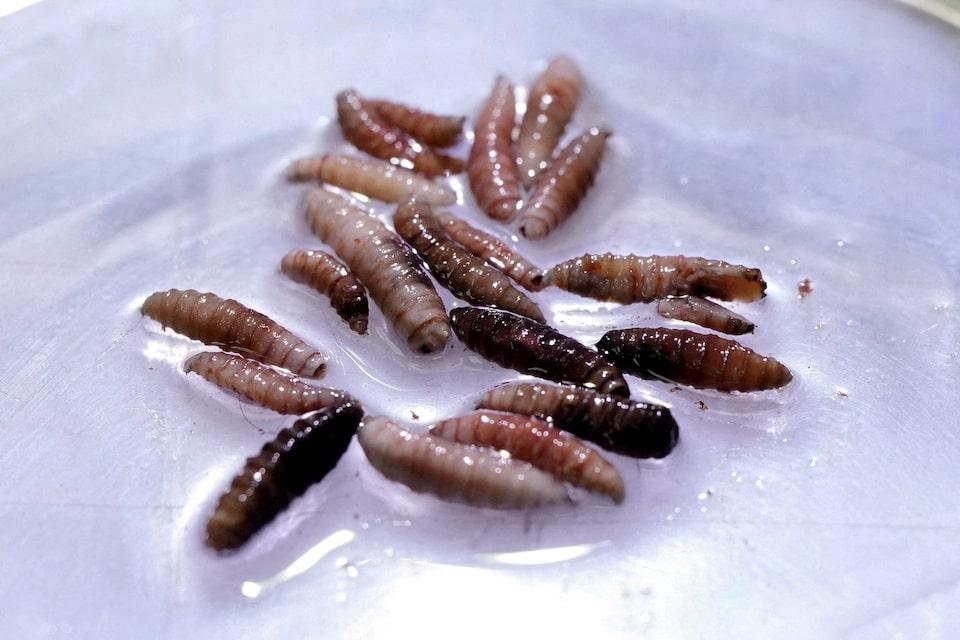
MEXICO CITY, Sept 22 (Reuters) - A confirmed case of an animal infected with the flesh-eating screwworm parasite in Mexico's northern Nuevo Leon state near the U.S. border was immediately treated to prevent a further outbreak, the Mexican government said Monday. The country's agriculture ministry said there was no risk of adult screwworm fly emergence due to the early detection of the infected bovine, which was confirmed on Sunday. Sign up here. Fly traps in northern Mexico have not detected a single screwworm fly, the statement added. The screwworm parasite has moved northward through Central America and Mexico, rattling the U.S. cattle industry and prompting the U.S. government to keep its border mostly closed to Mexican cattle imports since May, adding to trade tensions between the two countries. The U.S. Department of Agriculture first confirmed the case detected less than 70 miles (113 km) from the U.S.-Mexico border in a statement late Sunday, saying it was analyzing the information and "will pursue all options to release sterile flies in this region as necessary." The infected animal was in a shipment of 100 animals originating from the Gulf Coast state of Veracruz, Mexico said. "We are managing an isolated case of screwworm infestation in Nuevo Leon and implementing the measures agreed upon with the U.S. government just over a month ago," Mexico's Agriculture Minister Julio Berdegue said Monday in a post on X. Mexico recorded 5,086 cases of screwworm in animals as of August 17, according to the most recent government data. That was a 53% jump from July. U.S. cattle ranchers on the southern border contacted by Reuters reacted with little surprise to the case in Nuevo Leon, and many have been preparing for months to deal with the pest. U.S. health officials confirmed in August a human infection of screwworm in Maryland in a person who had traveled from El Salvador after Reuters exclusively reported on the case. Mexican President Claudia Sheinbaum said the country was waiting on an assessment by a team of USDA experts that recently visited Mexico. https://www.reuters.com/business/environment/mexico-says-screwworm-case-near-us-border-contained-no-flies-detected-north-2025-09-22/
2025-09-22 20:00
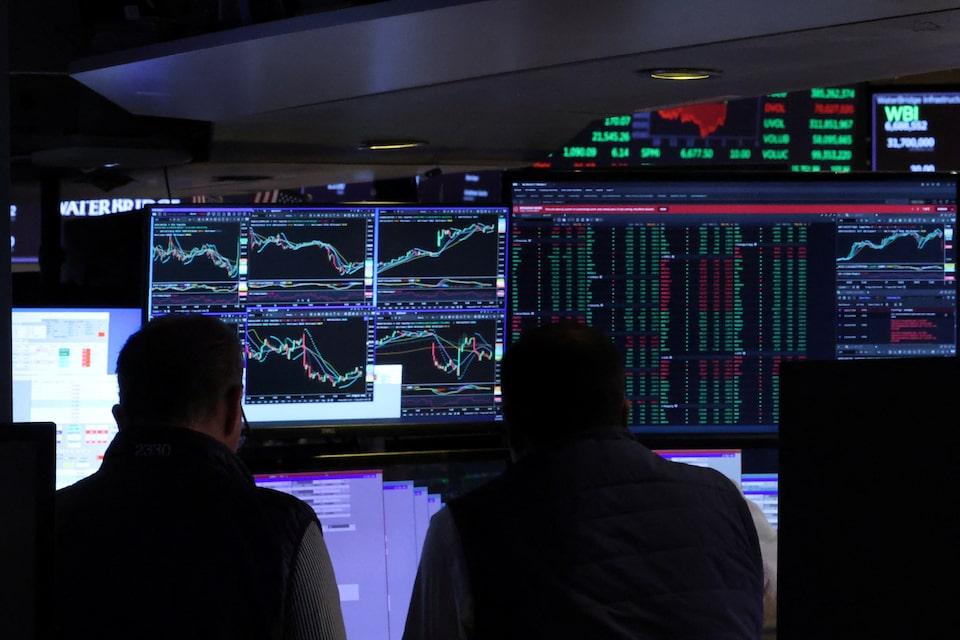
Nvidia shares up after it says it will invest $100 bln in OpenAI Apple shares up after brokerage raises target price Some Fed officials cast doubt on need for further rate cuts Indexes: Dow up 0.1%, S&P 500 up 0.4%, Nasdaq up 0.7% NEW YORK, Sept 22 (Reuters) - All three major U.S. stock indexes registered record closing highs for a third straight session on Monday, led by gains in technology shares, with Nvidia (NVDA.O) , opens new tab gaining after it said it will invest up to $100 billion in OpenAI. Shares of Nvidia gained 3.9%. Nvidia will also supply OpenAI with data center chips, the companies said, which further stoked optimism about AI prospects. Sign up here. Shares of Apple (AAPL.O) , opens new tab rose 4.3% after Wedbush raised the stock's target price on strong demand signs for the iPhone 17, while Tesla (TSLA.O) , opens new tab climbed 1.9%. Technology (.SPLRCT) , opens new tab led S&P 500 sector gains and ended 1.7% higher. Some Federal Reserve officials made remarks doubting the need for further rate cuts. Last week, the U.S. central bank cut interest rates for the first time since December and indicated more cuts would come at its upcoming meetings. Both St. Louis Fed President Alberto Musalem and Atlanta Fed President Raphael Bostic, in separate remarks, said that while the Fed's quarter of a percentage point rate cut at last week's meeting was appropriate as a way to manage the risk of rising unemployment, lowering inflation remains the priority. However, Fed Governor Stephen Miran, who last week dissented when the Fed cut the benchmark rate by a quarter of a percentage point and said a half-point cut was warranted, said on Monday that monetary policy "is well into restrictive territory." The S&P 500 is now up 13.8% for the year so far and up 3.6% for September, a month that is historically weak for stocks. "We're certainly pointing out to clients and having portfolios reflect that we're at all-time highs and valuations are getting stretched," said Oliver Pursche, senior vice president and advisor for Wealthspire Advisors in Westport, Connecticut. "There needs to be a catalyst for stocks to move materially higher, and markets appear to be kind of ignoring potential headwinds," he said. The Dow Jones Industrial Average (.DJI) , opens new tab rose 66.27 points, or 0.14%, to 46,381.54, the S&P 500 (.SPX) , opens new tab gained 29.39 points, or 0.44%, to 6,693.75 and the Nasdaq Composite (.IXIC) , opens new tab gained 157.50 points, or 0.70%, to 22,788.98. Also worrying some investors were U.S. President Donald Trump's new visa fees , opens new tab for foreign workers, which drew widespread condemnation from technology executives and others across social media. Shares of Tylenol maker Kenvue (KVUE.N) , opens new tab fell 7.5% during the session as investors braced for Trump to make an announcement linking the pain-killer to autism. After the closing bell, Trump said the Food and Drug Administration will tell doctors to advise pregnant women against using acetaminophen, the active ingredient in Tylenol. But after the announcement, Kenvue shares bounced up 4.7%. Among key economic reports this week will be one on the U.S. personal consumption expenditures price index, a closely watched inflation gauge. Advancing issues outnumbered decliners by a 1.22-to-1 ratio on the NYSE. There were 559 new highs and 99 new lows on the NYSE. On the Nasdaq, 2,716 stocks rose and 1,963 fell as advancing issues outnumbered decliners by a 1.38-to-1 ratio. Volume on U.S. exchanges was 18.65 billion shares, compared with the 17.5 billion average for the full session over the last 20 trading days. https://www.reuters.com/sustainability/sustainable-finance-reporting/us-futures-inch-lower-after-rally-markets-await-clarity-trump-visa-policy-2025-09-22/
2025-09-22 19:59
Measure meant to build up needed foreign reserves Suspension to last through end-October or $7 billion cap reached Exporters groups warn of supply glut Markets rally on tax cut, U.S. support pledge BUENOS AIRES, Sept 22 (Reuters) - Argentina's government on Monday temporarily eliminated export taxes on grains and their by-products, as well as on beef and poultry, in a bid to speed up sales abroad and rake in much-needed dollars to prop up the flagging peso currency. Just over a month ahead of congressional elections, President Javier Milei's government has faced setbacks in the legislature which have caused nervous investors to turn to the safe-haven dollar and forced the central bank to dip into its dwindling reserves. Sign up here. The decree published Monday suspends export taxes on soy, corn, wheat and their by-products, including biodiesel. It will last through the end of October, or until declared exports reach $7 billion. This significantly eases the tax burden for exports from the key sector, from a prior level of 26% on soybeans, 24.5% on soybean oil and meal and 9.5% on corn. Argentina is one of the world's top grains suppliers, and the sector is key to funneling in foreign currency. Presidential spokesperson Manuel Adorni later said that beef and poultry exports would also be tax-exempt through the end of October. SHORT-TERM RUSH The tax break could cause a rush to sell, especially as farmers look for cash to fund planting for next season, analysts said. Significant portions of the 2024/25 grains harvests worth more than $8 billion, remain unsold, according to analyst Lorena D'Angelo. After the announcement, soybean futures for November delivery Matba-Rofex exchange rose some $50 to around $355 per metric ton. Prices could climb to up to $400 per ton, D'Angelo said. However, the temporary measure could backfire, she and others warned, saying that by creating a short-term rush to sell, the resulting supply glut could limit potential price increases. Agricultural association Sociedad Rural Argentina criticized the decision, arguing for a permanent tax break. "It's clear that this is an emergency measure due to the need for dollars," said the group's vice president, Marcos Pereda. "This has happened in the past, and any temporary measure usually causes supply to greatly outweigh demand," he added. BROADER ECONOMIC BOOST Argentine markets rallied on Monday, with the tax break announcement followed by a pledge from Washington to examine financial support for Argentina. U.S. Treasury Secretary Scott Bessent said swap lines, direct currency purchases and purchases of U.S. dollar-denominated government debt could be used to boost the Latin American ally. The wholesale peso strengthened nearly 4.5% on Monday, closing at 1,412 per greenback, while on the parallel market , the currency appreciated around 3% to 1,475 per dollar. Dollar bonds and the main stock index also rallied, with the country risk index - a measure of investor confidence - coming down. https://www.reuters.com/world/americas/argentina-suspends-agro-export-taxes-scoop-up-dollars-2025-09-22/