2025-09-22 17:59
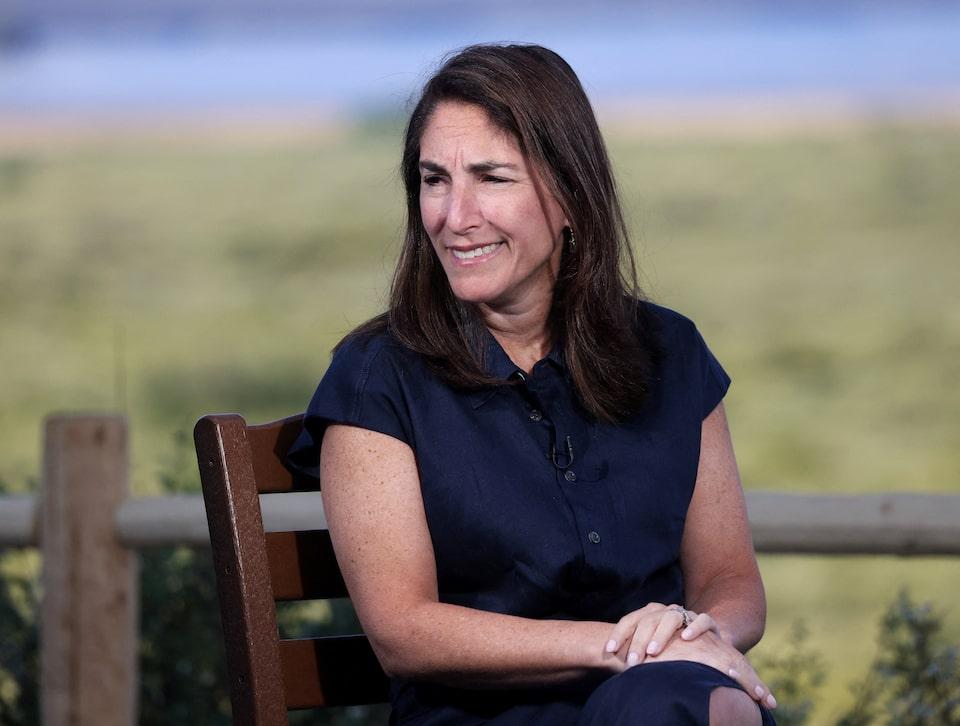
Hammack emphasizes caution due to persistent inflation above 2% target Fed's recent rate cut reflects internal divisions on future interest rate path Hammack sees job market near maximum employment despite signs of fragility Sept 22 (Reuters) - The Federal Reserve needs to be "very cautious" in removing restrictive monetary policy with inflation still above the central bank's 2% target and remaining persistent, Cleveland Fed President Beth Hammack said on Monday. "I think we are only a short distance to neutral, and it worries me that if we remove that restriction from the economy, things can start overheating again," Hammack said in remarks that showed the divisions inside the Fed over whether interest rates will keep falling. Sign up here. Hammack's comments at an event at the Cleveland Fed headquarters followed last week's decision by the Federal Open Market Committee - the Fed's interest-rate-setting panel - to lower the central bank's benchmark rate by a quarter-percentage point to a range of 4.00%-to-4.25%. Hammack, among the most hawkish Fed policymakers, is not a voter on policy this year and did not say whether she supported the reduction. But in her remarks she emphasized that inflation remains a significant concern for her, while she sees the job market as remaining closer to the Fed's "maximum employment" mandate, even if there are emerging signs of fragility. The latest unemployment rate at 4.3% "is right around a maximum employment number," Hammack said, and while it may edge up this year it is expected to fall again before long. "On the inflation side, we are missing by a more meaningful number, by a full percentage point. And we have been missing for four-and-a-half years, and I anticipate missing for the next couple of years." "I think we should be very cautious in removing monetary policy restriction because I think it's important that we stay restrictive to bring inflation back down to target," Hammack said. Along with their decision on interest rates, Fed officials last week updated their quarterly economic and policy projections. The median expectation among the 19 officials showed an expectation for rates to drop by another half a percentage point this year, but nearly half of them did not see that as appropriate. Six of them saw the current level as appropriate through this year, and two others saw only one more quarter-point reduction this year as appropriate. Another official felt the level of rates prior to last week's reduction was the appropriate level. Part of the judgment in rate decisions involves policymakers estimating how far current policy is from the so-called neutral rate of interest that neither stimulates nor restricts economic activity. "I have one of the higher estimates on the committee, and I think we're only very mildly restrictive after last week's move" Hammack said. "So I think we are a very short distance to neutral." https://www.reuters.com/business/feds-hammack-still-focused-inflation-calls-caution-easing-policy-2025-09-22/
2025-09-22 16:44
NEW YORK, Sept 22 (Reuters) - Top U.S. asset manager Vanguard is bullish on corporate bonds despite high valuations, and while it expects tariffs will continue to be a risk for the U.S. economic and inflation outlook, those headwinds could be offset by further Federal Reserve interest rate cuts. Investment-grade credit spreads - or the premium over U.S. Treasuries paid by high-rated companies to issue bonds in the U.S. market - declined to 74 basis points last week, their lowest since 1998, as investors pile into the asset class to grab higher yields than U.S. Treasuries, and as a Fed in rate-cutting mode is expected to encourage economic activity by lowering borrowing costs for U.S. firms. Sign up here. "Credit spreads are near historical lows, but healthy fundamentals, attractive all-in yields, robust investor demand, a proactive Fed, and low recession risk support current valuations," Sara Devereux, global head of fixed income at Vanguard, said in a note to clients on Monday, seen by Reuters. She added the firm has been adding credit risk across its portfolios. "Credit valuations are stretched but justified," she said. Vanguard, which manages $11 trillion, estimated that about a third of the impact of President Donald Trump's tariffs has already passed through the economy, with half expected by year end and the rest in 2026. "A slow pace of implementation has helped the economy digest the changes and companies mitigate the impact, but risks to growth and inflation persist," Devereux said. The Fed lowered interest rates by 25 basis points last week to a 4%-4.25% range, and traders are betting additional rate cuts this and next year will bring interest rates to about 3% by the end of 2026. Further rate adjustments, as well as Trump's policies that include tax cuts and deregulation, will likely offset the impact of tariffs on U.S. growth, said Devereux, adding she expects moderate growth over the next year. However, she warned, the Fed is unlikely to cut rates by as much as the market is expecting, unless the economy enters a recession. https://www.reuters.com/business/vanguard-bullish-us-credit-despite-tariff-risks-still-horizon-2025-09-22/
2025-09-22 16:16
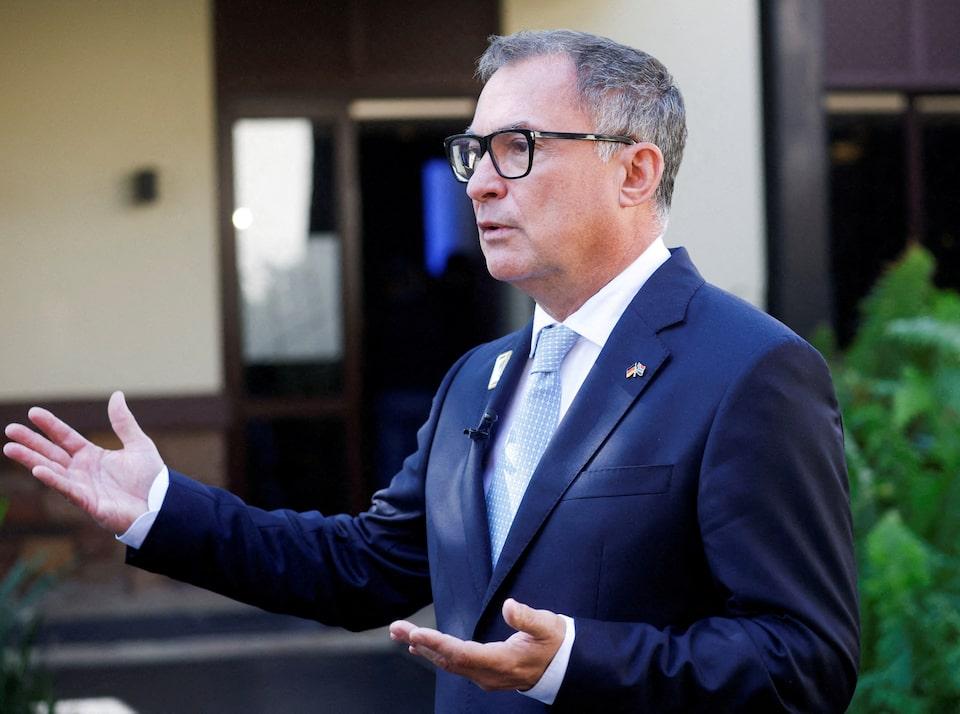
FRANKFURT, Sept 22 (Reuters) - The euro cannot replace the dollar as the world's dominant currency, but needs to strengthen its global role, partly to protect the bloc in case of a sustained loss of confidence in the dollar, Germany's central bank chief said. The dollar has fallen this year in response to erratic U.S. policies, boosting calls across Europe to beef up the euro's global role to provide investors with an alternative safe haven. Sign up here. Analysts and central bankers have voiced concern that tariffs make trade policy unpredictable, that large tax cuts, promised by U.S. President Donald Trump, make U.S. debt unsustainable and his attacks on the U.S. Federal Reserve's independence have damaged the dollar's safe haven reputation. "The U.S. dollar is no longer fully perceived as a safe haven," Bundesbank President Joachim Nagel said. "While it seems neither realistic nor desirable for the euro to replace the U.S. dollar as the reserve currency in the foreseeable future, a greater international significance of the euro would certainly be possible and desirable," Nagel added. For the euro to gain international weight, the bloc needs a stability-oriented fiscal stance, predictable policies, military assertiveness, deep, liquid, and open capital markets, and a wide range of high-quality, safe investments, Nagel said. "The high savings of European households should be better channelled to increase innovation, productivity, and competitiveness," Nagel said. "Our savings are urgently needed to finance Europe's green and digital transition, as well as defence spending." Although reduced confidence in the dollar has increased the euro's value, Nagel said he was not concerned about its current valuation, especially since the gain was much smaller when based on trade-weighted numbers. The euro also needs to be able to ward off the stability threat from the growing role of stablecoins in the financial world, Nagel said. Stablecoins are designed to maintain their value, but without regulation, pose a risk to financial stability since a loss of confidence in them could lead to a fire sale of reserve assets, especially U.S. government bonds. https://www.reuters.com/business/finance/euro-needs-enhanced-global-role-cannot-overtake-dollar-bundesbank-says-2025-09-22/
2025-09-22 12:14
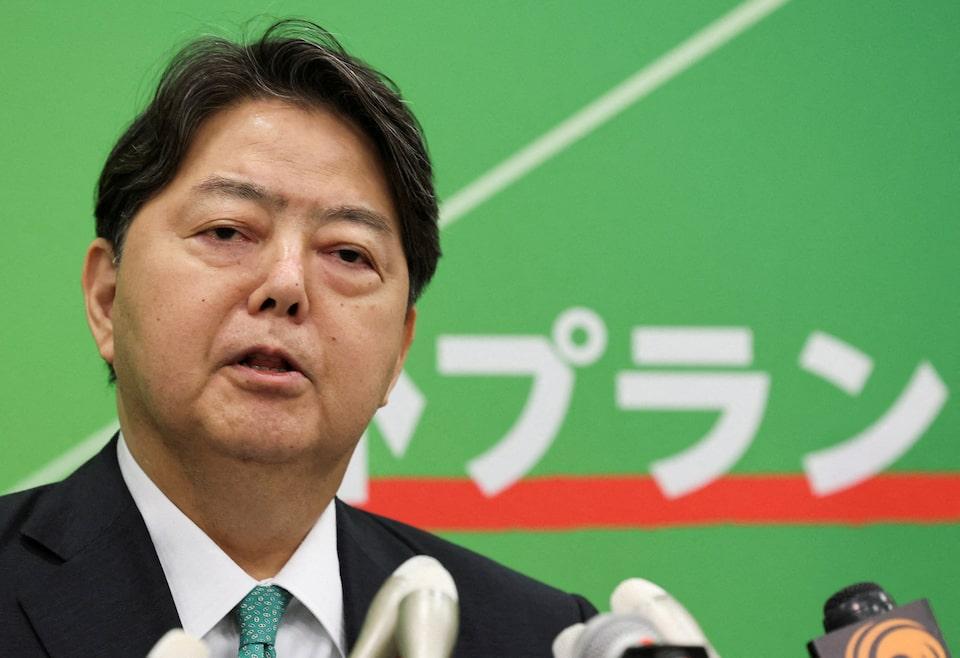
This is a breaking news story. Full coverage will be available soon. Japanese pm contender and chief cabinet secretary hayashi: boj is conducting monetary policy in way that does not deviate much from govt thinking Sign up here. Hayashi: size of spending package must take into account japan's 'quite small' output gap, avoid issuance of deficit-covering debt Hayashi: if chosen as premier, will compile economic package to cushion blow from rising living costs, spending for disaster relief https://www.reuters.com/business/japanese-pm-contender-chief-cabinet-secretary-hayashi-boj-is-conducting-monetary-2025-09-22/
2025-09-22 12:04
BENGALURU, Sept 22 (Reuters) - The Swiss National Bank will hold its policy rate at zero on September 25 and throughout 2026 due to inflation remaining on target and the currency holding steady, according to a majority of economists in a Reuters poll. With the SNB already having the lowest interest rate among major central banks and inflation gradually picking up - although remaining very low - the bar is high for rates to go negative, as they were from December 2014 until September 2022. Sign up here. Earlier this month, SNB Chairman Martin Schlegel shared a similar view, citing "undesirable side effects" of negative rates. Meanwhile, a steady franc may provide additional comfort to the central bank, especially when the ECB is widely expected to be done with cutting rates. The SNB will keep its main policy rate at 0.00% on September 25, its first pause since December 2023, according to all but one of 41 economists in the September 17-22 Reuters poll. One expected a cut to -0.25%. "We updated our view and now expect a policy rate hold, rather than one more cut, after inflation printed above our forecasts over the summer," said Josie Anderson, European economist at Nomura. "In addition, hawkishness from the ECB at recent meetings suggests the ECB is unlikely to cut its policy rate again for the foreseeable future, limiting the prospect of CHF appreciation." Last week, the U.S. Federal Reserve delivered its first cut since December, while the ECB kept its deposit rate unchanged for the second consecutive meeting on September 11. The franc has only gained around 0.4% against the euro since the start of this year and is expected to lose more than 2% over the coming 12 months, according to a separate Reuters survey. Meanwhile, inflation, which was at 0.2% last month and remained well within the central bank's target range of 0%-2%, is expected to average just 0.2% this year and 0.6% in 2026. More than 80% of economists - 30 of 36 - now expect rates to remain on hold for the rest of the year, a bigger majority than two-thirds in a June survey. A strong majority - 21 of 25 - predicted the rate would still be at 0.00% at the end of 2026. "We expect the SNB to remain on hold for the foreseeable future as domestic inflation has stabilised at low levels while at the same time economic activity remains resilient," said Nikolay Markov, lead economist at Pictet Asset Management. "Also, the SNB still has leeway to intervene in the foreign currency market as needed in the event of further CHF appreciation - a policy option that should be preferred by the Governing Board compared to introducing negative rates." The export-dependent economy, which grew 1.2% annually last quarter - the slowest pace since early 2024 - is already feeling the impact of 39% U.S. tariffs announced on August 1. It is likely to grow 1.2% this year and next, on average, poll medians showed. (Other stories from the Reuters global economic poll) https://www.reuters.com/business/snb-hold-rates-zero-september-25-throughout-2026-economists-say-2025-09-22/

2025-09-22 11:47
NEW DELHI, Sept 22 (Reuters) - India's infrastructure output (ININFR=ECI) , opens new tab rose 6.3% year-on-year in August, backed by growth in steel, coal and cement production, government data showed on Monday. The index, which tracks activity across eight sectors and makes up 40% of the country's industrial production, grew at a revised 3.7% in July. Sign up here. KEY NUMBERS * Crude oil output fell 1.2% year-on-year in August against a fall of 1.3% in July * Natural gas production declined 2.2% year-on-year after a fall of 3.2% in July * Cement output rose 6.1% in August compared with a revised growth of 11.6% year-on-year in July * Steel production rose 14.2% after a revised 16.6% year-on-year increase in July * Fertiliser production rose 4.6% year-on-year in August after a growth of 2% in July * Coal production grew 11.4% year-on-year compared with a fall of 12.3% in July * Electricity generation grew 3.1% year-on-year in August against a revised 3.7% increase in July * Refinery products output grew 3% in August against a revised 1.1% fall in July * Infrastructure output grew 2.8% year-on-year in April-August against a growth of 4.6% a year ago https://www.reuters.com/world/india/indias-august-infrastructure-output-grows-63-yy-2025-09-22/