2026-01-31 12:05
MOSCOW, Jan 31 (Reuters) - The Russian government said on Saturday it was lifting the ban on gasoline exports for oil producers to avoid overstocking while extending the ban on exports for non-producers until the end of July 2026. "The decision is aimed at maintaining stability in the domestic fuel market," the government said. Sign up here. The Russian energy ministry had submitted a proposal to the government requesting that the gasoline export ban for fuel producers be lifted ahead of schedule, Interfax news agency reported on Monday, citing a source familiar with the matter. Russia also extended the ban on diesel and other types of fuel for non-producers until the end of July 2026. https://www.reuters.com/business/energy/russia-eases-restrictions-gasoline-exports-2026-01-31/

2026-01-31 11:06
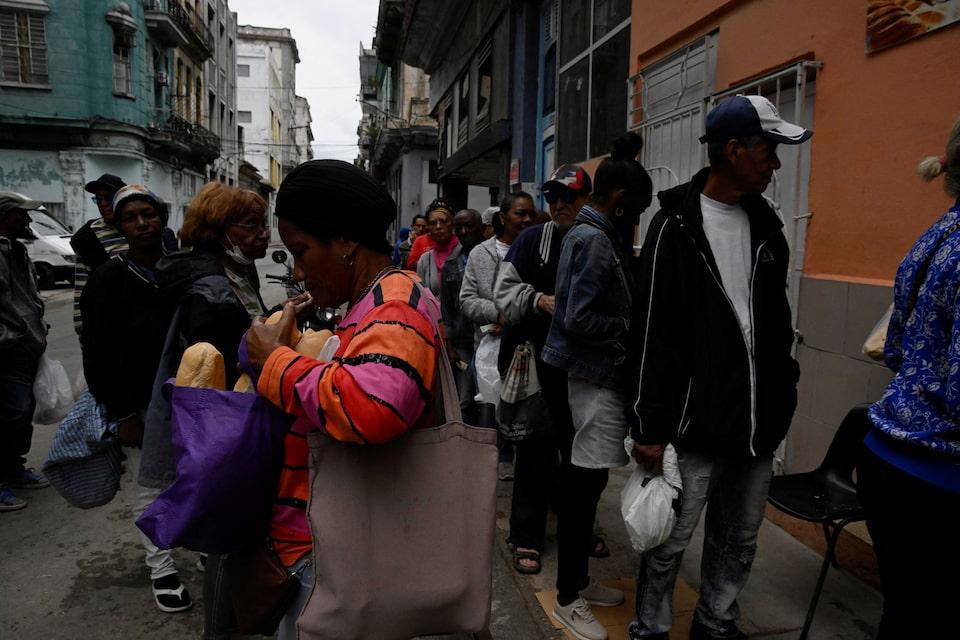
Currency loses 10% of value in three weeks Trump pressure has cut off much of Cuba's oil supply Lines for fuel growing fast, including in Havana Locals say change needed even as dissent remains sparse HAVANA, Jan 31 (Reuters) - Cubans from all walks of life are hunkering into survival mode, navigating lengthening blackouts and soaring prices for food, fuel and transport as the U.S. threatens a stranglehold on the communist-run nation. Reuters interviewed over three dozen residents of towns and neighborhoods around the capital Havana – the country's political and economic engine - from street vendors to private sector workers, taxi drivers and state employees. Sign up here. Together, those discussions paint a picture of a people pushed to the limit as goods and services - particularly those tied to ever more limited fuel supplies - become scarcer and more expensive. For much of rural Cuba, this is not entirely new. The island's frail and antiquated power generation system has been slowly failing for years and residents have grown accustomed to spending hours at a time without functioning electricity, internet or water pumps. But the seaside capital, where the streets are lined with 1950s-era cars and colorful if decrepit Spanish colonial architecture, has until recently fared better. Now crisis looks set to swamp it, too, as fuel shortages take hold, with first Venezuela, then Mexico halting oil shipments to the island. U.S. President Donald Trump has said tariffs will be imposed on imports from countries that supply Cuba with oil, ratcheting up the pressure on Washington's long-time foe in the wake of the ousting of Venezuelan President Nicolas Maduro, a key Cuban ally, in early January. In many other countries, the conditions would have sent people out into the streets. So far, in a nation where dissent has long been curbed, there has been little sign of protest. But it is unclear how much more Cubans will be willing to endure. Cuba's peso has lost more than 10% of its value against the dollar in three weeks, pushing up the price of groceries. "This has put me in an impossible situation," said Yaite Verdecia, a Havana resident and housewife. "There's no salary that can cope with this." DAILY LIFE GETTING MORE DIFFICULT Trump, when asked about the prospect of a U.S. military intervention in Cuba shortly after the capture of Maduro, said he did not think an attack was necessary because "it looks like it's going down." On Friday, Cuba's Foreign Minister Bruno Rodriguez declared an "international emergency" in response to the U.S. tariff warning, which he said constituted "an unusual and extraordinary threat." But the government has said little about how it will manage the growing threat of humanitarian crisis. Many of the Cubans Reuters spoke with said daily life - already difficult - had been reduced to basics like assuring food, fuel for cooking, and water, and that it had become noticeably harder in recent days. Lines for gasoline have grown significantly this week at a handful of service centers in the city still supplied with fuel. And since the U.S. blocked Venezuelan deliveries of oil to Cuba in mid-December, virtually all gas has been sold at a premium, in dollars - a currency to which few Cubans have access. "It used to be that you could sign up and get fuel once a month (in pesos)," said Havana resident Jesus Sosa, referring to an app that would let residents know when it was their turn to fill up their cars. "Not anymore. Sales in national currency have stopped." 'YOU HAVE TO PAY THE PRICE OR STAY HOME' The crunch has hit both public and private transportation, putting some buses and private taxis out of business and forcing others to raise their prices. Daylan Perez, a 22-year-old who hails private taxis for clients in old Havana, said fewer buses mean people now have no choice but to pay rising fees for private transport. "You have to pay the price or stay home," he said. Even transportation by electric vehicle - once thought to be a panacea in a city short of fuel - has been hit by blackouts that now last for eight to 12 hours or more. Taxi driver Alexander Leyet of Havana swapped to an electric three-wheeled taxi recently, thinking he had outsmarted the pack. "Now because of the blackouts I can only charge my taxi for four or five hours," he said. For decades, the government that has its roots in Fidel Castro's 1959 Cuban Revolution has survived despite sometimes brutal economic struggles, upending regular predictions of imminent collapse or an uprising. It has long alleged a U.S.-led effort to foment revolt, but the most recent widespread protests were in the pandemic year of 2021, despite a 12% contraction of the economy between 2019 and 2024. Sharp crackdowns on any form of dissent, combined with the emigration of between one and two million people since the pandemic, have all but eliminated organized in-country opposition. The Cubans interviewed by Reuters generally declined to answer questions about the prospect of protests. POWER GOES OUT But none of those interviewed disputed that change was necessary. "I'm just praying God finds a way to get us out of this (mess)," said Mirta Trujillo, a 71-year-old street vendor from Guanabacoa who burst into tears as she told Reuters she could no longer afford food. Previously, she had depended on a ration book of basic goods provided by the government, but that was phased out post-pandemic as tourist income and other sources of hard currency dried up. "I'm not against my country... but I don't want to die of hunger," she said. On a recent weekday evening, Reuters witnessed an accident at a busy intersection in Havana where the stoplights were not functioning as a result of a power outage. "Sometimes when the power goes out, accidents happen because the traffic lights don't work," said Raysa Lemu, whose apartment overlooks a boulevard in Marianao, on the outskirts of Havana. "It used to be they turned off the power two or three times a week, but now it's every day and sometimes it's up to 12 hours." Julia Anita Cobas, a 69-year-old housekeeper from Guanabacoa, gets up at 4 a.m. each morning for a 10-mile (16-km) commute that now approaches four hours round-trip. With less public transportation available, the journey has become longer and more costly. "I leave my house before sunrise and I don't know how I'll get back," she said. But Cobas, who was born just before Castro's revolution, said she had no expectation that Trump would make things any better. "Since I was born the (United States) has been threatening us, and every day we deal with hardship. But we've survived it all," she said. Aimee Milanes, a 32-year-old resident of Reparto Electrico, just outside Havana, said neither the Cuban nor the U.S. government offered her much hope. "We're drowning. But there's nothing we can do," said Milanes. "This is about survival. Nothing else." https://www.reuters.com/world/americas/cubans-under-siege-us-stranglehold-sets-2026-01-31/
2026-01-31 10:50
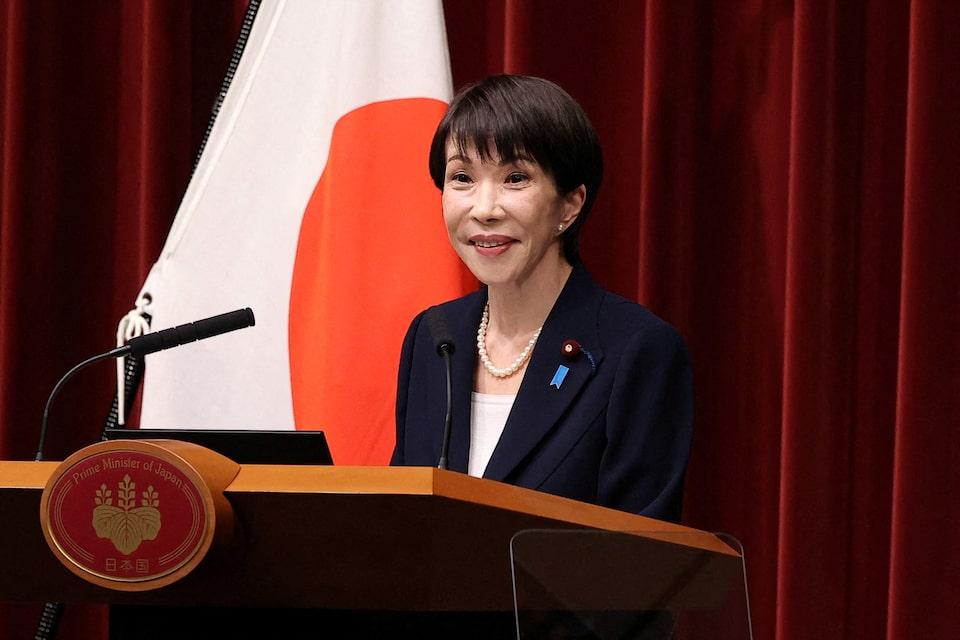
Weak yen in focus ahead of February 8 snap election PM Takaichi calls weak yen a major opportunity for exporters Later says she did not have preference for weak or strong yen Co-head of largest opposition party Noda criticises PM comments TOKYO, Feb 1 (Reuters) - Japanese Prime Minister Sanae Takaichi has talked up the benefits of a weaker yen in a campaign speech, adopting a tone at odds with her finance ministry which has refused to rule out any options to counter excessive foreign exchange volatility. Takaichi later softened her stance, saying she did not have a preference for the yen's direction. Sign up here. "People say the weak yen is bad right now, but for export industries, it's a major opportunity," Takaichi said on Saturday ahead of a snap election on February 8. "Whether it's selling food or automobiles, even though there were U.S. tariffs, the weaker yen has served as a buffer. That has helped us tremendously." Takaichi also expressed a desire to build an economic structure resilient to currency fluctuation by boosting domestic investment. The yen has hovered at 18 month lows against the U.S. dollar, contributing to inflation that has raised the prospect of interest rate hikes by the central bank. Minister of Finance Satsuki Katayama has repeatedly said her ministry will take action to support the currency when necessary, which analysts and traders have widely interpreted as market intervention. In an X post on Sunday, Takaichi said she did not favour a specific yen direction. "I did not say which is better or worse - a strong yen or a weak yen," Takaichi said in the post. She said the government is monitoring financial markets and, as prime minister, she will refrain from commenting specifically on the matter. "My intention was solely to state that we aim to build an economic structure that is resilient to exchange-rate fluctuation, and not, as some reports have suggested, to emphasise the benefits of a weak yen." Former prime minister and finance minister Yoshihiko Noda, who co-heads the largest - and newly created - opposition party, the Centrist Reform Alliance, said a weak yen hurts households, Nikkei reported on Sunday. "No one feels pleased while looking at their household budget amid an excessive weakening of the yen," Nikkei quoted Noda as saying. "The perspective of ordinary people is missing, which has made me concerned once again." The yen spiked after reports that the New York Federal Reserve had joined the Japanese authorities in asking banks about exchange rates for yen purchases - queries that market participants often interpret as readiness to intervene. The yen's protracted decline and a recent surge in Japanese government bond yields to record highs reflect investor concern about Japan's strained finances. Takaichi is seeking a mandate for her mission to reflate the economy. https://www.reuters.com/world/asia-pacific/japans-takaichi-cites-weak-yens-benefits-even-her-government-threatens-2026-01-31/
2026-01-31 10:28
Kyiv's metro stops, emergency crews rescue stranded people Chisinau without power for hours Power lines affected by technical disruption Emergency occurs during Ukraine-Russia 'energy ceasefire' Ukrainian grid shattered by months of Russian strikes KYIV/CHISINAU, Jan 31 (Reuters) - Parts of Ukraine and Moldova, including the neighbouring countries' capitals, were plunged into blackouts on Saturday caused by a malfunction of high-voltage power lines, officials said. Power was restored later in the day. Officials did not directly link the accident to war damage, although Ukraine's power grid has suffered from the accumulated impact of Russian airstrikes, leading to severe restrictions on electricity supplies in recent weeks. Sign up here. President Volodymyr Zelenskiy blamed ice buildup on power lines and ruled out a cyberattack. "In the morning, a technological accident occurred on the power grid: two lines between Romania and Moldova and within the territory of Ukraine stopped operating," he said in his nightly video address. "The causes are being thoroughly investigated." He said Ukraine had increased power imports to meet demand. MOLDOVA: DISRUPTION TRIGGERED BY UKRAINE PROBLEMS Ukrainian Energy Minister Denys Shmyhal said the two incidents occurred within a minute of each other, "leading to a cascade of shutdowns in seven regions of the country." Moldova's Energy Ministry said the disruption there was triggered by problems in Ukraine's grid that led to a voltage drop on the line connecting Romania and Moldova. Romania's Energy Ministry did not immediately respond to a request for comment. The system is under greater pressure as forecast night-time temperatures of -13 degrees Celsius (9 Fahrenheit) in Kyiv are due to sink to -22 C on Monday. Zelenskiy said nearly 3,500 apartment buildings lack heating in the capital. "The city and utilities and energy experts are promising to fix the heating situation by tomorrow morning," he said. "But the pace should be faster." Russia agreed to halt strikes on energy infrastructure until Sunday at the request of U.S. President Donald Trump. Kyiv said it would reciprocate, and the countries did not report major attacks. Regions in both Ukraine and Moldova were affected after the malfunction at 10:42 a.m. Kyiv time. Officials in both countries said power was restored later in the day following efforts to stabilise interconnected grids. Officials in Moldova said it took 3-1/2 hours for power supplies to return to normal in the country lying between Ukraine and Romania. PASSENGERS LED OUT OF METRO STATIONS The metro in Kyiv suspended operations and water supplies in the city were cut temporarily. The state emergency service said its teams led 500 stranded passengers out of metro stations. Some passengers were seen waiting at a station with dimmed lights in anticipation of electricity being restored. Traffic lights and some public transport in Chisinau were not working, according to the city's mayor, and most districts did not have electricity. The accident caused a shutdown on Ukraine's side, triggering automatic protection at substations and the temporary disconnection of nuclear power plant units from the grid, Shmyhal said. https://www.reuters.com/world/moldova-hit-by-widespread-power-cuts-amid-ukraine-grid-problems-2026-01-31/

2026-01-31 08:16
PARIS, Jan 31 (Reuters) - France has lowered the safety limit for cereulide toxin in infant formula, aiming to strengthen protections after several major groups ordered worldwide recalls over contamination concerns, the farm ministry said on Saturday. Cereulide, which can cause nausea and vomiting, has been detected in ingredients from a factory in China supplying a large number of baby formula makers including Nestle, Danone and Lactalis, triggering recalls in dozens of countries and raising concerns among parents. Sign up here. The new threshold will be of 0.014 micrograms of cereulide per kg of body mass, compared to 0.03 micrograms per kg currently, the ministry said in a statement. France's move follows a European Union meeting on January 28 and is in line with an updated guidance from the European Food Safety Authority that will be released on Monday, it said. The lower threshold is likely to lead to further withdrawals in France in the coming days, it added. The recalls illustrate how a single compromised ingredient can spread through the infant nutrition supply chain, despite tight regulation, and cause rapid market jitters. French investigators said on January 23 they are looking into whether there is a link between the death of two infants and recalled formula products. On Thursday, consumer group foodwatch said it had filed a criminal complaint in Paris on behalf of eight families whose babies it says fell ill after consuming contaminated infant formula, claiming companies waited too long to warn the public. https://www.reuters.com/sustainability/climate-energy/france-tightens-infant-milk-rules-after-recalls-2026-01-31/

2026-01-31 07:22
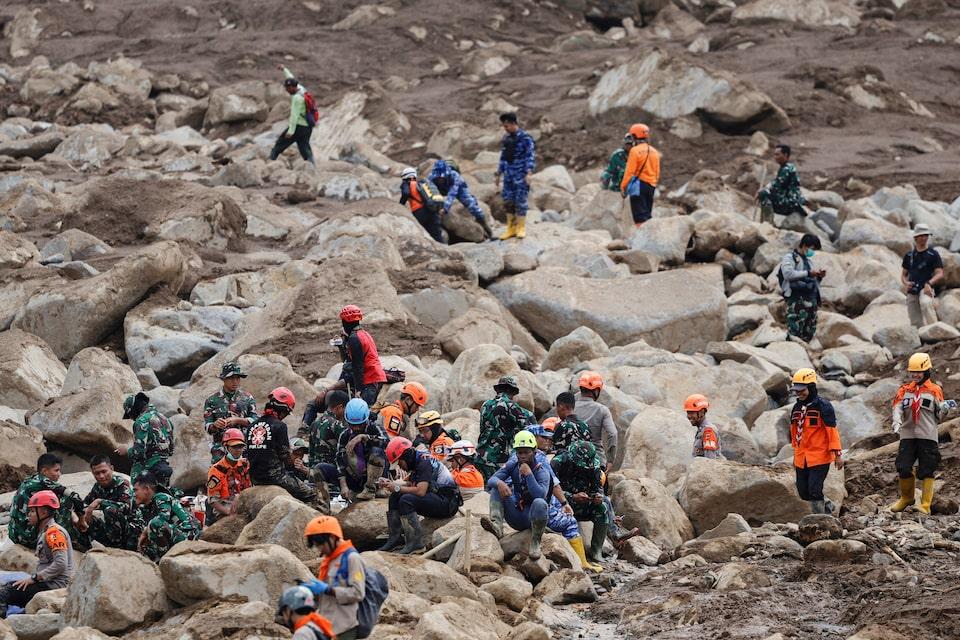
JAKARTA, Jan 31 (Reuters) - The death toll from a landslide a week ago in Indonesia's West Java province has risen to 49, the country's main rescue agency Basarnas said on Saturday, with 15 still missing. Twenty-three soldiers were also killed while conducting border patrol training, the navy said on Tuesday. Sign up here. The January 24 landslide that hit Pasir Langu village in the Bandung Barat was triggered by heavy rains. The landslide followed cyclone-induced floods and landslides on the island of Sumatra late last year that killed 1,200 people and displaced over one million residents. The rescue agency extended the emergency response period for seven days to February 6. Basarnas had its funding cut by a parliamentary panel on Wednesday, despite concerns over the number of disasters the agency has to deal with. https://www.reuters.com/business/environment/indonesia-landslide-death-toll-rises-49-agency-says-2026-01-31/