2025-09-19 17:32
SAO PAULO, Sept 19 (Reuters) - Brazilian fuel distributor Ipiranga has seen its sales volumes rise after police and tax authorities carried out raids to dismantle an organized crime ring in the sector, the company's chief executive said on Friday. Multinational energy companies have struggled for years to root out organized crime from their distribution networks in Brazil, and experts had projected the crackdown to result in gains for major fuel distributors. Sign up here. Ipiranga's sales in Sao Paulo state, Brazil's richest and most populous, are up after the raids, CEO Leonardo Linden said, though he said it was too soon to measure the full impact of the raids on the company's margins. "I expect gains in (market share) in August and especially in September," he said. Last month, authorities in Latin America's largest economy launched a series of raids aimed at dismantling multibillion-dollar money laundering and fraud schemes linked to organized crime in the fuel sector. Firms targeted in the raids had a 7% market share of the country's fuel distribution market, while holding a 33% share of Sao Paulo's ethanol market, according to Ipiranga, which is controlled by conglomerate Ultra (UGPA3.SA) , opens new tab. Brazil's Instituto Combustivel Legal - an industry group created to combat fuel fraud - had said it expected sales volume for major distributors, including Ipiranga, to rise as a result of the raids. "I've never seen such a significant police operation. ... But it can't stop here," Linden said. "We need to build a more balanced environment that better encourages companies that do things right in the sector." https://www.reuters.com/business/energy/ipiranga-sales-jump-after-raids-targeting-organized-crime-brazil-fuel-sector-2025-09-19/

2025-09-19 17:30
Inequality, debt woes fuel debate on taxing the rich Wealth taxes rarely generate much revenue, say experts Higher taxes on capital, inheritance seen as better options FRANKFURT, Sept 19 (Reuters) - Cash-strapped European governments looking to tax the rich harder to plug holes in public finances and redress rising inequality may find that direct wealth levies are not the most effective solution. History shows outright wealth taxes rarely generate much revenue and often miss their main targets, tax experts and economists say. They point to a menu of options that work better, including greater scrutiny of capital gains, inheritance taxes and exit fees for those trying to switch to a tax haven. Sign up here. "Concerns about wealth inequality do not imply that governments should use net wealth taxes," the IMF said in a recent guide to governments. "Improving capital income taxes tends to be both more equitable and more efficient." MODEST REVENUES In Europe, Switzerland, Spain and Norway have varying forms of a wealth tax on holders of assets above a certain level, and France and Britain are debating the idea to reduce their budget deficits. The average top income tax rate across the 38 countries in the Organisation for Economic Co-operation and Development fell from 66% in 1980 to 43% currently. And at the very pinnacle of society, the top 0.0001% of earners can pay hardly any taxes at all in countries such as France and the Netherlands because they can park their assets in holding companies, according to research by Paris School of Economics professor Gabriel Zucman. He was behind a proposal for a 2% wealth tax on France's richest 0.01% in the 2026 budget, now being debated by politicians. "We need to ensure that billionaires pay at least as much as other social groups," Zucman told Reuters. "It is a basic question of justice and respect for the fundamental principles of tax fairness." But taxing a person's stock of assets isn't the only or perhaps even the best way to get there. These taxes typically generate modest revenues of just a few decimal points of gross domestic product. This is because taxpayers, particularly the ultra-rich, can easily shield their assets by placing them in businesses or trusts, in exempted or hard-to-value items such as antiques, or even siphon them off to tax havens. CAPITAL GETS BETTER DEAL In addition, a wealth tax is generally levied on all types of wealth at the same rate - effectively penalising those who own lower-yielding assets. By contrast, a tax on the income derived from capital - such as dividends and capital gains, which are profits made when an asset is sold - is levied on actual returns. As these are generally subject to lower tax than labour income, proponents of taxes on the wealthy see room for change. "The favourable tax treatment of gains is a significant driver of low effective tax rates among high-net-worth individuals," the OECD said in a report published earlier this year. Income from capital gains and dividends is taxed at a low, flat rate in countries including France, Germany, Italy, South Korea and Japan. Some economists argue low taxes on capital encourage savings, investment and entrepreneurship, although OECD research shows those aims could be achieved in other ways, such as targeted relief. Fixes include removing exemptions for capital gains, such as on some real estate, and making sure these are taxed, at the latest, when assets are inherited or a taxpayer leaves the country, especially for a tax haven, according to OECD and IMF research. DEATH TAX MAY GIVE ECONOMY NEW LIFE Inheritance tax, sometimes disparagingly called a "death tax", is both fair and efficient, according to the OECD. Its researchers argue it has advantages over a wealth tax, such as not discouraging people from saving for their old age or, if the right exemptions are in place, from making a nest for their children. Detractors say inherited assets have already been taxed when income was earned. They point to the fact that the top 1% of earners are already the biggest contributor to the state's coffers in most major countries. While most developed economies do tax inherited wealth, not all make full use of that tool. Most do not tax unrealised capital gains, and provide generous allowances for business assets. In Italy, Poland and, up to a threshold, South Korea, heirs don't pay any levy on a business they inherit. In Ireland, Spain and Germany there are very high exemptions. In a competitive global environment, policymakers need to strike a balance in raising tax revenue without sending the wealthy to other jurisdictions, tax experts say. Yet tax activist group the Tax Justice Network argues everyone would benefit from a narrower wealth gap. "One of the things that undermines social outcomes for everybody, including the wealthiest, is inequality... High inequalities undermine economic growth. They undermine life expectancy across the board," said the Tax Justice Network's Chief Executive Alex Cobham. https://www.reuters.com/business/finance/europe-has-menu-options-make-wealthy-pay-more-taxes-2025-09-19/

2025-09-19 16:13
BUENOS AIRES, Sept 19 (Reuters) - Mexico's central bank is set to again lower its benchmark interest rate by a quarter of a percentage point on September 25, taking it to 7.50%, a Reuters poll showed. That would be the eleventh moderate cut since the bank, known as Banxico, began a steady easing cycle to deal with weak economic conditions at the start of 2024. Sign up here. Policymakers are expected to remain slightly more concerned by a slow domestic economy than by consumer price trends, in line with their outlook following last month's 25 basis-point move. All 24 economists polled from September 15-18 forecast Banxico's five-member governing board would cut the key rate by a quarter percentage point to 7.50% from 7.75% at its September 25 meeting. "Mexico’s economy has decelerated, with growth stalling in Q2. Meanwhile, inflation has moderated, aligning with Banxico’s 3 plus/minus 1% target," said Luciano Campos, senior economist at Numera Analytics. "Despite notable rate reductions over the past year, elevated interest rates persist, making a 25 basis-point cut from 7.75% to 7.50% the probable outcome at next week’s meeting," he added. Recent data showing lower than expected economic growth in the second quarter and relatively contained inflation in August were consistent with a continued gradual easing stance spelt out in the bank's minutes. The U.S. Federal Reserve's rate cut earlier this week was seen as another factor supporting a new reduction in Mexico's cost of borrowing. "Banxico is likely to continue cutting rates well below market expectations as long as the Fed cuts and the U.S. dollar remains weak," BofAML analysts wrote in a report after the Fed's last move. Of a total 19 responses to an extra question on when the bank's next adjustment would be after September's move, a majority of 16 said they saw another 25 basis-point decrease in November. Banxico does not meet in October. The remaining three mentioned other months. Of 19 estimates for the size of the possible cut, 18 were for a quarter percentage point, with just one looking at a 50 basis-point move. Quarterly medians in the survey showed Mexico's rate falling to 7.00% by the close of this year, then dropping 25 basis points in the first quarter of 2026, and by another quarter percentage point in April-June of next year. In August, consensus views pointed at a higher end-2025 rate of 7.50%, with the cost of borrowing decreasing to 7.00% in the first half of 2026. (Other stories from the Reuters global economic poll) https://www.reuters.com/world/americas/mexicos-central-bank-cut-benchmark-rate-by-25-basis-points-750-september-25-2025-09-19/
2025-09-19 14:27
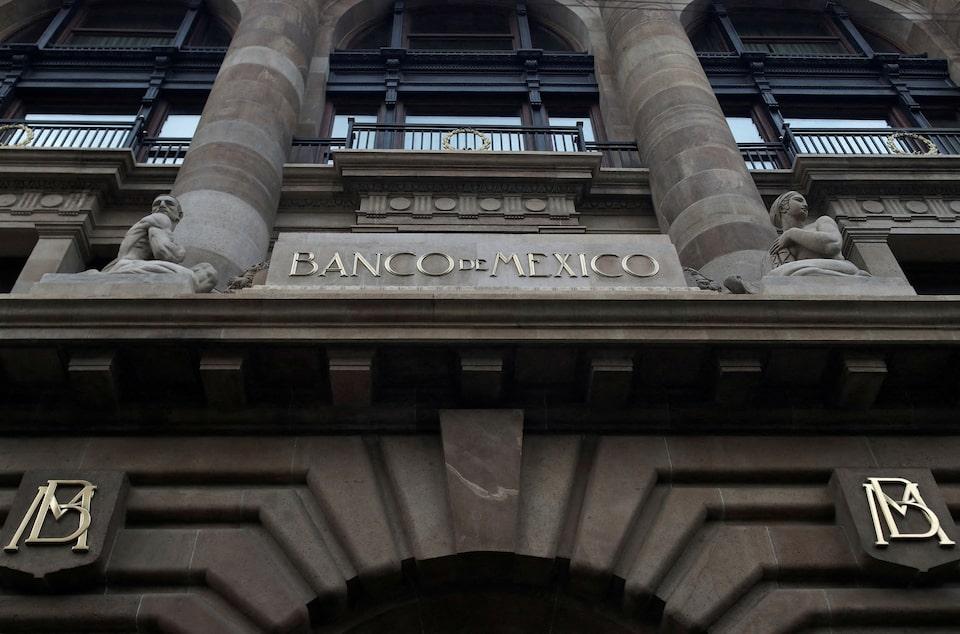
JAKARTA, Sept 19 (Reuters) - Indonesia's government is considering offering an incentive to make the public put any U.S. dollars they hold into the domestic financial market rather than send them abroad, the finance minister said on Friday. Purbaya Yudhi Sadewa said such a move would be aimed at boosting the country's foreign exchange reserves as well as providing enough dollar financing for various projects. Sign up here. "I just found out that every month, many Indonesians send money abroad... We will prevent this by providing attractive incentives so that they don't have to bother sending their dollars abroad," he told a press conference. The minister said the incentive would be designed using a market-based scheme. https://www.reuters.com/world/asia-pacific/indonesia-mulls-incentives-keep-us-dollars-domestic-market-finmin-says-2025-09-19/

2025-09-19 14:01
Retail sales in August likely to grow by 1%, StatsCan said August rebound in sales indicates a good start to Q3 GDP Sales drop across eight subsectors led by clothing, food OTTAWA, Sept 19 (Reuters) - Canada recorded a widely anticipated drop in retail sales in July as purchases across a broad range of products dropped, data from the national statistics agency showed on Friday, with consumers spending less for clothing and groceries. Retail sales for July were down 0.8% to C$69.6 billion ($50.36 billion), Statistics Canada said, giving up most of the previous month's gains. Sign up here. June retail sales increased by a revised 1.6%, StatsCan said, while an advanced indicator suggests that retail sales growth is likely to rebound to 1% in August. Retail sales, which include domestic sales of cars, furniture, food, gasoline and many other items, are considered an early indicator of gross domestic product growth and contribute around 40% to total consumer spending. Analysts and economists track the retail sales number closely to gauge the health of the economy. A healthy August retail sales number could indicate that third-quarter GDP might not be weak and could possibly avoid contraction, after the economy shrank in the second quarter. Two back-to-back quarters of contractions mean an economy has entered a recession. "While the July retail sales figures were soft, a decent August suggests Canadian consumers didn't stay down for long," said Shelly Kaushik, senior economist at BMO Capital Markets. "Despite ongoing trade uncertainty and further weakening in the labor market, the economy looks to be on track for a modest recovery to start the third quarter," she said. In July, retail sales were down in eight of nine subsectors, representing 72.2% of retail sales, said StatsCan, adding that in volume terms retail sales decreased by 0.8%. Sales at motor vehicles and parts dealers - the biggest contributor to retail sales accounting for over 27% of the overall number - rose by 0.2%. It was the only sector that posted growth in July. Retail sales excluding motor vehicle and parts - a closely-tracked metric - were down 1.2%, missing analysts' estimates by a large margin. Analysts polled by Reuters had forecast retail sales to be down 0.8%, and sales excluding motor vehicles and parts were projected to drop by 0.7%. The biggest decline in sales was observed in the clothing and accessories category where purchases dropped by 2.9%. This was followed by a drop in purchases at supermarkets and grocery retailers. This category fell by 2.5%, StatsCan said. ($1 = 1.3821 Canadian dollars) https://www.reuters.com/world/americas/canadas-july-retail-sales-drop-08-rebound-likely-august-2025-09-19/

2025-09-19 13:42
Slight majority sees policy rate unchanged at 2.00% Median forecast for policy rate of 1.75% by year-end Riksbank balancing too-high inflation with weak growth The link to Riksbank poll data: STOCKHOLM, Sept 19 (Reuters) - Sweden's central bank is expected to keep its policy rate on hold next week, but polled analysts were almost evenly divided between those expecting no change from 2.00% and those seeing a cut to 1.75%. Twelve of 22 analysts in a Reuters poll saw rates remaining unchanged. However, 14 of 22 saw the benchmark interest rate falling to 1.75% by the end of the year, with one further analyst expecting the policy rate to drop to 1.50%. Sign up here. "We expect the Riksbank to leave its policy rate unchanged at 2.00% at its 23 September meeting, as inflation remains high and above its forecast from June," Nomura said in a note, adding that the economic outlook was brightening. "However, a policy rate cut to 1.75% remains a risk." Like many central banks, the Riksbank has slashed rates over the last couple of years as inflation eased from a peak of more than 10%. But policymakers now face a tricky balancing act. The economy has been sluggish, but growth prospects are improving - not least because the government has promised an 80 billion-crown ($8.6 billion) budget boost next year. Some of the uncertainty about the effects of U.S. President Donald Trump's tariff policies has also dissipated. Inflation remains well above the central bank's 2.00% target. However, the labour market is weak, recovery has been delayed, and the Riksbank is confident price pressures are temporary and will fall back over the coming months. "We expect the Riksbank to cut the policy rate to 1.75% ... and signal a small possibility of another rate cut in the coming three quarters," SEB said in a note. "We think that continued slow growth and a weak labour market will be more important than the slightly higher inflation during the summer." When it kept its policy rate at 2.00% in August, the Riksbank said there was a 50-50 chance of a rate cut before the end of the year, and the overall picture has not changed much since then. The bank will announce its next policy decision on September 23. ($1 = 9.3568 Swedish crowns) https://www.reuters.com/business/finance/swedish-central-bank-seen-hold-next-week-rate-cut-not-ruled-out-reuters-poll-2025-09-19/