2025-09-18 07:03
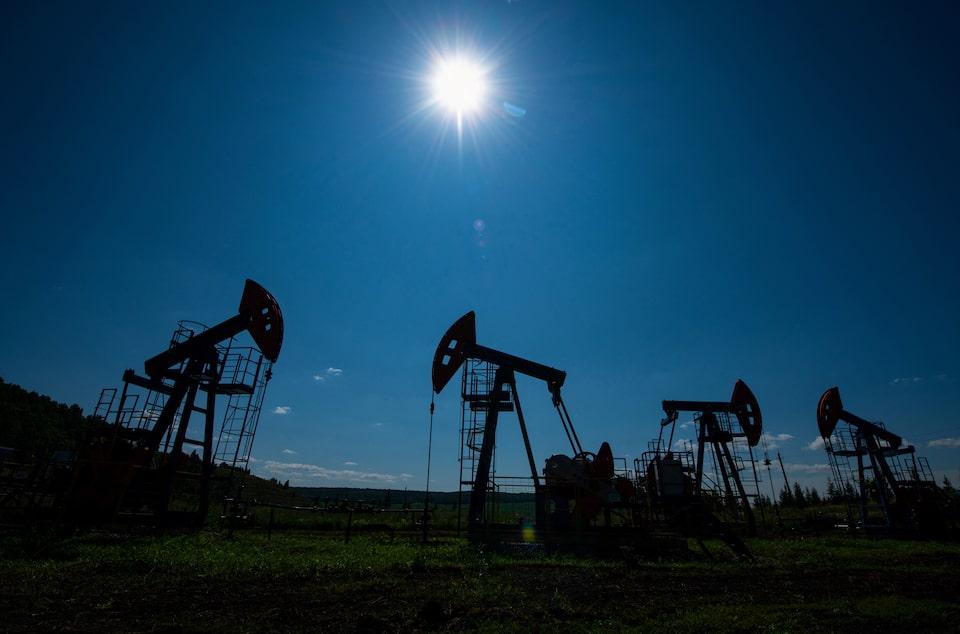
HONG KONG, Sept 18 (Reuters) - Commodities have had a rough decade, but a confluence of structural factors suggests that after years of underinvestment, the stage may be set for the next super cycle. Commodities super cycles are long, powerful waves driven by major thematic shifts. The 1970s super cycle saw a mix of geopolitical supply shocks and loose monetary policy. The early 2000s super cycle was defined by China's historic urbanisation boom. Sign up here. Today, there are structural factors on both the supply and demand sides of the commodities equation that could catalyze the next boom. To begin, the supply outlook for commodities overall has a few points of vulnerability that, if tested, could support a bullish long-term outlook. First, critical resources and the capacity to process them are highly concentrated in just a few jurisdictions. For instance, S&P Global reports that over 40% of the world's copper production comes from Chile and Peru. Over 50% of the world’s iron ore is supplied by Australia and Brazil. And Kazakhstan alone accounts for over 40% of global uranium mine supply. This concentration extends beyond extraction to refining. China refines nearly 90% of the world's rare earth elements, which are vital for everything from electric vehicles to defence systems. It also refines over 40% of the world’s copper, critical for AI and electrification. We have already seen examples of countries using their control of commodities supply as geopolitical leverage. China temporarily restricted rare earth exports in 2025 during trade disputes, and the U.S. included long-term Liquified Natural Gas (LNG) purchase commitments in its tariff agreements with the European Union and South Korea. This trend of weaving energy security and dependency into trade discussions and other geopolitical disputes creates a persistent risk premium that could erupt into severe supply disruptions down the line. Compounding this is a simple geological reality: the easy, high-grade deposits have likely already been found. Greenfield mining projects can now expect to face declining ore grades, soaring capital costs, and lead times that could exceed a decade. Years of underinvestment, partly due to shareholder pressure on miners to prioritise dividends over growth, have starved the pipeline of future supply. INELASTIC DEMAND Powerful secular trends are also unfolding on the demand side that could be quite bullish for commodity prices over the long run. The global push for electrification and decarbonisation is profoundly metal-intensive. Copper is the perfect example. While traditional sectors like construction remain important consumers of the base metal, explosive growth looks set to come from electric vehicles, renewable power systems and the vast grid infrastructure needed to support them. Meanwhile, massive, cash-rich technology companies are investing hundreds of billions of dollars annually in capital expenditures to build out artificial intelligence data centres and related power projects. For these firms, securing the necessary energy and materials to win the Al race is an existential imperative, making their demand resilient. Copper is once again a case in point. The International Energy Agency (IEA) calls the metal a “global critical mineral” and estimates that demand based on stated policies and supply from announced projects could lead to a potential shortfall of 30% by 2035. This doesn’t look like the story of a cyclical shortage, but a structural collision between an inadequate supply base and accelerating demand. FINANCIAL TAILWIND Finally, the financial winds seem to be shifting in commodities' favor. First, there’s the simple matter of price. The inflation-adjusted copper price remains 30% below its 2011 peak, while the inflation-adjusted oil price and the overall Bloomberg Commodities Index (which includes energy, industrial and precious metals, and agricultural produce) are 70% below their previous peaks in 2008. This is in stark contrast to U.S. equities where the S&P 500 index (.SPX) , opens new tab continues to hit all-time nominal highs and has almost tripled since its pre-Global Financial Crisis peak in 2007, even after adjusting for inflation. At the same time, investors may need to find a new asset class to reduce portfolio volatility. That’s because inflation is proving sticky in several developed markets – most notably the U.S. – which could limit central banks’ ability to cut rates aggressively when economies weaken. That means the investors can no longer count on bonds to hedge downside risks to equity prices, leaving traditional balanced portfolios consisting only of equities and bonds vulnerable when investors suddenly seek to shed risk. Gold has already reasserted itself as a hedge against geopolitical turmoil and monetary debasement, driven by relentless central bank buying and growing retail interest. Perhaps industrial metals and other commodities may soon also be seen as strategic inflation and growth hedges, given the supportive supply-demand outlook. Yet, despite this potential, investment mandates that allow for direct investments in commodities, let alone dedicated commodity investment mandates, remain a rarity in most institutional portfolios. Many in the investment communities have taken the poor price performance of commodities over the recent decade to be indicative of the future trajectory. This backward-looking mentality could potentially stem the flow of capital into this area. FALLING INTO PLACE Crucially, once a super cycle starts, it takes a lot to put an end to it. This often requires either painful policy measures on the demand side or major technological breakthroughs on the supply side. Think former Federal Reserve Chair Paul Volcker's rate hikes in the 1980s, the U.S. shale revolution in the 2010s, and China’s property market downturn more recently. That means these cycles can last for a long time. While properly timing such booms is very challenging, one can note when the underlying conditions for a super cycle appear to be falling into place – and we could be seeing that now. (The views expressed here are those of Taosha Wang, a portfolio manager and creator of the “Thematically Thinking” newsletter at Fidelity International). Enjoying this column? Check out Reuters Open Interest (ROI), , opens new tab your essential new source for global financial commentary. ROI delivers thought-provoking, data-driven analysis of everything from swap rates to soybeans. Markets are moving faster than ever. ROI, , opens new tab can help you keep up. Follow ROI on LinkedIn, , opens new tab and X. , opens new tab https://www.reuters.com/markets/commodities/commodities-could-be-verge-new-super-cycle-2025-09-18/
2025-09-18 07:01
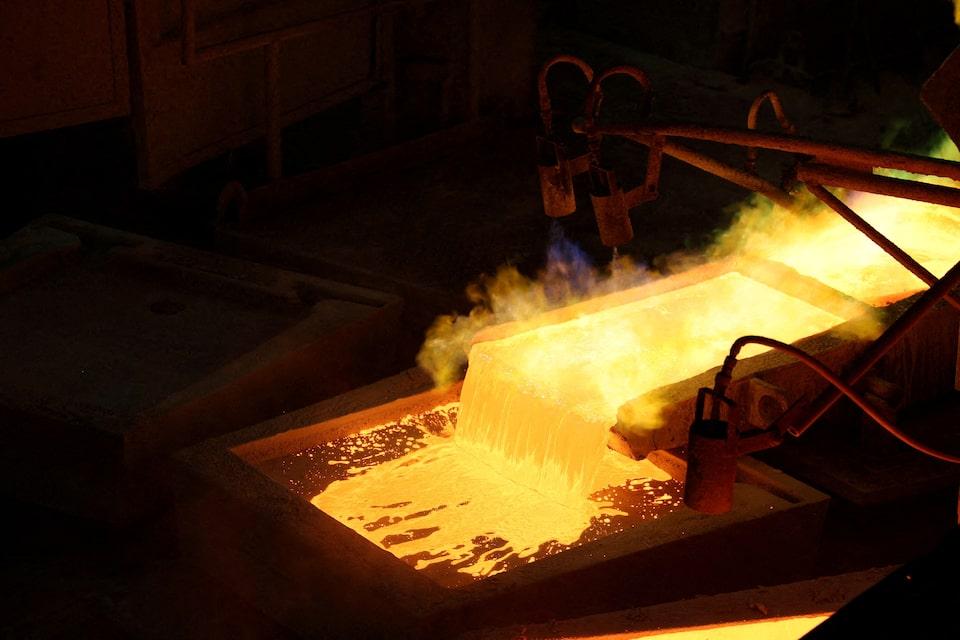
Brent, WTI both down for a second day of decline Fed rate cut of a quarter point already priced in, analyst says Market clouded by rising supply, US demand concerns TOKYO/SINGAPORE, Sept 18 (Reuters) - Oil prices declined for a second session on Thursday, after the Federal Reserve cut interest rates as expected and traders focused on concerns about the U.S. economy and excess supplies. Brent crude futures fell 26 cents, or 0.38%, to $67.69 a barrel by 0656 GMT. U.S. West Texas Intermediate futures dropped 28 cents, or 0.44%, to $63.77. Sign up here. The Fed cut its policy rate by a quarter of a percentage point on Wednesday and indicated it will steadily lower borrowing costs over the rest of the year, responding to signs of weakness in the jobs market. Lower borrowing costs typically boost demand for oil and push prices higher. But the latest move and the hint of two more cuts this year was already priced in, said Priyanka Sachdeva, a senior market analyst at Phillip Nova. "What caught markets’ attention was not just the easing, but Powell’s downbeat message," she said, referring to Fed Chair Jerome Powell. "He stressed weakening job markets and inflation that remains sticky, making the cut look more like risk-management than a demand booster." The indication of more rate cuts coming from the Fed signals that policymakers assess risk to the economy from unemployment to be higher than from inflation, said Claudio Galimberti, chief economist and global director of market analysis at Rystad Energy, in a client note. Persistent oversupply and soft fuel demand in the U.S., the world's biggest oil consumer, also weighed on the market. U.S. crude oil stockpiles fell sharply last week as net imports dropped to a record low while exports jumped to a near two-year high, data from the Energy Information Administration showed on Wednesday. A rise in distillate stockpiles (USOILD=ECI) , opens new tab by 4 million barrels, however, against market expectations of a gain of 1 million barrels, raised worries about demand in the world's top oil consumer and pressured prices. https://www.reuters.com/business/energy/oil-edges-lower-amid-worries-over-us-economy-market-oversupply-2025-09-18/

2025-09-18 06:53
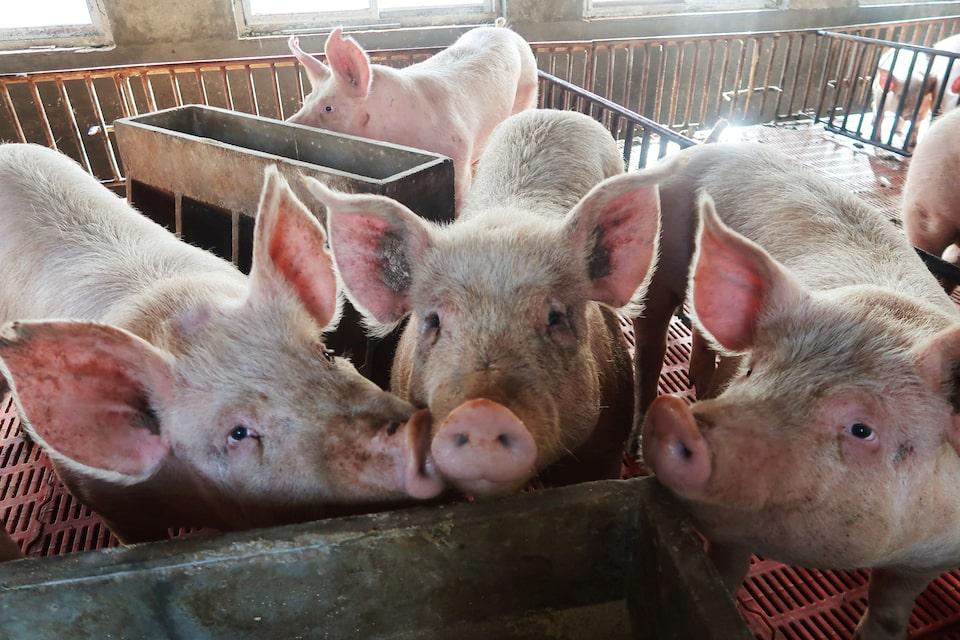
BEIJING, Sept 18 (Reuters) - China has called on its top hog producers to "take the lead" in cutting output, state-run Shanghai Securities News reported on Thursday, as the country battles a supply glut and sluggish consumer demand in its massive pork sector. At a high-level meeting on Tuesday, officials urged major companies - including Muyuan Foods (002714.SZ) , opens new tab and Wens Foodstuff (300498.SZ) , opens new tab - to reduce breeding sows, lower slaughter volumes, and keep hog weights around 120 kg, the report said. Sign up here. The meeting, jointly held by the National Development and Reform Commission and the Ministry of Agriculture and Rural Affairs' animal husbandry bureau, signals a stronger push by Beijing to rein in overcapacity and stabilise prices. Authorities also plan to tighten credit for hog production capacity expansion and cut subsidies that fuel pig output growth, the report said. The move comes as hog prices plunge to around 13 yuan ($1.83) per kg, down from 18.8 yuan a year ago, according to consultancy MySteel, pressuring margins across the industry. As of 0607 GMT, shares of Muyuan had slipped 2%, while Wens tumbled 3%. ($1 = 7.1102 Chinese yuan renminbi) https://www.reuters.com/markets/commodities/beijing-urges-top-hog-producers-cut-output-state-media-says-2025-09-18/
2025-09-18 06:49
Powell describes rate cut as risk-management measure SPDR Gold Trust holdings fall 0.44% on Wednesday Sept 18 (Reuters) - Gold prices extended losses on Thursday as the dollar firmed after the U.S. Federal Reserve cut interest rates by an expected quarter of a percentage point and adopted a measured rhetoric on further policy easing. Spot gold dipped 0.6% to $3,637.41 per ounce, as of 0636 GMT, after hitting a record high of $3,707.40 on Wednesday. Sign up here. U.S. gold futures for December delivery slipped 1.2% to $3,671.30. "The general message from the Fed was slightly to the hawkish side on interest rates, they didn't really enthusiastically endorse lower rates," said Marex analyst Edward Meir. "As a result, we saw the dollar firm up after the Fed meeting and the Treasury rates also moved higher... I think over the short term, we are probably a little bit overbought here and we could retrace a bit further maybe to the $3,600 mark." The dollar (.DXY) , opens new tab rose 0.4% to extend gains against its rivals, making gold more expensive for other currency holders. The Fed reduced rates by 25 basis points on Wednesday and indicated it will steadily lower borrowing costs for the rest of this year. Fed Chair Jerome Powell characterised the policy action as a risk-management cut in response to the weakening labour market and the central bank is in a "meeting-by-meeting situation" regarding the outlook for interest rates. Traders are currently pricing in a 90% chance of another 25-bp cut at the Fed's next meeting in October, compared with a 74.3% probability a day earlier, according to the CME Group's FedWatch tool. The Bank of England will announce its own policy decision later on Thursday, and is widely anticipated to keep rates at 4%. Meanwhile, SPDR Gold Trust , the world's largest gold-backed exchange-traded fund, said its holdings fell 0.44% to 975.66 tonnes on Wednesday from 979.95 tonnes on Tuesday. Elsewhere, spot silver fell 0.6% to $41.40 per ounce, platinum gained 0.5% to $1,371.60 and palladium eased 0.2% to $1,152.24. https://www.reuters.com/world/india/gold-slips-dollar-firms-after-feds-message-interest-rate-path-2025-09-18/

2025-09-18 06:40
PARIS, Sept 18 (Reuters) - French utility EDF's nuclear production was reduced by 1.1 gigawatt early on Thursday, data from the company showed, as workers lowered power output at the Flamanville 1 reactor as part of a nationwide strike expected to hit several sectors. Nuclear production was only affected at a single power plant while hydropower output was unaffected, the data showed. Sign up here. France has 57 GW of total nuclear capacity, which produces about 70% of the country's annual electricity. https://www.reuters.com/sustainability/sustainable-finance-reporting/nationwide-french-strike-cuts-french-electricity-production-2025-09-18/
2025-09-18 06:33
MOSCOW, Sept 18 (Reuters) - Oil demand continues to grow in Asia, while China and some other countries have been replenishing their crude stockpiles, Alexander Dyukov, the head of Russian oil major Gazprom Neft (SIBN.MM) , opens new tab said on Thursday, TASS news agency reported. OPEC+ group agreed earlier this month to further raise oil production from October as its leader Saudi Arabia pushes to regain market share, while slowing the pace of increases compared with previous months due to an anticipated weakening of global demand. Sign up here. Dyukov, the head of Russia's top four oil producer, however, said demand was still robust. "Global oil consumption rises in the summer. In fact, in Asia, consumption continues to rise in the autumn. Furthermore, we see that a number of countries, including China, are currently replenishing their strategic oil reserves," Dyukov was quoted as saying. The International Energy Agency said last week global oil supplies would rise more rapidly than expected this year because of planned output increases by the OPEC+ group comprising the Organization of the Petroleum Exporting Countries and allies such as Russia, according to an agency report. However, OPEC's own report made no change to its relatively high forecasts for oil demand growth this year and next, saying the global economy was maintaining a solid growth trend. Dyukov also said it is expected that Gazprom Neft will increase both crude production and refining volumes this year, TASS reported, without providing figures. https://www.reuters.com/business/energy/russias-top-oil-executive-says-asian-oil-demand-still-growing-tass-reports-2025-09-18/