2026-01-30 17:17
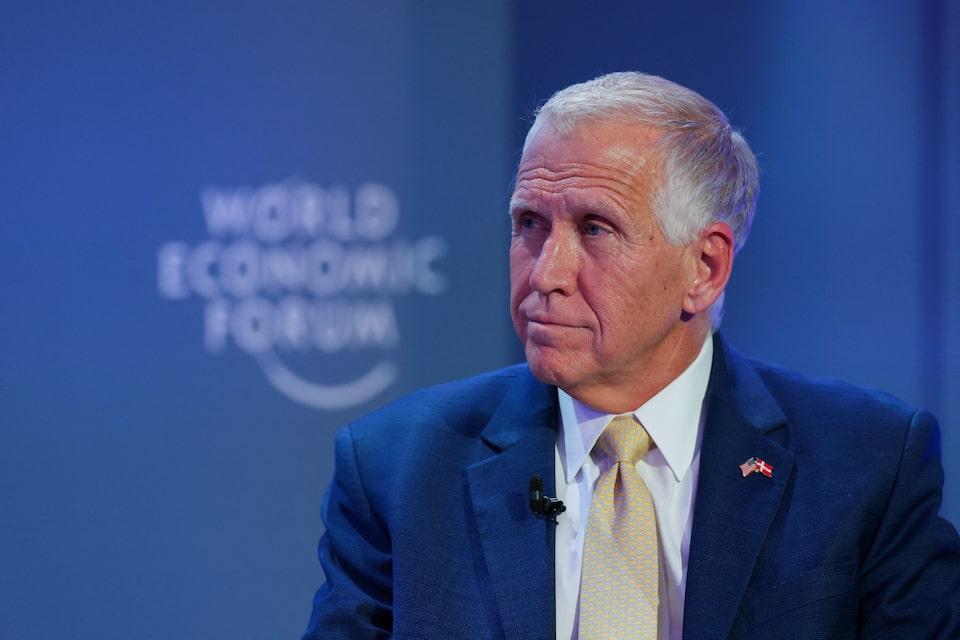
Tillis cites probe into Powell as reason to oppose Trump's Fed nominees North Carolina senator says Department of Justice's investigation is political interference Republicans divided over Trump's pressure tactics against Fed WASHINGTON, Jan 30 (Reuters) - President Donald Trump's pick of Kevin Warsh to lead the Federal Reserve is running into opposition from within his own party in Congress, as at least one Republican senator said on Friday he will block the confirmation if the Justice Department's investigation of U.S. central bank chief Jerome Powell continues. Senator Thom Tillis, a North Carolina Republican, said in a post on X that he will continue to "oppose the confirmation of any Federal Reserve nominee, including for the position of Chairman" until the Justice Department's inquiry into Powell is "fully and transparently resolved." Sign up here. Trump later fired back, saying Tillis' "obstructionist" stances against some of the president's policies explain "why he's no longer a senator." Tillis has said he will not run for re-election in 2026, but will remain in the Senate until early next year. "If he doesn't approve, we just have to wait until somebody comes in and we'll approve it, right?" Trump said at the White House. Tillis, however, did not appear to be backing down. "This proves how the separation of powers works: one senator can prevent the most powerful man on the planet from potentially undermining the credibility and the independence of the Fed," the North Carolina senator told reporters. "I don't consider that obstruction. I consider that doing my job." Tillis sits on the Senate Banking Committee, which is in charge of Fed confirmations. The committee has a narrow 13-11 Republican majority, so losing just one vote could hold up the process of getting the nomination before the full Senate, where Republicans have just a three-vote majority. The basis of the Justice Department's inquiry into Powell stems from remarks last year to the committee about cost overruns at a building renovation project at the Fed's headquarters complex in Washington. The Justice Department served Powell with a grand jury subpoena earlier this month, the Fed chief said. Powell has denied any wrongdoing and described the probe as a "pretext" to pressure the central bank on monetary policy. Trump has demanded that the Fed deliver big interest rate cuts to help stimulate the economy. Trump on Friday encouraged the Powell probe. "He's either incompetent, or he - or somebody - is a crook, and we'll find out," the president said. But Tillis called the probe "a bogus potential investigation." At least one other Republican, Senator Lisa Murkowski of Alaska, has previously said she would not back a Trump nominee to the Fed while that probe is underway. SOME REPUBLICANS CRITICAL OF TRUMP'S PRESSURE ON FED Tillis' threat to block Warsh's nomination is the latest in a string of barbs between himself and the president. Trump, in an ABC News interview on Wednesday, called Tillis and Murkowski "losers" after their criticism of his administration's immigration enforcement operation in Minnesota. The North Carolina senator has been more outspoken since he announced his impending retirement from the Senate last year. His decision followed a high-profile break with Trump over the administration's tax-and-spending bill, citing concern about the impact on Tillis' home state, a competitive electoral battleground with both Republican and Democratic statewide leaders. Tillis' current opposition does not mean the Warsh nomination will not ultimately be successful, as the senator complimented the former Fed governor in his post on Friday and left room for eventual support if the Justice Department changes course. Republican senators in Trump's second term have given wide latitude to the president's nominees. But Tillis and a small group of Republican senators critical of Trump's attempts to influence the Fed have stressed the importance of maintaining the central bank's independence in the face of the Trump administration's criticism and investigations into Powell and Fed Governor Lisa Cook. Trump attempted to fire Cook from the central bank, and the U.S. Supreme Court last week heard arguments on the legality of that move. It is unclear when Warsh's confirmation hearing will be held, but Senator Tim Scott, a South Carolina Republican who chairs the banking committee, welcomed the pick and said he intends to hold "a thoughtful, timely confirmation process" for the nominee. White House economic adviser Kevin Hassett, who Trump also considered for the Fed chief nomination, acknowledged on CNBC on Friday that the legal issues surrounding the Fed could gum up any Senate approval process until they are resolved. "That it is an issue that should get resolved quickly," Hassett said. Other Republicans on the Senate Banking Committee, such as Senator Bernie Moreno of Ohio, called Trump's pick "phenomenal" and said Warsh "will restore independence to the Federal Reserve." Democrats on the committee are expected to oppose Trump's pick. "This nomination is the latest step in Trump's attempt to seize control of the Fed," Senator Elizabeth Warren, the committee's senior Democrat, said in a statement. "Donald Trump said anybody who disagrees with him will never be Fed Chairman. Former Fed Governor Kevin Warsh – who cared more about helping Wall Street after the 2008 crash than millions of unemployed Americans – has apparently passed the loyalty test," Warren said. https://www.reuters.com/world/us/trumps-pick-lead-fed-faces-early-hurdle-republican-senator-2026-01-30/
2026-01-30 17:02
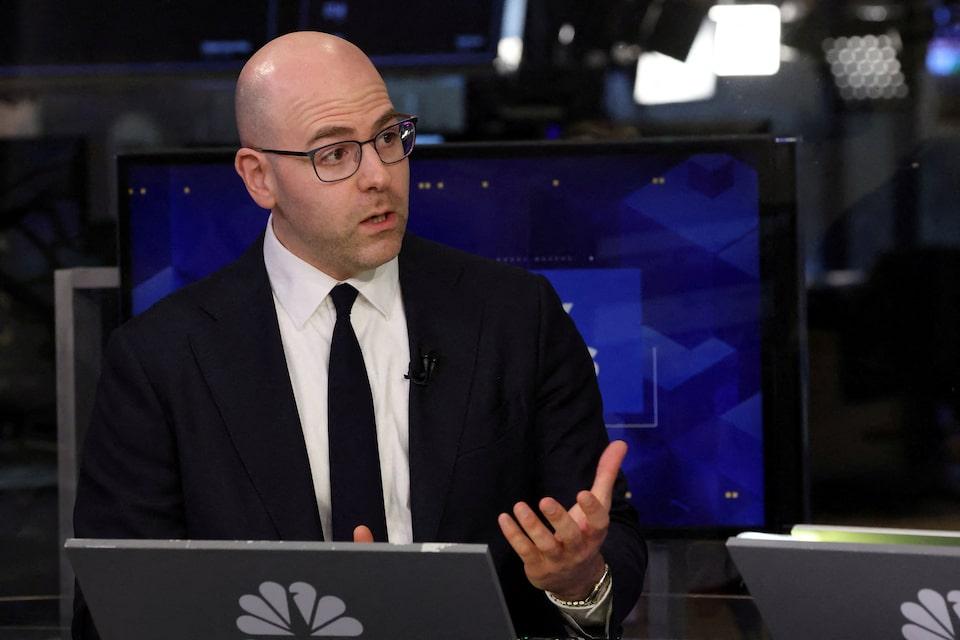
Jan 30 (Reuters) - Federal Reserve Governor Stephen Miran said in a television interview Friday that he assumes Kevin Warsh, nominated to succeed current Fed chair Jerome Powell, will likely fill his expiring term at the central bank. Speaking on CNBC, Miran noted that his term, which ends on January 31, would be the only slot available for Warsh, himself a former Fed Governor, to take as part of the effort to install him as chair. Sign up here. Warsh has been tapped to succeed Powell, whose chair term ends in May, while his governor term ends in 2028. There remains a possibility Powell will stay on the central bank to help provide a counterweight to ongoing pressure on the Fed by President Donald Trump. Miran, who dissented in favor of an interest rate cut at this week’s policy meeting, said the likely speed of the confirmation process would leave him in place at the next rate-setting Federal Open Market Committee meeting. Miran expressed confidence that even as Warsh has aggressively criticized the Fed as part of his campaign to become its leader, he’ll be warmly received by the officials he has targeted. Warsh has had “a long history of convincing people about his arguments, and so I think as a result, he's going to be treated with a lot of respect,” Miran said. “I think people are going to find him very persuasive, because at the end of the day, I think a lot of his views are really right.” Miran defended his dissenting vote at the Fed meeting by again arguing that inflation is not the issue it appears to be when you look at the headline numbers. “There is no inflation problem,” the policymaker said. https://www.reuters.com/sustainability/boards-policy-regulation/feds-miran-assumes-warsh-will-fill-his-governor-slot-central-bank-cnbc-2026-01-30/
2026-01-30 16:50
FRANKFURT/BERLIN, Jan 30 (Reuters) - German industry bosses including the CEOs of Siemens Energy and Thyssenkrupp will join Economy Minister Katherina Reiche on a trip to Saudi Arabia, four people briefed on the matter said, as Europe's top economy seeks to diversify its energy supply. Reiche is scheduled to travel to Saudi Arabia from February 1 to 3 to expand economic relations, a spokesperson for her ministry said, only days after she highlighted the need for new alliances in light of rising geopolitical tensions. Sign up here. The trip will focus on energy, a critical issue for Germany - Saudi Arabia's most important economic partner in the European Union - which has suffered from soaring costs after losing access to cheap gas from Russia. Christian Bruch, CEO of power equipment maker Siemens Energy (ENR1n.DE) , opens new tab, and Miguel Lopez, who leads industrial conglomerate Thyssenkrupp (TKAG.DE) , opens new tab, will be part of the business delegation travelling with Reiche, the sources said. Uniper (UN0k.DE) , opens new tab boss Michael Lewis, EnBW (EBKG.DE) , opens new tab CEO Georg Stamatelopoulos and Egbert Laege, in charge of Sefe Group, will also take part, they added. Thyssenkrupp, EnBW and Sefe confirmed the participation of their CEOs. Siemens Energy and Uniper declined to comment. The ministry spokesperson said a number of memorandums of understanding would be signed on the trip, "focusing on energy projects, innovation, deep technology, artificial intelligence, and especially in the start-up sector". Further underscoring the region's relevance to Berlin, German Chancellor Friedrich Merz is scheduled to travel to Saudi Arabia, Qatar and the United Arab Emirates from February 4 to 6. Both the Gulf states' investments in the German economy and efforts to diversify energy supplies are on the agenda, a government spokesperson said, adding Berlin hoped "to see increased investment activity". Qatar is a key shareholder in some of Germany's biggest and most well-known companies, including Volkswagen , RWE (RWEG.DE) , opens new tab and Deutsche Bank (DBKGn.DE) , opens new tab. https://www.reuters.com/business/energy/siemens-energy-thyssenkrupp-join-german-economy-minister-saudi-arabia-trip-2026-01-30/

2026-01-30 16:48
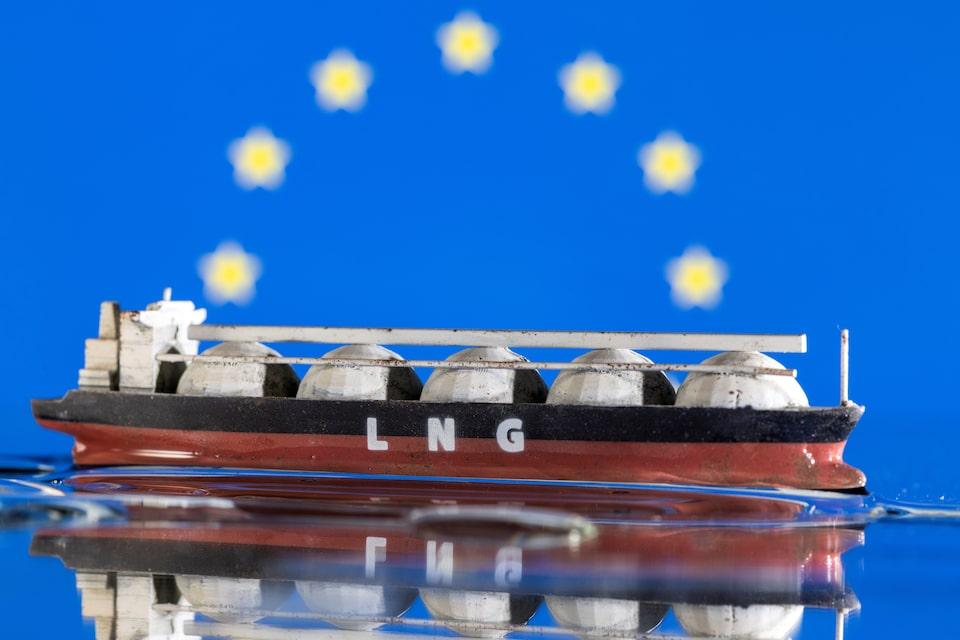
BRUSSELS, Jan 30 (Reuters) - The United States supplied 60% of the European Union's liquefied natural gas this month, data showed on Friday, confirming its role as Europe's dominant LNG supplier as some European officials become wary of growing reliance on U.S. energy. The 60% share was an increase from both last month and January 2025, when the U.S. supplied 53% of EU imports, data shared with Reuters by analytics firm Kpler showed. Sign up here. The 5.36 million metric tons of LNG the EU imported from the U.S. in January is the second-highest volume for any month to date, exceeded only by October 2025, Kpler said. Higher gas demand driven by cold weather this month partly caused the uptick. But Kpler said it expects the trend for increasing U.S. supply to continue, to around 65% of Europe's total LNG this year, from around 56% in 2025. Europe has increased purchases of U.S. gas to reduce its reliance on Russian energy since Moscow's 2022 invasion of Ukraine, and last year agreed to spend $750 billion on U.S. energy in a trade deal with President Donald Trump. But Trump’s push to take over Greenland and recent tariff threats have sharpened concerns among some governments of the risk of becoming reliant on the U.S. for fuel. EU energy commissioner Dan Jorgensen said this week the crisis over Trump's threats against Greenland had been a "wake-up call" on energy security, and warned the EU risked "replacing one dependency with another" as it shifted away from Russian energy. Around 19% of the EU's LNG supplies came from Russia in January, Kpler said. The bloc has agreed to ban all Russian LNG and pipeline gas imports by late 2027. The first stages of the gradual ban will take effect in the coming months, prohibiting short-term Russian LNG contracts. https://www.reuters.com/business/energy/us-share-europes-lng-imports-increased-60-january-2026-01-30/
2026-01-30 16:07
OTTAWA, Jan 30 (Reuters) - Canada recorded a slightly higher C$26.39 billion ($19.51 billion) budget deficit for the first eight months of the 2025/26 fiscal year as government expenditures grew faster than revenues, the finance ministry said on Friday. By comparison, the deficit in the same period a year earlier had been C$22.72 billion, it said in a statement. Sign up here. Program expenses rose 3.1% on increases across all major categories of spending. Public debt charges marginally increased by 0.3% reflecting offsetting effects of lower short-term interest rates on treasury bills and higher rates on stock of marketable bonds, the ministry said. Year-to-date revenues grew by 1.9%, largely reflecting higher income from custom import duties and corporate and personal income tax revenues. On a monthly basis, Canada posted a deficit of C$8.02 billion in November, compared to a C$8.21 billion deficit in November 2024. ($1 = 1.3524 Canadian dollars) ((Reuters Ottawa bureau; [email protected] , opens new tab)) Keywords: CANADA BUDGET/ https://www.reuters.com/world/americas/canada-budget-deficit-over-first-eight-months-202526-rises-c2639-bln-2026-01-30/
2026-01-30 13:34
Contraction in goods-producing sectors behind flat growth Manufacturing output shrank by 1.3%, followed by agriculture Services-producing sectors helped offset some of the weakness Q4 GDP could shrink by 0.5% annualized, 2025 GDP seen at 1.3% OTTAWA, Jan 30 (Reuters) - Canada's economic growth stalled in November as an expansion in services was offset by weakness in goods-producing industries, data showed on Friday, as Canada's economy slows down after almost a year of tariffs and trade uncertainty. Gross domestic product was flat month-on-month in November, after a 0.3% contraction in October, Statistics Canada said. Sign up here. Analysts polled by Reuters had forecast marginal growth of 0.1%. U.S. President Donald Trump's tariffs on steel, automotive, lumber, and aluminum have hobbled output in these sectors. While the tariff malaise has largely not spread beyond these sectors, a recent Bank of Canada survey showed that business sentiment was subdued, investment was down, and companies expected layoffs. On a preliminary basis, Statistics Canada said output was expected to edge 0.1% higher in December, though the agency cautioned the estimate could be revised. November's figures indicate an annual growth contraction of 0.5% in the fourth quarter, undershooting the Bank of Canada's most recent forecast of no growth in the final three months of the year, based on monthly GDP by industry data. Two consecutive quarters of contraction would constitute a technical recession. Canada's economy is expected to have grown 1.3% in 2025, StatsCan said. Final reported quarterly GDP numbers are based on income and expenditure and can differ from the estimate calculated from GDP by industry. "The still sluggish momentum towards quarter end may be a concern, as monthly growth rates will need to accelerate for the economy to achieve the (Bank of Canada's) near 2% MPR forecast for Q1," Andrew Grantham, senior economist at CIBC Capital Markets, wrote in a note. SECTOR PERFORMANCE Services‑producing industries, which account for roughly three quarters of economic output, mainly drove growth in November. Retail trade, transportation and warehousing and educational services were the top three performing sectors. However, wholesale trade declined 2.1%, its largest contraction since April last year, the statistics agency said. The strength in services was offset by a 0.3% contraction in goods-producing industries, the third such contraction in four months. Manufacturing output, which contributes over 8% of GDP, contracted 1.3%. The industry remains among the most exposed to trade uncertainty and U.S. tariffs and global trends. Output of motor vehicles and parts manufacturing shrank 6.4% owing largely to a global semiconductor shortage, StatsCan said. The drop in manufacturing was closely followed by the agriculture, forestry, fishing and hunting sub sector, which contracted 1.1%, the agency said. The Canadian dollar weakened 0.36% to C$1.3537 to the U.S. dollar, or 73.87 U.S. cents. Yields on the two-year government bonds were down 0.5 basis points to 2.407%. https://www.reuters.com/world/americas/canadas-economic-growth-stalled-november-could-contract-q4-2026-01-30/