2025-09-15 06:05
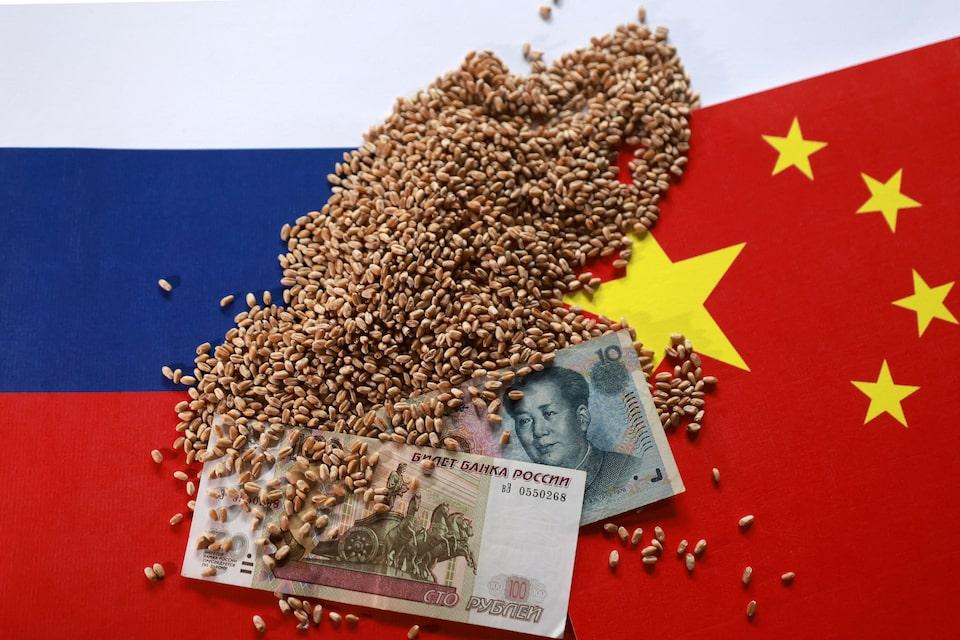
Barter transactions help circumvent SWIFT disconnection and secondary sanctions fears Russia's economy ministry issued a guide to facilitate foreign barter transactions Barter last popular during Russia's chaotic 1990s post-Soviet economy MOSCOW, Sept 15 (Reuters) - Old-fashioned barter is on the rise in Russia's foreign trade for the first time since the 1990s, as companies seeking to outfox Western sanctions swap wheat for Chinese cars and flax seeds for building materials. Even as Russia builds warm ties with China and India, the return of barter shows just how far the war in Ukraine has distorted trading relationships for the world's biggest producer of natural resources, three decades after the 1991 collapse of the Soviet Union ushered in Russian economic integration with the West. Sign up here. The United States, Europe and allies have imposed more than 25,000 different sanctions on Russia over the 2022 war in Ukraine and the 2014 annexation of Crimea in a bid to sink Russia's $2.2 trillion economy and undermine support for President Vladimir Putin. Washington has also hit India with tariffs in response to New Delhi's oil trade with Russia. Putin says Russia's economy has outperformed expectations. It grew faster over the past two years than G7 countries, despite Western predictions of a crash. He has ordered businesses and officials to defy sanctions in every way they can. However, there are growing signs of strain on the economy, which the central bank now shows to be technically in recession and which suffers high inflation. Some punitive measures - particularly the disconnection of Russian banks from the SWIFT payments system in 2022 and Washington's warnings to Chinese banks last year against supporting Russia's war effort - have stoked fears of secondary sanctions. "Chinese banks are afraid of being placed on sanctions lists, under secondary sanctions, so they do not accept money from Russia," a source in the payment market told Reuters. Those concerns appear to be behind the emergence of barter transactions, which are much harder to trace. In 2024, Russia's economy ministry issued a 14-page "Guide to Foreign Barter Transactions," advising businesses on how to use the method to skirt sanctions. It even proposed the creation of a trading platform that would work as a barter exchange. "Foreign trade barter transactions allow the exchange of goods and services with foreign companies without the need for international transactions," the ministry document said, citing "conditions of sanctions restrictions." Until recently, there was little evidence of commercial interest in such transactions. However, last month, Reuters reported that China's Hainan Longpan Oilfield Technology Co. was seeking to trade steel and aluminium alloys in exchange for marine engines. The company did not respond to a request for comment. For this story, Reuters was able to identify eight such transactions of goods-in-kind based on trade sources, public statements from customs services and company statements. The transactions have not been previously reported. While the news agency could not establish the overall value or volume of barter in the Russian economy due to the opacity of the transactions, three trade sources said the practice was becoming more frequent. "The growth of barter is a symptom of de-dollarisation, sanctions pressure and liquidity problems among partners," Maxim Spassky, Secretary of the General Council of the Russian-Asian Union of Industrialists and Entrepreneurs, an industry body, told Reuters. Spassky said barter volumes were likely to grow further. One of the trade sources - who spoke on condition of anonymity due to the sensitivity of the information - said the system helped circumvent sanctions that disconnect Russian banks from dollar and euro transactions. Three analysts said a possible indication of the scale of barter was a widening divergence between the foreign trade statistics of the central bank and the customs service's own data, which reached $7 billion in the first half of this year. In response to a request for comment, Russia's customs service confirmed barter was carried out with different countries "for a wide range of goods." It said, however, the number of barter transactions was insignificant compared to overall foreign trade contract volumes. Russia's foreign trade surplus in January - July decreased by 14% compared to a year earlier, to $77.2 billion, according to published data from the Federal Customs Service. Exports during this period decreased by $11.5 billion to $232.6 billion, while imports increased by $1.2 billion to $155.4 billion. The government and central bank declined to discuss barter with Reuters beyond saying that there was no data available on such transactions as they would be included in the overall figures if reported lawfully. One source close to the government said that the data divergence could be due to differences in methodology. CARS FOR GRAIN In one transaction identified by Reuters from two trade sources, Chinese cars were traded for Russian wheat. According to one of the sources, the Chinese partners in the deal asked their Russian counterparts to pay in grain. The Chinese partners bought the cars in China for yuan. The Russian partner bought grain with roubles. Then the wheat was exchanged for cars. Reuters could not establish the volumes traded, nor the mechanism by which the traders decided the value of the grain or the cars. In two other transactions, flax seeds were exchanged for goods including household appliances and building materials from China, customs statements show. Experts with knowledge of Russia's external trading said one of the flax deals, registered in a 2024 statement by Russia's customs service of the Urals region, was estimated to be worth in the region of $100,000. China is a major importer of Russian flax seed, used in industrial processes and as a nutritional product. In other transactions, metals were delivered to China in exchange for machines, Chinese services were swapped for raw materials, and a Russian importer bought aluminium to pay a Chinese company. One deal was with Pakistan. Some barter transactions have allowed the import of Western goods to Russia despite sanctions, two sources with knowledge of the transactions said, without providing details of which goods. At the Kazan Expo business forum in August, Chinese companies cited settlement issues among problems hindering the development of bilateral trade. Xu Xinjing, chairman of Hainan Longpan Oilfield Technology Co., Ltd, said barter trade could be a solution. Speaking at the conference, Xu said that "in the current conditions of limited payments," barter provided new opportunities for enterprises in Russia and Asian countries. BARTER SOWED CHAOS IN THE 1990S In the wake of the Soviet collapse in the 1990s, barter sowed chaos through the economy as vast chains of contingent deals were set up for everything from electricity and oil to flour, sugar and boots, allowing for pricing scams that made value hard to determine and earned fortunes for some. At the time, the lack of ready money, vast inflation and repeated devaluations made barter attractive. Now, there is plenty of money but barter is being driven by the constantly changing pressure of the threat of Western sanctions on Russia and China. Russia says the Western sanctions are illegal and China has criticised them as discriminatory. Barter is not the only workaround. Some traders have used so-called "payment agents", who for a fee facilitate payments through various schemes, but such transactions can be risky. Another way to execute payment is via Russia's state-owned VTB bank which has a branch in Shanghai. Others use cryptocurrencies pegged to the U.S. dollar. "Small businesses are actively using crypto. Some transport cash, some work through offsets, some diversify accounts with different banks," said Sergey Putyatinsky, vice president for operations and IT at BCS, a leading Russian financial company. "There is no ready-made technological answer yet. The economy is surviving, and business is simultaneously applying 10-15 different payment methods," he said. https://www.reuters.com/business/finance/wheat-chinese-cars-russia-turns-barter-skirt-sanctions-2025-09-15/
2025-09-15 05:46
Slew of central bank meetings on deck, focus on the Fed Dollar weakens ahead of expected U.S. rate cut Euro dips after France's credit rating downgrade Yuan steady despite bleak Chinese economic data SINGAPORE, Sept 15 (Reuters) - The dollar slipped on Monday ahead of a pivotal week filled with central bank decisions headlined by the Federal Reserve, while the euro hardly reacted to Fitch's downgrade of France's credit rating. Trading in Asia was thinned with markets in Japan closed for a holiday, leaving currencies mostly rangebound over the course of the session. Sign up here. The euro came under slight pressure and last traded 0.04% lower at $1.1729, though investors largely shrugged off Friday's announcement from Fitch downgrading France's sovereign credit score to the country's lowest level on record. The move strips the euro zone's second-largest economy of its AA- status as it grapples with political crisis and ballooning debt. Still, much of investors' attention this week will be on the slew of rate decisions in the U.S., Japan, United Kingdom, Canada and Norway that could set the tone for markets, with the Fed taking centre stage. Expectations of a rate cut from the Fed on Wednesday have weighed on the dollar in recent times, and it declined 0.08% against a basket of currencies to 97.58 on Monday. Sterling rose 0.11% to $1.3565, while the Aussie dollar rose 0.23% to $0.6663, flirting with a 10-month high hit on Friday. "We are calling for a 25-basis-point cut from the FOMC this week, which is more than fully priced," said Carol Kong, a currency strategist at Commonwealth Bank of Australia. Just as important will be Fed members' "dot plot" projections for rates and guidance from Fed Chair Jerome Powell on the extent and pace of any further easing. "In order to have an impact on currencies, Powell will have to out-dove the market by giving quite explicit hints about follow-up rate cuts. And if the FOMC does deliver an outsized 50-basis-point cut, that could also push the dollar down quite significantly, unless he suggests that there is a limited chance of follow-up cuts," said Kong. Elsewhere, the yen strengthened more than 0.1% to 147.44 per dollar, ahead of the Bank of Japan's (BOJ) policy meeting later in the week. While the BOJ is expected to stand pat on rates, focus will similarly be on comments from Governor Kazuo Ueda on the future policy path. "The JPY continues to underperform in the near-term undermined by the pick-up in political uncertainty in Japan after PM Ishiba resigned," said analysts at MUFG in a note. "The BOJ would have to provide a signal that a rate hike could be delivered as soon as next month to trigger a reversal of JPY weakness." In other currencies, the New Zealand dollar was up 0.15% to $0.5964. The onshore yuan got a slight lift from a weaker greenback and last stood at 7.1213 per dollar, despite Monday's grim economic data which showed China's factory output and retail sales in August logged their weakest growth since last year. Also on investors' radars were talks between U.S. and Chinese officials. They concluded a first day of talks in Madrid on Sunday on their strained trade ties and a looming divestiture deadline for Chinese short-video app TikTok, amid Washington's demands that its allies place tariffs on imports from China over its purchases of Russian oil. https://www.reuters.com/world/middle-east/dollar-eases-ahead-central-bank-bonanza-eyes-fed-2025-09-15/
2025-09-15 05:44
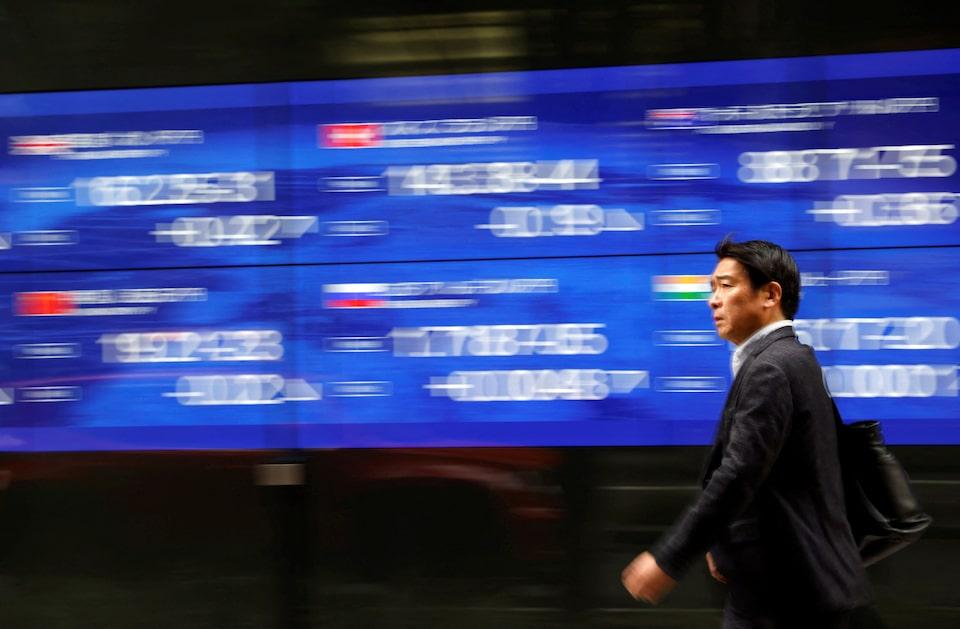
Wall St futures up 0.1%, Nikkei closed for holiday Euro shows little reaction to Fitch downgrade of France Rate cuts seen from Fed, BoC; steady for BoE, BOJ SYDNEY, Sept 15 (Reuters) - Asian shares steadied near four-year highs on Monday ahead of an action-packed week that is seemingly certain to see the U.S. Federal Reserve resume its easing cycle, and perhaps leave the door wide open to a series of cuts. The Bank of Canada is also expected to cut rates by a quarter point this week, while the Bank of Japan and the Bank of England also meet and are both expected to hold rates steady. Sign up here. European stocks are headed for a slightly firmer open, with EUROSTOXX 50 futures 0.3% higher. S&P 500 futures and Nasdaq futures were both up 0.1%. Markets are 100% priced for an easing of 25 basis points from the Fed, taking its funds rate to 4.0-4.25%, with futures implying just a 4% chance of 50 basis points. Just as important will be Fed members' "dot plot" projections for rates and guidance from Fed Chair Jerome Powell on the extent and pace of any further easing. Futures already have 125 basis points of cuts priced in by late 2026, so anything less than dovish will disappoint investors. "The key question for the September FOMC meeting is whether the Committee will signal that this is likely the first in a series of consecutive cuts," said David Mericle, chief U.S. economist at Goldman Sachs. "We expect the statement to acknowledge the softening in the labor market but do not expect a change to the policy guidance or a nod to an October cut." U.S. President Donald Trump continued his attacks on the central bank on Sunday, saying Powell was incompetent and hurting the housing market. A holiday in Japan made for some thin trading conditions in Asia on Monday, with the euro showing scant reaction to Fitch's downgrade of France. The single currency was holding steady at $1.1732 , a short way from its recent top of $1.1780. The dollar was off 0.15% on the yen at 147.44 , but well within the 146.22 to 149.13 range of the past month or so. The euro has been underpinned by a steady outlook for EU rates, with the European Central Bank signalling last week it was in a "good place" on policy. A host of ECB officials are due to speak this week, including President Christine Lagarde. CHINA DATA MISSES While the Nikkei (.N225) , opens new tab was shut for the holiday, futures stood at 44,520, just below the cash close of 44,768, having climbed more than 4% last week. MSCI's broadest index of Asia-Pacific shares outside Japan (.MIAPJ0000PUS) , opens new tab was last flat, although it did hit a new four-year high earlier in the session. South Korea's market (.KS11) , opens new tab rose 0.4% to hit another record high after the government scrapped a plan to raise taxes on stock investment. Chinese shares outperformed, with blue chips (.CSI300) , opens new tab up 0.5% and Hong Kong's Hang Seng index (.HSI) , opens new tab 0.2% higher as investors redoubled bets on Chinese tech shares amid Sino-U.S. trade talks. U.S. and Chinese officials concluded a first day of talks in Madrid on Sunday on their strained trade ties, and will resume them later on Monday. Trump said he was still negotiating on the divestiture deadline for Chinese short-video app TikTok. Data released on Monday showed the Chinese economy lost some momentum in August, with a slew of activity indicators - from industrial output to retail sales - coming below forecasts. Falls in property investment deepened, while home prices declined another 0.3% in August, extending a downward trend that has persisted since early 2023. "Given the slowdown of the past few months, we expect that there's a strong case for additional short-term stimulus efforts," said Lynn Song, ING's chief economist, Greater China. "We continue to see a high possibility for another 10bp rate cut and 50bp reserve-requirement-ratio cut in the coming weeks." In the commodities market, oil prices extended gains on Monday as investors assessed the impact of Ukrainian drone attacks on Russian refineries that could disrupt its crude and fuel exports. Brent rose 0.5% to $67.33 a barrel, while U.S. crude firmed 0.5% to $63 per barrel. Gold was flat at $3,644 an ounce , not far from last week's all-time high of $3,673.95. The cash Treasuries market was closed due to the holiday in Japan. Yields on 10-year Treasuries last stood at 4.07%, having hit a five-month low of 3.994% last week as a run of soft labour data added to the case for aggressive Fed easing. https://www.reuters.com/world/china/global-markets-wrapup-2025-09-15/
2025-09-15 05:18
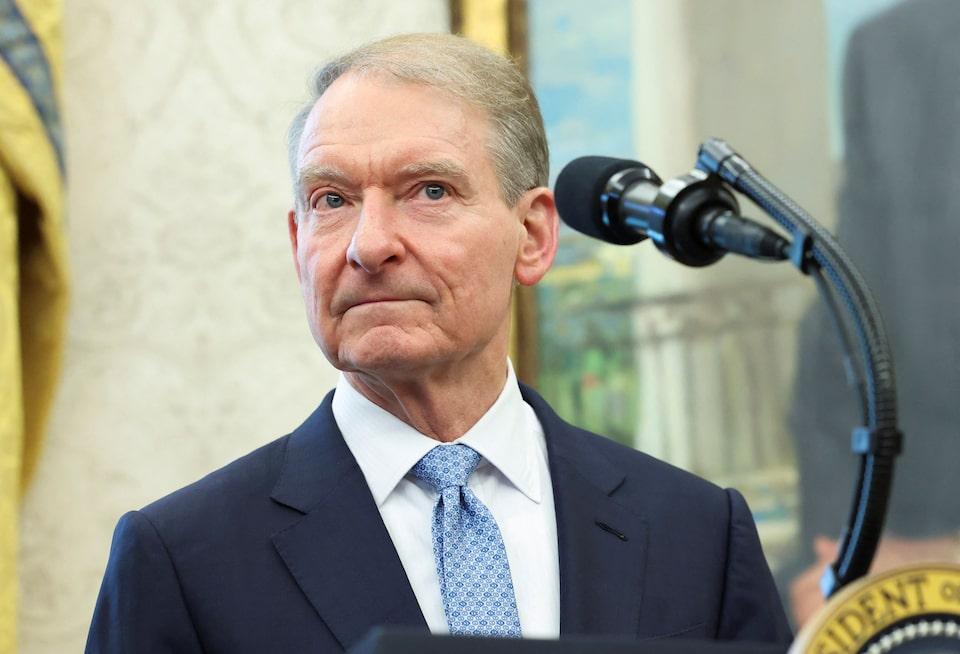
Sept 15 (Reuters) - The U.S. Securities and Exchange Commission Chairman Paul Atkins vowed to give businesses notice of technical violations before "bashing down their door", marking a shift away from aggressive enforcement actions, according to a Financial Times interview published on Monday. "I think a lot of people rightly criticised the SEC," said Atkins. "Especially in more recent years it was not grounded in precedent or predictability. It would shoot first and then ask questions later," Atkins told the newspaper. Sign up here. "What I am trying to address is a market perception that there was a lack of due process, a lack of notice, a lack of rule of law." Earlier this month, the SEC unveiled its rule-making agenda for the upcoming months, which could see broad proposals to revamp cryptocurrency regulations and reduce rules Wall Street has decried as being overly burdensome. The focus on cryptocurrency by Atkins highlights President Donald Trump's pledge to be a "crypto president" and promote the adoption of digital assets. Atkins told the FT that most tokens are not securities and wants to develop rules that would allow investors to trade tokenised versions of shares and bonds - synthetic versions of securities that have the same legal rights but can trade 24/7 using blockchain technology. This marks a stark departure from the policies of former President Joe Biden, who in a bid to protect Americans from fraud and money laundering, cracked down on the crypto industry. https://www.reuters.com/sustainability/boards-policy-regulation/sec-notify-businesses-technical-violations-before-taking-action-ft-reports-2025-09-15/
2025-09-15 04:39
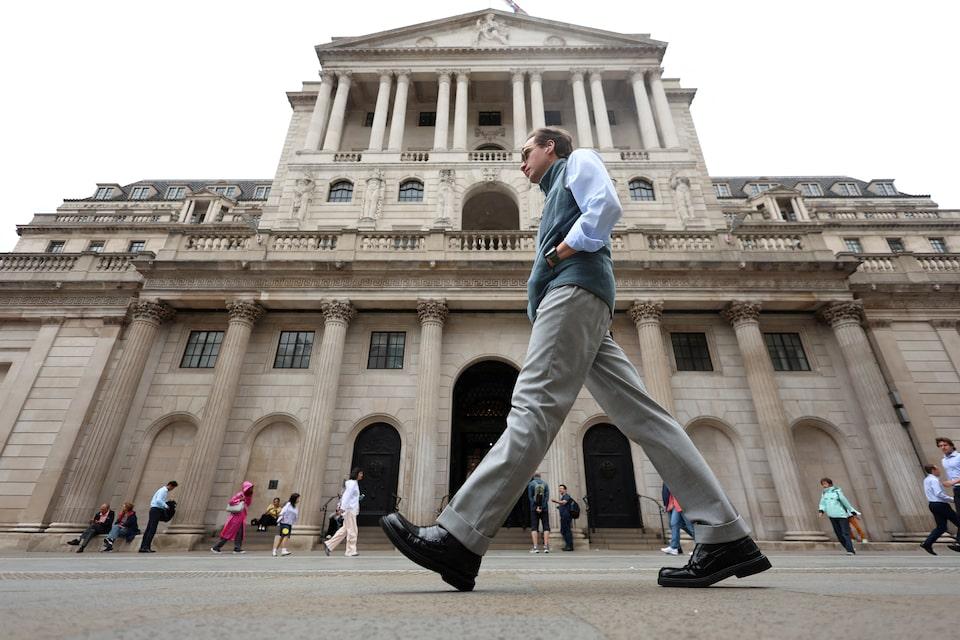
A look at the day ahead in European and global markets from Gregor Stuart Hunter Sure enough, you wait ages for a central bank meeting, and then they come along all at once. Sign up here. Okay, yes, fine, we had the ECB last week. But this week sees the U.S. Federal Reserve, the Bank of England, the Bank of Japan and a host of other central banks from Toronto to Taipei deciding on interest rates. The Fed holds its latest policy meeting with a historic challenge to its leadership pending in the courts and a rushed effort underway to confirm President Donald Trump's nominee to fill an open seat on its Board of Governors, which should provide some resolution to questions over the central bank's independence that have bubbled throughout the summer. Markets are fully pricing in a 25-basis-point-cut on Wednesday, but have reined in expectations of a jumbo 50 bps reduction to just 3.8%, according to the CME Group's FedWatch tool. They started the week gently enough, with stocks in Asia (.MIAPJ0000PUS) , opens new tab floating 0.1% higher with Japanese markets closed for a holiday, and South Korea's Kospi index (.KS11) , opens new tab hitting a new record as the government scrapped plans to hike taxes on capital gains. In early European trades, the pan-region futures were up 0.11%, German DAX futures were flat, and FTSE futures slipped 0.1%. OAT futures extended declines for a second day after Fitch downgraded France's credit rating on Friday. The S&P 500 e-minis U.S. stock futures were up 0.1% ahead of Friday's Triple Witching event, which sees the expiry of single-stock options, as well as equity index futures and options. The U.S. and Britain are preparing to announce agreements on technology and civil nuclear energy during U.S. President Donald Trump's unprecedented second state visit this week, as the UK hopes to finalise steel tariffs under a much-vaunted trade deal. In other trade news, U.S. and Chinese officials concluded a first day of talks in Madrid on Sunday on their strained trade ties, and will resume them later on Monday. Trump said he was still negotiating on the divestiture deadline for Chinese short-video app TikTok, with a source telling Reuters the U.S. is expected to again extend a September 17 deadline for China's ByteDance to divest its U.S. assets. Data on Monday showed the Chinese economy lost some momentum in August, with a slew of activity indicators coming below forecasts. Its industrial output expanded at 5.2%, slowing from the 5.7% pace of the previous month, while retail sales rose only 3.4% from a year ago. Elsewhere in China, there were worrying signs that the red-hot Labubu bubble may be starting to burst. Plushie-maker Pop Mart (9992.HK) , opens new tab shares sank as much as 9% in Hong Kong after J.P. Morgan downgraded the shares to neutral, saying the stock is priced for perfection, and vulnerable to setbacks. Analysts from the Wall Street bank expressed disappointment over the lack of visibility for the next iteration of the brand, such as the release timeline for new animations or interactive toys. Give the people what they want, Pop Mart! Key developments that could influence markets on Monday: Economic data: Euro zone trade balance for July Euro zone reserve assets for August Debt auctions: France: 4-month, 5-month, 6-month and 1-year government debt auctions Germany: 1-year government debt auction https://www.reuters.com/world/china/global-markets-view-europe-2025-09-15/
2025-09-15 02:55
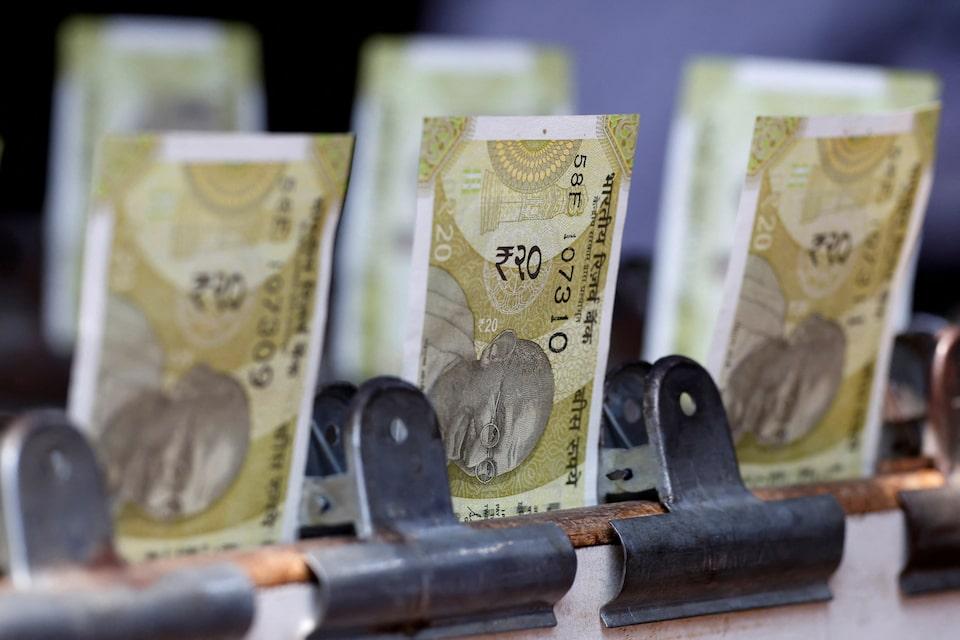
MUMBAI, Sept 15 (Reuters) - The Indian rupee is likely to open flat on Monday, as traders balance certainty around a Federal Reserve rate cut with ongoing headwinds from U.S. trade tariffs. The one-month non-deliverable forward points to the rupee opening largely unchanged from Friday’s level of 88.2750. Sign up here. The currency tumbled to a record 88.4550 last Thursday, with traders flagging thin exporter hedging, a possible outflow and lacklustre portfolio flows. Importers were quick to hedge on any recovery in the rupee, keeping the currency under persistent pressure. Market participants believe the Reserve Bank of India has been intervening, leaning against the rupee's weakness to keep moves orderly and avoid a deeper sell-off. "With the way flows are shaping up, the rupee has little room to recover," said a dealer at a state-run bank. "The RBI's likely presence is helping to contain the pressure and prevent a bigger shakeout." Support from the RBI and muted moves in other Asian peers have limited the rupee’s losses to just 0.1% so far this month, despite the fresh record lows. However, it remains the worst-performing major Asian currency in September. ALL ABOUT FED Forex markets will be squarely focused on the Fed's policy decision on Wednesday, where a 25-basis-point rate cut is fully priced in. Analysts say the bigger driver will be the Fed’s guidance, including its dot plot and commentary on the path ahead. The main shift since the Fed’s last meeting has been signs of softness in the U.S. labor market, with the July and August jobs reports disappointing. That has investors betting on a cut this week and further easing in October and December. The key question for the September Fed meeting is whether policymakers will signal that this is likely the first in a series of consecutive cuts, Goldman Sachs said in a note. While Goldman expects the Fed statement to acknowledge the softening in the labor market, it does not expect a change to the policy guidance or a nod to an October cut. KEY INDICATORS: ** One-month non-deliverable rupee forward at 88.36; onshore one-month forward premium at 12 paise ** Dollar index down at 97.62 ** Brent crude futures up 0.5% at $67.3 per barrel ** Ten-year U.S. note yield at 4.07% ** As per NSDL data, foreign investors sold a net $386.7mln worth of Indian shares on Sept. 11 ** NSDL data shows foreign investors bought a net $4.2mln worth of Indian bonds on Sept. 11 https://www.reuters.com/world/india/fed-cut-certainty-tariff-worries-keep-rupee-boxed-2025-09-15/