2025-09-12 13:04
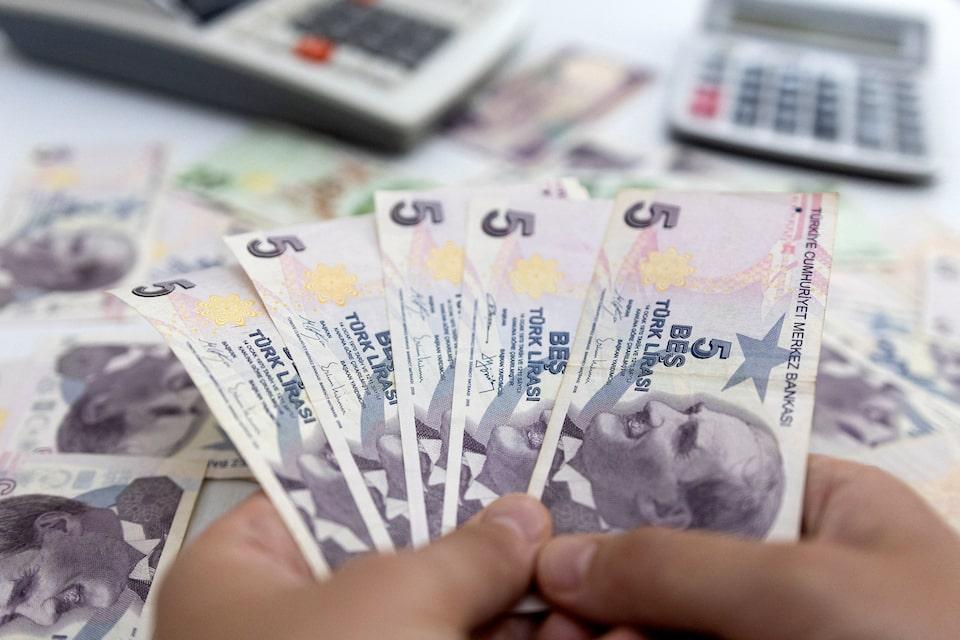
Sept 12 (Reuters) - Turkey's financial markets are bracing for a court ruling on Monday that could oust the leader of the main opposition party following months of political turmoil that has roiled Turkish stocks, bonds and the lira. Monday's ruling is the latest chapter in a legal crackdown on the main opposition to President Tayyip Erdogan that has been unsettling investors since March, when the arrest of Istanbul Mayor Ekrem Imamoglu - Erdogan's main rival - triggered a major selloff. Sign up here. The turmoil has put a fresh focus on Turkey, an emerging market economy that has in the last two years seen a return of some of the foreign investment that vanished in previous years over the government's unorthodox policies. The latest ruling follows a September 2 court decision that ousted the Istanbul provincial head of the opposition Republican People's Party (CHP), citing irregularities at a local party congress. Markets will be closely watching Monday's ruling, and the political fallout. "It is a very important moment for Turkey," said Giulia Pellegrini, portfolio manager at Allianz. Below are five charts on how Turkey's financial markets have fared in recent months. EQUITIES SUFFER Turkish stocks tumbled after the September 2 ruling, with Istanbul's benchmark (.XU100) , opens new tab index dropping as much as 5% during the session, its worst daily performance in about six months. Losses in the banking index (.XBANK) , opens new tab were even bigger. Since Imamoglu's arrest, the benchmark and banking indexes are down 15% and 10% in dollar terms, respectively. The declines are in sharp contrast to wider emerging markets. The MSCI Emerging Markets Index (.MSCIEF) , opens new tab has gained more than 23% since the start of the year, compared to a loss of some 8% in the index provider's Turkey benchmark, representing the country's most liquid and sizeable stocks that foreign investors seek exposure to. LINGERING LIRA On the day of Imamoglu's arrest, the lira weakened more than 2.6% against the dollar and hit a record 42.00 level with the speed of the move sending shockwaves through the markets. The currency has returned to a more gradual pace of depreciation since then, though it has still weakened more than 9% - making it one of the worst performers across emerging markets. That comes against the backdrop of the dollar waning around 10% this year, on track for its worst year in more than two decades - usually a boon to emerging market currencies. Grant Webster, portfolio manager at Ninety One, said he did not expect a repeat of the lira's steep plunge on Monday, pointing to the currency's more muted reaction in early September, with authorities standing ready to react swiftly. "They put processes in place which allow them to more quickly sell dollars and to tighten liquidity - so they can do it very quickly," Webster said. FOCUS ON CENTRAL BANK Turkey's hard currency reserves have long been a flash point, especially when authorities had to draw on them to shore up the lira. Following Imamoglu's arrest, the central bank sold some $57 billion in reserves. In the days following the early September ruling, traders said the central bank sold $4 billion-$5 billion - denting its rebuilding effort after the March drawdown. Politics have also shaped interest rate decisions. The March markets rout prompted policymakers to abandon their easing push and hike the policy rate by 350 basis points to 46% in April. After holding steady in June, the central bank resumed easing in July, cutting by 300 and 250 basis points in July and September respectively to 40.5%. FIXED INCOME PRESSURES Local bonds have oscillated this year, with yields scaling five-month highs in mid-April, and ticking up again earlier this month. While external debt also showed big swings, longer-dated dollar bonds are trading at their highest in a year. Credit Default Swaps (CDS) - a proxy for the costs to insure exposure to a country's external debt against default - have steadily come down, and are now not far off pre-March levels. However, some expect this could change on Monday. "The case could reshape Turkish politics and increase the political risk premium currently embedded into Turkish assets to a new level," BBVA analysts wrote in a note. https://www.reuters.com/world/middle-east/after-months-political-drama-turkish-markets-brace-next-big-test-2025-09-12/
2025-09-12 12:57
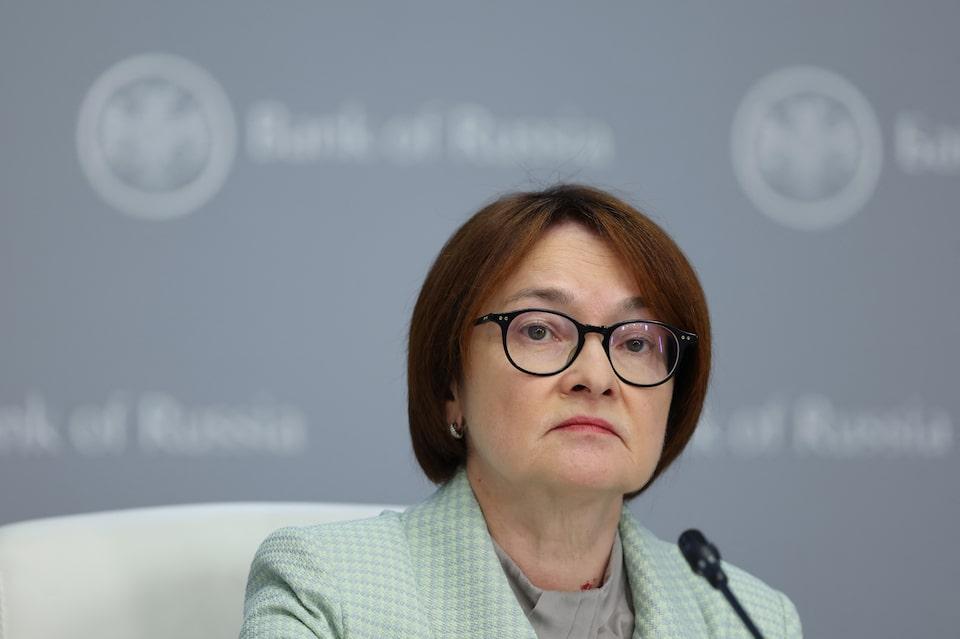
MOSCOW, Sept 12 (Reuters) - Russian Central Bank Governor Elvira Nabiullina and her deputy Alexei Zabotkin addressed a news conference on Friday after the central bank cut its key rate to 17% from 18%. They spoke in Russian and the quotes below were translated into English by Reuters. Sign up here. *NABIULLINA ON PAYMENT SYSTEMS BETWEEN RUSSIA AND CHINA We do not comment on the details of cooperation in the field of international settlements. In general, I can say that despite external restrictions, our banks and companies are developing various alternative payment methods. Therefore, international settlements do not currently have any impact on stability and monetary policy. *NABIULLINA ON ECONOMIC GROWTH According to our estimates, the economy will continue to grow this year and next, albeit at a slower pace than in the previous two years. There can be no other outcome after the overheating, but it is still growth. Moreover, the more severe the overheating, the more noticeable the economic slowdown will be. When will growth accelerate again? In our view, when potential catches up with demand, when we finally emerge from overheating, and both demand and supply grow at a steady pace. For inflation, this will mean a steady return to 4%, and for interest rates, a return to neutral territory. We currently estimate this neutral territory to be 7.5%-8.5%. However, the reasons for the acceleration in growth are not the reduction in interest rates themselves, but the fact that the reduction in interest rates will mean that the economy is returning to a balanced state, with demand no longer outstripping production capacity. In the baseline forecast, this will happen by the beginning of 2027. If we try to accelerate growth now, before demand has caught up with the supply of goods, services, and production, inflation will accelerate and ultimately undermine sustainable growth. Therefore, we are determined to bring inflation down to sustainably low levels. NABIULLINA ON OPTIONS FOR KEY RATE DECISION Two options were considered at the meeting: lowering the rate by 1% and keeping the rate unchanged. The arguments in favour of keeping the rate unchanged were that monetary conditions had eased significantly and that we needed to assess the consequences of the decisions already taken. And, of course, we will need to obtain more information about what the budget policy will ultimately be. NABIULLINA ON THE BUDGET FACTOR Our decision today reflects our understanding, based on the information currently available, of how the budget will shape up at the end of 2025 and its parameters for 2026, 2027 and 2028. We assume that the budget will be disinflationary for the year, but the extent of this will be clarified when amendments to this year's budget are made. We expect the government to present specific quantitative characteristics by the end of September, and we will include them in our forecast update at the October meeting. And, of course, the budget factor is always important, as is the predictability of budget policy in general. NABIULLINA ON THE EXCHANGE RATE "We always take into account exchange rate dynamics. This is an important indicator of the degree of monetary policy tightness and the main indicator through which changes in external conditions affect inflation. With a monetary policy aimed at low inflation, a stable, self-sustaining weakening of the exchange rate is impossible. But fluctuations do occur. They are inevitable when economic conditions change. And, of course, we analyse all these factors when making decisions." https://www.reuters.com/business/finance/russias-nabiullina-rates-economy-budget-2025-09-12/
2025-09-12 12:45
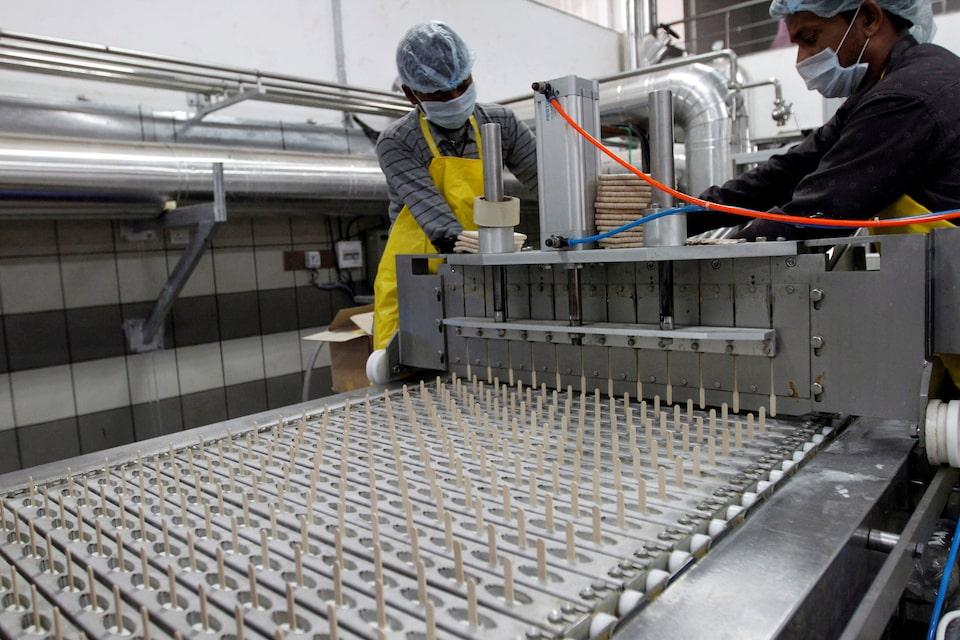
Sept 12 (Reuters) - The U.S. subsidiary of India’s Vadilal Industries (VDLI.NS) , opens new tab will start manufacturing ice cream at its local facility by the year-end to reduce dependence on imports and boost sales, an executive of the unit said on Friday. Vadilal Industries USA currently imports a majority of its products from India. Sign up here. U.S. President Donald Trump last month imposed tariffs of up to 50% on Indian goods, sending exporters of everything from apparel to frozen shrimp into a frenzy and forcing them to work out contingency plans. Corporates globally from Johnson & Johnson (JNJ.N) , opens new tab and Adidas (ADSGn.DE) , opens new tab to Sony (6758.T) , opens new tab have flagged a financial knock worth billions of dollars due in part to the tariffs on countries. The Bristol, Pennsylvania-based subsidiary, set up in 2009, distributes its products to stores across the country and accounts for roughly a third of Vadilal Industries' turnover. "(Scaling) our manufacturing in America will give us a significant advantage in terms of saving on the tariff and overall supply chain impacts from India," Vadilal Industries USA CEO Shreshth Jhawar told Reuters in an interview. Jhawar said the U.S. plant is expected to begin operations by December with full-fledged ice cream manufacturing commencing by April. The Ahmedabad, Gujarat-based parent company posted revenue from operations of 10.11 billion rupees ($114.55 million) for the year ended March 31. Jhawar did not disclose the investment size in the facility, which Vadilal Industries USA aims to use for future exports. The subsidiary, which brought forward its shipments several months ago in anticipation of tariff challenges, is on track to meet revenue growth of 20% in the ongoing financial year, he said. "We have to do everything to keep protecting (market share)," Jhawar said, adding the U.S. unit will absorb some of the cost impact. ($1 = 88.2590 Indian rupees) https://www.reuters.com/business/retail-consumer/indias-vadilal-industries-us-unit-make-ice-creams-locally-cut-imports-2025-09-12/
2025-09-12 12:40
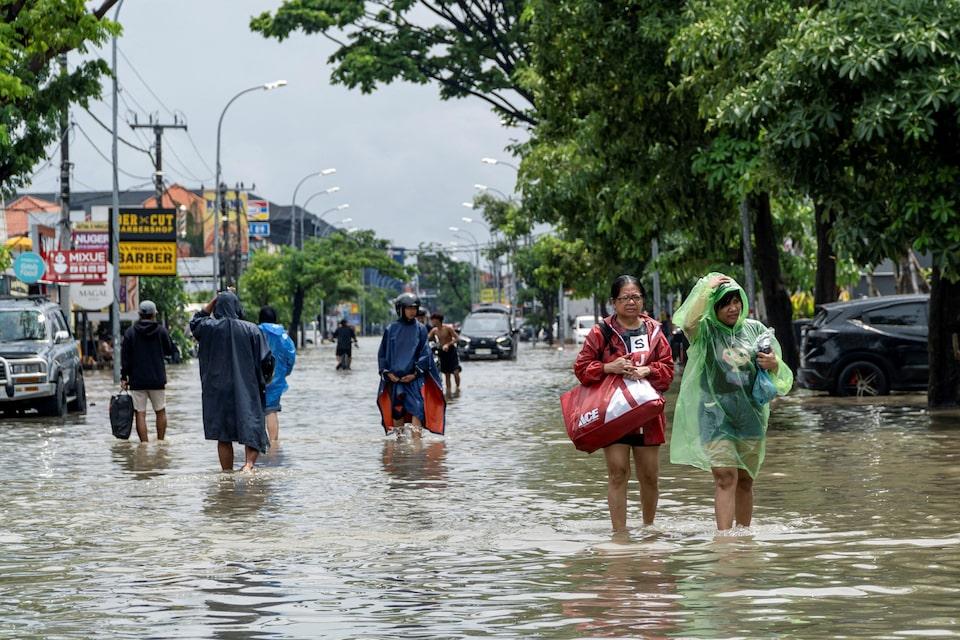
JAKARTA, Sept 12 (Reuters) - Indonesia is expected to experience a longer-than-usual peak period during its wet season this year, bringing a higher risk of floods and extreme rainfall in many areas of the Southeast Asian country, its weather agency forecast on Friday. The wet season in the archipelago of over 17,000 islands starts this month and ends in April 2026, Indonesia Meteorology and Geophysics Agency head Dwikorita Karnawati said in a news conference. Sign up here. The peak wet season will begin in November and December this year for Sumatera and Borneo islands, she said, while Java, Sulawesi, Maluku and Papua islands will experience the peak season from January to February 2026. "We must be cautious because the peak of the wet season is quite long and happens in almost all areas in Indonesia," she said. "The risk of floods is high between November this year and February next year," said Guswanto, another official at the agency. The agency also warned of extreme rainfall in a short period of time. Dwikorita said certain areas could see the equivalent of a month's rainfall in a single day. The holiday island of Bali had experienced the equivalent of a month's rainfall in two days over the last few days, the agency said. Heavy rains on Tuesday and Wednesday caused floods in Bali's capital Denpasar and six other regions, killing 18 people and forcing the evacuation of more than 500 people. "We must anticipate what will happen in the peak of wet season because of what happened in Bali" before the peak, Dwikorita said. The weather agency had previously predicted a shorter-than-expected dry season this year due to higher-than-normal precipitation. https://www.reuters.com/business/environment/indonesia-faces-greater-flood-risk-this-wet-season-says-weather-agency-2025-09-12/
2025-09-12 12:35
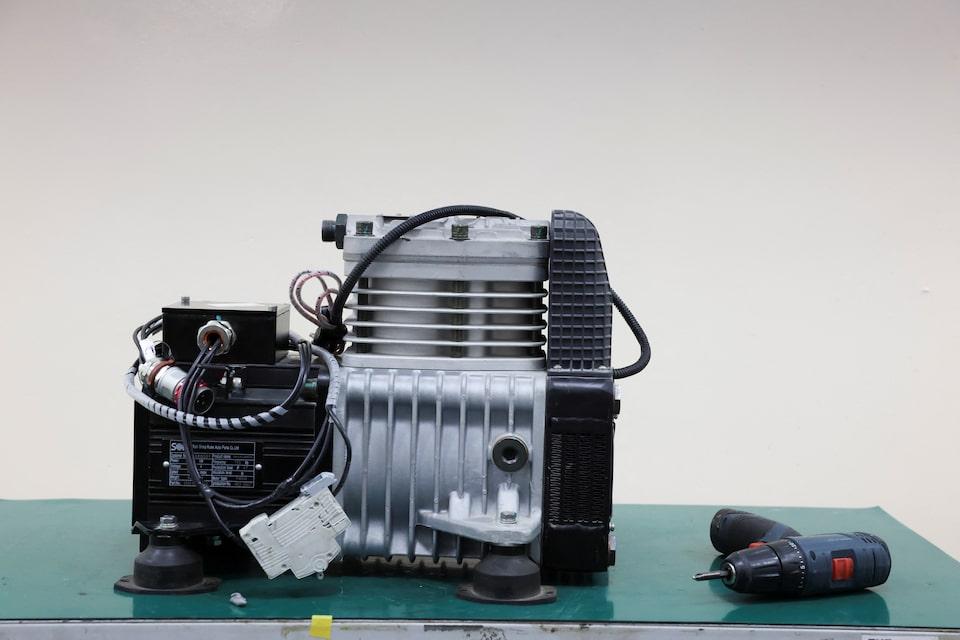
LONDON, Sept 12 (Reuters) - How can the West break its dependency on China for rare earth magnets? The question has taken on new urgency after China restricted exports earlier this year, sending shockwaves through Western manufacturing chains. Sign up here. The race to build domestic mine-to-magnet supply chains has accelerated, particularly in the United States, where the Department of Defense is taking a direct stake in MP Materials (MP.N) , opens new tab, operator of the country's only rare earths mine, and guaranteeing a floor price for its products. But part of the solution is lying in plain sight all around us in the form of old laptops, power tools and smartphones. Given the criticality of rare earths in today's high-tech world, it's astonishing that less than 1% are recycled. That may be about to change. TECHNICAL BREAKTHROUGHS The low recycling rate reflects a combination of technological and economic challenges. Dismantling magnet motors, removing the rare earths and reprocessing them can be both manually and energy intensive. The concentration of rare earth elements in the final product is often so low that it is simply not worth it. Automotive shredders, for example, will strip copper and aluminium out of end-of-life vehicles but the rare earth magnets end up in a steel mill, where they are lost to slag destined for landfill. Several companies, however, seem to have cracked the problem using an array of technologies. Canada's Cyclic Materials announced in June a $25-million investment in a recycling facility , opens new tab in Ontario to convert 500 metric tons per year of magnet-rich feed-stock into mixed rare earth oxide. Cyclic has signed deals for the supply of end-of-life motors with Lime , opens new tab, the company behind the ubiquitous shared e-bike, and SYNETIQ , opens new tab, the UK's leading automotive salvage operator. Proprietary dismantling and processing technologies recover not just the rare earths but all the other metals such as copper, which will be sent to Glencore's (GLEN.L) , opens new tab Horne smelter in Quebec for refining back into cathode. American Resources Corp's (AREC.O) , opens new tab ReElement Technologies division is pioneering the use of chromatography , opens new tab to separate metals from both rare earth magnets and end-of-life lithium-ion batteries at its plant in Indiana. The company, which has this month been awarded a $2-million grant , opens new tab from the Department of Defense, claims its technology , opens new tab uses 75% less energy and generates 70% less carbon emissions than existing recycling processes. A multi-party collaboration, including Western Digital (WDC.O) , opens new tab, Microsoft (MSFT.O) , opens new tab and Critical Materials Recycling, has piloted , opens new tab acid-free dissolution technology developed by the Department of Energy's Critical Materials Innovation Hub , opens new tab to recover rare earths from hard drives collected from Microsoft data centers. MP Materials itself is branching into the rare earths recycling business via a $500-million tie-up , opens new tab with Apple (AAPL.O) , opens new tab. MAGNET POWER This recycling revolution is only now starting to transition from pilot to commercial-scale operations. But the new technology comes with a much lower price tag than new mines and primary processing plants. It can also deliver units faster. Moreover, if the West wants to break free of China's rare earths chokehold, it will need both primary and secondary supply streams to have a hope of catching up with booming demand from the clean energy sector. Internal combustion vehicles need only a handful of small magnet motors for ancillary functions such as sensors and audio systems. But permanent magnets are core components for most electric and hybrid vehicles, translating into a five-fold increase in rare earth requirements. Rare earth magnets are also critical inputs for wind turbines, a sector that has been super-charged by the shift to renewable energy. Global demand for permanent magnets is expected to triple over the next decade, according to consultancy McKinsey. Usage of core magnet rare earth elements - neodymium, praseodymium, dysprosium and terbium - is forecast to grow from 59,000 tons in 2022 to 176,000 tons in 2035. TAPPING THE URBAN MINE On the basis of the currently announced project pipeline, magnet rare earths supply is set to fall short of demand by 60,000 tons, or roughly 30% of usage, in 2035, according to McKinsey. The caveat is that this assessment excludes China, which doesn't issue forecasts and regulates rare earths production via quotas. Even though the West is trying to loosen China's rare earths grip, McKinsey sees only a gradual diversification of supply, warning "current pipelines and trajectories are likely to fall short over the next five to ten years". Which leaves China as the most likely player to fill any global supply shortfall, extending the West's rare earths dilemma into the next decade. Scrap could be an important lever in the global balance of rare earths power. McKinsey expects the scrap pool both to keep accumulating and to shift from smaller magnets in electronic devices to larger magnets in electric vehicles and wind turbines. By 2035 the rare earth value stream could generate 40,000 tons of pre-consumer scrap and 41,000 tons of post-consumer scrap. The former will mostly reside in China, the world's largest processor, but the latter will be widely geographically distributed. Tapping that urban mine would both help the West meet burgeoning demand and build out domestic supply chains. Indeed, to quote McKinsey, "powering the energy transition's motor begins with understanding scrap pools" and the technology to exploit them. The race to do so is now on. The opinions expressed here are those of the author, a columnist for Reuters. https://www.reuters.com/markets/commodities/recycling-pioneers-race-close-rare-earths-scrap-gap-2025-09-12/
2025-09-12 12:31
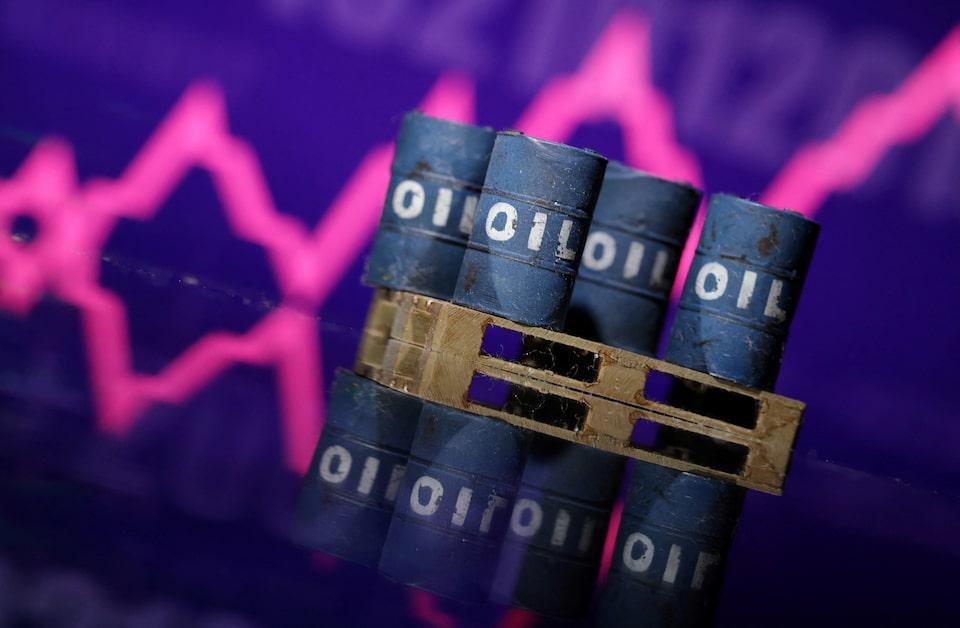
Prices supported by Chinese buying and war risks Brent and WTI benchmarks fell sharply in previous session Sept 12 (Reuters) - Oil prices rose nearly 2% on Friday on renewed concern over Russian crude supply, outweighing pressure from oversupply and weaker U.S. demand risks. Brent crude futures rose $1.31, nearly 2%, to $67.68 a barrel by 1211 GMT and U.S. West Texas Intermediate crude gained $1.12, or 1.8%, to $63.49. Sign up here. The Kremlin said on Friday that there was a pause in peace negotiations between Russia and Ukraine. Negotiators have held three rounds of direct talks this year in Istanbul, most recently on July 23, but the two sides remain far apart on how a possible peace deal might look, which could trigger further Western sanctions against Russia. "Strong sanctions could potentially overshadow the underlying oversupply outlook," said SEB Research analyst Ole Hvalbye. Meanwhile, a drone attack on Russia's northwestern port of Primorsk - one of the country's largest oil and fuel export terminals - led to a suspension of oil loading operations overnight, an official from Ukraine's SBU security service told Reuters. "Those attacks on Russian energy infrastructure have room to drag down Russian crude and refined product exports," said UBS analyst Giovanni Staunovo. The Brent and WTI benchmarks had fallen by 1.7% and 2% respectively on Thursday. A monthly report from the International Energy Agency on Thursday said that global oil supply would rise more rapidly than expected this year because of planned output increases by the OPEC+ group comprising the Organization of the Petroleum Exporting Countries and allies such as Russia. However, OPEC's own report later in the day made no change to its relatively high forecasts for oil demand growth this year and next, saying the global economy was maintaining a solid growth trend. While there is a risk of a tumble in oil prices, factors such as tightness in the distillates market, sustained buying from China to fill inventories and potential sanctions on Russia and secondary sanctions on its customers are keeping the market supported, said PVM Oil Associates analyst John Evans. On the supply side, India's largest private port operator, Adani Group, has banned tankers sanctioned by Western countries from entering all of its ports, three sources told Reuters and documents show, potentially curbing Russian oil supplies. India is the biggest buyer of Russian seaborne oil, mostly shipped on tankers that are under sanctions by the European Union, United States and Britain. https://www.reuters.com/business/energy/oil-prices-jump-almost-2-risks-russian-output-2025-09-12/