2025-09-12 12:29
First reported drone strike on Primorsk, a key Baltic export hub Two vessels and pumping station caught fire; blaze extinguished No oil product spill risk, according to the governor Over 30 drones destroyed over the region, governor says MOSCOW, Sept 12 (Reuters) - A Ukrainian drone attack on Russia's northwestern port of Primorsk suspended loadings at the country's largest oil terminal for the first time, according to two industry sources and Ukraine's military. The drone strike, the first reported such attack on the port, set fire to two vessels, the industry sources said. The Russian governor of the region around the port said a drone attack had set fire to one vessel and a pumping station and did not report any suspension of operations. Sign up here. Kyiv has intensified drone attacks on Russian energy infrastructure as it pushes for talks to end the war in Ukraine, trying to cut Russia off from its main source of revenue - crude oil sales - by limiting export capabilities. Ukraine's SBU security agency said it had hit the Primorsk port with drones overnight leading to a fire and the suspension of loading operations. Oil loadings from Primorsk were suspended early on Friday, two industry sources familiar with oil loadings from the port said. It was not clear if the operations had resumed at the time of writing. WHICH TANKERS WERE HIT? The Transneft pipeline operator operating the port and Russia's Energy Ministry did not immediately respond to requests for comment. Two oil tankers, Kusto and Cai Yun, were hit by the attack, according to the industry sources. Kusto is an Aframax tanker owned and managed by Solstice Corp, according to LSEG. Cai Yun is an Aframax owned and managed by Acceronix Ltd. Both are registered in the Seychelles, public databases show. Since early August, Ukraine has intensified attacks on Russia's energy infrastructure, including refineries and pipelines, as peace talks remain stalled. Other ports, including nearby Ust-Luga and the Black Sea's Novorossiisk, have been repeatedly targeted in recent months. Russia has revised its September crude export plan from western ports to 2.1 million barrels per day (bpd), an 11% increase from the initial schedule, as drone strikes on domestic refineries have reduced local demand for crude. Governor Alexander Drozdenko said the fire on the vessel at Primorsk, which he did not identify, was extinguished, and there was no risk of an oil product spill. More than 30 drones were destroyed over the region, he added in the Telegram post, without mentioning the war in Ukraine. Comments under his post reflected local anxiety. "How long will this go on for? I haven't slept all night and all morning. I only wish everything would be okay. The child doesn't sleep, just tries to fall asleep, then bang, bang — it's just awful. I wish it would all end soon," wrote a user named Sashulya. Primorsk is located on the Gulf of Finland near St. Petersburg. Russia's air transport agency Rosaviatsia said Pulkovo Airport in St. Petersburg suspended operations for several hours on Friday morning. Russia's military said its air defense systems intercepted and destroyed 221 Ukrainian drones overnight, including nine over the Moscow region. Asked for comment, Ukraine's General Staff spokesperson said the military did not have immediate information on the reported strike. https://www.reuters.com/world/ukrainian-drones-strike-russias-largest-oil-terminal-first-time-2025-09-12/

2025-09-12 12:11
Gold prices have risen twofold since late 2022 Gunvor is developing trading from precious metal concentrates to refined bars Others like Mitsui's unit are expanding precious metals business LONDON, Sept 12 (Reuters) - Global commodity trading house Gunvor (GGL.UL) is expanding its precious metals business from trading derivatives into physical metal and has hired specialists in the London and Singapore trading hubs, the company told Reuters. Gunvor's expansion in the sector coincides with a rally that has seen gold prices rise twofold since late 2022 as investors sought shelter from global economic and geopolitical turbulence. Spot gold hit a record high of $3,674 per troy ounce on Tuesday. GOL/ Sign up here. Global gold market trading volumes averaged $329 billion a day in the first half of 2025, the highest semi-annual value in World Gold Council data going back to 2018. "We are developing the full value chain from gold and silver concentrates to refined bars. The team is coming together with several key traders in place now," said Seth Pietras, head of corporate affairs at Gunvor. FROM DERIVATIVES TO PHYSICAL METAL The core activity at privately-owned Gunvor is energy trading with liquefied natural gas being the main profit contributor. The group has been trading precious metals derivatives but not physical metal. The latest hire is Jonny Duncan, previously a precious metals sales manager at ICBC Standard Bank, one of the leading bullion banks. He joined the trading house in London this month. The precious metals business has been expanding over the last year since Oliver Martin, formerly a senior precious metals trader at mining giant Anglo American (AAL.L) , opens new tab, joined Gunvor in Singapore, Pietras said. He did not disclose the total size of the team. "Our quick growth in this market has resulted from our ability to leverage existing sourcing relationships globally, especially in South Africa," he said, without disclosing revenue from the precious metals business. Gunvor's first-half net profit fell 71% year- on-year to $121 million due to oil oversupply, increased competition, fewer arbitrage opportunities and thin margins. Other players have been expanding their precious metal businesses too. A subsidiary of major Japanese trading house Mitsui & Co (8031.T) , opens new tab hired a specialist earlier this year while French bank Societe Generale (SOGN.PA) , opens new tab is planning a partial comeback to gold trading after quitting the bullion market in 2019. Gunvor's developing physical bullion business is led from London by Gregory Frith - formerly on StoneX's precious metals sales desk. Pietras said he brought wealth of "relationships in the refinery and end-buyer markets.". London is home to the world's largest over-the-counter gold trading hub, where market players trade directly with each other rather than via an exchange. This sector is dominated by bullion banks including HSBC, ICBC Standard Bank and JP Morgan. Singapore is a major precious metals trading centre for Asian clients, while Switzerland, where Gunvor is based, is the world's biggest bullion refining and transit hub. https://www.reuters.com/business/gunvor-expands-precious-metals-business-into-physical-trading-2025-09-12/

2025-09-12 12:07
Sept 12 (Reuters) - Eni's (ENI.MI) , opens new tab Chief Executive Claudio Descalzi met the U.S. energy and interior secretaries on Friday as Washington pushes to seal energy supply deals that it hopes will strengthen its influence in the region while weakening Russia's. In a series of meetings on the sidelines of the Gastech conference in Milan, Descalzi hosted U.S. Secretary of Energy Chris Wright, Secretary of Interior Doug Burgum and Ambassador to Italy Tilman Fertitta, discussing energy security and Eni's expanding investments in the United States, Eni said in a statement. Sign up here. The parties reiterated their mutual satisfaction with a deal signed by Eni and Venture Global (VG.N) , opens new tab in July, the Italian group's first long-term liquefied natural gas deal with a U.S. producer. Italy and the U.S. vowed on Monday to deepen energy cooperation by boosting U.S. LNG exports to Italy, aiming to reinforce Europe's shift away from Russian gas after the Ukraine invasion. https://www.reuters.com/business/energy/eni-ceo-us-delegation-meet-bolster-energy-ties-2025-09-12/

2025-09-12 12:06
Cracks appearing in labour market give green light to Fed Euro awaits Fitch verdict on French finances LONDON, Sept 12 (Reuters) - The dollar inched higher on Friday after falling the day before as a surge in U.S. jobless claims and a modest tick up in inflation kept investors zeroed in on likely Federal Reserve interest rate cuts next week and beyond. The dollar index was up 0.1% at 97.66, but it was still on track to record a weekly fall of 0.1%, its second consecutive weekly decline. Sign up here. On Thursday, data showed the biggest weekly increase in four years in the number of Americans filing new applications for jobless benefits. That overshadowed U.S. consumer inflation data for August, which showed prices rising at the fastest pace in seven months but with increases still modest and broadly in line with expectations. While the mixed data might add some wrinkles to the Fed's policy deliberations next week, investor focus is mostly centered on rate cut prospects for now. "The hurdle to faster cuts is labour market weakness as long as inflation stays well behaved," said Dominic Bunning, head of G10 FX strategy at Nomura. "I still think it's a very high bar to cut by 50 basis points next week," he added. Pricing of Fed fund futures indicates that the market believes the Fed is certain to cut its key interest rate by 25 basis points (bps) on September 17. However, traders have reined in bets on a larger 50 bps rate cut next month, with pricing implying a shallower path of easing before the end of the year than anticipated earlier, according to the CME Group's FedWatch tool. The yield on benchmark 10-year Treasury notes rose four bps to 4.0433% compared with its U.S. close of 4.011%, having fallen below 4% for the first time since April on Thursday. The euro was down less than 0.1% at $1.1725 after rising the day before as traders curbed their bets on another European Central Bank rate cut this cycle, now seeing another move at less than 50%. The ECB kept its key interest rate on hold at 2% for a second straight meeting on Thursday, with chief Christine Lagarde saying that the bank remains in a "good place", adding that risks to the economy had become more balanced than before. Fitch Ratings is expected to give its verdict on French public finances after markets close on Friday following the confidence motion on September 8. "Fitch’s sovereign rating model is, if anything, likely to indicate a small improvement," analysts from Citi wrote in a research report. "Going explicitly against the direction of its model and ‘manually’ downgrading the rating would require the agency to come to the conclusion that the balance of power between stakeholders of public funds has tilted further away from financial creditors since the last rating decision in spring," they wrote. Against the yen, the dollar was trading 0.4% stronger at 147.76 after the U.S. and Japanese governments issued a joint statement on Friday, which reaffirmed that exchange rates should be "market determined" and that excess volatility and disorderly moves in exchange rates were undesirable. Sterling traded at $1.3553 , slipping 0.2% after data showed the British economy stagnated in July. The offshore yuan was last at 7.1234 yuan per dollar , weakening 0.1%, while the Australian dollar was a touch softer at $0.6645 , although it remained near a 10-month high. https://www.reuters.com/world/africa/dollar-regains-some-ground-still-heading-small-weekly-drop-2025-09-12/

2025-09-12 11:53
DENPASAR/JAKARTA, Indonesia, Sept 12 (Reuters) - Two people were still missing on Indonesia's resort island of Bali, officials said on Friday, as flood waters began to recede after killing at least 18 people this week, most of them swept away when rivers burst their banks. Torrential rains on Tuesday and Wednesday caused the fast-rising floods in Denpasar and six of Bali's eight regions, blocking major roads and access to the island's international airport. There were also landslides in some areas. Sign up here. Indonesia's disaster agency said in a statement that the death toll has risen to 18 from a previous 16 and the search for the two missing was still ongoing. Rapid development on the island has not taken into account the need for sufficient drainage infrastructure, said I Nyoman Gede Maha Putra, an architecture and planning expert at the Warmadewa University in Denpasar. "The city planning does not consider disasters," he told Reuters. "All of the infrastructure construction is geared toward making Bali more attractive to tourists and investors." I Wayan Koster, Bali’s governor, was quoted by local media as saying, however, that conversion of land use was not to blame for this week’s flooding in Denpasar. The regional development planning body for the Bali government did not immediately respond to a request for comment. Tourism is Bali's main source of income, and last year, there were more than 6.3 million international tourist arrivals on the island, data from the country's Statistics Bureau shows, exceeding tourist arrivals from 2019, the year before the COVID-19 pandemic ground tourism to a halt. Bali accounted for more than 40% of Indonesia's total tourist arrivals last year. https://www.reuters.com/sustainability/land-use-biodiversity/waters-recede-bali-after-floods-kill-18-people-with-two-still-missing-2025-09-12/

2025-09-12 11:44
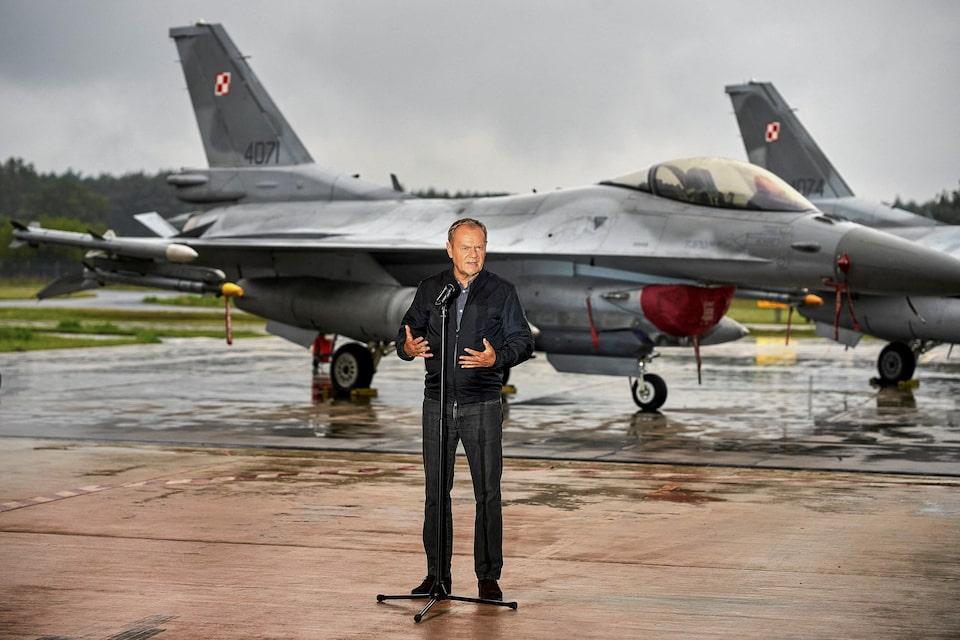
LATEST DEVELOPMENTS NATO chief and top commander to hold press conference EU extends sanctions on individuals over war in Ukraine Extended German air policing takes effect over Poland Russia dismisses concern about military exercise WARSAW, Sept 12 (Reuters) - Poland rejected on Friday a suggestion by Donald Trump that Russian drone incursions into its airspace could have been a mistake, a rare contradiction of the U.S. president from one of Washington's closest European allies. Poland, backed by aircraft from other NATO, shot down drones that had violated its airspace on Wednesday, the first time a member of the Western military alliance is known to have fired during Russia's war in Ukraine. Sign up here. Russia said its forces had been attacking Ukraine at the time and that it had not intended to hit any targets in Poland. Trump told reporters in Washington on Thursday: "It could have been a mistake." But Polish Prime Minister Donald Tusk responded on X: "We would also wish that the drone attack on Poland was a mistake. But it wasn't. And we know it." After strong condemnation of Russia by European leaders over the incident, Germany said it had extended air policing over Poland. The United Nations Security Council was set to meet on Friday at Poland's request to discuss the incident. NATO called a press conference for 1500 GMT by its head, Mark Rutte, and its top military official, Supreme Allied Commander Europe Alexus Grynkewich, who is a U.S. Air Force general. 'NO QUESTION OF A MISTAKE' For Warsaw's leadership so directly to contradict Trump is almost unheard of, and a sign of Europe's alarm at the U.S. president's willingness to give weight to Moscow's account. Poland is among the closest U.S. allies in Europe. It has praised Trump for calling for greater European military spending, and has been praised in turn by the Trump administration for devoting the largest share of its economy to defence of any NATO ally, including the United States itself. Polish Deputy Defence Minister Cezary Tomczyk said: "I think this is a message that should reach President Trump today: there's no question of a mistake - this was a deliberate Russian attack." Warsaw has portrayed the drone incursions as an attempt by Russia to test the capabilities of Poland and NATO to respond. Polish Foreign Minister Radoslaw Sikorski was visiting Kyiv on Friday. QUESTIONS ABOUT EUROPEAN DEFENCES This week's incident has raised questions about NATO's preparedness for drone attacks and the security of Europe's civil air transport. European leaders say it is the latest demonstration that Moscow has no interest in a peace deal in Ukraine, weeks after Trump hosted President Vladimir Putin in Alaska and withdrew a demand that Russia accept an immediate ceasefire. Trump has repeatedly set deadlines for Moscow to agree a ceasefire or face new sanctions, only to row back. European officials have been in Washington this week hoping to coordinate sanctions on Russia with the U.S. administration. Announcing such sanctions in tandem was previously standard practice but has not taken place since Trump returned to office. EU member states agreed on Friday to a regular six-month extension to their existing list of travel bans and freezes on bank accounts of people and companies over the Russian invasion. Kremlin spokesman Dmitry Peskov said on Friday peace negotiations were on pause and that "the Europeans are hindering this" peace process. France said the Russian ambassador would be summoned on Friday. On Thursday Paris said it would deploy three Rafale fighter jets to help Poland protect its airspace and Germany said it would strengthen its commitment to NATO's eastern border. Japan said it had decided to lower its price cap on Russian crude oil to punish Moscow for its continued war in Ukraine. RUSSIAN ATTACKS AND UKRAINIAN DRONE STRIKES Russia and its close ally Belarus began a long-planned joint military exercise on Friday involving drills in both countries and in the Baltic and Barents seas. Dismissing concerns abroad about the exercise, Peskov said Western European countries were suffering "emotional overload" and that Russia did not pose a threat to them. Russia also pressed on with attacks on Ukraine, killing three people in the northern Ukrainian region of Sumy, local Ukrainian prosecutors said. Ukrainian drones attacked Russia's northwestern port of Primorsk, setting fire to a vessel and a pumping station, the regional governor said. It was the first reported drone strike on one of the country's largest oil and fuel export terminals. https://www.reuters.com/business/aerospace-defense/poland-says-russian-drone-incursions-could-not-have-been-mistake-contradicting-2025-09-12/