2025-09-12 09:59
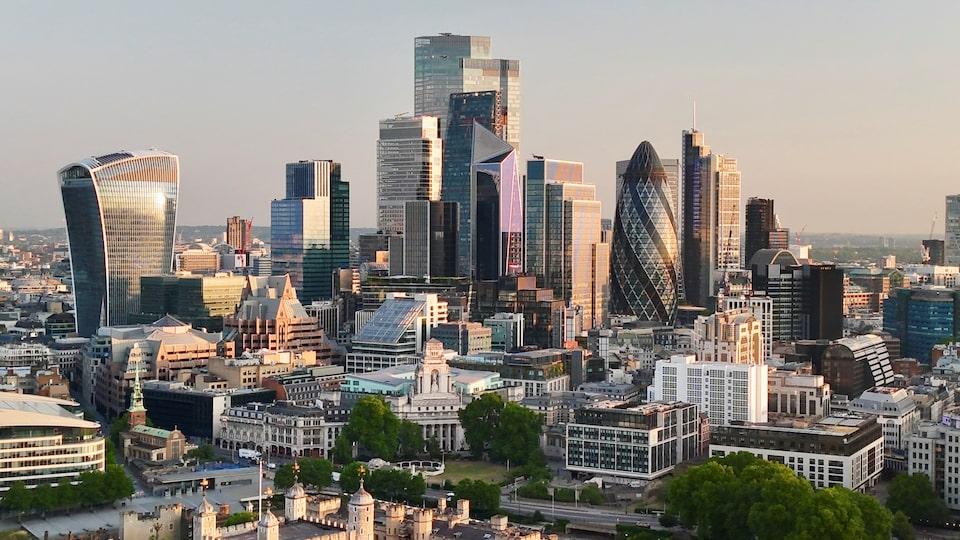
LONDON, Sept 12 (Reuters) - The British public's expectation for inflation in around five years' time rose in August to its highest since May 2019 at 3.8%, according to a Bank of England survey on Friday, which may unsettle some policymakers ahead of next week's rate decision. The measure of longer-term public inflation expectations increased from 3.6% in May while expectations for inflation in the next 12 months rose to a two-year high of 3.6%, up from 3.2% three months earlier. Sign up here. Surveys of public inflation expectations are not viewed by economists as a forecast, but are seen as a risk factor for higher inflation, as they increase the chance that people will push for higher wages and accept higher price increases. Members of the BoE's Monetary Policy Committee place varying weight on this type of survey. Some view it as more of a knee-jerk reaction to recent inflation data, while others regard it as reflecting a possible loss of confidence in the central bank's willingness to get inflation back to its 2% target. Net satisfaction with the BoE's approach to controlling inflation dropped in the survey to +2 in August from +6 in May, although it is still higher than it has been for most of the past three years. British consumer price inflation rose to an 18-month high of 3.8% in July, the highest in the Group of Seven advanced economies, and last month the BoE forecast it would reach 4% in September before returning to target in the second quarter of 2027. The BoE cut rates by a quarter-point to 4% in August, but financial markets see almost no chance of a rate cut next week and only a roughly 40% chance of a cut later this year, according to LSEG data. https://www.reuters.com/world/uk/uk-publics-long-term-inflation-expectations-rise-highest-since-2019-2025-09-12/
2025-09-12 09:48
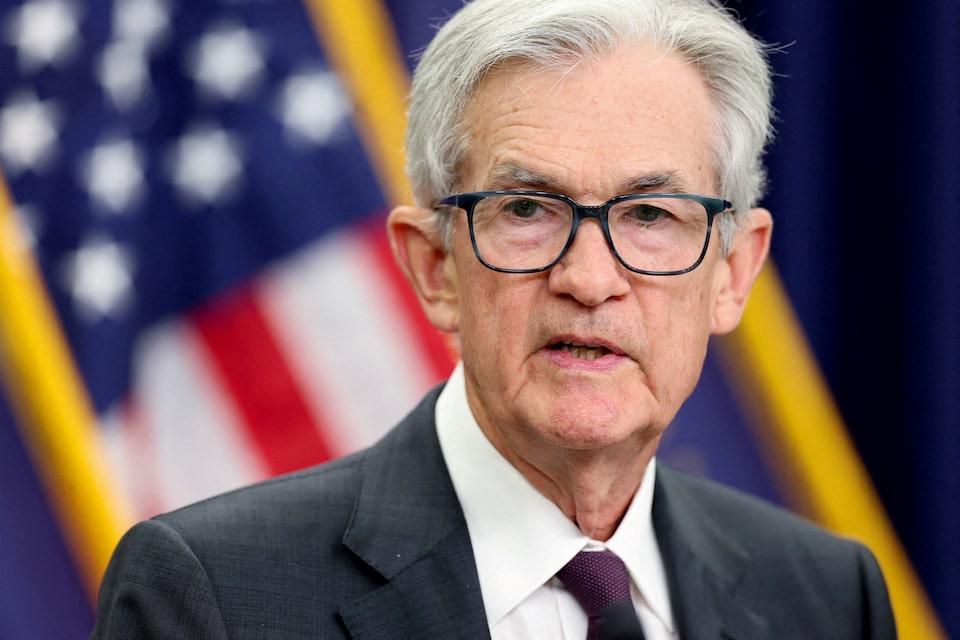
Sept 12 (Reuters) - The moment investors - and at least one occupant of the White House - have been waiting for is almost here. The Federal Reserve is one of a number of major central banks that meets in the coming week to set monetary policy, and its decision could set the tone for markets for the rest of the year. Sign up here. Here's your look at the week ahead from Kevin Buckland in Tokyo, Alden Bentley in New York and Dhara Ranasinghe, Karin Strohecker and Amanda Cooper in London. 1/ THE FED, FINALLY The week's main event is shaping up to be a resumption of U.S. monetary easing after a nine-month pause. Over the past two weeks, bad news on the jobs front and tame inflation readings from CPI and PPI reports have paved the way for the Fed to cut rates by at least 25 basis points after its Tuesday-Wednesday meeting, resuming the easing path that ran from last September to December. Some Fed officials, including Chair Jerome Powell at the Jackson Hole symposium last month, have been signalling a cut was coming. The questions have been: when? and how many? President Donald Trump, for one, believes the answers are something like: immediately, and a lot. Betting in futures markets suggests a quarter-point cut in the 4.25%-4.5% Fed funds target is all but certain, with a 10% chance of a super-sized 50 bps cut. By December, at least 75 bps of easing is priced in. 2/ BOJ TIMING Whether or not U.S. Treasury Secretary Scott Bessent is right about the Bank of Japan being behind the curve, a rate hike on September 19 looks like a long shot. For one thing, Japan won't know who its next prime minister is until October 4 at the earliest, and the front-runners couldn't be much further apart in their views on fiscal and monetary policy. Sanae Takaichi, potentially the country's first female premier, is an Abenomics disciple backing higher spending and looser monetary conditions. Shinjiro Koizumi, who at 44 would be its youngest premier, is the continuity candidate, close to outgoing fiscal hawk Shigeru Ishiba. Another complication is potential Fed easing. A BOJ hike in that environment could roil Japan's already fragile bond market, accelerate yen strength, and knock stocks off their record peaks. Traders now see a rate hike by year-end as a coin toss, compared with a 72% bet last month after Bessent's last jab. 3/ READY FOR MORE? Europe's not missing out on a central-bank packed week. The Bank of England is tipped to hold rates steady on Thursday, and analysts have pushed back forecasts for future rate cuts, citing sticky inflation. August inflation numbers are out a day earlier and could add to a sense that further cuts are unlikely soon. UK jobs data is released on Tuesday. Still, the UK isn't alone in grappling with higher-than-anticipated inflation that casts doubt over central banks' ability to keep cutting rates. Norway's central bank also meets on Thursday. Markets are pricing a roughly 70% chance of a quarter-point rate reduction, but underlying inflation - running at 3.5% year-on-year - makes traders less confident of a move. A day after the Fed, Thursday's European rate decisions are likely to highlight a growing dispersion among big central banks. 4/ ...AND THEN THERE IS THE REST Several major emerging market central banks also have rate decisions. Having announced a new and lower policy objective of achieving 3% inflation, central bankers in South Africa will have to re-anchor inflation expectations and might keep rates on hold at 7%, with some expecting there is room to cut soon. Brazil - having hiked 450 bps over the past 12 months - is expected to keep rates at a nearly 20-year high of 15% on Wednesday. But slowing growth and downside inflation surprises could spark debate on when cuts might start. Faced with uncertainty over fiscal expansion, analysts are undecided over whether Indonesia's central bank will cut, or keep rates at 5%, on Wednesday after the sacking of respected Finance Minister Sri Mulyani - widely seen as one of the few checks on President Prabowo Subianto's big growth and spending promises that have unnerved many investors. 5/ NOT BAD FOR A RELIC Gold has virtually doubled in value in the space of three years and is up nearly 40% in 2025, set for its strongest yearly gain since 1980's 126% surge. It has beaten even bitcoin , which is up "only" 22%. A weaker dollar tends to favour gold, as do falling interest rates and lower real yields - those that strip out inflation. What else favours gold - and has been delivered in spades this year - is geopolitical uncertainty, persistent inflation and a desire to ditch dollars. The price has vaulted above $3,600 an ounce and a lot of demand is coming from central banks and other buyers with a longer investment horizon. Not bad for what economist John Maynard Keynes once dubbed the "barbarous relic". https://www.reuters.com/business/take-five/global-markets-themes-repeat-graphic-2025-09-12/
2025-09-12 09:41
Japan's interest rates are too low, Gyoten says Weak yen could accelerate inflation, he says Gyoten was involved in the 1985 Plaza Accord TOKYO, Sept 12 (Reuters) - The Bank of Japan should be mindful of the risk of inflation accelerating due to the yen's prolonged weakness, as Japan's interest rates remain ultra-low, former top currency diplomat Toyoo Gyoten told Reuters. "It's a matter of fact that Japan's interest rates have been simply too low, and that's undeniably contributing to the yen's weakness," said Gyoten, who was involved in the 1985 Plaza Accord, which saw five major economies agree to a concerted devaluation of the dollar. Sign up here. "Naturally, there's concern that if this situation is left unattended, it could accelerate inflation (through higher import costs). The BOJ really needs to take this into consideration," he said in an interview. The BOJ exited a massive, decade-long stimulus last year and raised short-term rates to 0.5% in January on the view Japan was on the cusp of sustainably achieving its 2% inflation target. While consumer inflation has exceeded the BOJ's target for well over three years, governor Kazuo Ueda has vowed to go slow in hiking rates due to uncertainty over the impact of U.S. tariffs on Japan's economy. The yen plunged to 38-year lows past 161 per dollar last year. It has partly rebounded, but has remained weak for much of this year and was last fetching around 147 on the dollar. Gyoten, now honorary advisor to Mitsubishi UFJ Financial Group's (8306.T) , opens new tab main banking arm, said the yen's weakness would be corrected if Japan gradually moves toward further tightening, narrowing the interest rate gap with the United States. "Looking at the yen's value from a historical perspective, it's still too weak. There's no reason why the yen shouldn't strengthen significantly from here," he said. Gyoten, who became vice finance minister for international affairs in 1986, recalled the public outcry when the yen shot up in the aftermath of the Plaza Accord. The BOJ responded with massive monetary easing to shield the exports-reliant economy from the currency shock. But the move fuelled asset bubbles that later burst, leaving deep scars on what is now the world's fourth-largest economy. "Rather than trying to stop the yen's appreciation, Japan should have accepted a stronger yen and used it as an opportunity to reduce its dependence on exports and shift to a new growth model," he said. Regarding lingering caution among export-oriented industries about a strong yen, he noted that the sentiment "has changed quite a bit from the past." Unlike in earlier times when a strong yen was seen as inherently negative, there is now a growing awareness that the perspective of ordinary consumers has to be taken into account, Gyoten said, referring to households getting crunched by higher costs of living due partly to the weak yen. https://www.reuters.com/world/boj-should-watch-out-inflation-risks-weak-yen-ex-japan-fx-diplomat-says-2025-09-12/

2025-09-12 07:59
JAKARTA, Sept 12 (Reuters) - An Indonesian task force has seized plots spanning hundreds of acres from miners PT Weda Bay Nickel and PT Tonia Mitra Sejahtera for lack of relevant forestry permits, officials said on Friday. The world's largest producer of nickel products is cracking down on illegal exploitation of natural resources, with President Prabowo Subianto saying last week that more than 1,000 such mining operations were identified. Sign up here. The crackdown boosted nickel prices, with benchmark three-month nickel on the London Metal Exchange up 1.32% at $15,350 a metric ton by 0801 GMT. The most-traded contract on the Shanghai Futures Exchange closed daytime trade up 1.28% at 121,800 yuan a ton. A 148-hectare (366-acre) area at PT Weda Bay Nickel's concession has been seized for the lack of a forestry licence needed to exploit the plot, mining ministry official Rilke Jeffri Huwae said. "They have the mining permit, but they don't have the borrow-to-use permit for the forest," Rilke said. Weda Bay Nickel, controlled by China's Tsingshan Holding Group, France's Eramet SA and Indonesia's Aneka Tambang, spans 45,000 hectares (111,000 acres) on Indonesia's island of Halmahera. Weda Bay is trying to seek clarification from the task force, said a company source who sought anonymity in the absence of authorisation to speak to media. Eramet Indonesia said it was fully committed to comply with all applicable rules, while assessing the situation. "We respect the decisions of the Indonesian authorities and fully support PT WBN in working closely with the authorities to ensure all activities undertaken meet the required legal and regulatory standards," it said in a statement. The seized plot was a rock quarry for construction material and did not cover the mining extraction site, Eramet said, adding that it did not expect significant impact on Weda Bay's operation. Images from a regional news channel showed authorities, some in military uniform, putting up a sign showing the area was now under government control. The government had closed off the area, Eramet said. The task force has also seized an area of 173 hectares (427 acres) managed by PT Tonia Mitra Sejahtera in Southeast Sulawesi, said Febrie Adriansyah, a senior prosecutor at the attorney general's office. Tonia's mining permit covers nearly 5,900 hectares (14,580 acres), ministry data showed. The task force has identified a total of 4.2 million hectares (10 million acres), managed by 51 companies, as lacking proper forestry permits, Febrie added. https://www.reuters.com/sustainability/indonesia-cites-lack-forestry-permits-land-seizures-nickel-miners-2025-09-12/

2025-09-12 07:28
IEA expects oversupply to increase with OPEC+ output boost US consumer prices rise, Fed likely to cut rates Sept 12 (Reuters) - Oil prices fell on Friday, extending the previous session's hefty losses as concerns about oversupply and weaker U.S. demand outweighed worries about the risk of supply disruption from conflict in the Middle East and Ukraine. Brent crude futures fell 55 cents, or 0.83%, to $65.82 a barrel by 0703 GMT, and U.S. West Texas Intermediate crude fell 57 cents, or 0.91%, to $61.80. Sign up here. "The (U.S.) inflation battle doesn't quite look won, which dampens the demand outlook for oil from the world's largest economy," said Priyanka Sachdeva, senior market analyst at brokerage Phillip Nova. "Even geopolitical unrest is failing to support oil prices, as fundamentals point to an oversupply and lacklustre demand," Sachdeva added. Government reports on Thursday showed U.S. consumer prices in August increased by the most in seven months and a surge in first-time applications for unemployment aid last week. The data fuelled expectations that the Federal Reserve will cut interest rates next week to try and boost economic growth, which would in turn drive up demand for oil. Oil prices had gained as much as 2% earlier this week on the potential for disruptions to output or trade flows from conflicts, but the benchmarks started tumbling on Thursday - wiping out those gains. The slide began after the International Energy Agency (IEA) said in a monthly report that world oil supply would rise more rapidly than expected this year due to planned output increases by the Organization of the Petroleum Exporting Countries and allies such as Russia, a grouping known as OPEC+. OPEC, in its own report, made no change to its relatively high global oil demand growth forecasts for 2025 and 2026, saying the world economy was maintaining a solid growth trend. The crude market keeps toggling between surplus supply pressures and concerns about short-term disruptions, but the geopolitical worries are providing diminishing support to prices, SDIC Futures said in a daily report. OPEC+ decided on Sunday to further raise its oil output quotas from October as the group's leader, Saudi Arabia, pushes to regain market share. Saudi Arabia's crude oil exports to China are set to surge, several trade sources told Reuters on Thursday, with state-controlled energy firm Aramco (2222.SE) , opens new tab shipping about 1.65 million barrels per day that way in October, up sharply from 1.43 million bpd allocated in September. In Russia, the world's second-biggest producer of crude behind the U.S. in 2024, revenue from crude and oil products sales declined in August to one of the lowest levels seen since the start of the war in Ukraine, the IEA said. An Energy Information Administration report on Wednesday said U.S. crude stocks rose last week by 3.9 million barrels to 424.6 million barrels. https://www.reuters.com/business/energy/oil-prices-extend-losses-oversupply-us-demand-concerns-2025-09-12/
2025-09-12 07:24
Australia aims to be key supplier for Western allies' supply chain Trip comes as US builds up domestic defence, battery industries Delegation will not include Australia's trade or resources ministers MELBOURNE, Sept 12 (Reuters) - More than 20 Australian critical minerals companies including Trafigura unit Nyrstar (NYR.BR) , opens new tab will head to the U.S. next week to explore areas for collaboration, four sources familiar with the matter told Reuters. The delegation led by the Australian Trade and Investment Commission (Austrade) will attend meetings in New York and Washington with senior officials from the Trump administration. Sign up here. Although sources described the trip as fairly routine, the companies will arrive after Australian Prime Minister Anthony Albanese and President Donald Trump last week spoke about opportunities for critical minerals companies in both countries to co-operate more closely. Australia has requested a meeting with Trump and Albanese will travel to the United Nations General Assembly in New York later this month although no meetings have been announced. Australia is striving to position itself as a key supplier to Western allies as they build an alternative supply chain to China while the U.S. is readying to deploy funding to build out its battery and defence industries. Reuters reported last month that the Trump administration was considering a plan to reallocate at least $2 billion from the CHIPS Act, which supports semiconductor research and chip factory construction, to fund critical minerals projects. Nyrstar last month won Australian government support to assess the possibility of producing four critical minerals across two aging smelters, including antimony which is used in ammunition and for which China has limited exports. But Nyrstar would need more funds to bring that plan into action. The meetings were described as a chance to better understand the Trump administration's priorities as well as meet administration officials and build relationships, with some attendees angling for funding opportunities. Among other miners going are Australia's top lithium producer Pilbara Minerals (PLS.AX) , opens new tab which largely supplies lithium to China and South Korea, International Graphite (IG6.AX) , opens new tab, which is building out processing capabilities from its Western Australian graphite mine, and Cobalt Blue (COB.AX) , opens new tab, which is developing its Broken Hill cobalt project in New South Wales. Spokespeople from Pilbara Minerals, International Graphite and Cobalt Blue confirmed that company representatives would be in attendance next week. The delegation will not include Australia's Trade Minister Don Farrell or Resources Minister Madeleine King. The ministers' offices did not immediately respond to requests for comment on prospects for major announcements. Australia already has a critical minerals partnership with the United States and under legislation passed in late 2023, Australian mineral deposits qualify as domestic supply for U.S. defence procurement. https://www.reuters.com/world/asia-pacific/australian-critical-minerals-companies-head-washington-2025-09-12/