2026-01-30 11:05
Brent projected to average $62.02 per barrel in 2026 WTI projected to average $58.72 per barrel in 2026 For table of crude price forecasts, click Jan 30 (Reuters) - Oil prices are likely to hold near the $60 a barrel mark this year, as the prospect of oversupply in the market offsets the impact of geopolitical tensions that could disrupt cargoes, a Reuters poll showed on Friday. The survey of 31 economists and analysts conducted in January forecast that Brent crude would average $62.02 per barrel in 2026, slightly up from December's forecast of $61.27. Brent was trading around $70 on January 30 and averaged around $68.20 last year. Sign up here. U.S. crude is projected to average $58.72 per barrel, compared with December's estimate of $58.15. Prices averaged $64.73 in 2025. Geopolitics are at the fore following U.S. President Donald Trump’s threats to Iran, expanded sanctions on Russia, and unrest across the Middle East. All pose supply risks. However, analysts said U.S. trade policy shifts, China’s demand trajectory, and OPEC+’s next steps will also steer prices this year. "Geopolitics brings lots of noise but neither the events in Venezuela nor Iran should ultimately alter the big picture. The oil market appears to be in a lasting surplus," said Norbert Ruecker, head of economics & next generation research at Julius Baer. Analysts expect that surplus to range from 0.75 to 3.5 million barrels per day. VENEZUELA SUPPLY ADDITIONS WILL TAKE TIME Analysts broadly expect it to take years for any major increase in production from Venezuela after the U.S. capture of President Nicolas Maduro earlier this month. Kpler anticipates Venezuelan supply will dip through April because of the U.S. crackdown on tankers under sanctions, but that it will rebound in the second half of the year as existing infrastructure is reactivated. Any increases in oil production beyond this will require sustained investment, prolonged political stability, the replacement of ageing infrastructure and the backing of international firms, Kpler added. OPEC+ POLICY IS ALSO IN FOCUS OPEC+, which meets on Sunday, is unlikely to take any decisions beyond March at the meeting, three OPEC+ delegates told Reuters. The eight members raised oil output targets by around 2.9 million barrels per day last year, but paused those hikes for the first quarter of 2026. "OPEC+ will defend a price floor while also watching its market share. If consumption grows enough, the coalition could carefully increase output to meet rising demand without flooding the market," said Cyrus De La Rubia, chief economist at Hamburg Commercial Bank. https://www.reuters.com/business/energy/oil-forceast-hover-near-60bbl-oversupply-outweighs-geopolitical-risks-2026-01-30/
2026-01-30 10:27
Indexes down: Dow 0.36%, S&P 500 0.43%, Nasdaq 0.94% Apple manages small gain after earnings report Small-cap Russell 2000 underperforms large caps Gold and silver miners fall, tracking metal prices Jan 30 (Reuters) - Wall Street's main indexes closed lower on Friday as investors viewed President Donald Trump's nomination of former Federal Reserve Governor Kevin Warsh as a hawkish choice to succeed Federal Reserve Chair Jerome Powell, while also digesting earnings reports and a high inflation reading. On top of assessing the risks from U.S. tensions with countries including Iran, investors were also worried about the prospect of another U.S. government shutdown after new barriers emerged in the Senate to a deal that would ensure continuation of funding for agency operations. Sign up here. At the Fed, Warsh, 55, is expected to favor lower interest rates but stop short of the more aggressive monetary easing linked to some other potential nominees. With Powell's term ending in May, Warsh, if confirmed by the Senate, would take the helm of a central bank he has argued should scale back its role in the economy and rethink its approach to monetary policy. "Markets are calibrating to Trump's pick of Kevin Warsh ... and the outlook for monetary policy," said Michael Hans, chief investment officer at Citizens Wealth, who also pointed to an unwinding of recent trading patterns with the U.S. dollar gaining ground on Friday and precious metals selling off sharply. Meanwhile, in earnings, Apple (AAPL.O) , opens new tab shares regained ground to close up 0.4% after earlier losses a day after the iPhone maker released quarterly results. On the data front, producer prices increased more than expected in December, suggesting inflation could pick up in the months ahead. "There's a combination of investor concerns around the Fed chair announcement, some mixed tech earnings and lingering inflation pressure as well as some uncertainty about a potential government shutdown even though it should be short-lived," said Angelo Kourkafas, senior global strategist at Edward Jones. The Dow Jones Industrial Average (.DJI) , opens new tab fell 179.09 points, or 0.36%, to 48,892.47, the S&P 500 (.SPX) , opens new tab lost 29.98 points, or 0.43%, to 6,939.03 and the Nasdaq Composite (.IXIC) , opens new tab lost 223.30 points, or 0.94%, to 23,461.82. The rate-sensitive, small-cap Russell 2000 index (.RUT) , opens new tab has recently been outperforming large-cap indexes but on Friday it lagged with a 1.6% loss for the day. But the Russell 2000 ended the month up more than 5%, compared with monthly advances of 1.4% for the S&P 500 and 0.9% for the Nasdaq. The Dow, meanwhile, climbed 1.7% for January, to notch a ninth consecutive monthly advance, its longest winning streak since 2018. For the week, the S&P 500 rose 0.3%, the Dow fell 0.4% and the Nasdaq fell 0.2%. The S&P's Materials index (.SPLRCM) , opens new tab led declines among the S&P 500's 11 major industry sectors, with a 1.9% loss, as U.S.-listed gold and silver miners tumbled in sympathy with the massive selloff in gold prices and in silver. Defensive consumer staples (.SPLRCS) , opens new tab was the sector with the biggest advance on the day, rising 1.4%. Colgate-Palmolive (CL.N) , opens new tab was its biggest gainer, closing up 5.9%, after the maker of toothpaste and soap forecast annual sales above Wall Street estimates on steady demand for household staples in markets such as Latin America and Europe. Investors have given a mixed reception to megacap earnings reports this week with a stark warning that record capital‑spending binges will be tolerated as long as the growth keeps coming. Apple wrapped up the week with a forecast of higher-than-expected revenue growth of up to 16% for the March quarter, but warned that rising memory-chip prices had started to pressure profitability. Microsoft (MSFT.O) , opens new tab ended down 0.7% on Friday after falling 10% on Thursday for its deepest daily loss since March 2020 after its cloud revenue failed to impress. Meta (META.O) , opens new tab shares closed 3% lower on Friday. After falling on Thursday following its results, Tesla (TSLA.O) , opens new tab shares rose 3.3% on Friday, providing the S&P 500 with its biggest boost, after reports that SpaceX is exploring deals with the electric-vehicle maker and other companies run by Elon Musk. Verizon Communications (VZ.N) , opens new tab was the S&P 500's second-biggest boost, finishing up 11.8% after it forecast annual profit and free cash flow above market expectations on Friday, after aggressive promotions during the peak holiday period fueled its highest quarterly wireless subscriber additions in six years. SanDisk (SNDK.O) , opens new tab shares rallied 6.9% after a better-than-expected third-quarter forecast as AI fuels storage demand. But KLA Corp (KLAC.O) , opens new tab shares tumbled 15.2% even after the company beat Wall Street expectations for second-quarter profit and revenue. Declining issues outnumbered advancers by a 1.59-to-1 ratio on the NYSE where there were 247 new highs and 154 new lows. On the Nasdaq, 1,599 stocks rose and 3,222 fell as declining issues outnumbered advancers by a 2.02-to-1 ratio. The S&P 500 posted 19 new 52-week highs and 10 new lows while the Nasdaq Composite recorded 72 new highs and 205 new lows. On U.S. exchanges, 23.88 billion shares changed hands compared with the 19.42 billion moving average for the last 20 trading sessions. https://www.reuters.com/business/wall-street-futures-fall-trump-set-announce-fed-chair-pick-2026-01-30/
2026-01-30 10:25
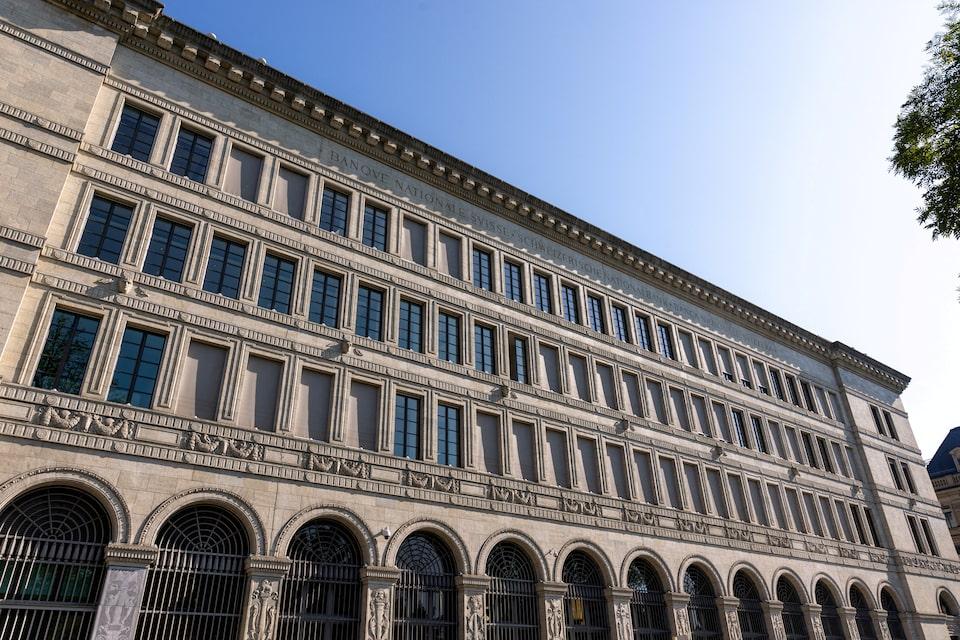
Swiss National Bank says it does not manipulate currency Swiss remain on U.S. Treasury monitoring list Remaining on list won't affect SNB policy, analyst says ZURICH, Jan 30 (Reuters) - The Swiss National Bank on Friday denied manipulating the Swiss franc after the U.S. Treasury kept Switzerland on a watch list of countries that might manage their currencies to win an "unfair" trade advantage. The U.S. Treasury said it was strengthening its monitoring of foreign exchange practices, including interventions to resist both depreciation and appreciation against the dollar. Sign up here. It did not accuse any major partners, but Switzerland was found to meet two of the three criteria for possible currency manipulation. However, its foreign currency interventions, calculated at around $7 billion in the 12 months to June 2025, were seen as "relatively modest". The SNB said it had taken note of the U.S. report on trading partners' macroeconomic and foreign exchange policies, where Switzerland featured alongside nine other countries including China, Japan and Korea. "The SNB does not engage in any manipulation of the Swiss franc," it said in a statement. "It neither seeks to prevent balance of payments adjustments nor to gain unfair competitive advantages for the Swiss economy." It said it remained in contact with U.S. authorities to explain Switzerland's economic situation and monetary policy. It also referred back to a joint statement from September in which the U.S. Treasury recognised that foreign exchange interventions were important for the SNB to meet its target of controlling inflation. The SNB had remained on the sidelines for much of the period, only stepping up interventions in April 2025 to stem the franc's appreciation after President Donald Trump unveiled a barrage of global tariffs. Karsten Junius, economist at J.Safra Sarasin, said he did not think SNB policy would change: "The SNB is not acting to win an unfair advantage for the Swiss economy, but only seeking to neutralise an unfair disadvantage of a safe-haven currency, whose appreciation pushes inflation downwards." SNB Chairman Martin Schlegel last week told Reuters foreign currency interventions and interest rates remained the bank's main tools to obey its legal mandate of keeping inflation between 0% and 2%. In December, Schlegel said the central bank remained willing to be active in the foreign exchange markets "as necessary". https://www.reuters.com/business/finance/swiss-say-not-engaged-fx-manipulation-after-us-strengthens-currency-monitoring-2026-01-30/
2026-01-30 10:25
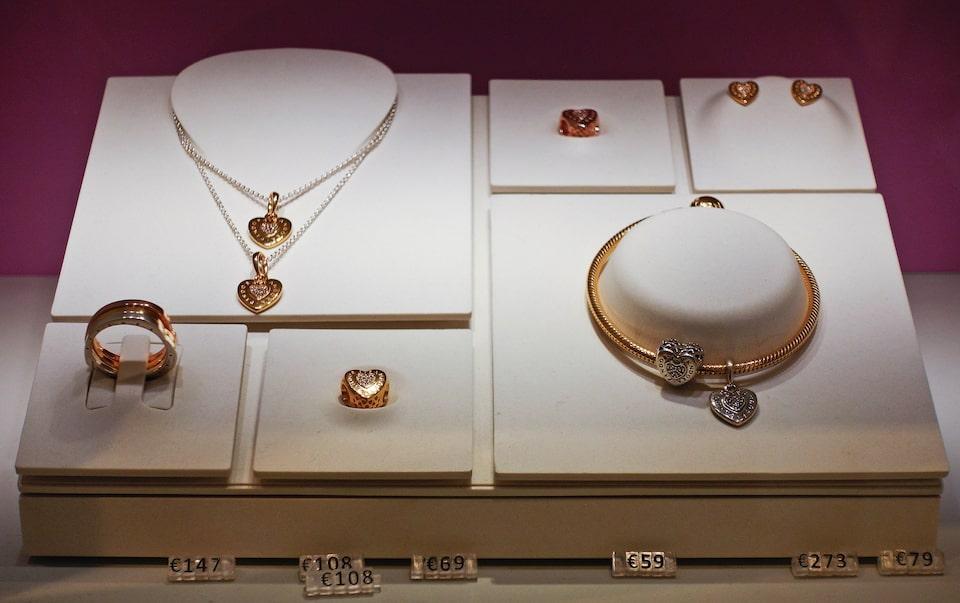
Italian jewellers adapt designs to reduce gold content Small jewellers face most acute challenges Big brands like LVMH also affected Wedding rings highlight price sensitivity, demand for gold remains strong Jan 29 (Reuters) - In Italy's storied gold‑making hubs, jewellers are reworking their designs to trim gold content as they race to blunt the impact of record prices and appeal to shoppers watching their budgets. Gold prices hit a record high on Thursday, surging near $5,600 an ounce, more than double a year ago as geopolitical concerns and jitters over trade pushed investors towards the safe-haven asset. Sign up here. The rally is putting undue pressure on small artisans as they face mounting demands from clients including international brands to produce cheaper items, from signature pieces to wedding rings, according to interviews with four independent jewellers in Italy's main jewellery-making hubs. "The main question that I've heard in the last months is if I can produce something lighter while having the same appearance," said Massimo Lucchetta, owner of Lucchetta 1953, an independent jeweller which makes items for department stores in Bassano del Grappa, near Italy's premier gold-crafting hub of Vicenza in the country's northeast. CUTTING THE WEIGHT BUT KEEPING THE SHAPE Vicenza, known as one of Italy's three "cities of gold" alongside Arezzo in Tuscany and the Golden Valley of Valenza in Piedmont, hosts twice a year the Vicenzaoro fair, a global event for jewellery and watchmaking. In Arezzo, several jewellery makers have stepped up the use of machinery that keeps a piece's shape while cutting its metal content, said Giordana Giordini, owner of independent jewellery brand Giordini. That could, for instance, keep the size of a pendant unchanged but cut its weight in half: "The person is still buying the same idea of what it is," she said from her workshop in Arezzo. Giordini supplies wholesalers and some retail stores, with nine out of 10 of its products shipped to international markets. Italy in 2024 accounted for 11.2% of the $130 billion global jewellery market, according to a recent study by bank Mediobanca. Over 6,800 companies operate in the gold, silver and jewellery industry in Italy, employing almost 34,000 people, the study says. SMALLER JEWELLERS TAKE A HIT, BIG NAMES ARE NOT IMMUNE Cecile Cabanis, finance chief at luxury behemoth LVMH (LVMH.PA) , opens new tab, said on Tuesday the price of gold had a negative impact on the performance of its watches and jewellery business, which includes high-end jewellery brands like Bulgari and Tiffany. That comes even though the French conglomerate, which has its flagship gold manufacturing site in Valenza, has implemented hedging measures, including the use of financial derivatives and negotiating the forecast price of future precious metals deliveries, according to its yearly report. The pressure on smaller workshops is, however, more acute. They are unable to hedge, due to the expense and the risks of trading in financial derivatives. Sharp day-to-day swings in the price of gold and silver have a direct effect on retail prices as raw material costs are directly passed on to customers, said Giordini. A gold necklace that cost 300 euros ($358) some months ago may now be priced at 500 euros, she said. Giordini said fluctuations in the price of gold can affect the costs facing businesses like hers by tens of thousands of euros, as they pay for raw materials upfront. Valenza jeweller Alessia Crivelli, who is also the vice president of trade group Confindustria Federorafi, said another option for producers is to recover and reuse scrap metals from their own production lines. Using recycled or resold gold is, however, close to impossible because it can be difficult to certify its origin. WEDDING RINGS IN FOCUS While high-end clients may view gold jewellery as an investment and remain willing to absorb higher prices, the need to also serve the less affluent consumers is driving the focus on reducing weight, said another producer from Valenza. "If brands need a certain price positioning, they ask us in development to pay more attention to the final weight," the producer added, asking not to be named because of client confidentiality concerns. Wedding rings, where weight constitutes a significant share of the cost, are becoming a focal point in price sensitivity for couples: "If before they spent around 600 euros, today they may have to spend more than 2,000," the producer said. However, demand for gold jewellery is expected to endure as consumers continue to look at the metal as a store of value. "In the end, they pay for gold because they want it to be gold," said the producer. ($1 = 0.8385 euros) https://www.reuters.com/world/india/gold-rally-pushes-italian-jewellers-make-leaner-designs-2026-01-30/
2026-01-30 10:19
OPEC+ likely to keep current output policy, sources say Brent crude prices rise to highest since August Kazakhstan's Tengiz oilfield recovering from disruptions LONDON, Jan 30 - OPEC+ is likely to keep its pause on oil output increases for March when it meets on Sunday, five delegates told Reuters, even as crude climbs above $70 a barrel on concern the U.S. could launch a military strike on OPEC member Iran. The meeting of eight OPEC+ members, which pump about half the world's oil, comes as Brent crude has risen to almost $72 a barrel, its highest since August, despite speculation that a supply glut would push prices down. Sign up here. The eight producers - Saudi Arabia, Russia, the United Arab Emirates, Kazakhstan, Kuwait, Iraq, Algeria and Oman - raised production quotas by about 2.9 million barrels per day from April through December 2025, roughly 3% of global demand. They then froze further planned increases for January through March 2026 because of seasonally weaker consumption. Three of the five OPEC+ delegates, who all asked not to be identified as they are not authorised to speak to the media, said Sunday's meeting was unlikely to take any decisions beyond March. OPEC and authorities in Saudi Arabia and Russia did not immediately respond to requests for comment. Also on Sunday, a separate OPEC+ panel called the Joint Ministerial Monitoring Committee is scheduled to meet, delegates said. The JMMC does not have decision-making authority on production policy. U.S. President Donald Trump has intensified pressure on Iran to curb its nuclear programme, threatening military action and deploying a U.S. naval group to the region. Washington has imposed extensive sanctions on Tehran to choke off its oil revenue, a crucial source of state funding. Trump is weighing targeted strikes on security officials and senior figures to stir unrest and potentially weaken the ruling system, Reuters reported on Thursday, citing U.S. sources. Oil prices have also been supported by supply losses in Kazakhstan, where the oil sector has suffered a series of disruptions in recent months. Kazakhstan on Wednesday it was restarting the huge Tengiz oilfield in stages. https://www.reuters.com/business/energy/opec-set-keep-oil-production-pause-march-prices-jump-sources-say-2026-01-30/
2026-01-30 10:17
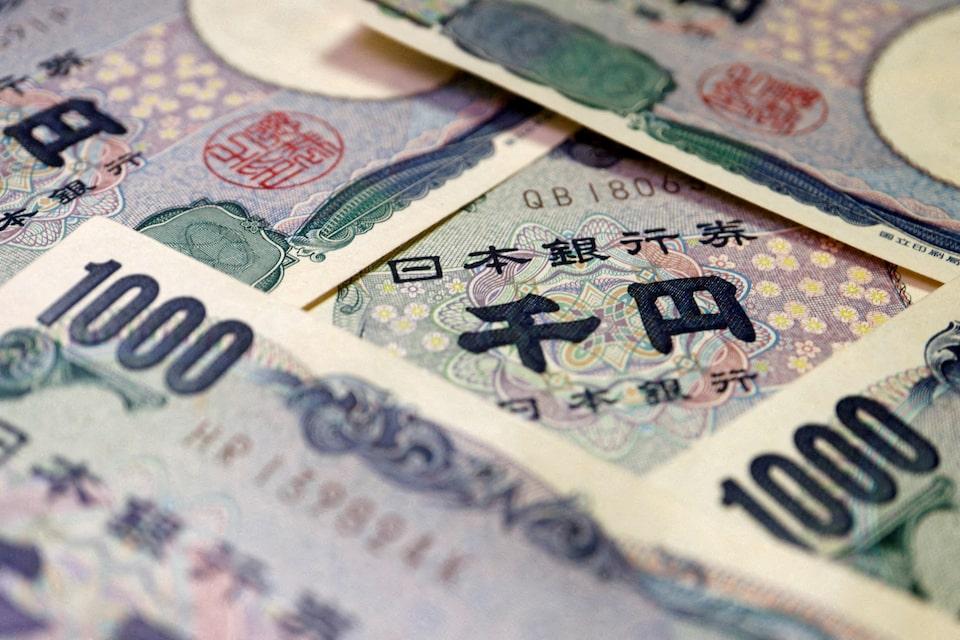
Japan maintains readiness to act, with $1.16 trillion in foreign reserves Yen jumped 1.7% last week after trading near 18-month low Prime Minister Takaichi seeks mandate amid economic volatility TOKYO, Jan 30 (Reuters) - Japan refrained from intervening in currency markets through last week, official data showed on Friday, confirming that the government's efforts to defend the yen have been limited to verbal warnings. Ministry of Finance data showed Japan spent no funds on intervention from December 29 through January 28. On January 23 after a decision by the Bank of Japan, the yen mysteriously jumped 1.7% after trading near an 18-month low against the dollar. Sign up here. The yen rallied for two more days after that on reports of rate checks, a common precursor to intervention, from finance officials in Tokyo and Washington, suggesting a rare instance of coordinated action to bolster Japan's currency. But money market data from the Bank of Japan this week did not show the typical massive outflows that occur when the government steps into the currency market. Finance Minister Satsuki Katayama and top currency diplomat Atsushi Mimura have declined to comment on the reported rate checks, with the latter saying Japan would maintain close coordination with the United States on foreign exchange and act appropriately. The yen trimmed its weekly advance on Friday, sliding 0.5% to 153.79 per dollar. Japanese authorities have typically refrained from confirming intervention, while warning that they stand ready to counter one-sided, speculative currency moves. Tokyo still has plenty of firepower to act, with foreign currency reserves standing at $1.16 trillion as of December. "History tells you that intervention is only a temporary solution to a weaker currency," said Rodrigo Catril, a currency strategist at National Australia Bank in Sydney. "There are real and fundamental arguments as to why the yen is where it's at." The yen's protracted decline and a recent surge in Japanese government bond (JGB) yields to record levels are manifesting investor concern about the nation's strained finances. The volatility comes at a delicate time, with Prime Minister Sanae Takaichi seeking a mandate for her mission to reflate the economy at a snap election on February 8. The nation's most recent bouts of currency market intervention came in 2024, when the government spent a record 15.3 trillion yen ($99.43 billion) to prop up the yen as monetary policy diverged sharply between the Federal Reserve and BOJ. ($1 = 153.8800 yen) https://www.reuters.com/world/asia-pacific/japans-fx-market-intervention-limited-verbal-warnings-mof-data-shows-2026-01-30/