2025-09-12 07:01
Government imposes 48 new rules to protect nearby ancient rock art Critics say decision will set back climate action Plant and its LNG to generate 4.3 bln tons of carbon emissions SYDNEY, Sept 12 (Reuters) - Australia gave final approval on Friday for Woodside (WDS.AX) , opens new tab to operate the country's oldest and second-largest liquefied natural gas plant until 2070, while imposing 48 "strict" new rules in a bid to limit its environmental impact. The decision to extend the life of the North West Shelf plant in Western Australia caps a seven-year approvals process dogged by appeals and backlash from green groups, who say it will imperil nearby ancient rock art and set back efforts to curb climate change. Sign up here. The federal and state governments had to balance those concerns with the interests of one of Australia's largest export industries, which is the biggest source of LNG for key ally Japan. Environment Minister Murray Watt said on Friday Woodside had agreed to 48 conditions that were "technically feasible" but would protect the Indigenous Murujuga rock art in the area by limiting emissions. "Some of the gases that are emitted at this facility, which if not controlled properly, could have a significant impact on the rock art," he told reporters. "We are confident that the conditions that we’ve set are the right ones to protect the jobs in and the economic opportunities arising from the plant but also importantly to protect the rock art." The rock art is estimated to be up to 50,000 years old and is of cultural and spiritual significance to Indigenous Australians. It was inscribed on the UNESCO World Heritage List in July. Watt also set additional legal protections for parts of the site under federal heritage law, while ensuring "this decision does not stop industry from operating". The North West Shelf plant's existing licence had been set to expire in 2030. The four-decade extension was given preliminary approval in May, but Woodside then battled with the government over the conditions for nearly four months. Watt said Woodside had agreed to specific limits on pollutants, including cutting levels of nitrogen oxide emissions by 60% in five years and 90% by 2061. Rock art experts have said such emissions risk degrading the petroglyphs by turning into acid rain. "This final approval provides certainty for the ongoing operation of the North West Shelf Project, so it can continue to provide reliable energy supplies as it has for more than 40 years," said Liz Westcott, Woodside's chief operating officer for Australia. The company was committed to protecting the rock art, she said. 'CARBON BOMB' Critics condemned the decision as a blow to Australia's efforts to curb climate change, with the plant and its LNG expected to generate up to 4.3 billion metric tons of carbon emissions over its lifetime. "It is a betrayal of Australians who voted for action on climate change, and of our Pacific neighbours," said Mark Ogge, principal advisor at The Australia Institute. The Australian Conservation Foundation said the conditions were inadequate in preventing “climate damage” caused by the plant, calling it a "carbon bomb". The North West Shelf LNG plant was Australia's largest until July, when Woodside shut one of its five processing trains, reducing its capacity to 14.3 million metric tons a year as the offshore gas fields that long fed the plant are drying up. The extension lays the groundwork for Woodside to bring online new supply, including its Browse offshore project, the country's biggest untapped conventional gas resource. Woodside's partners in the North West Shelf venture are units of BP (BP.L) , opens new tab, Chevron (CVX.N) , opens new tab, Shell (SHEL.L) , opens new tab, Japan's Mitsui & Co (8031.T) , opens new tab and Mitsubishi Corp (8058.T) , opens new tab, and China's CNOOC (600938.SS) , opens new tab. Woodside shares closed down 3.4% with oil prices falling. https://www.reuters.com/business/energy/australia-gives-north-west-shelf-gas-plant-final-approval-run-until-2070-2025-09-12/
2025-09-12 06:56
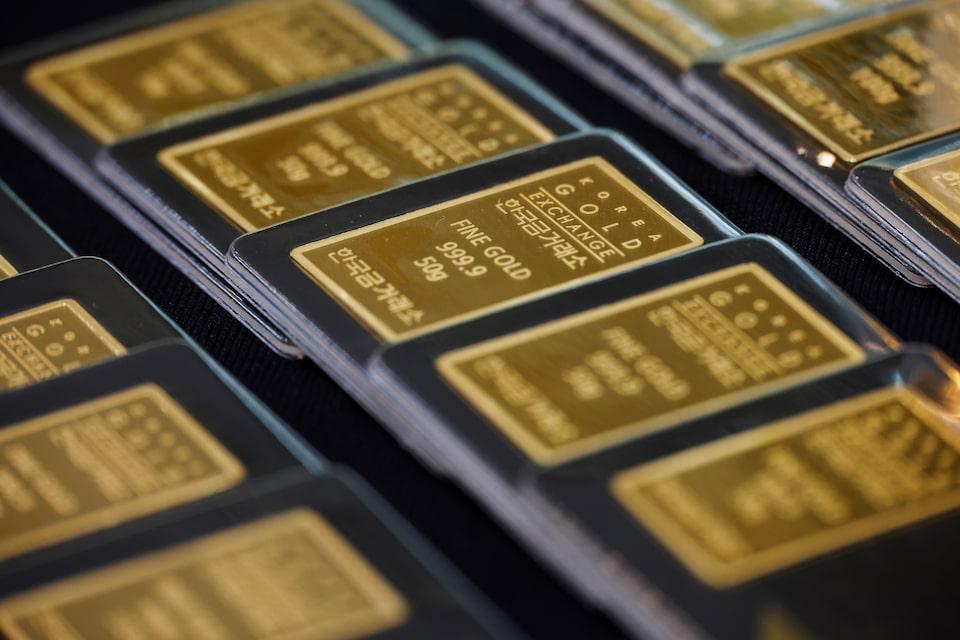
Sept 12 (Reuters) - UBS raised on Friday its gold price forecast by $300 to $3,800 per ounce by the end of 2025, and by $200 to $3,900 by mid-2026, citing anticipated Federal Reserve easing and U.S. dollar weakness linked to rate cuts and geopolitical risks. The Swiss bank also revised its estimate for gold exchange-traded fund (ETF) holdings, projecting levels to exceed 3,900 metric tons by the end of 2025, approaching the previous record of 3,915 tons set in October 2020. Sign up here. "We maintain an Attractive view on gold and stay long the metal in our global asset allocation. Moreover, our analysis suggests a mid-single-digit percentage allocation to gold is optimal," UBS said in a note. The bank highlighted geopolitical concerns and policy differences between the U.S. administration and the Federal Reserve as key factors boosting gold's appeal, along with U.S. President Donald Trump's stance favouring lower interest rates. UBS expects central bank purchases of gold to remain robust at around 900-950 tons this year, or slightly below last year's near-record purchases of just above 1,000 tons. "The key risk for gold is if the Fed is forced to raise rates due to inflation-related upside surprises," UBS added. Non-yielding bullion, often considered a safe-haven asset during periods of economic and geopolitical uncertainty and known to perform well in low-interest-rate environments, hit a record high of $3,673.95 on Tuesday and has gained more than 39% year-to-date. https://www.reuters.com/markets/commodities/ubs-raises-gold-price-target-3800oz-by-end-2025-2025-09-12/
2025-09-12 06:53
FRANKFURT, Sept 12 (Reuters) - European Central Bank policymaker Martins Kazaks on Friday singled out the ECB's December meeting as key to determining whether inflation was set to stray from the bank's 2% target. The European Central Bank left interest rates unchanged on Thursday and maintained an upbeat view on growth and inflation, dampening expectations for any further cut in borrowing costs. Sign up here. Kazaks said the ECB should avoid providing any guidance in an environment marred by geopolitical risks, but said the December 18 gathering, at which the central bank will update its economic projections, was "rich" in information. "Of course December is rich because we’ll get a new set of projections and we’ll see if there is a deviation from 2% and how large and persistent that is likely to be," Latvia's central bank governor told Reuters in an interview. Sources had also told Reuters policymakers would not have enough information by their next meeting in October 29 to assess the impact of U.S. tariffs, and saw the following gathering as key. The ECB's latest projections, published on Thursday, see inflation falling from around 2% currently to 1.7% next year and 1.9% in 2027. Kazaks added that a delay to the European Union's new Emissions Trading System 2 (ETS2), which has been baked into the ECB's projections for 2027, would have "quite a sizeable" downside impact on inflation. "The ETS 2 is baked into our projections for 2027 and is worth some 0.3 percentage points," Kazaks said. "If it doesn’t happen for political reasons, that would have quite a sizeable impact." The new EU carbon market will impose a CO2 price on suppliers of polluting fuels used in cars and buildings. But Germany, the Czech Republic and 14 other countries have demanded the European Union introduce stricter price controls to the bloc's new carbon market, over fears that the policy will raise consumers' bills. Kazaks also cited the euro's exchange rate, which pushes down import prices when it rises and vice-versa, and potentially "deflationary" Chinese exports into the euro zone as key risks. "So uncertainty is high and there are many risk scenarios," he said, adding that this reinforced the case for making rate decisions meeting-by-meeting, based on incoming data. https://www.reuters.com/business/finance/ecbs-kazaks-flags-rich-december-meeting-carbon-price-risk-2025-09-12/

2025-09-12 06:47
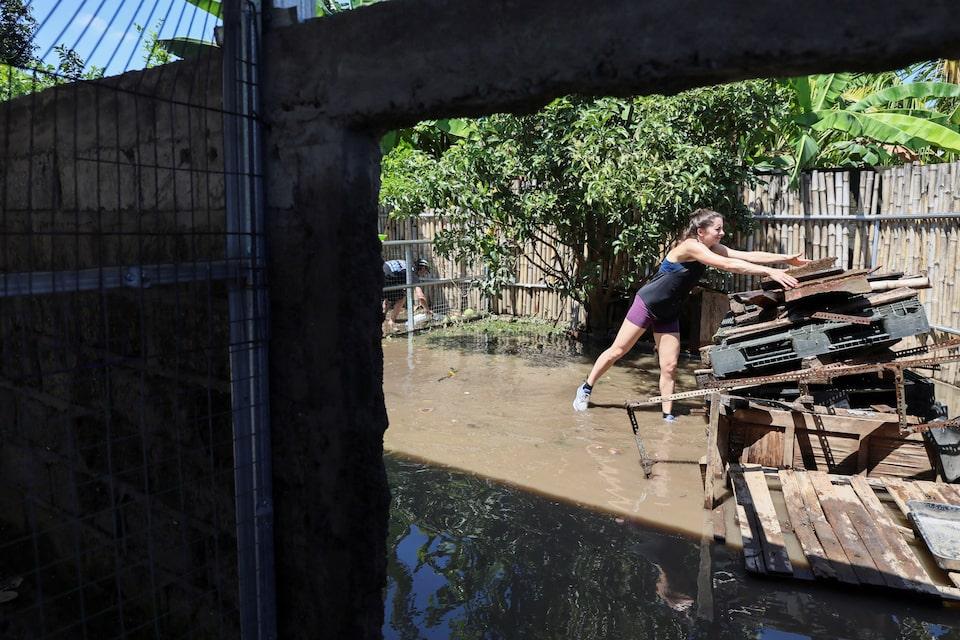
DENPASAR/JAKARTA, Indonesia, Sept 12 (Reuters) - Two people were still missing on Indonesia's resort island of Bali, officials said on Friday, as waters began receding after flooding killed at least 16 people this week, most of them swept away when rivers burst their banks. Torrential rains on Tuesday and Wednesday caused the fast-rising floods in Denpasar and six of Bali's eight regions, blocking major roads and access to the island's international airport. There were also landslides in some areas. Sign up here. Rapid development on the island did not take into account the need for sufficient drainage infrastructure, said I Nyoman Gede Maha Putra, an architecture and planning expert at the Warmadewa University in Denpasar. "The city planning does not consider disasters," he told Reuters. "All of the infrastructure construction is geared toward making Bali more attractive to tourists and investors." I Wayan Koster, Bali’s governor, was quoted by local media as saying, however, that conversion of land use was not to blame for this week’s flooding in Denpasar. The regional development planning body for the Bali government did not immediately respond to a request for comment. Tourism is Bali's main source of income, and last year, there were more than 6.3 million international tourist arrivals on the island, data from the country's Statistics Bureau shows, exceeding tourist arrivals from 2019, the year before the COVID-19 pandemic ground tourism to a halt. Bali accounted for more than 40% of Indonesia's total tourist arrivals last year. The search for the two missing people was still ongoing on Friday, said I Nyoman Sidakarya, the head of Bali's search and rescue body. https://www.reuters.com/sustainability/land-use-biodiversity/waters-recede-bali-after-floods-kill-16-people-with-two-still-missing-2025-09-12/
2025-09-12 06:30
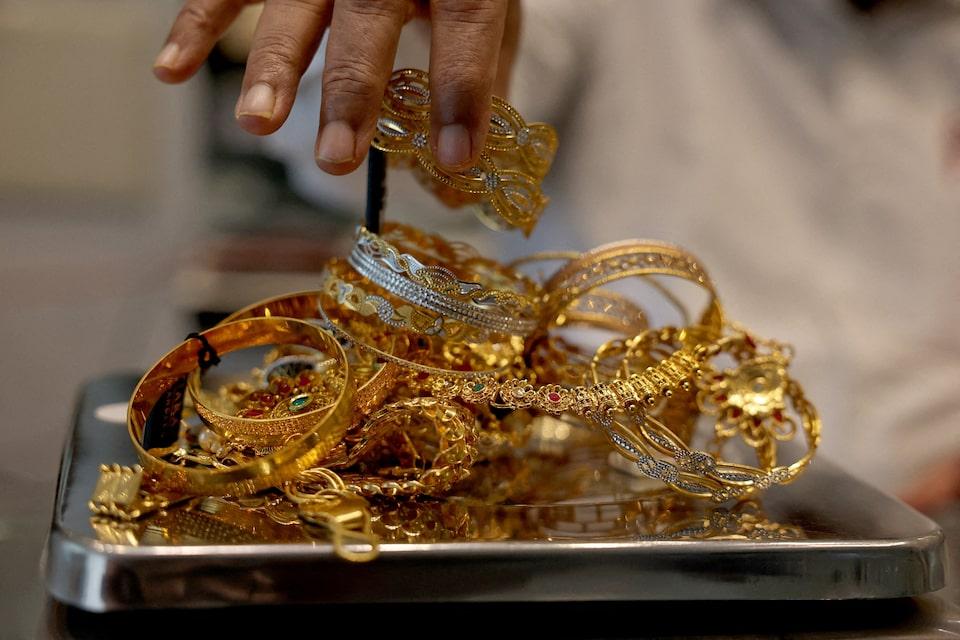
US CPI increases 0.4% in August Initial jobless claims jump to 263,000 last week Gold has gained 1.9% so far this week Silver, platinum, palladium set for weekly gain Sept 12 (Reuters) - Gold prices rose on Friday and were set for a fourth consecutive weekly gain, as mounting concerns over a weakening U.S. labour market eclipsed inflation worries ahead of a widely expected Federal Reserve rate cut next week. Spot gold was up 0.5% at $3,651.92 per ounce, as of 0609 GMT. The contract hovered near a record high of $3,673.95 touched on Tuesday. Bullion has gained 1.8% so far this week. Sign up here. U.S. gold futures for December delivery were up 0.5% at $3,690.30. "Now the market is looking for a high chance of at least three interest rate cuts before 2025 ends, which is much more than earlier projections from two months ago," OANDA senior market analyst Kelvin Wong said, adding that this is helping gold at the moment. U.S. consumer prices rose 0.4% in August, the steepest monthly rise in seven months, while data on Wednesday showed an unexpected decline in U.S. producer prices in August. Weekly jobless claims surged last week, underscoring a material softening in labour market conditions. This followed the U.S. employment report last Friday, which signalled job growth nearly stalled in August. The Fed is widely anticipated to lower its key interest rate by 25 basis points on Wednesday, with a slim possibility of a 50-basis-point reduction, according to CME Fedwatch tool , opens new tab. Non-yielding bullion, often considered a hedge against inflation and economic uncertainties, tends to perform well in a low-interest-rate environment. "It's not far off from $3,700 ... so that could happen at any moment. In the short term, we see some resistance at about $3,900 according to our technical analysis, but long term, we feel that it is probably still heavily under-owned by most institutions," said Ryan McIntyre, managing partner at Sprott Inc. The yellow metal has risen about 39% so far this year, driven by a soft dollar, strong central bank buying, dovish monetary policy and heightened global uncertainty. Elsewhere, spot silver rose 1.2% to $42.07 per ounce, platinum was up 1.1% at $1,393.71 and palladium gained 1% to $1,200.31. All three metals were set for a weekly rise. https://www.reuters.com/world/india/gold-set-fourth-weekly-gain-soft-us-data-fed-rate-outlook-2025-09-12/
2025-09-12 06:24
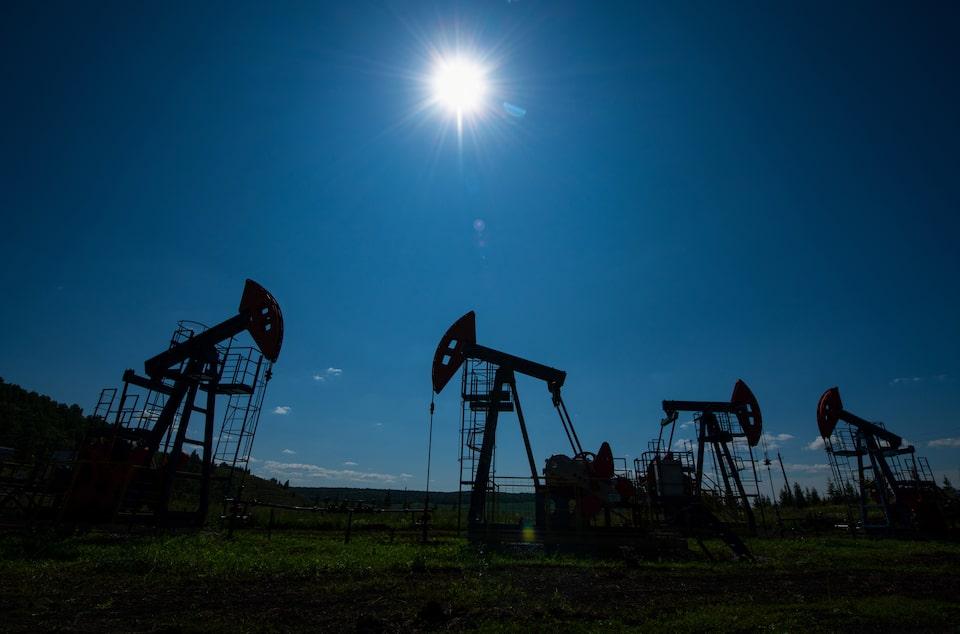
TOKYO, Sept 12 (Reuters) - Japan lowered its price cap on Russian crude oil to $47.60 per barrel from $60, effective on Friday, to punish Moscow for its continued war in Ukraine, although the move is largely symbolic as nearly all Japan's current Russian crude imports are exempt. The measure follows the European Union's action in July to lower its price cap on Russian crude to $47.60 as part of its 18th sanctions package against Moscow. Sign up here. Tokyo has agreed with other G7 countries to phase out Russian oil imports in response to Moscow's 2022 invasion of Ukraine. However, Japan continues to buy Sakhalin Blend crude, a byproduct of liquefied natural gas production at the Sakhalin-2 project, which is vital to Japan's energy security as it accounts for about 9% of its LNG imports. Transactions related to the Sakhalin project are exempt from the price cap rule, an official at the industry ministry said, adding that the reduced oil price cap is expected to have no actual impact on Japan's crude procurement. Japan bought 95,299 kilolitres, or 599,413 barrels, of crude from Russia between January and July, accounting for just 0.1% of its total imports, finance ministry trade data showed. Japan will also impose additional asset freeze and export control sanctions on entities in Russia and other countries to join the international effort to achieve peace in Ukraine, Chief Cabinet Secretary Yoshimasa Hayashi told a regular briefing. https://www.reuters.com/business/energy/japan-cuts-price-cap-russian-oil-4760-additional-sanction-2025-09-12/