2025-09-12 06:16
Latest handover cements Agrinas status as largest palm oil firm It now has production potential of 5.7 million tons CPO Aims to build dozens of new mills JAKARTA, Sept 12 (Reuters) - Indonesia handed over 674,178 hectares (1.7 million acres) of palm oil plantations to state firm Agrinas Palma Nusantara on Friday, taking to 1.5 million hectares (3.7 million acres) the total area of land given to the company. The handover solidifies Agrinas' status as the world's largest palm oil company by land size. A government task force said Agrinas now has the potential to produce 5.7 million metric tons of crude palm oil annually. Sign up here. The company aims to start expanding its palm oil processing capacity to augment output that now falls short of that potential, however, Director Zulham Syakwan Koto told reporters, without giving details. "We currently have 17 mills," Zulham said. "However, with such a large area, we plan to have dozens more in the future. More will be added next year." The output will be used for the government's cheap cooking oil programme in the short term and for bioenergy in the longer term, he added. Some areas handed over to Agrinas are in damaged condition and it is working to return them to normal, he said. Indonesia has cracked down on the illegal use of forest, targeting plantations and mining areas, with the government also announcing on Friday the seizure of parts of two mining areas. Another 1.8 million hectares seized from illegal operators by a government task force are also being verified prior to their handover to Agrinas later, said Febrie Adriansyah, a senior prosecutor with the office of the attorney general. The companies whose land has been seized will also face fines that authorities will soon start calculating and collecting, Febrie added. "These fines are basically for the illegal gains amassed while the state lands were used illegally. So the profit must be returned," said Febrie, a member of the task force, adding that the government would keep control of the land after the penalties. https://www.reuters.com/markets/commodities/indonesias-agrinas-adds-sprawling-palm-areas-plans-dozens-more-mills-2025-09-12/

2025-09-12 05:48
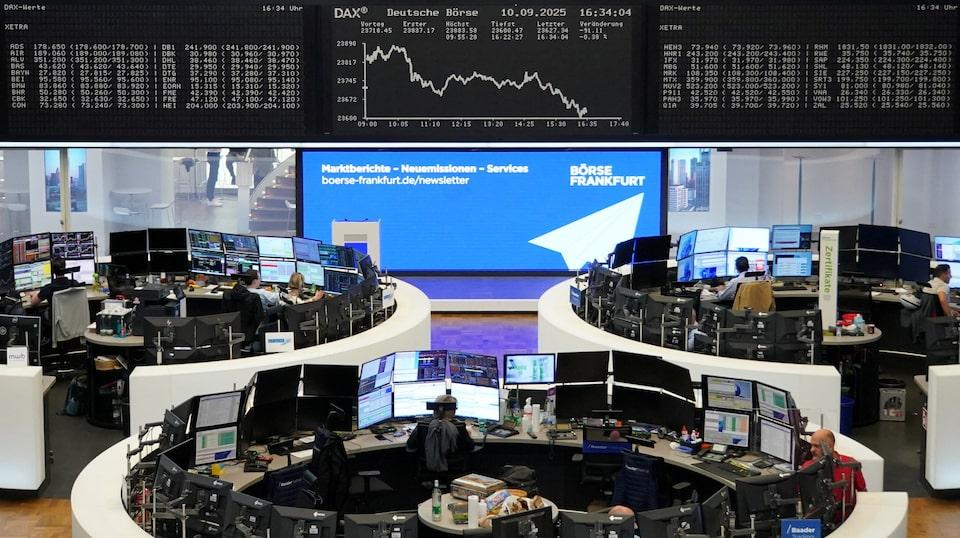
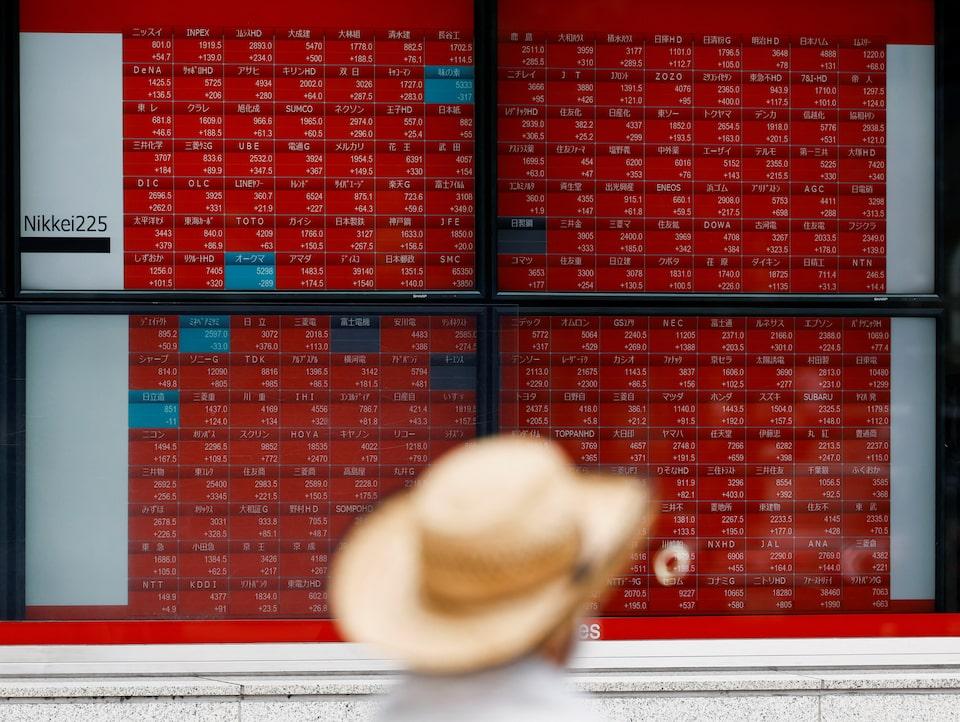
Asian stock markets : Nikkei, KOSPI hit fresh records, tracking Wall St Markets lean toward three Fed rate cuts by year end Bond yields down for the week, dollar flatlines SYDNEY, Sept 12 (Reuters) - Asian share markets followed Wall Street higher on Friday as expectations for rapid-fire U.S. rate cuts promised to lower borrowing costs globally, a relief to stressed bond markets and a drag on the dollar. The joy spread to European shares with the EUROSTOXX 50 futures , FTSE futures and DAX futures all up 0.2%. S&P 500 futures and Nasdaq futures were flat, having hit new peaks overnight. Sign up here. Indexes in Japan, South Korea and Taiwan were all at or near record peaks, while Chinese stocks hit a 3-1/2 year high, spurred by extravagant expectations for AI-related earnings growth. The U.S. consumer price report had been the last major hurdle to the Federal Reserve cutting interest rates next week, and it proved unthreatening, if a little firm. Indeed, costs in the CPI that feed into the Fed's preferred measure of core personal consumption expenditures (PCE) were on the soft side, leading analysts at Citi to predict a steady reading of 2.9% for August. "It's an encouraging reading for Fed officials preparing to engage in a series of rate cuts," said Veronica Clark, an economist at Citi. "We continue to expect 125bp of rate cuts over the next five FOMC meetings, with growing risk that the Fed will continue cutting rates below 3%." Markets continue to imply a 100% chance of a quarter-point cut to 4.00%-4.25% next week, and ramped up the probability of two further easings this year to around 90%. The Treasury market has already eased in anticipation with 10-year yields down 20 basis points in the past two weeks, effectively a rate cut given mortgage rates are tied to yields in the United States. That drop helped soothe concerns in some other major bond markets, particularly in Europe, pressured by political uncertainty and expanding fiscal burdens. In Asia, Japan's Nikkei (.N225) , opens new tab climbed 1.0% to another all-time high, bringing gains this week to 4.1%. South Korea (.KS11) , opens new tab added 1.3%, taking its weekly rise to almost 6%. Chinese blue chips (.CSI300) , opens new tab held steady, having hit the highest since early 2022, while MSCI's broadest index of Asia-Pacific shares outside Japan (.MIAPJ0000PUS) , opens new tab jumped 1.2%. ECB IN A GOOD PLACE In currency markets, the dollar was back at 147.40 yen , having briefly been as high as 148.20 the previous session. Japanese and U.S. finance ministers on Friday released a statement reaffirming that neither country would target currency levels in their policies. The euro held at $1.1728 , having got a modest fillip on Thursday when the European Central Bank kept rates unchanged and signalled it was in a "good place" on policy. "This suggests the Governing Council is not inclined to ease in the absence of a large growth shock," said Greg Fuzesi, an economist at JPMorgan. "We have thus moved back our call for a final rate cut from October to December." "We recognise the ECB might be done with cuts, but still think downside growth risks and the inflation outlook justify an easing bias." After the meeting, ECB sources told Reuters the December meeting would be the most realistic time frame to debate whether another cut was needed to buffer the economy. Markets imply only a one-in-five chance of a December easing, and around a 60% probability the ECB is done for this cycle. In commodity markets, gold firmed 0.5% to $3,654 an ounce , just off the record top of 3,673.95 hit early in the week. Oil prices were under pressure after the International Energy Agency predicted an even larger record oil surplus next year as OPEC continues to pump more product. Brent dropped 0.6% to $65.91 a barrel, while U.S. crude eased 0.8% to $61.88 per barrel. https://www.reuters.com/world/china/global-markets-wrapup-2pix-2025-09-12/
2025-09-12 05:37
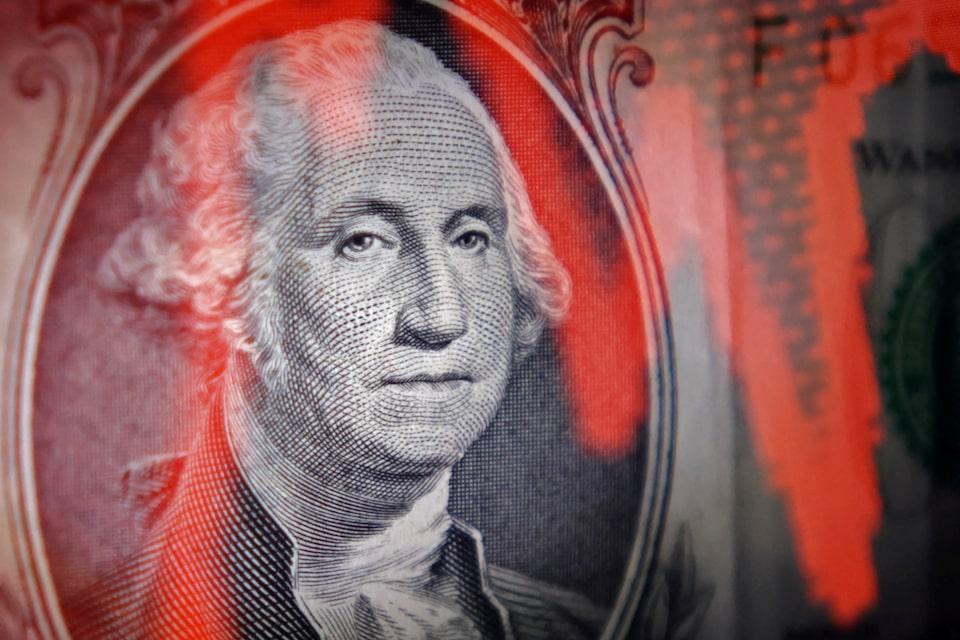
Cracks appearing in labour market give green light to US central bank Euro awaits Fitch verdict on French finances SINGAPORE, Sept 12 (Reuters) - The dollar regained some strength but remained under pressure on Friday as a surge in U.S. jobless claims and a modest tick up in inflation kept investors zeroed in on likely Federal Reserve interest rate cuts next week and beyond. The dollar index was last trading up 0.1% at 97.643, having snapped a two-day winning streak on Thursday and on track to record its second consecutive weekly decline. Sign up here. On Thursday, data showed the biggest weekly increase in the number of Americans filing new applications for jobless benefits in four years. That overshadowed U.S. consumer inflation data for August, which showed prices rising at the fastest pace in seven months but still modest and broadly in line with expectations. While the mixed data might add some wrinkles to the Fed's policy deliberations next week, investor focus is mostly centred on rate cut prospects for now. "We're quite betwixt and between, and the outlook is quite murky," said Tim Kelleher, head of institutional FX Sales at Commonwealth Bank in Auckland. "The market is at a crossroads." The yield on benchmark 10-year Treasury notes edged up to 4.0338% compared with its U.S. close of 4.011%, after a decline in yields that came close to crossing the 4% mark for the first time since April. Pricing of Fed fund futures indicates that the market believes the Fed is certain to cut its key interest rate by 25 basis points (bps) on September 17 as labour market softness overshadows inflation risks. However, traders are reining in bets on a jumbo 50 bps rate cut next month, with pricing implying a shallower path of easing before the end of the year than anticipated earlier, according to the CME Group's FedWatch tool. The euro stood at $1.1724 , weakening 0.1% so far in Asia as traders curbed their bets on another European Central Bank rate cut this cycle, now seeing another move as a coin toss, after the bank sounded sanguine about the economic outlook. Euro zone rate setters kept their key interest rate on hold at 2% for a second straight meeting, with ECB chief Christine Lagarde saying that the bank remains in a "good place" and said risks to the economy had become more balanced than before. Fitch Ratings is expected to give its verdict on French public finances after markets close on Friday after the confidence motion on September 8. "Fitch’s sovereign rating model is, if anything, likely to indicate a small improvement," analysts from Citi wrote in a research report. "Going explicitly against the direction of its model and ‘manually’ downgrading the rating would require the agency to come to the conclusion that the balance of power between stakeholders of public funds has tilted further away from financial creditors since the last rating decision in spring." The Australian dollar was last holding steady at $0.666 , trading near a 10-month high, while the kiwi slipped 0.1% to $0.5968 . "AUD has seen strong interest from the hedge fund community over the last few sessions, however trading is more reflective of a USD selling narrative," said Troy Fraser, head of FX Sales at Citi Australia and New Zealand. "The recent PPI data and weaker jobs data in the U.S. helped reassure markets that a September rate cut by the Fed is firmly in play." Against the yen, the dollar was trading 0.2% stronger at 147.50 yen after the U.S. and Japanese governments issued a joint statement on Friday, which reaffirmed that exchange rates should be "market determined" and that excess volatility and disorderly moves in exchange rates were undesirable. Sterling traded at $1.3557 , slipping 0.1%, while the offshore yuan was last at 7.1170 yuan per dollar , weakening 0.1%. https://www.reuters.com/world/africa/dollar-back-foot-surging-jobless-claims-firm-up-fed-rate-cut-views-2025-09-12/
2025-09-12 05:03
PARIS, Sept 12 (Reuters) - A wave of cancellations, cost pressures and policy uncertainty have thinned the low-emissions hydrogen project pipeline and cut 2030 projected development by nearly a quarter, the International Energy Agency said on Friday. About 37 million metric tons per year of the low-carbon fuel is expected to be produced by 2030, down from 49 million a year earlier as developers shelved or delayed plans, the IEA said in its Global Hydrogen Review. Sign up here. Actual output is likely to be lower because not all announced projects reach completion, it added. However, this means that capacity that is already operating, under construction or at final investment decision is expected to climb more than five-fold from 2024 levels to above 4 million tons per year by 2030, the report said. Another 6 million tons could be in place by then if governments implement effective demand-creation policies and accelerate infrastructure build-out, the IEA said. Cost competitiveness remains the central hurdle, as falling natural gas prices have widened the gap in recent months in favour of fossil-based hydrogen, while higher electrolyser prices have weighed on low-carbon projects. The IEA expects the cost gap to narrow by 2030 as technology costs decline and regions with strong renewables growth and new regulations improve cost structures. China is the main developer of hydrogen electrolysers, accounting for 65% of global capacity that is installed or at final investment decision and nearly 60% of worldwide electrolyser manufacturing capacity. Low-carbon hydrogen is produced through electrolysis that splits water into hydrogen and oxygen using electricity often derived from renewables. Manufacturers elsewhere face financial strain due to rising costs and slow uptake, while Chinese firms may also confront future challenges as more than 20 gigawatts a year of existing manufacturing capacity exceeds current demand. An IEA analysis of installing Chinese-made electrolysers outside China found no significant cost advantage versus other producers once transport costs and tariffs are factored. Southeast Asia is emerging as a significant hydrogen market, with about 430,000 tons per year of low-emissions hydrogen production by 2030 in announced projects, up from roughly 3,000 tons today. https://www.reuters.com/sustainability/climate-energy/iea-cuts-2030-low-emissions-hydrogen-production-outlook-by-nearly-quarter-2025-09-12/

2025-09-12 04:50
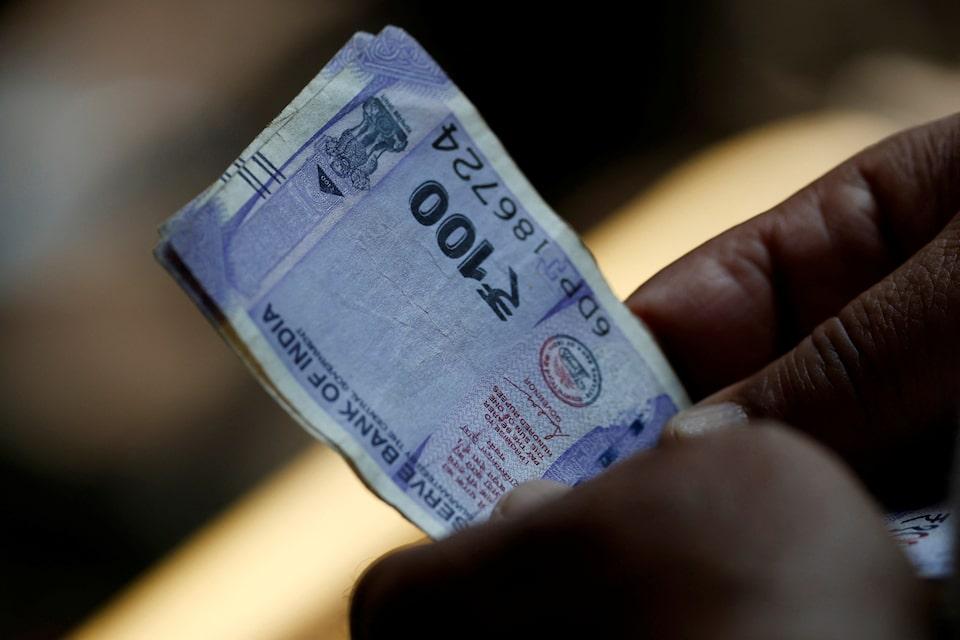
MUMBAI, Sept 12 (Reuters) - The Indian rupee rose on Friday, drawing some relief from expectations that the Federal Reserve remains on track to cut rates, possibly three times this year. Forward premiums inched up to their highest since the first half of May. Sign up here. The rupee was at 88.3025 at 10:06 IST, up from 88.4425 on Thursday, when it fell to an all-time low. It has been under steady pressure since the U.S. imposed extra tariffs on Indian imports of Russian oil late last month. Any brief relief in the currency have been limited by importers covering their dollar needs and continued demand from speculators, bankers said. The story feels "increasingly repetitive - tariff-led pressure on India’s exports combined with lack of portfolio flows weighing on the currency, Amit Pabari, managing director at FX advisory firm CR Forex said, "The rupee seems caught in a cycle of stress." The Indian currency has declined through September despite firming expectations of multiple Federal Reserve rate cuts. The Fed is poised to lower rates by 25 basis points next week, with two further cuts likely in October and December. Data on U.S. inflation and initial jobless claims released on Thursday reinforced market bets on a more accommodative Fed. Claims data reinforced the narrative of a weakening labor market, supporting Fed cuts and boosting risk appetite. USD/INR forward premiums have been climbing in response to Fed rate cut expectations, with the implied yield on the one-year contract on Thursday rising to a new four-month high. The one-year USD/INR forward yield has risen 14 basis points so far this year, following a 20-basis-points jump in August. https://www.reuters.com/world/india/rupee-rises-fed-boost-forward-premiums-near-4-month-high-2025-09-12/
2025-09-12 04:35
Sept 12 (Reuters) - A look at the day ahead in European and global markets from Wayne Cole. Well, that was a relief. U.S. CPI was on the firmer side but not so much that you'd notice. Some of the prices that feed into core PCE were surprisingly benign, leading analysts to trim their forecasts to +0.2% m/m and a steady 2.9% on the year. Sign up here. So it's all go for the Federal Reserve to resume its easing cycle with 25 basis points next week, though it's notable markets see just a 7% chance of a bumper 50bps. You would assume the more aggressive option will be discussed given the sheer scale of the downward shift in the labour market data. If it's 25 but a voter or two dissents in favour of 50, that might be dovish enough to keep the market rally going. The guidance needs to be dovish given futures have shifted to pricing in 71bps of cuts by Christmas, and 125bps by July. Five cuts in five meetings would be fine. Oh, and a plea to the Fed, please go back to a single rate and not this 4.25-4.50 range. We're not at the zero-bound anymore. Bonds have already delivered a quarter-point cut to mortgage rates with 10-year yields down ~20bps in the past two weeks. To keep the rally going, investors need Fed Chair Jerome Powell to open the door to a series of easings, depending on the data, of course. Anyway, the prospect of much lower U.S. borrowing costs has kept liquidity flowing in Asia and allowed investors to bet on all things AI. Indexes in Japan, South Korea and Taiwan have all hit record highs. The Kospi (.KS11) , opens new tab alone is up almost 6% for the week. Chinese blue chips are back to the peaks from early 2022, having so far survived Beijing's stern warnings against capitalist excesses. The dollar has held up relatively well on the majors in the face of falling yields, while giving ground on some of the less crowded crosses. The dollar index is just a fraction lower on the week, despite all the talk of the end of exceptionalism. The Australian dollar , for instance, finally escaped its soporific trading range to reach a 10-month top, while the Norwegian crown just reached its best level since early 2023. Both have seen yield spreads vs the USD swing around 40 basis points in their favour in the past month or so, and both are testing huge chart levels. Key developments that could influence markets on Friday: - Appearances by Bank of Spain Governor Jose Luis Escriva and ECB policy maker Olli Rehn - UK GDP and manufacturing output for July. Final readings on EU CPI - US consumer sentiment for September https://www.reuters.com/business/take-five/global-markets-view-europe-2025-09-12/