2025-09-11 16:50
NEW YORK, Sept 11 (Reuters) - Gemini Space Station, the cryptocurrency exchange founded by Cameron and Tyler Winklevoss, has drawn over 20 times as many orders for its planned U.S. initial public offering as there are available shares, people familiar with the matter said on Thursday. The strong demand, ahead of the IPO's pricing later on Thursday, shows investors' huge appetite for crypto company listings. Sign up here. Gemini and its bankers have stopped taking new orders for shares and, in an unusual move, the IPO proceeds will be capped at $425 million, the sources said. Any further price increase will instead reduce the number of shares sold, the people added, asking not to be identified as the information is not public. Without the cap, Gemini would have been set to raise as much as $433 million in the first-time share sale, based on its filings with the U.S. Securities and Exchange Commission. That figure excludes the $50 million Nasdaq (NDAQ.O) , opens new tab has committed to invest in a private placement at the time of the IPO. Reuters was first to report on the investment. A representative for Gemini did not respond to a request for comment. SHARE PRICE ALREADY RAISED ON STRONG DEMAND The company has already raised the proposed price of the 16.67 million shares being sold to between $24 and $26 each, up from a range of $17 to $19, due to strong demand. At the top of the range, Gemini would have a market value of over $3 billion, according to Reuters calculations based on filings. Crypto listings are gathering momentum. Stablecoin issuer Figure Technology raised $787.5 million in an upsized U.S. IPO on Wednesday. CoinDesk owner Bullish (BLSH.N) , opens new tab and stablecoin issuer Circle (CRCL.N) , opens new tab both enlarged their offerings earlier this year. Regulatory victories under a pro-crypto White House, rising corporate adoption, and inflows from exchange-traded funds have fueled a wave of listings, with the sector's market value recently surpassing $4 trillion. Gemini is expected to start trading on Friday. Goldman Sachs (GS.N) , opens new tab and Citigroup (C.N) , opens new tab are the lead bookrunners for the IPO. The company plans to list its shares on the Nasdaq under the symbol "GEMI". https://www.reuters.com/business/ipo-winklevoss-founded-crypto-exchange-gemini-over-20-times-oversubscribed-2025-09-11/

2025-09-11 15:44
Deposit rate unchanged at 2% as expected Market starting to price out last rate cut Debate over more easing to simmer for months Economy holding up but tariffs impact not yet fully felt FRANKFURT, Sept 11 (Reuters) - The European Central Bank left interest rates unchanged on Thursday as expected and maintained an upbeat view on growth and inflation, dampening expectations for any further cut in borrowing costs. The ECB halved its key rate in the year to June but has been on hold at 2% since, arguing that the economy of the 20-country euro zone is in a "good place" even if all policy options, including additional easing, could not be ruled out. Sign up here. Recent data has confirmed this sanguine view, giving policymakers time to understand how U.S. tariffs, higher German government spending, looming Federal Reserve rate cuts and political turmoil in France might impact growth and inflation. "We continue to be in a good place," ECB President Christine Lagarde told a press conference, adding that inflation was where the ECB wanted it to be and the domestic economy solid. Uncertainty about global trade had eased after a number of U.S. tariff deals, she said, including the European Union's own agreement which set a 15% duty on most U.S. imports of EU goods. Sources with direct knowledge of the discussion said rate cut talk was not over but that it would still take months for the ECB to gain clarity, meaning the next proper debate on whether more support is needed is likely to be in December. While the ECB still sees inflation dipping below its 2% target next year, investors curbed rate-cut bets after Lagarde said risks were more balanced. "Two things have clearly moved out of our radar screen when it comes to downside risk," Lagarde said. "The first one is the risk of European retaliation, the second thing ... is that trade uncertainty has clearly diminished." Money markets are now pricing in just a 40% chance of one last rate cut by next spring, less than before Thursday's decision, even while they expect the Fed to ease U.S. borrowing costs six times by the end of 2026. INFLATION BELOW TARGET The ECB now sees inflation at 1.9% in 2027 - below the 2.0% projected in June - with core inflation at 1.8%, also below the central bank's 2% target. Lagarde played down the significance of such a miss, saying: "We have indicated very clearly in our strategy that minimal deviations, if they remain minimal and not long-lasting, will not necessarily justify any particular movement." The public debate is in any case focused on just a single rate cut, indicating that the ECB is almost done with changes to monetary policy and that rates are likely to stay around current levels for an extended period. "We do not believe the ECB's reaction function is geared towards fine-tuning policy, and, in our baseline, expect a prolonged period of inaction on policy rates," Pimco Portfolio Manager Konstantin Veit said. Lagarde in her press conference described risks to the economy as "more balanced" than in June but said the inflation outlook was still more uncertain than usual. Hawkish Governing Council members, who oppose further easing, say the economy has been unexpectedly resilient in the face of trade tensions and that growth is well supported by buoyant private consumption. But their more dovish colleagues argue that tariffs have yet to fully work their way through the economy and could dampen an already low growth rate, reversing the rise in consumption. They say the Fed's looming rate cuts could also put downward pressure on prices by supporting the euro against the dollar. Fresh political chaos in Paris, which has pushed French bond yields sharply higher, is another headache for the ECB. It has tools to intervene, but only for an "unwarranted and disorderly" rise in borrowing costs, which economists say is clearly not the case now, given France's high debt and feeble economic growth. Asked to comment on France and the possibility of ECB intervention, Lagarde said on Thursday that euro zone sovereign bond markets were orderly and functioning with smooth liquidity. https://www.reuters.com/markets/europe/ecb-holds-rates-unchanged-still-in-good-place-2025-09-11/

2025-09-11 15:30
FRANKFURT, Sept 11 (Reuters) - European Central Bank policymakers see their December meeting as the most realistic time frame to debate whether an another interest rate cut is needed to buffer the euro zone economy from the impact of U.S. tariffs, three sources told Reuters. The ECB left rates unchanged on Thursday and maintained an upbeat view on growth and inflation, dampening expectations for any further cut in borrowing costs. Sign up here. But sources on the ECB's Governing Council said the debate on a rate cut was not over just yet, although policymakers probably won't have enough information by their next meeting in October 29 to make a proper assessment. This meant that the December 18 meeting was seen as the more likely date to discuss a reduction in borrowing costs, also in light of incoming inflation and growth data and the next batch of projections. An ECB spokesperson declined to comment. https://www.reuters.com/business/finance/ecb-governors-eye-december-next-chance-any-cut-sources-2025-09-11/
2025-09-11 13:54
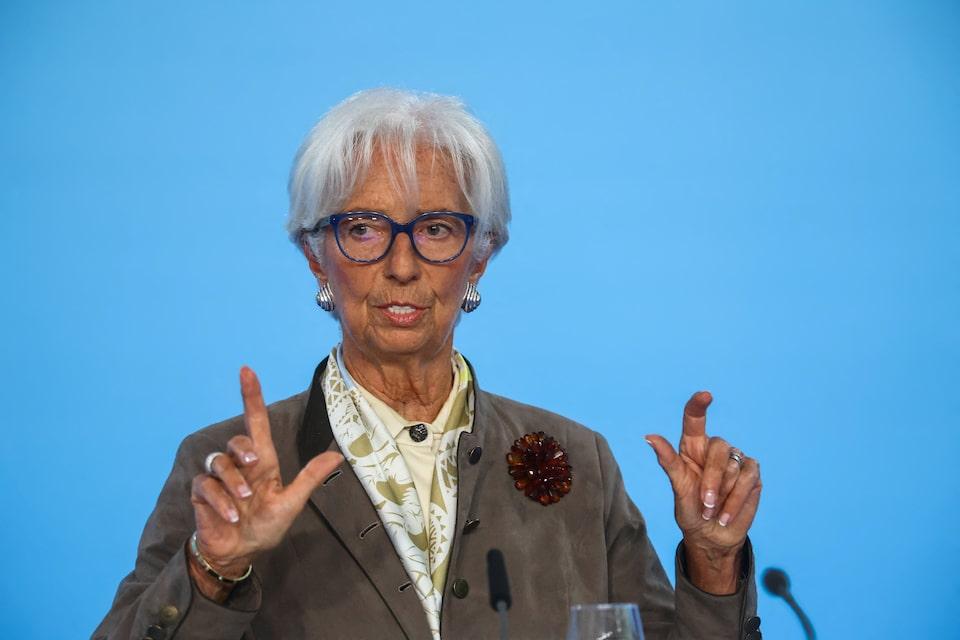
Sept 11 (Reuters) - Concern about a softening job market will keep the Federal Reserve on course to resume its interest rate cuts next week, though the U.S. central bank is likely to move cautiously because of fresh signs that tariffs are pushing prices higher. That was the bet in financial markets on Thursday after government reports showed jobless claims jumped last week and consumer inflation rose more than expected in August, with particularly big increases in the prices of goods like furniture and cars that are heavily impacted by import duties. Consumer prices rose 2.9% last month on a year-over-year basis, matching the rise in the comparable period in July. The Fed targets 2% inflation by a different, though related, measure. Sign up here. "Inflation remains hotter than hoped, but the Fed's focus is jobs," James Knightley, chief international economist at ING, wrote in a note, adding that the weekly increase in unemployment claims was the biggest in almost four years. "On the face of it, this hints at a pick-up in the pace of layoffs in an environment of already weak hiring and will reaffirm expectations of a 25-bp (basis point) Fed rate cut next week." Rate futures pricing reflects expectations for quarter-percentage-point rate cuts at each of the Fed's three remaining policy meetings this year, starting with a reduction in the Fed's policy rate to the 4.00%-4.25% range at the September 16-17 gathering. Bets also rose on the prospect that the Fed would deliver a fourth consecutive rate cut in January, with the odds on that outcome approaching 50%, up from less than 40% before the data on Thursday. Economists polled by Reuters before the latest data largely expected the Fed to cut rates twice in the rest of 2025. President Donald Trump has called for far steeper rate cuts. https://www.reuters.com/business/fed-seen-track-rate-cuts-job-worries-eclipse-inflation-fears-2025-09-11/
2025-09-11 12:57
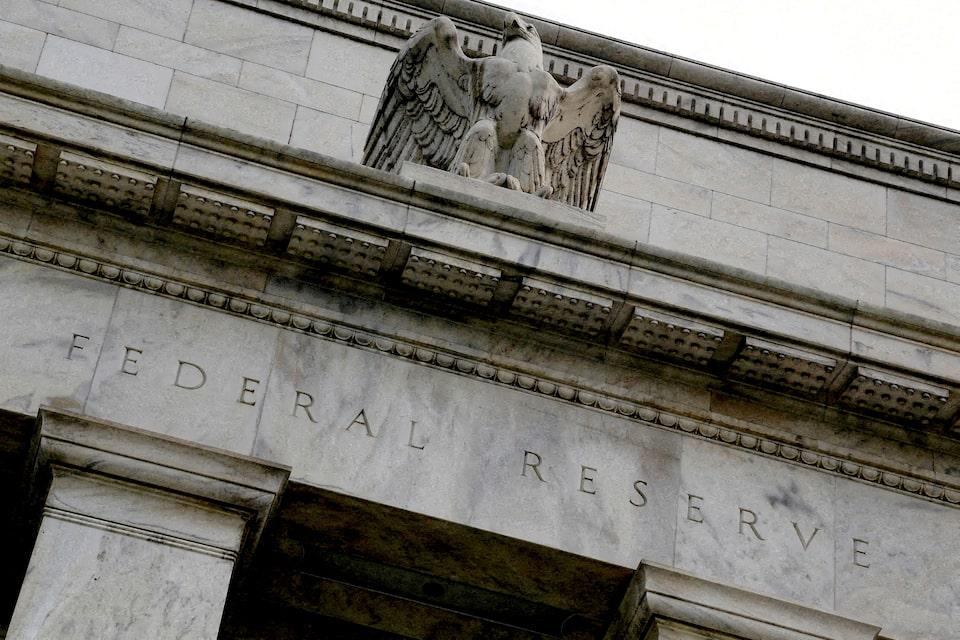
IEA expects oversupply to increase with OPEC output boost EIA reports bigger than expected rise in oil stocks US consumer prices data due later on Thursday LONDON, Sept 11 (Reuters) - Oil prices fell on Thursday, pressured by concerns over softening U.S. demand and broad oversupply that offset threats to output from conflict in the Middle East and the Russian war in Ukraine. Brent crude futures were down 86 cents, or 1.3%, at $66.63 a barrel by 1240 GMT while U.S. West Texas Intermediate crude futures lost 89 cents, or 1.4%, to $62.78. Sign up here. "Oil prices are falling today in response to bearish IEA headlines, which suggest massive oversupply on the oil market next year," said Commerzbank analyst Carsten Fritsch. The International Energy Agency said in its monthly report that world oil supply will rise more rapidly than expected this year on OPEC+ increasing output further. However, the OPEC report published after the IEA's kept non-OPEC supply and demand forecasts for the year unchanged, citing steady demand. The Organization of the Petroleum Exporting Countries and allies, a group collectively known as OPEC+, on Sunday decided to raise production from October. The market was torn between perceived supply shortage due to a rise in tensions in the Middle East and Ukraine and actual oversupply from higher OPEC+ production and swelling stocks, said PVM Oil Associates analyst Tamas Varga. Saudi Arabia's crude oil exports to China are set to surge in October, several trade sources told Reuters on Thursday, with Aramco shipping about 1.65 million barrels per day in October, compared with 1.43 million bpd allocated in September. In the U.S., crude inventories rose by 3.9 million barrels in the week to September 5, the Energy Information Administration said, against expectations of a draw of 1 million barrels. The market was also questioning how long China could continue to absorb barrels and keep OECD inventories low, said UBS analyst Giovanni Staunovo, adding that investors were also watching fo further sanctions affecting Russian oil. U.S. energy secretary Chris Wright and EU energy commissioner Dan Jorgensen discussed efforts to restrict Russian energy trade in Brussels, with Jorgensen saying that the bloc's planned deadlines were ambitious but there is a need to speed the process. Going into 2026, the overall oil market might register a hefty surplus, said Ole Hvalbye at SEB Research, adding that demand appears to be holding up and could potentially absorb the increased OPEC+ output. https://www.reuters.com/business/energy/oil-prices-fall-1-oversupply-weaker-us-demand-2025-09-11/
2025-09-11 12:57
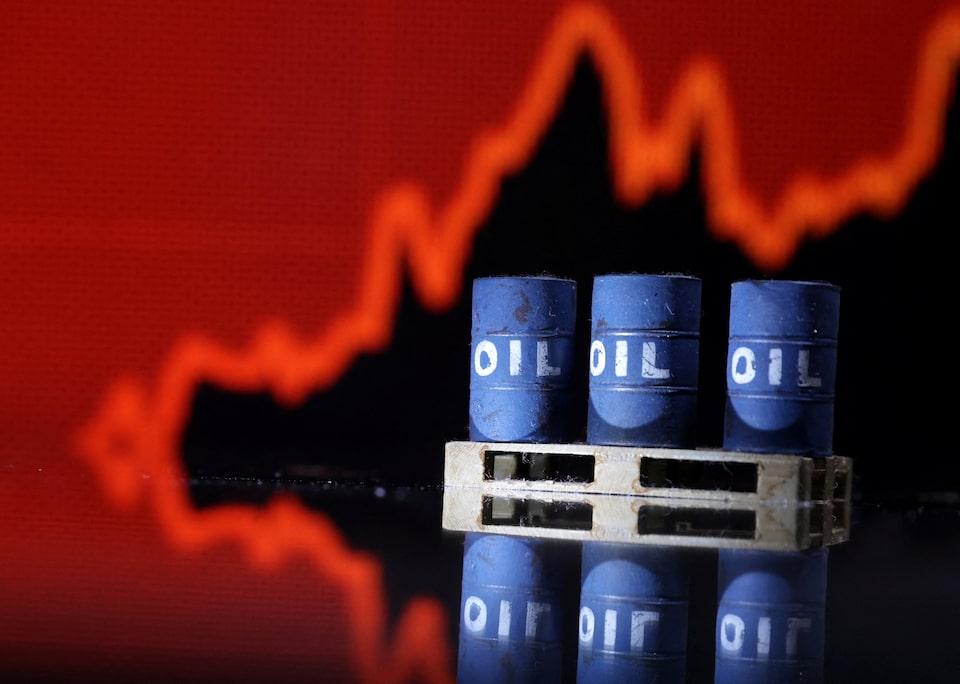
LONDON, Sept 11 (Reuters) - The European Central Bank left interest rates unchanged on Thursday as expected but offered no clues about its next move, even as investors continue to bet that more support will be needed as inflation dips below target next year. Inflation is now seen at 1.9% in 2027, below the 2.0% projected in June, and core inflation is seen at 1.8% then, both below the 2% target, fresh ECB projections showed. Sign up here. The euro briefly slipped but was last trading 0.18% firmer at $1.1715 , while interest rate-sensitive short-dated bond yields were broadly steady on the day , . Europe's STOXX index was up 0.3% from its last close. COMMENTS: MARK WALL, CHIEF EUROPEAN ECONOMIST, DEUTSCHE BANK, LONDON: "The near-term staff forecasts for headline inflation were revised a little higher, which means a less deep undershoot of the inflation target in 2026. However, the downward revision of the core inflation forecast to 1.8% in 2027 signals a potential lengthening of the undershoot. That could have dovish ramifications for monetary policy. The ECB describes the inflation outlook as “broadly unchanged” and the statement is quite succinct. The ECB isn’t rushing to judgement on the 2027 number. The rates pause likely continues." ARNE PETIMEZAS, DIRECTOR RESEARCH, AFS GROUP, AMSTERDAM: "A bit of weakness in euro/dollar as the ECB cut the 2027 core CPI forecast to 1.8% from 1.9%. Yes, that's 2027, and nobody has a clue, and the ECB staff forecasting track record is awful. What matters is that the doves now have a shoe to throw at the hawks." JACK ALLEN-REYNOLDS, DEPUTY CHIEF EURO-ZONE ECONOMIST, CAPITAL ECONOMICS, LONDON: "The ECB’s decision to leave its deposit rate unchanged at 2.0% today and offer no guidance on future rate decisions was in line with expectations. The bank is unlikely to change interest rates again this year, but we think the risks are skewed towards renewed cuts in 2026." IRENE LAURO, EURO ZONE ECONOMIST, SCHRODERS, LONDON: "The ECB today appears to confirm our view that the easing cycle has ended. With trade uncertainty fading, the euro area’s recovery is set to accelerate." "Risks have shifted for the eurozone from trade uncertainty to political instability, with France now in the fiscal spotlight. But the resilience of the economy and strengthening domestic demand means the ECB can afford to keep monetary policy unchanged." FRANCESCO PESOLE, FX STRATEGIST, ING, LONDON: "The euro is a little weaker, it's what we expected, the risks were to the downside. "It could be this GDP forecast for 2026 is a little lower. "There’s no reason why at this point they would change their guidance. It's a small reaction so we'll see what happens in the press conference." "Things that can move a little bit more is probably anything related to bunds and if the market senses that the council or (ECB President Christine) Lagarde are ready to take the French situation into consideration in monetary policy decisions. "But I think it’s still not highly likely that she will give anything away, she will just follow the script where she says the ECB can step in with the necessary tools." MARCHEL ALEXANDROVICH, ECONOMIST, SALTMARSH ECONOMICS, LONDON: "No surprises from the ECB as it leaves interest rates unchanged. However, in terms of the new forecasts, there are downward revisions to the inflation forecasts for 2026 and 2027, which suggests that the ECB maintains a slight easing bias as it heads into year-end." SYLVAIN BROYER, CHIEF EMEA ECONOMIST, S&P GLOBAL RATINGS: "The ECB is done cutting rates. Sticky services and food inflation keep consumer sentiment under strain. Real wage growth still outpaces productivity, and easing the policy rates to weaken the euro would be useless in the present situation." https://www.reuters.com/markets/europe/view-ecb-holds-rates-steady-2-lowers-inflation-forecasts-2025-09-11/