2026-01-30 09:24
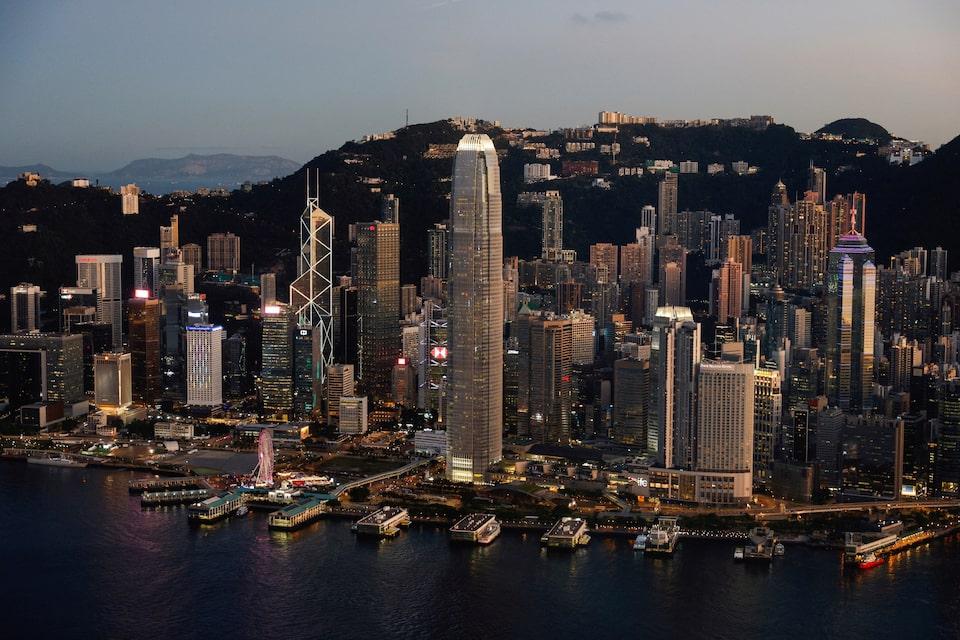
2025 GDP up 3.5%, beating govt's 3.2% forecast Q4 seasonally adjusted GDP up 0.1% q/q HK economy to maintain "good momentum" in 2026, government says HONG KONG, Jan 30 (Reuters) - Hong Kong's economy expanded 3.8% from a year earlier in the fourth quarter, official advance estimates showed on Friday, the 12th consecutive quarter of growth thanks to buoyant regional trade flows, growth in inbound tourism and financial service activities. Hong Kong's economy grew a revised 3.7% in the third quarter, 3.1% growth in the second and 3.0% in the first quarter of 2025. Sign up here. For the whole of 2025, real GDP posted growth of 3.5%, compared to 2.5% in 2024. That exceeded the government's forecast of 3.2% growth for the year. "Looking ahead, the Hong Kong economy is expected to maintain good momentum in 2026," a government spokesman said. "Sustained moderate expansion of the global economy, coupled with persistently strong global demand for artificial intelligence-enabled electronic-related products, will lend support to Hong Kong's export performance." On a seasonally adjusted quarterly basis, the economy expanded 1.0% in October-December, the data showed. That compared with 0.7% in July-September, 0.4% in April-June and 1.8% in January-March. Improving consumer and business sentiment and expected further interest rate cuts in the U.S. will benefit consumption and investment activities, while external uncertainties persist amid escalating geopolitical tensions, the spokesman added. Private consumption expenditure increased by 2.5% in the fourth quarter, compared with a 2.4% rise in the third quarter, and it was up 1.6% for 2025. Total exports of goods increased 15.5% in the fourth quarter, compared with the third quarter's 12% rise, and it was up 12% for 2025. Imports of goods grew 18.4%, compared with an 11.7% rise in the third quarter. It was up 12.6% for 2025. https://www.reuters.com/world/asia-pacific/hong-kong-q4-gdp-expands-38-yy-2025-gdp-up-35-2026-01-30/
2026-01-30 09:04
FRANKFURT, Jan 30 (Reuters) - Euro zone consumers raised their longer-term inflation expectations to a record high in December, a European Central Bank poll showed on Friday, implying prices were seen growing faster than the ECB's target pace for years to come. ECB President Christine Lagarde and colleagues have been saying for months the central bank for the euro zone is "in a good place" after seeing inflation fall to its 2% target, and market expectations remain largely anchored around that level. Sign up here. But the ECB's latest Consumer Expectations Survey showed households had nudged up their inflation expectations five years ahead to 2.4% in December, the highest reading since the survey began in 2022 and a 20-basis-point increase from November. The median respondent saw inflation at 2.8% over the next 12 months, unchanged from November, and at 2.6% in three years' time, up from 2.5% a month earlier. Still, ECB policymakers, who use these findings in their policy deliberations, could take comfort in the fact that consumers still expected inflation to come down over the poll's time horizon. The ECB is expected to hold its policy rate unchanged at 2% for the foreseeable future, but uncertainty relating, among other factors, to U.S. President Donald Trump's unpredictable economic policy has kept investors and policymakers on tenterhooks. https://www.reuters.com/business/finance/euro-zone-consumers-up-5-year-inflation-forecast-record-high-ecb-poll-shows-2026-01-30/

2026-01-30 08:55
Jan 30 (Reuters) - Financial markets are heading towards the end of an unforgettable January, not least thanks to the dollar - set for its worst start of the year since 2018, and the coming week brings a set of catalysts that could shake things up further. Megacap earnings will set the tone for stocks, while U.S. jobs data could bring new headwinds or tailwinds for the dollar, and geopolitics might keep gold looking shiny. Plus, former Federal Reserve Governor Kevin Warsh has emerged as the likely candidate to run the central bank. Sign up here. Here's your week-ahead from Rocky Swift in Tokyo; Lewis Krauskopf in New York and Yoruk Bahceli, Dhara Ranasinghe and Karin Strohecker in London. 1/ STRONG POLICY, WEAK DOLLAR The dollar is languishing near four-year lows, its renewed weakness grabbing the attention of central bankers, investors, and even the White House. A day after Donald Trump emboldened greenback bears, saying the dollar's value was "great" when asked if the currency had declined too much, Treasury Secretary Scott Bessent said the U.S. has a strong dollar policy and was not intervening to strengthen the yen. The scale and speed of further falls could challenge banks if investors move at once to protect their U.S. assets from a dollar slide. It could also force central banks from the euro area to Asia to act to prevent a sharp rise in their domestic currencies that could choke off growth. It's the U.S.'s currency, but be in no doubt, it's everyone else's problem. 2/ JOBS JOLT Investors will look for evidence of a strengthening U.S. jobs market in the monthly employment report on February 6, as they assess the prospects for further rate cuts. The Fed cited signs of stabilisation in employment when it held interest rates steady on Wednesday, after easing monetary policy in late 2025 in response to a weakening labour market. Nonfarm payrolls for January are expected to have risen 70,000, a Reuters poll showed, after rising by 50,000 in December. Meanwhile, another heavy crop of earnings reports is about to land. Among them are two of the "Magnificent Seven" megacap companies: Google parent Alphabet (GOOGL.O) , opens new tab and Amazon (AMZN.O) , opens new tab, which just confirmed 16,000 corporate job cuts. 3/ GOLDEN YEARS The breathtaking rally that has lifted gold (and silver, platinum and palladium for that matter) to record highs might be showing a few cracks. Expectations that the next Fed chief could be more hawkish saw gold scuttle away from its near-$5,600 record high, but it's still on track for a 20% rally in January - its strongest month since 1980. And there seems no shortage of triggers to provide more support for everyone's favourite safe haven - a fracturing world order, a potential attack on Iran, a falling dollar, worries about Fed independence or renewed trade turmoil. World Gold Council data showed gold demand hit an all-time high last year, as jitters over instability and trade sparked a surge in investment. But sky-high prices have already hit jewellery demand and are set to dampen central bank buying, according to the organisation. 4/ TENSION IN TOKYO Japan's unsteady bond market faces two key tests of demand ahead of a lower house vote where the prime minister and her opponents are campaigning on increased stimulus. Japanese government bond yields have surged, sending shockwaves through global debt markets, after Prime Minister Sanae Takaichi announced a snap election and pledged a two-year reprieve on sales taxes on food. Tuesday sees an auction of benchmark 10-year JGBs, while new 30-year securities will be sold on Thursday. The 10-year yield hit a 27-year high of 2.38% and 30-year yields reached a record 3.88% on January 20 on speculation the election will usher in more debt-funded measures that will further impair Japan's fiscal health. Yields have stabilised since, while the yen has rallied on threats of official intervention. 5/ A EURO PROBLEM The ECB meets on Thursday and investors will be on the lookout for any indication on how a stronger euro might impact rates. It could have been a very different meeting had Trump slapped tariffs on European countries in a push to buy Greenland, but his quick backtrack has avoided that scenario. The dollar has been under fire since the start of the year, pushing the euro up 3% in the last two weeks alone to above $1.20, its highest since 2021. Policymakers in Frankfurt aren't happy. They expect euro zone inflation to come in below the ECB's 2% target this year and next and are already worried further euro appreciation could pull inflation even lower. For now, the ECB is expected to stay on hold and traders believe another rate cut is only slightly more likely by the summer. https://www.reuters.com/business/take-five/global-markets-themes-graphic-2026-01-30/
2026-01-30 07:48
SINGAPORE, Jan 30 (Reuters) - At least three liquefied natural gas (LNG) cargoes loaded in Australia and Canada are heading toward Europe and the Americas instead of their usual destination, Asia, after an Arctic storm curbed exports from the U.S., shiptracking data showed. The diversion of supply away from Asia could tighten supply and support spot LNG prices in the region. Sign up here. While much of the Northern Hemisphere saw colder-than-usual weather in the past week, an Arctic storm in the U.S. cut gas output and curbed LNG exports from Gulf Coast terminals, lifting prices globally on rising demand. "Pacific cargoes may be drawn into the Atlantic to help backfill for lost U.S. production," said Alex Froley, senior LNG analyst at energy consultancy ICIS, adding that a dip in feedgas flows to U.S. liquefaction plants this week suggests some 10-20 cargoes could be lost. The U.S. accounts for more than half of Europe's LNG imports, Kpler data showed. From Australia, tanker Methane Julia Louise is westbound crossing the Indian Ocean after loading a cargo from Gorgon LNG on January 23. It is expected to arrive at Dunkirk, France on February 19, LSEG data showed. Australia last exported an LNG cargo to Europe in February 2025, according to Kpler data. Additionally, tanker Maran Gas Hector, which departed Queensland Curtis LNG (QCLNG) in Eastern Australia around January 21-22, is heading east towards the Americas, Kpler and LSEG data showed. From western Canada, tanker Qingcheng departed on January 20 and is heading westwards towards Asia, LSEG and Kpler showed. It made a U-turn to divert from its original route to go towards the Americas on January 26. The Qingcheng tanker could possibly be heading for Europe through the Panama Canal, said Froley. So far, exports from LNG Canada, which shipped its first cargo in July, have gone to east Asia. Asian LNG futures based on the benchmark S&P Global Energy Platts Japan-Korea Marker (JKM) price were at $11.465 per million British thermal units (mmBtu) on Thursday. The benchmark front-month contract at the Dutch Title Transfer Facility (TTF) hub however, closed higher at 39.97 euros per megawatt hour on Thursday, or $14.02 per mmBtu. https://www.reuters.com/business/energy/canada-australia-lng-cargoes-head-atlantic-rare-move-after-arctic-storm-2026-01-30/

2026-01-30 07:40
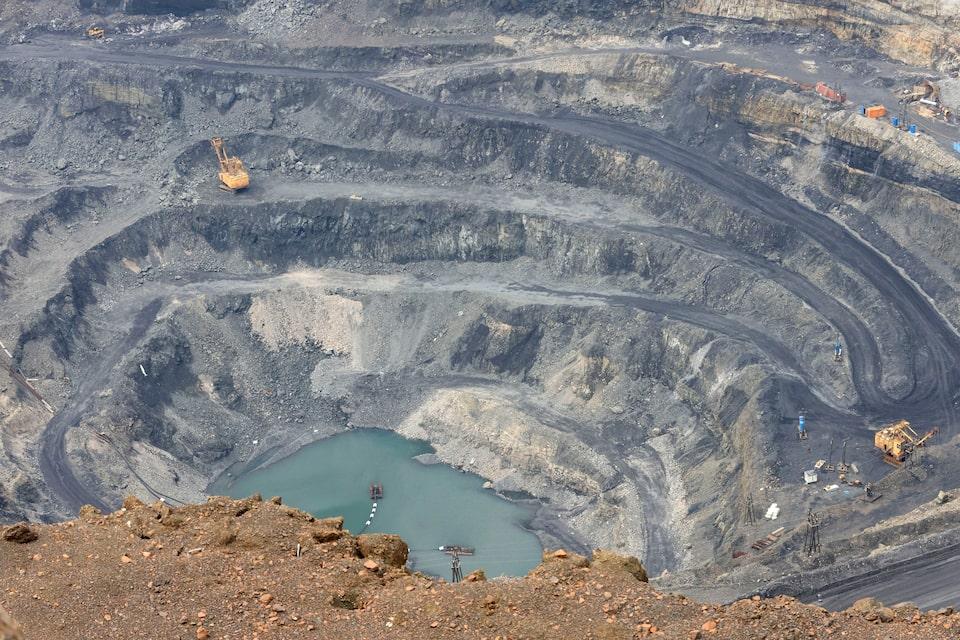
SOFIA, Jan 30 (Reuters) - The Arctic is no longer a frozen periphery, especially not after the U.S. spat with Europe over Greenland. As sea ice melts, the High North is emerging as a strategic hub for energy, shipping and critical minerals. It is warming nearly four times faster than the rest of the planet, but what’s also heating up is the debate over who will control the Arctic routes, rules and resources that will shape global markets for decades. Sign up here. While Russia and China are methodically building influence over the Arctic to enhance their economic leverage, Western policy is just beginning to catch up. RUSSIA'S ARCTIC FOOTPRINT Russia dominates the Arctic due to geography and infrastructure. Roughly 80% of Arctic oil and gas production comes from Russian territory, with Arctic fields accounting for about one-fifth of Russia's oil output and a far larger share of its export growth potential, according to the Arctic Institute , opens new tab. What sets Russia apart is not just scale but concentration. Russia's Arctic region holds an estimated 35.7 trillion cubic metres (tcm) of natural gas resources, nearly 75% of Russia’s total proven reserves and more than the rest of the Arctic combined. Around 95% of Russia’s platinum-group metals and roughly two-thirds of its rare earth reserves sit in its Arctic territories. Russia already produces 100% of its nickel and 92% of its cobalt in this area, according to data from producer Nornickel and government statistics. By contrast, the West’s Arctic assets are significant but fragmented. Alaska holds the largest oil reserves in the region, accounting for about 3.5% of U.S. total crude output, according to the U.S. Energy Information Administration , opens new tab. The city of Kiruna in Sweden contains the European Union's largest rare earth deposit, which if developed, could supply 18% of the bloc's needs, says the country's state-owned LKAB. Finland is set to become the EU's first integrated lithium producer this year. And then, of course, there’s Greenland, an autonomous territory of Denmark. It has vast critical mineral potential, but the logistical challenges involved in tapping these resources make major investments unlikely in the near term. NORTHERN SEA RE-ROUTING Before Russia's full-scale invasion of Ukraine, Arctic energy flows were deeply integrated with European markets. Since 2022, however, sanctions have forced the rerouting of Russian fossil fuel exports. Arctic crude and condensate are now shipped east via Murmansk and the Northern Sea Route (NSR), often carried by a growing “shadow fleet” of aging tankers operating outside Western insurance regimes. Liquefied natural gas (LNG) from the Yamal Peninsula continues to reach both Asian and European buyers, given that Russian LNG has not been fully sanctioned. However, the EU has moved to ban all Russian LNG imports from January 1, 2027, so the NSR will become even more important for Russia , opens new tab as it reroutes its exports to Asia. The NSR nearly halves the voyage length between northern Europe and Asia compared with the Suez Canal, giving Moscow leverage over a trade corridor that bypasses traditional chokepoints. The Arctic also continues to be a testing ground for sanctions evasion. Ship-to-ship transfers, opaque ownership structures and the blending of Arctic-origin oil have weakened Western measures targeting the shadow fleet and Arctic LNG projects. CHINA’S POLAR CALCULUS China’s footprint in the Arctic is narrower than Russia’s but strategically placed. Chinese firms own nearly 30% of the Yamal LNG project through the national energy giant CNPC and the Silk Road Fund, with policy banks helping finance the $27 billion venture. That investment secures long-term LNG supplies, exposure to polar energy technology and options on future Arctic shipping routes. Beijing’s interest extends beyond hydrocarbons. Chinese companies have pursued stakes in Arctic minerals, including rare earths in Greenland and iron ore and nickel across the High North. These resources sit at the heart of global clean-energy supply chains, so access to them reinforces China’s dominance over low-carbon manufacturing. For global trade, China’s Arctic ambitions are about resilience. The “Polar Silk Road” offers a hedge against disruptions in the Red Sea, Suez or the Malacca Strait. Even limited commercial use of Arctic routes strengthens China’s bargaining power when negotiating contracts for shipping and port infrastructure, both central to its global economic strategy. LONG-TERM MARKET IMPLICATIONS The geoeconomic rivalry over Arctic resources and trade routes will unfold throughout the coming decades, but its structural impact on global markets is already visible. Tighter Russian control of Arctic routes has allowed the Kremlin to maintain its foothold in Asian LNG markets, undermining the strength of U.S. and EU sanctions. Looking forward, concentrated control over Arctic sea lanes may splinter trade routes, making the High North a separate corridor with different rules, costs and political risks. Meanwhile, the Arctic is no longer distant for the EU and the U.S. It is a gateway for energy flows, data cables and shipping lanes that underpin transatlantic economies. Any disruption - whether through sanctions evasion, cyberattacks, sabotage against critical infrastructure, or heavy‑handed regulation of Arctic navigation - could reverberate through global supply chains. In short, as melting ice opens up new trade opportunities, it is also exposing a new fault line in the global economic order - one that markets can no longer afford to treat as frozen. (The views expressed here are those of Martin Vladimirov, director of the Geoeconomics Program of the Center for the Study of Democracy (CSD), and Vanya Petrova, a senior analyst at the CSD.) Enjoying this column? Check out Reuters Open Interest (ROI), , opens new tab your essential new source for global financial commentary. Follow ROI on LinkedIn, , opens new tab and X. , opens new tab And listen to the Morning Bid daily podcast on Apple , opens new tab, Spotify , opens new tab, or the Reuters app , opens new tab. Subscribe to hear Reuters journalists discuss the biggest news in markets and finance seven days a week. https://www.reuters.com/markets/commodities/us-europe-fall-behind-race-control-arctic-2026-01-30/
2026-01-30 07:32
Local Indian prices hit record high of 180,779 rupees per 10g India's gold demand to fall in 2026, says WGC China jewellery demand picks up ahead of Lunar New Year Spot gold touches record high of $5,594.82/oz on Jan 29 Jan 30 (Reuters) - Gold premiums in India rose to a more than decade-high on strong investment demand ahead of a likely duty hike, while premiums in China jumped due to a pickup in investment and jewellery demand despite global rates touching a record near $5,600 this week. Bullion dealers in India charged a premium of up to $121 per ounce this week over official domestic gold prices – inclusive of 6% import and 3% sales levies – the highest since May 2014. Last week, dealers were charging premiums of up to $112. Sign up here. "Anticipating a duty hike in the budget, investors were paying a premium over record prices to buy gold," said Ashok Jain, proprietor of Mumbai-based gold wholesaler Chenaji Narsinghji. Finance Minister Nirmala Sitharaman is set to present the 2026-27 Union Budget on February 1. She had slashed import duties on gold and silver to 6% from 15% in July 2024. "This week, we witnessed some of the highest volatility in the market. Not only were international prices volatile, but the rupee also fluctuated wildly. This severely affected retail jewellery buying," said a said a Mumbai-based bullion dealer with a private bank. Domestic gold prices hit a record high of 180,779 rupees ($1,967.77) per 10 grams on Thursday. India's gold demand is likely to fall in 2026 following an 11% drop last year, the World Gold Council (WGC) said on Thursday. In China, bullion traded at premiums of up to $32 an ounce above the global benchmark spot price this week, up from last week's premium of $8. With elevated gold prices, customers have been flocking to precious metal traders in Shanghai and Hong Kong, with some betting it could rise even further. "We can see some physical selling interest from people looking to sell their jewellery at these higher prices. But on the other hand, small investors still want to buy because the run for gold and silver looks quite bullish after the break above $5,000," said Peter Fung, head of dealing at Wing Fung Precious Metals. International spot gold prices were headed for their best month since January 1980 after rallying to a record just shy of $5,600 an ounce earlier this week, with investors seeking safety amid lingering geopolitical and economic uncertainties. Fung said jewellery demand in China had picked up ahead of the Lunar New Year and fresh demand was still coming in, terming it as a good sign for the yellow metal given jewellery purchases represented more long-term investment. In Hong Kong, gold traded anywhere from a $0.5 discount to premiums of $1.70, while in Japan, bullion was sold at discounts of $6 to a $1 premium, same as last week. In Singapore , gold was sold between a $0.50 discount to premiums of up to $2.20. ($1 = 91.8700 Indian rupees) https://www.reuters.com/world/china/asia-gold-india-gold-premiums-decadal-high-china-demand-undeterred-by-price-rise-2026-01-30/