2025-09-10 23:26
Sept 10 (Reuters) - Japan's top power producer, JERA, will explore liquefied natural gas offtake from the Alaska LNG project, JERA and developer Glenfarne said, as talks to ink firm binding sale contracts for the $44-billion project continue. Since assuming the lead developer role in the Alaska LNG project in March, Glenfarne has lined up preliminary agreements that could lead to offtake from the project's 20 million metric tons a year capacity, including with Taiwan's CPC and Thailand’s PTT (PTT.BK) , opens new tab, but firm deals have yet to be signed. Sign up here. On Wednesday, Glenfarne said in a statement it signed a letter of intent with JERA for the sale of 1 million tons a year of LNG from the project over a 20-year term on a free-on-board basis. The letter of intent will facilitate information exchange and collaboration with Glenfarne as JERA assesses the project's timelines and economics, the Japanese company, a joint venture of Tokyo Electric Power (9501.T) , opens new tab and Chubu Electric Power (9502.T) , opens new tab, said in a separate statement on Thursday. "This LOI provides a platform for continued dialogue with Glenfarne, and as more details become available, we look forward to deepening our understanding of the project," Ryosuke Tsugaru, JERA's chief low carbon fuel officer, said in the statement. Glenfarne said it is targeting a final investment decision (FID) for the Alaska LNG pipeline in late 2025 and a 2026 FID for the project's LNG export components. Since returning to office, U.S. President Donald Trump has pledged to push the project, which aims to transport stranded gas from Alaska's remote north across the state and liquefy it for export. Despite Trump's optimism, some Japanese officials and energy executives have raised concerns that the project's expected costs could make its gas less competitive than that from other sources. Reuters reported that Japan had hired consultancy Wood Mackenzie to review the proposed 800-mile (1,287 km) Alaska gas pipeline and LNG plant, signalling that Tokyo is considering deeper involvement in the project. https://www.reuters.com/business/energy/japans-jera-explore-lng-offtake-alaskas-44-billion-export-project-2025-09-10/
2025-09-10 23:08
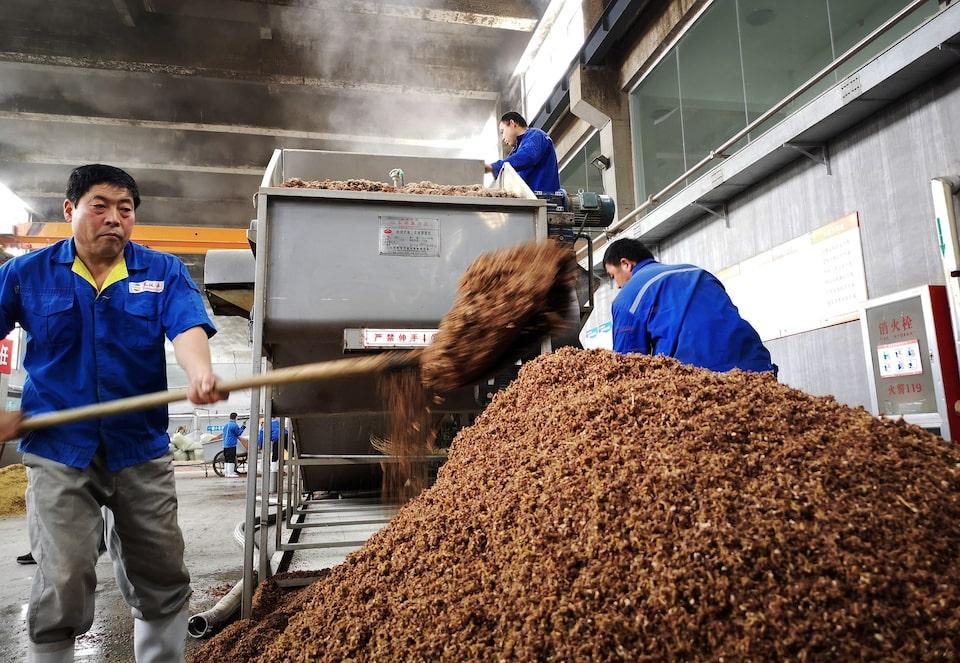
Brazil could ship sorghum to China this year, official says Chinese approval of Brazil shipments is blow to US, one farmer says US exports to China have plummeted amid trade dispute SAO PAULO, Sept 10 (Reuters) - China has approved imports of Brazilian sorghum, an official at Brazil's Agriculture Ministry told Reuters, adding the first cargos could be shipped this year, providing an alternative to plunging U.S. exports sooner than expected by many. The agreement comes as relations between China and the United States, traditionally a major exporter of sorghum to the Asian country, have sharply deteriorated amid trade tariffs instigated by U.S. President Donald Trump. Sign up here. "We've watched Brazil become a formidable competitor in other commodities, and this development in sorghum is deeply concerning," said Craig Meeker, a Kansas farmer and past chair of the National Sorghum Producers industry group in the United States. "U.S. growers have spent 15 years building a relationship with China as a reliable, quality supplier, and we don’t take lightly the potentially devastating impact this could have on our market." China's General Administration of Customs (GACC) wrote to Brazil saying that its sorghum is eligible for shipment, Eduardo Porto Magalhaes, coordinator for international phytosanitary inspection and certification at the Brazilian ministry, said in an interview on Tuesday. The designation follows an early August visit by a Chinese delegation to meet with sorghum producers in Brazil. China first announced plans to import Brazilian sorghum during President Xi Jinping's state visit to Brasilia in November 2024, which marked an upgrade in the status of bilateral relations. "The next steps are to register Brazilian companies, exporters, and producers that intend to export to China. We've already completed the first round of registrations for these companies and will now submit them to China," Magalhaes said. The first sorghum exports could leave Brazil for China in the next 60 days, Magalhaes said. Representatives for Brazilian sorghum and corn farming group Abramilho had said in August they did not expect to ship the current crop to China. GACC was not immediately available to respond to questions. U.S. sorghum exports to China this year through July stood at just 82,323 metric tons, down 97% from the same period a year earlier, according to U.S. Census Bureau trade data. Brazil's sorghum production doubled in just a few years to 4.4 million metric tons in the 2023/24 season, according to national crop agency Conab, but the country's exports still represent less than 1% of the international market. Sorghum producers are hopeful that Chinese interest can boost demand for their crop. "I believe that the demand for sorghum exports will encourage the growth of sorghum planting here in Brazil," Pedro Ottoni, director for the International Maize Alliance and sorghum producer who hosted the Chinese delegation, told Reuters. "Brazil will stand out in global sorghum production." https://www.reuters.com/markets/commodities/china-clears-imports-brazil-sorghum-official-says-blow-us-2025-09-10/
2025-09-10 22:39
Sept 10 (Reuters) - Newmont (NEM.N) , opens new tab has applied for a voluntary delisting of its common shares from the Toronto Stock Exchange due to low trading volumes, the world's top gold miner said on Wednesday. The move, expected to be effective on or about the close of trading September 24, is likely to improve the administrative efficiency and reduce costs. Sign up here. Bloomberg News reported in August that Newmont has set a target of reducing costs by $300 per ounce, which could lead to thousands of layoffs. Last year, the miner had announced plans to divest non-core assets, trim workforce and cut debt following its $17.14 billion acquisition of Australian firm Newcrest. Since November 2024, the company has divested several of its Canadian assets, including the Eleonore mine that was sold for about $795 million, the Musselwhite Gold Mine in Ontario, sold in an $850 million deal, and its stake in Porcupine Operations in Ontario, sold for $425 million. Newmont still operates the Brucejack and Red Chris mines, both located in Canada. The company had announced a $3 billion share repurchase program in July when it reported its second-quarter results. The miner said on Wednesday it would maintain its primary listing on the New York Stock Exchange and support its listings on the Australian Securities Exchange and the Papua New Guinea Stock Exchange. It does not intend to seek security holder approval in relation to the delisting, as the shares currently trade on alternative markets. https://www.reuters.com/markets/commodities/newmont-applies-voluntary-delisting-toronto-stock-exchange-2025-09-10/
2025-09-10 22:15
SAO PAULO, Sept 10 (Reuters) - The Brazilian central bank will offer up to $1 billion through two dollar auctions with repurchase agreement on September 12, the monetary authority said in a statement on Wednesday. The simultaneous auctions aim to roll over contracts maturing on October 2, and will start on September 12 at 10:30 a.m. local time, the central bank said. Sign up here. The repurchase is set for February 3 or March 3 next year, depending on the auction, the bank added. The central bank has in recent months held auctions with repurchase agreements aiming to roll over maturities scheduled for the beginning of each month. https://www.reuters.com/world/americas/brazils-central-bank-auction-up-1-billion-with-repurchase-deal-friday-2025-09-10/
2025-09-10 22:01
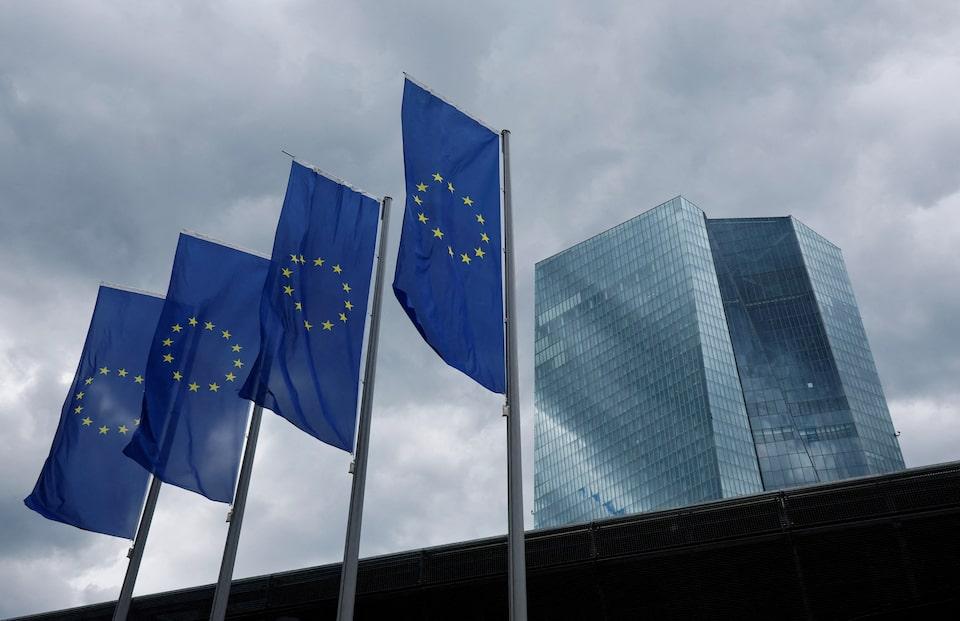
Deposit rate to remain at 2% Debate over more easing to simmer for months Economy holding up but tariffs impact not yet fully felt Decision at 1215 GMT, Lagarde press conference at 1245 GMT FRANKFURT, Sept 11 (Reuters) - The European Central Bank is set to leave interest rates unchanged on Thursday as inflation remains in line with its target, but a fraught trade and political outlook means it will keep alive the prospect of further easing. The ECB halved its key rate to 2% in the year to June but has been on hold ever since, arguing that the 20-country euro zone economy is in a "good place", even if more easing cannot be ruled out. Sign up here. Data over the summer has only confirmed this sanguine view, giving policymakers time to understand how U.S. tariffs, higher German government spending and political turmoil in France might impact growth and inflation. This makes it likely that ECB President Christine Lagarde will once again aim to be "deliberately uninformative" about the future path of interest rates - as in July, when she batted back every question on the way forward. But Lagarde is unlikely to close the door on further rate cuts, especially since inflation is projected to temporarily dip below the ECB's 2% target next year, keeping alive market bets that a final "insurance" cut could come around the turn of the year. "The risk of a more persistent inflation undershooting - which might become evident in December, when the ECB will be forecasting out to 2028 - suggests a dovish bias," HSBC analysts said in a note. In any case, the debate is at the margins and focuses on just a single rate cut, indicating that the ECB is done with the bulk of changes to monetary policy and rates are likely to stay around this level for an extended period. Investors see a 50-60% chance of one last cut by next spring, even as they expect the U.S. Federal Reserve to ease six times by the end of next year. The ECB will announce its decision at 1215 GMT, followed by Lagarde's 1245 GMT news conference. RISKS The key debate will be around how policymakers see risks. Hawkish Governing Council members, who are opposed to further easing, say the euro zone economy has been unexpectedly resilient to trade tensions and that growth is well supported by buoyant private consumption. They point to rebounding industrial production and a surge in German government spending to argue that growth will remain on a moderately upward path. Although U.S. President Donald Trump's 15% tariffs on European Union imports are higher than predicted, firms are showing adaptability and the certainty of having agreed a deal offsets some of the negatives. "Our base case remains for the economy to remain resilient, as trade induced uncertainty recedes and gives way to a more positive impulse from higher European defence and German infrastructure spending," BNP Paribas said in a note. But policy doves say that tariffs have yet to fully work their way through the economy and could dampen an already low growth rate, reversing the rise in consumption. This could then weigh on prices next year, just when inflation is seen dipping below target, raising the risk that firms will change their pricing and wage-setting, thus entrenching anaemic price growth, much like before the pandemic. The Fed's looming rate cuts are meanwhile likely to help the euro firm against the dollar, putting downward pressure on prices. "We expect (the ECB) to stay on hold this year, before cutting rates to protect inflation expectations early next year if inflation expectations follow headline inflation lower," Societe Generale economist Anatoli Annenkov said. A fresh bout of political chaos in Paris, which has pushed French bond yields sharply higher, is another headache for the euro zone's central bank. It has tools to intervene, but only for an "unwarranted and disorderly" rise in borrowing costs, which economists say is clearly not the case now, given France's high debt and feeble economic growth. https://www.reuters.com/markets/europe/ecb-hold-rates-again-keep-door-ajar-further-easing-2025-09-10/
2025-09-10 21:38
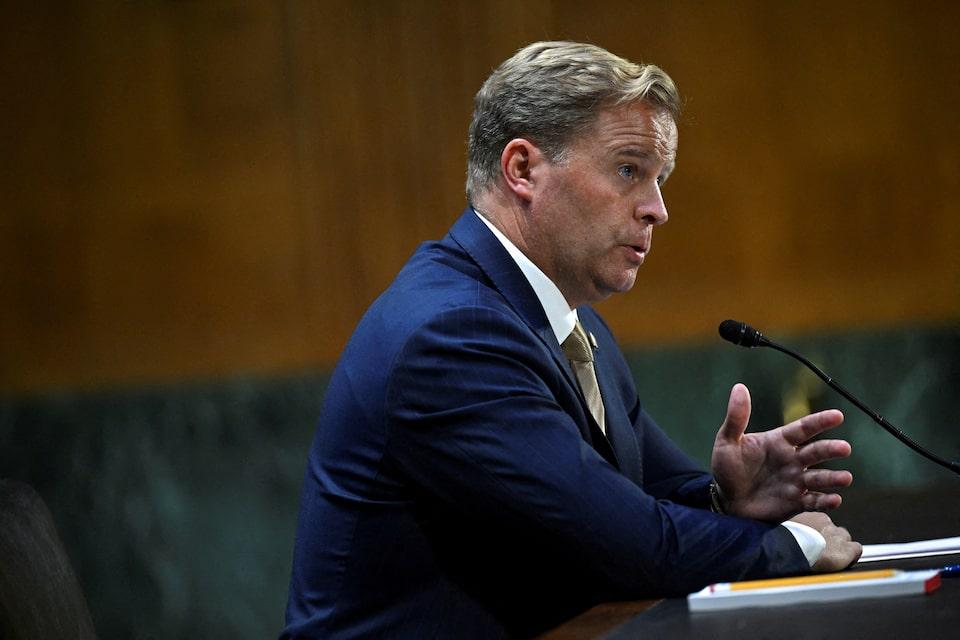
Sept 10 (Reuters) - U.S. President Donald Trump's pick to run the Commodity Futures Trading Commission, Brian Quintenz, on Wednesday accused crypto entrepreneur Tyler Winklevoss of lobbying the White House to stall his nomination after a text exchange. In a post on X, Quintenz said it was his understanding that after the text exchange on July 24 Winklevoss and his brother Cameron Winklevoss contacted Trump and asked that Quintenz's nomination be paused. Sign up here. Spokespeople for Winklevoss, the White House and the CFTC did not immediately respond to requests for comment. Tyler Winklevoss and his brother Cameron both donated $1 million in bitcoin to Trump's election campaign last year. In screenshots of the text exchange that Quintenz posted to X, Winklevoss flagged a 2022 CFTC lawsuit against Gemini, the crypto exchange he co-founded, in which the agency accused Gemini of making false and misleading statements concerning a bitcoin futures contract the firm was pursuing in 2017. Gemini paid $5 million to settle the lawsuit in January, but in June filed a complaint with the CFTC's internal watchdog arguing that the company was unfairly targeted. "I'd like to understand your thoughts on this and how you plan to align with President Trump and the Administration's mandate to end the lawfare and make amends for it," Winklevoss texted Quintenz. Quintenz, whom Trump announced he had tapped for CFTC chair in February, responded that the matter should be handled by a confirmed CFTC chair and said he would look into it if he got the job. Quintenz's Senate hearing to examine his nomination was in June, but it has yet to advance to the full Senate. Gemini, which is set to debut on the Nasdaq on Friday, did not respond to a request for comment. The company is targeting a market valuation of up to $3.08 billion. https://www.reuters.com/sustainability/boards-policy-regulation/trumps-cftc-pick-says-entrepreneur-winklevoss-lobbied-president-delay-nomination-2025-09-10/