2025-09-10 20:47
Producer prices fall unexpectedly in August Oracle's forecast boosts chipmakers, power supply companies Barclays, Deutsche Bank raise S&P 500 2025 year-end target S&P 500 +0.30%, Nasdaq +0.03%, Dow -0.48% Sept 10 (Reuters) - The S&P 500 and Nasdaq notched record-high closes on Wednesday, as Oracle surged and cooler-than-expected inflation data supported expectations the U.S. Federal Reserve will cut interest rates next week. Oracle (ORCL.N) , opens new tab soared 36% in its biggest one-day percentage gain since 1992 after the tech company pointed to a demand surge from AI firms for its cloud services. Sign up here. Its stock market value reached $922 billion, leapfrogging the values of Eli Lilly (LLY.N) , opens new tab, JPMorgan Chase (JPM.N) , opens new tab and Walmart (WMT.N) , opens new tab, and approaching Tesla's (TSLA.O) , opens new tab $1.12 trillion market value. Artificial intelligence-related chip stocks also rallied, with Nvidia (NVDA.O) , opens new tab up 3.8%, Broadcom (AVGO.O) , opens new tab jumping 10% and Advanced Micro Devices (AMD.O) , opens new tab climbing 2.4%. The PHLX chip index (.SOX) , opens new tab rose 2.3% to a record high. Data center power suppliers also benefited, with Constellation Energy (CEG.O) , opens new tab, Vistra (VST.N) , opens new tab and GE Vernova (GEV.N) , opens new tab all rising more than 6%. Apple (AAPL.O) , opens new tab, viewed by many investors as lagging in the race to dominate AI, declined 3.2%, sliding for a fourth straight session. A cooler-than-expected producer prices reading provided additional momentum as traders shored up their bets on interest-rate cuts this year. Recent labor market data has confirmed the U.S. jobs market is in a slowdown. Traders fully expect the Fed to cut interest rates by at least 25 basis points at its policy meeting next week, with a 10% chance the central bank could cut by 50 basis points, CME's FedWatch tool showed. The S&P 500 has now climbed about 11% in 2025, while the Nasdaq has rallied about 13%. "The fundamentals remain very strong in the equity markets, domestically. But we also have to acknowledge that valuations are extended at this point and serve as some natural tension to a continued upward trajectory," said Bill Northey, senior investment director at U.S. Bank Wealth Management in Billings, Montana. The S&P 500 climbed 0.30% to end the session at 6,532.04 points, closing with a record high for the second straight day. The Nasdaq gained 0.03% to 21,886.06 points for its third consecutive record-high close. The Dow Jones Industrial Average declined 0.48% to 45,490.92 points. Six of the 11 S&P 500 sector indexes declined, led lower by consumer discretionary (.SPLRCD) , opens new tab, down 1.58%, followed by a 1.06% loss in consumer staples (.SPLRCS) , opens new tab. Investors will now focus on consumer prices data due on Thursday, for insights on where U.S. inflation is headed. "Combining the softer data (PPI figures) with the Fed's increased emphasis on the labor market side and the growing trend we've seen in downward revisions to the monthly employment data - all support the expectation for a rate cut," said Jordan Rizzuto, CIO at GammaRoad Capital Partners. In a setback for the White House, a federal judge on Tuesday temporarily blocked U.S. President Donald Trump from removing Fed Governor Lisa Cook. Barclays and Deutsche Bank raised their year-end targets for the S&P 500, citing stronger corporate earnings, resilient U.S. economic growth and optimism around artificial intelligence. Synopsys (SNPS.O) , opens new tab tumbled 36% in its biggest one-day decline on record after the chip design software provider missed Wall Street estimates for quarterly revenue. Rival Cadence Design Systems (CDNS.O) , opens new tab fell 6.4%. Declining stocks outnumbered rising ones within the S&P 500 (.AD.SPX) , opens new tab by a 1.5-to-one ratio. The S&P 500 posted 19 new highs and 8 new lows; the Nasdaq recorded 112 new highs and 72 new lows. Volume on U.S. exchanges was relatively heavy, with 17.2 billion shares traded, compared with an average of 16.0 billion shares over the previous 20 sessions. https://www.reuters.com/business/sp-500-nasdaq-notch-record-high-closes-oracle-soars-ai-optimism-2025-09-10/

2025-09-10 20:38
Fourth grid collapse in less than a year, causes under investigation Residents face daily blackouts, economic crisis worsens Obsolete power plants struggle as oil imports dwindle HAVANA, Sept 10 (Reuters) - Communist Cuba's National Electric Union said power was slowly being restored Wednesday evening on the Caribbean Island after the grid collapsed at 9:14 a.m. local time. State-run media reported airports and essential services such as hospitals and water pumps were up and running thanks to backup systems. The vast majority of the country's 9.7 million residents remained in the dark. Sign up here. In Havana, home to 2 million residents, authorities said they were working to start major power plants. This was the fourth time in less than a year that the national grid collapsed. In the past, it has taken two to three days for service to be fully restored. "There has been a total disconnection of the Electric System," the Energy Ministry and National Electric Union said Wednesday morning. The ministry said causes are being investigated. Even before Wednesday's grid collapse, the vast majority of residents had already been experiencing daily blackouts of 16 hours or more. The grid failure follows a string of nationwide blackouts since late last year that plunged Cuba's frail and antiquated power generation system into near-total disarray. The country has also been facing fuel, food and other shortages, along with its worst economic crisis in decades. "This is crazy for everybody," Raúl Ernesto Gutierrez said in Havana. Gutierrez said he was visiting the capital and that back home in the countryside, "we will have to cook with charcoal, with firewood. It’s stressful and also frustrating." Havana state worker Danai Hernandez, said she was on the way home from work which had just shut down. "I’m going home to organize everything in the household and ... now we have to wait. We don't have any other choice," she said, visibly upset. Cuba's oil-fired power plants, already obsolete and struggling to keep the lights on, reached a full crisis last year as oil imports from Venezuela, Russia and Mexico dwindled. https://www.reuters.com/sustainability/boards-policy-regulation/cuba-says-power-slowly-returning-after-nationwide-blackout-2025-09-10/

2025-09-10 20:29
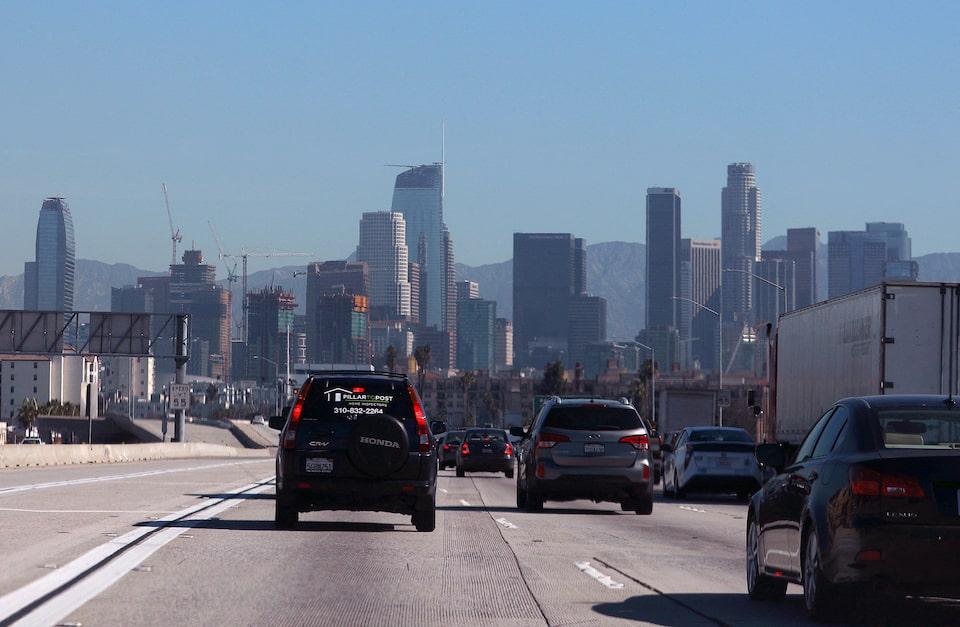
WASHINGTON, Sept 10 (Reuters) - The federal government is barring states from allowing electric vehicles and other clean cars to use carpool lanes without meeting vehicle occupancy requirements starting October 1, California officials said on Wednesday. California Governor Gavin Newsom said single drivers with the state's Clean Air Vehicle decal will no longer be able to use carpool lanes or receive reduced toll rates in some areas. Sign up here. California and other states had used the perk to incentivize the sale of EVs. President Donald Trump has taken aim at EVs on a number of fronts including signing legislation in June to bar California's electric vehicle sales mandates. California has issued more than 1 million decals since the program was created and has been open recently to EV and plug-in hybrid owners under a program previously authorized by the Federal Highway Administration. “By taking away this program, hundreds of thousands of California’s drivers will pay the price. It’s a lose-lose and we urge the federal government to retain this program. This is a great program for climate-conscious Californians,” said California Department of Motor Vehicles director Steve Gordon. A Transportation Department spokesperson said Congress in 2021 under then President Joe Biden opted not to extend the deadline. "USDOT is working with industry stakeholders to develop policy priorities that best speak to the needs of working-class Americans," the department said. Trump signed legislation in July that ends $7,500 tax credits for buying or leasing new electric vehicles on September 30, as well as a $4,000 used EV credit, that have helped juice green vehicle sales in recent years. Congress has also been considering imposing new annual fees on EVs to pay for road repairs since they do not pay federal fuel taxes. In July, the Trump administration told automakers they face no fines for failures to meet fuel efficiency rules dating back to the 2022 model year under a law signed by Trump. The administration is making other changes that will save automakers billions of dollars in purchasing credits from Tesla (TSLA.O) , opens new tab and others to meet prior regulatory requirements. https://www.reuters.com/sustainability/climate-energy/us-ending-electric-vehicle-carpool-lane-access-program-2025-09-10/
2025-09-10 20:01
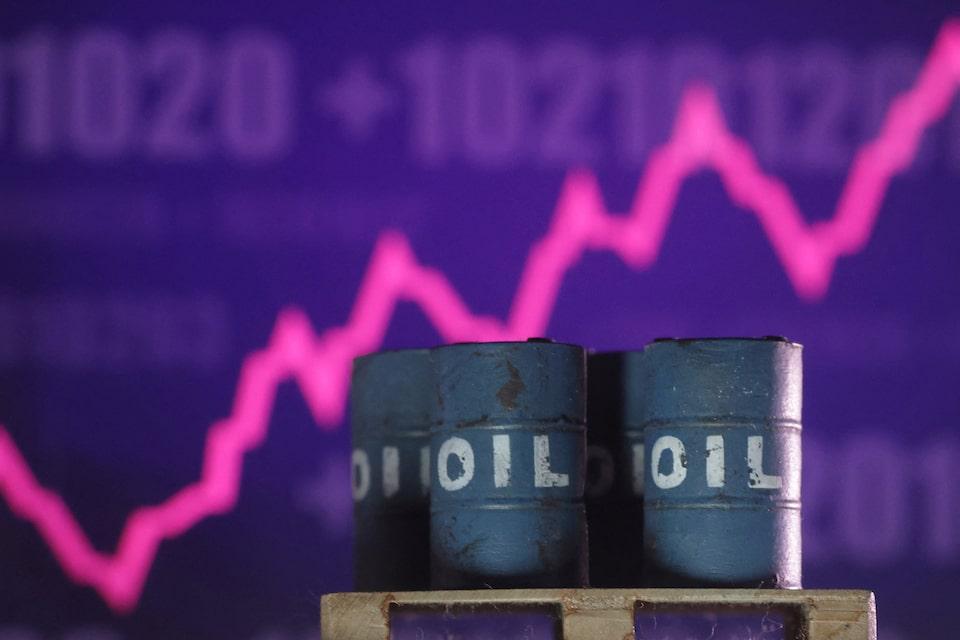
US crude, fuel stocks rose last week, EIA says Global tension mounts as Poland shoots down drones Trump asks EU to put tariffs on China, India to pressure Russia, sources say Longer-term outlook still for oversupply as OPEC+ ups production HOUSTON, Sept 10 (Reuters) - Oil prices settled higher on Wednesday by more than $1 a barrel as investors worried about possible supply disruptions after Polanddowned drones in its airspace and the U.S.pushed for new sanctions on buyers of Russian oil the day after an Israeli attack in Qatar, but a report showing swelling U.S. supplies capped gains. Brent crude futures settled up $1.10, or 1.7%, at $67.49 a barrel. U.S. West Texas Intermediate crude futures rose $1.04, or 1.7%, to settle at $63.67 a barrel. Sign up here. Geopolitical tensions mounted when Poland shot down drones over its airspace during a widespread Russian attack in western Ukraine, the first shots by a NATO member in the Russia-Ukraine war. On Tuesday, prices had settled 0.6% higher after Israel said it had attacked leadership of the Palestinian militant group Hamas in Doha. Both benchmarks rose nearly 2% shortly after the attack, then retraced most of those gains. Still, there was no immediate threat of oil supply disruption "The dark cloud of surplus ahead is ... hanging over the market with Brent trading two dollars lower than last Tuesday. Geopolitical risk premiums in oil rarely last long unless actual supply disruption kicks in," SEB analysts said. U.S. President Donald Trump has urged the European Union to impose 100% tariffs on China and India - major buyers of Russian oil - as a strategy to pressure Moscow to enter peace talks with Ukraine, according to sources. With EU officials in Washington to discuss Russia sanctions, European Commission chief Ursula von der Leyen said on Wednesday the bloc was considering a faster phase-out of Russian fossil fuels as part of new measures aimed at Moscow. The 27-member bloc is very unlikely to impose crippling tariffs on India or China, EU sources said. Traders expect the Federal Reserve will cut U.S. interest rates at its September 16-17 meeting, which could boost economic activity and demand for oil. Strong global economic growth in the next few years will increase demand for oil, U.S. Energy Secretary Chris Wright, said, cautioning that U.S. oil production may plateau for a little while. U.S. crude stocks, gasoline and distillate inventories rose last week, the Energy Information Administration said, a bearish sign for the near-term supply outlook. Crude inventories increased by 3.9 million barrels in the week to September 5, the EIA said. Analysts polled by Reuters had expected a draw of 1 million barrels. U.S. gasoline stocks rose by 1.5 million barrels, compared with analysts' estimates for a draw of 200,000 barrels. Distillate stockpiles, which include diesel and heating oil, rose by 4.7 million barrels, versus expectations for a rise of 35,000 barrels. "A very bearish report. The big headline is that crude build ... and then on top of that we had a big drop in gasoline, so now we are waiting to see how much gasoline demand will fall off a cliff after the U.S. summer driving season, and it looks like it will be substantial," said John Kilduff, partner with Again Capital. "Given the economic data points lately showing an indicated slowdown, especially in the labor market, this weak gasoline demand and pattern of low exports could be other indicators of a slowing economy in the U.S. and potential globally," Kilduff added. On Tuesday, the EIA cautioned that global crude prices will be under significant pressure in coming months due to output increases by OPEC+, the Organization of the Petroleum Exporting Countries and its allies including Russia. https://www.reuters.com/business/energy/oil-prices-settle-up-over-1-after-global-tensions-mount-oversupply-caps-gains-2025-09-10/
2025-09-10 19:19
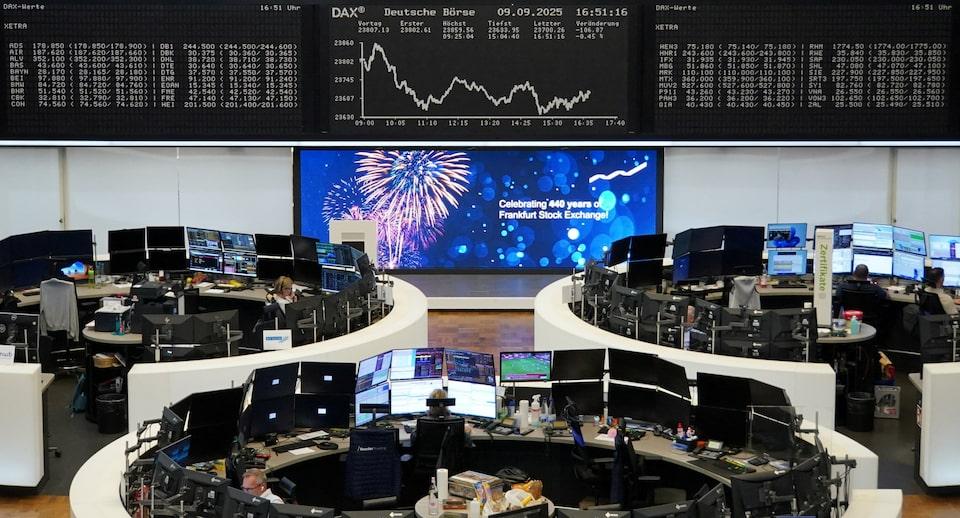
Global equities gain on U.S. producer inflation data Dollar edges down, U.S. Treasury yields fall Polish shares fall on geopolitical worries Gold holds near record, oil prices settle up $1/barrel Next up, U.S. consumer price data due Thursday NEW YORK/MUMBAI, Sept 10 (Reuters) - MSCI's global stock index was advancing on Wednesday after hitting a record earlier with the dollar down slightly and Treasury yields hitting their lowest level since April after softer-than-expected U.S. inflation data boosted the outlook for Federal Reserve rate cuts. Meanwhile geopolitical uncertainty boosted oil prices and kept gold near record highs following Israel's attack on Hamas leadership in Qatar on Tuesday, while Polandscrambled its own and NATO air defences to shoot down drones following a Russian air attack on western Ukraine. Sign up here. On the data front, the U.S. Labor Department's Bureau of Labor Statistics said that the Producer Price Index (PPI) for final demand dipped 0.1% after a downwardly revised 0.7% jump in July. In comparison, economists polled by Reuters had forecast a 0.3% PPI advance after a previously reported 0.9% surge in July. Services prices fell 0.2% while goods prices edged up 0.1% after increasing 0.6% in the prior month. "Stocks and bonds clearly liked the PPI report. Inflation came in a bit tamer than many had expected," said Carol Schleif, Chief market strategist, BMO Private Wealth in Minneapolis. "This lends credence to the theme that the Fed should not only cut once next week. This increases the likelihood Fed should be able to cut more than once before year-end." Traders see a 25 basis point in interest rate cut by the Fed next Wednesday as a sure thing, and even lay roughly 10% odds on a super-sized half percentage-point reduction, according to the CME Group's FedWatch Tool, which also shows bets for further cuts at both the October and December meetings. The final potential hurdle to those expectations - consumer inflation data - comes out early on Thursday. Schleif noted that markets could potentially lose some steam towards the end of the day as investors wait for the August Consumer Price Index reading. Investors worried about the central bank's long-held independence were likely encouraged that a court ruling temporarily blocked President Donald Trump from removing Federal Reserve Governor Lisa Cook, a case which is likely to end up before the Supreme Court. Stephen Miran, a top White House economic advisor, cleared a U.S. Senate hurdle on Wednesday, advancing his nomination as Federal Reserve governor. On Wall Street, the S&P 500 and Nasdaq hit record highs after the PPI data. At 02:38 p.m. the Dow Jones Industrial Average (.DJI) , opens new tab fell 219.89 points, or 0.48%, to 45,491.45, the S&P 500 (.SPX) , opens new tab rose 15.54 points, or 0.24%, to 6,528.15 and the Nasdaq Composite (.IXIC) , opens new tab rose 4.36 points, or 0.02%, to 21,883.84. MSCI's gauge of stocks across the globe (.MIWD00000PUS) , opens new tab rose 2.50 points, or 0.26%, to 964.20 after hitting a record high during Wednesday's session. Earlier the pan-European STOXX 600 (.STOXX) , opens new tab index closed down 0.02% while Poland's blue-chip index (.WIG20) , opens new tab fell about 0.9%, underperforming other regional European markets. In currencies, the U.S. dollar was marginally down against the yen and euro after the producer prices data cemented expectations for Fed rate cuts. The dollar index , which measures the greenback against a basket of currencies including the yen and the euro, fell 0.06% to 97.75, with the euro up 0.03% at $1.1709. Against the Japanese yen , the dollar weakened 0.08% to147.29. In cryptocurrencies, bitcoin gained 1.85% to $113,558.32. Key U.S. Treasury yields eased back after the data and fell further after an auction. The yield on benchmark U.S. 10-year notes fell 4.2 basis points to 4.032%, from 4.074% late on Tuesday while the 30-year bond yield fell 3.8 basis points to 4.6786%. The 2-year note yield, which typically moves in step with interest rate expectations for the Federal Reserve, fell 1.3 basis points to 3.529%, from 3.542% late on Tuesday. In energy markets, oil prices rose after Israel's Qatar attack on Hamas leadership, while the U.S. made a push for new sanctions on buyers of Russian oil, but concerns over crude oversupply capped further gains. U.S. crude settled up 1.66%, or $1.04 at $63.67 a barrel and Brent ended at $67.49 per barrel, up 1.66%, or $1.10 on the day. Gold kept close to its record high hit in the previous session supported by expectations for rate cuts following the softer-than-expected U.S. inflation data. Spot gold rose 0.56% to $3,646.40 an ounce. U.S. gold futures rose 0.29% to $3,653.90 an ounce. https://www.reuters.com/world/china/global-markets-wrapup-7-graphic-2025-09-10/
2025-09-10 19:16
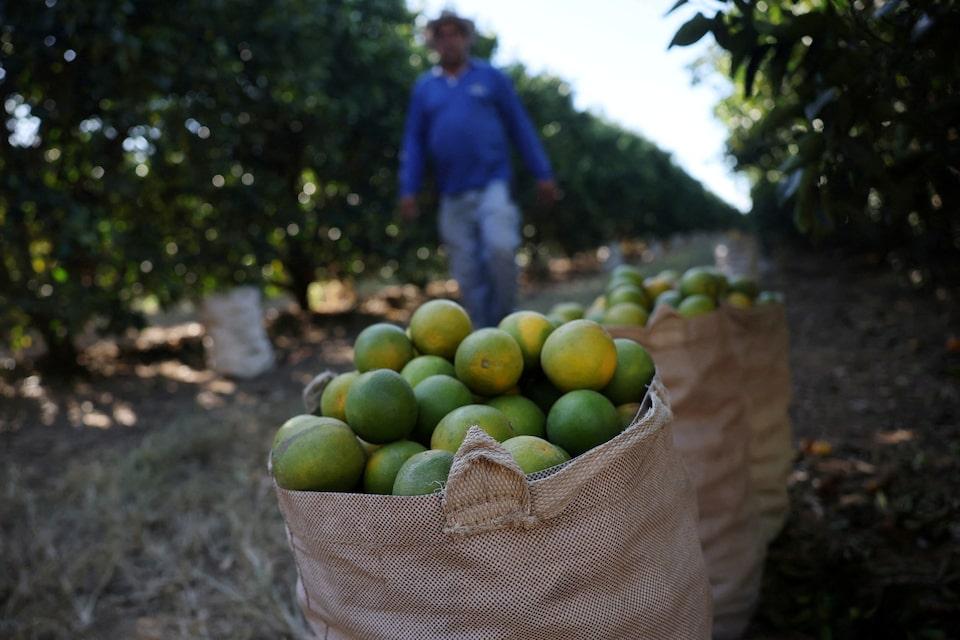
SAO PAULO, Sept 10 (Reuters) - Greening disease, caused by bacteria transmitted by the Asian citrus psyllid, has infected nearly 48% of Brazil's citrus belt, according to new data from industry-funded research group Fundecitrus on Wednesday. Such infections have increased for an eighth year in Brazil, the world's largest orange producer and orange juice exporter, hurting orange production, Fundecitrus said. Sign up here. In the 2024/2025 season, Brazil's orange output is estimated at 230.9 million 40.8 kilogram boxes, the smallest in several years, Fundecitrus said. Although orange groves were expected to recover, the severity of greening is taking a toll on trees. In May, Fundecitrus had forecast Brazil's orange production in 2025/2026 would reach 314.6 million boxes, but on Wednesday it cut the forecast by 2.5% to 306.74 million boxes. In the United States, Florida has also grappled with citrus greening disease for more than a decade, shrinking the state's output. The disease also made the U.S. more dependent on orange juice imports from Brazil. The infected trees produce fruits that are green, misshapen and bitter, unsuitable for sale as fresh fruit or for juice. According to CropLife Latin America, a trade group representing chemical firms, the disease has caused $120 million in losses each year in Brazil. Greening is believed to be responsible for the death of more than 50 million trees in Asia and 10 million in Africa over the last seven years, CropLife's website said. In Brazil, favorable weather conditions for the proliferation and survival of the bacteria have made greening a persisting problem. Sao Paulo and Minas Gerais state comprise Brazil's main citrus belt. https://www.reuters.com/business/environment/bacterial-greening-disease-infects-nearly-half-brazils-citrus-belt-2025-09-10/