2026-01-30 07:27
COPENHAGEN, Jan 30 (Reuters) - Small amounts of radioactive substances have been detected in air samples in Finland though there was no risk to public health, the country's nuclear safety watchdog said on Friday. "The concentrations were very low and posed no risk to people or the environment," the Radiation and Nuclear Safety Authority (STUK) said in a statement. Sign up here. STUK said that the radioactive substances did not originate from Finnish nuclear power plants, though it did not offer an explanation for their detection. "In many cases, the source of the radioactive substances cannot be identified," the agency said. Finland, Sweden, Russia and the wider region have a number of nuclear power reactors. https://www.reuters.com/world/finland-detects-small-amount-radioactivity-sees-no-health-impact-2026-01-30/

2026-01-30 07:21
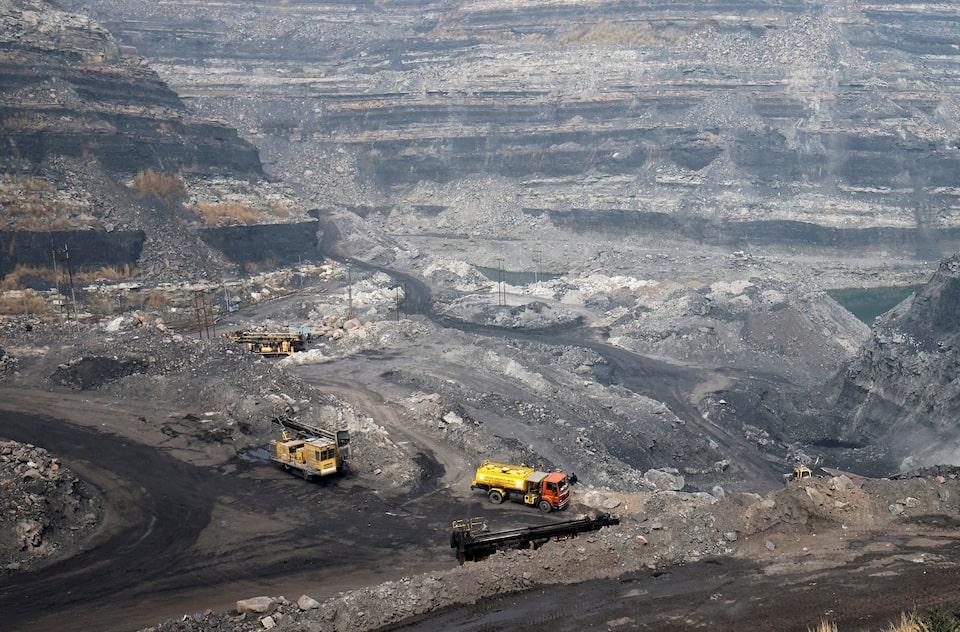
LITTLETON, Colorado, Jan 30 (Reuters) - While North America and Europe scramble to build the data centers needed to run 21st-century businesses, many emerging markets remain anchored to 20th-century products like steel, cement and plastics for job creation and economic growth. That divergence is splitting energy transition trajectories, too. Sign up here. In the U.S. and Europe, the race to lead in artificial intelligence and data processing is overhauling power systems to deliver more electrons, more reliably. Meanwhile, many economies in Asia, Africa and the Middle East remain tied to power-hungry heavy industry, mainly to churn out raw materials and consumer goods. That means fossil fuels - particularly coal - may retain a central role within energy systems for far longer than policymakers in the West assume. CARBON-HEAVY While the economies of Europe and the U.S. were initially powered by raw materials and heavy industry, decades of offshoring have resulted in the transfer of much of that smokestack production capacity to other regions. Since the 1990s, China has been the primary location for the build-out of new capacity for the production of metals, cement, chemicals, ceramics and glass, and has in turn deployed those raw materials to develop its world-leading manufacturing sector. However, scores of other emerging markets including Vietnam, Indonesia, Nigeria, Egypt, Turkey and India have or are attempting to follow similar development blueprints, and are now also major producers of various raw materials. Indeed, three-quarters of global production capacity of steel and chemicals is located in Asia, Africa, the Middle East and Latin America, data from Global Energy Monitor (GEM) shows. When it comes to the capacity footprint for cement and clinker , opens new tab - the vital ingredients in concrete - around 85% of global capacity is outside of North America and Europe. Economies across Asia, Africa and the Middle East are also leading the build-out of new steel, cement and chemicals, accounting for nearly 90% of capacity under construction. CAPTIVE AUDIENCE These countries are not just cheaper places to produce raw materials. They are also some of the fastest-growing consumers of cement, steel, plastics and related products. That combination of low operating costs and rising domestic consumption has helped reinforce the rationale for building up production capacity of those materials locally. The build-out of the associated supply chains across trucking fleets, storage operators and processing facilities has created additional economic value and jobs, which further elevates their importance within local economies. Throw in the potential for developing a manufacturing sector that can upscale those materials into pricier consumer goods and it is understandable why so many countries have policies that support basic materials industries. ENERGY HOGS However, such a deep dependence on raw materials for jobs and key intermediate products also shapes national power systems designed to keep these industries alive. Making cement, steel and chemicals is notoriously energy-intensive, and producers need abundant, cheap power to stay competitive. Many of these materials are also easily imported, which leaves local producers vulnerable to being undercut by foreign rivals. That in turn pressures local authorities to ensure that operating costs remain as low as possible - especially energy costs - and to shape policy in producers' favor. In fast-growing, cost-sensitive economies, the energy system becomes industrial policy. Today, much of Southeast Asia as well as parts of North and Central Africa rely on coal for much of their industrial power supplies. Extensive mining, import and storage facilities have often been developed to support and sustain that coal dependence, and coal-fired power is often among the quickest ways for those economies to ratchet up energy supplies. Pushes to expand coal-fired power output may be at odds with the trends seen in more developed regions, and may reverse efforts to decarbonize energy systems. But as long as basic materials like cement and steel pay most of the bills and employ large workforces, producer countries may not have the luxury to accelerate energy transition efforts without upending the broader economy. {The opinions expressed here are those of the author, a columnist for Reuters.} Enjoying this column? Check out Reuters Open Interest (ROI), , opens new tab your essential new source for global financial commentary. Follow ROI on LinkedIn, , opens new tab and X. , opens new tab And listen to the Morning Bid daily podcast on Apple , opens new tab, Spotify , opens new tab, or the Reuters app , opens new tab. Subscribe to hear Reuters journalists discuss the biggest news in markets and finance seven days a week. https://www.reuters.com/markets/commodities/old-economy-demands-may-stall-emerging-market-decarbonization-2026-01-30/
2026-01-30 07:15
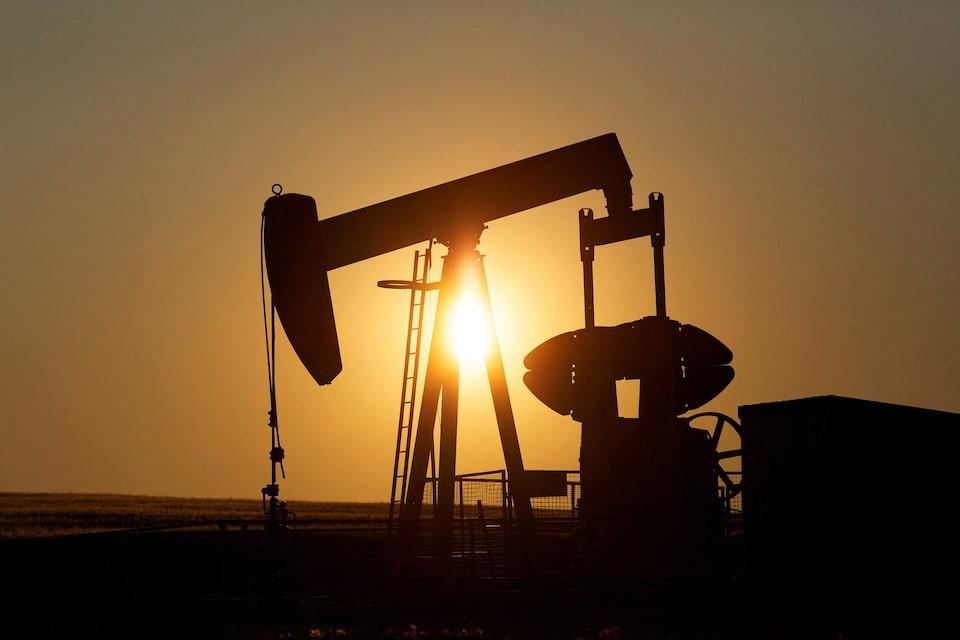
LONDON, Jan 30 (Reuters) - Oil prices remain stuck in a narrow band even after soaring 15% in January, partly on fears of a fresh U.S. strike on Iran. Tough talk on either side is unlikely to push crude prices much higher, given today's well-supplied market. What would be needed is big-time action that results in a meaningful, sustained hit to the global supply-demand balance. This month so far, Brent crude futures have climbed above $70 a barrel, their highest since last July. That puts the global benchmark on track for its biggest monthly gain since January 2022, when Russian forces were preparing to invade Ukraine, as a series of major supply disruptions have collided with escalating geopolitical risk in the Middle East. Sign up here. First, there was the drop in Venezuelan exports following the U.S. arrest of Nicolas Maduro. Caracas’s oil shipments averaged just 605,000 barrels per day (bpd) in January, below the 2025 average of 780,000 bpd, according to data analytics firm Kpler, as the country struggles to revive its industry. Next, over in Kazakhstan, output at the giant Tengiz field – one of the world’s largest – was halted on January 18 by a power outage. While operations have restarted, the field is unlikely to return to its pre‑outage production level of more than 900,000 bpd before mid‑February. Meanwhile, U.S. production is still recovering after plunging by up to 2 million bpd – roughly 15% of national supply – during last weekend’s severe winter storm. These setbacks delivered a substantial hit to global supply in January, and some outages are likely to linger for weeks or even months. While the combined impact has helped to lift prices, the gains have been capped by rising output in other parts of the global market, including from key OPEC producers. That surge in supply has put downward pressure on prices in recent months. Indeed, the International Energy Agency forecasts a massive 3.7 million bpd oversupply in 2026. Growing onshore and offshore inventories lend credence to this projection. IRAN TENSIONS ON THE RISE Nevertheless, President Donald Trump’s increasingly explicit threats to strike Iran, as well as the large U.S. military buildup in the region, have added upward pressure to oil prices in recent days. How events will unfold here remains uncertain, of course. Will Washington attack Iran at all? If so, how forcefully? And, then, how would Tehran retaliate? What is known, however, is that the stakes for oil markets are very high. Iran, OPEC’s fourth‑largest producer, pumped 3.3 million bpd in 2025, roughly 3% of global crude. Tehran has vowed to retaliate against any U.S. strike, including by hitting neighbouring states, raising the prospect of broader disruptions across a region whose energy exports supply nearly 20% of global consumption. Markets are without a doubt on edge. The CBOE crude oil volatility index (.OVX) , opens new tab , which measures the market's expectations of volatility based on a range of put and call options, rose sharply from 30 at the start of the year to over 50 on Thursday, its highest since the Israel-Iran war last June, when it reached 77. GEOPOLITICAL RISK PREMIUM Taken together, the recent physical outages and rising Middle East tensions create a strongly bullish backdrop for crude. So why hasn’t it been enough for Brent to break out of its $60 to $80 per barrel band that it's been trapped in for nearly two years? In short, investors are only pricing in a modest geopolitical risk premium, given the prevailing global supply glut. As a reminder, prices remained confined to this narrow range last year as well despite the Israel‑Iran war, a wave of Ukrainian attacks on Russian oil facilities, and Trump’s “Liberation Day” tariff announcement. So what would it take to propel prices into triple‑digit territory? It would likely need to be a doomsday scenario – a regional conflagration that severely disrupts flows. Otherwise, the oil market is simply less responsive to escalating political tensions than it may have been in the past. Today, traders need to see supply losses big enough to outweigh the supply overhang – and that’s a big ask. Enjoying this column? Check out Reuters Open Interest (ROI), , opens new tab your essential new source for global financial commentary. Follow ROI on LinkedIn, , opens new tab and X. , opens new tab And listen to the Morning Bid daily podcast on Apple , opens new tab, Spotify , opens new tab, or the Reuters app , opens new tab. Subscribe to hear Reuters journalists discuss the biggest news in markets and finance seven days a week. https://www.reuters.com/markets/commodities/oil-needs-an-iran-supply-shock-not-tough-talk-break-out-range-2026-01-30/
2026-01-30 07:04
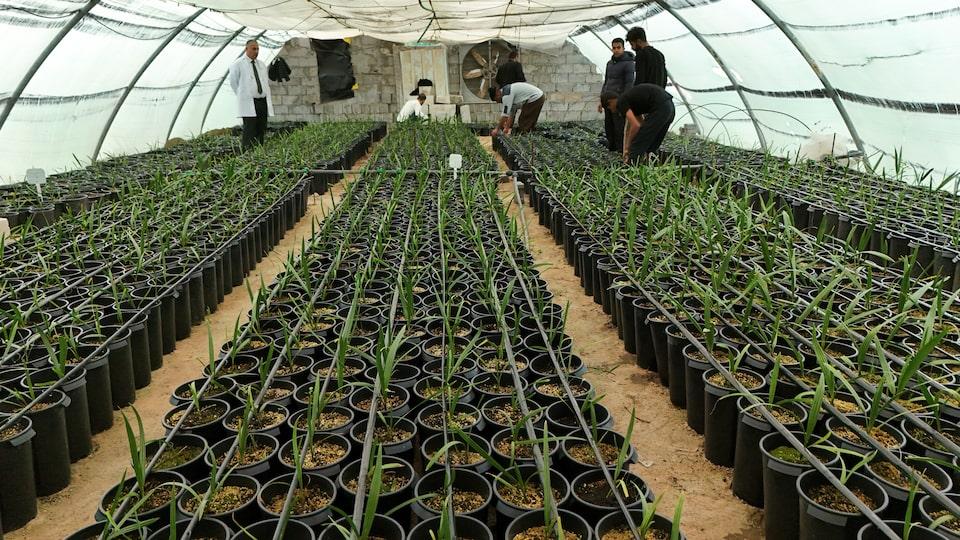
Tissue-culture propagation boosts date palm production in Iraq Basra's tissue-culture lab produces 250,000 seedlings annually Acclimatisation process improves palm survival in extreme conditions BASRA, Iraq, Jan 30 (Reuters) - In greenhouses and sterile laboratories west of Basra, Iraqi technicians wearing gloves and masks lift tiny date palm shoots from jars, hoping one day to restore orchards laid waste by decades of war, land loss and creeping water salinity. Date palms, once central to Iraq's agricultural economy, have been ravaged by the upstream damming of the Tigris and Euphrates, declining rainfall, seawater intrusion and decades of conflict. Sign up here. In a private-sector push, scientists and officials are now scaling up tissue-culture propagation to produce disease-free date palm saplings and preserve rare Iraqi varieties. "Tissue-culture agriculture is distinguished mainly by its high production," said Mohammed Abdulrazzaq, director of Nakheel Al Basra. "In previous methods, a palm tree could give you three to four offshoots, but with tissue culture, we can produce thousands of offshoots from a single palm." FROM ONE PALM, THOUSANDS MORE Nakheel Al Basra, one of the province's largest tissue-culture laboratories, began operations in 2023 and can produce up to 250,000 palm seedlings a year, said Abdulrazzaq, adding that tissue-culture palms have a success rate of up to 99%. Inside the laboratory, workers use masks and gloves when handling palm samples to limit contamination. Tiny shoots are kept in jars on racks and moved through stages designed to produce uniform, disease-free planting material. Abdulrazzaq said wars, the bulldozing of farmland and rising water salinity had pushed some Iraqi date varieties to "the verge of extinction." Iraq's water security has become a pressing issue as levels in the Euphrates and Tigris have fallen sharply, compounded by upstream dams, mainly in Turkey. In Shatt al-Arab, the drop has allowed seawater from the Gulf to push further inland, driving salinity to unprecedented levels, which farmers describe as an advancing "saline tongue" in their water supplies. Basra alone once had 13 million palm trees out of 32 million across Iraq, said Dr. Jassim Mohammed, head of the agriculture department at Basra's Directorate of Agriculture, but the number has since fallen sharply. TOUGHENED TO WITHSTAND HEAT AND SALT Researchers at the facility say producing seedlings is only part of the challenge in Basra, where summer temperatures can exceed 50 degrees Celsius (122 degrees Fahrenheit) and salt levels in water can surge. To improve survival rates, young palms are acclimatised to extreme conditions before planting by gradually raising temperatures, said Ismail Sadiq, a researcher at Nakheel Al Basra. The process starts at 25C (77F) and is stepped up to about 52C (126F), a level he said can be reached in Basra in summer. "So, when moved to any place with similar or higher temperatures, the palm is fully acclimatised," Sadiq said. He said salt concentrations are also increased gradually inside the laboratory, from no added salt to 6,000 to 8,000 parts per million (ppm), to prepare the plants for saline water in the field. Standing in a greenhouse lined with rows of young palms and irrigation lines, Abdulrazzaq said the process had entered its post-lab stage. "The palms are now ready to be sold to farmers and need six months before being planted in the ground," he said. "They are prepared for outdoor conditions." Some farmers say the technique is already improving survival rates. Farmer Faysal al-Khazraji said he planted 100 tissue culture seedlings alongside 100 conventional offshoots. "All 100 tissue culture palms succeeded, while the other 100… honestly we only got 25," he said. Abdulrazzaq said the laboratory is propagating Iraqi varieties including Barhi, while also introducing imported commercial types such as Sukkary. Seedlings around 30 cm tall sell locally for $40 to $60, he added. Tissue-culture palms now represent more than 15% of varieties in Basra's Al-Zubair and Safwan areas, said Saleh Hassan, director of agriculture in Basra's al-Zubair district. Basra has added about 600,000 palms over the past five years, bringing the total to around three million, according to Dr. Mohammed, who said tissue-cultured palms account for more than 100,000 of those. https://www.reuters.com/sustainability/climate-energy/rising-salinity-heat-push-basra-grow-date-palms-lab-2026-01-30/
2026-01-30 06:40
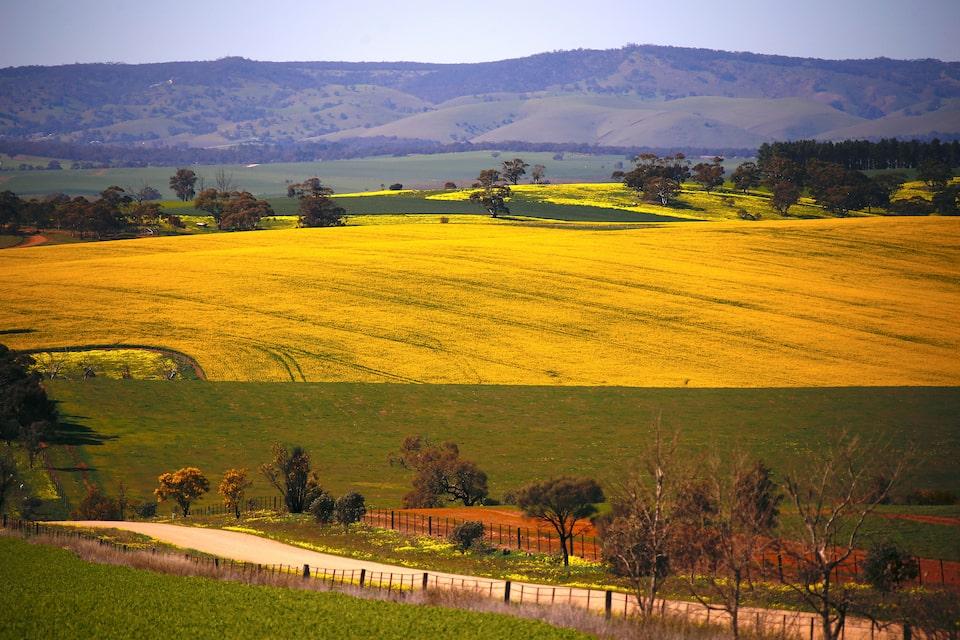
China buying canola from Canada again after trade war hiatus Australia shipping to China for first time since 2020 Australian prices competitive with Canadian Canada likely to take back lion's share of China market CANBERRA/BEIJING, Jan 30 (Reuters) - A trade deal between China and Canada has damaged Australia's hopes of becoming China's main supplier of canola, but the Pacific nation's access to the world's biggest oilseed importer has significantly improved, traders and analysts said. China has resumed purchases of Canadian canola in the last two weeks after a months-long hiatus triggered by a trade war. Sign up here. Rival exporter Australia has been positioning itself to capture a share of the Chinese market, having sold around 500,000 metric tons to Chinese buyers after overcoming biosecurity hurdles that had previously blocked its access. "Even if they do keep buying Canadian canola, China is now buying our canola for the first time in five years," said Dennis Voznesenski, an analyst at Commonwealth Bank in Sydney. "Being back in China, even if not exclusively, is a good thing for Australian canola demand and prices," he said. Chinese buyers have snapped up as much as 650,000 tons of Canadian seed since Beijing and Ottawa struck an initial trade deal earlier this month that will slash tariffs on Chinese electric vehicles and Canadian canola, traders have told Reuters. China imposed preliminary anti-dumping duties of 75.8% on Canadian canola in August, largely halting shipments and idling its crushing industry. This month's deal should drop total duties on canola to around 15%. Canadian and Australian prices will now influence trading decisions, dealers said. "Prices hold the key," said Stefan Meyer, who leads a trading team at brokers StoneX in Sydney. There was little difference between the landed cost of Australian and Canadian canola in China, he said. "Australian exporters are matching the (Canadian) prices or offering slightly lower." Canadian canola seed is being offered in China at $551 a ton for March shipment, including cost and freight (C&F), compared with $550 a ton for Australian canola, two trade sources said. A third said Australian supply was $5-$10 cheaper than Canadian. Canada, which grows much more canola than Australia, will likely retake the biggest share of China's market, traders said. "Domestic companies remain more inclined to purchase Canadian canola, having relied on it for years due to its large production and steady supply," said Zhang Deqiang, an analyst at Sublime China Information. But Australian exporters remain upbeat. "We can compete on price for the volume and we would win demand if competitive," said a source at an international trading firm in Australia. This is "a significant improvement from not having any access to the market at all," he said. The first few Australian shipments are part of a trial , opens new tab to prove that seed from the country does not risk spreading a fungal plant disease called blackleg in China. Two cargoes of about 60,000 tons have arrived so far from Australia. One, which arrived in China in January, is set to be crushed this week, according to traders with knowledge of the matter. At least two more are due to sail in February, according to shipping data compiled by Bendigo Bank Agribusiness. https://www.reuters.com/world/asia-pacific/australian-canola-down-not-out-china-after-xis-deal-with-canada-2026-01-30/
2026-01-30 06:29
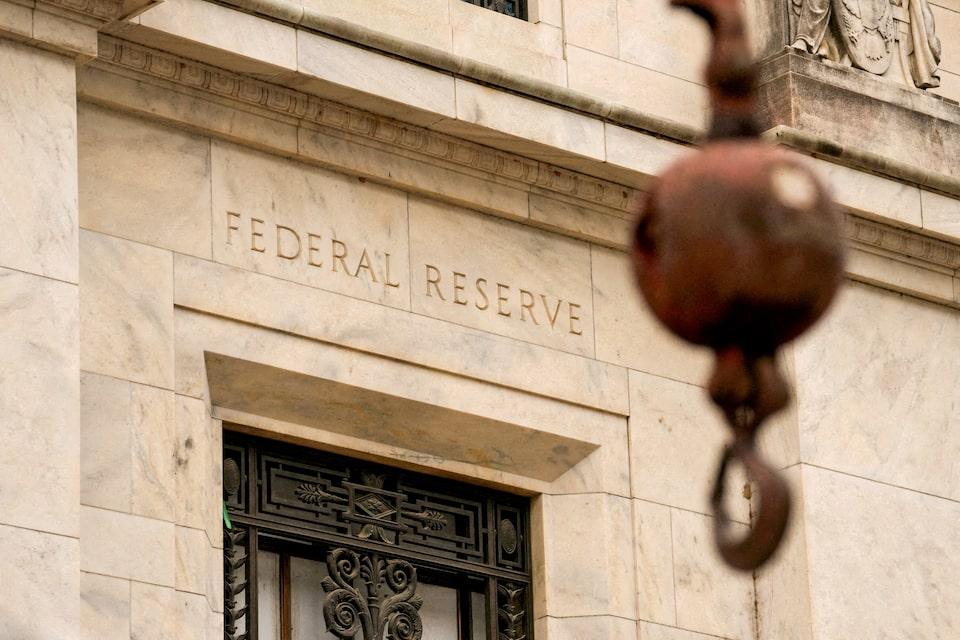
Trump wants a Fed chair who will deliver lower interest rates Warsh wants to change the way the Fed does monetary policy Fed independence under scrutiny Jan 30 (Reuters) - President Donald Trump is expected to name a successor to Federal Reserve Chair Jerome Powell on Friday after a White House meeting the previous day with former Fed Governor Kevin Warsh, a Fed critic who has said the U.S. central bank needs "regime change" to regain lost credibility. Trump told reporters at the Kennedy Center on Thursday that he would announce his choice the next morning, and that it would be "somebody that could have been there a few years ago ... I think it's going to be a very good choice. I hope so." Sign up here. Warsh, 55, had met with Trump at the White House, a source later told Reuters. In his first term, President Trump had passed over Warsh in favor of Powell, a choice he regretted when Powell would not cut interest rates as fast or deep as Trump urged. This time around Trump made support for lower rates one of his explicit criteria for a Fed chair candidate. Warsh, like the other three people identified by Trump officials as finalists for the job, has said the Fed should be lowering rates more than it has. Trump's nomination of a Powell successor, who must be confirmed by the Senate, comes amid unprecedented presidential efforts to exert control over the Fed. Traditionally, the independence of the central bank from political pressure has been seen as key to its job to fight inflation. Trump's efforts include an attempt to oust Fed Governor Lisa Cook in a case now before the Supreme Court, and a Department of Justice probe that Powell says is part of a broad attempt by the administration to intimidate the Fed. Powell's chair term ends in May, and he has declined to say if he will take the unusual step of staying on as a Fed governor. Doing so would deny Trump another open Fed seat to fill and complicate the bank's leadership under a new chair. Powell's term as a member of the Board of Governors expires in 2028. Trump's promise of an announcement on Friday came hours after he had said he would make his choice public next week. A schedule for the president released by the White House late on Thursday did not point explicitly to such an event. The White House calendar for Trump showed a late-morning executive order signing session and a mid-afternoon policy meeting. INTENSE SCRUTINY FOR WARSH Trump's Fed chair pick may face another challenge as well: One key lawmaker in Trump's Republican Party, Senator Thom Tillis of North Carolina, has threatened to block any Fed nominees until the DOJ investigation is resolved. Warsh - who as Fed governor from 2006 to 2011 was then Fed Chair Ben Bernanke's chief liaison to Wall Street during the 2008 financial crisis and a key proponent of tighter monetary policy - has said in recent months he believes Trump is right to press the central bank for steep interest-rate cuts. Warsh has also criticized the Fed for underestimating the inflation-busting potential of productivity growth supercharged by artificial intelligence. With a background on Wall Street, including as a partner in the office managing the wealth of investing giant Stanley Druckenmiller, and family ties to major Trump supporter Ron Lauder, Warsh will be under intense scrutiny to prove his independence from the president. While no White House insider, Warsh has been a confidant of the president and a guest at his Florida estate, and looks poised to push Trump's priorities as a "shadow" Fed chair until Powell's term ends in mid-May. A lawyer and a distinguished visiting fellow in economics at Stanford University's Hoover Institution, Warsh has called for an overhaul of the central bank that would slim its balance sheet and ease banking regulation. He says that shrinking the balance sheet would allow it to "redeploy" excess liquidity in financial markets to the real economy by lowering the Fed's policy rate. That's not an argument that has made headway at the current Fed, which cut rates three times in 2025 but this week left its benchmark interest rate unchanged in the 3.50%-3.75% range and signaled no hurry to move lower any time soon. The central bank also recently stopped shrinking its balance sheet in line with its strategy of keeping banking reserves ample to make for better control over its policy rate. Other candidates for the Fed chair job have included Rick Rieder, chief investment officer of BlackRock's global fixed income business; Fed Governor Christopher Waller, one of two policymakers who dissented this week in the central bank's decision to keep rates unchanged; and White House economic adviser Kevin Hassett, an unapologetic cheerleader for many of the president's orthodox-defying policies, including high tariffs and an immigration crackdown. https://www.reuters.com/business/trump-plans-announce-his-fed-chairman-choice-next-week-2026-01-29/