2025-09-10 06:29
LONDON, Sept 10 (Reuters) - A sense of normality has returned to the copper market now the threat of U.S. import tariffs on refined metal has been deferred. Physical copper is still flowing into CME warehouses after the rush to move metal to the United States but the CME spot premium over the London Metal Exchange (LME) is now stabilizing around the $100 per ton level, which is pretty much where it was before the tariff scare. Sign up here. Fund managers, however, are still fighting shy of the metal after the roller-coaster ride in the first part of the year. Investor positioning on the CME copper contract shrank to a decade-low in August and has edged up only slightly since. Investors remain net long but largely thanks to a complete collapse in short positions. Bulls, meanwhile, are only tentatively dipping their toes back in the water. The tariff heat may have gone out of the market, but there is still little light on price direction as physical arbitrage flows muddy the fundamental picture. Fund managers have evidently decided there is easier money to be made in other commodity sectors, particularly precious metals. BEAR EXODUS Fund positioning, long and short, on the CME copper futures contract sank to just 51,685 contracts on August 18, which was the lowest level of participation since 2013. The mass departure of investors resulted in average daily volumes slumping by 42% to 53,776 contracts, the lowest activity rate since December 2021. Trading in the CME's main copper options contract fell even more, by 56% year-on-year. Particularly noticeable has been the exodus of short-position holders among the investment community. Outright short positions have collapsed from a February high of 72,858 contracts to just 11,792, the lightest bear positioning since 2011. The first half of the year was a scary time to be short CME copper as the U.S. price soared to a record premium over the LME international price. It wasn't easy being a bull either, given the extreme volatility in the U.S. premium trade. Fund long positions are also much reduced relative to the first months of 2025. They hit a three-year low of 35,447 contracts last month but have since picked up to 46,443 contracts. THE LURE OF GOLD Funds are still evidently bruised from the tariff tumult and remain wary of copper, or at least the CME copper price, which will continue to be highly sensitive to any change in tariff policy. President Donald Trump's administration has left the door open to a possible phase-in of refined copper import tariffs from 2027, which in Trump-time is a very long time indeed. Nor is the copper market generating any clear technical signals, which are the lifeblood of momentum funds. The London Metal Exchange (LME) copper price has been trading a $9,500-10,000 per ton range since May and the CME price is also now churning sideways after the tariff implosion at the end of July. Fundamental signals have been distorted by the massive relocation of copper to the United States, where CME inventory of 277,400 tons is now higher than LME and Shanghai Futures Exchange stocks combined. Until copper regains directional impetus, upwards or downwards, there are richer pickings for investors in the super-hot gold and silver markets. By nominal value, managed money accounts now hold 47% of their total commodity exposure in gold and 7% in silver, according to Ole Hansen, head of Commodity Strategy at Saxo Bank. With gold prices hitting another record high of $3,659 per ounce on Tuesday and silver trading above the $40-per ounce level for the first time since 2011, it could be a while before funds commit again to copper. The opinions expressed here are those of the author, a columnist for Reuters. https://www.reuters.com/markets/commodities/bruised-funds-retreat-copper-after-tariff-turbulence-2025-09-10/
2025-09-10 06:26
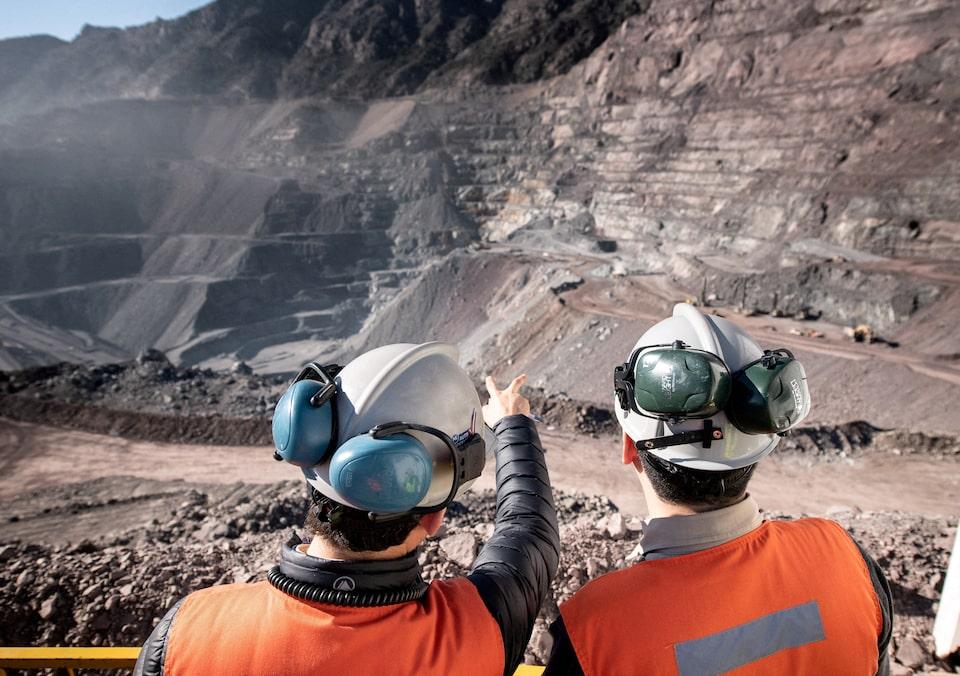
Sept 10 (Reuters) - Australian lender ANZ Group (ANZ.AX) , opens new tab raised its year-end gold price forecast to $3,800 per ounce on Wednesday and expects prices to peak near $4,000 by next June, supported by strong investment demand for bullion. Gold prices rose to an all-time high $3,673.95 on Tuesday and has gained 38% so far this year, bolstered by a soft dollar, strong central bank buying, dovish monetary settings and heightened global uncertainty. Sign up here. "Prospects of continued accommodative monetary policy, increasing geopolitical tensions, ongoing macroeconomic challenges, and concerns over the Fed's independence are expected to strengthen the investment case for gold," ANZ analysts said in a note. Central bank gold purchases are estimated to remain in the range of 900 metric to 950 metric tons in 2025, implying expected purchases of 485 tons–500 tons in second half of the year, the bank said. China's central bank added gold to its reserves in August, extending purchases of bullion into a 10th straight month. "Rising risks to the labour market will likely prompt the U.S. Fed to maintain its easing stance through to March 2026. This will exert downward pressure on U.S. Treasury yields, which normally enhances the appeal of gold," ANZ said. The Australian lender also raised its year-end silver price target to $44.7 per ounce, citing support from gold's bull run and firm ETF inflows. Spot silver rates climbed to a 14-year high of $41.65/oz on Monday. https://www.reuters.com/business/anz-hikes-gold-price-forecast-3800-solid-investment-demand-2025-09-10/
2025-09-10 06:21
Sept 10 (Reuters) - ExxonMobil (XOM.N) , opens new tab expects the European Union to sign multi-decade U.S. gas contracts under its pledge to buy billions of dollars of American energy, the Financial Times reported on Wednesday. The EU in July pledged to buy $750 billion of U.S. energy by 2028 as part of a sweeping trade pact with Washington. Sign up here. The EU declined to comment to Reuters. Peter Clarke, senior vice president of Exxon's liquefied natural gas business, told the FT that Europe's expanding LNG infrastructure made it "logical" to commit to longer-term supply, noting Exxon sells about 80% of its LNG under such contracts. Europe is now “the most important market” for U.S. LNG exports, and the next step will be for the continent “to figure out how it supports long-term contracting,” the newspaper quoted him as saying. The U.S. supplied 50% of the EU’s liquefied natural gas imports in 2024, along with 17% of oil and 35% of coal, according to Eurostat. Any expansion in energy trade is likely to center on LNG, with the U.S. the world's top exporter of the fuel. "We have seen in the data quite a big increase in LNG imports to Europe, year on year, it’s up about 20 per cent," Clarke told FT, adding that 55% of the imports were from the United States. https://www.reuters.com/business/energy/exxon-expects-eu-sign-long-term-us-gas-deals-ft-reports-2025-09-10/
2025-09-10 06:18
Sept 10 (Reuters) - Australia's Woodside Energy (WDS.AX) , opens new tab said on Wednesday it had entered an agreement with Malaysia's state-owned Petronas (IPO-PETO.KL) , opens new tab to supply 1 million metric tons of liquefied natural gas per annum for 15 years, starting 2028. Sign up here. https://www.reuters.com/business/energy/woodside-energy-petronas-ink-15-year-lng-supply-deal-2025-09-10/
2025-09-10 06:15
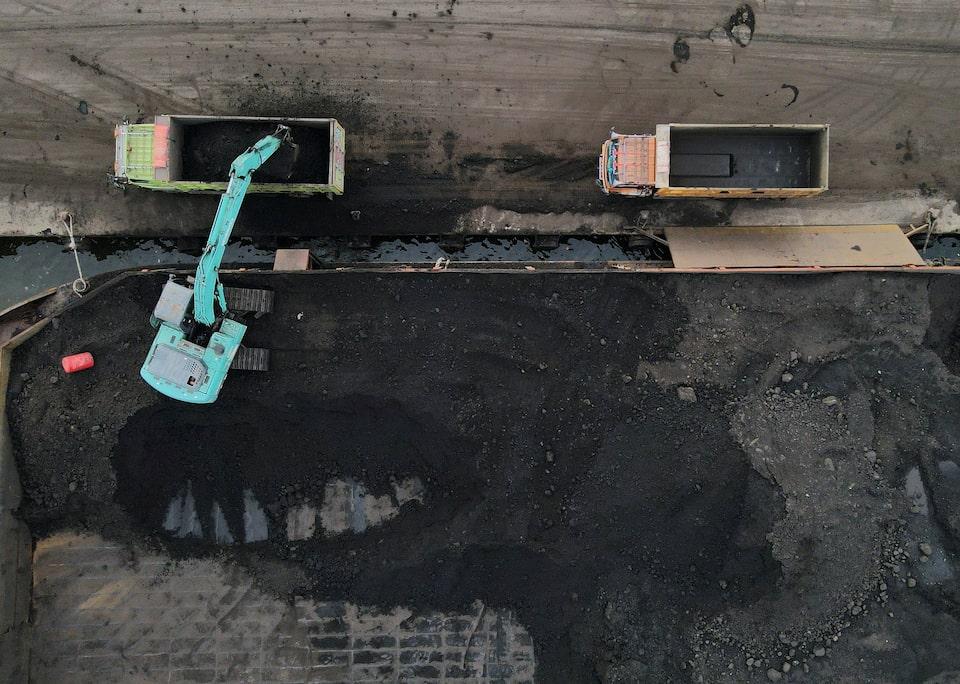
SINGAPORE, Sept 10 (Reuters) - Asia's clean energy push will stall unless governments curb fossil fuel subsidies, offer stable policy direction and invest in upgrading grids, industry executives said on Wednesday. The executives flagged the cancellation of renewables auctions and subsidies to the fossil fuel industry as the biggest impediments of growth in green investments at a time when data centres are driving growth in power demand. Sign up here. "Coal continues to be subsidised and power and energy in general continue to be used as a political tool to win votes. And I think that's the biggest stumbling block," Lawrence Wu, chief financial officer for Asia of Portugal-based renewable power firm EDP Renewables (EDPR.LS) , opens new tab, told the APPEC conference in Singapore. Major Asian economies including Indonesia and India continue to incentivise coal use, saying it helps keep retail power tariffs in check, and cite lower per capita emissions to defend dependence on the fossil fuel. Nitin Apte, CEO of General Infrastructure Partners-owned, Singapore-based Vena Group, said the company is quadrupling construction of renewable energy projects in Asia to meet surging loads but said policy, not technology, is the main limitation. "If we know a permit takes four years and the steps are clear, we can price that risk. The concerns come when you run an auction and then cancel it or the power purchase agreement is not bankable," Apte said. Taiwan revoked two offshore wind generation licenses after review this year, while India has cancelled 11.4 gigawatts (GW) of renewable energy tenders in the last two years for reasons including high tariffs quoted. Data centres have caused a surge in power demand across the region, and not necessarily for renewable energy, he said. "I don't think they (data centres) really care what carbon intensity they have. They just want energy," Apte said. Malaysia, one of Southeast Asia's hottest data centre markets, is boosting coal-fired power output and importing the fuel at record levels, taking advantage of low prices. Both executives said challenges such as permitting delays were inflating financing costs and called for predictable long-term policy and timelines. Wu said EDPR is "doubling down" on Japan and Australia, which had "sustainable" risks that the company was "prepared to take". "It takes a few years to develop a project fully, but we know with a huge level of certainty in terms of what's going to come," adding that the predictability helped drive down financing and capital costs. https://www.reuters.com/sustainability/climate-energy/coal-subsidies-policy-instability-threaten-asias-energy-transition-2025-09-10/
2025-09-10 05:48
Market sees 8.4% odds of half-point Fed cut on September 17 Asian traders take cues from Wall Street's rise to new record US PPI, CPI figures this week to give final clues on Fed move TOKYO, Sept 10 (Reuters) - Asian stocks tracked Wall Street higher on Wednesday and safe-haven bonds fell as traders firmed up bets that U.S. labour market softness would spur the Federal Reserve to cut rates by at least a quarter point next week. S&P 500 futures pointed 0.3% higher, while the-European STOXX 50 futures gained 0.2%. Sign up here. Gold caught its breath after Tuesday's record high while the dollar was little changed with two crucial days of U.S. inflation figures, starting later on Wednesday, ahead of the Fed's September 17 decision. Crude oil continued to rise after Israel's attack on Hamas leadership in Qatar. Indeed, geopolitical worries remained front and centre of investors' minds after Poland scrambled its own and NATO air defences to shoot down drones following a Russian air attack on western Ukraine. Japan's Nikkei share average (.N225) , opens new tab added 0.8%, South Korea's KOSPI (.KS11) , opens new tab jumped 1.7% and Taiwan's equity benchmark (.TWII) , opens new tab climbed as much as 1.5% to hit a record high. Hong Kong's Hang Seng (.HSI) , opens new tab gained 1.3%, while mainland Chinese blue chips (.CSI300) , opens new tab rose 0.3%. Overnight, the S&P 500 (.SPX) , opens new tab, Nasdaq Composite (.IXIC) , opens new tab and the Dow Jones Industrial Average (.DJI) , opens new tab each ended the day at fresh all-time highs. Traders see a rate cut by the Fed next Wednesday as a sure thing, and even lay 8.4% odds on a super-sized half-point reduction, the CME Group's FedWatch Tool shows. A week earlier, markets had assigned a 7% probability on the Fed holding rates steady, but another dismal monthly payroll number last week convinced investors the Fed had no cushion to wait any longer to support the economy. The final hurdles to that view will come on Wednesday and Thursday, in the form of producer and consumer inflation readings, respectively. "An upside inflation surprise could rock the boat slightly and lead to an unwinding of rate cut probabilities, not so much for September, but for subsequent months," said Kyle Rodda, senior financial markets analyst at Capital.com. The rapid deterioration in U.S. economic data, particularly on jobs, "is the reason why markets are pricing in such aggressive easing from the Fed - which, incidentally, the markets appear to believe will be enough to protect the U.S. economy from a recession, judging by current risk appetite," Rodda added. Markets took in stride a court ruling that temporarily blocked President Donald Trump from removing Federal Reserve Governor Lisa Cook, a case which is likely to end up before the Supreme Court. Investors are keenly following the unprecedented legal battle as it could upend the central bank's long-held independence. U.S. Treasury bonds declined for a second day on Wednesday, pushing yields higher. The 10-year Treasury yield added 1 basis point to 4.088%, after climbing almost 3 basis points on Tuesday. Equivalent Japanese government bond yields rose 0.5 basis points to 1.565%, paring an earlier rise after a smooth auction of five-year debt. Bond yields rise when prices fall. The U.S. dollar index , which measures the currency against six rivals, eased slightly to 97.707, reversing earlier small gains. The greenback was little changed at $1.1715 per euro , and down 0.07% at 147.31 yen . The European Central Bank sets policy this Thursday, and is widely expected to keep rates unchanged. A month ago, economists were split on the likelihood of further rate reductions by the ECB, but sentiment has shifted with recent data showing inflation holding close to the 2% target and unemployment at a record low. The Bank of Japan announces its latest policy decision on Friday next week, and is universally expected to forgo a rate hike this time. Reuters and Bloomberg published conflicting reports on Tuesday in terms of tone, with Reuters suggesting the BOJ may wait longer to tighten policy, while Bloomberg suggested policymakers are eyeing a hike this year. Investors have also been watching politics, focusing on who will take over from Shigeru Ishiba as Japan's next prime minister, and on the staying power of France's newly appointed fifth prime minister in two years. Gold rose 0.5% to $3,644 per ounce, a day after leaping to an unprecedented $3,673.95. Brent crude futures rose 1.1% to $67.13 a barrel, while U.S. West Texas Intermediate crude futures gained 1.1% to $63.34. Prices had settled up 0.6% in the previous trading session after Israel said it had attacked Hamas leadership in Doha, which Qatar's prime minister said threatened to derail peace talks between Hamas and Israel. https://www.reuters.com/world/china/global-markets-wrapup-3-2025-09-10/