2026-01-30 01:46
Trump to announce new Fed chair on Friday, endorses deal to avoid shutdown S&P 500 futures continue slide after tech selloff rattles markets Precious metals plunge, losses deepen after flash crash SINGAPORE, Jan 30 (Reuters) - Stocks slumped and the dollar and bond yields shot up on Friday after U.S. President Donald Trump said he has firmed up his choice to lead the Federal Reserve, with reports zeroing in on Kevin Warsh as the likely pick. While Warsh, a former Fed governor, is seen as an advocate of lower interest rates, he is also considered to be one of the less radical choices among the various names that have been raised and is perhaps more cautious on heavy monetary stimulus than others. Sign up here. MSCI's broadest index of Asia-Pacific shares outside Japan (.MIAPJ0000PUS) , opens new tab tumbled as much as 1.4%, extending the previous day's declines, with the biggest one-day slump of the past month. S&P 500 e-mini futures slid 0.7%, Nasdaq e-mini futures were off 0.9% and precious metals plunged, after Reuters reported that Warsh visited the White House for a meeting with Trump on Thursday, citing a source familiar with the matter. Bloomberg News also reported that the Trump administration was preparing to nominate Warsh as the next Fed chair. Warsh "is on record as saying he prefers lower rates," said Damien Boey, a portfolio strategist at Wilson Asset Management in Sydney. "But the trade-off that he makes with lower rates is that he wants the Fed to have a smaller balance sheet." "The markets are reacting as if thinking: 'What would the world look like with a smaller Fed balance sheet?'" On prediction market site Polymarket, the implied probability of contracts betting that Trump will nominate Warsh to lead the central bank surged to 94% from 35% earlier in the day. The U.S. dollar index , which measures the greenback's strength against a basket of six currencies, was last up 0.4% at 96.574, reversing some recent weakness. "We've definitely seen some dollar buying straight away on the back of it," said Tim Kelleher, head of institutional FX sales at Commonwealth Bank in Auckland. "He's known to the markets and will probably calm things down slightly." Asian stocks were led lower by declines in China, with a gauge of Chinese companies with listings in Hong Kong (.HSCE) , opens new tab off 2.2%. MSCI's broadest gauge of equities outside of Japan remains on track for its best monthly performance in more than three years. In Tokyo, the Nikkei 225 (.N225) , opens new tab slipped 0.1%. Stocks in Jakarta (.JKSE) , opens new tab rallied 1.2% after the head of Indonesia's stock exchange resigned after taking responsibility for a selloff triggered by a warning of a potential downgrade from MSCI. It was the country's biggest stock rout since the 1998 Asian Financial Crisis. Meanwhile, South Korean stocks (.KS11) , opens new tab eked out a 0.1% gain, capping a 24% advance this month, representing their best performance since December 1998. The yield on the U.S. 10-year Treasury bond was last up 4.6 basis points at 4.271%. Fed funds futures are pricing an implied 84.6% probability that the U.S. central bank will hold steady on rates at its next two-day meeting on March 18, compared with a 87.5% chance a day earlier, according to the CME Group's FedWatch tool. A faltering rebound for precious metals fell short after a choppy session on Thursday. Gold fell as much as 5.2% to $5,114.88, while silver plunged 7.5% to lows of $107.37. Platinum and palladium both tanked 8%. Brent crude was last down 1.5% at $69.62 as oil markets weighed geopolitical risks, after Trump on Thursday signed an executive order declaring a national emergency and establishing a process to impose tariffs on goods from countries that sell or provide oil to Cuba. Also on Thursday, Trump said he was planning to talk to Iran amid rising tensions. Bitcoin was last down 2.0% at $82,709.51 and Ether tumbled 2.7% to $2,740.32. https://www.reuters.com/world/china/global-markets-global-markets-2026-01-30/
2026-01-30 01:40
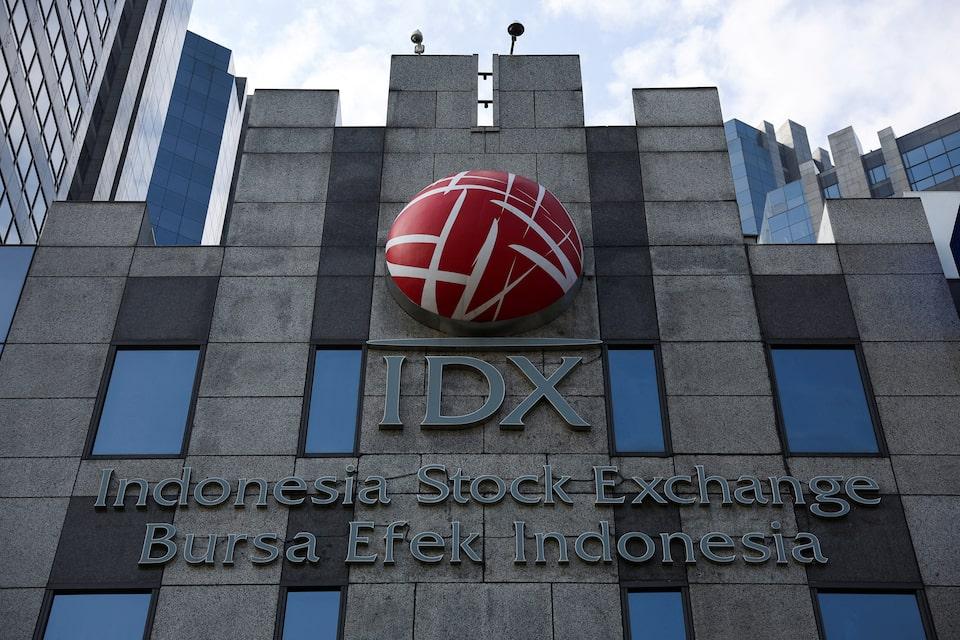
MSCI flags possible downgrade to frontier market status CEO of Indonesia Stock Exchange resigns amid market turmoil Government plans reform to improve transparency, governance MSCI concerns to be resolved by May, regulator says JAKARTA/SINGAPORE, Jan 30 (Reuters) - Indonesia's chief economic minister promised increased financial market transparency and improved corporate governance on Friday, after the stock exchange chief resigned to take responsibility for a $80 billion share rout. Airlangga Hartarto, at a news conference, said authorities were committed to stock market reform and that the country's economic fundamentals remained sound. Sign up here. Proposed improvement measures include doubling the free float requirement of shares to 15%, allowing pension and insurance funds to increase capital market investment to 20% of their portfolio from 8%, and checking the affiliation of shareholders with ownership of less than 5%. "The government guarantees protection for all investors by maintaining good governance and transparency," Airlangga said. Index provider MSCI flagged a possible downgrade of Indonesian stocks to "frontier" status on Wednesday due to concern about share ownership and trading transparency, triggering the steepest two-day share price fall since April. Indonesia Stock Exchange CEO Iman Rachman resigned on Friday. "I hope this is the best decision for the capital market. May my resignation lead to improvement in our capital market," Iman told a press conference. "Hopefully, the index, which opened positively this morning, will continue to improve in the coming days." The Financial Services Authority (OJK) will ensure Iman's resignation does not affect operations, an OJK official told reporters. It will take the lead in implementing reforms and aims to resolve the MSCI's concerns by May, the official said. "We remind all investors to remain calm and rational when making investment decisions," said Inarno Djajadi, who overseas capital markets at the regulator. The benchmark Jakarta Composite Index (.JKSE) , opens new tab dropped more than 8% on Wednesday and Thursday but was last up 1.18%, a day after authorities announced the proposed measures to address MSCI's concern and ease investor worry. The rupiah was last at 16,790 to the U.S. dollar, hovering near its weakest-ever rate of 16,985 set last week. Someone had to take responsibility for the loss of confidence, said Mohit Mirpuri, portfolio manager at SGMC Capital in Singapore, referring to Iman. "The bigger picture is a reset and an opportunity for the exchange to emerge stronger with clearer standards and governance," Mirpuri said. Foreign capital outflows have increased due to concern about how President Prabowo Subianto is widening the fiscal deficit and expanding state involvement in financial markets. This month's appointment of his nephew Thomas Djiwandono to the central bank and last year's firing of respected finance minister Sri Mulyani Indrawati have shaken confidence in Prabowo's stewardship. Regulators said communication with MSCI has been positive and that they were awaiting a response to their proposed measures which they hoped to implement soon. Their swift action appears to have allayed investor concern but sentiment remains fragile. "Policymakers want to fix this," said Paul Dmitriev, senior analyst and co-portfolio manager at Global X ETFs. "The government has every incentive to fix these issues as systemic outflows would be substantial and could materially impact the market." Foreign investors sold around a net $645 million worth of shares in the two-day selloff, exchange data showed. They sold $1 billion worth of shares in 2025. ($1 = 16,780 rupiah) https://www.reuters.com/world/asia-pacific/indonesia-markets-face-cautious-open-after-msci-warning-sparks-80-billion-rout-2026-01-30/
2026-01-30 01:11
Trump to announce Fed Chair nominee, Warsh considered Dollar index rises 0.4%, trims weekly decline to 0.9% Trump endorses spending deal to avoid government shutdown TOKYO, Jan 30 (Reuters) - The dollar rose on Friday, clawing back some of its slide on the week, after U.S. President Donald Trump said he would soon announce his nominee to head the Federal Reserve while optimism grew for Washington to avert a government shutdown. Trump said he intends to name his pick to replace Fed Chair Jerome Powell on Friday, following news that former Fed Governor Kevin Warsh visited the White House. The Japanese yen fell, and cryptocurrencies tumbled. Sign up here. The greenback recovered some of this week's losses after tension between Trump and Cuba, Iran, Venezuela, Greenland and Europe hit some investors' confidence in U.S. assets. "The appointment of Warsh, if it's true, will be seen as someone who can, in a way, remain independent, and not someone seen as likely to be subservient to Trump's wishes," said Khoon Goh, head of Asia research for ANZ in Singapore. "Any sensible market participant would not want to carry a big position into the weekend," he added. "So some of this could just be positioning lightening up. If you're short dollars, you've done well, take your chips off the table." The dollar index , which measures the greenback against a basket of currencies, rose 0.4% to 96.55, trimming its weekly slide to 0.9%. The euro dipped 0.4% to $1.1922, while the yen weakened 0.5% to 153.85 a dollar. Sterling slid 0.4% to $1.3751. Bloomberg News said Warsh would get the nod to replace Powell at the Fed, while a person familiar with the matter told Reuters he met Trump at the White House on Thursday. The dollar also received a lift after Republican and Democratic lawmakers hammered out a deal to stave off a looming government shutdown. Escalating conflict abroad and unease over domestic immigration crackdowns have hammered the U.S. currency, driving the dollar index to a four-year low earlier this week. Overnight, the White House said Trump signed an executive order for tariffs on countries that provide oil to Cuba, while he threatened new tariffs on Canada and said the United States was decertifying business jets made there. With tension simmering in Iran, Trump said on Thursday he planned to speak with leaders in Tehran, even as the U.S. dispatched another warship to the Middle East and Pentagon chief Pete Hegseth said the military would be ready to carry out whatever the president decided. The dollar closed last week with its biggest fall since last April, driven in part by the Trump administration's tariff threats against European countries if they stood in the way of his ambition of buying Greenland. The spat over Greenland was the start of wider geopolitical concerns that have dragged the currency broadly lower, said Westpac Group senior economist Mantas Vanagas. "It's the fact that the 'Sell America" trade has resurfaced, and investors are questioning to what extent the United States is still a trustworthy partner for other economies," he added. The dollar found some support after the Fed held interest rates steady on Wednesday against the backdrop of what Fed Chair Powell described as a solid economy and diminished risks to both inflation and employment. The yen broke back above 154 to the dollar, but is still poised for its second straight weekly gain, as Japanese policymakers hinted at possible coordinated currency market intervention with the United States to defend the currency. The yen fell to a near 18-month low last week as concerns about Japan's finances mounted before a snap election in which Prime Minister Sanae Takaichi and her opponents are campaigning on a plank of tax cuts. The Australian dollar weakened 0.7% versus the greenback to $0.6997, and the kiwi lost 0.5% to $0.6046. In cryptocurrencies, bitcoin tumbled 2.2% to $82,519.22, touching the weakest since November 21, while ether sank declined 3% to $2,732.04. https://www.reuters.com/world/africa/dollar-poised-weekly-slide-global-tensions-rise-2026-01-30/
2026-01-30 00:43
Jan 29 (Reuters) - U.S. timber company Weyerhaeuser (WY.N) , opens new tab swung to an adjusted quarterly loss on Thursday, pressured by lower commodity wood product prices and sluggish demand in major end-markets. The implementation of President Donald Trump's trade measures — particularly the 10% tariff on lumber imports and a duty of 25% on finished wood products that took effect in October — affected wood products manufacturers such as Weyerhaeuser. Sign up here. The company reported an adjusted loss of 9 cents per share for the quarter ended December 31, compared with a profit of 11 cents a year ago. The U.S. housing market also faced significant pressure in the second half of 2025 from elevated mortgage rates that kept potential homebuyers on the sidelines. Pending home sales dropped 3% from a year earlier, impacted by a sharp slowdown in job growth because of economic uncertainty. In its timberlands business, the company said it expects first-quarter 2026 sales volumes to be slightly higher, while per-unit log and haul costs are seen slightly lower. In its wood products segment, Weyerhaeuser expects adjusted core profit for the current quarter to come in slightly above fourth-quarter levels. Adjusted core profit from its timberlands segment fell to $114 million in the quarter, from $126 million a year ago, while that of the real estate unit jumped 25% to $95 million from $76 million a year earlier. Weyerhaeuser owns or controls about 10.5 million acres of timberlands in the U.S., primarily in the west, south and northeast. The Seattle, Washington-based company's net sales fell 9.8% to $1.54 billion in the quarter, compared with the analysts' consensus estimate of $1.56 billion, according to data compiled by LSEG. Last month, Weyerhaeuser and Aymium entered a memorandum of understanding to produce 1.5 million tons of sustainable biocarbon annually for use in metals manufacturing. Shares of Weyerhaeuser were down 2.2% after the bell. The stock gained 9.5% in 2025. https://www.reuters.com/business/weyerhaeuser-swings-an-adjusted-loss-fourth-quarter-weak-wood-product-prices-2026-01-30/

2026-01-30 00:05
BOGOTA, Jan 29 - Colombia's top court on Thursday ordered President Gustavo Petro's government to pause an emergency decree that had been intended to boost government finances, pending a final court decision. Petro's administration put the measures into effect in December after a tax reform bill aimed at raising 16.3 trillion pesos ($4.45 billion) failed to pass in Congress. Sign up here. The economic emergency gave Petro's government the power to make decisions by decree without authorization from Congress, a move that allowed for higher taxes in an effort to raise 11 trillion pesos ($3 billion) to finance part of the 2026 budget. Colombia in June raised the 2025 fiscal deficit target to 7.1% of GDP, from an original 5.1%, prompting ratings agencies to downgrade the country's sovereign rating. Petro had previously said that a suspension of the economic emergency mesures in Colombia, Latin America's fourth-largest economy, would make the country's debt more expensive, and Interior Minister Armando Benedetti on Thursday criticized the court decision. “It's not right. By temporarily suspending the economic emergency, the mega-rich are being protected,” he said in a post on X. ($1 = 3,665.97 Colombian pesos) https://www.reuters.com/world/americas/colombian-court-pauses-petros-economic-emergency-measures-2026-01-30/
2026-01-29 23:36
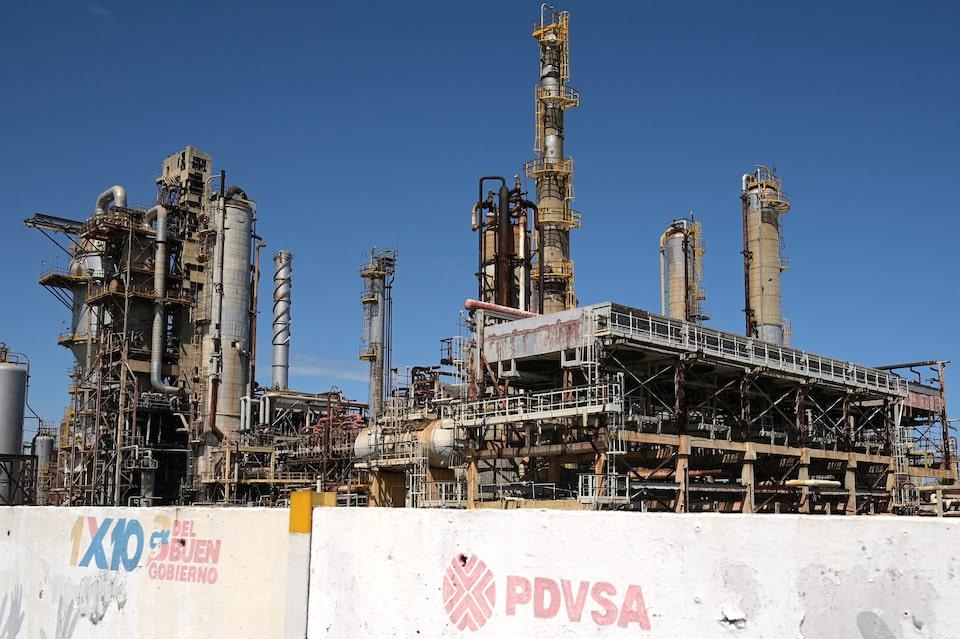
Authorities can approve asset transfers, outsourcing of oilfield operation after sweetened terms New hydrocarbon tax introduced, income tax can be lowered for energy projects Oil ministry gains power to approve, change contracts Washington eased sanctions on the country Jan 29 (Reuters) - Lawmakers approved in a final vote on Thursday a sweeping reform of Venezuela's main oil law after sweetening a proposal by interim President Delcy Rodriguez to lower taxes, expand the oil ministry's decision power, grant autonomy for private producers and make possible asset transfers and outsourcings. The changes are expected to encourage increases in oil and gas production and foreign investment following a $100 billion reconstruction plan for the industry proposed by U.S. President Donald Trump this month after the U.S. military captured Venezuelan President Nicolas Maduro. Sign up here. The fast-tracked reform to the backbone of the country's oil industry follows 20 years of strict nationalization and expropriation of assets previously owned by foreign companies including U.S. oil majors Exxon Mobil (XOM.N) , opens new tab and ConocoPhillips (COP.N) , opens new tab, which have not been fully compensated after years of arbitrations and lawsuits. "We have achieved the unanimous approval of a hydrocarbons law reform that will make hiring domestic and foreign companies to extract resources from the world's largest oil reserve more competitive," said National Assembly President Jorge Rodriguez. As promised by U.S. officials, Trump's administration eased sanctions on the Venezuelan energy industry related to its oil exports through a general license shortly after the reform approval. The proposal was submitted, discussed and approved in less than two weeks. Trump said he would control Venezuela's oil revenue indefinitely following a flagship $2 billion supply deal between Caracas and Washington. Many potential oil investors viewed the reform as "good enough" to encourage initial investment to recover the OPEC country's depleted industry, while former Venezuelan officials have called it unconstitutional. The new law will allow private producers to operate projects under new oil contracts or in joint ventures, even if they are the minority stakeholders. They are gaining long-sought autonomy to commercialize output and cash proceeds out of state company PDVSA's control. The reform also formalizes an oil production sharing model first introduced by Maduro and negotiated with little-known energy firms in recent years. Politicians and experts have warned about the secrecy of those deals and the potential for corruption due to loose regulation. Changes to the text added in recent days prepared the ground for reducing the income tax for energy projects and removed a series of extra taxes. But a new 'hydrocarbon tax' yet to be regulated in separate legislation was introduced, casting doubts about Caracas' intention of really lowering the government's take, among the highest in Latin America. Proposals made at the last minute by opposition lawmakers to grant transparency, limit the ministry's powers and maintain the National Assembly approval power for oil contracts were rejected. The legislature's energy committee received some 120 proposals to modify the law, said lawmaker Orlando Camacho, who is allied with the government. Washington did not recognize the legitimacy of the election of Venezuela's National Assembly. The U.S. also rejected other voting processes in the country that had little participation and a lack of international observation. MORE FLEXIBILITY The possibility of transferring oil assets currently owned and operated by state oil firm PDVSA, and to outsource the operation of oilfields under the new contract model was added recently to the reform. Those production-sharing contracts are expected to be signed as the government makes an evaluation over the next six months of dozens of PDVSA-controlled oil and gas joint ventures, the model that has dominated the industry since the previous hydrocarbons law was approved in 2001. The National Assembly lost its previous approval authority over contracts, with the oil ministry - currently also controlled by Rodriguez - taking over almost all power to sign contracts and greenlight any term changes. https://www.reuters.com/business/energy/sweeping-oil-reform-venezuela-approved-operators-expected-gain-autonomy-2026-01-29/