2025-09-07 23:05
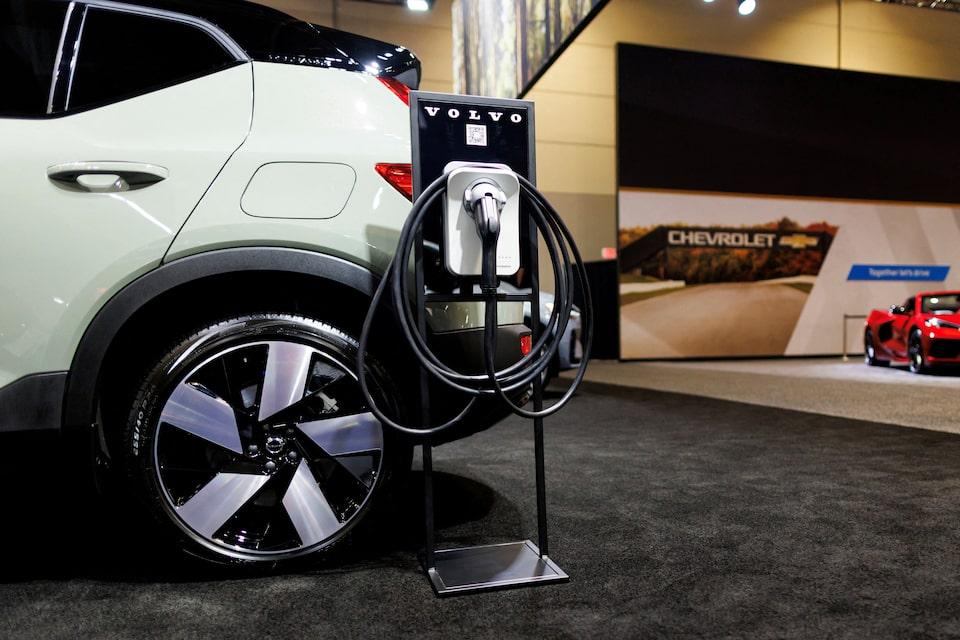
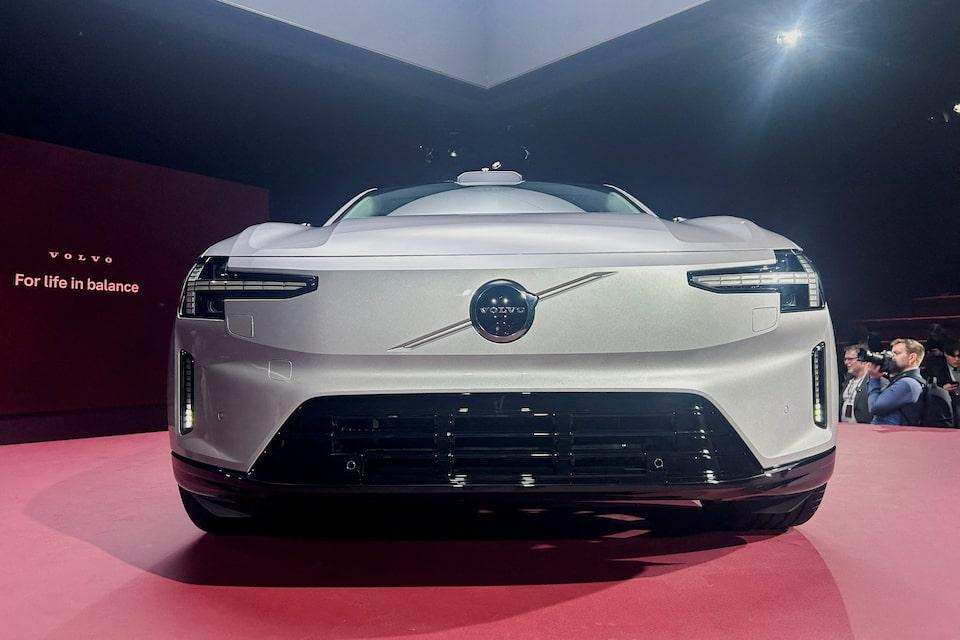
Sept 8 (Reuters) - Over 150 bosses from Europe's electric car industry signed a letter on Monday urging the European Union to stick to its 2035 zero emission target for cars and vans. The electric car industry's signatories, including Volvo Cars and Polestar, warned against any delays to the targets, saying in the letter that would mean stalling Europe's EV market, handing an advantage to global competitors and eroding investor confidence. Sign up here. It follows a separate letter at the end of August from heads of the European automobile manufacturers' and automotive suppliers' associations to European Commission President Ursula von der Leyen stressing that a 100% reduction for cars by 2035 was no longer feasible. That letter included the signature of Mercedes-Benz (MBGn.DE) , opens new tab CEO Ola Kaellenius. On September 12, von der Leyen is set to discuss the future of the automotive sector automotive with industry players, which are facing the dual threat of increased competition from Chinese rivals and U.S. tariffs. Weakening targets now would send a signal that Europe can be talked out of its own commitments, Michael Lohscheller, CEO of Polestar, said in a statement. "That would not only harm the climate. It would harm Europe's ability to compete," he said. Michiel Langzaal, chief executive of EU charging company Fastned, cited the clarity the 2035 target had provided and investments already made in areas like charging infrastructure and software development. "Those investments can only create returns if we get to this goal," he said. All European carmakers except Mercedes-Benz were on track to comply to CO₂ regulation for cars and vans over 2025-2027, according to a report on Monday from transport research and campaign group T&E. Mercedes, it said, would need to pool its emissions with Volvo Cars and Polestar to avoid fines for missing the targets. https://www.reuters.com/sustainability/climate-energy/europes-electric-car-industry-urges-eu-not-delay-co2-emission-targets-2025-09-07/
2025-09-07 22:59
OPEC+ to increase production target by 137,000 bpd in October Group's actual output unlikely to grow much as some members exceed quotas Move allows Saudi Arabia to increase market share LONDON, Sept 8 (Reuters) - OPEC+’s surprise announcement that it will further accelerate oil production may seem like a threat to an already oversupplied market, but the actual market impact is likely to be limited. The same cannot be said of the political benefits for the group's leader Saudi Arabia, which is seeking to reassert group discipline while expanding its market share and solidifying its relationship with the United States. Sign up here. The Organization of the Petroleum Exporting Countries plus Russia and other allies, the group collectively known as OPEC+, agreed on Sunday to begin unwinding 1.65 million barrels per day of production cuts that were set to remain in place until the end of 2026. The group of eight core OPEC+ members said it will raise its oil output target by 137,000 bpd in October. At this pace, it will take the group 12 months to remove the full tranche of 1.65 million bpd of cuts, leaving the alliance with another 2 million bpd of production cuts still in place until the end of 2026. OPEC+ said it retained options to accelerate, pause or reverse hikes at future meetings. It scheduled the next meeting of the eight countries for October 5. The group had already raised production quotas by about 2.5 million bpd, around 2.4% of global demand, between April and September. This put downward pressure on oil prices, which have declined by about 18% from their 2025 high in mid-January to $67 a barrel. The new additions seemingly come at the worst possible moment for the market, which is widely expected to have already entered an extended period of oversupply due to production increases in Argentina, Canada, the United States and elsewhere. The International Energy Agency previously forecast that supply would outstrip demand by an average of 3 million bpd between October 2025 and the end of 2026 – and that was before Sunday’s announcement. DISCIPLINE In theory, adding more barrels in this environment should weigh heavily on oil prices. In practice, however, the impact may be muted. An analysis of OPEC+ production suggests the actual additions are likely to be far more modest than advertised, as most members are already producing at or near full capacity. In March 2025, just before the group began unwinding its first layer of cuts, joint production reached 31.83 million bpd, only 1 million bpd below its 32.88 million bpd production target for September, according to IEA figures. That was largely because several OPEC+ members, notably Kazakhstan, the United Arab Emirates and Iraq, had already far exceeded their OPEC+ production quotas. In July, that trio jointly outpaced their September quotas by some 500,000 bpd. The new quotas are therefore not actually going to add many additional barrels to the market because, for the most part, these guidelines are simply catching up with the reality on the ground. For Saudi Arabia, however, the changes are significant. The Kingdom’s output is set to increase from 9.07 million bpd in March to 9.98 million in September. This will leave it with around 2.2 million bpd of spare capacity, according to IEA estimates, far more than any other OPEC+ member. Under the tranche of cuts that are now being unwound, Saudi Arabia and Russia each reduced output by roughly 500,000 bpd. But Russia has little, if any, spare capacity, given that strict Western sanctions have limited investments in new production. Saudi Arabia therefore stands to benefit the most from this rollback, with Riyadh well positioned to capture more market share, in particular from U.S. shale firms that will need to slow down drilling activity in the face of lower oil prices. TRUMP CARD Saudi Energy Minister Prince Abdulaziz bin Salman, the architect of the original OPEC+ supply cuts, now appears to be firmly back in the driver's seat after spending years battling the group’s breakdown in internal discipline. And, importantly, this new move gives Riyadh the ability to garner valuable political capital, as U.S. President Donald Trump has urged OPEC to lower oil prices. The Saudis can now show that they are trying to do just that. The Saudis therefore appear willing to withstand an environment of low oil prices for an extended period of time both to make long-term gains in market share and to support its relationship with its key ally. Indeed, Saudi Crown Prince Mohammed bin Salman is reportedly scheduled to visit Washington, D.C., in November. This follows Trump's visit to the Gulf nation in May when Riyadh pledged to invest $600 billion in the United States while Washington agreed to sell Saudi Arabia an arms package worth $142 billion. It's safe to say that supply cuts and crude prices will be on the agenda for the new meeting in November. OPEC+’s new production targets are therefore unlikely to significantly disrupt the oil market – and thus probably will not massively shift prices – but they could still have long-term consequences because of the geopolitical backdrop. Enjoying this column? Check out Reuters Open Interest (ROI), , opens new tab your essential new source for global financial commentary. ROI delivers thought-provoking, data-driven analysis. Markets are moving faster than ever. ROI , opens new tab can help you keep up. Follow ROI on LinkedIn , opens new tab and X. , opens new tab https://www.reuters.com/markets/commodities/opec-output-hike-boosts-saudi-market-share-political-capital-2025-09-07/
2025-09-07 22:54
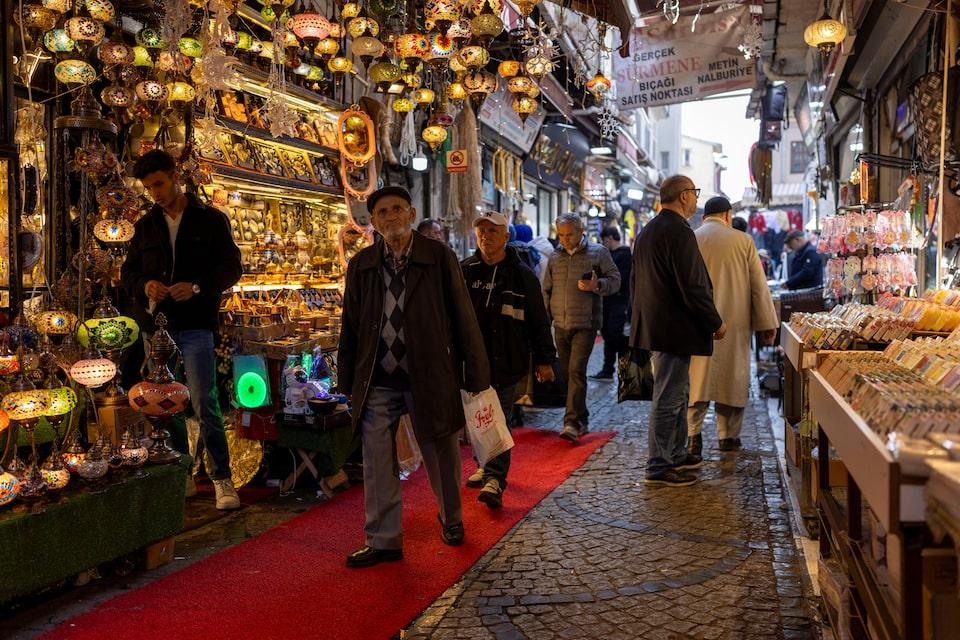
Turkey aims for single-digit inflation from 2027 on GDP growth seen at 3.3% in 2025 Turkey says programme's aim is to achieve price stability ANKARA, Sept 8 (Reuters) - Turkey's medium-term economic programme forecasts inflation to hit 28.5% in 2025 and 16% in 2026, before reaching single digits from 2027, according to a text of the economic roadmap published in the Official Gazette on Sunday. The programme, which sets the government's economic roadmap for the next three years, was expected to be announced on Monday by Vice President Cevdet Yilmaz, who said earlier its focus will be disinflation, balanced growth and lasting social prosperity. Sign up here. "The fundamental objective during the programme is to bring inflation down to the level of single digits and establish price stability," the government said. Official data on Wednesday showed Turkey's annual inflation came in higher than expected in August at nearly 33%. Since abandoning an unorthodox economic policy championed by President Tayyip Erdogan, pushing for low interest rates despite high inflation, Turkey's economic leadership has been working to lower inflation, with the central bank starting an easing cycle. In July, the bank cut its policy rate by 300 basis points, relaunching an easing cycle paused in March due to fluctuations over a widespread legal crackdown on the main opposition which prompted domestic and market turmoil. Markets were jolted again this week when a court ousted the Istanbul provincial head of the main opposition, dealing a fresh judicial blow to Erdogan's opponents and triggering sharp falls in Turkish share and bond markets. The turmoil and August inflation readings are likely to slow the central bank's plans to cut interest rates as it also weighs stronger economic growth. The previous medium-term programme from September 2024 aimed for single-digit inflation by 2026, and forecast economic growth at 5% by 2027. FORECASTS The programme forecast economic growth at 3.3% in 2025, 3.8% in 2026, reaching 5% in 2028. It said potential gross domestic product (GDP) growth was expected to increase by 0.5% during the programme on the back of structural reforms. It also anticipated a strong surge in tourism revenues to $75 billion by 2028 from $64 billion this year. Exports were seen climbing to $308.5 billion by 2028 from $273.8 billion this year. The unemployment rate was seen at 8.5% in 2025 and 8.4% in 2026, the programme showed, while the current account-to-GDP ratio was forecast to be 1.4% in 2025, before reaching 1% in 2028. The programme also saw current account deficit narrowing to $18.5 billion by 2028, from $22.6 billion this year, while the budget deficit was forecast to widen from 2,208.3 billion lira ($53.55 billion) this year to 2,805.1 billion lira in 2028. It also said the floating exchange rate regime will continue and that the role of public finance in supporting macroeconomic stability would be increased during the programme's term. The lira stood at 41.2650 against the dollar at 2227 GMT, from a close of 41.1950 on Friday. The programme also listed a series of structural reforms for the next three years, ranging from transitioning into digital or high added-value technology industries to a green transformation and ways to increase agricultural efficiency. Six reforms were set out for financial and price stability, including measures - some administrative changes and some legal amendments - for creating a strong, institutionalised financial sector, matching prices to inflation, increasing cost savings, and making capital markets more efficient. ($1 = 41.2358 liras) https://www.reuters.com/world/middle-east/turkey-sees-inflation-285-2025-with-single-digits-by-2027-programme-says-2025-09-07/
2025-09-07 22:31
TOKYO, Sept 8 (Reuters) - Oil prices rose on Monday in early trade, paring last week's losses, after OPEC+ agreed over the weekend to raise output further but at a slower pace from October due to an anticipated weakening of global demand. Brent crude gained 23 cents, or 0.4%, to $65.73 a barrel by 2213 GMT, while U.S. West Texas Intermediate crude climbed 21 cents, or 0.3%, to $62.08 a barrel. Sign up here. Both benchmarks fell over 2% on Friday as a weak U.S. jobs report dimmed the outlook for energy demand. They lost more than 3% last week. OPEC+, which includes the Organization of the Petroleum Exporting Countries plus Russia and other allies, has agreed to further raise oil production from October as its leader Saudi Arabia pushes to regain market share, while slowing the pace of increases compared with previous months. OPEC+ has been increasing production since April after years of cuts to support the oil market, but the Sunday decision to further boost output came as a surprise amid a likely looming oil glut in the northern hemisphere winter months. Eight members of OPEC+ agreed on Sunday in an online meeting to raise production from October by 137,000 barrels per day, it said in a statement, much lower than the monthly increases of about 555,000 bpd for September and August and 411,000 bpd in July and June. https://www.reuters.com/business/energy/oil-prices-rise-opec-agrees-raise-output-slower-pace-october-2025-09-07/
2025-09-07 22:08
Battery EV sales seen exceeding 30% of EU car market by 2027 T&E says Mercedes focuses on more profitable combustion engine models To continue lagging on emission targets Report warns against weakening future emission targets BRUSSELS, Sept 8 (Reuters) - All European carmakers except Mercedes-Benz (MBGn.DE) , opens new tab are on track to meet the European Union's 2025-2027 carbon emission targets thanks to an expected surge in sales of new electric vehicles, according to a report published on Monday. Research and campaign group Transport & Environment forecast a marked improvement from first-half sales in 2025, when only Geely-owned Volvo Cars and BMW (BMWG.DE) , opens new tab were on course while Stellantis (STLAM.MI) , opens new tab, Renault (RENA.PA) , opens new tab, Volkswagen (VOWG.DE) , opens new tab and Mercedes were lagging. Sign up here. The report said increased launches of more affordable models thanks to declining battery prices and sharp growth of charging infrastructure were fuelling demand. It forecast battery electric vehicle sales would surpass a 30% share of the EU car market in 2027 from 18% this year. T&E said this was a sign that targets were working and said that any weakening of the next set of targets for 2030 and 2035 would dismantle investments in EVs and allow China to extend its lead. "Europe now faces a decisive choice: to either lead the global BEV race and confidently enter the electric age or risk falling behind in the fossil fuel era," it said. Auto groups have said that future CO2 emission targets, including a 100% reduction by 2035, are no longer feasible. Executives are due to meet European Commission President Ursula von der Leyen on September 12 to discuss the EU sector's future. The European Commission yielded in March to pressure from European automakers to give them three years, rather than one, to meet CO2 emission targets for new cars and vans. T&E said expected Mercedes to keep trailing other EU automakers on the targets as it was focussing on more profitable internal combustion engine models. Failure to meet the targets results in fines, which carmakers had said would run into billions of euros if 2025 was the target year. Compliance is now based on average emissions over the period 2025 to 2027. Mercedes is expected to avoid fines by pooling its emissions with those of Volvo Cars and Polestar , for which Mercedes would pay its rivals. Sweden's Volvo is majority-owned by China's Geely Holding (GEELY.UL), whose chairman controls a company with a 9.69% stake in Mercedes. https://www.reuters.com/sustainability/climate-energy/eu-carmakers-close-emission-goals-mercedes-lags-says-report-2025-09-07/
2025-09-07 19:40
MEXICO CITY, Sept 7 (Reuters) - Mexico's top prosecutor said on Sunday that authorities have so far detained 14 people suspected to be involved in the illicit trade of fuels, reiterating that more actions would follow as new information comes to light. On March 19, authorities seized a petroleum tanker in the Port of Tampico, together with nearly 63,000 barrels of diesel it was carrying, as well as containers and vehicles for its transport and storage. Sign up here. The tanker, Challenge Procyon, had arrived from the United States, LSEG tanker-tracking data showed. Mexican authorities said then that it was carrying diesel on which a special tax was due on import; instead, it had been declared to customs as a petrochemical exempt from the tax. "This seizure is one of the largest in recent history related to this crime and started a series of investigative and intelligence efforts that revealed part of the criminal structure behind these activities," said the country's attorney general, Alejandro Gertz. "There'll be more actions." Gertz added that these investigations had confirmed the existence of an organization dedicated to the theft and illegal trade of hydrocarbon products, which was using false documentation, complicit customs agencies and public officials. Mexican authorities have not released company names and have given only the first names of the 14 people detained on suspicion of involvement in the crime, to protect their identity. The investigations into these businessmen, active and retired naval officials and former customs officials, are ongoing. Raymundo Morales, head of the Mexican Navy, said at the same press conference in Mexico City that the Navy had strengthened internal controls and disciplinary procedures to prevent and eradicate the illegal import of fuels. "We're protecting the institution without excusing isolated individual behaviors that violate public trust," he added, speaking alongside Gertz and the security minister, Omar Garcia Harfuch. https://www.reuters.com/world/americas/after-14-detentions-mexicos-top-prosecutor-vows-more-actions-against-fuel-crimes-2025-09-07/