2025-09-07 11:32
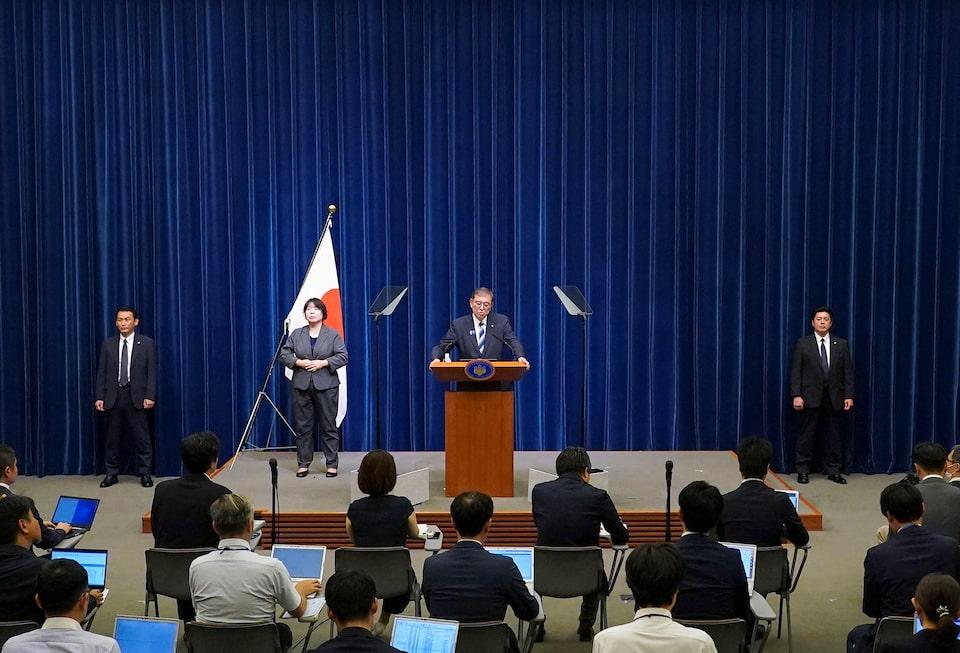
Sept 7 (Reuters) - Japanese Prime Minister Shigeru Ishiba said on Sunday he had decided to resign, ushering in a potentially lengthy period of policy paralysis at a shaky moment for the world's fourth-largest economy. Ishiba, 68, instructed his Liberal Democratic Party - which has governed Japan for almost all of the post-war era - to hold an emergency leadership race, adding he would continue his duties until a successor was elected. Sign up here. Here are comments from market analysts. MARCHEL ALEXANDROVICH, ECONOMIST, SALTMARSH ECONOMICS, LONDON: "The focus for the markets will be on what happens to bond yields. But it’s exactly what we are seeing in other parts of the world - uncertainty over fiscal policy and high levels of government debt are a toxic combination. As we continue to see in France, of course." MICHAEL BROWN, SENIOR RESEARCH STRATEGIST, PEPPERSTONE, LONDON: "I don't think we can say that the resignation is a complete surprise as it's been mooted for some time, but the timing of the announcement is certainly unexpected. As for the market reaction, this obviously introduces significant downside risks for the (yen) and for long-end (Japanese government bonds) when trade gets underway... "That selling pressure is likely to come first from the market now needing to price a greater degree of political risk, not only in terms of the LDP leadership contest but also the potential for a general election to be held if the new leader seeks a mandate of their own. "There's also the fiscal angle to consider, with candidates for the leadership all likely to propose looser fiscal stances than Ishiba, hence further pressuring the long end of the curve, where demand for JGBs had already been waning quite significantly. "For the (Bank of Japan), all this political uncertainty is likely to be a further delay to the tightening cycle. Policymakers had already been taking an incredibly cautious approach to rate hikes, an approach which they're now even more likely to maintain as political uncertainty ramps up." RONG REN GOH, PORTFOLIO MANAGER, EASTSPRING INVESTMENTS, SINGAPORE: "Ishiba's resignation was preceded by resignations of other senior members of his party, so it's not wholly unexpected in a way. "In terms of impact on JGBs and the yen, market participants appear more concerned about BOJ falling behind the curve, so are likely to focus on the coming two policy meetings in September and October to set the tone for JGBs and the yen. In my mind, the fiscal uncertainty is a secondary concern." KATSUTOSHI INADOME, SENIOR STRATEGIST, SUMITOMO MITSUI TRUST ASSET MANAGEMENT, TOKYO: "Yields on super-long bond yields will likely rise from Ishiba's resignation. He has strict fiscal discipline. There has been an upward pressure on super-long bond yields due to uncertainties about fiscal conditions, and the pressure will increase." TAKAMASA IKEDA, SENIOR PORTFOLIO MANAGER, GCI ASSET MANAGEMENT, TOKYO: "The market has already priced in his resignation, so the question is who is going to be the next. "If Sanae Takaichi is going to be the successor, that's positive for the stock market as she wants to boost government spending." SAKTIANDI SUPAAT, REGIONAL HEAD OF FX RESEARCH AND STRATEGY, GLOBAL MARKETS, MAYBANK, SINGAPORE: "Ishiba's resignation may trigger a knee-jerk safe-haven bid for the yen and some JGB volatility, but sustained direction in dollar/yen will hinge more on Fed–BoJ policy divergence than domestic politics. "If Ishiba's resignation escalates into broader LDP instability, markets could price in greater political risk premia, amplifying safe-haven flows into the yen and flattening pressure on JGB yields." https://www.reuters.com/business/analyst-views-japan-pm-ishibas-resignation-2025-09-07/
2025-09-07 11:19
Deal to raise output reached in principle, sources say Output to rise by 130,000-140,000 bpd in Oct, sources say Meeting starts at 1230 GMT on Sunday Talks focus on gradual unwinding of 1.65 mln bpd cut LONDON/MOSCOW/BAGHDAD, Sept 7 (Reuters) - OPEC+ is set to agree to further raise oil output on Sunday, while probably slowing the pace of increases from October compared with recent months because of weakening global demand, four OPEC+ sources said. OPEC+, which includes the Organization of the Petroleum Exporting Countries plus Russia and other allies, has reversed its strategy of output cuts from April and has already raised quotas by about 2.5 million barrels per day. Sign up here. That increase, which equates to about 2.4% of world demand, was intended to boost market share amid pressure from U.S. President Donald Trump for lower oil prices. But those increases have failed to significantly dent oil prices, which are trading near $66 a barrel supported by Western sanctions on Russia and Iran, encouraging further oil production increases by rivals such as the United States. A deal on Sunday to boost output from October - to be discussed at an online meeting of the group's members due to start at 1230 GMT - would mean OPEC+ would begin to unwind a second tranche of cuts of about 1.65 million bpd by eight members more than a year ahead of schedule, after fully unwinding the first tranche since April. The group will likely agree to raise oil output from October by between 130,000 and 140,000 barrels per day, Iraq's OPEC delegate Mohammed al-Najjar told reporters on the sidelines of an energy conference in Baghdad. "So far the matter is still uncertain," Najjar added. Two sources familiar with the talks said that the group has reached an agreement in principle to raise output by at least 135,000 bpd from October. A third source said that an increase of about 135,000 bpd was looking likely. This would mean that the group would unwind the 1.65 million bpd cut over the course of one year, giving it the option to accelerate, pause or reverse hikes at future meetings. At their last meeting in August, OPEC+, which pumps about half of the world's oil, raised production by 547,000 bpd for September. Brent crude futures closed at $65.50 a barrel on Friday, down 2.2%, due to a weak U.S. jobs report and expectations of an OPEC+ output hike. This is still up from a 2025 low of near $58 seen in April. OPEC+'s hikes have fallen short of the pledged amounts because most members are pumping near capacity. As a result, only Saudi Arabia and the United Arab Emirates are able to add more barrels into the market, analysts have said and data have shown. OPEC+ still has in place two layers of cuts - the 1.65 million bpd cut by eight members, and another 2 million bpd cut by the whole group in place until the end of 2026. https://www.reuters.com/business/energy/opec-set-raise-oil-output-further-october-sources-say-2025-09-07/
2025-09-07 11:04
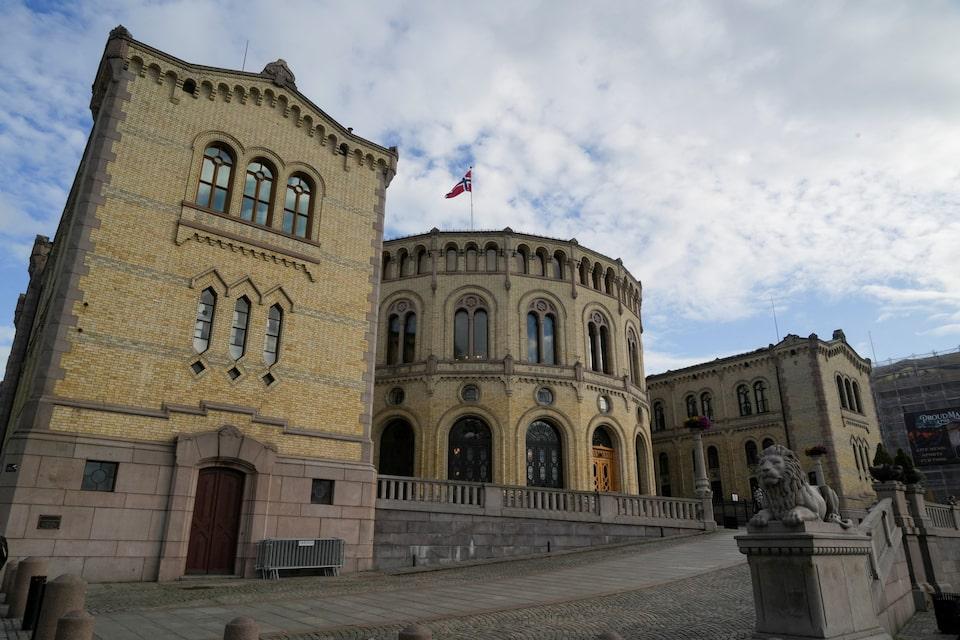
Election takes place on September 7-8 Left-wing parties hold narrow lead in polls Geopolitical concerns weigh on voters Small parties could sway election outcome OSLO, Sept 7 (Reuters) - Norwegians went to the polls on Sunday for the first of two days of voting in a close race between a left-wing bloc led by the incumbent Labour Party and a right-wing bloc headed by the populist Progress Party and the Conservatives. At least nine political parties are expected to win seats in the parliamentary election which ends on Monday evening, but only the leaders of the three major parties are candidates for prime minister. Sign up here. Key issues in the campaign have included the cost of living, taxation and public services, and the outcome could have an impact on energy and power supplies to Europe as well as the management of Norway's $2 trillion sovereign wealth fund. Geopolitics have loomed large with voters, and analysts said this could benefit Labour and its leader, Prime Minister Jonas Gahr Stoere, a former foreign minister who presents himself as a safe pair of hands. Labour and four smaller parties are seen winning 88 seats in Norway's parliament, three more than the minimum needed to secure a majority and down from a combined 100 seats for the left in 2021, according to an average of recent opinion polls. The Progress Party and the Conservative Party, along with two smaller groups, are on course to win the remaining 81 seats, but the difference in opinion polls between the left and the right blocs remains well within the margin of error. TUTTI FRUTTI COALITION Since 2021, Stoere has needed the backing of the agrarian Centre Party and the Socialist Left to support his agenda, but polls show he may need to widen the scope to include the Communist party and the Greens. "The most likely scenario is that Stoere gets re-elected, but this will be a 'tutti frutti' coalition, which will be going in very different directions," said Jonas Stein, an associate professor in political science at the university of Tromsoe. Demands from Greens and Communists may include tougher restrictions on oil and gas exploration, more tax on the wealthy and high earners, and more overall spending from Norway's sovereign wealth fund, the world's largest. The return to power of U.S. President Donald Trump and Russia's war in Ukraine have been particular sources of anxiety in Norway, a nation of 5.6 million people with an export-oriented economy and a shared border with Russia in the Arctic. Labour is seen winning some 27% of the vote, this month's pollofpolls.no average showed, which would make it the biggest party. Kristin Tellefsen, 50, a high school teacher speaking to Reuters in Oslo on Saturday, said equality and integration were her top priorities, adding she considered that the prime minister was doing a great job. "Stoere is a huge resource for this country," Tellefsen said. In the right-wing camp, former prime minister Erna Solberg's Conservatives have campaigned for public sector reform and scrapping Norway's wealth tax, which they say unfairly targets business ownership. But as in other Western countries, voters are increasingly turning to more populist right-wing options. Sylvi Listhaug's anti-immigration Progress Party is currently polling around 21% of the vote, comfortably ahead of the Conservatives on 14%. Solberg and Listhaug have openly disagreed on who should be the next prime minister in the case of a right-wing victory, leaving some voters wary of backing either of the two. https://www.reuters.com/world/europe/norwegians-begin-voting-tightly-fought-parliamentary-election-2025-09-07/
2025-09-07 09:01
HONG KONG, Sept 7 (Reuters) - A tanker carrying liquefied natural gas from Russia’s sanctioned Arctic LNG 2 project has departed from a Chinese port, shiptracking data showed, a day after it berthed there. Sunday's LSEG data indicated that the Russian Voskhod LNG tanker was sailing southwards after leaving anchor at an LNG terminal in the port of Tieshan in China's southwestern region of Guangxi. Sign up here. The Russian-flagged tanker, with a cargo of 150,000 cubic metres of LNG, was loaded up at the Arctic LNG 2 facility in Gydan in northern Siberia on July 19, LSEG data showed. The cargo is the second from the sanctioned project to dock in China after sanctioned tanker Arctic Mulan arrived at the Beihai LNG terminal in late August. Arctic Mulan's cargo was the first from Arctic LNG to reach an end-user since it started up last year. Reuters was not able to immediately able to ascertain if the LNG was discharged at Tieshan port. https://www.reuters.com/world/china/tanker-carrying-sanctioned-russian-arctic-lng-leaves-chinese-port-2025-09-07/

2025-09-07 08:45
Sept 7 (Reuters) - The new chief executive of carmaker Stellantis (STLAM.MI) , opens new tab has urged the European Union to show flexibility on the transition to electric vehicles in order to protect the auto industry. "A strategic dialogue is very important, but now it's vital to act with urgency. There is no time for delays," said Antonio Filosa, who became Stellantis CEO in June. Sign up here. European Commission President Ursula von der Leyen is set to host automotive sector executives on September 12 to discuss the future of the sector, which is facing twin threats of Chinese competition in electric vehicles and U.S. tariffs. Filosa, head of a group whose brands include Fiat, Alfa Romeo, Peugeot, Chrysler, Jeep, and Opel, called on the European Commission to support the sale of cars such as hybrids to bring down the average age of vehicles on the road. "A European policy that encourages the replacement of older cars with new cars and a wider choice of powertrains would have a greater impact on global CO2 emissions than the annual new car market does," he said in a joint interview with Italy's Il Sole 24 Ore and France's Les Echos. Filosa said the Light Commercial Vehicle sector was facing an emergency and added that the period over which CO2 emissions in the category were calculated should be extended to five years from three. He also sought to dismiss speculation that Stellantis could seek a buyer for Maserati as he reviews its brand portfolio. "I want to make it clear that Maserati is not for sale, but we need to understand which products to develop and which long-term strategy to adopt for one of our most iconic brands," he said. https://www.reuters.com/sustainability/climate-energy/new-stellantis-ceo-calls-eu-help-support-car-sector-2025-09-07/
2025-09-07 07:16
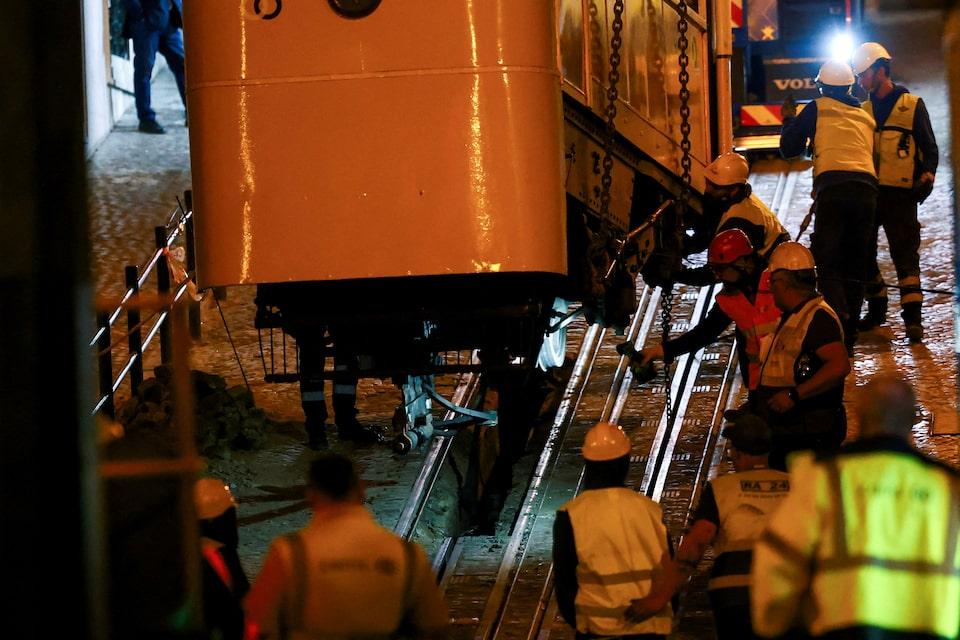
LISBON, Sept 7 (Reuters) - Problems with a cable likely caused a Lisbon funicular railway popular with tourists to hurtle down a hill, killing at least 16 people and injuring another 22 when it crashed into a building, according to a preliminary report. The yellow tram-like carriage, which carries people up and down a steep hillside in the Portuguese capital, hit a building after leaving the track on Wednesday, just metres from its twin at the bottom of a steep hill. Sign up here. Portugal's Office for Air and Rail Accident Investigations on Saturday released its first investigative report into the crash. The report said the cabins had travelled "not more than about six meters" when they "suddenly lost the balancing force provided by the cable connecting them." "Cabin No. 2 suddenly reversed, its movement halting approximately 10 meters beyond due to its partial excursion past the end of the track and the burial of the underside of the trambolho (trolley) at the end of the cable trench," it added. "Cabin No. 1, at the top of Calcada da Gloria, continued its downward movement, increasing its speed. The report added: "The cabin's brakeman immediately applied the pneumatic brake and the hand brake to try to halt the movement. These actions had no effect in stopping or reducing the cabin's speed, and it continued accelerating down the slope." The report added an examination of the wreckage showed "the connecting cable had given way" at the attachment point to the cabin at the top of the hill. A final report will be published later. https://www.reuters.com/world/europe/deadly-portugal-funicular-crash-likely-due-problems-with-cable-report-says-2025-09-07/