2026-01-29 23:10
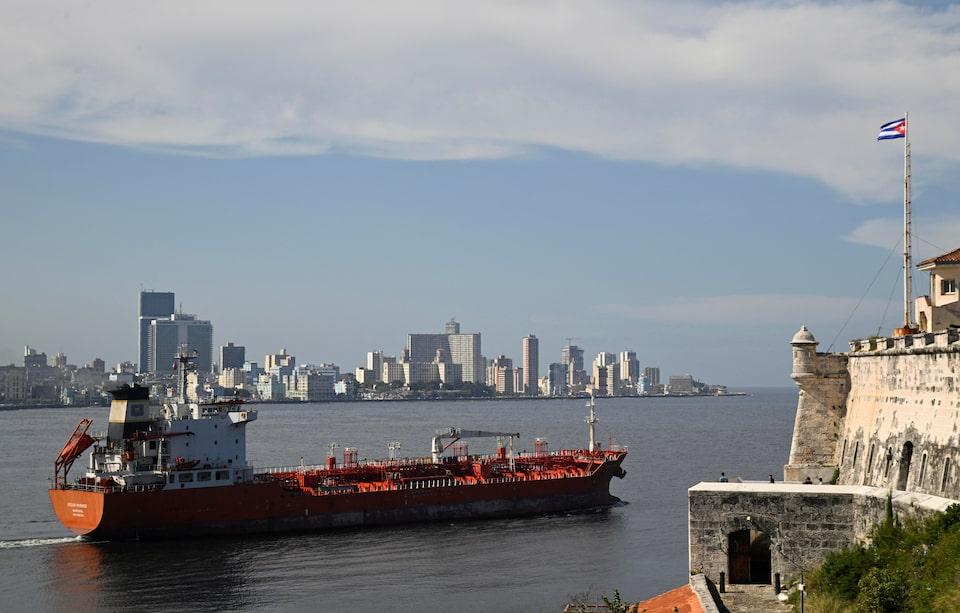
WASHINGTON, Jan 29 (Reuters) - U.S. President Donald Trump on Thursday threatened new tariffs on countries supplying oil to Cuba, escalating a pressure campaign against the Communist-run island. The move, authorized by an executive order under a national emergency declaration, did not specify any tariff rates or single out any countries whose products could face U.S. tariffs. Sign up here. Emboldened by the U.S. military's seizure of ousted Venezuelan President Nicolas Maduro in a deadly raid earlier this month, Trump has repeatedly talked of acting against Cuba and pressuring its leadership. Trump said this week that "Cuba will be failing pretty soon," adding that Venezuela, once the island's top oil supplier, has not recently sent oil or money to Cuba. Trump has used tariff threats as a foreign policy tool throughout his second term in office. Cuba's president said this month Washington had no moral authority to force a deal on Cuba after Trump suggested the Communist-run island should strike an agreement with the U.S. https://www.reuters.com/world/americas/trump-impose-tariffs-goods-nations-nations-giving-oil-cuba-white-house-says-2026-01-29/
2026-01-29 22:38
SAO PAULO, Jan 29 (Reuters) - Aluminium Corporation of China (Chinalco) (601600.SS) , opens new tab and Rio Tinto (RIO.AX) , opens new tab agreed to acquire a controlling stake in the Companhia Brasileira de Aluminio (CBAV3.SA) , opens new tab for 4.69 billion reais ($903.61 million), the firms said in filings issued late on Thursday in Brazil. Chinalco and Rio Tinto agreed to buy 446.6 million shares, or a 68.6% stake, of the Brazilian aluminium producer for 10.50 reais each, they said. The controlling stake will be purchased from Brazilian conglomerate Grupo Votorantim, they added. Sign up here. Chinalco and Rio Tinto said they will launch a tender offer for the remaining shares of Companhia Brasileira de Aluminio, also known as CBA, in a mandatory move under Brazilian regulations that can lead to the delisting of the firm from the Sao Paulo exchange B3. Reuters reported earlier that Chinalco and Rio Tinto were close to announcing the deal for a controlling stake in CBA. The acquisition price represented a 1.4% premium on CBA's closing price on Thursday. Chinalco and Rio Tinto said the stake in CBA will be managed through a joint venture, owned 67% by a subsidiary of the Chinese firm and 33% by the Anglo-Australian miner. CBA operates an integrated aluminium production chain that spans bauxite mining, refining and smelting. It also manufactures diverse primary aluminium products. The Brazilian company's shares have more than doubled in the last 12 months, pushing its market capitalization to $1.27 billion as of Thursday, according to LSEG data. The sale process also attracted interest from Emirates Global Aluminium (EGA), a UAE-based company jointly owned by Abu Dhabi's Mubadala sovereign wealth fund and Dubai's Investment Corporation of Dubai, Reuters has reported. However, negotiations with EGA did not advance. https://www.reuters.com/business/finance/chinalco-rio-tinto-close-announcing-purchase-brazils-cba-says-source-2026-01-29/
2026-01-29 22:34
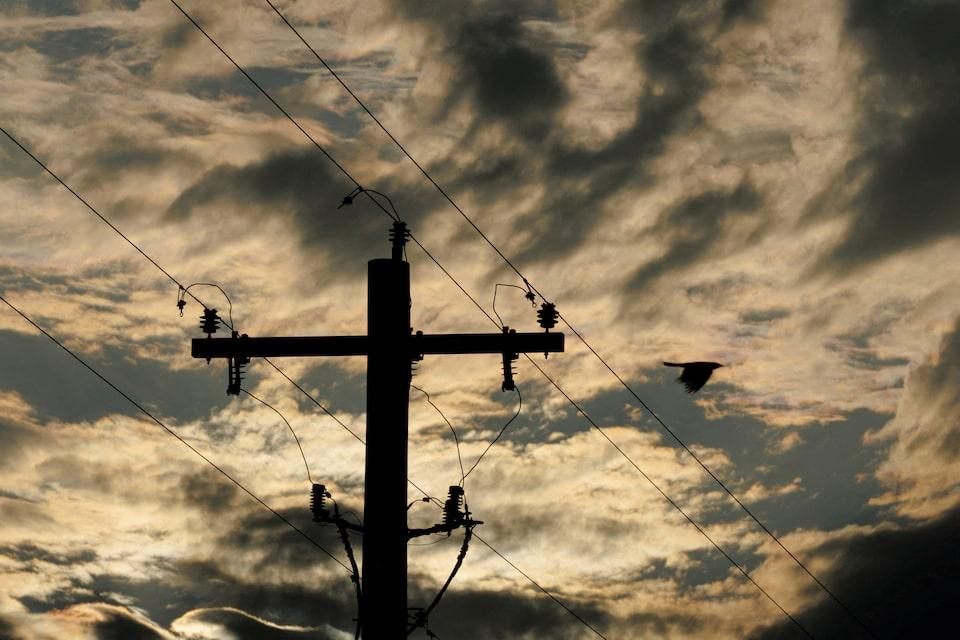
BOSTON/NEW YORK, Jan 29 (Reuters) - The largest U.S. electric grid on Thursday operated near record levels for demand amid frigid temperatures as weather forecasters predicted another Arctic blast over the weekend. The PJM Interconnection, which manages the flow of electricity for 67 million people in 13 Midwest and Mid-Atlantic states and Washington, D.C., reported electric demand at about 140 gigawatts in the morning hours. The grid's all-time winter record for demand is 143.7 GW, set in January 2025. Sign up here. Earlier in the week, PJM said that record would be smashed on Friday, predicting 148 GW of demand. PJM now says Friday will not be a record-setting day, with a demand forecast of about 142 GW. PJM and electric grids in New York and New England have had to navigate congested high-voltage lines throughout their territories. Temperatures hovering above 0 degrees Fahrenheit (-18 Celsius) this week have caused power line overloads from a surge in electricity demand. Meanwhile, power plant outages in PJM's territory surged to more than 20 GW earlier this week as cold disrupted gas-fired turbines and boiler equipment at coal-fired generators. PJM forecasts lower outages for Friday, however, at about 15 gigawatts, or about 8% of the grid's 180.8 GW of operational capacity. On Thursday afternoon, PJM spot wholesale electricity prices were about $150 per MWh, far below brief peaks that soared above $3,000 per MWh earlier in the week. Prices calmed down as temperatures warmed slightly and gas supplies became less constricted for power generators. “In the event of another significant storm with severe cold, it remains possible that prices could spike once again," said Matthew Palmer, head of Americas gas research at S&P Global Energy. "However, the closer we get to March and the end of the traditional winter heating season this is less likely.” https://www.reuters.com/business/energy/demand-largest-us-electric-grid-hovers-near-winter-record-2026-01-29/
2026-01-29 22:26
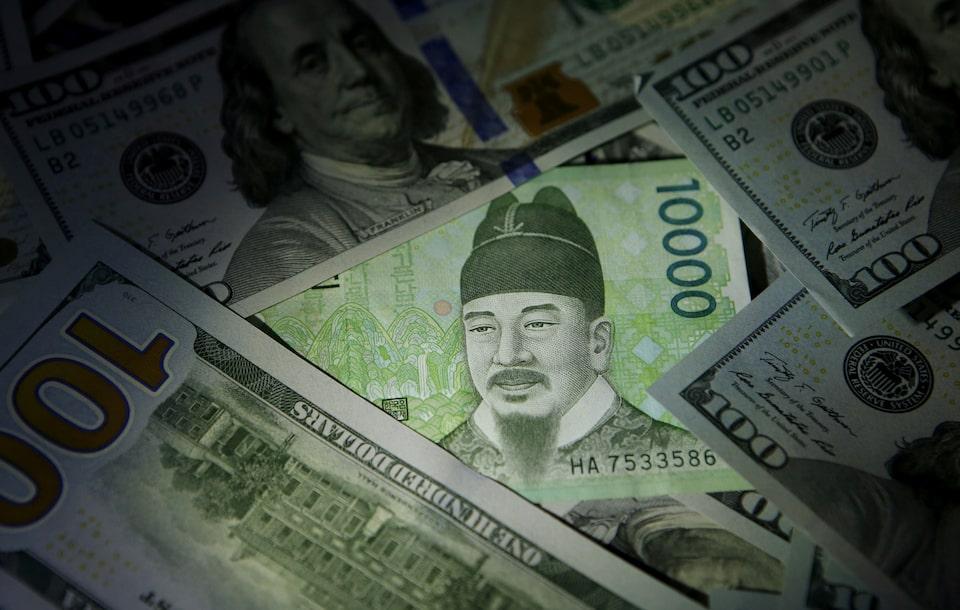
SEOUL, Jan 30 (Reuters) - The U.S. Treasury said recent depreciation in the South Korean won was not in line with the Asian country's strong economic fundamentals, in an assessment that was part of a semi-annual currency report , opens new tab. "Depreciation pressures on the won were acute in the fourth quarter of 2024 as the central bank reduced its policy rate in November and amid the onset of domestic political instability," said the report released on Thursday. "The won depreciated further in late 2025, which was not in line with Korea’s strong economic fundamentals." Sign up here. The rare U.S. assessment on the dollar-won level came after South Korean authorities in December rolled out measures to bolster the currency as it slumped towards the psychologically important level of 1,500 per dollar. The currency has been under pressure from domestic investors' purchase of overseas stocks and concerns about additional U.S. investment, which was part of a trade deal with President Donald Trump's administration. The won closed at 1,434.0 per dollar on Thursday, bouncing in recent days after a joint response between Japan and the U.S. helped strengthen the yen. In its latest semi-annual currency report, the Treasury said no major trading partner met all three criteria for enhanced analysis of currency practices during the last half of 2024 and the first six months of 2025. South Korea remained on a "monitoring list" meriting close attention, but was not accused of currency manipulation. https://www.reuters.com/world/asia-pacific/us-treasury-says-recent-korean-won-weakness-not-aligned-fundamentals-2026-01-29/
2026-01-29 22:03
ORLANDO, Florida, Jan 29 (Reuters) - Volatility coursed through world markets on Thursday as fears over a U.S. strike on Iran and threat of another U.S. government shutdown rattled oil and metals, while AI bubble fears hammered tech stocks and pushed the Nasdaq and S&P 500 into the red. More on that below. In my column today I look at Federal Reserve Chair Jerome Powell's press conference on Wednesday, and why it was revealing for what he didn't say on Fed independence rather than what he did say on the economy. Sign up here. If you have more time to read, here are a few articles I recommend to help you make sense of what happened in markets today. Today's Key Market Moves Today's Talking Points * Oil on a tear The price of oil is shooting higher, propelled by renewed geopolitical risk concerns, namely U.S.-Iran tensions. Brent crude broke above $70 a barrel on Thursday for the first time since July, WTI crude is the highest since September. Sustained high energy prices will worry policymakers. Year-on-year oil price changes have been disinflationary since 2024, and at the start of this year were running at -25%. That's now -5%. With the affordability crisis likely a key issue in the U.S. midterm elections, President Donald Trump may also be getting twitchy. * Volatility fuels dislocation Thursday's trading was marked by sharp price swings across all asset classes, with the lurches particularly extreme in commodity markets. Gold, silver and copper soared to fresh highs, but later slumped - gold and silver closed the day lower. They seem to be buckling under the weight of speculative excess that has fueled their eye-watering gains recently, particularly the precious sector. Volatility and price dislocations have spilled over into the dollar and FX this week too. Equity sentiment isn't immune. * Tech wreck Is the AI bubble starting to deflate? Shares in some of the world's biggest tech firms plunged on Thursday as investors fretted whether the hundreds of billions of AI spend will yield adequate returns. Microsoft and SAP posted double-digit losses. As analysts at Carlyle Group note, the history of transformative technology shows the AI bubble will deflate or burst. But that's part of the process, so some pain is on the way. "The bottom line is that bubbles are endemic to technological revolution." What could move markets tomorrow? Want to receive Trading Day in your inbox every weekday morning? Sign up for my newsletter here. Opinions expressed are those of the author. They do not reflect the views of Reuters News, which, under the Trust Principles , opens new tab, is committed to integrity, independence, and freedom from bias. https://www.reuters.com/world/asia-pacific/global-markets-trading-day-graphic-2026-01-29/
2026-01-29 21:59
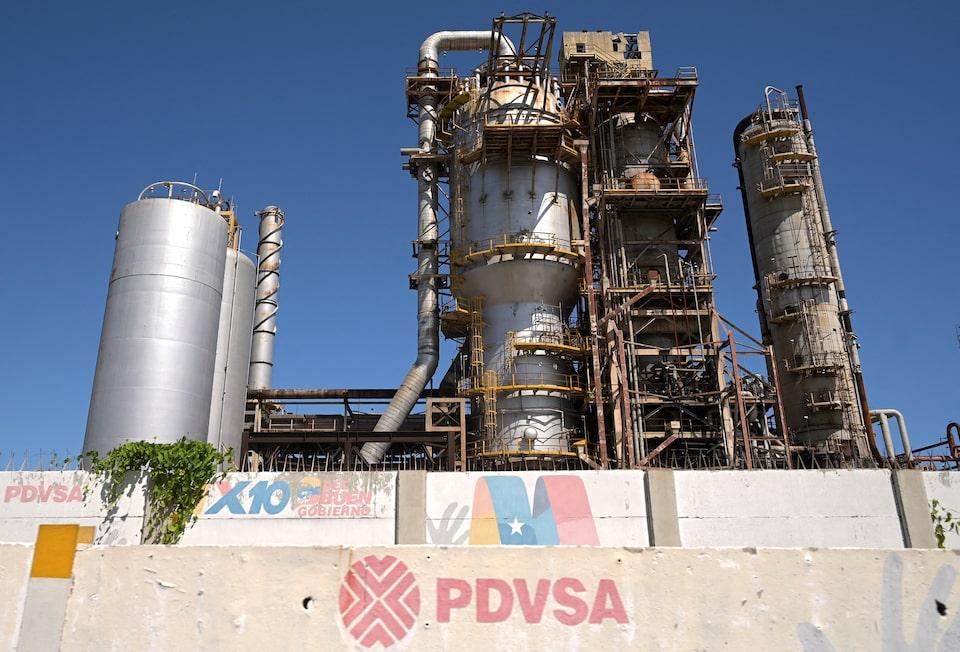
Broad US license eases sanctions on Venezuelan oil Represents shift from issuing individual licenses Transactions with entities in Cuba not allowed WASHINGTON, Jan 29 (Reuters) - The Trump administration broadly eased sanctions on Venezuela's oil industry on Thursday as it seeks to expand production there after U.S. forces ousted the South American country's President Nicolas Maduro early this month. The U.S. Treasury authorized transactions involving the government of Venezuela and state oil company PDVSA that are "ordinarily incident and necessary to the lifting, exportation, reexportation, sale, resale, supply, storage, marketing, purchase, delivery, or transportation of Venezuelan-origin oil, including the refining of such oil, by an established U.S. entity." Sign up here. The decision to issue a broad, general license marks a pronounced shift from a previous strategy of granting individual exemptions to sanctions for companies seeking to do business in the country. During President Donald Trump's first administration The Treasury's Office of Foreign Assets Control designated Venezuela's entire energy industry as subject to U.S. sanctions in 2019 after Maduro's first re-election, which Washington did not recognize. The license does not authorize any payment terms that are not commercially reasonable, involve debt swaps or payments in gold, or are denominated in digital currency. The license also excludes any transactions involving persons or entities located in or controlled by Russia, Iran, North Korea and Cuba. It also excludes transactions involving blocked vessels and entities "organized under the laws of Venezuela or the United States that is owned or controlled, directly or indirectly, by or in a joint venture with a person located in or organized under the laws of the People’s Republic of China." OIL PRODUCERS SEEKING LICENSES Oil producers Chevron (CVX.N) , opens new tab, Repsol (REP.MC) , opens new tab and ENI (ENI.MI) , opens new tab, refiner Reliance Industries (RELI.NS) , opens new tab, and some U.S. oil service providers had sought licenses in recent weeks to expand output or exports from the OPEC member. The companies are partners and customers of PDVSA. The large number of individual requests to the U.S. government had delayed progress on plans to expand exports and get investment moving quickly into Venezuela, two sources said this week. The new OFAC license, meanwhile, came as lawmakers in Venezuela on Thursday approved a sweetened reform of the country's main oil law that is expected to grant autonomy to private producers in joint ventures or under new contracts to operate their projects and commercialize the output. It also formalizes an oil production-sharing model first introduced by Maduro and negotiated with little-known energy firms in recent years. Following the U.S. capture of Maduro, the administration of President Donald Trump is pursuing a $100 billion reconstruction plan for the country's oil industry, and intends to manage the oil sales "indefinitely." As part of that effort, the U.S. and Caracas reached an initial $2 billion deal in January to export Venezuelan crude oil, including to U.S. refiners. https://www.reuters.com/business/energy/us-eases-sanctions-venezuelan-oil-industry-2026-01-29/