2025-09-05 20:01
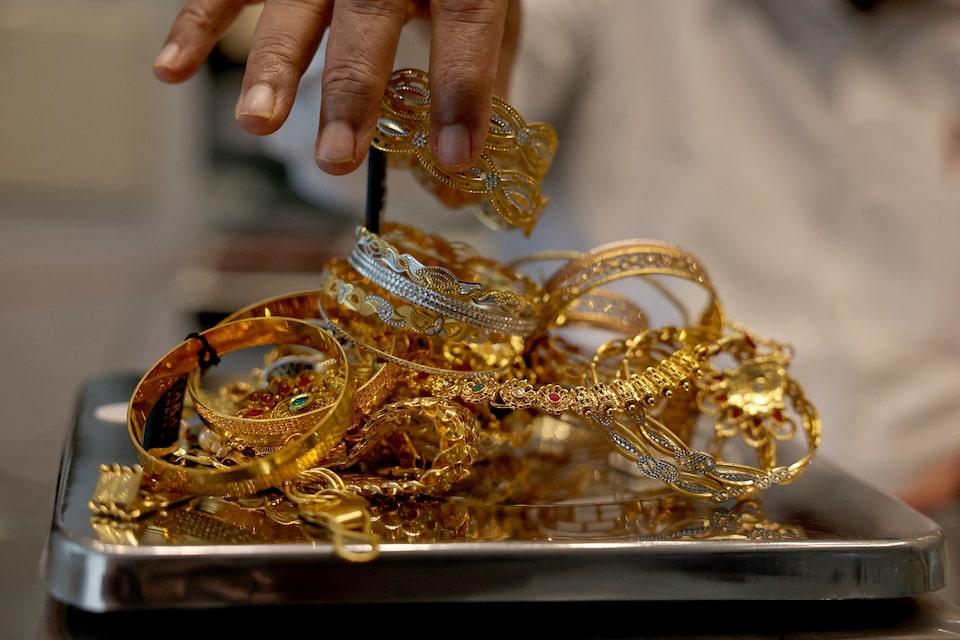
US unemployment rate for August rose to 4.3% Spot gold up 37% so far this year Record prices stifle physical gold buying in top Asian hubs Silver heads for third consecutive weekly gain Sept 5 (Reuters) - Gold's powerful rally took on fresh legs on Friday, with prices just cents away from $3,600 per ounce, as weak U.S. jobs data further raised expectations for bullion-supportive Federal Reserve rate cuts. Spot gold was up 1.4% at $3,596.55 per ounce, as of 2:47 p.m. EDT (1847 GMT), having hit a record $3,599.89 earlier. The metal is now on track for its strongest weekly gain in nearly four months. U.S. gold futures for December delivery settled 1.3% higher at $3,653.30. Sign up here. Bullion has surged 37% so far this year after a 27% gain in 2024 - driven by U.S. dollar weakness, central bank buying, a softening monetary policy backdrop and wider geopolitical and economic uncertainty. Data showed U.S. job growth weakened sharply in August while the unemployment rate increased to 4.3%, confirming that labour market conditions were softening. Traders are now betting an 90% chance of a 25-basis-point rate cut and a 10% chance of a 50 basis-point cut in September. "Gold makes new highs; bulls are looking at the clearly weakening trend of employment translating into multiple rate cuts," said Tai Wong, an independent metals trader. "The outlook is undoubtedly bullish for gold as labour concerns override inflation for the short, probably medium term. However, I think we are still too far away from 4,000 unless there is a massive dislocation," Wong added. Analysts have also flagged the independence of the Fed as a key factor in shaping gold's trajectory - an issue thrust into the spotlight after U.S. President Donald Trump attempted to fire Fed Governor Lisa Cook and put repeated pressure on the central bank to slash rates. Bullion, which does not pay interest, tends to shine when rates are low and uncertainty is high, making it a go-to asset for investors seeking safety. China and India are top gold consumers. Physical demand for gold in these hubs dropped this week due to record high prices. August gold in reserves data from China's central bank, due on Sunday, will not catch the September record highs, but may still provide more clarity on how demand from central banks was being affected by high bullion prices. Among other metals, spot silver rose 0.8% to $40.98 per ounce and was heading for its third consecutive weekly gain. Platinum gained 0.5% to $1,373.92 and palladium fell 1.5% to $1,110.32. https://www.reuters.com/world/india/gold-nears-record-3600oz-level-weak-us-jobs-data-fuels-rate-cut-bets-2025-09-05/
2025-09-05 19:38
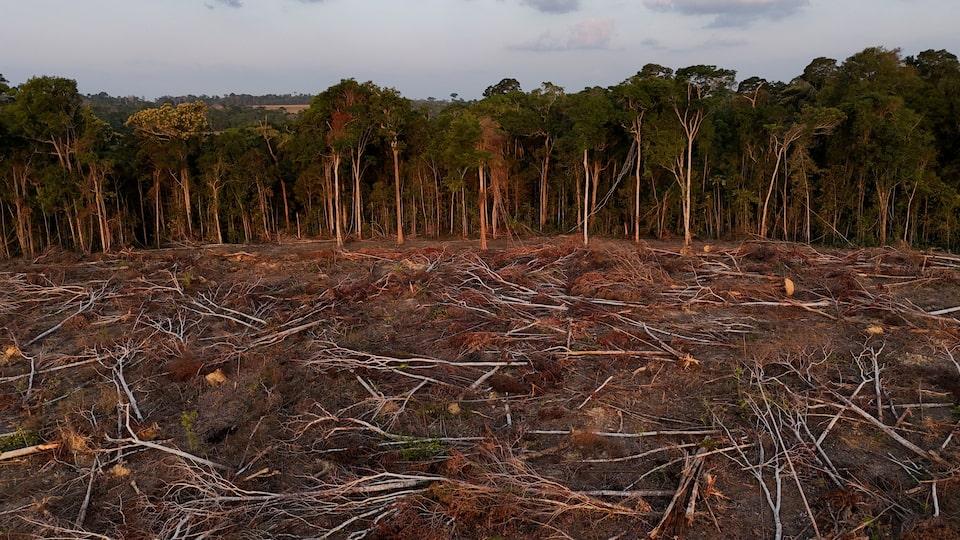
SAO PAULO, Sept 5 (Reuters) - Large food retailers in Europe have urged global grain traders to defend Brazil's soy moratorium initiative, a pact designed to protect the Amazon rainforest from soy-driven deforestation amid farmer efforts to suspend the program. In a letter dated Sept. 5 seen by Reuters, food grocers -including Tesco (TSCO.L) , opens new tab, Sainsbury's (SBRY.L) , opens new tab, Lidl and Aldi - directly ask the CEOs of ADM, Bunge, Cargill, Louis Dreyfus Company and China's Cofco to publicly reaffirm their commitment to banning soybean purchases from Amazonian farmers who cleared land there after a 2008 cut-off date. Sign up here. "We are writing to you at a critical moment for the future of the Amazon Soy Moratorium, an initiative your companies have championed, protecting the Amazon for nearly two decades...", the letter said, adding Brazil's competition authority CADE decision to suspend the program in August "poses a serious threat to this vital agreement." The letter suggests consumers and large companies will renew pressure on traders if they don't refrain from sourcing soy grown on deforested Amazon land. Brazil, the world's largest soy producer and exporter, sells most of it to China, which needs it to make feedstock. The traders did not immediately respond to a Reuters request for comment. Credited with slowing soy-driven deforestation in the Amazon, the moratorium has disgruntled farmers for years. Eventually, farmers' powerful lobbying in Congress pushed CADE to investigate it. In the letter, which is also signed by Britain's National Pig Association and privately owned food producers based in the UK, grain traders are praised for their efforts to appeal CADE's decision. "Even though a temporary injunction was put in place concerning the immediate implementation of the (CADE) order, action is needed to remove any market uncertainty over this time regarding the protections of this vital ecosystem," the letter said. According to signatories of the letter, if any suspension of the soy moratorium occurs, they expect the grain traders to be prepared "to immediately deploy an interim compliance measure on an individual company basis until a longer-term solution is secured" to protect the Amazon. https://www.reuters.com/sustainability/climate-energy/food-grocers-urge-grain-traders-uphold-brazils-soy-moratorium-initiative-2025-09-05/
2025-09-05 19:28
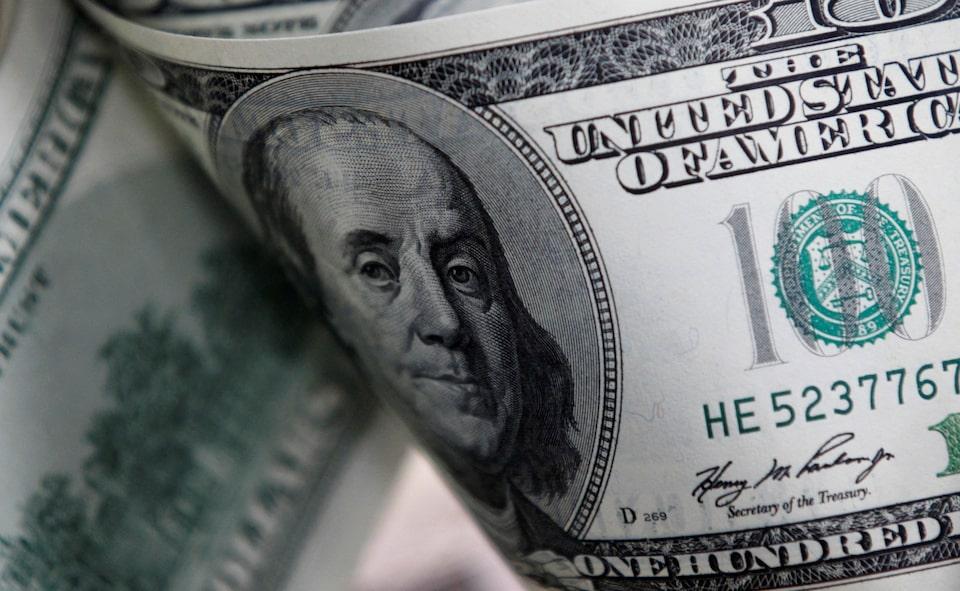
Non-farm payrolls rise by 22,000 jobs last month Dollar falls against yen and Swiss franc Euro gains, pound sterling rises Gold hits fresh record high Traders pricing in 12% chance of 50 bps cut NEW YORK, Sept 5 (Reuters) - The U.S. dollar fell sharply against major peers on Friday after crucial monthly jobs data showed that American employers hired fewer workers than expected, which affirms weakening labor market conditions and likely guarantees a Federal Reserve interest rate cut. Labor Department data showed that nonfarm payrolls increased by only 22,000 jobs last month, far short of the 75,000 positions estimated by economists polled by Reuters. Sign up here. The dollar fell across the board following the report. It weakened 0.70% to 147.44 against the Japanese yen , but was still on track for the second straight week of gains. The greenback dropped 0.91% to 0.79830 against the Swiss franc and was poised for the fourth consecutive week of losses against the currency. "The data is giving evidence of what was feared, which is that what companies have experienced throughout the year because of changes in trading policy has added costs when it comes to tariffs," said Juan Perez, director of trading at Monex USA in Washington. "These costs can only be absorbed for so long and what is being manifested is that companies are struggling with hiring." The euro was up 0.55% at $1.171675 and was set to notch a weekly gain against the dollar. The dollar index fell 0.48% to 97.767 and was set to shed 0.23% this week. "It's definitely not a good story for the U.S. dollar and it's not a good story for the United States because what today truly establishes is that we are experiencing very serious stagflation," Perez added. U.S. Treasury yields fell. The rate-sensitive 2-year note yield fell 8.1 basis points to 3.511%. The yield on benchmark U.S. 10-year notes fell 8.8 basis points to 4.088%. Wall Street's main indexes, including the S&P 500 (.SPX) , opens new tab, Nasdaq (.IXIC) , opens new tab and the Dow (.DJI) , opens new tab, reversed gains in early trade and were all trading down. Traders are now pricing a 10% chance of a 50-basis point cut at the Fed's next meeting later this month, while the probability of a 25-basis point cut is at nearly 90%, according to the CME's FedWatch tool. "The pendulum has swung very far in favor of a Fed rate cut that even the market is pricing in a 10% chance of a 50 basis-point cut," said Marc Chandler, chief market strategist at Bannockburn Global Forex. "But a 50 basis-point cut would make it seem like they made a mistake by not cutting previously and I don't think they want to admit to that . . . The prudent thing to do, and I think the Fed is prudent, is a 25-basis-point cut." The pound rose versus a weaker dollar after Friday's news that British Deputy Prime Minister Angela Rayner resigned , opens new tab after admitting to underpaying property tax on a new home, in a fresh blow for her boss, Prime Minister Keir Starmer. It strengthened 0.51% to $1.35055 and was on track to gain 0.02% for the week. Gold hit a fresh record high of $3,599.89 as the dollar weakened. Spot gold rose 1.35% to $3,593.04 an ounce. https://www.reuters.com/world/africa/dollar-drops-against-peers-after-weaker-than-expected-jobs-report-2025-09-05/
2025-09-05 18:25
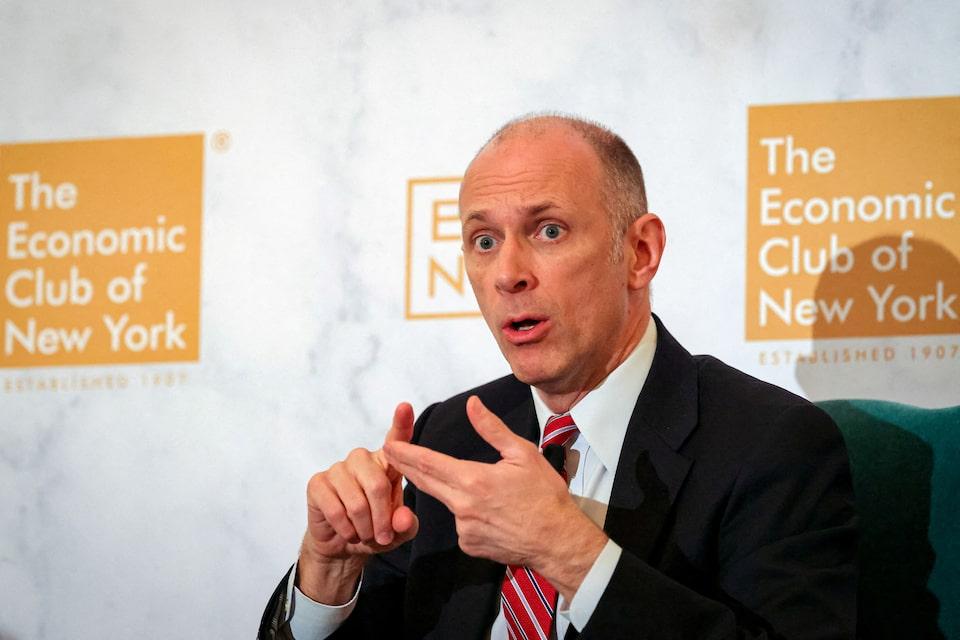
Sept 5 (Reuters) - Federal Reserve Bank of Chicago President Austan Goolsbee, speaking Friday after data showed further job-market weakening, said he is still undecided whether September is the right timing for an interest rate cut, while also defending the need to keep the U.S. central bank insulated from short-term political pressure. In an interview on Bloomberg TV, Goolsbee said he is "totally opposed" to any move to take away the Fed's independence. Goolsbee, however, said he does not think that's what is being attempted and said he expects that any nominee to the central bank will do their job "seriously." Sign up here. President Donald Trump's nominee for the Fed, Stephen Miran, said Thursday he would take an unpaid leave from the White House while he serves at the Fed through January, a move that Democrats said shows Miran would not be independent. https://www.reuters.com/business/feds-goolsbee-says-hes-undecided-sept-rate-cut-defends-fed-independence-2025-09-05/
2025-09-05 18:16
Investors anticipate chance of half-point cut at Fed meeting later in month US job growth in August comes in much weaker than expected Stocks waver after report, dollar slides NEW YORK, Sept 5 (Reuters) - After a surprisingly weak U.S. payrolls report that underscored that the economy is slowing, investors see the need for accelerated monetary easing, including an increased chance of a jumbo interest rate cut this month. Heading into Friday's employment report, investors were already widely projecting the Federal Reserve to lower its benchmark interest rate by a standard quarter-point at its September 16-17 meeting, in what would be its first reduction in nine months. Fed Chair Jerome Powell had set the stage for such a cut in remarks last month that pointed to risks in the labor market. Sign up here. But after data showed U.S. jobs grew by a paltry 22,000 in August, well below estimates, market pricing began making room for the possibility of a heftier half-percentage-point reduction, while more easing is now expected through 2025 overall. "This is two disappointing jobs reports in a row and certainly makes the case for a weakening economy," said Jack Ablin, founding partner and chief investment officer at Cresset Capital. "If you combine that with Chairman Powell's bias toward full employment rather than price stability, it does suggest that the Fed could go more than originally planned." The prospect of lower interest rates has been a support for stocks in recent weeks but equities wavered after Friday's report. Stock futures jumped initially after the data, before reversing course. The benchmark S&P 500 (.SPX) , opens new tab was last down 0.5%. "If investors are focused on Fed policy cuts, then that could be supportive of the stock market," said Jim Baird, chief investment officer with Plante Moran Financial Advisors. "If investors are instead looking at it as a precursor to further slippage in labor conditions and job losses and perhaps an economy that softens up further from here, that's not good news for stocks." Investors piled in to U.S. Treasuries, sending both short and long-term yields lower. The benchmark U.S. 10-year Treasury yield fell as low as 4.06%, its lowest in about five months. Meanwhile, in foreign exchange markets, the prospect of accelerated rate cuts sank the dollar index (.DXY) , opens new tab to a near six-week low. "We find G10 FX is trading with front-end nominal yields. That's why the dollar dropped after weaker-than-expected payrolls," said Benjamin Ford, researcher at macro research and strategy firm Macro Hive. Fed fund futures as of Friday afternoon were baking in a 10% chance of a 50 basis-point reduction later this month, with the 90% balance of probability on a 25 bp cut, according to LSEG data. When the Fed started its cutting cycle in September 2024, the central bank began with a half-percentage-point reduction, noted Blair Shwedo, head of investment grade sales and trading at US Bank. "So I would imagine the market is looking back at that and realizing the Fed is not scared to start out with a more aggressive 50 bp cut," Shwedo said. Mark Malek, chief investment officer at Siebert Financial, said a 50 basis-point move "would add a tailwind to the (stock) market." "It would definitely be a boost for the megacap growth stocks, and a green light for investors to take on more risk," Malek said. A 50 basis-point cut could lead to the "capitulation" of short bets for the front-end part of the Treasury curve, which may exacerbate volatility in the bond market, said Slawomir Soroczynski, head of fixed income at Crown Agents Investment Management. The prospect of more aggressive easing could also further raise fears about inflation. Current inflation rates are still above the Fed's 2% target and Powell and other Fed officials have been wary that President Donald Trump's tariffs could lead to higher prices. "Powell’s concern is there’s still tariff uncertainty, and he knows that from an inflation standpoint the increase in risk sentiment will certainly spur asset price inflation," said George Cipolloni, portfolio manager at Penn Mutual Asset Management. "Now will it spur consumer price inflation? That's the tug of war." Not everyone was convinced a hefty cut was coming after the jobs data. August is a "noisy month" with figures that tend to get revised higher, said Phil Blancato, chief executive officer of Ladenburg Thalmann Asset Management. And more data will come ahead of the Fed meeting, in particular next Thursday's August Consumer Price Index report that offers another read on inflation trends. "Inflation is still a major concern and is not being tamed by the slower economic growth," said Melissa Brown, managing director of investment decision research at Simcorp. https://www.reuters.com/business/investors-look-more-aggressive-us-rate-cuts-after-weak-jobs-data-2025-09-05/
2025-09-05 18:13
Sun bought $75 million of World Liberty tokens Trump family's crypto ventures raise conflict of interest concerns Sun plans to buy more World Liberty tokens despite freeze Sept 5 (Reuters) - Justin Sun, one of the biggest known backers of President Donald Trump's World Liberty Financial crypto venture, said on Friday his tokens connected to the project had been frozen, without giving further details. Sun had spent at least $75 million on World Liberty Financial tokens, known as $WLFI, according to his posts on X. The tokens became publicly tradable on Monday and fell in value. Sign up here. In a post on X addressed to "the World Liberty Financials team," Sun said: "during the course of operations, my tokens were unreasonably frozen" and asked the team to unlock them. China-born crypto entrepreneur Sun did not say what the operations were, how many tokens were frozen or who had frozen them. World Liberty said in a statement later on Friday that the company had heard "community concerns" about wallet blacklists. It did not name Sun or give any details about his tokens. "We do not seek to blacklist anyone," the company said in its statement on X. "We respond when alerted to malicious or high-risk activity that could harm community members." A spokesperson for Sun's crypto firm, Tron, said in a statement to Reuters that "Justin and the WLFI team are in active communication about this matter." The public comments by Sun were a reminder of the complexities of the business ties behind the Trump family's growing fortune from crypto ventures. This year, Eric Trump - the president's second-oldest son - and others at World Liberty have spoken onstage with Sun at major crypto events in Dubai and Hong Kong. The younger Trump and Sun also frequently post on X praising each other and their respective crypto projects. Sun is the second-largest known investor in World Liberty, and his early buy into the firm last year of $30 million matched the amount the company said it needed to jumpstart operations. Sun later said his investment totalled $75 million. Sun is also an adviser to World Liberty, and has used his crypto platforms to boost its flagship offering, stablecoin USD1. The Trump family stake in World Liberty has made them hundreds of millions of dollars through their cut of token sales. Those riches have come at a time when Donald Trump has publicly backed the crypto industry, giving rise to broad criticisms of conflict of interest given that some of the family's business partners have in the past faced regulatory actions by the government that Trump now heads. The U.S. Securities and Exchange Commission under the Trump administration, for example, has been exploring a resolution to its civil fraud case against Sun, Reuters reported in February. Sun also signalled on Friday in a post on X that he planned to buy $10 million more in World Liberty tokens, and put an additional $10 million in a separate, publicly traded U.S. stock that invests in World Liberty tokens. Blockchain data shows that the World Liberty Financial "guardian address" on Thursday blacklisted a wallet owned by Sun which holds around 545 million tokens, according to Nicolai Sondergaard, research analyst at Nansen. This means the tokens cannot be transferred out of that wallet. Before being blacklisted, Sun transferred 50 million of the tokens to another address, the Nansen analyst said. World Liberty had previously said early investors would be able to sell up to 20% of their token holdings. The $WLFI tokens were trading around 18 cents on Friday, according to CoinGecko, having initially traded above 30 cents on their debut. https://www.reuters.com/business/finance/top-trump-crypto-backer-justin-sun-says-his-world-liberty-tokens-unreasonably-2025-09-05/