2025-09-05 08:51
Sept 5 (Reuters) - The prospect of a change in leadership and policy making at the U.S. Federal Reserve, in France, Japan and Norway will keep markets on alert, while the European Central Bank meets and investors brace for data from the U.S., China and Japan. Here's your week ahead in global markets by Alden Bentley in New York, Rocky Swift in Tokyo, Yoruk Bahceli, Dhara Ranasinghe and Karin Strohecker in London. Sign up here. 1/ THE PRICE YOU PAY Investors have a lot riding on Thursday's August U.S. inflation report. A rate cut at the Federal Reserve's September 16-17 meeting is priced in but not a foregone conclusion, especially if the Consumer Price Index rises more than the 0.3% expected after July's 0.2% rise. Some policymakers, including Fed Chair Jerome Powell, have signalled that an easing for the first time since December is likely, maybe this month - depending on data. The long expected pass-through from tariffs has yet to be really felt by consumers paying for imported goods. U.S. Treasury auctions will be another test of where long-term interest rates are headed, especially Thursday's 30-year bond sale. T-bond yields rose above the psychological 5% level for the first time in seven weeks in recent days, enticing bond buyers and should indicate support for bidding at the long-end. 2/ MONEY'S TOO TIGHT (TO MENTION) Who would envy being finance minister of France or Britain right now? Economic growth is weak, debt uncomfortably high. Try and cut public spending and you have a revolt on your hands, signal you take fiscal discipline anything but seriously, and bond vigilantes swoop. France holds a confidence vote in parliament on Monday, called precisely because its prime minister wants backing for an unpopular debt-reduction plan. He's unlikely to win, fuelling political uncertainty and difficulties bringing an over 5% budget deficit down. Britain's fiscal challenges have hurt gilts and sterling. A November budget is shaping up as a key risk event. Meanwhile, ruling party lawmakers in Japan prepared their bids to replace outgoing premier Shigeru Ishiba on Monday, as financial markets recoiled on the political uncertainty and the possibility of his successors ramping up government spending. Norwegians vote on Monday on the final day of a parliamentary election that has seen investments in Israel in focus, sparking an unusual public debate over how the Scandinavian country's sovereign wealth fund - the largest in the world - operates. 3/ POKER FACE The ECB meeting is set to hold rates on Thursday. Traders reckon the central bank is done cutting this year. A hawkish tone at July's meeting, an EU-U.S. trade deal and better-than-expected data since then have wiped bets on further easing. Traders now see around a 30% chance of a rate cut by December, having nearly fully priced that move before the July meeting. Economists polled by Reuters , opens new tab also reckon the ECB is done for 2025. Policymakers last time wanted to remain "deliberately uninformative , opens new tab" about future decisions. Markets will face another guessing game as traders try to read between the lines during ECB chief Christine Lagarde's news conference. Expect her to also be pushed on what renewed political turmoil in France and the risk of a deterioration in U.S. Federal Reserve independence means for the euro zone economy. 4/ BIG IN JAPAN Data from China and Japan will be closely watched for signs of how U.S. President Donald Trump's mercurial tariff policy is impacting Asia's biggest economies. China trade data is due on Monday for August when talks between Beijing and Washington went down to the wire to extend a trade truce and forestall the imposition of more than 100% tariffs on each other's goods. The previous print showed Chinese exports grew a better-than-expected 7.2% in July, but a breakthrough with the Trump administration remains distant. Wednesday's Reuters Tankan index of Japanese manufacturers' sentiment, tracking the central bank's own gauge, may offer clarity on how Japan Inc is weathering the trade turmoil. Uncertainty over the tariff hit has stayed the Bank of Japan's hand on rate hikes. 5/ BLACK AND GOLD Gold has again scaled record highs, boosted by uncertainty around the global economic outlook, U.S. trade policy and the fate of King Dollar after Trump's battle with the Fed triggered a high-stakes legal challenge and raised fresh concerns over central bank independence. Analysts predict the run isn't quite over yet for the ultimate safe haven after spot gold prices hit a record high of $3,578.50 in recent days, and central banks joining the push to stock up on the precious metal. But there's less of a shine on oil. On Sunday, OPEC+ agreed to further raise oil production from October as its leader Saudi Arabia pushes to regain market share, while slowing the pace of increases compared with previous months due to an anticipated weakening of global demand The deal also means OPEC+ - which pumps half the world's oil - has begun to unwind a second tranche of cuts of about 1.65 million bpd by eight members more than a year ahead of schedule. https://www.reuters.com/business/take-five/global-markets-themes-update-1-graphic-2025-09-05/
2025-09-05 07:58
Gold up 3% this week after hitting a record high on Wednesday US non-farm payrolls data due at 1230 GMT Fed officials consider rate cuts due to labour market concerns Sept 5 (Reuters) - Gold prices edged higher on Friday and were on track for their best weekly gain in three months, as expectations of a Federal Reserve rate cut bolstered bullion's appeal and investors awaited U.S. non-farm payrolls data due later in the day. Spot gold was up 0.1% at $3,548.49 per ounce, as of 0934 GMT. Bullion has risen 3% so far this week. Sign up here. U.S. gold futures for December delivery were steady at $3,605.10. U.S. jobless claims rose more than expected last week, while the ADP National Employment Report showed private payrolls grew below forecasts in August, both signalling further signs of a weakening labour market. Investors are now focused on the U.S. non-farm payrolls report, due at 1230 GMT, which is expected to show an increase of 75,000 jobs in August, according to a Reuters poll, compared with 73,000 in July. Gold's short-term direction hinges on the U.S. jobs report and its influence on rate-cut expectations, bond yields, and the dollar, with a weak NFP print driving prices toward $3,650, while support at $3,450 to $3,500 remains key, said Ole Hansen, Saxo Bank's head of commodity strategy. Several Federal Reserve officials speaking earlier this week pointed to labour market concerns as a key factor supporting the case for rate cuts. Traders anticipate the Fed will deliver its first rate cut of the year, lowering interest rates by 25 basis points at the conclusion of its two-day policy meeting starting on September 17. FEDWATCH Gold, which hit a record high of $3,578.50 on Wednesday, offers no yield and typically performs well in a low-interest-rate environment. "The combination of lower funding costs, Fed independence concerns, geopolitical risks, a steepening yield curve spiced with a weaker dollar all points to further gains in precious metals," Hansen said. Elsewhere, spot silver rose 0.2% to $40.76 per ounce and was heading for its third straight weekly gain. Platinum gained 1% to $1,381.17 and palladium was down 0.7% at $1,119.23. https://www.reuters.com/world/india/gold-heads-best-week-three-months-ahead-us-jobs-data-2025-09-05/

2025-09-05 07:57
KYIV, Sept 5 (Reuters) - Ukrainian President Volodymyr Zelenskiy said he would meet European Council President Antonio Costa and Slovak Prime Minister Robert Fico in Kyiv on Friday to discuss energy issues. Ukraine's deputy energy minister Roman Andarak said in Copenhagen on Friday that Zelenskiy was expected to discuss a phase-out of Russian oil deliveries via Ukraine with Fico during their meeting. Sign up here. Slovakia is heavily reliant on supplies of oil from Russia via the Druzhba pipeline, whose infrastructure Ukrainian drones have attacked recently, causing repeated disruptions in supply that elicited a furious reaction from Bratislava. Ukraine, battling a full-scale Russian invasion since February 2022, has repeatedly called on other countries to stop buying Russian oil to deprive Moscow of funds to wage its war. https://www.reuters.com/world/europe/zelenskiy-meet-eus-costa-slovakias-pm-energy-issues-2025-09-05/

2025-09-05 07:32
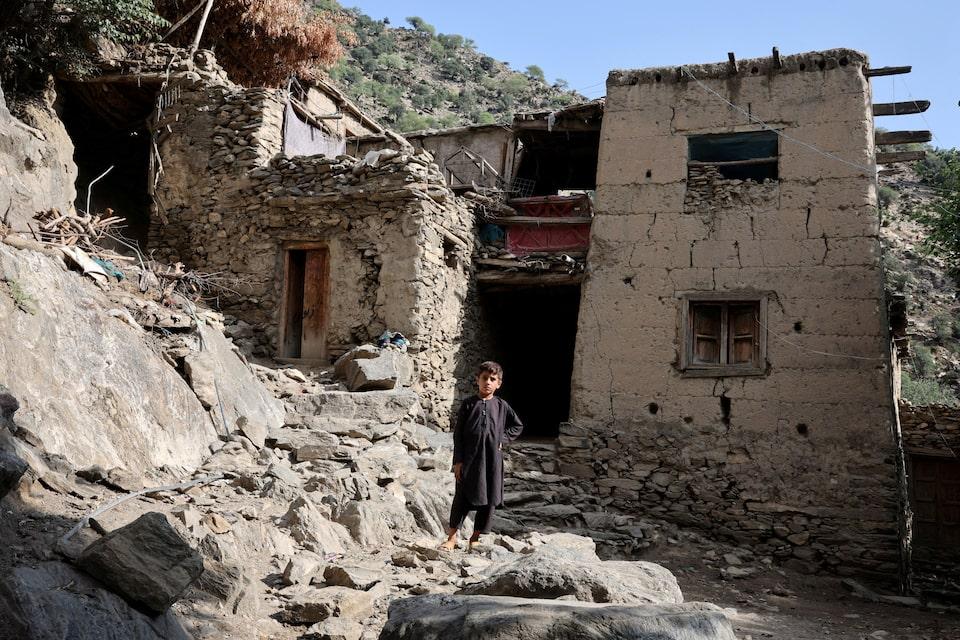
Two powerful aftershocks strike within 12 hours More than 6,700 homes destroyed, survivors stay in the open Rescuers slowed by landslides, blocked roads, rough terrain WHO warns of disease, overcrowding, lack of sanitation UN says money running low, plans emergency funding appeal JALALABAD, Afghanistan, Sept 5 (Reuters) - Two powerful aftershocks struck eastern Afghanistan 12 hours apart, triggering fears of more deaths and destruction on Friday in a region where earthquakes have killed about 2,200 people as rescuers battled mountainous terrain and harsh weather. Survivors in the earthquake-prone region are scrambling for basic amenities as the United Nations and other agencies warn of a critical need for funds, food, medical supplies and shelter, with the World Health Organization seeking funds of $4 million. Sign up here. The latest aftershocks follow two earthquakes that ravaged a nation already crushed by war, poverty and shrinking aid. The Taliban administration estimated 2,205 deaths and 3,640 injuries by Thursday. Ambulances ferried to hospital 13 people injured after Thursday night's tremor of magnitude 6.2 in Nangarhar province, with its epicentre in the district of Shiwa near the Pakistan border, said regional health spokesman Naqibullah Rahimi. Ten were discharged after treatment and three were in stable condition, he added. A Reuters witness said details of the damage were still being collected after continuous aftershocks in Nangarhar, with its capital Jalalabad about 150 km (95 miles) from Kabul. Friday's earthquake of magnitude 5.4 struck the southeast at a depth of 10 km (6.2 miles), the German Research Center for Geosciences (GFZ) said, just hours after Thursday's event. With houses built mostly of dry masonry, stone, and timber, some families preferred to stay in the open to guard against shocks, rather than return home. Residents of the Nurgal district of Kunar have left their homes to live in tents, on the surrounding high land near a river, or in the open, for fear of more tremors. Fallen rocks and earth blocked access to some badly affected villages, holding up rescue and relief efforts, they said. The week's first earthquake of magnitude 6, just before midnight on Sunday, was one of Afghanistan's deadliest, unleashing damage and destruction in Nangarhar and Kunar provinces when it struck at a shallow depth of 10 km (6 miles). A second quake of magnitude 5.5 on Tuesday caused panic and interrupted rescue efforts as it sent rocks sliding down mountains and cut off roads to villages in remote areas. The two initial quakes flattened villages in both provinces, destroying more than 6,700 homes, and rescue workers pulled bodies from the rubble on Thursday. Afghanistan's earthquakes mainly happen in the Hindu Kush mountain range, where the Indian and Eurasian tectonic plates meet. FUNDING CRISIS Landslides and debris on key roads hampered relief work, the WHO said, as it called for more funds to provide healthcare and disease surveillance. "A funding gap of at least $4 million threatens to delay critical activities, underscoring the urgent need for international support," it added in a statement. It warned of the risk of disease, stemming from overcrowded shelters, unsafe water and inappropriate waste management, while an influx of Afghans recently deported from Pakistan strains the fragile healthcare system. Afghanistan's Taliban government made an urgent appeal for international aid soon after Sunday's disaster. But relief has been scant in a country largely ignored by the world since the Taliban takeover in 2021, that is struggling to accommodate millions of Afghans expelled from neighbouring Iran and Pakistan, as well drought victims in its north. The United Nations, which has said money to help quake victims will run out soon, plans to launch an emergency appeal for funds, a senior official in the country said. It has released $10 million, more than the trickle of cash announced by rich nations, though some have sent assistance such as tents. "We have some seed funding, but we are looking to make a flash appeal," Kate Carey, deputy head of the UN’s humanitarian affairs coordination office for Afghanistan, told Reuters. https://www.reuters.com/business/environment/two-powerful-aftershocks-pummel-afghanistan-after-earthquakes-kill-2200-2025-09-05/
2025-09-05 07:07
Opposition ANO pledges to cap energy prices, take 100% control of energy provider CEZ ANO head Babis proposes lower taxes, rejects EU carbon allowances Critics say his plans could increase national debt Parliamentary election set for October 3-4 OSTRAVA, Czech Republic, Sept 4 (Reuters) - The main Czech opposition party ANO, headed by business tycoon and former prime minister Andrej Babis, pledged on Thursday to cap energy prices, lower the pension age and reduce taxes for individuals and companies as it launched a final push to win back power next month. ANO is leading the opinion polls ahead of October 3-4 parliamentary elections, with more than 30% support - about 10 percentage points ahead of the centre-right SPOLU (Together) coalition led by Prime Minister Petr Fiala. Sign up here. While the party looks likely to head the next cabinet, the divide between ANO and the current ruling coalition parties makes it likely Babis will need to seek support from pro-Russian and anti-European Union extremist groups to form a majority. The 71-year-old owner of chemicals, farming, food processing empire Agrofert started ANO as a pro-European, centrist movement in 2011, but has since turned it into an anti-Brussels, anti-immigration group amid a broad lurch to the right seen throughout Europe. He recently co-founded the Patriots for Europe group in the European Parliament with populist Hungarian leader Viktor Orban and a group of European far-right parties, and in July told Reuters he would scrap a Prague-led initiative to supply Ukraine with large-calibre ammunition if he returns to power. "We will jump-start the economy, lower taxes for individuals and companies, cancel public television and radio fees, freeze politicians' salaries," Babis told a campaign event in the city of Ostrava. He said he would reject moves to impose the EU's carbon emission allowances on households due to take effect in 2027 to avoid price rises, setting up one potential battle with the EU. "We will enforce cheap energy for all. We will absolutely not allow new green taxes for households and transport," Babis said. To gain greater control over electricity price-setting, the party reiterated that it would raise the state's stake in the country's top energy provider CEZ to 100% from the current 70%. ANO said it would cap the retirement age at 65, reversing a pension reform gradually raising the age to 67 to limit sharp increases in pension costs as part of the budget. The party also plans to cut corporate tax to 19% from 21%, increase tax write-offs for individuals and lower value-added tax for restaurants. Babis said the funding for these measures would come through improved tax collection and higher economic growth. The party's fiscal expert Alena Schilerova said that ANO was not pledging balanced budgets now but that they would be the result of a successful economic policy. The main ruling party said Babis' pledges would send the country into a debt spiral. The current centre-right coalition has narrowed the public budget gap to 1.9% this year from 5% in 2021, when it took over from Babis amid the coronavirus pandemic. ($1 = 20.9570 Czech crowns) https://www.reuters.com/sustainability/climate-energy/czech-former-pm-babis-pledges-cheap-energy-lower-pension-age-bid-win-back-power-2025-09-05/

2025-09-05 06:48
Brent, WTI down for a third consecutive session On weekly basis, both down more than 1% OPEC+ to consider further output hike on Sunday SINGAPORE, Sept 5 (Reuters) - Oil prices extended their decline into a third session on Friday, heading for a weekly loss for the first time in three weeks as supply expectations grow and a surprise build in U.S. crude stocks adds to demand concerns. Brent crude futures fell 19 cents, or 0.28%, to $66.80 a barrel by 0642 GMT, while U.S. West Texas Intermediate crude fell 23 cents, or 0.36%, to $63.25. Sign up here. Brent was down 1.92% and WTI down 1.19% so far this week. Crude oil remained under pressure amid concerns of rising OPEC+ supply, ANZ research analysts wrote in a note on Friday. Market expectations are growing that the group will push more barrels into the market to regain market share lost to U.S. shale producers in recent years, the analysts said. Reuters reported on Wednesday that eight members of the Organization of the Petroleum Exporting Countries and allies like Russia - known together as OPEC+ - will consider raising production further in October at a meeting on Sunday, citing two sources familiar with the discussions. Another boost would mean that OPEC+, which pumps about half of the world's oil, would be starting to unwind a second layer of output cuts of about 1.65 million barrels per day, or 1.6% of world demand, more than a year ahead of schedule. Meanwhile, U.S. crude oil inventories rose 2.4 million barrels last week as refineries headed into maintenance season, data from the Energy Information Administration showed on Thursday, compared with expectations in a Reuters poll for a 2 million-barrel draw. Strength in the downstream sector has been a key support for prices over recent months, BMI analysts said in a report, but refining margins will likely be squeezed in coming months as global demand growth wanes and refiners ramp up maintenance. This, in turn, will lower throughput, reducing the call on crude, the BMI analysts said. Supply risks, though, continue to cloud the market. U.S. President Donald Trump told European leaders on Thursday that Europe must stop buying Russian oil, a White House official said. Any cuts to Russia's crude exports or other disruption to supplies could push global oil prices higher. https://www.reuters.com/world/middle-east/oil-heads-first-weekly-loss-three-supply-glut-looms-2025-09-05/