2026-01-29 21:15
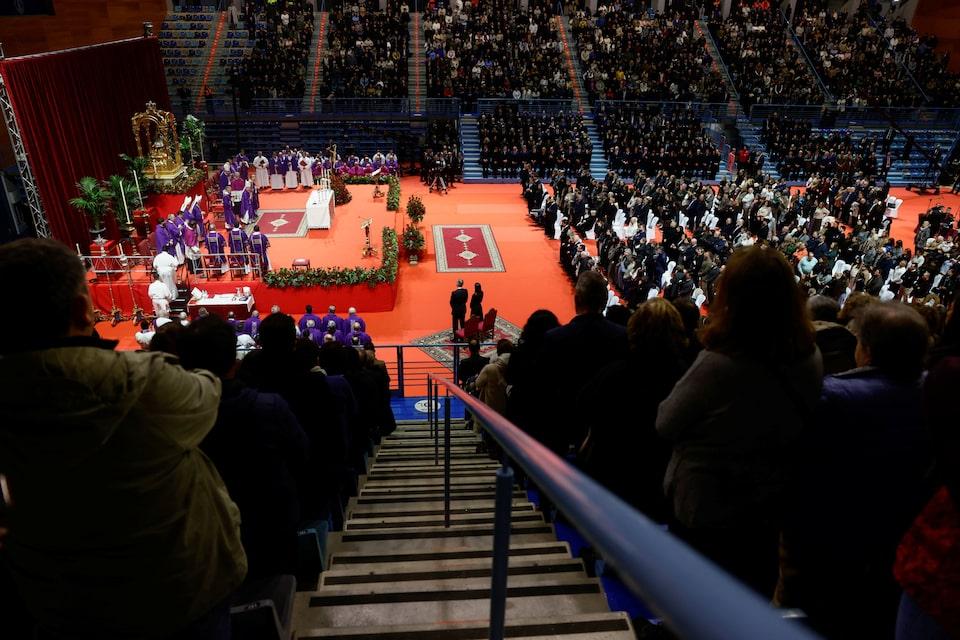
HUELVA, Jan 29 (Reuters) - Some relatives of the 45 people killed in Spain's rail disaster vowed on Thursday to find out why the two high-speed trains collided, making their promise before survivors still wearing bandages and slings at a funeral mass. "Only the truth will help us heal this wound. We will know the truth, we will fight so that there will never be another train," Liliana Saenz, who lost her mother, said at the service in the southern city of Huelva. King Felipe VI and Queen Letizia attended. Sign up here. Spain is trying to come to terms with the January 18 disaster near the village of Adamuz in southern Spain that caused one of the highest death tolls from a train crash in European history. The government has been scrutinized over whether it has sufficiently invested in maintenance of Spain's vaunted railway system since the crash and other incidents that same week, including the death of a train driver in Catalonia. Prime Minister Pedro Sanchez and Transport Minister Oscar Puente didn't attend the service. A fracture in the rail appeared to have occurred before one of the trains headed for Madrid from Malaga derailed and was hit by a second, Huelva-bound train coming in the opposite direction 20 seconds later, authorities said. Puente said the gap could have been as short as nine seconds. "We are the 45 families who would trade all the gold in this world, which is now worthless, for the chance to move the hands of the clock forward just 20 seconds," Saenz, flanked by her brother, told a congregation of hundreds of relatives of the victims and some of the survivors. https://www.reuters.com/world/spain-mourns-victims-families-push-train-crash-truth-2026-01-29/
2026-01-29 21:07
Global payment volumes rise 8% Cross-border volume growth decelerates Shares fall 1% in extended trading Jan 29 (Reuters) - Visa (V.N) , opens new tab exceeded estimates for first-quarter profit and revenue on Thursday, buoyed by increased card usage during the holiday season amid resilient U.S. consumer spending in the last three months of 2025. Higher-income households were the primary drivers, with the holidays seeing record shoppers and a surge in online sales. Sign up here. Visa's services are used by billions worldwide for everyday purchases, making it a barometer for economic health. Lower and middle-income households had limited ability to substitute purchases, however, as U.S. President Donald Trump's tariffs raised prices for consumers. Global payment volumes, a gauge of overall consumer and business spending on Visa's network, jumped 8% on a constant-dollar basis in the reported quarter. In a statement, CEO Ryan Mclnerney also credited the strong quarterly results to continued strength in value-added services and commercial and money movement solutions. Peer Mastercard (MA.N) , opens new tab also reported strong results in the quarter on Thursday, as resilient spending on travel, leisure and everyday essentials boosted transaction volumes for the payments processor. However, Visa's cross-border total volumes grew at a slightly slower pace of 12% in the first quarter compared with the year-ago period. Its cross‑border metrics - a real‑time proxy for global trade and travel, a focus point for markets since Trump's "Liberation Day" tariff announcements last year - are closely watched by analysts and economists. In the last quarter, Visa's finance chief Chris Suh said in an interview with Reuters that the company had not seen a meaningful impact from tariffs. "Shares sold off modestly likely due to higher opex guide for fiscal year second quarter (we assume Olympics-related) and some weakness in cross-border trends," analysts at Evercore ISI said in a note. Shares of the company were down 1% in extended trading. Visa's stock gained nearly 11% in 2025, outperforming Mastercard but lower than American Express (AXP.N) , opens new tab and broader market returns. American Express is scheduled to report quarterly results on Friday morning. Visa's adjusted net income came in at $6.1 billion, or $3.17 per share, in the three months ended December 31. That compares with $5.5 billion, or $2.75 per share, a year earlier. Analysts were expecting a profit of $3.14 apiece, according to estimates compiled by LSEG. "Visa tends to guide conservatively, and it has shown consistent ability to outperform on the top and bottom lines, as was just demonstrated this quarter," analysts at Seaport Research partners said. The company reported revenue of $10.90 billion, also beating Wall Street estimates of $10.69 billion. STABLECOIN PUSH Visa is working to integrate stablecoins into existing payment systems, seeing an opportunity to maintain its market leadership as these tokens gain traction, Visa's head of crypto, Cuy Sheffield, said earlier this month. "The stablecoin opportunity remains additive to what Visa is doing today, and we will continue to invest where we see the greatest demand," a Visa executive said in an analyst call. The company already has various stablecoin-related initiatives, including stablecoin-linked payment cards. It launched a pilot program in December to allow some U.S. banks to settle with Visa using Circle's stablecoin, USDC. https://www.reuters.com/business/finance/visa-quarterly-profit-rises-strong-payment-volumes-2026-01-29/

2026-01-29 21:02
Thailand added to US monitoring list as external surpluses grow Treasury to scrutinize countries' efforts to resist depreciation against dollar China 'stands out' for lack of currency transparency, US Treasury says WASHINGTON, Jan 29 (Reuters) - The U.S. Treasury said on Thursday it was strengthening scrutiny of countries' foreign exchange practices, including their interventions to resist both depreciation and appreciation against the dollar, but it did not accuse any major trading partner of currency manipulation. In its latest semi-annual currency report, the Treasury said no major trading partner met all three criteria for enhanced analysis of currency practices during the last half of 2024 and the first six months of 2025. Sign up here. The Treasury added Thailand to its "monitoring list" of countries warranting close attention due to the growth of the Asian country's global current account surplus and its trade surplus with the U.S. The addition brings the monitoring list to 10 economies, with China, Japan, South Korea, Taiwan, Singapore, Vietnam, Germany, Ireland and Switzerland also remaining on the list. The report has traditionally focused on whether countries are engaging in one-sided currency intervention or other manipulation to resist appreciation against the dollar to keep their exports cheaper. But going forward, the Treasury said it "is now monitoring more broadly the extent to which economies that choose to smooth exchange rate movements do so to resist depreciation pressure in the same manner as they do to resist appreciation pressure." NO SPECIFIC COUNTRY TARGETED Asked if the change was meant to scrutinize Japan's currency practices more closely amid recent yen weakness, a Treasury official said the changes were not meant to single out any one country, but to aid the department's analysis during periods covered by future reports, during which the dollar has weakened against major currencies. The next report, due in November, will include the second half of 2025. The official said that in particular, the Treasury would be looking to see whether countries' interventions to resist depreciation against the dollar are symmetrical with their efforts to resist appreciation, or less aggressive. Japan has been battling a weak yen, with policymakers using calibrated communication to drive the currency higher against the dollar without resorting to large-scale market intervention. Tokyo's efforts won tacit backing from U.S. authorities after the New York Federal Reserve conducted dollar/yen rate checks last week - considered a possible intervention precursor move - a source familiar with the matter told Reuters. But U.S. Treasury Secretary Scott Bessent on Wednesday said the U.S. was "absolutely not" intervening to support the yen. The dollar index , which measures the greenback against a basket of currencies, edged higher on Thursday for a second straight day after touching its weakest level since February 2022 on Tuesday. OTHER INFLUENCES MONITORED The Treasury also said that for countries on the monitoring list, it will analyze whether other government policies are influencing foreign exchange markets, such as capital controls, macroprudential measures or the use of government investment vehicles or pension funds. The Treasury also will study countries' use of foreign exchange swaps to sterilize or offset spot interventions to minimize their impacts on domestic monetary conditions, as well as trading partners' net forward positions. Traditionally, the Treasury's three main criteria for analyzing foreign exchange and determining manipulation are a trade surplus with the U.S. of at least $15 billion, a global current account surplus above 3% of GDP and persistent, one-way net foreign exchange purchases that reach 2% of GDP. Countries that meet two of these are automatically added to the list. The Treasury did not label China a currency manipulator, avoiding a potential escalation in trade tensions with Beijing, despite what it called "depreciation pressure" facing its yuan currency. But the department said China "stands out among our major trading partners in its lack of transparency around its exchange rate policies and practices," repeating language from its previous report in June 2025. "This lack of transparency will not preclude Treasury from designating China if available evidence suggests that it is intervening through formal or informal channels to resist (yuan) appreciation in the future," Treasury said. https://www.reuters.com/world/china/us-treasury-strengthens-currency-monitoring-criteria-finds-no-manipulation-2026-01-29/
2026-01-29 21:01
Confirms Trump administration's intent to ease growth in politics, sports wagers Critics argue event contracts, offered by Kalshi, Polymarket etc, are akin to gambling CFTC and SEC announce 'Project Crypto' now joint effort WASHINGTON, Jan 29 (Reuters) - The U.S. Commodity Futures Trading Commission will draft new regulations governing the burgeoning market for so-called event contracts, removing obstacles for companies that oversee wagers on politics and sports, the agency's leader said on Thursday. Michael Selig, the CFTC's new chairman, spoke during a joint public discussion with Paul Atkins, chair of the Securities and Exchange Commission, where they also announced the two agencies would be jointly pursuing "Project Crypto," an SEC initiative to develop regulations for the digital assets industry. Sign up here. WHY IT MATTERS The agency will withdraw a prior rule proposal that would have banned such contracts. The move underscores an effort by the Trump administration to allow a regulated pathway for political and sports-related events contracts. Critics warn these contracts amount to gambling and should be banned. Major players include the companies Kalshi and Polymarket. KEY QUOTE "For too long, the CFTC’s existing framework has proven difficult to apply and has failed our market participants. That is something I intend to fix by establishing clear standards for event contracts that provide certainty to market participants," Selig said in a speech. CONTEXT The CFTC and state regulators had previously battled in court to prevent event contracts and prediction market operators from allowing wagers on sports without oversight by gaming authorities or on elections. A judge in Massachusetts ruled last week that Kalshi cannot offer sports betting in the state through its online portal, granting a request from the state attorney general. https://www.reuters.com/legal/government/us-commodities-agency-issue-events-contract-regulations-2026-01-29/
2026-01-29 20:42
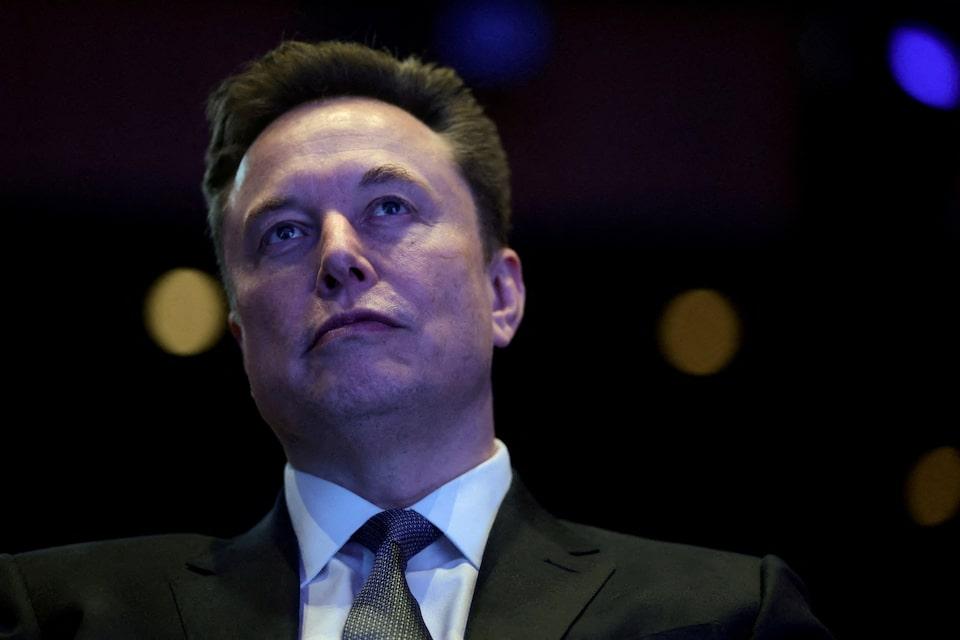
Space-based AI data centers offer solar power, reduced costs, but face technical risks SpaceX ideally positioned for AI-ready satellite clusters, Musk sees space as cost-effective Competitors like Blue Origin, Nvidia, Google and China also pursuing space-based AI centers WASHINGTON, Jan 29 (Reuters) - A proposed merger between Elon Musk's SpaceX and xAI, reported exclusively by Reuters on Thursday, could give fresh momentum to Musk's plan to launch satellite data centers into orbit as he battles for supremacy in the rapidly escalating AI race against tech giants like Alphabet's (GOOGL.O) , opens new tab Google, Meta (META.O) , opens new tab and OpenAI. Here is what we know about space-based AI computing: Sign up here. WHAT ARE SPACE-BASED AI DATA CENTERS? Space‑based data centers - still an early‑stage concept - would likely rely on hundreds of solar‑powered satellites networked in orbit to handle the enormous computing demands of AI systems like xAI’s Grok or OpenAI’s ChatGPT, at a time when energy‑hungry Earth‑based facilities are becoming increasingly costly to run. Advocates say operating above the atmosphere offers nearly constant solar power and eliminates the cooling burdens that dominate ground‑based data‑center costs, potentially making AI processing far more efficient. But engineers and space specialists caution that commercial viability remains years away, citing major risks from space debris, defending hardware against cosmic radiation, limited options for in-person maintenance, and launch costs. Deutsche Bank expects the first small‑scale orbital data‑center deployments in 2027–28 to test both the technology and the economics, with wider constellations — potentially scaling into the hundreds or thousands— emerging only in the 2030s if those early missions work. WHY DOES MUSK WANT TO DO THIS? SpaceX is the most successful rocket-maker in history and has successfully launched thousands of satellites into orbit as part of its Starlink internet service. If space-based AI computing is the future, SpaceX is the most ideally placed to operate AI-ready satellite clusters or facilitate the setting up of on-orbit computing. "It's a no-brainer building solar-power data centers in space ... the lowest-cost place to put AI will be space, and that will be true within two years, three at the latest," Musk said at the World Economic Forum in Davos earlier this month. SpaceX is considering an initial public offering this year that could value the rocket and satellite company at over $1 trillion, Reuters has reported. Part of the proceeds would go to funding the development of AI data center satellites, sources say. WHAT ARE MUSK'S COMPETITORS DOING? Jeff Bezos' Blue Origin has been working on technology for AI data centers in space, building on the Amazon (AMZN.O) , opens new tab founder's prediction that "giant gigawatt data centers" in orbit could beat the cost of their Earth-bound peers within 10 to 20 years by tapping uninterrupted solar power and radiating heat directly into space. Nvidia (NVDA.O) , opens new tab‑backed Starcloud has already offered a glimpse of that future: its Starcloud‑1 satellite, launched on a Falcon 9 last month, carries an Nvidia H100 - the most powerful AI chip ever placed in orbit - and is training and running Google’s open‑source Gemma model as a proof of concept. The company ultimately envisions a modular “hypercluster” of satellites providing about five gigawatts of computing power, comparable to several hyperscale data centers combined. Google is pushing the space-based data center idea with Project Suncatcher, a research effort to network solar-powered satellites equipped with its Tensor Processing Units into an orbital AI cloud. The company plans an initial prototype launch with partner Planet Labs around 2027. China also plans to create a "Space Cloud" by launching space‑based artificial intelligence data centers over the next five years, state media reported on Thursday. China's main space contractor, China Aerospace Science and Technology Corporation, vowed to "construct gigawatt-class space digital-intelligence infrastructure," according to a five-year development plan. https://www.reuters.com/sustainability/climate-energy/why-does-elon-musk-want-put-ai-data-centers-space-2026-01-29/
2026-01-29 20:39
LOS ANGELES/WASHINGTON, Jan 29 (Reuters) - California officials are meeting Detroit automakers this week to discuss the next phase of greenhouse gas regulations for cars and trucks, the state's top air regulator said. California is fighting in the courts and in the U.S. Congress against President Donald Trump's efforts to dismantle landmark federal vehicle emissions standards. Governor Gavin Newsom plans an announcement next week that will lay out details of a new $200 million electric vehicle incentive program that aims to help fill the gap left after Trump’s budget bill killed federal tax credits for new electric cars last year, Lauren Sanchez, chair of the California Air Resources Board, told Reuters in an interview. Sign up here. "We are accelerating all of our work on zero-emissions vehicles, and we know that we have to navigate a managed transition that protects the environment, protects communities, protects workers in collaboration with the industry," Sanchez said. Ford Motor (F.N) , opens new tab and Stellantis did not immediately comment. GM confirmed it was meeting with CARB in Detroit on Thursday and said it "has long history of dialogue and collaboration with CARB" and added "California has the 4th largest economy in the world and is an important market for growth and innovation." For decades, California has had some of the nation’s dirtiest air. Other U.S. states have followed its lead in setting rules aimed at reducing harm from pollution. The federal Clean Air Act of 1970 gave California the unique authority to request waivers from the Environmental Protection Agency (EPA) to set emissions standards that are stricter than the federal government's. Congress rescinded California waivers aimed at bolstering zero-emissions vehicles after the Detroit Three lobbied Congress and the White House for significant relief from California emissions regulations. The White House also significantly weakened federal tailpipe rules and Congress passed legislation to stop collecting penalties for not meeting vehicle tailpipe standards. GM said this week the rollback of federal emissions rules could save it up to $750 million. Newsom, a vocal Trump foe who is seen as a leading Democratic presidential candidate in 2028, in September harshly criticized GM saying GM CEO Mary Barra "sold us out" in a bid to eliminate the progress made by CARB. Trump's attack on electric vehicles and broader assault on policies aimed at accelerating a transition to clean energy has ceded the market to China, Sanchez said. "We are doing everything we can to support the innovation that is needed for automakers to compete on the global scale again," she said, pointing to Governor Newsom's EV incentive program. "We look forward to partnering with automakers to ensure that those investments encourage the innovation and global competition we know is needed." CALIFORNIA CLIMATE GOALS Last year, Trump used the Congressional Review Act to rescind California’s Advanced Clean Cars II waiver to phase out gasoline-powered cars by 2035. That move, combined with the end of federal tax credits for EVs, put a chill on electric passenger car sales and production. It also revoked the state's Advanced Clean Trucks waiver that mandated the phase-in of zero-emission heavy-duty truck manufacturing as well as its Heavy-Duty Engine Omnibus Low NOx waiver that would have drastically cut nitrogen oxide emissions from new diesel trucks over time. The administration is also seeking to end the EPA's ability to regulate greenhouse gas emissions by rescinding the "endangerment finding" that defines those emissions as a human health threat. The repeal of the endangerment finding is expected in the coming weeks. Sanchez said California anticipates challenging a repeal in court. Prior to Trump’s inauguration in January 2025, CARB officials withdrew a waiver request that would have set the strictest locomotive pollution rule in the country and required railroad operators to phase out old diesel locomotives. They also withdrew a waiver request that would have set a timeline for truck drivers to replace diesel trucks with zero-emissions rigs. Sanchez characterized those as strategic withdrawals that left state regulators open to pursue other strategies. "We're prepared to fight and we're prepared to also explore alternatives at the same time," Sanchez said. https://www.reuters.com/legal/litigation/california-accelerates-work-ev-rules-tax-credits-that-trump-opposes-states-top-2026-01-29/