2025-09-04 14:18
SEC to propose rules for digital asset sales Potential amendments for crypto trading on national exchanges SEC aims to reduce compliance burdens for public companies Sept 4 - The U.S. Securities and Exchange Commission on Thursday unveiled its rulemaking agenda for the upcoming months, which could see broad proposals to revamp cryptocurrency regulations and reduce rules Wall Street has decried as being overly burdensome. The SEC formally outlined several of its initiatives to overhaul cryptocurrency policies, which SEC Chair Paul Atkins had previewed in July. Those include proposing rules about the offer and sale of digital assets, which the SEC said could potentially include certain exemptions and safe harbors, and clarifying how its broker-dealer rules apply to crypto. Sign up here. The SEC also said it would consider amending its rules to allow for crypto to be traded on national securities exchanges and alternative trading systems. If enacted, those policies would represent a major win for the digital asset industry, which has long pushed for tailored rules that would enable crypto to become more enmeshed with traditional finance. "This regulatory agenda reflects that it is a new day at the Securities and Exchange Commission," Atkins said in a statement. "The items on the agenda represent the commission's renewed focus on supporting innovation, capital formation, market efficiency and investor protection." On the campaign trail last year, President Donald Trump courted crypto cash by pledging to be a "crypto president" and promote the adoption of digital assets. That is in stark contrast to former Democratic President Joe Biden's regulators, who, in a bid to protect Americans from fraud and money laundering, cracked down on the industry. The Biden administration's SEC sued exchanges Coinbase, Binance, and dozens more, alleging they were flouting U.S. laws. Trump's SEC has since dropped those cases. The SEC also plans to propose a plan for "rationalization" of disclosures. The agency's core work includes laying out disclosure requirements meant to increase transparency and reduce risk for investors. The agency also flagged a plan to "to reduce compliance burdens" for public companies in connection with shareholder proposals. https://www.reuters.com/legal/government/us-sec-unveils-agenda-revamp-crypto-policies-ease-wall-street-rules-2025-09-04/
2025-09-04 12:39
Sept 4 (Reuters) - The gasoline unit at Nigeria's 650,000 barrel-per-day Dangote refinery may be shut for 2-3 months for repairs, IIR Energy said in a client note on Thursday. The 204,000 bpd Residue Fluidized Catalytic Cracking Unit (RFCCU) was forced to shutdown on August 29 and a tentative restart is planned for September 20. Sign up here. However, it may remain shutdown for longer to complete major repairs and equipment replacements that were previously scheduled for December 2025, the note said. Dangote did not immediately respond to a request for comment. The possibly lengthy shutdown marks a setback for the refinery just as it was ramping up in recent weeks. It has shipped two gasoline cargoes to the U.S. East Coast, expected to arrive in the New York area later this month, a major milestone as industry observers were closely tracking if and when the plant would produce fuel meeting U.S. standards. https://www.reuters.com/world/africa/nigerias-dangote-refinery-gasoline-unit-could-be-shut-2-3-months-iir-says-2025-09-04/

2025-09-04 12:38
MADRID, Sept 4 (Reuters) - Spain's high speed trains to and from Madrid were either halted or delayed on Thursday afternoon, as a result of a computer outage, railway infrastructure operator Adif said in a post on X. Adif said its backup system was working and that service was being gradually restored. Sign up here. https://www.reuters.com/world/spains-high-speed-trains-madrid-disrupted-after-computer-outage-2025-09-04/

2025-09-04 12:30
WASHINGTON, Sept 4 (Reuters) - The Trump administration's widely anticipated report from President Donald Trump's "Make America Healthy Again" commission will be released next week, White House adviser to "MAHA" Calley Means said on Thursday. "We need to get back to whole food and away from ultra-processed food," Means told Fox News' "Fox & Friends" program. "So we -- and you'll see this with the MAHA Commission report next week... -- this administration is evangelizing ranchers, evangelizing farmers and working to put whole food on the child's plate." Sign up here. https://www.reuters.com/business/healthcare-pharmaceuticals/maha-commission-report-due-next-week-white-house-adviser-says-2025-09-04/

2025-09-04 12:27
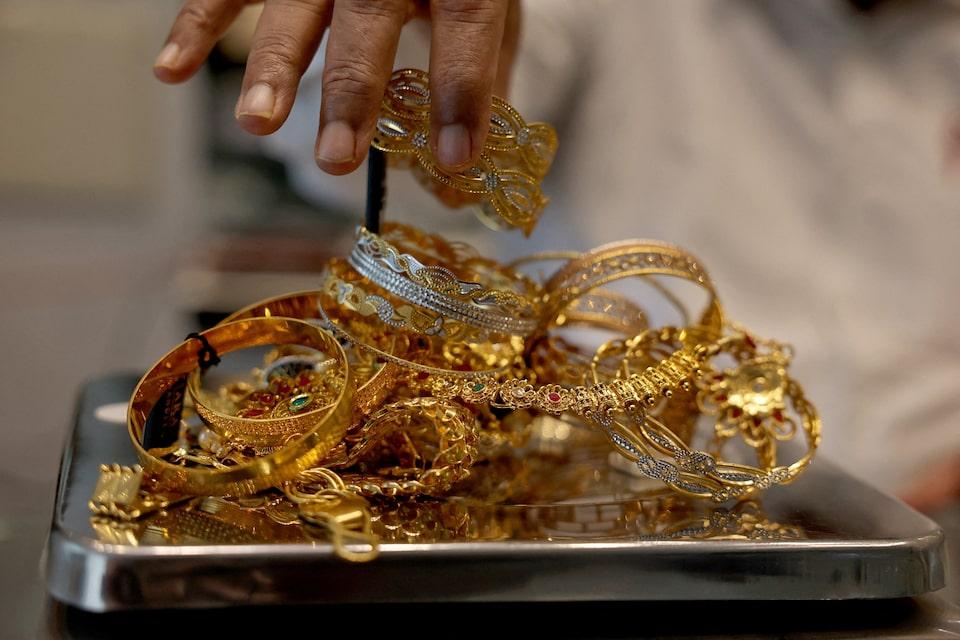
Gold hits all-time high at $3,578.50/oz on Wednesday Silver eases from highest level since September 2011 US non-farm payrolls data due on Friday Sept 4 (Reuters) - Gold prices declined on Thursday, pulling back from a record high as investors locked in profits as attention shifted to U.S. jobs data for further insight into the Federal Reserve's policy path. Spot gold was down 0.3% at $3,547.18 per ounce as of 1207 GMT, while U.S. gold futures for December delivery dipped 0.8% to $3,605.90. Sign up here. On Wednesday, spot gold peaked at $3,578.50 amid rising bets for a Fed rate cut and lingering geopolitical and economic uncertainties. "The market was way overbought and needed to correct," StoneX analyst Rhona O'Connell said. The focus is now on weekly jobless claims and the ADP report due later in the day, and U.S. non-farm payrolls data due on Friday. "If the jobless claims are way out of line, then we could see a reaction (in prices) – down if below, up if high," O'Connell said. A Labor Department report showed on Wednesday that job openings fell more than expected to 7.181 million in July. Meanwhile, several Fed officials said labour market worries continue to animate their beliefs that rate cuts are imminent. The market is now pricing in a 98% chance of a 25 basis-point rate cut this month, CME Group's FedWatch tool showed. Non-yielding gold typically performs well in a low interest-rate environment and in times of uncertainty. Questions about the Fed's independence will take centre stage on Thursday when President Donald Trump's economic advisor Stephen Miran testifies at a Senate Banking Committee hearing on his nomination to the U.S. central bank's seven-member governing board. "Should private investors diversify more heavily into gold, we see potential upside to gold prices to well above our $4,000 mid-2026 baseline," Goldman Sachs said in a note on Wednesday. Elsewhere, spot silver fell 0.6% to $40.95 per ounce, after hitting its highest since September 2011 on Wednesday. Platinum lost 1.9% to $1,394.40 and palladium shed 1% to $1,136.19. https://www.reuters.com/world/india/gold-eases-record-high-all-eyes-us-jobs-data-2025-09-04/
2025-09-04 12:13
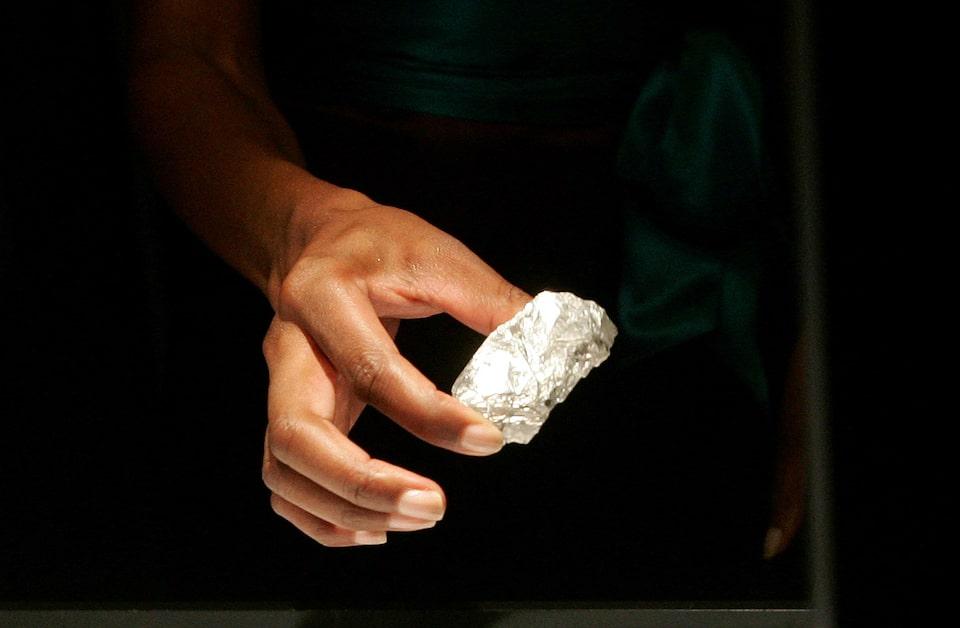
Sept 4 (Reuters) - Lesotho's biggest diamond mine, Letseng, has laid off 240 workers, a fifth of its workforce, as it battles persistently low gem prices due to weak demand and an uncertain global economic environment, parent company Gem Diamonds (GEMD.L) , opens new tab said on Thursday. Diamonds are vital to Lesotho's economy, with the sector contributing up to 10% of its GDP and providing employment for thousands in the country of just over 2 million people. Diamonds are also Lesotho's major export commodity, along with textiles and clothing. Sign up here. Gem Diamonds said its Letseng mine, which produces some of the world's largest and most valuable gems such as the 910-carat "Lesotho Legend", had revised its mine plan and cut jobs to reduce costs. "Sustained pricing pressure, softer demand in key markets, ongoing macroeconomic and geopolitical uncertainty, and tariff uncertainties in respect of India, combine to create difficult trading conditions," Gem Diamonds CEO Clifford Elphick said in a statement. Gem Diamonds on Thursday reported a half-year loss of $11.7 million, compared to a $2.1 million profit a year earlier, after revenue plunged 42% on the back of weaker prices. It booked a $10.7 million impairment on the value of Letseng due to the weak diamond prices. The company realised an average price of $1,008 per carat in the six months to June 30, 26% lower than last year. Its half-year production was 47,125 carats, compared to 55,873 carats during the same period last year. Diamond prices have fallen about 35% from early 2022 highs due to changing consumer preferences and the rise of lab-grown gems, according to the Zimnisky Global Rough Diamond Price Index. Miners have responded by curbing output, cutting jobs and halting projects. https://www.reuters.com/business/world-at-work/lesothos-biggest-diamond-mine-cuts-20-workforce-price-slump-persists-2025-09-04/