2025-09-04 12:07
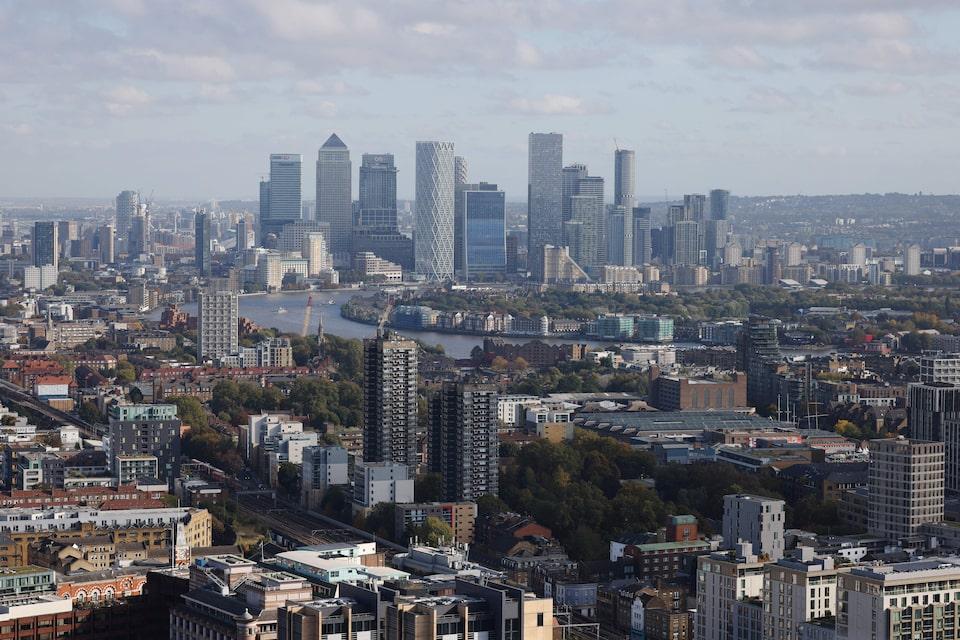
LONDON, Sept 4 (Reuters) - British businesses have cut employment by the largest amount in nearly four years and expect wage growth to slow - but do not think this will translate into much lower inflation, according to a Bank of England survey published on Thursday. The BoE's Decision Maker Panel survey of around 2,000 firms with at least 10 staff showed businesses reported that employment levels in the three months to August were 0.5% lower than a year earlier, the biggest drop since the third quarter of 2021. Sign up here. This is in line with the annual fall in payrolled employees in July reported in tax office data released last month, although other official data - which has suffered from low response rates - suggest this fall has been offset by higher self-employment. The BoE forecast last month that inflation will climb to 4% in September. Policymakers are divided about how fast it will return to its 2% target and whether further interest rate cuts are warranted after August's quarter-point reduction to 4%. Thursday's survey offers ammunition for both camps. Businesses surveyed by the BoE in the three months to August said they expected to raise their own prices by 3.7% over the coming year - although more volatile monthly data showed a drop to 3.5% in August alone from 3.9% in July. Companies said they planned to raise wages by an average 3.6% over the coming year - less than the 4.6% they said they had over the past 12 months and the joint-lowest since the BoE started regularly asking this question in May 2022. But Rob Wood, chief UK economist at Pantheon Macroeconomics, said the rate at which planned wage growth was falling had slowed and that businesses were responding to higher employment costs by cutting staff rather than wages. "The DMP survey shows stubborn wage and price pressures despite falling employment, continuing to suggest that structural economic changes and supply weakness are keeping inflation high," he said, predicting no more rate cuts this year. https://www.reuters.com/sustainability/sustainable-finance-reporting/uk-firms-report-biggest-drop-employment-since-2021-boe-survey-2025-09-04/
2025-09-04 12:05
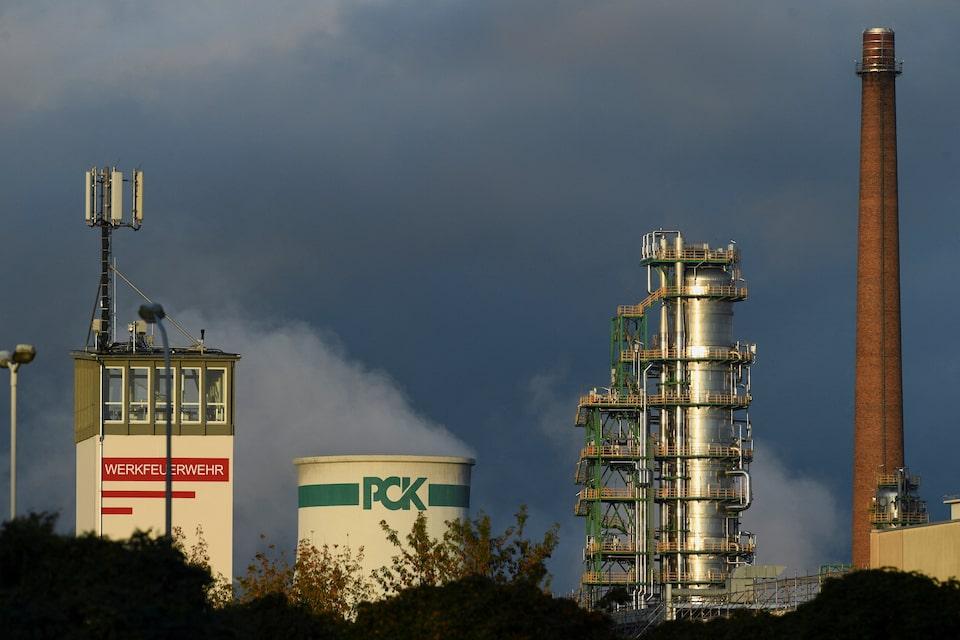
BERLIN, Sept 4 (Reuters) - Oil flows through the Druzhba pipeline to Germany's PCK refinery are expected to return to normal by the end of this week following the repair of damages, Rosneft Germany, the refinery's largest shareholder, said on Thursday. Ukrainian drones struck an oil pumping station in Russia's Tambov region, leading to supply disruption via the Druzhba pipeline last month. Sign up here. Germany's PCK refinery - one of the country's largest - in the northeastern town of Schwedt is supplied in part by Kazakh crude transported via the pipeline, after a stop in Russian oil deliveries in the wake of Moscow's invasion of Ukraine. Rosneft Germany spokesperson Burkhard Woelki said the company imports 120,000 tons of oil from Kazakhstan every month, adding that talks with Kazakhstan regarding expanding and extending the oil imports beyond 2025 were on track. German news agency DPA reported the return of flows first. https://www.reuters.com/business/energy/oil-flows-germany-via-damaged-druzhba-pipeline-normalise-rosneft-germany-says-2025-09-04/
2025-09-04 12:00
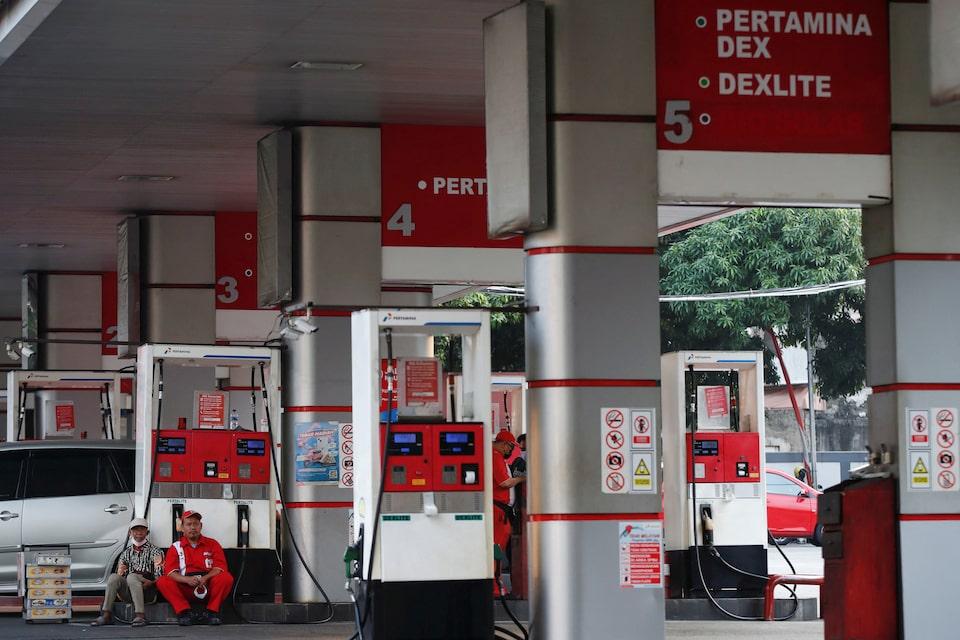
JAKARTA, Sept 4 (Reuters) - The Indonesian government will hold discussions with private fuel distributors, an official said on Thursday, as supply runs low at petrol stations operated by Shell and BP-AKR. Shell and BP-AKR, the operator of BP's fuel stations, said they had inventory shortages for some gasoline products. Sign up here. Shell said last week some of its products would not be available at some fuel stations for an undetermined period. The market share of private fuel distributors, which sell only unsubsidised fuels, is small compared to those controlled by state firm Pertamina. However, restrictions in sales of subsidised fuel have caused demand shifts to Shell and BP, local media reported. The government will meet with all privately-run fuel distributors next week to discuss the issue, energy ministry senior official Laode Sulaeman told Reuters. Laode said this year, private distributors have been given a fuel import quota 10% higher than in 2024. Energy minister Bahlil Lahadalia encouraged private firms to partner with Pertamina to address the problem. BP-AKR said it was experiencing limited stock of BP's 92-octane and 95-octane fuels, while Shell was coordinating with the energy ministry to ensure fuel availability, a spokesperson said. https://www.reuters.com/business/energy/indonesia-discuss-fuel-supply-issue-with-private-distributors-official-says-2025-09-04/
2025-09-04 11:55
Funicular railway popular with tourists 15 killed at scene on Wednesday, two more died in hospital Car had lost ability to brake before derailing Union says workers had flagged cable tension concerns Transport company says inspections carried out daily LISBON, Sept 4 (Reuters) - Portuguese authorities were investigating on Thursday what caused a funicular railway popular with tourists to derail and hurtle down a hill, killing at least 17 people and injuring 21 when it crashed into a building. Footage from the site showed the mangled wreckage of the yellow tram-like funicular, which carries people up and down a steep hillside in the Portuguese capital, lying where it had left the track and hit a building, just metres from another car at the bottom of the hill. Sign up here. Lisbon resident Abel Esteves, 75, and his wife and grandson were among 40 passengers in the car at the bottom of the hill who saw the derailed carriage careering towards them. "When I saw another carriage coming down, I told my wife: 'We're all going to die here'," he said. "It picked up a brutal speed, took a slight turn and hit the building with a loud bang." Flags flew at half-mast as Portugal declared a day of mourning for the victims. The city's remaining two lines were shut for inspections, authorities said. Thirty-eight people were involved in the accident, with 15 killed at the scene while two more died in hospital overnight, said Margarida Martins, head of the city's emergency services. Among the injured were four Portuguese, two Germans, two Spanish, one Korean, one Cape Verdean, one Canadian, one Italian, one French, one Swiss and one Moroccan, she said. The German foreign ministry said in a statement that it assumed some of its citizens were among the victims. Eliane Chaves, a Brazilian who has lived in Lisbon for 20 years, said she walked past the funicular every day. "It is truly sad," she said, as tears streamed down her cheeks. "People say that it was negligence but it was not negligence. They supervise it thoroughly. It was an accident, just like a plane or car accident can happen." BRAKING SYSTEM Manuel Leal, leader of the Fectrans union, told local TV that workers on the Gloria railway - one of the symbols of the city - had complained about problems with the funicular's haulage cable tension that made braking difficult, but it was too early to say if that was the cause of the crash. The municipal public transport company Carris said in a statement that "all maintenance protocols have been carried out", including monthly and weekly maintenance programmes and daily inspections. At the scene of the crash police could be seen taking photos of the wreckage as well as inspecting the braking system on the undamaged car nearby. The line's two cars, each capable of carrying around 40 people, are attached to opposite ends of a haulage cable with traction provided by electric motors on the cars that counterbalance each other. As the cable apparently snapped, the car that was coming down the 265-metre slope lost its ability to brake and derailed on a turn, crashing into a corner building. The car at the bottom of the line jolted back a couple of metres (yards) and was apparently undamaged, but video from bystanders showed several passengers jumping out of its windows. The line, which opened in 1885, connects Lisbon's downtown area near the Restauradores Square with the Bairro Alto, or Upper Quarter, famous for its vibrant nightlife. The Gloria line transports around 3 million people annually, according to the town hall. Authorities did not identify the victims or disclose their nationalities, but said some foreign nationals were among the dead. Some local media reported that a German family-of-three was among the victims, including a three-year-old child who suffered minor injuries, while the father died and the mother was seriously hurt. Portugal, and Lisbon in particular, has experienced a tourism boom in the past decade, with visitors cramming the popular downtown area in the summer months. https://www.reuters.com/world/europe/portugal-investigates-causes-cable-car-crash-that-killed-17-2025-09-04/

2025-09-04 11:44
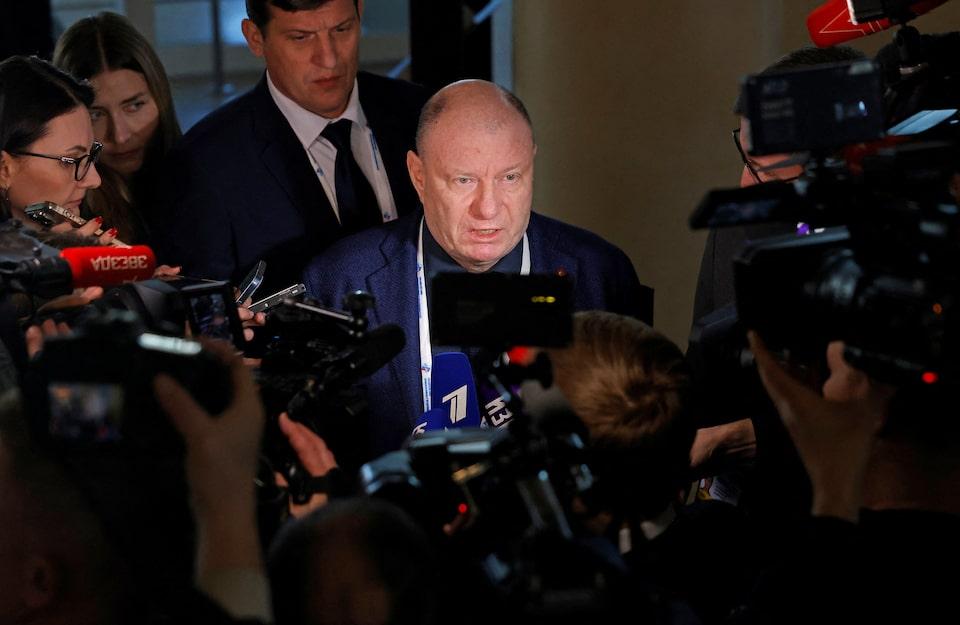
LONDON, Sept 4 (Reuters) - Russian oligarch Vladimir Potanin's ex-wife can pursue a multi-billion dollar share of his stake in Nornickel, London's Court of Appeal ruled on Thursday, allowing potentially one of the highest-value divorce cases ever brought to continue. Potanin, the chief executive of Norilsk Nickel (GMKN.MM) , opens new tab, the world's largest palladium producer and a major producer of refined nickel – is facing a mammoth divorce claim from his ex-wife Natalia Potanina. Sign up here. Potanina wants to bring a claim for financial relief following their formal divorce in 2014, which includes a claim for 50% of the value of her ex-husband's ultimate beneficial interest in shares in Nornickel. Potanin currently holds a 37% stake in the company, which is valued at nearly $9 billion, according to MOEX data. His ex-wife is also seeking 50% of any dividends paid to Potanin since 2014 and a high-end Russian property, on which the parties spent around $150 million. Her lawyers say she received only $41.5 million, less than 1% of the couple's total assets, after their divorce in the Russian courts, though Potanin said his ex-wife received about $84 million and argued the couple had no connection to Britain. London's High Court originally rejected Potanina's bid to bring a claim in 2019, with a judge saying that if her claim was allowed to proceed "then there is effectively no limit to divorce tourism". But on Thursday the Court of Appeal overturned that decision, saying she had very largely severed her ties with Russia and was entitled to bring her claim. "The discrepancy between her award of the marital assets and the husband's retained share was significant; the discrepancy between what she had recovered in Russia compared with what she would have recovered had the case been heard in this jurisdiction was equally significant," the court ruling said. Potanina's lawyer Frances Hughes said her client was delighted that the court had recognised the merits of her case. "She very much hopes that her case can now be resolved and can be concluded without further delay," she said in a statement. https://www.reuters.com/world/uk/russian-oligarch-potanins-ex-wife-can-pursue-massive-divorce-claim-uk-court-2025-09-04/
2025-09-04 11:39
US job openings data reinforces rate cut wagers All eyes on Friday's payrolls report for policy cues Bond market ructions ease but fiscal worries linger SINGAPORE/LONDON, Sept 4 (Reuters) - The U.S. dollar held firm on Thursday in a volatile week as investors contend with a fragile bond market and data showing a weakening labour market, which has reinforced expectations the Federal Reserve will cut rates this month. With the Fed focused on employment, Friday's crucial jobs report will help set expectations for the central bank's next few policy meetings. Data on Wednesday showed job openings fell to a 10-month low in July, although layoffs remained relatively low. Separate surveys on private sector employment and monthly layoffs are due later on Thursday. Sign up here. Traders are pricing in a near-100% chance of the Fed cutting interest rates later this month, up from 89% a week ago, CME FedWatch showed. They are also pricing in 139 basis points of easing by the end of next year. The dollar edged up in relatively steady trade, reflecting investor wariness of making any big moves ahead of Friday's payrolls report. The euro edged down 0.14% to $1.1645, as did sterling, , down 0.1% at $1.344, just above Wednesday's four-week lows. The dollar index , which tracks the U.S. currency against six others, was up slightly at 98.31. The Japanese yen weakened, leaving the dollar up 0.2% at 148.34. Several Federal Reserve officials said labour market worries continue to underpin their view that rate cuts still lie ahead for the central bank, boosting expectations of an imminent rate cut. James Knightley, ING's chief international economist, said the Fed is very likely to cut rates meaningfully in the months ahead with little inflation pressure coming from the jobs market. "We expect them to cut 25 bp at the September, October and December FOMC meetings," he said. The Fed is due to meet on September 16 and 17. BOND WORRIES Much of the focus this week has been on the bond market, where yields on long-end notes across the globe have risen as investors become increasingly anxious about the fiscal health of major economies from Japan to Britain and the United States. "Global bonds recovered some lost ground yesterday providing some temporary relief and helping to stabilise the foreign exchange market," MUFG currency strategist Lee Hardman said. A closely watched auction of 30-year Japanese government bonds passed smoothly on Thursday, calming investors' nerves, while the dovish comments from policymakers triggered a modest rally in Treasuries, pushing yields lower. U.S. 30-year bond yields were down 1.6 basis points on the day at 4.888% , having hit 5% - the highest in about 1-1/2 months - on Wednesday. Uday Patnaik, head of Asia fixed income and global emerging market debt in the asset management division of L&G, said the rise in yields reflects poor fiscal conditions in some of the largest advanced economies, where the debt-to-GDP ratio is heading above 100%. "The problem here is not one of these countries are running a primary surplus, which means revenues cannot even cover non-interest spending," he said. "To fix this will necessitate significant cuts in spending or additional revenues, at a time when social and political pressures are running high." In other currencies, the Australian dollar fell 0.4% to $0.6518, while the New Zealand dollar dipped 0.3% to $0.5859. https://www.reuters.com/world/middle-east/dollar-holds-firm-signs-weaker-us-job-market-fuel-rate-cut-bets-2025-09-04/