2026-01-29 17:51
JOHANNESBURG, Jan 29 (Reuters) - South African state-owned power utility Eskom has raised its salary increase offer to trade unions to 5.5% from the 3.5% it proposed last year, a document seen by Reuters showed, though it remains well below what unions are demanding. Eskom has been a long-term drag on Africa's biggest economy through its electricity cuts and financial woes. But a sharp improvement in the performance of its coal-fired power stations has allowed it to stop implementing nationwide blackouts. It reported its first full-year profit in eight years last financial year. Sign up here. The revised wage offer was presented to the three major unions it negotiates with over salaries this week in a second round of pay talks. Eskom proposed that the 5.5% pay increase come into effect on July 1, the day after its current three-year wage deal expires, the document showed. The offer includes adjustments to other benefits, such as housing. An Eskom spokesperson confirmed the utility's latest salary offer was 5.5%. Unions are seeking pay hikes of up to 15%, far above South Africa's annual inflation rate (ZACPIY=ECI) , opens new tab which stood at 3.6% in December and which the central bank thinks may have peaked. A third round of wage negotiations is scheduled to take place in February, said Khangela Baloyi, energy sector coordinator for the National Union of Mineworkers. Eskom's three-year agreement reached in 2023 saw non-managerial employees' salaries increase by 7% each year. The former state monopoly still generates the bulk of South Africa's electricity and would like to agree another multi-year wage deal. Unions have gone on strike during previous wage disputes, triggering power blackouts. This time around the potential impact of a strike on Eskom's operations is harder to gauge as the recent improvement in its generation fleet means it has excess capacity. https://www.reuters.com/business/world-at-work/south-africas-eskom-ups-wage-hike-offer-ongoing-union-talks-2026-01-29/
2026-01-29 17:32
ROME, Jan 29 (Reuters) - Multinational steelmaker ArcelorMittal (MT.LU) , opens new tab, the former owner of Italian steel firm Acciaierie d'Italia (ADI), said on Thursday it had filed a 1.8 billion euro ($2.2 billion) claim against the Italian government over losses linked to its investment in ADI's plants. The filing is a tit-for-tat move following Italy's state‑appointed administrators of ADI, formerly known as ILVA, seeking around 7 billion euros ($8.37 billion) in damages from ArcelorMittal, alleging that it had mismanaged ADI's steelworks. Sign up here. The government took over the administration of ADI from ArcelorMittal in early 2024. ADI has struggled to maintain production amid high energy costs and weak demand. In the government's case, Luxembourg-headquartered ArcelorMittal said in a statement on Thursday that ADI's government-appointed commissioners had served it with a summons to appear before a Milan court. It said it saw "no factual nor legal basis" in the summons and rejected all allegations, including assertions that it has pursued a strategy of running down the plants, destroying ADI's business and extracting profits from Italy. ArcelorMittal said it had invested about 2 billion euros "to turn around a structurally challenged business," much of which was devoted to meeting environmental standards set by the government. It accused the government of "omissions and illegitimate legislative interventions" which undermined the conditions on which it bought the plants and led to the loss of its investments. Sources close to the matter said in December that Italy had picked U.S. investment fund Flacks for exclusive talks on the sale of ADI. The government had previously tried to sell ADI's steelworks to an Azeri consortium comprising Baku Steel and Azerbaijan Business Development Fund, but failed to reach an agreement. ILVA's Taranto steel plant was once Europe's largest, but has been hobbled since 2012 by judicial investigations and asset seizures related to the environmental impact of its activities. ADI's future has become a major political issue for Prime Minister Giorgia Meloni, as a shutdown would have significant knock‑on effects across Italy's manufacturing sector. ($1 = 0.8357 euros) https://www.reuters.com/sustainability/arcelormittal-makes-2-billion-claim-against-italy-steel-plant-row-2026-01-29/
2026-01-29 17:09
Patrick James faces fraud, conspiracy charges; brother also charged Prosecutors say First Brands concealed fraudulent accounting schemes Patrick James denies charges, to defend himself in court Lawyer for Edward James says client conducted himself with dignity NEW YORK, Jan 29 (Reuters) - The founder of First Brands has been indicted by federal prosecutors for allegedly defrauding lenders out of billions of dollars before the auto parts supplier collapsed into bankruptcy. Patrick James, 61, who was also First Brands' chief executive, was charged in a nine-count indictment made public on Thursday with running a continuing financial crimes enterprise, bank fraud, wire fraud and money laundering conspiracy. Sign up here. His brother Edward James, 60, who had been a First Brands senior vice president, faces most of the same charges. Both defendants were arrested on Thursday in Ohio and are expected eventually to appear in Manhattan federal court, where the indictment was filed. They could face decades in prison if convicted. A former First Brands executive, Andy Brumbergs, 45, entered a related guilty plea and is cooperating with prosecutors. The charges add a criminal dimension to the implosion of First Brands, once one of the world's largest auto parts suppliers, whose Chapter 11 case has disrupted the supply chain for major automakers including Ford (F.N) , opens new tab and General Motors (GM.N) , opens new tab. “Patrick James is presumed innocent and denies these charges," a spokesperson said in an email. "He built First Brands from nothing into a global industry leader and has always been devoted to the success of the company. Mr. James looks forward to presenting his case in court.” Seth DuCharme, a lawyer for Edward James, said in an email that his client "has conducted himself with integrity and dignity over decades of hard work ... We look forward to appearing in New York on his behalf and we have complete confidence in Mr. James." A lawyer for Brumbergs declined to comment. U.S. SAYS FIRST BRANDS FEIGNED SUCCESS First Brands filed for protection from creditors on September 28 with more than $9 billion of liabilities, sparking fear among Wall Street lenders exposed to the privately held, Cleveland-based company. Jefferies Financial Group (JEF.N) , opens new tab and Switzerland's UBS are among the most exposed financial firms. Both declined to comment. First Brands has begun winding down some businesses, while looking for buyers for its other assets. Patrick James stepped down as chief executive two weeks after the bankruptcy filing. New management sued him in November, saying he left the company insolvent while transferring hundreds of millions of dollars to himself. Prosecutors echoed that accusation. “The James brothers obtained billions for First Brands—and millions for themselves—by presenting their lenders with the impression of a successful, growing international business,” U.S. Attorney Jay Clayton in Manhattan said in a statement. “ The indictment and the guilty plea unsealed today describe a very different reality: a business run through fraud, fake documents, and false financials,” he added. FAST EXPANSION ALLEGEDLY FUELED BY IMPROPER ACCOUNTING Founded in 2013, First Brands had by last year become a major supplier of auto parts such as brakes, filters and lighting systems, with about $5 billion in annual sales. Prosecutors said First Brands financed its growth by borrowing billions of dollars that were secured by inventory and physical assets such as plants and equipment. But according to the indictment, the Jameses manufactured that growth by defrauding lenders and financing partners through a series of schemes including double- and triple-pledging loan collateral, faking invoices and concealing substantial liabilities. This allegedly left First Brands vulnerable to cash flow disruptions and potential declines in asset values, while remaining dependent on continued access to capital. The fraud allegedly lasted from 2018 to 2025. Prosecutors said that as cash dried up and debts mounted, the Jameses "closed ranks" to prevent creditors, auditors and potential asset buyers from seeing First Brands' dire outlook. Members of their inner circle allegedly expressed concern in an email that people might "slip and say the wrong thing" to those counterparties, including by revealing First Brands' dependence on debt and financing arrangements that were off its balance sheet, the indictment said. The Jameses were indicted six weeks after Clayton's office unveiled an indictment accusing top executives of subprime auto lender Tricolor of defrauding lenders and double-pledging collateral. Tricolor filed to liquidate in bankruptcy last September 10, eighteen days before First Brands' Chapter 11 filing. FORD, GM TO PROVIDE SOME HELP At a Thursday hearing in Houston bankruptcy court, First Brands received a judge's permission to obtain short-term financing from Ford and GM. The automakers will prepay $48 million for parts over the next week, and perhaps provide more financing week-to-week, to let First Brands continue operating businesses that serve them. Those businesses employ about 17,000 people in North America. First Brands has begun winding down its Brake Parts, Cardone aftermarket parts and Autolite spark-plug units, which together employed 4,000 people. Despite borrowing $1.1 billion after filing for bankruptcy, First Brands said early this month that cash on hand had shrunk to $190 million. https://www.reuters.com/business/finance/first-brands-founder-patrick-james-his-brother-indicted-fraud-2026-01-29/
2026-01-29 15:28
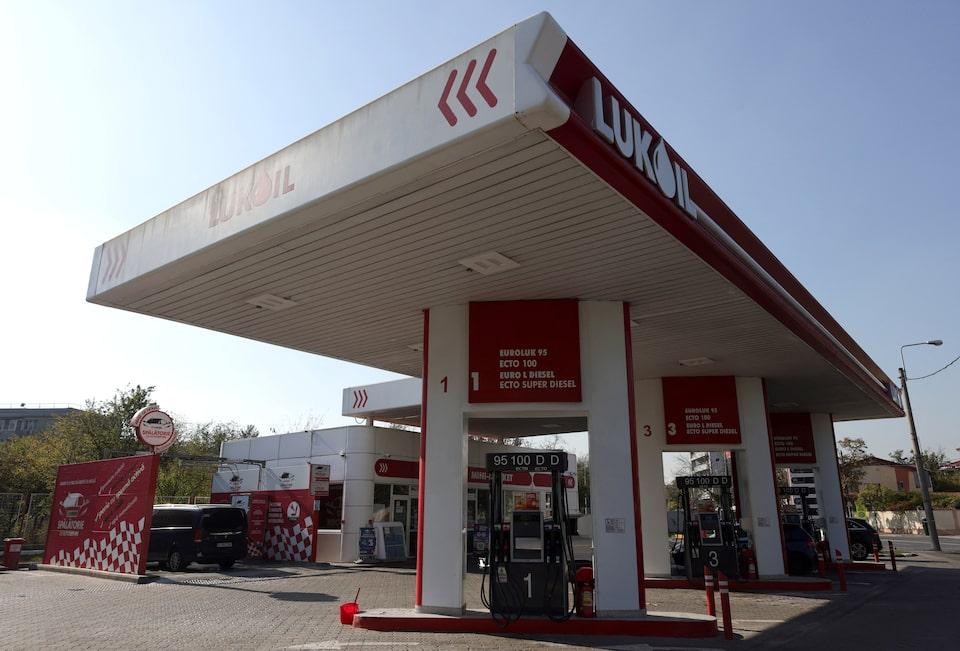
Jan 29 (Reuters) - Carlyle Group (CG.O) , opens new tab is poised to acquire most of Russian oil producer Lukoil's (LKOH.MM) , opens new tab foreign assets, initially valued at $22 billion by analysts. Neither Lukoil nor Carlyle disclosed a price for the sale, which still requires approval from the Office of Foreign Assets Control, the U.S. agency that administers sanctions. The U.S. Treasury had given Lukoil until February 28 to divest its global portfolio. Sign up here. The planned Lukoil purchase marks the latest expansion of Carlyle's energy holdings, which already include stakes in U.S. proved developed producing (PDP) oil and gas assets, midstream infrastructure, and renewable energy platforms. Below is a summary of Carlyle's key energy assets and deals, highlighting its footprint across fossil fuels and clean energy: Lukoil international assets (pending) – Carlyle has agreed to acquire most of Lukoil's international portfolio, including oilfields, refineries and fuel station. The deal remains subject to OFAC clearance and other regulatory approvals. BASF Coatings business (2025) – Carlyle, alongside Qatar Investment Authority, struck a deal to buy a majority stake in BASF's (BASFn.DE) , opens new tab coatings business, valuing the unit at 7.7 billion euros ($9.21 billion). U.S. PDP oil and gas partnership (2025) - Carlyle, via its Asset-Backed Finance unit, has committed up to $2 billion with Diversified Energy , opens new tab to invest in existing proven developed producing U.S. oil and gas assets, focusing on long-life, cash-generating fields. Carlyle ABF has deployed nearly $8 billion since 2021. Revera Energy (2025) – Carlyle launched , opens new tab Revera Energy, an independent energy infrastructure solutions platform. In Australia, Revera's portfolio includes a 250 MW/700 MWh battery storage system under construction. It has a pipeline of more than 750 MW of additional battery storage, 2.3 GW of solar, 1.4 GW of wind, and a 1 GW green hydrogen project. In the UK, Revera is advancing 1.2 GW of late-stage battery storage projects. Amp Energy transition investment (2021)– Carlyle has committed about $374 million to Amp Energy's global renewable platform , opens new tab, which has developed renewable generation capacity and is advancing additional projects and battery storage in late-stage development or construction worldwide. SierraCol (2020) - Carlyle set up SierraCol in 2020 after buying assets from Occidental Petroleum (OXY.N) , opens new tab and its production of 45,000 barrels of oil equivalent per day make it the largest independent producer in Colombia. In 2025, Carlyle was seeking a buyer for SierraCol for around $1.5 billion. NGP Energy Capital Management stake – Carlyle holds a significant ownership interest in NGP, a North American natural resources investment firm managing $25 billion in upstream , opens new tab and midstream energy assets. In 2012, Carlyle acquired a 47.5% revenue interest , opens new tab in NGP. https://www.reuters.com/business/energy/carlyles-list-energy-investments-it-eyes-lukoil-assets-worth-22-billion-2026-01-29/
2026-01-29 15:12
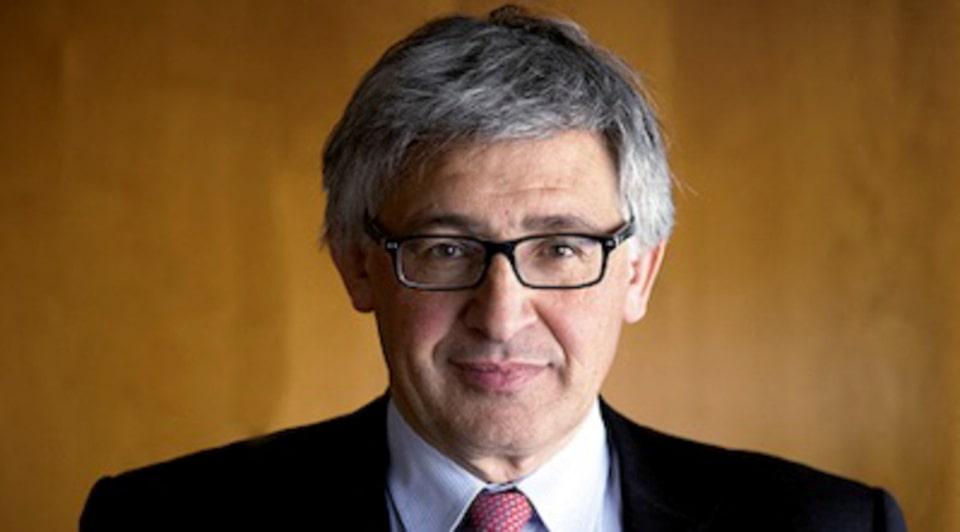
MILAN, Jan 29 (Reuters) - The euro zone needs to be self-sufficient in handling payments and the digital euro will provide the necessary infrastructure for retail transactions, European Central Bank Executive Board Member Piero Cipollone said on Thursday. The ECB is working on a digital version of the single currency to maintain the central bank's core role in an increasingly digital economy and defend the euro zone's monetary sovereignty. Sign up here. Speaking remotely at a conference in Italy, Cipollone said the digital euro scheme, together with two other projects the ECB is working on for wholesale payments, will give the euro zone the tools it needs "to keep its house in order." "That can give (the euro zone) more strength," he said, when asked if the digital euro could boost the currency bloc's position vis-a-vis the United States. The ECB is betting the digital euro, which euro zone residents will be able to use both in shops and online, will help counter the spread of stablecoins, digital assets which are pegged mainly to the U.S. dollar. "Stablecoins only pose a danger if the payments system in Europe can't meet users' needs," Cipollone said. "If we cover all use cases I don't see why people should go for a rather more complex option." The ECB's decision to structure the digital euro to provide both wholesale and retail payments services in online and offline mode, has been criticised by some for potentially putting it in direct competition with commercial lenders. But Cipollone said the ECB's scheme would build the single payments infrastructure the euro zone lacks at the moment, while keeping commercial banks central to the payments system, retaining sole access to their clients' payments data. Banks will provide the digital wallet where people keep their digital euros, Cipollone said, and payments can be made through an application on users' mobile phones. https://www.reuters.com/business/digital-euro-can-help-make-euro-zone-self-sufficient-payments-ecbs-cipollone-2026-01-29/
2026-01-29 14:37
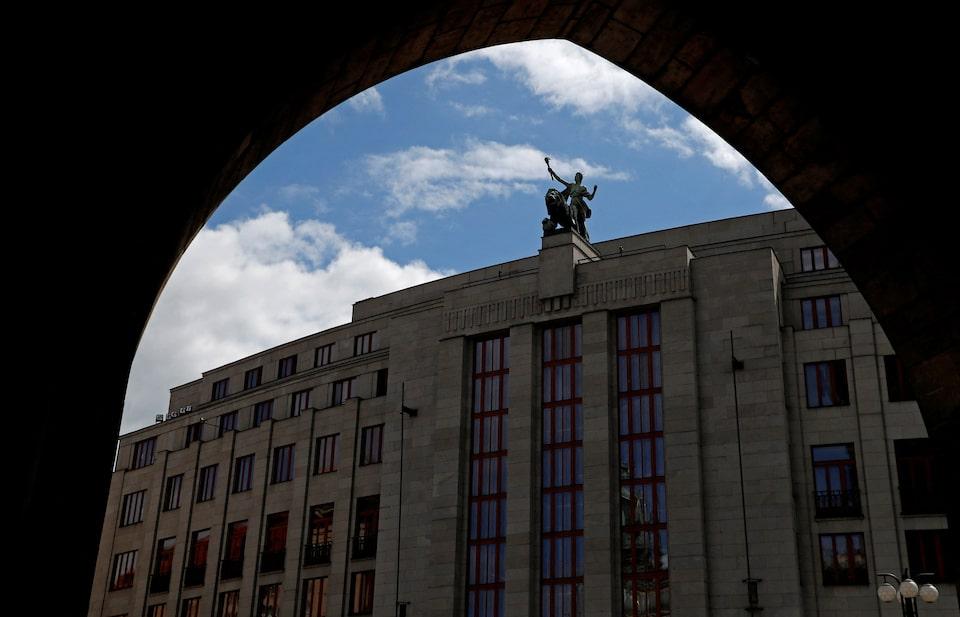
Rate decision due Feb 5 at 2:30 p.m. (1330 GMT) Bank to comment on the decision at 3 p.m. All 16 analysts see main rate on hold at 3.50% Median forecast sees rate at 3.50 % at end-2026 (pvs 3.50%) Some analysts say a rate cut this year is possible PRAGUE, Jan 29 (Reuters) - The Czech National Bank (CNB) is likely to hold interest rates steady when it meets next week and may do so throughout 2026, a Reuters poll of analysts showed on Thursday, but the chances of more policy easing are growing. The central bank has been on hold since last cutting interest rates in May and has halved its main rate (CZCBIR=ECI) , opens new tab to 3.50% in an easing cycle that started in 2023. Sign up here. While inflation is around a 2% target, policymakers have been wary of elevated services price growth and rising wages. At its last meeting in December, though, the board shifted its view of risks to meeting inflation targets to neutral, from inflationary. Inflation also ended 2025 below expectations and is likely to fall below target after a new populist government took measures to cut energy bills. Central bank Vice-Governor Jan Frait told Reuters this week that the bank could discuss slight monetary easing at its February 5 policy meeting due to external factors that may lead large central banks to cut rates. In the poll, all 16 analysts forecast the bank to stay on hold next week, while the median forecast still saw unchanged rates this year. But of those giving an outlook, at least five saw a cut coming as soon as the second quarter - after no forecasts for any move in the last poll. Some who predicted stability said a lowering may be possible. "Given the change in the CNB's communication, a cut cannot be ruled out this year," Komercni Banka analysts said in a report on Thursday. But its base case remained stability this year: "In addition to... anticipated fiscal expansion, the unexpectedly strong economy is another reason why the CNB is unlikely to cut rates." LOWER INFLATION RISKS Markets began pricing in chances of lower rates after December inflation stayed at 2.1% year-on-year. Policymakers will be watching developments in services prices - which have been rising almost 5% - at the start of the year, when companies revise price lists. Central bank board member Jan Prochazka said in a Bloomberg interview on Wednesday he was inclined to wait for more data before another cut. Central bankers usually look past the direct impact of regulatory price changes, like in energy, but ING economist David Havrlant said lower utility bills would seep into other areas, and that disinflationary pressures would leave the real interest rate too restrictive. For Adam Ruschka, a J&T Banka economist who forecast a cut in the second quarter, January inflation due out on the morning of the board meeting could already prompt a move next week. "Otherwise, they will try to hold (rates), but as low inflation numbers will come, the pressure (to lower rates) will be too big," he said. https://www.reuters.com/business/czech-rates-likely-stay-hold-next-week-debate-over-cut-starts-2026-01-29/