2025-09-03 10:44
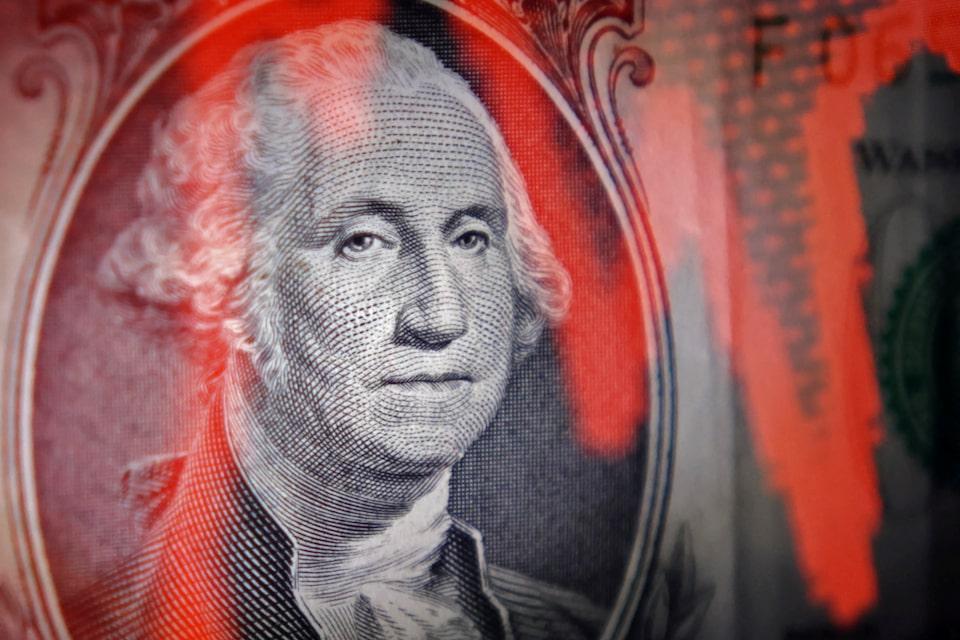
BENGALURU, Sept 3 (Reuters) - The U.S. dollar will weaken over coming months as market participants ponder the Federal Reserve's future independence and how many more rate cuts it may deliver, a Reuters survey of foreign exchange strategists showed on Wednesday. The greenback, down nearly 10% against a basket of major currencies this year, has been the worst performer among them. (.DXY) , opens new tab The short-dollar trade has dominated FX markets since late March, according to Commodity Futures Trading Commission data. Sign up here. Worries about the inflationary impact of tariffs, an enormous tax cut and spending law and repeated White House attempts to interfere with the world's most powerful central bank have reversed the dollar's fortunes after a multi-year run of strength. A weaker dollar trend will likely persist in the near-term as interest rate futures show markets fully pricing in two Fed cuts this year and possibly another in early 2026. Nearly 80% of respondents, 39 of 50, said net-short bets would either rise further by end-September or remain around current levels, according to the August 29-September 3 Reuters poll. The remaining 11 said short bets would decrease. No one chose "a reversal to net-longs." "A big risk is the fact everybody seems to think the dollar is likely to weaken, which means that positioning is all one way. That's sometimes a factor that should make us a little bit more wary," said Jane Foley, head of FX strategy at Rabobank. "If we get a lot of inflationary news from the U.S., there certainly would be room for pullbacks in favor of the dollar." FX strategists in Reuters polls, who have broadly accurately predicted the dollar's slide this year, forecast the euro , currently $1.17, to climb steadily to a median $1.18 and $1.19 in three and six months respectively. It was then predicted to trade at $1.20 in a year: the highest survey median since September 2021. In the meantime, U.S. President Donald Trump's repeated pressure on Chair Jerome Powell to slash rates to 1% and his efforts to oust Fed Governor Lisa Cook over mortgage fraud allegations are testing the boundaries of presidential power. Trump’s Fed board nominee Stephen Miran, chair of the Council of Economic Advisers, has called for sharply lower rates, argued tariffs have little inflationary impact, and proposed Fed governance reforms that would give the president greater control, including the power to dismiss its leadership at will. "The dollar will face some pressure to soften into the end of the year and it's going to be a function of two things: one, a resumption of the Fed's rate-cutting cycle and second, the market's questions with regard to the Fed's independence," said Paul Mackel, head of FX research at HSBC. (Other stories from the September foreign exchange poll) https://www.reuters.com/business/fed-rate-cuts-doubts-over-independence-keep-us-dollar-under-pressure-2025-09-03/
2025-09-03 10:32
MUMBAI, Sept 3 (Reuters) - The Indian rupee ended higher on Wednesday even as most Asian currencies fell, with market participants betting on the unit staging a recovery in the near term, while weakness in the dollar index and strong local shares also aided sentiment. The currency ended at 88.0700, up 0.1% from Tuesday's close of 88.1550. It hit an intraday high of 87.9900 before declining below the 88-mark. Sign up here. The rupee, which is among the worst-performing Asian currencies this year, hit an all-time low of 88.33 per dollar on Monday on outflows as well as concerns from the fallout of U.S. tariffs. A Reuters poll of currency analysts on Wednesday showed that the rupee will avoid a further dramatic slide, with a median forecast of 88.04 per dollar by the end of this month. However, over one-third expect the currency to drift towards 90 as long as hefty U.S. tariffs on Indian goods stay in force. The punitive 50% U.S. tariffs, among the steepest in the world, are threatening to curb trade and capital inflows. The rupee has fallen about 3% so far this year, weighed down by net foreign equity outflows of $15 billion, as ties with the U.S. remain strained over tariffs and New Delhi's purchases of Russian oil. "The rupee is expected to trade with a negative bias," said Amit Pabari, managing director of CR Forex. Still, the pair will face resistance near 88.40, while support remains at 87.50. Stalled trade negotiations with the U.S. and heightened political uncertainty in major global economies are likely to continue being a drag on the currency, Pabari said. Most Asian currencies weakened on Wednesday after a global bond market selloff deterred investors, with the Korean Won leading the losses. India's benchmark Nifty 50 index ended 0.6% higher, while the dollar index was down 0.2% at 98.215 at 1530 IST. https://www.reuters.com/world/india/rupee-up-second-day-bets-short-term-rebound-despite-tariff-related-risks-2025-09-03/

2025-09-03 10:30
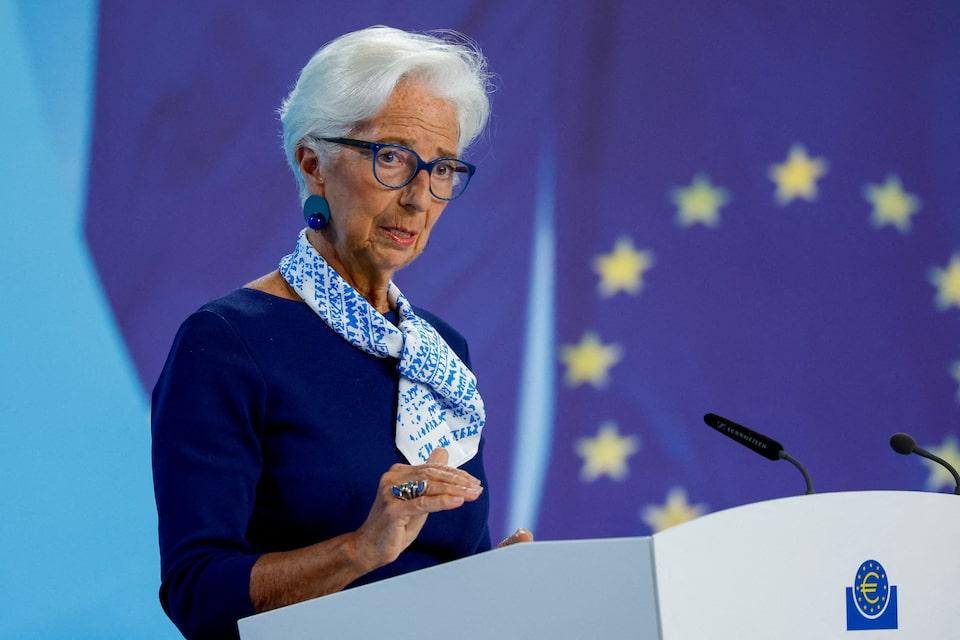
Lagarde says EU should seek 'safeguards' from foreign issuers Italian regulator says stablecoins not legal tender FRANKFURT, Sept 3 (Reuters) - European Union legislators should demand safeguards and robust equivalence regimes from foreign issuers of stablecoins to prevent the risk of runs on reserves held in the EU, European Central Bank President Christine Lagarde said on Wednesday. The EU has put in place one of the world's strictest regimes on crypto assets, requiring that stablecoins, which are pegged to an official currency, be fully backed by reserves. Sign up here. But Lagarde said legislators should hold companies that issue stablecoins both in the EU and abroad to the same, high standards. "European legislation should ensure that such schemes cannot operate in the EU unless supported by robust equivalence regimes in other jurisdictions and safeguards relating to the transfer of assets between the EU and non-EU entities," she told a regulatory conference. "This also highlights why international cooperation is indispensable. Without a level global playing field, risks will always seek the path of least resistance," Lagarde said. Speaking later at the same event, Italian market regulator Federico Cornelli said EU rules had to make clear that cryptocurrencies, including stablecoins, could not be considered legal tender in any financial transaction. "Only the euro issued by our ECB is legal tender and this must be made very clear to all citizens," said Cornelli, a commissioner at Italy's market watchdog CONSOB. The ECB is the lender of last resort for euro zone banks and their chief regulator. It is also responsible for financial stability in the EU, along with national authority. Lagarde noted that the EU's Markets in Crypto-Assets Regulation (MiCAR) allowed holders of a stablecoin issued both in the bloc and abroad to liquidate it wherever they saw fit. This means they would likely choose the EU in the event of a run, in light of its stricter requirements on reserves. But reserves held in the EU may prove too low during such a fire sale. "In the event of a run, investors would naturally prefer to redeem in the jurisdiction with the strongest safeguards, which is likely to be the EU, where MiCAR also prohibits redemption fees," Lagarde said. "But the reserves held in the EU may not be sufficient to meet such concentrated demand." https://www.reuters.com/business/finance/ecbs-lagarde-says-eu-should-close-loopholes-stablecoin-regulation-2025-09-03/
2025-09-03 10:00
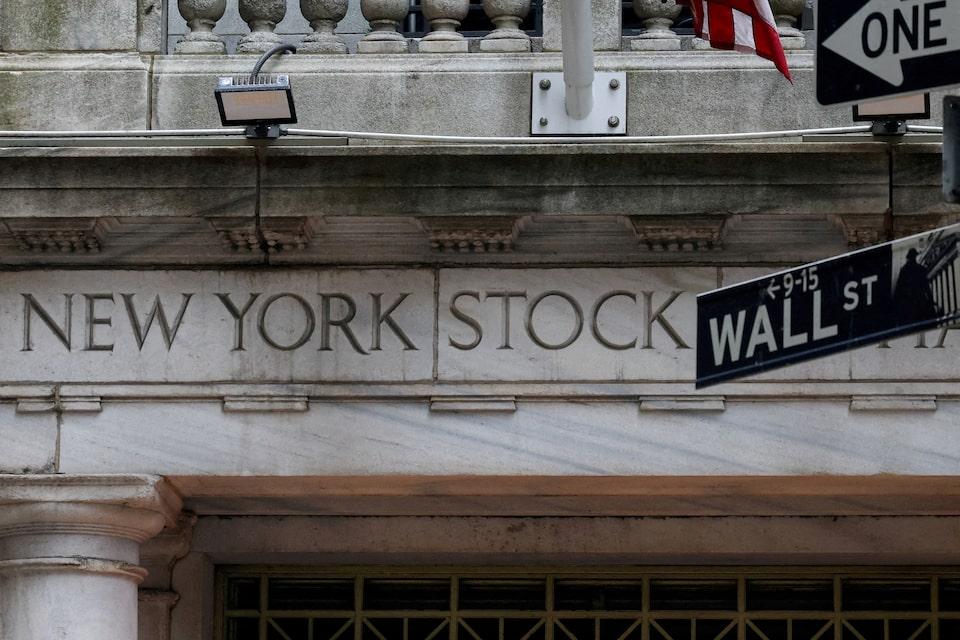
Doubts over tariff legality spark risk-off move across markets Yields surge on fiscal worries, concerns over Fed independence Stocks wobble on Treasury yield surge, gold rises NEW YORK, Sept 2 (Reuters) - Investors are bracing for more volatility after Wall Street’s summer lull gave way when markets reopened from the Labor Day unofficial end-of-summer holiday on Tuesday. With September historically the worst month for the U.S. stock market, fears over Federal Reserve independence and President Donald Trump's tariff uncertainty were at the fore, converging to jolt stocks and bonds. Sign up here. Market participants have long fretted over frothy valuations in stocks and corporate bonds, even as signs of a slowing economy piled up this summer. At the same time, an escalating spat between Trump and the Federal Reserve raised concerns that political strong-arming of the U.S. central bank could rattle the U.S. Treasury market, even as markets had appeared to take that in stride in recent weeks. On Tuesday, those simmering anxieties boiled over, reignited by fresh doubts about the legality of Trump's tariffs that emerged over the holiday weekend. That pushed stocks and bonds down, with many in the market anticipating more turbulence ahead of a pivotal jobs report on Friday. "We have some uncertainty around these tariffs, and that's the trigger right now I think for the risk-off sentiment," said Seth Hickle, portfolio manager at Mindset Wealth Management. "The concern is that the bond vigilantes will awaken and cause some chaos in the bond market, given the fact that we may have to send some of this tariff money back overseas," he said, referring to bond investors who punish bad policy by selling government debt. The CBOE Market Volatility index (.VIX) , opens new tab touched its highest mark in over four weeks, while the S&P 500 (.SPX) , opens new tab stock index dropped 0.7% on Tuesday. Long-dated Treasury yields spiked amid a global bond selloff. Benchmark 10-year Treasury yields, which rise when bond prices drop, surged by nearly five basis points to 4.269%, while 30-year yields surged to their highest since mid-July. Rising yields can hurt stocks as bond returns become more attractive. Investors often look at 10-year yields of about 4.5% as a level at which demand for stocks wobbles. They also tend to support the dollar , which staged a rebound from recent weakness on Tuesday. Mark Luschini, chief investment strategist at Janney Montgomery Scott, said the surge in 30-year Treasury yields to nearly 5% was "helping to put some pressure on the tape." The court ruling against Trump's tariffs "has obviously put a little consternation in terms of what it means for the collection of tariff revenues here in the U.S. and help toward paring back our budget deficit," Luschini said. SEPTEMBER CHILLS Seasonal weakness may stem in part from investors returning from summer holidays cleaning up portfolios while also making tax and other adjustments ahead of the end of the year. Over the past 35 years, September has ranked as the worst-performing month of the year for the S&P 500, with an average decline of 0.8% during that period, according to the Stock Trader's Almanac. The index has fallen in 18 of those 35 Septembers, the only month to have been down more times than up in that period, according to the Almanac. Christian Hoffmann, head of fixed income and portfolio manager at Thornburg Investment Management, said a risk-off move was largely expected this month, with heavy debt issuance in credit markets on Tuesday exacerbating the selloff in government debt as investors reallocated funds to corporate debt. "Our bias has been to be lightening up on risk through the summer as valuations ground tighter," he said. Corporate bond spreads -- the premium over U.S. Treasury yields that highly rated companies must pay to borrow -- hit their tightest-ever at 75 basis points last month, according to the ICE BofA Corporate Index. "Given the lack of volatility that we've been seeing and where spread levels were, it seemed like the more likely case was to have some more volatility," Hoffmann said. Friday's August jobs data will be crucial for investors to assess how aggressively the Fed will cut rates in the coming months, although continued inflation pressures could limit its ability to come to Wall Street's rescue. Investors also will be watching this week's confirmation hearing for Stephen Miran, a close Trump ally and his pick for a temporary Fed post, replacing Adriana Kugler who resigned on August 1. His appointment comes as Trump escalates attacks on the Fed, including relentless criticism of Chair Jerome Powell for not lowering interest rates, and a push to remove Governor Lisa Cook. "The market sees the possibility of a less independent central bank and there's going to be implications because of that," said Josh Chastant, portfolio manager for public markets at GuideStone Funds. Investors also look for alternative assets that can help protect portfolios in volatile markets. Gold bullion rose to a record high near $3,540 an ounce on Tuesday. “This year, gold and bitcoin are both up, not one or the other,” said Aakash Doshi, head of gold strategy at State Street Investment Management. The two assets – one historically viewed as a hedge, the other as a high-volatility strategy - converge when it comes to the U.S. dollar, he noted. “Both offer an alternative to fiat currencies and de-dollarization.” https://www.reuters.com/business/investors-edge-september-reset-exposes-simmering-us-market-risks-2025-09-02/
2025-09-03 07:58
BERLIN, Sept 3 (Reuters) - Deutsche ReGas on Wednesday said it had signed long-term agreements with German chemical producer BASF (BASFn.DE) , opens new tab and Norway's energy major Equinor (EQNR.OL) , opens new tab for liquefied natural gas regasification capacity at its terminal in Mukran on the Baltic Sea. "We are proud to support the energy security of one of the leading chemical companies and to work with the leading supplier of natural gas for Germany and Europe," Deutsche ReGas CEO Ingo Wagner said in a statement. Sign up here. Terms of the agreements were not disclosed. An Equinor spokesperson confirmed that the company has booked capacity at the Mukran terminal, for shipments from its Hammerfest LNG plant in northern Norway and volumes sourced from third parties. https://www.reuters.com/business/energy/deutsche-regas-secures-lng-regasification-deals-with-basf-equinor-2025-09-03/
2025-09-03 07:45
Sept 3 (Reuters) - Germany's chemical industry association on Wednesday said its capacity utilization hit its lowest level in more than 30 years in the second quarter as sales and prices declined on uncertainties around U.S. tariffs. In the April-June period, Germany's chemical industry was running at only 72% of its full production capacity, the lowest level since 1991, and well below the level required to break even, VCI said. Sign up here. The VCI association said pull-forward effects in business with the United States waned throughout the April-June period, as exports had been brought forward in anticipation of tariffs on goods from Europe. European chemical manufacturers are grappling with renewed challenges as U.S. tariffs disrupt global trade, leading customers to postpone purchases and weakening demand in a sector still recovering from the 2022 energy crisis. Overall production in Germany's chemicals sector including pharmaceuticals fell 3.8% quarter-on-quarter, contrasting with the January-March quarterly increase of 6.7%. "Weak demand, declining sales, and production far below pre-crisis levels - this is the current reality in our industry and also in large parts of German industry," VCI managing director Wolfgang Grosse Entrup said in a statement. The sector, the third-largest industry in Europe's economic powerhouse Germany, can be seen as a bellwether for the broader economy as it produces materials used in sectors ranging from automotive and construction to agriculture and textiles. Pharmaceutical output fell by 5.6% compared with the previous quarter. On an annual comparison, overall quarterly production was down 3.1%, or 5.1% when pharmaceuticals were excluded, and revenue fell by 2.7% compared with the same period last year. The industry maintained its 2025 guidance for production volumes including pharmaceuticals to fall by 2% and industrial sales by 1%. https://www.reuters.com/sustainability/boards-policy-regulation/german-chemical-sector-running-lowest-capacity-more-than-30-years-vci-says-2025-09-03/