2025-09-03 07:45
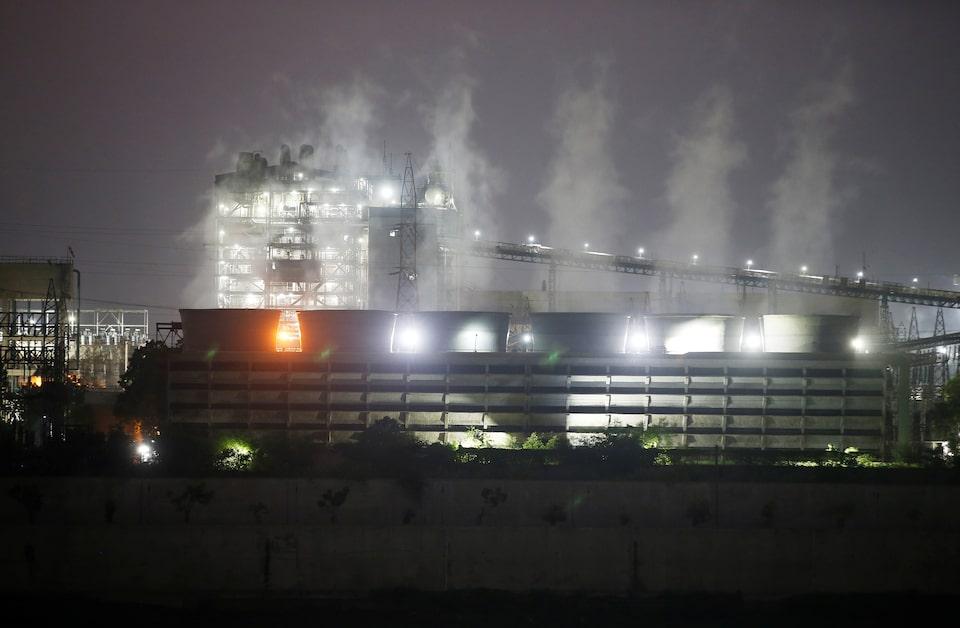
NEW DELHI, Sept 3 (Reuters) - India will test the installation of battery storage systems at some coal power plants, as the country grapples with integrating massive solar capacity while maintaining reliable electricity supply, an advisor to the country's power ministry said. The concept addresses a critical challenge facing India's power grid, where thermal plants must ramp down during peak solar hours but maintain capacity for evening demand when solar generation drops. Sign up here. The Central Electricity Authority (CEA) has been working on guidelines for coal-based power plants and technical minimum load requirements as the country rapidly expands renewable energy capacity. India is aiming to expand its non-fossil fuel capacity to 500 GW by 2030, but coal remains central to its energy security. The government plans to increase coal-based capacity by 97 GW by 2035, taking the total to around 307 GW to ensure round-the-clock power. "At times there are only two choices. Either you shut down the coal plant (during excess solar generation) or lose the thermal capacity in the evening, which we don't want," CEA chairman Ghanshyam Prasad told Reuters on the sidelines of PowerGen India 2025 event in New Delhi. "We are just trying this as an experiment," he said, adding that the country's top coal power generator NTPC (NTPC.NS) , opens new tab had been tasked with testing this at some plants and given funding support. The batteries would allow the coal plants to capture excess energy and dispatch it to the grid at a later point when needed, allowing the plants to operate at a stable rate, saving costs and extending their lives, CEA's Prasad said. Recently, NTPC floated a tender for setting up of 1.7 GW of battery storage across 11 coal plants. https://www.reuters.com/sustainability/boards-policy-regulation/india-test-battery-storage-coal-plants-balance-grid-solar-power-surges-2025-09-03/
2025-09-03 07:12
MOSCOW, Sept 3 (Reuters) - Russia will help China overtake the United States as the world's biggest producer of nuclear power, the chief of Russia's Rosatom state nuclear corporation said in comments broadcast on state TV on Wednesday after talks in Beijing. The United States operates the world's largest network of nuclear reactors, with nearly 97 gigawatts (GW) of installed capacity. Sign up here. China is racing to build dozens of reactors though and had 53.2 GW of operating nuclear power reactor capacity as of April 2024, according to the U.S. Energy Information Administration. "China has ambitious plans for the development of atomic energy. The task has been set to catch up and surpass the United States in installed capacity, which means reaching a capacity of more than 100 gigawatts," Alexei Likhachev, the Rosatom chief, told Russian state television. Asked by state television if Russia would help China in that target, Likhachev said: "Of course. We will help. We are already helping." Russia has already helped build four nuclear reactors in China and is building four more and China needs a large amount of uranium and nuclear fuel for its ambitious plans, Likhachev said. As a result China will need to develop a new generation of closed nuclear fuel cycle reactors based on Russian technology, he said. https://www.reuters.com/business/energy/russia-says-it-will-help-china-overtake-united-states-nuclear-power-2025-09-03/

2025-09-03 07:00
Sept 3 (Reuters) - Shell (SHEL.L) , opens new tab will not resume construction of a biofuels facility at its Shell Energy and Chemicals Park in Rotterdam after an in-depth evaluation found it would not be competitive, the company said on Wednesday. The project's construction was paused in July 2024 due to weak market conditions. Shell in September 2021 had approved the development of the plant to produce 820,000 metric tons per year and had planned to bring it online in 2025. Sign up here. "As we evaluated market dynamics and the cost of completion, it became clear that the project would be insufficiently competitive to meet our customers' need for affordable, low carbon products," said Machteld de Haan, Shell's Downstream, Renewables and Energy Solutions President. "This was a difficult decision, but the right one, as we prioritise our capital towards those projects that deliver both the needs of our customers and value for our shareholders," Haan said. Along with other major oil companies, Shell has been shifting away from renewable projects and back to its traditional expertise of fossil fuel production. https://www.reuters.com/sustainability/climate-energy/shell-scraps-plans-biofuels-facility-rotterdam-2025-09-03/
2025-09-03 06:55
Focus shifts to U.S. jobs data, due on Friday Gold hit record high of $3,546.99/oz earlier in the session SPDR Gold Trust holdings rise 1.32% on Tuesday Sept 3 (Reuters) - Gold prices extended their record run on Wednesday, as persistent market uncertainty and growing investor confidence that the U.S. Federal Reserve will cut interest rates this month lifted demand for the safe-haven metal. Spot gold was up 0.1% at $3,536.58 per ounce, as of 0645 GMT, after hitting an all-time of $3,546.99 earlier in the session. U.S. gold futures for December delivery gained 0.3% to $3,602.40. Sign up here. Adding to market uncertainty and potential trade tensions, U.S. President Donald Trump's administration said it will ask the Supreme Court for an expedited ruling on tariffs that a U.S. appeals court found illegal last week. "The Supreme Court decision has seemingly introduced a lot of uncertainty into the market because they could radically change what the macro landscape looks like if these decisions don't go the president's way," said Ilya Spivak, head of global macro at Tastylive. "The attempt at compromising Fed independence to some extent, that's a very big deal as well. The bias for gold is very clearly higher, momentum here seems rather one-sided." Trump has been exerting relentless pressure on the Fed to cut interest rates and publicly discussed firing Fed Chair Jerome Powell. Upping this battle, Trump last month attempted to fire Fed Governor Lisa Cook, setting off a critical legal test over the Fed's ability to function without political interference. U.S. rate futures are pricing in a 92% chance of a 25-basis-point Fed rate cut at the end of the two-day policy meeting on September 17, according to CME Group's FedWatch tool. Non-yielding gold typically performs well in a low-interest-rate environment. SPDR Gold Trust , the world's largest gold-backed exchange-traded fund, said its holdings rose 1.32% to 990.56 tons on Tuesday, the highest since August 2022. Investors are now looking forward to the U.S. non-farm payrolls data, due on Friday, to determine the size of the Fed's potential rate cut later this month. Elsewhere, spot silver eased 0.1% to $40.84 per ounce, after hitting its highest point since September 2011 in the previous session. Platinum fell 0.6% to $1,395.03 and palladium slipped 0.4% to $1,129.58. https://www.reuters.com/world/india/gold-prices-extend-record-run-strong-safe-haven-inflows-2025-09-03/

2025-09-03 06:55
Sept 3 (Reuters) - Brazil's competition watchdog CADE has opened an investigation into Anglo American's (AAL.L) , opens new tab plan to sell its nickel operations in the country to a unit of Hong Kong-listed MMG (1208.HK) , opens new tab for up to $500 million, the Financial Times reported on Wednesday. The probe follows a complaint from CoreX Holding, a global industrial group and direct competitor in the region, the report said, citing an unidentified source. Sign up here. "Based on a complaint received, an Administrative Procedure for Investigating an Act of Economic Concentration was instituted," the FT quoted CADE as saying. However, CADE noted that the launch of an investigation does not necessarily mean the deal will be blocked, the report added. Anglo declined to comment, while CoreX and Brazil's competition authority did not respond to Reuters' request for comment. In February, the London-listed miner agreed to sell its nickel business in Brazil. Anglo demerged its platinum business in May and in July said that its nickel and steelmaking coal assets were discontinued operations, with their sale agreed but not yet completed. The company has been selling or spinning off non-core assets to focus on copper and iron ore since bigger rival BHP's (BHP.AX) , opens new tab failed takeover attempt last year. Anglo is also considering options for its loss-making De Beers diamond unit, including a possible sale or listing. https://www.reuters.com/sustainability/brazil-opens-probe-into-anglo-americans-500-million-nickel-business-sale-ft-2025-09-03/
2025-09-03 06:52
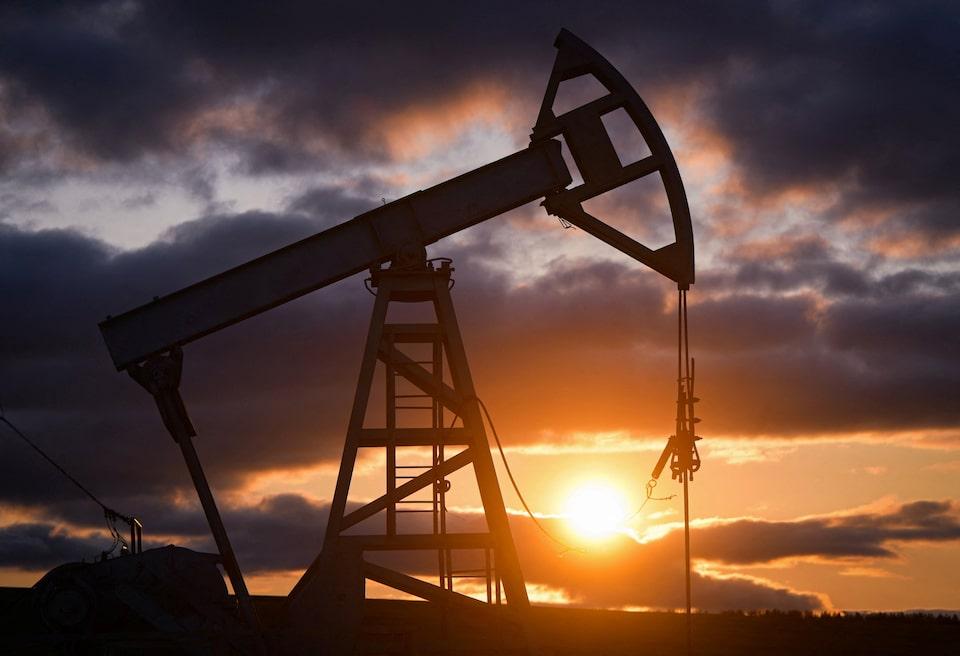
SINGAPORE, Sept 3 (Reuters) - Oil prices eased in Asia on Wednesday but held near one-month highs on the back of new U.S. sanctions on a network of shipping companies and vessels, while traders looked ahead to an OPEC+ meeting over the weekend. Brent crude fell 16 cents, or 0.2%, to $68.98 a barrel by 0645 GMT. U.S. West Texas Intermediate crude dipped 13 cents, or 0.2%, at $65.46 a barrel. Sign up here. The benchmarks settled up more than 1% in the previous session after the U.S. imposed new sanctions on a network of shipping companies and vessels led by an Iraqi-Kittitian businessman for smuggling Iranian oil disguised as Iraqi oil. Oil futures continue to be supported by the fresh sanctions which signal the possibility of tighter supply ahead, said Priyanka Sachdeva, senior market analyst at Phillip Nova. "Structural volatility persists, with sanctions on Iran and geopolitical flashpoints shaping the risk premium and keeping crude anchored near recent strength," said Sachdeva. The market was also waiting for the results of a meeting of eight members of the Organization of the Petroleum Exporting Countries and their allies on September 7. Analysts say the group is unlikely to make further changes to production for now. "Geopolitical risks continue to influence oil price trends. The market is eyeing the upcoming OPEC meeting and remains on edge for further increases leading to an oversupply," said Emril Jamil, senior analyst at LSEG. Also supporting prices, U.S. crude oil stockpiles were expected to have fallen last week, along with distillate and gasoline inventories, a preliminary Reuters poll showed on Tuesday. Three analysts polled by Reuters ahead of weekly inventory data estimated on average that crude inventories fell by about 3.4 million barrels in the week to August 29. But soft economic data kept prices capped. U.S. manufacturing contracted for a sixth straight month as President Donald Trump's tariffs hit business confidence and economic activity, weighing on the demand outlook for oil. https://www.reuters.com/business/energy/oil-dips-holds-near-one-month-high-us-sanctions-2025-09-03/