2025-09-03 05:07
NEW DELHI, Sept 3 (Reuters) - Widespread flooding has hit several parts of northern India, officials said, with more thunderstorms forecast for Wednesday as local media reported that 10,000 people were evacuated from the river banks in capital Delhi. The monsoon season in India has been particularly intense this year, killing at least 130 people in August alone in north India, wiping out villages and destroying infrastructure. Sign up here. The latest round of flooding has hit northern Jammu and Kashmir, Himachal Pradesh, Uttarakhand and Punjab, where the Chenab and Tawi rivers have risen above the danger mark at several spots. The swollen rivers have triggered landslides and damaged many roads, disconnecting parts of the mountainous regions of Jammu and Himachal from the rest of India. A woman and her daughter were killed after rains brought down a wall in their house in Jammu and Kashmir's Rajouri district, a regional official said. The India Meteorological Department warned of heavy to very heavy rain in the region on Wednesday, with more downpours expected in Uttarakhand and Uttar Pradesh. The Central Water Commission said the swollen Yamuna had breached its danger mark on Tuesday in Delhi. Local media reported that nearly 10,000 people had been evacuated to relief camps set up by the government along the main highways as a precautionary measure for those living in low-lying areas. Residents living along the Yamuna in Delhi were evacuated in 2023 as well after floodwaters entered their homes and the river hit its highest level in 45 years. Many tourist spots in Himachal Pradesh have been hit by landslides in recent weeks, as raging rivers damaged infrastructure. Three people were killed in Mandi district in the latest landslide, state Chief Minister Sukhvinder Singh Sukhu said on Wednesday, and two more were feared trapped under the debris. Educational institutions were ordered shut, authorities said, asking people to remain indoors due to flood warnings. In neighbouring Punjab, the government said 30 people have been killed and nearly 20,000 evacuated since August 1. Water gushing through the plains in India's breadbasket Punjab state has destroyed 150,000 hectares of crops, the government said on Tuesday. Continuous rain prompted authorities to release water from dams, which has caused flooding in plains in India and Pakistan in recent days. https://www.reuters.com/sustainability/climate-energy/heavy-rain-lashes-northern-india-yamuna-river-breaches-danger-mark-delhi-2025-09-03/

2025-09-03 05:06
Fiscal worries send super long bond yields higher Investor await jobs report for cues US rate outlook Dollar finds support as sterling, yen under pressure Gold races above $3,500 to record peak TOKYO, Sept 3 (Reuters) - A global slide in long-dated bonds extended into Asia on Wednesday, with Japanese yield hitting a record high while gold scaled a new peak as mounting concerns over government debt and economic growth rattle investors. Bond yields especially on super-long-dated 30-year tenors have been soaring around the world, with investors anxious about the scale of debt in countries from Japan to the United States. Sign up here. The 30-year Japanese government bond (JGB) yield hit an unprecedented 3.255%, following a run-up in similarly dated gilts and Treasuries on Tuesday. European futures indicated a higher open but much will depend on whether the bond selloff takes a breather as focus remains on the potential collapse of the French government and UK's ability to stabilise its finances. The pan-region Euro Stoxx 50 futures were up 0.36%, while German DAX futures gained 0.25%. FTSE futures were flat. Ben Bennett, Asia Head of Investment Strategy at L&G, said huge fiscal deficits are weighing on long-dated bonds as investors have to absorb significant issuance. "I think higher rates in Japan is also a major factor, as global bond markets no longer benefit from the Japanese hunt for yield. It’s a perfect storm for long-dated bonds and a headache for governments." Japan's Nikkei (.N225) , opens new tab fell 0.69% as worries about the nation's financial health returned after Prime Minster Shigeru Ishiba's close aide said he intended to resign from his post. MSCI's broadest index of Asia-Pacific shares outside Japan (.MIAPJ0000PUS) , opens new tab was down 0.4%. Attention now turns to services data in Europe for indications of how countries are weathering the unpredictable tariff policies of U.S. President Donald Trump and to key U.S. labour data on Friday for signals on rate cuts by the Federal Reserve. Trump on Tuesday said his administration will ask the Supreme Court for an expedited ruling on tariffs that an appeals court found illegal last week. The court allowed for the tariffs to stay in place until October 14. U.S. manufacturing contracted for a sixth straight month in August as factories grappled with the impact of import tariffs, data showed on Tuesday. Purchasing managers indexes for the euro zone and Britain are due for release on Wednesday. U.S. nonfarm payrolls on Friday will be preceded by data on job openings and private payrolls, giving clarity on the labour market that has become the focus of policy debate at the Fed. Markets widely expect the Fed to lower interest rates later this month, pricing in an 89% chance of a 25-basis-point cut. The 30-year JGB yield jumped 8 basis points (bps) to a record high of 3.28% as markets brace for a sale of the debt on Thursday. The yield on the 30-year Treasury was last at 4.985%, just below the psychologically important 5% mark it last hit mid-July. "A lot hinges now on the August U.S. jobs report this Friday," said Vasu Menon, managing director of investment strategy at OCBC Bank. "If it comes in significantly below market expectations, this could cause long-end yields to ease slightly although we may not see a big move lower until we get the U.S. August CPI figures on 11 September." The dollar found its footing, rising 0.3% to 148.79 yen. Sterling eased 0.2% to $1.3367 , while the euro last bought $1.163. The pound slumped 1.1% in the previous session and 30-year gilt yields hit their highest since 1998, underscoring investor angst about the Labour government's ability to exercise fiscal constraint. British finance minister Rachel Reeves is expected to raise taxes in her autumn budget to remain in line with her fiscal targets, while in France Prime Minister Francois Bayrou looks set to lose a confidence vote as opposition parties balk at his cuts to government spending. Gold prices extended their record run on Wednesday, holding firm above the key $3,500 level and were last at $3,537.81 per ounce. U.S. crude eased 0.2% to $65.41 a barrel. https://www.reuters.com/world/china/global-markets-wrapup-2-2025-09-03/
2025-09-03 04:43
SINGAPORE, Sept 3 (Reuters) - Economists have raised their forecasts for Singapore's growth this year and expect monetary policy to be held steady at a review next month, a survey of forecasters by the Monetary Authority of Singapore showed on Wednesday. Geopolitical tensions were cited as a top downside risk for the city-state, while an easing of trade tensions and a sustained tech cycle upturn were seen as potential upside risks, the responses from 20 economists for the September quarter survey found. Sign up here. The median forecast for growth this year was raised to 2.4% from 1.7% in the June quarter survey. In August, the government raised its forecast range for 2025 growth to 1.5% to 2.5% due to a better-than-expected first half performance. Economists expected year-on-year growth of 0.9% in the third quarter, the survey found. The MAS held policy settings steady at a review in July, after easing in January and April, and the survey found a majority of economists expected no change to policy at the next review in October. Policy was also seen on hold at the January 2026 review. The median forecasts for core inflation, which excludes private road transport and accommodation costs, edged down to 0.7% from 0.8% in the Q2 survey, while the median forecast for headline inflation was steady at 0.9%, the survey showed. At a policy review in April, the MAS lowered its forecast range for core inflation to 0.5% to 1.5% in 2025. In March and July, the annual core inflation rate was 0.5%, the lowest rate in more than three years. The survey published on Wednesday was sent out on August 12, the day that data showed the economy grew an annual 4.4% in the second quarter and the government revised its growth forecast. (This story has been corrected to remove an extraneous word in paragraph 7 and show that the core rate was also at 0.5% in March) https://www.reuters.com/world/asia-pacific/singapore-mas-survey-shows-economists-lift-gdp-forecast-see-steady-policy-2025-09-03/
2025-09-03 04:42
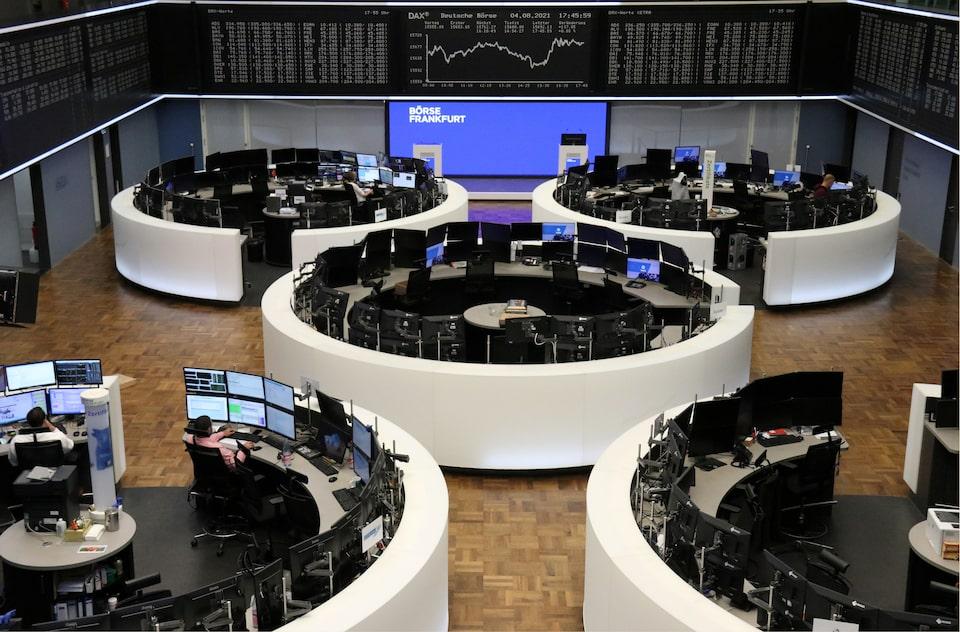
A look at the day ahead in European and global markets from Rocky Swift A day after U.S. President Donald Trump re-emerged in the Oval Office to dispel rumours about his health, Chinese President Xi Jinping made a defiant show of strength at his nation's largest ever military parade. Sign up here. Trump returned from days of public absence to face court challenges to his tariff policies, immigrant deportations, and ability to fire any public official he pleases. The optics were very different in Beijing, as Xi, Russia's Vladimir Putin and North Korea's Kim Jong Un watched processions of missiles, tanks and drones. Kim even followed the "bring your daughter to work" tradition, showing off to the world his potential successor and evidence that autocracies still have a lot of life in them. Away from geopolitics, bond markets are again sounding alarm over mounting government deficits and debt piles. U.S. Treasury yields ticked up in Asian trading and Japan's 30-year yields reached an all-time high. Sterling sank even lower after a 1.1% slide on Tuesday when 30-year gilt yields soared to the highest since 1998. With stocks shaky and bonds looking perilous, you can always count on gold. The precious metal hit an all-time high of $3,546.99 in the Asian trading day. On the data front, purchasing managers indexes (PMIs) for the euro zone and Britain will lead the way, with July JOLTS figures in the United States to follow as a prelude to key nonfarm payrolls on Friday. Markets are pricing in an 89% chance of a 25-basis-point reduction in the Federal Reserve's key policy rate this month, and weak labour data would increase the odds for more cuts. Equity futures are pointing to openings in positive territory in Europe, with the pan-region Euro Stoxx 50 contracts up 0.34% at 5,317, German DAX futures gaining 0.3% to 23,609, and FTSE futures inching up 0.1% at 9,151. And keeping on the positive theme, Trump sounded a conciliatory note to Xi, posting on social media: "Please give my warmest regards to Vladimir Putin and Kim Jong Un as you conspire against the United States of America." Key developments that could influence markets on Wednesday: - PMIs for Britain, euro zone, Chicago - Bank of England's Sarah Breeden and Catherine Mann speak at separate events - European Central Bank President Christine Lagarde speaks - Euro zone PPI inflation (July) - France: Reopening of 3-month, 4-month, 6-month and 11-month government debt auctions - Germany: Reopening of 7-month, 2-year, 7-year and 10-year government debt auctions - Britain: - Reopening of 1-month, 3-month, 6-month and 3-year government debt auctions - Federal Reserve officials scheduled to speak include St. Louis Fed President Alberto Musalem and Minneapolis Fed President Neel Kashkari - U.S. data durable goods and JOLTS job openings for July https://www.reuters.com/world/china/global-markets-view-europe-2025-09-03/
2025-09-03 03:38
Q2 GDP growth tops forecast, fastest annual pace in nearly 2 years Consumers finally spend after rate cuts Public, private investments add little to growth Weak business investment raises concerns Markets slightly pare back chance of November rate cut SYDNEY, Sept 3 (Reuters) - Australia's economy grew at the fastest annual pace in almost two years in the second quarter as consumers finally started spending after multiple rate cuts, taking over from the government as the main driver of growth. The Reserve Bank of Australia has reduced rates three times since February to 3.6% as inflation cooled, providing some relief to households but frail business investment and global economic uncertainty will likely maintain pressure on the central bank to ease policy further. Sign up here. "Today’s data are an encouraging confirmation that heightened global uncertainty did not take a heavy toll on the economy in Q2," said Sean Langcake, head of macroeconomic forecasting for Oxford Economics Australia. "Still, Q2 may prove to be a high watermark for growth in 2025. The June quarter benefitted from a rebound from a soft Q1, business and consumer confidence are still a little shaky and the labour market appears to be cooling." The Australian Bureau of Statistics on Wednesday reported real gross domestic product (GDP) rose 0.6% in the second quarter, topping market forecasts of a 0.5% gain. That compared with a 0.3% gain in the first quarter. Annual growth accelerated to 1.8%, from 1.4%, the fastest pace in almost two years and slightly stronger than the RBA's forecast of 1.7% by year-end. The forecast-topping GDP figures pushed up the Australian dollar 0.1% to $0.6525, while three-year government bond futures fell 5 ticks to 96.48. Investors pared back the chance for a rate cut in November to 92%, from almost 100% certainty before the data, while the total easing expected dropped to 45 basis points, from about 50 bps. The central bank has so far adopted a gradual and cautious approach to policy easing, having cut in February, May and August after assessing inflation data for each quarter. The focus is now on the labour market, which has eased from full employment levels albeit at a gradual pace. The bureau said household consumption jumped 0.9%, led by discretionary spending, adding 0.4 percentage points to GDP growth. The rate cuts so far have lowered mortgage repayments for households, with government's tax cuts boosting their cashflows. The household savings ratio eased back to 4.2%, from 5.2%, as consumers chose to spend rather than save. Tom Lay, head of national accounts at the bureau, said end of financial year sales and new product releases contributed to rises in spending on furnishings, household equipment, cars and recreation. "Households took advantage of the proximity of Easter to ANZAC day to extend their holiday break, resulting in rises in discretionary services," said Lay. WEAK GOVERNMENT, BUSINESS INVESTMENTS Government spending, which was the engine of activity last year, added little to growth as investment in roads, rail and health fell. Private investment was flat after a 0.6% rise in the first quarter, again barely contributing to activity. Net exports added 0.2 percentage points to GDP. Treasurer Jim Chalmers said business investment will be the key focus as the government has identified areas like housing, renewable energy, critical mineral projects and data centres as a priority. "In these numbers today we acknowledge the flatness of business investment, but across almost every area, we are seeing some encouraging developments," said Chalmers, noting that dwelling investment rose for a sixth straight quarter. The report showed GDP per capita rose 0.2% in the quarter, having slid back into negative territory the previous quarter. That is still modest considering the strong population growth. "While today’s numbers all but rule out an RBA rate cut in September, the pace of expansion suggests further loosening of monetary policy is needed," said Tony Sycamore, analyst at IG. https://www.reuters.com/world/asia-pacific/australias-q2-gdp-growth-quickens-2-year-high-consumers-open-wallets-2025-09-03/

2025-09-03 03:04
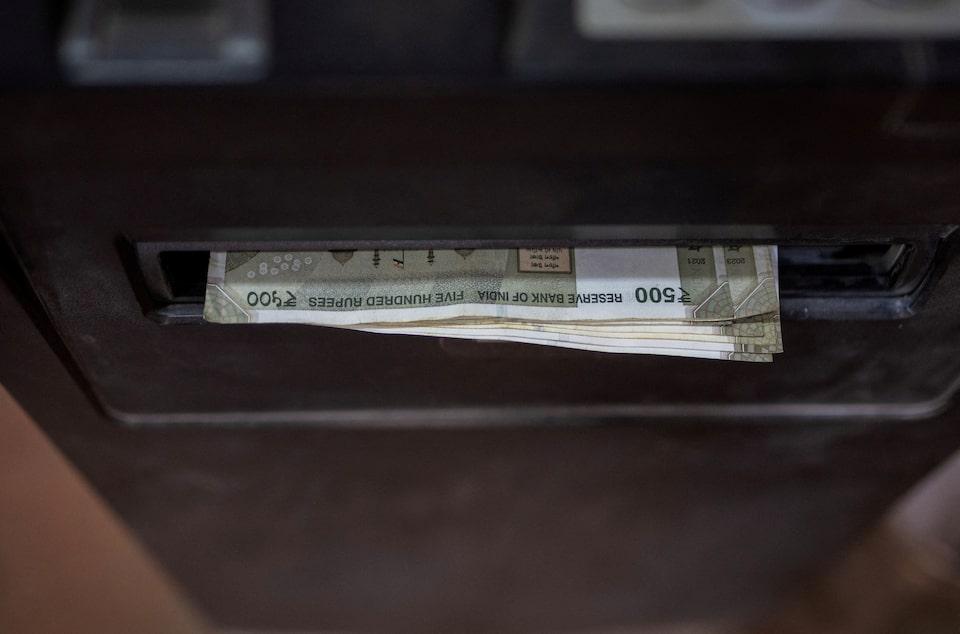
MUMBAI, Sept 3 (Reuters) - The Indian rupee is expected to open higher on Wednesday, shrugging off weakness in Asian peers and soft risk sentiment, with market participants noting that the near-term depreciating bias has moderated to an extent. The 1-month non-deliverable forward indicated the rupee will open in the 88.04 to 88.08 range versus the U.S. dollar, compared with 88.1550 in the previous session. Sign up here. The rupee on Tuesday saw choppy price action, rising to an intraday high of 87.85 before slipping back past the 88 mark. Traders said the brief climb past 87.95, a key resistance level, signalled that near-term pressure on the currency had tempered. "We will still see whippy price action. However, the bias near term is more balanced now than what it was before," a trader at a private sector bank said. The move to 87.85 on Tuesday was helped by one-off foreign bank flows and the "mildest of optimism" on U.S.-India trade, the trader said. That optimism stemmed from India’s commerce minister saying he expects a U.S.-India trade pact to be finalised by November despite recent setbacks, the trader pointed out. The remarks coincided with U.S. President Donald Trump’s comments that India had offered to cut its tariffs “to nothing.” DOLLAR CLIMBS, EQUITIES SLIDE The dollar index rallied 0.66% on Tuesday and inched higher in Asia on Wednesday. Asian currencies weakened against the dollar. The dollar's strength came amid a drop in U.S. and European equities and as long-dated European bond yields hit multi-year highs, with investors increasingly concerned about the fiscal situation. https://www.reuters.com/world/india/rupee-likely-get-breather-despite-challenging-asia-backdrop-2025-09-03/