2026-01-29 13:34
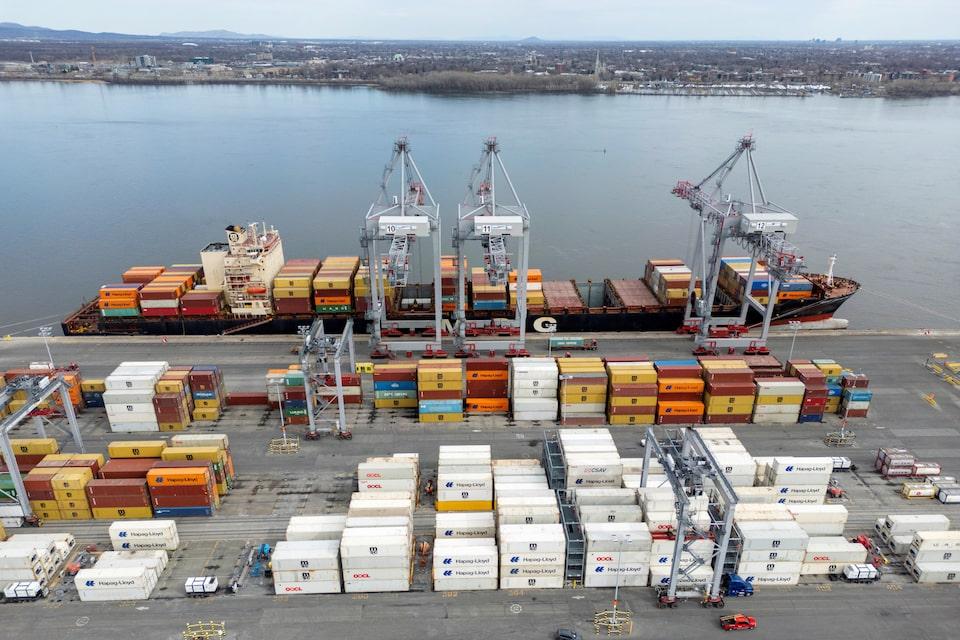
Exports to US drop to 68% in November from 76% a year ago US trade surplus increased to C$6.6 billion in November Exports of metals, non-metallic goods down 24.4%, led by gold Imports from other countries rose 7.8%, led by China OTTAWA, Jan 29 (Reuters) - Canada posted a huge jump in its monthly international trade deficit in November as merchandise exports dropped by a big margin, data showed on Thursday, and economists said firms were still pursuing their drive to diversify trade away from the U.S. It posted a goods trade deficit of C$2.2 billion ($1.62 billion) in November, compared with an upwardly revised C$395 million registered in October, Statistics Canada said. Sign up here. Barring September, when Canada posted a marginal surplus, there has been a trade deficit with the U.S. since February 2025, coinciding with the start of uncertainty driven by President Donald Trump's tariffs and takeover threats. Trump's levies on imports of steel, automotive, aluminum and lumber have hit these critical Canadian sectors hard, pushing exporters to find new markets. Exports to the U.S. accounted for over 68% of total outbound shipments from Canada in November, down from 76% a year ago. The November deficit was largely driven by a 24.4% drop in exports of metals and nonmetallic goods, led by a fall in exports of unwrought gold, StatsCan said. Large declines were observed in exports of unwrought gold to Britain, the United States and Hong Kong. In volume terms, exports were down 0.9%. Exports of motor vehicles and parts fell by 11.6%. This was the biggest drop seen in this category in three years, the statistics agency said. Imports also dropped, but minimally, with total imports down only 0.1% to C$66.14 billion. Imports of motor vehicles and parts and energy products led the slight decline. U.S. TRADE Exports to the U.S. decreased by a smaller amount than the fall in imports from south of the border, helping boost Canada's merchandise trade surplus with the U.S. to C$6.6 billion in November, up from C$5.2 billion in October. Imports from the U.S. dropped 5.4% while exports dropped only 1.8%. "I do see the momentum moving in the right direction. Are we going to see results overnight? No," said Stuart Bergman, chief economist at Export Development Canada. He said exports to the U.S., which posted their second monthly decline in November, will only keep shrinking as exporters find new markets. However, he warned that Canada's exports were still concentrated in a handful of countries with almost 90% of its exports going into the U.S., Britain, the European Union and China, and it needed to diversify more. Imports from countries other than the U.S. rose 7.8%, their highest level in current records, StatsCan said, adding that this trend was led by China and Germany. However, exports to other countries apart from the U.S. fell by 4.9%, taking Canada's trade deficit with countries other than the U.S. up to C$8.8 billion in November from C$5.6 billion in October. The Canadian dollar firmed after the data release and was trading up 0.32% to C$1.3511 to the U.S. dollar, or 74.03 U.S. cents. Yields on the two-year government bonds were down 0.5 basis points to 2.4192%. The November trade data was delayed as information for Canadian exports to the U.S. was unavailable due to a 43-day government shutdown in the United States, impacting data collection for several months. https://www.reuters.com/business/canada-records-big-jump-trade-deficit-november-exports-fall-2026-01-29/
2026-01-29 12:51
KYIV, Jan 29 (Reuters) - Ukraine's central bank cut its key interest rate to 15% on Thursday, from 15.5%, due to slowing inflation and more clarity over international financial aid this year, it said in a statement. Consumer price inflation slowed to 8% year-on-year in December, and the central bank expects it to continue decreasing in January. Sign up here. Governor Andriy Pyshnyi said the central bank decided to start the cycle of interest rate policy easing, taking into account a steady decline in inflationary pressures and lower risks related to external financing. The interest rate was held steady throughout much of 2025. "This decision will facilitate the economy's ongoing adaptation to wartime challenges – specifically by supporting lending, which has grown at a rate of over 30% year-on-year in recent years," Pyshnyi told an online media briefing. However, the central bank's statement said that inflation expectations remained high due to destruction in the energy sector after intensified Russian bombardments of Ukraine's power infrastructure. The central bank sees inflation ending this year only marginally lower at about 7.5%. GDP SEEN RISING BY 1.8% IN 2026 Central bank officials said they expect Ukraine's economic growth to continue in 2026 but at a modest pace due to the energy deficit. The central bank expects gross domestic product to increase by 1.8% this year, the same pace as last year. "The difficult situation in the energy sector will continue to restrain business activity for a long time," Pyshnyi said. Officials also said that higher imports of energy equipment and fuel were driving demand for hard currency. The central bank said it was committed to maintaining stability on the foreign exchange market. Its reserves stood at a record $57.3 billion and the central bank expects the reserves to grow to $65 billion by the end of this year. The European Union plans to provide Ukraine with 90 billion euros ($105.46 billion) of support over this year and next. Ukraine is also in talks with the International Monetary Fund on a new $8.1 billion lending program. https://www.reuters.com/business/finance/ukraines-central-bank-cuts-key-rate-15-after-inflation-slows-2026-01-29/

2026-01-29 12:39
SOUTH GOA, India, Jan 29 (Reuters) - India's Reliance Industries Ltd (RELI.NS) , opens new tab, operator of the world's largest refining complex, will buy up to 150,000 barrels per day of Russian oil from February for its domestic market-focused refinery, a company executive said on Thursday. Reuters earlier this month reported that Reliance was set to receive sanctions-compliant Russian oil in February and March after a one-month pause. Sign up here. Reliance last received Russian crude in December after securing a one-month U.S. concession that allowed it to wind down dealings with the Russian oil producer Rosneft (ROSN.MM) , opens new tab beyond a November 21 deadline. The U.S. imposed sanctions on Rosneft and fellow Russian oil giant Lukoil (LKOH.MM) , opens new tab in October but non-sanctioned Russian companies and trading intermediaries have continued sales. Reliance would buy up to 150,000 barrels per day of Russian oil from February from sellers that are not under sanctions, the executive said on the sidelines of India Energy Week, declining to be named in line with his company's policy. He did not name the sellers and Reliance did not immediately respond to a Reuters request seeking comment. Reliance was previously importing Russian crude under a long-term agreement with Rosneft for 500,000 barrels per day (bpd) for its 1.4 million-bpd Jamnagar refinery complex in Gujarat state. The conglomerate also buys oil from Saudi Arabia and Iraq, among others, under term deals to meet its requirements at the Jamnagar refinery complex in Gujarat, and also purchases Canadian oil. Reliance is also seeking U.S. approval to resume purchases of Venezuelan crude, Reuters reported earlier this month, as the private refiner looks to secure supplies with the move away from the biggest Russian oil companies. https://www.reuters.com/business/energy/indias-reliance-buy-up-150000-bpd-russian-oil-february-2026-01-29/

2026-01-29 12:38
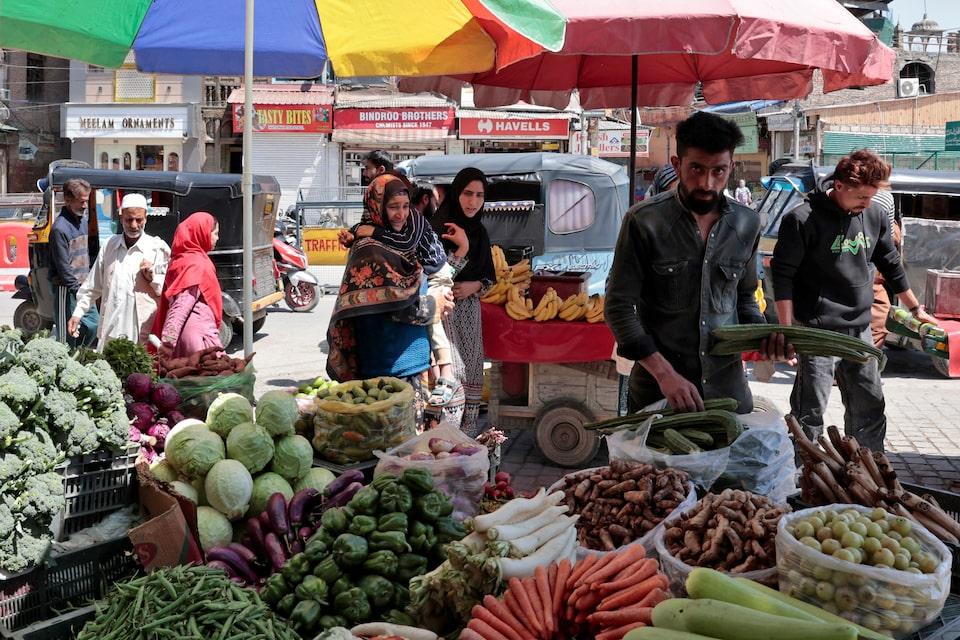
New CPI series to use 2024 as base year Food weight cut to 36.75% from 45.86% Housing, electricity weight set at 17.66% CPI groups to double to 12 from 6 for better price tracking NEW DELHI, Jan 29 (Reuters) - India will cut the weighting of food in its consumer price index (CPI) to 36.75% in a new inflation series, potentially making headline inflation readings less volatile and smoothing the outlook for monetary policy. Food prices, which tend to swing based on factors such as weather and supply disruptions, now account for 45.86% of the basket used to calculate CPI, while the central bank uses CPI as the anchor for its main inflation target of 4% plus or minus two percentage points. Sign up here. The current CPI basket still reflects 2011-12 consumer spending patterns, which economists say are no longer valid and may be skewing the readings. The statistics ministry said in a report that the revamped data series will use 2024 as the base year, while 2025 will be used as an overlapping year between the old and new series so that past data can be converted into the new base statistically. The number of major spending groups will be expanded to 12 from six, aligning India's inflation framework with international standards. Recent surveys show food now accounts for 39.7% of urban household spending, down from roughly 43% in 2011-12, and around 47% in rural areas, down from 53% earlier. The weighting of housing, water, electricity, gas and other fuels will stay at 17.66%, making shelter and utilities the second-biggest driver of inflation. "For the first time, rural house rent has been included in the CPI. Further, in both rural and urban areas, the sample size for house rent has been increased," said Saurabh Garg, secretary, Ministry of Statistics and Programme Implementation. Transport accounts for 8.8%, while health at 6.10% and clothing & footwear at 6.38% remain significant household expenses. Categories such as restaurants & accommodation, education and information & communication, each at around 3.5%, will reflect a more service-oriented consumption basket. For the first time, CPI will factor in prices from e-commerce platforms with items like airfares, OTT subscriptions, telecom plans and some services set to be tracked, the report showed. India's headline inflation rose in December to its fastest rate in three months at 1.33% year-on-year, as a decline in food prices slowed. Inflation in November stood at 0.71%. https://www.reuters.com/world/india/india-cut-food-weighting-cpi-new-inflation-series-2026-01-29/
2026-01-29 12:33
FRANKFURT, Jan 29 (Reuters) - Dutch miner and lithium supplier AMG Critical Materials (AMG.AS) , opens new tab plans to reduce dependence on China by processing battery-grade lithium for electric vehicles in Brazil, Portugal and Germany, its head of development told Reuters. AMG development head Michael Connor said the firm aimed to create what he called a "lithium highway" connecting those three countries to allow the company to bypass China, which he added was currently the only option for processing the material. Sign up here. "Our goal is to build this processing capacity in both Brazil and Portugal in order to establish a Western provider for this expertise – something that does not exist today," he said. EUROPE CAN CATCH UP WITH CHINA Europe is trying to curb reliance on Chinese lithium as it shifts away from fossil fuels, but the region's own extraction and refining capacity is minimal. The world's largest producers are South America, Australia and China. AMG produces spodumene concentrate – a lithium-bearing mineral – at its Mibra mine in Brazil and ships the material to China for conversion from about 6% lithium content to nearly 100%. Only then is it sent to AMG's facility in the German town Bitterfeld-Wolfen, where it is processed into lithium hydroxide, a key cathode material for EV batteries and stationary storage. Connor said that Europe could catch up despite lagging globally. Lithium extraction and processing is, however, complex and takes years to ramp up scale. "Even if China has gained a significant lead, there's no reason Europe can't catch up," he added. "Once production takes place in Europe, it becomes much cheaper to produce lithium here than to ship it via China." SLOWER-THAN-EXPECTED RAMP-UP AT GERMAN SITE AMG's Bitterfeld plant is expected to reach its full 20,000-metric-ton lithium hydroxide capacity by end-2026, two years later than planned, which means missing an earlier goal of 100,000 tons by 2030. Connor blamed the delay on weaker-than-expected market demand and ongoing checks by prospective customers. AMG is the largest shareholder in London-based Savannah Resources (SAVS.L) , opens new tab, which is developing a lithium project in northern Portugal. The Barroso spodumene deposit holds more than 39 million tons of estimated reserves, the largest in Europe. https://www.reuters.com/business/energy/dutch-lithium-supplier-amg-seeks-bypass-china-2026-01-29/

2026-01-29 12:26
KYIV, Jan 29 (Reuters) - Extremely low temperatures down to minus 30 degrees Celsius (minus 22 degrees Fahrenheit) will hit Ukraine at the beginning of next week, which is very dangerous for winter crops, agricultural analysts and the national emergency service said on Thursday. A sharp drop in temperature will begin on February 1 and will affect all regions except southern Ukraine and the frosts will begin to ease slightly only on February 4, the service said on the Telegram messenger. Sign up here. "We consider the current cold spell to be extremely dangerous for winter crops across a significant part of Ukraine," analyst Barva Invest said on Telegram. Ukraine is a producer of winter wheat, which accounts for about 95% of the total Ukrainian wheat harvest. Winter wheat, which has a higher yield than spring wheat, is sown in autumn and harvested in the summer of the following year. Barva Invest noted that a combination of severe frosts and insufficient snow cover could affect crops in central, north-eastern and eastern Ukraine. Frosts will be less severe in southern Ukraine, but there is no snow cover there to protect the crops. Temperatures dropped to minus 20 C in Ukraine in early January, only easing to above-zero temperatures this week. https://www.reuters.com/business/environment/temperatures-low-minus-30c-ukraine-next-week-may-damage-crops-2026-01-29/