2025-09-02 07:42
KUALA LUMPUR, Sept 2 (Reuters) - Malaysia's government has approved 13 large-scale solar projects with a total capacity of 1,975 megawatts, the energy transition ministry said on Tuesday. The large-scale solar generation projects - including one of Malaysia's largest floating solar projects with a capacity of 200 megawatts - will begin generating and supplying electricity in 2027 and 2028, the Ministry of Energy Transition and Water Transformation said in a statement. Sign up here. The ministry, through the Energy Commission, in January opened a bidding process under its fifth large-scale solar programme for contracts to supply a combined total of 2,000 megawatts worth of solar-generated electricity. Since the first such programme in 2016, 4,263 megawatts worth of solar generation have been approved, the ministry said. It did not disclose the identity of winning bidders. "The Ministry is confident that the implementation of this initiative will contribute significantly to the country's energy transition aspirations to increase the renewable energy capacity mix in the national electricity supply system to 70% by 2050," it said. https://www.reuters.com/business/energy/malaysia-approves-13-large-scale-solar-projects-with-capacity-1975-megawatts-2025-09-02/

2025-09-02 07:28
Sept 2 (Reuters) - British Gas owner Centrica (CNA.L) , opens new tab said on Tuesday the life of two nuclear power stations in the UK, in which it has a 20% share, has been extended until 2028. Heysham 1 and Hartlepool power stations, which are operated by French state-owned utility EDF, are now expected to generate electricity until March 2028, Centrica said. Sign up here. Britain aims to decarbonise its electricity sector by 2030 and reduce its reliance on natural gas power plants, which currently provide around a third of its power. The country has also been seeking to build new nuclear plants to replace its ageing fleet to boost energy security and also reach its climate targets. Centrica expects the total life extensions announced since December 2024 to add about 12 terawatt-hour (TWh ) to its electricity generation volumes between 2026 and 2030. However, there is no change to the expected March 2030 closure of the Heysham 2 and Torness nuclear plants. In July, Centrica acquired a 15% stake in the proposed Sizewell C nuclear plant in eastern England, joining investors including EDF and Canadian pension fund La Caisse and the UK government. https://www.reuters.com/business/energy/centrica-confirms-life-extensions-two-uk-nuclear-stations-until-2028-2025-09-02/
2025-09-02 07:26
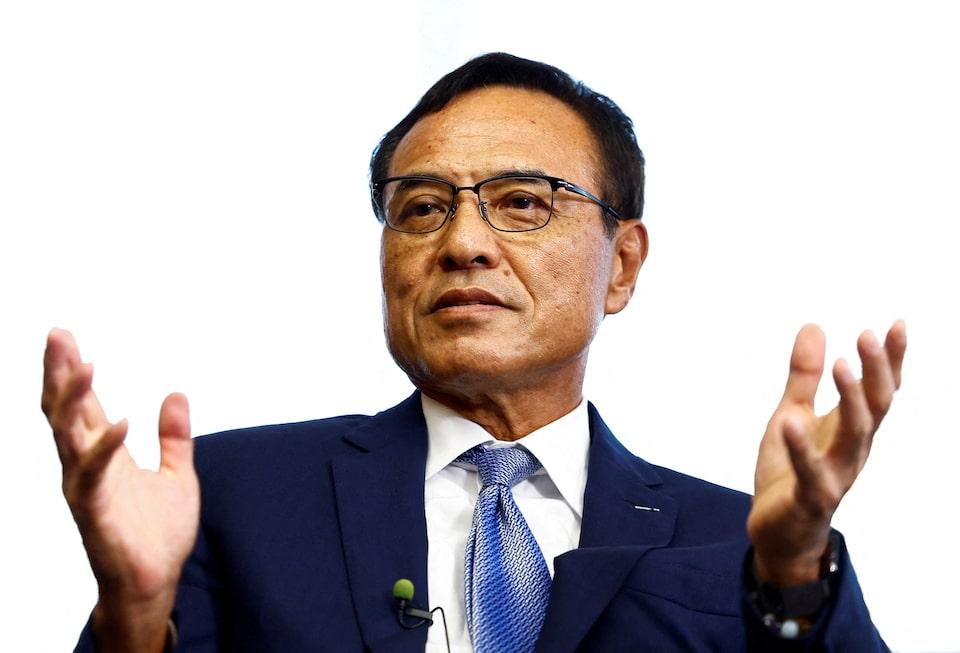
Niinami told company he believed purchase was legal Niinami suspected of purchasing supplements with cannabis component, newspaper reports Niinami advised Japanese prime ministers, often served as face of corporate Japan TOKYO, Sept 2 (Reuters) - Japanese beverage group Suntory Holdings said on Tuesday that CEO Takeshi Niinami has resigned following a police investigation into his purchase of a supplement that may be illegal. Niinami, an outspoken business leader who has often served as the face of corporate Japan at Davos and other international events, told the company he purchased the supplement believing that it was legal, Suntory said in a statement. Sign up here. The Tokyo Shimbun daily reported earlier that police in Fukuoka prefecture have been conducting an investigation into whether supplements containing cannabis components had been sent to Niinami's home - a probe that is connected to a man who was arrested in July. Suntory, best known overseas for its whisky and beer but which also makes a range of soft drinks such as Orangina-branded soda, said Niinami, who was also chairman, told the company he was the subject of a police investigation on August 22. He resigned on September 1. "He was a bold, decisive leader that got things done and I truly respected him," Suntory President Nobuhiro Torii told a press briefing in Tokyo, adding that Niinami was responsible for significantly expanding the company's revenues and profits. "In that respect - and I told this to him yesterday as well - it's a real shame that we couldn't continue as a team." According to Tokyo Shimbun, police questioned Niinami and searched his Tokyo home but no illegal drug possession or use has been confirmed. A Fukuoka Police official was not immediately available to comment on the report. Niinami, a fluent English speaker, is chair of the powerful Keizai Doyukai business lobby and has served as economic adviser to several Japanese prime ministers. A graduate of Harvard Business School, he was previously chief executive of convenience store operator Lawson before becoming Suntory's president in 2014, the first head of the firm from outside its founding family. Japan is known for its strict drug laws. Late last year, Japanese endoscope manufacturer Olympus Corp (7733.T) , opens new tab sacked then-CEO Stefan Kaufmann after an allegation that he had purchased illegal drugs. In 2015, police arrested Toyota Motor (7203.T) , opens new tab executive Julie Hamp, an American, on suspicion of illegally importing the painkiller Oxycodone into the country. She was later released. https://www.reuters.com/sustainability/boards-policy-regulation/suntory-says-ceo-niinami-resigns-after-police-probe-into-purchase-supplement-2025-09-02/
2025-09-02 07:24
Russia agrees to supply 44 bcm via existing pipeline Memorandum signed on Power of Siberia 2 through Mongolia Price for gas via Power of Siberia 2 lower than Europe Putin meets Xi and Mongolian president MOSCOW, Sept 2 (Reuters) - Russia's Gazprom has agreed to a modest rise in gas supplies to China via an existing pipeline and has signed a memorandum on building the vast Power of Siberia 2 pipeline but at prices lower than those charged to European buyers, state news agencies reported. The move comes as Russia seeks to expand its energy ties with China, its largest trading partner, after losing significant market share in Europe due to sanctions following the 2022 Ukraine conflict. Sign up here. Reuters reported last month that China was seeking to buy more Russian gas through an existing pipeline as talks between the two countries had failed to make significant progress on building a new link. Alexei Miller, the CEO of Russian state-controlled Gazprom (GAZP.MM) , opens new tab, told Russian news agencies on Tuesday that an agreement had been reached to increase supplies via the existing Power of Siberia pipeline, which runs from Eastern Siberia to China, to 44 billion cubic metres (bcm) a year from 38 bcm. Russia and China also agreed a deal to construct the Power of Siberia 2 pipeline, capable of delivering 50 bcm per year to China through Mongolia from the Bovanenkovo and Kharasavey gas fields in Yamal, Miller was quoted as saying. "Today, a legally binding memorandum was signed on the construction of the Power of Siberia 2 gas pipeline and the Soyuz Vostok transit gas pipeline through Mongolia," Miller said, Russian news agencies reported. The prices of gas supplies to China are lower than those Russia charged European buyers, Miller said, due to the vast distances and terrain over which pipelines had to be built, Miller said, adding that Power of Siberia 2 would be the world's biggest and most capital-intensive gas project. It was not clear who will build the pipeline and the final investments have not been disclosed. Speaking after President Vladimir Putin met Chinese President Xi Jinping and Mongolian President Ukhnaagiin Khurelsukh in Beijing, Miller said that prices for gas delivered through the Power of Siberia 2 will be negotiated separately, Russian news agencies reported. China's state news agency Xinhua also reported on Tuesday that the two heads of state held in-depth discussions and signed over 20 bilateral cooperation documents in fields, including energy. Gazprom shares edged up 0.5% in Moscow trading. CHINA BUYING The so-called "no limits" partnership between China, the world's biggest consumer of energy, and Russia, the world's biggest producer of natural resources, has strengthened since the West imposed onerous sanctions to punish Russia for the war in Ukraine. China is now Russia's biggest trading partner, the biggest purchaser of Russian crude and Russian gas, the second-biggest purchaser of Russian coal and the third-biggest purchaser of Russian LNG, according to the Kremlin. Gazprom supplies natural gas to China through a 3,000 km (1,865 mile) pipeline called Power of Siberia under a 30-year, $400 billion deal launched at the end of 2019. In 2024, exports amounted to about 31 billion cubic meters (bcm). It is expected that supplies will reach the planned capacity of 38 bcm this year. In February 2022, China also agreed to buy up to 10 bcm of gas annually by around 2026-2027 via a pipeline from Sakhalin Island in Russia's Far East. Miller said an agreement had been reached to increase gas supplies via the Far Eastern route to 12 bcm from the 10 bcm. But Russia's gas exports to China are still a small fraction of the record 177 bcm it delivered to Europe in 2018-19 annually. Russian gas now accounts for just 18% of European imports, down from 45% in 2021, while the bloc's oil imports from Russia have fallen to 3% from around 30% over that time. The European Union plans to fully phase out Russian energy by 2027. https://www.reuters.com/business/energy/russia-boost-gas-supplies-china-signs-deal-new-pipeline-2025-09-02/
2025-09-02 07:20
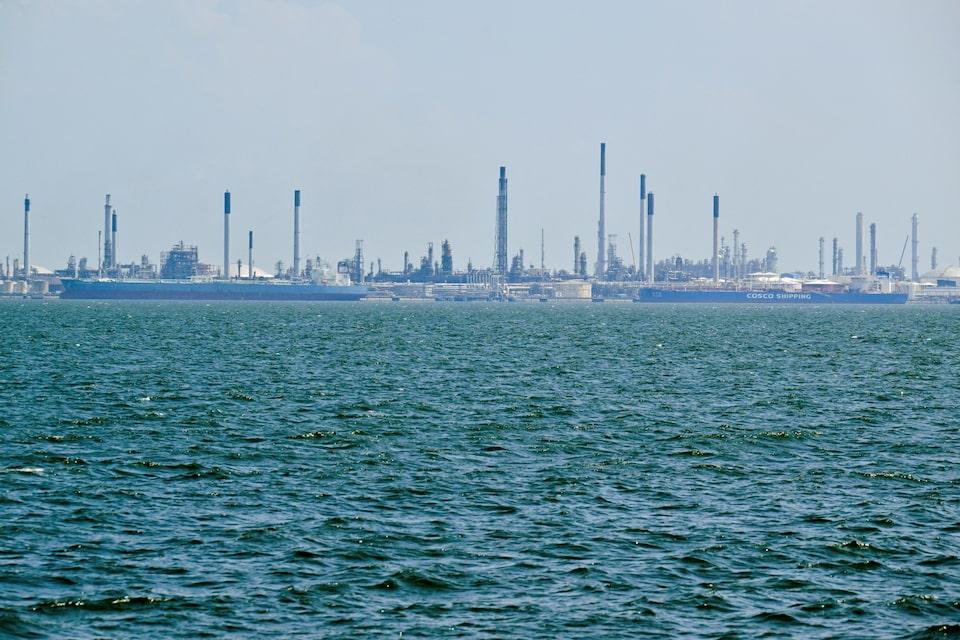
SINGAPORE, Sept 2 (Reuters) - Singapore's Bukom refinery has exported its first naphtha cargo in years following a longer-than-expected outage at its cracker, according to three sources with knowledge of the matter and shipping data, with more cargoes to be shipped in coming weeks. The export follows a force majeure last Thursday by plant operator Aster Chemicals and Energy on products derived from its naphtha cracker. Sign up here. Up to 35,000 metric tons (311,500 barrels) of naphtha was loaded onto the tanker Oriental Aquamarine on Monday, bound for South Korea, according to LSEG ship-tracking data. This marks its first full-sized cargo in the past five years. Separately, the refinery last exported a naphtha cargo in November 2021, Kpler data showed. Two more open-spec naphtha cargoes up to 60,000 tons each for loading between second-half September and early October from the refinery have been sold, two of the sources added, without providing details of the deals. The company does not comment on commercial arrangements as a matter of corporate policy, an Aster spokesperson said in an emailed response. These exports resulted from a prolonged maintenance period at the refiner's naphtha cracker, the sources said. The cracker was initially scheduled to resume operations in the first half of September, but that timeline has now been delayed indefinitely. Aster Chemicals and Energy operates a 237,000-barrel-per-day refinery and 1.1-million-ton-per-year naphtha cracker on Bukom Island. https://www.reuters.com/business/energy/singapores-bukom-refinery-exports-rare-naphtha-cargo-sources-say-2025-09-02/
2025-09-02 07:02
LONDON, Sept 2 (Reuters) - EDF Energy said on Tuesday it will extend the life of its Heysham 1 and Hartlepool nuclear power plants in Britain for a further 12 months to March 2028. The decision was taken following a series of positive graphite core inspections at both plants over the last nine months, EDF Energy said in a statement. Sign up here. Advanced Gas-cooled Reactors (AGRs) are the predominant type of reactors used in Britain. However, their graphite cores can suffer from cracking and degradation when they age. Therefore, regular inspections have to be carried out on them. The Heysham 1 and Hartlepool plants in northeast England, which have a combined capacity of 2.3 gigawatts and provide around 5% of Britain's power supply, were originally due to end generation in 2024 but their lives have been extended three times. Heysham 2 and Torness, which are both scheduled to generate until March 2030, were not in scope for this latest review after a two-year extension was granted last year. https://www.reuters.com/business/energy/edf-energy-extends-life-two-uk-nuclear-plants-2025-09-02/