2025-09-01 18:16
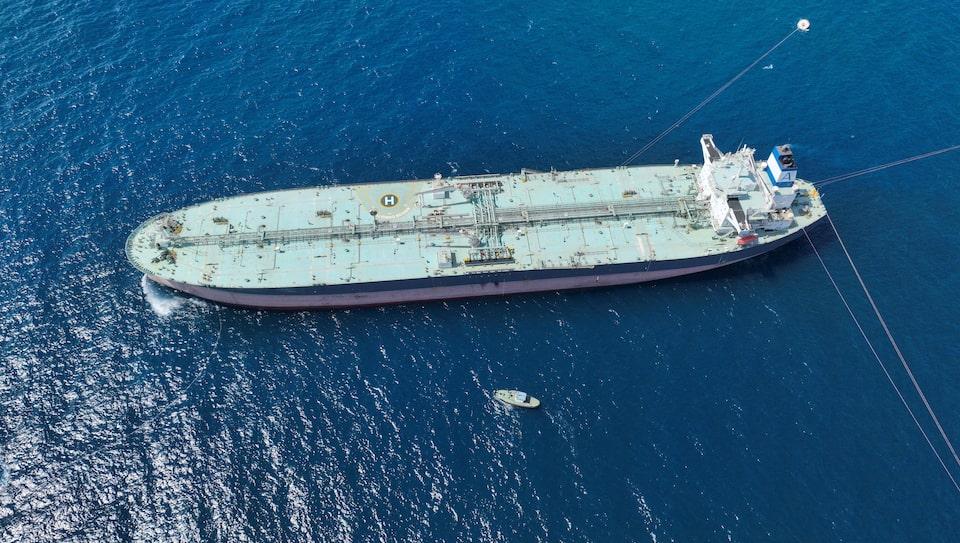
Some 600,000 barrels of oil sold to trading firm B Serve Energy, energy ministry official says US lifted sanctions after December fall of Assad and end of Syria's civil war Firms developing master plan to help explore and extract Syrian oil and gas TARTUS, Syria, Sept 1 (Reuters) - Syria exported 600,000 barrels of heavy crude oil on Monday from the port of Tartus as part of a deal with a trading firm, a Syrian energy official told Reuters, the first known official export of Syrian oil in 14 years. Syria exported 380,000 barrels of oil per day (bpd) in 2010, a year before protests against Bashar al-Assad's rule spiralled into a nearly 14-year war that devastated the country's economy and infrastructure - including crude production. Sign up here. Assad was toppled in December last year and the Islamist-led government that replaced him pledged to revive Syria's economy. Riyad al-Joubasi, assistant director for oil and gas at Syria's energy ministry, told Reuters the heavy crude oil had been sold to B Serve Energy. B Serve is linked to BB Energy, a global oil trading firm. BB Energy did not immediately reply to a request for comment. Syria's energy ministry said in a written statement the oil was exported on the Nissos Christiana tanker. Joubasi said it had been extracted from several Syrian fields but did not say which ones. Most Syrian oil fields lie in the northeast, in territory held by Kurdish-led authorities. Those authorities began providing oil to the central government in Damascus in February, but ties have deteriorated since then over fears about inclusivity and rights for minorities, including Kurds. Oilfields changed hands multiple times during Syria's war and U.S. and European sanctions complicated both legitimate exports and imports. Sanctions remained in place for several months after Assad's ouster, making energy imports difficult for Syria's new administration. But after U.S. President Donald Trump issued an executive order in June to lift American sanctions on Syria, U.S.-based firms began developing a master plan to help explore and extract Syrian oil and gas. Syria has also signed an $800 million memorandum of understanding with DP World to develop, manage and operate a multi-purpose terminal at Tartus, after Syria canceled a contract with a Russian firm that had operated the port under Assad. https://www.reuters.com/business/energy/syria-exports-first-crude-oil-shipment-14-years-official-says-2025-09-01/
2025-09-01 17:48
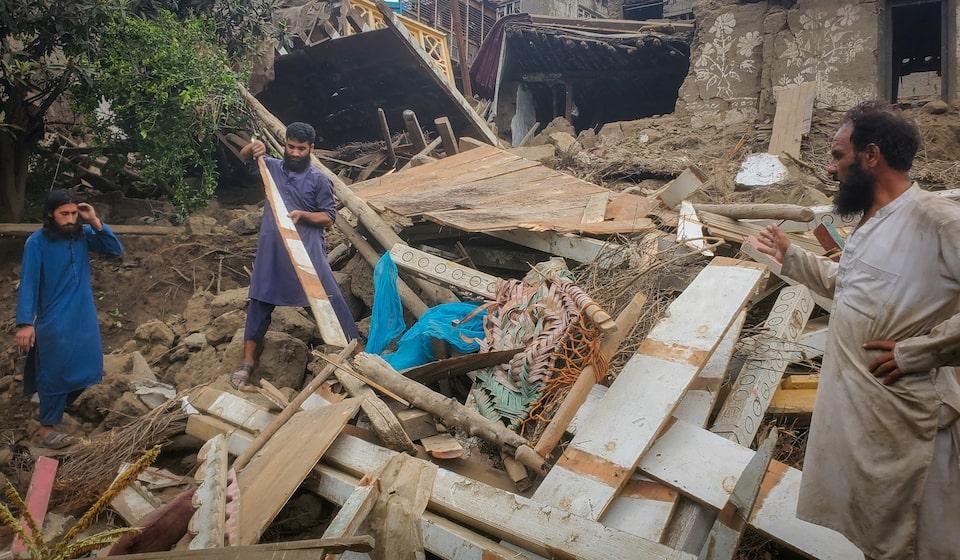
Rescuers comb rubble of homes in remote mountainous area Impassable roads, rough terrain Helicopters ferry the injured to hospital Midnight quake hit at a depth of 10 km (6 miles) Taliban-ruled Afghanistan struggling with sharp drop in foreign aid KABUL, Sept 1 (Reuters) - One of Afghanistan's worst earthquakes killed more than 800 people and injured at least 2,800, authorities said on Monday, as rescuers struggled to reach remote areas due to rough mountainous terrain and inclement weather. The disaster will further stretch the resources of the war-torn nation's Taliban administration, already grappling with crises ranging from a sharp drop in foreign aid to deportations of hundreds of thousands of Afghans by neighbouring countries. Sign up here. Sharafat Zaman, spokesperson for the health ministry in Kabul, called for international aid to tackle the devastation wrought by the quake of magnitude 6 that struck around midnight local time, at a depth of 10 km (6 miles). "We need it because here lots of people lost their lives and houses," he told Reuters. The quake killed 812 people in the eastern provinces of Kunar and Nangarhar, administration spokesperson Zabihullah Mujahid said. Ziaul Haq Mohammadi, a student at Al-Falah University in the eastern city of Jalalabad, was studying in his room at home when the quake struck. He said he tried to stand up but was knocked over by the power of the tremor. "We spent the whole night in fear and anxiety because at any moment another earthquake could happen," Mohammadi said. MUDBRICK HOMES COLLAPSE Rescuers were battling to reach remote mountainous areas cut off from mobile networks along the Pakistani border, where mudbrick homes dotting the slopes collapsed in the quake. "The area of the earthquake was affected by heavy rain in the last 24-48 hours as well, so the risk of landslides and rock slides is also quite significant - that is why many of the roads are impassable," Kate Carey, an officer at the U.N. Office for the Coordination of Humanitarian Affairs (UNOCHA), told Reuters. Rescue teams and authorities are trying to dispose of animal carcasses quickly so as to minimise the risk of contamination to water resources, Carey said. Casualties could rise as rescue teams access more isolated locations, authorities said. "All our ... teams have been mobilised to accelerate assistance, so that comprehensive and full support can be provided," said health ministry spokesperson Abdul Maten Qanee, citing efforts in areas from security to food and health. Reuters Television images showed helicopters ferrying out the affected, while residents helped security forces and medics carry the wounded to ambulances in an area with a long history of earthquakes and floods. Military rescue teams fanned out across the region, the defence ministry said, with 40 flights carrying away 420 wounded and dead. The quake razed three villages in Kunar, with substantial damage in many others, authorities said. At least 610 people were killed in Kunar with 12 dead in Nangarhar, they added. Some villagers sat weeping amid the piled ruins of their homes. Others began laboriously clearing the debris by hand, or carried out the injured on makeshift stretchers. “This is Mazar Dara in Nurgal district. The entire village has been destroyed,” one victim told reporters. “Children and elders are trapped under the rubble. We need urgent help.” Another survivor said: "We need ambulances, we need doctors, we need everything to rescue the injured and recover the dead.” It was Afghanistan's third major deadly quake since the Taliban took over in 2021 as foreign forces withdrew, triggering a cut to the international funding that formed the bulk of government finances. Diplomats and aid officials say crises elsewhere in the world, along with donor frustration over the Taliban's policies towards women, including curbs on those who are aid workers, have spurred the cuts in funding. Even humanitarian aid, aimed at bypassing political institutions to serve urgent needs, has shrunk to $767 million this year, down from $3.8 billion in 2022. APPEALS FOR FUNDING Humanitarian agencies say they are fighting a forgotten crisis in Afghanistan, where the United Nations estimates more than half the population is in urgent need of humanitarian aid. "So far, no foreign governments have reached out to provide support for rescue or relief work," a spokesperson of Afghanistan's foreign office said on Monday. Later, a spokesperson for China's foreign ministry said it was ready to provide disaster relief assistance "according to Afghanistan's needs and within its capacity". Meanwhile, Foreign Minister Subrahmanyam Jaishankar of India said it had delivered 1,000 family tents to Kabul and was moving 15 tonnes of food material to Kunar, with more relief material to be sent from India starting on Tuesday. The U.S. State Department's Bureau of South and Central Asian Affairs posted its condolences on X , opens new tab on Monday for the loss of life in the earthquake, but did not immediately respond when asked if the United States would provide any assistance. Afghanistan has been badly affected since U.S. President Donald Trump's administration in January began slashing funding to its humanitarian arm, USAID, and aid programs worldwide as part of a broader plan to end what it deems wasteful spending. U.N. Secretary General Antonio Guterres said its mission in Afghanistan was preparing to help those in areas devastated by the quake. Pope Leo also sent condolences for the dead. Afghanistan is prone to deadly earthquakes, particularly in the Hindu Kush mountain range, where the Indian and Eurasian tectonic plates meet. A 6.1-magnitude earthquake that killed 1,000 people in the eastern region in 2022 was the first major natural disaster faced by the Taliban government. https://www.reuters.com/world/asia-pacific/afghanistan-earthquake-kills-800-injures-2800-taliban-asks-world-help-2025-09-01/
2025-09-01 16:41
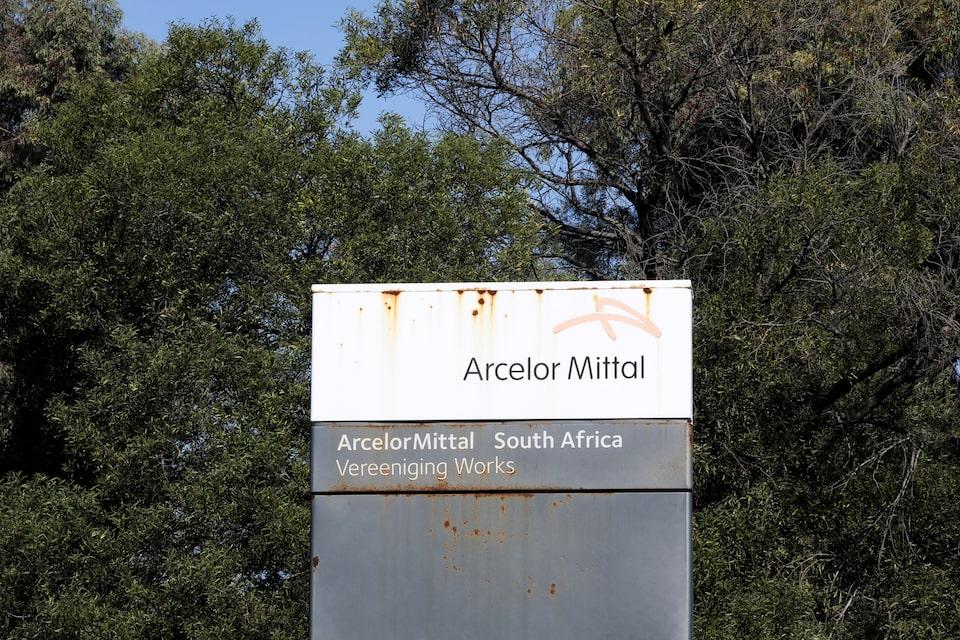
Sept 1 (Reuters) - ArcelorMittal South Africa (ACLJ.J) , opens new tab (MT.LU) , opens new tab (AMSA) is planning to lay off 4,000 workers, nearly half its workforce and more than initially expected, with cuts now set to extend to its main Vanderbijlpark plants, a union said on Monday. The steelmaker previously announced plans to shut its long steel plants at Newcastle and Vereeniging this month, cutting 3,500 jobs, as talks with the government have failed to provide an alternative solution. Sign up here. AMSA said it was "limited in what we can say in the public domain given the complexities of the matters under discussion and a cautionary announcement we issued recently", adding that "certain processes are still ongoing." The company produces some 2.4 million metric tons of steel annually, about 4% of group output. The Solidarity union said AMSA had told employees that it was preparing "mass retrenchments involving more than 4,000 jobs". Its statement said the cuts had been expanded to include Vanderbijlpark - AMSA's flagship operation, making flat steel. The company has been reporting losses since 2023 and posted a half-year headline loss of 1.0 billion rand ($56 million) on persistently low sales volumes and low prices. AMSA has twice deferred closing its long steel operations, which are buckling under the pressure of weak local demand, high electricity tariffs, poor freight logistics, competition from local scrap recycling mills and imports from China. The union accused the government of dragging its heels in seeking solutions. AMSA had asked the government to lower scrap export duties, which it says give recyclers an unfair advantage, and to impose tariffs on imports. It also sought favourable electricity and freight costs from state-owned utilities. https://www.reuters.com/business/world-at-work/arcelormittal-south-africa-job-cuts-could-rise-above-4000-union-says-2025-09-01/
2025-09-01 16:39
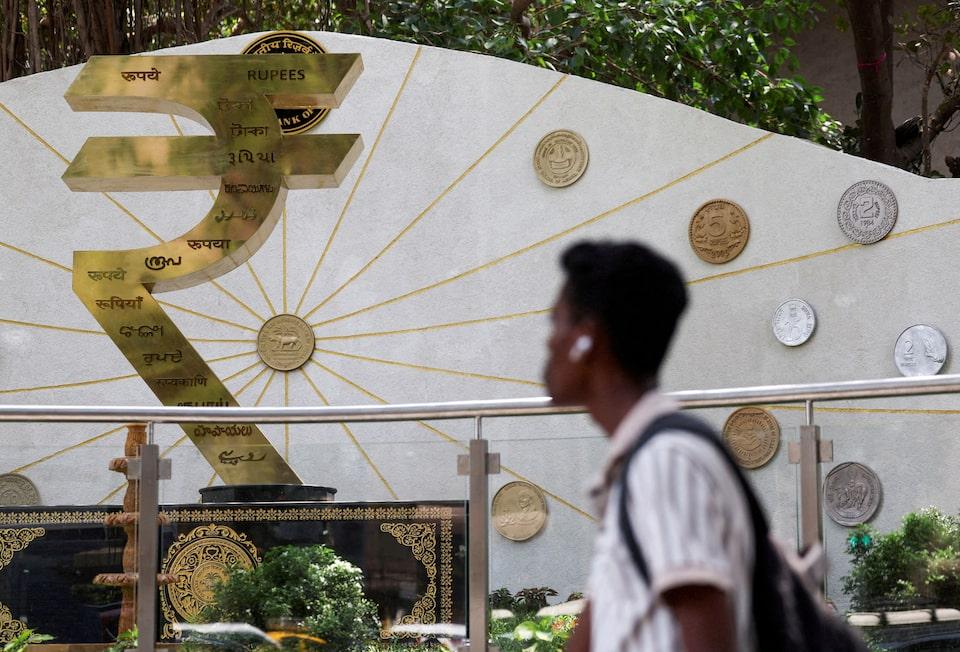
MUMBAI, Sept 1 (Reuters) - The Indian rupee recovered from its record low to end unchanged on Monday, helped by likely intervention from the Reserve Bank of India towards the later part of the session, according to traders. The rupee ended at 88.1950 to the U.S. dollar, identical to Friday's close. The currency fell 0.7% in August, its fourth consecutive monthly decline. Sign up here. The rupee plummeted to a fresh record low of 88.33 earlier in the day, reflecting mounting concerns over higher U.S. tariffs on Indian goods and the broader economic implications for the South Asian country. "Today being a U.S. holiday there was thin liquidity, thus flows had power to create unusual moves in the currency," said Kunal Sodhani, vice president at Shinhan Bank India. "Overall, rupee weakness may persist in order to maintain export competitiveness. For USD/INR, 87.94 now acts as an important support, which was earlier the all-time high, while 88.50 levels may be tested." The unit is the worst-performing Asian currency year-to-date, down about 3% against the dollar, and the underperformance is expected to continue as Indian goods face the highest U.S. tariffs among Asian countries. Higher tariffs are likely to drag the nation's export competitiveness, and a slowdown in exports could weigh on corporate revenues and profits. India's trade balance and broader growth outlook could also be affected, forcing foreign portfolio investors to reconsider allocations to Indian equities. Foreign investors have pulled out $2.4 billion from Indian equities over the past three sessions, and continuous outflows are expected to exacerbate volatility in the currency and equity markets. https://www.reuters.com/world/india/rupee-recovers-record-low-end-flat-after-likely-rbi-intervention-2025-09-01/
2025-09-01 16:37
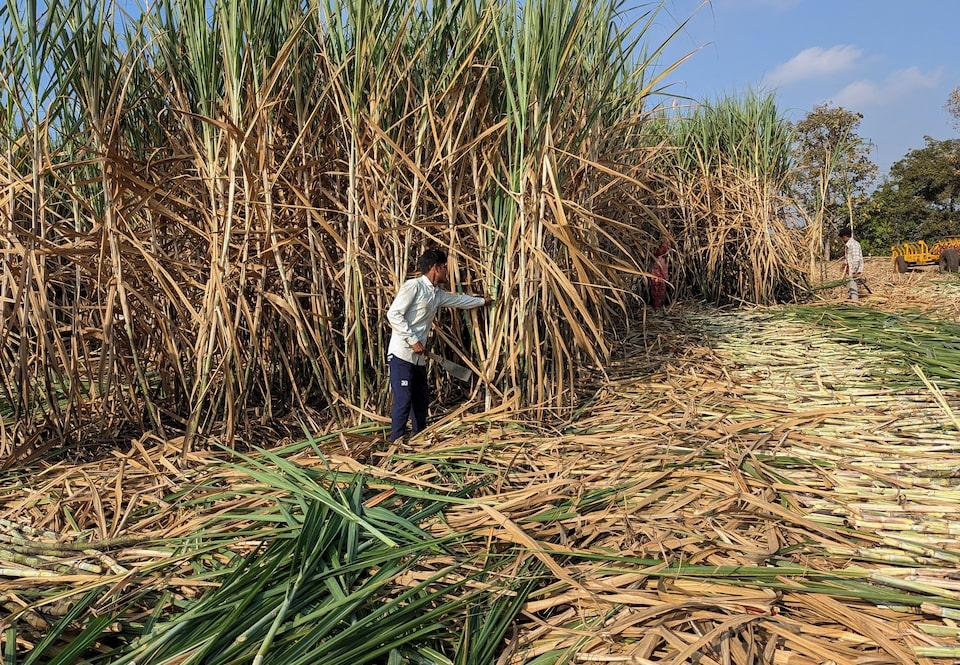
MUMBAI, Sept 1 (Reuters) - India has allowed production of ethanol from sugarcane juice, syrup and all types of molasses without any restrictions on volumes in 2025/2026, the government said in a notification on Monday. The world's second-biggest sugar producer had restricted production in the current marketing year because of a drop in sugarcane supplies. Sign up here. In the new ethanol supply year starting from November 1, sugar mills and distilleries are allowed to produce ethanol without any quantitative restriction, the Ministry of Consumer Affairs, Food & Public Distribution said. The government will periodically review sugar diversion to ethanol to ensure year-round domestic availability of the sweetener, it said. In the new season, sugarcane supplies are expected to jump as ample monsoon rains for two straight years have helped farmers to expand area under the crop. "This is a welcome move. The government should also raise the ethanol procurement price so that mills can pay farmers the government-fixed cane price," said a sugar miller based in the western state of Maharashtra. Indian sugar mills such as E.I.D.-Parry (EIDP.NS) , opens new tab, Balrampur Chini Mills (BACH.NS) , opens new tab, Shree Renuka (SRES.NS) , opens new tab, Bajaj Hindusthan (BJHN.NS) , opens new tab and Dwarikesh Sugar (DWAR.NS) , opens new tab have increased their ethanol production capacity in the last few years. India, the No.3 oil importer and consumer of petroleum products, aims to increase the blending of ethanol into gasoline to 20% by 2025/26. https://www.reuters.com/sustainability/climate-energy/india-allows-production-ethanol-sugarcane-juice-molasses-2025-09-01/
2025-09-01 16:30
Sept 1 (Reuters) - Slovak Prime Minister Robert Fico will hold bilateral meetings with Chinese President Xi Jinping and Russian President Vladimir Putin at China's World War Two anniversary celebrations in Beijing this week, Fico said on Monday. He will then meet Ukrainian President Volodymyr Zelenskiy in eastern Slovakia on Friday, he said in a statement. Sign up here. Fico, who leads a NATO and EU member country but has opposed Western sanctions on Russia, has had tense relations with Zelenskiy and broken ranks with European allies. He met with Putin in Moscow in December. Fico will also be the only European Union country leader to attend the celebrations in Beijing, where Xi will be flanked by Putin and also the leaders of North Korea, Iran, and Myanmar in a show of solidarity against the West. "I respect every single victim of the fight against fascism, therefore I have in the past stood with respect in front of memorials in Moscow, Normandy, or Washington," Fico said in an emailed statement. "I personally regret, and I admit I do not understand why, that from among EU countries, only Slovakia will be present in Beijing. New world order is being built, new rules of multipolar world, new balance of powers, which is extremely important for stability in the world." He said it was necessary to use the opportunity to meet world leaders, and that he had informed EU representatives about his trip. He did not further specify the agenda of his meetings in Beijing nor the meeting with Zelenskiy. Slovakia lashed out at Ukraine when it did not renew a contract to ship Russian gas to Slovakia after the old one expired at the end of last year, forcing Slovakia to use alternative routes for Russian gas and look for other suppliers. Slovakia has also been keen to keep imports of Russian oil through the Druzhba pipeline running through Ukraine, which were temporarily halted in the past two weeks after Ukrainian attacks on the pipeline in Russia. https://www.reuters.com/world/china/slovak-prime-minister-fico-meet-xi-putin-zelenskiy-this-week-2025-09-01/