2025-09-01 00:55
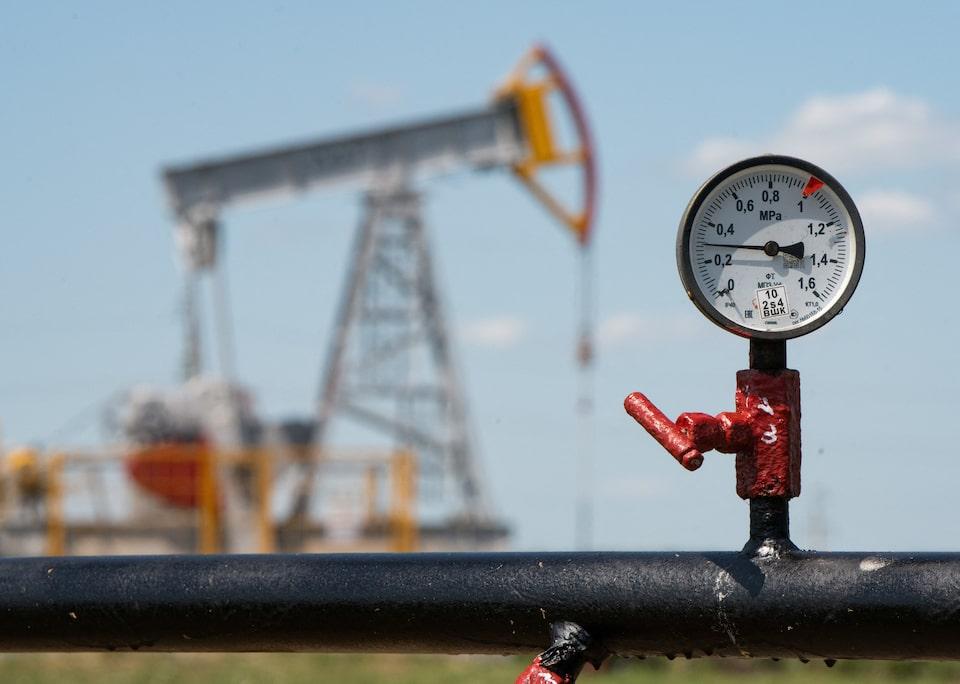
Russian drones knock out power facilities in Ukraine Zelenskiy vows more strikes deep inside Russia Asia manufacturing data mixed, clouds economic outlook OPEC+ to meet on September 7 SINGAPORE, Sept 1 (Reuters) - Oil prices traded in a tight range on Monday as worries about rising output and the impact of U.S. tariffs on demand offset supply disruptions stemming from intensified Russia-Ukraine airstrikes. Brent crude fell 30 cents, or 0.44%, to $67.18 a barrel by 0500 GMT, while U.S. West Texas Intermediate crude was at $63.73 a barrel, down 28 cents, or 0.44%. Trading is expected to be muted due to a U.S. bank holiday. Sign up here. Ukrainian President Volodymyr Zelenskiy vowed on Sunday to retaliate by ordering more strikes deep inside Russia after Russian drone attacks on power facilities in northern and southern Ukraine. Both countries have intensified airstrikes in recent weeks, targeting energy infrastructure and disrupting Russian oil exports. Markets remained concerned about Russian oil flows, with weekly shipments from its ports dropping to a four-week low of 2.72 million barrels per day, according to tanker tracker data cited by ANZ analysts in a note. However, Russian oil exports to India are set to rise in September, traders said, despite secondary tariffs imposed on New Delhi by the U.S. for buying oil from Moscow. "Modi’s meeting with Putin in China will be closely watched, particularly in light of U.S. pressures," Michael McCarthy, CEO of Moomoo Australia, said, referring to the Indian and Russian presidents who are attending the Shanghai Cooperation Organisation regional security bloc in China. A Reuters poll on Friday showed that oil prices are unlikely to gain much traction from current levels this year, as rising output from top producers adds to the risk of a surplus and U.S. tariff threats weigh on demand growth. The week started with a slew of manufacturing and export data from China, Japan and South Korea, among the world's biggest crude oil importers. Factory activity in China unexpectedly grew in August but weakened for other Asian economies as companies began to feel the pain from U.S. tariffs, private surveys showed on Monday, clouding the outlook for the region's fragile recovery. Brent and WTI crude posted their first decline in four months in August, down 6% or more on OPEC+ supply concerns. Investors are eyeing the September 7 meeting between members of the Organization of the Petroleum Exporting Countries and their allies for further supply cues. Meanwhile, U.S. crude oil production hit a record high in June, rising 133,000 barrels per day to 13.58 million bpd, according to data released by the Energy Information Administration on Friday. A U.S. labor market report this week will give a crucial read into the economy's health and test investors' confidence that interest rate cuts are coming soon, a view that has lifted their appetite for riskier assets such as commodities. https://www.reuters.com/business/energy/oil-holds-tight-range-rising-output-offsets-russia-supply-disruptions-2025-09-01/
2025-08-31 21:59
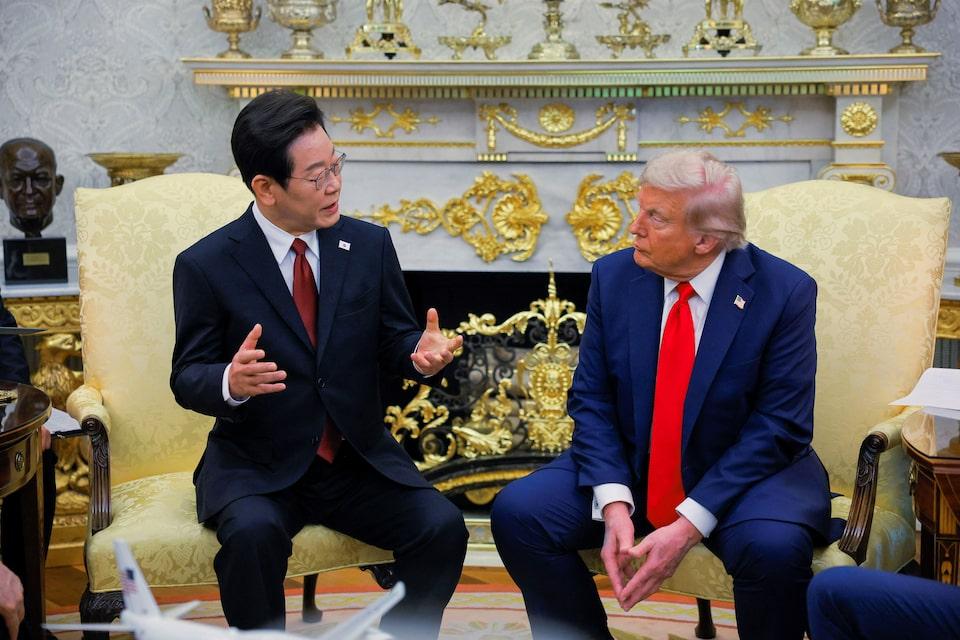
Negotiations slowed despite handshake agreement and summit Tariff and defence issues remain unresolved, impacting progress $350 billion investment fund and agriculture market disagreements persist SEOUL, Aug 29 (Reuters) - Negotiations ranging from tariffs to defence between South Korea and the United States were bogged down, overshadowing a handshake agreement and a promising presidential summit, officials in Seoul said. South Korean President Lee Jae Myung met U.S. President Donald Trump for the first time on Monday, and emerged declaring success after displaying personal chemistry and avoiding any public split between the two long-time allies. Sign up here. Behind the scenes, however, the two sides were unable to agree on a joint statement or even a fact sheet, and a month after announcing a deal on tariffs, the agreement still has not been finalised on paper. Lee's national security adviser, Wi Sung-lac, said on Friday that the two countries did not produce documents covering security, economy, trade or investments because progress remained slow in some areas while large strides had been made in other areas. More discussions and reviews were needed to hash out their details, he added, without providing specific details. South Korean presidential chief of staff Kang Hoon-sik told reporters on Thursday that it was a "very difficult negotiation" because issues ranging from investments to security are closely intertwined. "If the negotiations for one minister doesn't go well, they put a break on another negotiation that is going well," he said. "We've overcome a significant obstacle, but there is still a long way to go." Kang added that Washington could leverage several issues such as tariffs on cars, chips, and pharmaceuticals, as well as defence costs and around U.S. forces stationed in Korea. Speaking to his cabinet after the summit, Trump acknowledged a "problem with South Korea" but that Seoul had ultimately "kept the same deal." Neither Seoul nor Washington has elaborated. The U.S. Embassy in Seoul did not immediately respond to questions about the talks. 'BIG LOSSES' Even before Lee and Trump's meeting, disagreements over a $350 billion investment fund, as well as a U.S. push to open up South Korea's agriculture market, were hampering negotiations. Meanwhile, cuts to tariffs on automobiles are yet to be finalised and Seoul has not secured assurances on chip levies, both expected to be capped at 15% - the same rate as Europe. An auto industry official said the summit has done little to ease uncertainty: "We are really worried... We are having big losses." South Korean newspaper JoongAng Ilbo said the U.S. wanted to use the summit to produce documents detailing the $350 billion investments in return for accepting Seoul's demand for formalising 15% tariffs on cars and chips, and ruling out the opening of rice and beef imports. A South Korean official said Seoul has asked that loans and equity only account for a fraction of the fund. After the summit, Seoul said it was in talks with the U.S. to work out a non-binding deal on the fund. Japan, the only other country to propose such a large investment fund, is also facing delays in finalising its deal over unresolved issues with Washington. It remains unclear what payments Trump will demand from South Korea for maintaining the 28,500 American troops based there. He has also raised a fresh demand for the U.S. to own the land on which its bases are located. South Korean officials have said it is a political non-starter and there has been no such formal request from Washington. https://www.reuters.com/world/asia-pacific/south-korean-negotiators-struggle-close-gaps-with-us-despite-summit-tariff-deal-2025-08-29/
2025-08-31 21:16
CAIRO, Aug 31 (Reuters) - British maritime security firm Ambrey said on Sunday that a Liberia-flagged Israeli-owned tanker reported an explosion nearby, southwest of Saudi Arabia's Red Sea port city of Yanbu. A vessel reported "a splash in close proximity from an unknown projectile and heard a loud bang", the United Kingdom Maritime Trade Operations (UKMTO) said, adding that the vessel's crew were all safe and it was continuing to its next voyage. Sign up here. In a later update, Ambrey said it assessed the vessel to be "aligned with" the targets of Yemen's Iran-aligned Houthis' profile given that it was publicly Israeli-owned. Since 2023, the Houthis have been attacking vessels in the Red Sea that they deem to be affiliated with Israel in what they describe as support of Palestinians in Gaza. It was not immediately clear if the Houthis were involved, and the group did not provide immediate comment on the reported incident. UKMTO did not identify the party responsible, but said authorities were investigating. Yanbu is a port city located on Western Saudi Arabia's Red Sea coast. Saudi Arabia led a coalition that launched a military campaign in Yemen from early 2015 to support the Gulf-backed government against the Houthis, who had seized the capital Sanaa in 2014. The coalition has in the past foiled attempted assaults using explosive-laden boats it says were launched by the Houthis. https://www.reuters.com/world/middle-east/british-maritime-agency-ambrey-reports-blast-near-liberia-flagged-tanker-off-2025-08-31/

2025-08-31 20:59
CAIRO, Aug 31 (Reuters) - Maritime agencies reported on Sunday that they received reports of an incident southwest of Saudi Arabia's Red Sea port city of Yanbu. A vessel reported "a splash in close proximity from an unknown projectile and heard a loud bang", the United Kingdom Maritime Trade Operations (UKMTO) said, adding that the vessel's crew were all safe and it was continuing to its next voyage. Sign up here. Shortly after UKMTO's report, British maritime security firm Ambrey also said it was aware of an incident 37.5 nautical miles southwest of Yanbu. Both firms did not identify the party responsible for the incident, but UKMTO said authorities were investigating. Yanbu is a port city located on Western Saudi Arabia's Red Sea coast. Since 2023, Yemen's Iran-aligned Houthis have been attacking vessels in the Red Sea that they deem to be affiliated with Israel in what they describe as support of Palestinians in Gaza. It was not immediately clear if the Houthis were involved. The Houthis did not immediately comment on the reported incident. Saudi Arabia led a coalition that launched a military campaign in Yemen from early 2015 to support the Gulf-backed government against the Houthis, who had seized the capital Sanaa in 2014. https://www.reuters.com/world/middle-east/maritime-agencies-report-incident-southwest-saudi-arabias-red-sea-port-yanbu-2025-08-31/

2025-08-31 18:30
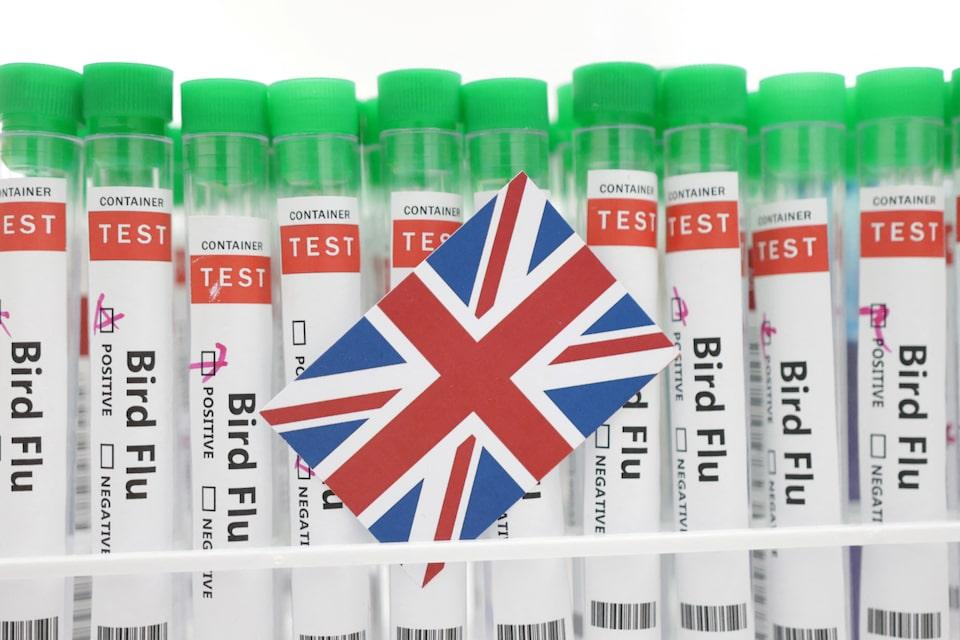
Aug 31 (Reuters) - The highly pathogenic avian influenza H5N1 virus was confirmed in poultry at a premises in southwestern England, the UK government said on Sunday. A 3 km (about 2 miles) protection zone and 10 km surveillance zone have been declared around the premises near Exminster in Devon, the government said, adding that "all poultry on the premises will be humanely culled." Sign up here. https://www.reuters.com/business/healthcare-pharmaceuticals/uk-confirms-h5n1-bird-flu-outbreak-southwestern-england-2025-08-31/
2025-08-31 17:23
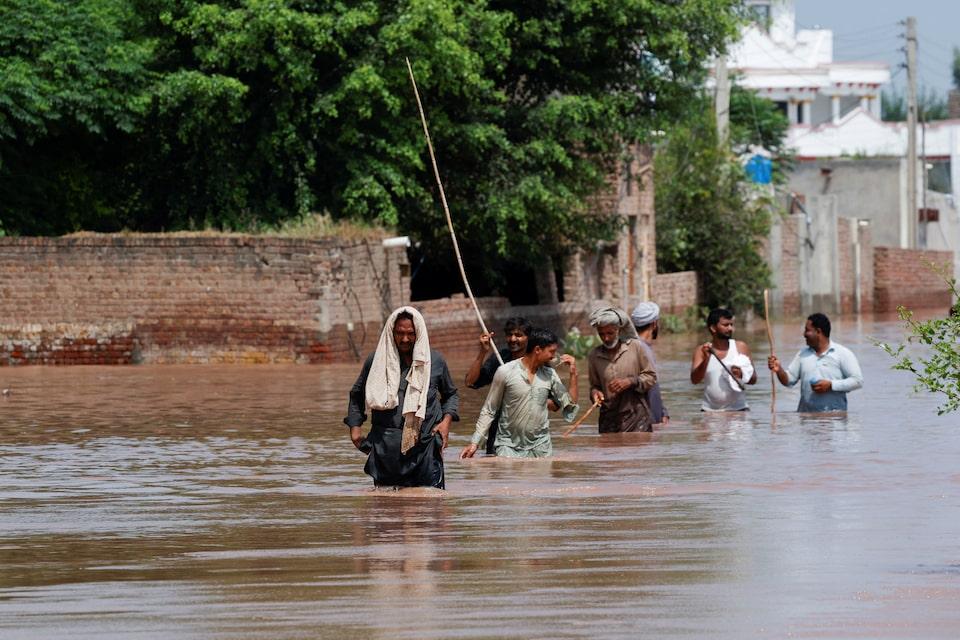
Floodwaters sweep into 1,400 villages in eastern province Punjab flooding is province's worst for 39 years More than 800 killed in Pakistan floods since late June India's dam water release worsens floods, officials say Pakistani authorities have evacuated more than a million people from homes in Punjab province this week, officials said on Thursday, as the worst flooding there in four decades caused havoc in hundreds of villages and submerged vital grains crops. Torrential monsoon rain and neighbouring India's release of excess water from its dams swelled three rivers that flow into the eastern province, forcing authorities to breach river banks in some places - causing flooding in more than 1,400 villages, Punjab's disaster management authority said. Sign up here. Residents of villages such as Qadirabad were walking through water up to their chests on Thursday after the River Chenab overflowed, causing sudden flooding. "We spent the whole night awake and frightened," Nadeem Iqbal, 26, a labourer, told Reuters as he waded through the water with one of his children. "Everyone was frightened. Kids cried. Women were worried. We were helpless," he said. Officials say flooding has been worsened in Punjab - home to half of Pakistan's people and a major producer of wheat, rice and cotton - by the release of water into the three rivers, the Ravi, Sutlej and Chenab, from Indian dams that were full. India, which routinely releases water from dams when they get too full, passed on three flood warnings to its arch rival Pakistan this week, calling them a humanitarian measure. Both countries are battling a heavy monsoon season that has unleashed flash floods. At least 60 people have died this month in hard-hit Indian Kashmir, while Pakistan's death toll since late June stands at 819. At least 12 people have died this week in Punjab province, said Marriyum Aurangzeb, a senior minister in the provincial government. 'THREAT EVADED' The waters of the Chenab threatened early on Thursday to burst through a 3,300-foot (1,000-metre) concrete barrage at Qadirabad that regulates flows, siphoning some of the water into a canal irrigation network. A collapse of the barrage would have inundated two nearby towns. To avert the danger, authorities deliberately blew up part of the riverbank at two places to release water onto nearby land before it reached the barrage, the provincial disaster management authority said. By Thursday afternoon, the level was down to 754,966 cusec, having reached nearly 1 million cusec overnight – well over its capacity of 800,000 cusec. A cusec is a flow of volume equivalent to one cubic foot, or 28 cubic litres, every second. "We have evaded the threat," a spokesperson for the authority said. Officials said shifting weather patterns were to blame for the floods in Pakistan, which has repeatedly been battered by flooding in recent years. In 2022, unprecedented flash floods caused by historic monsoon rains washed away roads, crops, infrastructure and bridges, killing at least 1,000 people. The head of Pakistan's National Disaster Management Agency, Inam Haider Malik, said that for the first time, weather systems coming from the east, south and west had converged over Pakistan this monsoon season. Planning Minister Ahsan Iqbal said climate change "is the new normal". "But it isn't unmanageable," he added. On the other side of the India-Pakistan border, Himalayan river levels began to recede after days of downpours and forecasters said they expected the rain to start easing from Thursday. https://www.reuters.com/sustainability/climate-energy/pakistan-evacuates-million-people-farming-belt-hit-by-worst-floods-decades-2025-08-28/