2025-08-29 10:36
LONDON, Aug 29 (Reuters) - What matters in U.S. and global markets today By Mike Dolan , opens new tab, Editor-At-Large, Finance and Markets Sign up here. Wall Street indexes continue to grind out new records as Federal Reserve doves push for an interest rate cut next month, but stock futures stepped back ahead of today's bell as inflation and trade updates were awaited and the Fed board row intensified. Just before the long Labor Day weekend, the July reading on the Fed's favored inflation gauge - the personal consumption expenditures (PCE) measure - is due for release on Friday along with goods trade data for the same month. Annual core PCE inflation is expected to have ticked up to 2.9%, although it will arguably be overshadowed by the more sensitive August payrolls report next week. * Chiming with White House demands, dovish Fed board governor Chistopher Waller - tipped by many to be the next Fed Chair - said that rates needed to be cut next month and that if August jobs and inflation readouts were soft enough then more than a quarter point reduction may be warranted. There was little to support that from Thursday's data at least, with Q2 GDP revised up to show 3.3% growth and weekly jobless claims ebbing. Fed futures price an 84% chance of a quarter point cut in September, with 55 basis points of cuts pencilled in by yearend. Treasury yields backed up slightly from Thursday's lows and the dollar firmed a touch. * Waller's Fed board colleague Lisa Cook filed a lawsuit on Thursday claiming President Donald Trump has no power to remove her from office, setting up a legal battle that could challenge long-established norms for the U.S. central bank's independence. Cook also sought an injunction that declares Trump's effort to fire her is unlawful and seeks to bar the Fed from taking steps to remove her pending further litigation. A hearing on the motion is set for 1000 EDT on Friday. If successful, it would allow Cook - who has always voted in step with the majority of Fed governors - to take part in September's policy meeting. * Elsewhere, the U.S. tariff exemption for package shipments valued under $800 ended on Friday, raising costs and disrupting supply chain models for e-commerce companies, small businesses using online marketplaces and consumers. The European Commission, meanwhile, proposed removing duties on imported U.S. industrial goods in return for reduced U.S. tariffs on European cars. China stocks outperformed and were on course for their biggest monthly gain in almost a year, despite a pullback in its red-hot tech sector and a cooling of the yuan from 2025 highs. British banks fell 3-5% after a UK think tank recommended the government tax banks on the billions of pounds they receive in interest from the Bank of England on the reserves. Today's Market Minute * The U.S. tariff exemption for package shipments valued under $800 ended on Friday, raising costs and disrupting supply chain models for e-commerce companies, small businesses using online marketplaces and consumers alike. * The Indian rupee hit a record low on Friday, slipping past the 88-per-dollar mark for the first time ever, as investors said the drag from punitive U.S. tariffs on Indian goods will hurt the country's growth and external finances. * Thailand's Paetongtarn Shinawatra has been dismissed as prime minister by the Constitutional Court for a violation of ethics after only a year in power, plunging the country and its stuttering economy into more uncertainty. * Amid the Federal Reserve drama and deluge of corporate earnings in August, one clear but overlooked trend emerged in U.S. equities: the rotation out of expensive tech stocks and into cheaper small caps. As the month draws to a close, ROI markets columnist Jamie McGeever writes, the big question is whether this can continue. * The world is going to need a lot of copper and other critical metals if it is going to pivot away from fossil fuels. But, ROI metals columnist Andy Home asks: can the mining industry deliver? Weekend reads * OVERHEATING OR SKEW?: U.S. Census Bureau numbers showing 2.2 million fewer foreign-born adults , opens new tab in July versus January are "almost certainly wrong", argues Peterson Institute fellow Jed Kolko, adding they are either incorrect or suggest a ludicrously overheated labor market with a jobless rate as low as 2.6%. Kolko explains that some or most of the decline is probably because immigrants are increasingly wary of responding to government surveys. The drop in immigrants is still very real and large - just not that large, he concludes. * LOWER JOBS BREAKEVEN: Falling net migration has likely cut by two thirds the 'breakeven' monthly payroll benchmark - the number of jobs the economy needs to add to keep the jobless rate steady, reckons St. Louis Fed economist Alexander Bick. Data from the last three months suggests a breakeven below 50,000 , opens new tab and if employment growth is revised downward again when the August jobs report is released on Sept 5, "it would support the low end of our estimate range - 32,000 jobs - being closer to the mark". * TRUST EROSION AND HAWKISH CUT: Former Fed Vice Chair Roger Ferguson says the Trump administration's attempt to remove Lisa Cook from the Fed board risks eroding trust in the central bank's autonomy , opens new tab, which undermines the dollar as a reserve currency and America's ability to service its debts. However, the most likely scenario for the September Fed policy meeting is a single 'hawkish cut' followed by a pause for the rest of the year, Ferguson wrote for the Council on Foreign Relations. * 'STABLECOIN PARADOX': Digital currencies pegged to fiat money face built-in tensions between credibility and competition, creating a 'stablecoin paradox', , opens new tab argue Eduardo Levy Yeyati and Sebastian Katz in column for CEPR's VoxEU. Pointing out that currency boards and hard pegs repeatedly failed under such pressure in the past, the 'paradox' is no longer abstract - it's the reality of a digital currency arms race between the two largest economies. The winner will be the system that can best resist erosion of its monetary discipline. America's test is how strict reserves can survive market incentives for growth while China is testing whether centralization can survive competitive pressures for private innovation. Both face the same trade-off: "stability requires discipline, but growth demands elasticity". * 'LAND SWAP' THAT WASN'T: Shortly after meeting Vladimir Putin in Moscow on August 6, U.S. envoy Steve Witkoff delivered major news to Donald Trump: The Russian president was prepared to offer significant territorial concessions to end his war in Ukraine. Witkoff's readout to the U.S. President prompted Trump to hail his emissary's "great progress" and announce a historic summit with Putin - indicating a land swap was on the table. But the diplomatic drive descended into confusion and the summit went nowhere. Reuters Gram Slattery, Jonathan Landay and Andreas Rinke report on what happened. Chart of the day The U.S. tariff exemption for package shipments valued under $800 ended on Friday. The U.S. Customs and Border Protection agency began collecting normal duty rates on all global parcel imports, regardless of value, country of origin, or mode of transportation at 12:01 a.m. EDT on Friday. It offered a flat-rate duty option of $80 to $200 per package shipped from foreign postal agencies for six months. The move broadens the Trump administration's cancellation of the 'de minimis' exemption for packages from China and Hong Kong in May as part of an effort to halt shipments of fentanyl and its precursor chemicals into the U.S. The de minimis exemption has been in place since 1938, starting at $5 for gift imports and was raised from $200 to $800 in 2015 to foster small business growth in e-commerce markets. Today's events to watch * U.S. July personal consumption expenditures inflation (PCE) guage, July personal income/consumption (8:30 AM EDT) July goods trade balance (8:30 AM EDT) July retail/wholesale inventories (8:30 AM EDT), University of Michigan final August consumer survey; Canada Q2 GDP revision (8:30 AM EDT) -- Want to receive the Morning Bid in your inbox every weekday morning? Sign up for the newsletter here. You can find ROI on the Reuters website , opens new tab, and you can follow us on LinkedIn , opens new tab and X. , opens new tab The opinions expressed here are those of the author, a columnist for Reuters. https://www.reuters.com/business/finance/global-markets-view-usa-2025-08-29/

2025-08-29 10:32
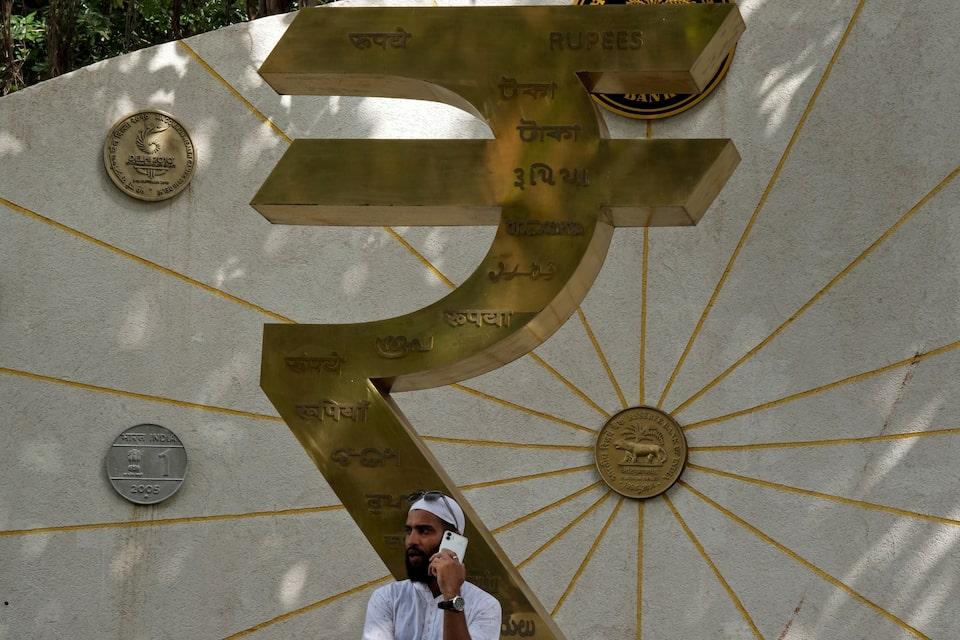
MUMBAI, Aug 29 (Reuters) - The Indian rupee plummeted to record lows on Friday, breaching the 88-per-dollar mark for the first time on concerns that punitive U.S. tariffs could hurt growth and further hit portfolio flows. Washington imposed an additional 25% tariff on Indian goods this week, doubling the total duties faced by the South Asian nation to 50%. Sign up here. The rupee ended at 88.1950 per U.S. dollar, down 0.65% on the day, marking its biggest one-day loss in nearly three months. The currency hit an all-time low of 88.3075 during the session, likely prompting intervention from the Reserve Bank of India. The rupee fell 0.68% in August, largely due to Friday's decline, extending its losing streak to the fourth month. "The U.S. tariffs are likely to prolong India’s balance of payment stress, keep financial flows weak, and widen the trade deficit," Dhiraj Nim, FX strategist at ANZ Bank said. "My view remains bearish on the rupee, with dollar/rupee likely to rise more despite a broadly weaker dollar." The U.S. tariffs are likely to shave off 60-80 basis points from India's GDP growth if they stay in place for a year, economists have said, potentially adding pressure on an already slowing economy. India's central bank currently expects the economy to grow by 6.5% in the current financial year that ends on March 31. Indian exports to the U.S. account for 2.2% of GDP but a sharp slowdown in labour-intensive industries like textiles and jewellery could lead to job losses and worsen the economic impact, economists have said. The tariffs could widen India's trade deficit at a time when foreign portfolio flows have been weak, worsening the country's balance of payments. Foreign portfolio investors have sold $9.7 billion in Indian debt and equities so far this year. They have pulled more than $1 billion from Indian equities over the two sessions following the announcement of additional U.S. tariffs. This week saw Indian equities register their steepest drop since March. The rupee’s decline this week—including a new all-time low against the yuan on Friday—could partially cushion the impact of higher U.S. tariffs. The rupee has struggled versus the dollar despite a broadly weaker dollar. "This is not a bad thing though because the trade weighted real effective exchange rate is now at the lowest level in 2 years and should help boost competitiveness," analysts at J.P. Morgan said in a note. https://www.reuters.com/world/india/rupee-plunges-all-time-low-steep-us-tariffs-logs-4th-month-loss-2025-08-29/
2025-08-29 09:30
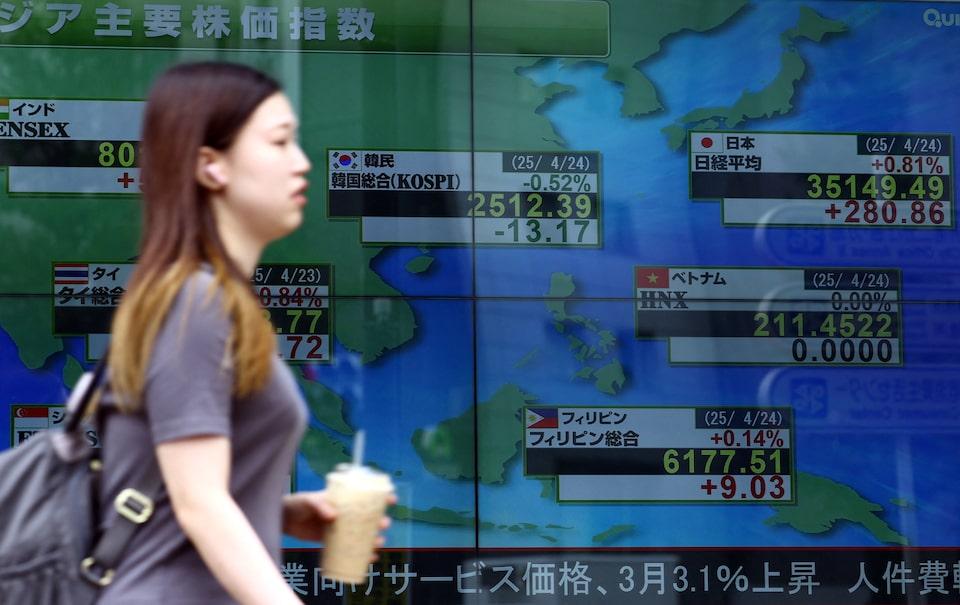
Stocks hesitant ahead of US PCE inflation data Dollar headed for monthly fall on rate cut bets, Fed worries European market risk on the rise due to French political woes LONDON, Aug 29 (Reuters) - World stocks inched back from their latest tech-led record highs on Friday ahead of U.S. inflation data that will feed the Federal Reserve's crucial - and increasingly politicised - interest rate plans. Traders were squaring up after another bullish month for global equities that has come despite brewing bond market worries over U.S. President Donald Trump's move to fire Fed policymaker Lisa Cook, and renewed political strife in France. Sign up here. Both Europe's STOXX 600 (.STOXX) , opens new tab share index and the euro were down and heading for their first weekly losses in four, while 0.6% dips on France's CAC 40 (.FCHI) , opens new tab and Germany's DAX (.GDAXI) , opens new tab left them set for trend-defying monthly drops. State Street's head of global macro strategy Michael Metcalfe said it was the first time in a long while that political risk was on the rise after a period where international investors have been pouring money into the region. "The question is do you take the fiscal risk in the euro or the Fed independence risk in the dollar," Metcalfe said. "This week, it looks like it's a score draw." Key European 30-year bond yields are also set to record their biggest monthly jumps since March. The largest move has come in France, where Prime Minister Francois Bayrou has called a confidence vote for September 8 that many expect him to lose. The closely-watched spread France pays over Germany for 10-year debt held at 78 bps, having soared over the last fortnight. . A UK bank share index (.FTNMX301010) , opens new tab fell 1.4% meanwhile after an influential think tank suggested the government could begin taxing banks based on their Bank of England reserves. Asia was mixed overnight with Chinese shares (.CSI300) , opens new tab clocking up their best month in almost a year with a more than 10% gain on hopes that its economy, especially the tech sector, is picking up. Japan's heavyweight Nikkei ended down on the day, although it too has jumped 4% in August and both it and MSCI's broadest index of Asia-Pacific shares outside of Japan (.MIAPJ0000PUS) , opens new tab are on an unbroken 5-month run of gains. One blip in China was a 1.7% pull back on the tech-focused STAR 50 Index (.STAR50) , opens new tab after it had surged more than 7% in the previous session, while shares in chip firm Cambricon Technologies (688256.SS) , opens new tab tumbled more than 6% after it issued a risk alert to investors in a stock exchange filing, citing a sharp rise in its stock prices since late July. "Certainly, when you see such a very, very large move, and then some warning coming from the company, you could think that there has been a little bit of overshooting," said Frank Benzimra, head of Asia equity strategy at Societe Generale. WAITING ON PCE In the broader market, focus now turns to the release of the U.S. PCE price index data - the Fed's preferred measure of inflation - later on Friday. Khoon Goh, head of Asia research at ANZ, said analysts would be looking to see whether the impact of trade tariff increases is starting to show. "There are three important pieces of data ahead of the September FOMC. So there's the PCE, then there's the payrolls number next week, and then the CPI reading." Traders are currently pricing in an 85% chance of a rate cut in September, up from 63% a month earlier, according to the CME FedWatch tool. Fed Governor Christopher Waller on Thursday said he wants to start cutting interest rates next month and "fully expects" more rate cuts to follow, to bring the Fed's policy rate closer to a neutral setting. The heightened expectations of imminent Fed rate cuts left the dollar on course for a monthly fall of 2% against a basket of currencies (.DXY) , opens new tab on Friday. The euro was last down 0.1% at $1.1677, pressured in part by political and fiscal worries in France, while sterling eased 0.2% to $1.3477, though was set for a monthly gain of more than 2%. The dollar was also battling headwinds from worries about Fed independence as President Donald Trump steps up his campaign to exert more influence over monetary policy, including his latest attempt to fire Fed Governor Lisa Cook. Cook filed a lawsuit on Thursday claiming Trump has no power to remove her from office. Elsewhere, oil prices fell on Friday, with Brent crude futures last down 0.6% to $68.20 a barrel, while U.S. crude dipped to $64.21 per barrel. Safe-haven gold was down 0.2% to $3,408.78 an ounce, while bitcoin fell 2% to just under 110,000 per dollar. https://www.reuters.com/world/china/global-markets-wrapup-3-pix-2025-08-29/
2025-08-29 09:17
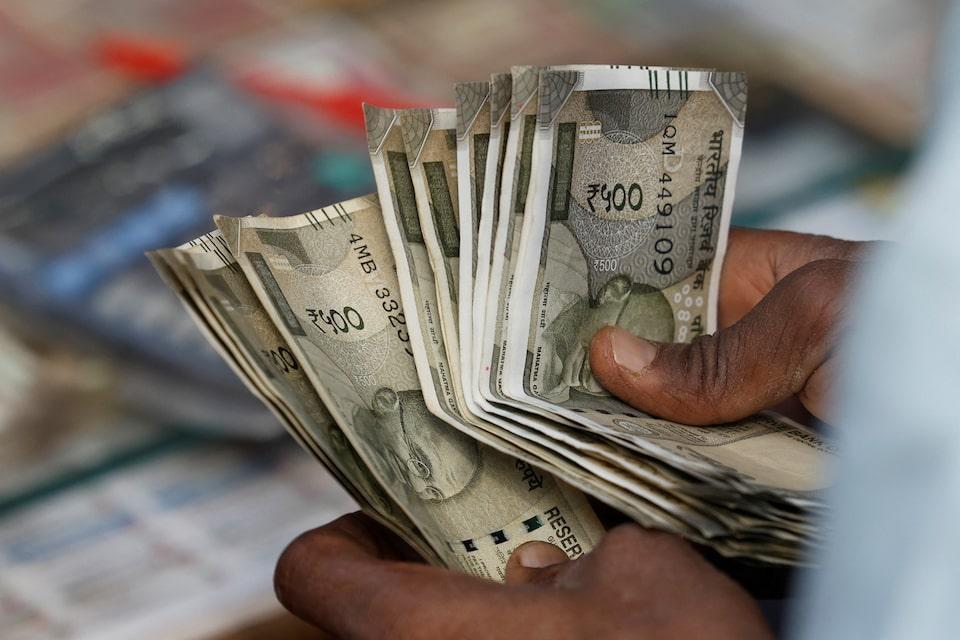
MUMBAI, Aug 29 (Reuters) - The Indian rupee weakened to a new all-time low against the offshore Chinese yuan on Friday, a move that could boost competitiveness for a segment of exporters in the South Asian nation facing hefty U.S. tariffs. The rupee dropped to 12.3862 against the offshore yuan on Friday, extending its weekly decline to 1.2% and the monthly drop to 1.6%. Sign up here. Over the past four months, the Indian currency has tumbled nearly 6% against the yuan. The rupee's fall versus the yuan reflects the contrasting recent news flow about U.S. tariffs for India and China, according to Gaura Sen Gupta, economist at IDFC FIRST Bank. Washington imposed an additional 25% tariff on Indian goods this week, doubling the total duties faced by the South Asian nation to 50%. Meanwhile Chinese goods face a lower 30% tariff from the U.S. with a pause on higher triple-digit duties remaining in place. The yuan-rupee forex rate matters for India’s trade performance, considering that the two economies compete directly in key U.S-bound sectors such as textiles, engineering goods and chemicals. A weaker rupee against the yuan makes Indian products relatively cheaper than those of Chinese rivals in the export market, partially cushioning the blow from higher U.S. tariffs. Plus, a weaker rupee against the yuan could help narrow India’s trade deficit with China. The yuan-rupee cross is among the key metrics tracked by the Reserve Bank of India, according to a person familiar with the central bank’s thinking. They asked not to be identified since they were not authorized to speak to media. The central bank did not immediately respond to a request for comment. The RBI will likely welcome the rupee’s drop against the yuan considering that it does not involve the currency weakening "beyond their comfort" versus the dollar, said Dhiraj Nim, FX strategist at ANZ Bank. "The RBI should anyway be welcoming a weaker rupee per se... that it is relative to the yuan, all the better," he said. The rupee fell past the 88-per-dollar mark on Friday, hitting a record low of 88.29. Bankers said the Reserve Bank of India likely stepped in to support the currency. https://www.reuters.com/world/india/indian-rupee-sinks-record-low-versus-offshore-yuan-likely-boost-competitiveness-2025-08-29/
2025-08-29 07:41
CAIRO, Aug 29 (Reuters) - Egypt's petroleum ministry said on Friday that two new wells in the deepwater West Delta have gone online, adding about 60 million cubic feet per day (mcfd) of natural gas to the country's output. Egypt seeks to boost gas production after increasingly turning to imports to meet domestic demand. Sign up here. The new output from the West Delta includes 50 mcfd from the Sapphire South Central DP well, the third drilled under phase 11 of the West Delta Deep Marine development with investment from Shell (SHEL.L) , opens new tab, and 10 mcfd from the Scarab D4 well, which was restored after years offline, the ministry said in a statement. Egypt, once a regional exporter, is having to import some of its gas as its own production has fallen due to aging fields and lack of investment in new fields. Egypt's gas production in May of 3,545 million cubic metres, was down more than 40% from March 2021, according to the Joint Organisations Data Initiative (JODI) which measures oil and gas production. On Tuesday, the Egyptian petroleum ministry said three new wells were being drilled to boost production from the country's largest gas field, Zohr, in the Mediterranean, and that another well in the area has already been linked to production adding 65 mcfd to national supply. The ministry said Zohr's output had dropped to 1.9 billion cubic feet per day by early 2024, well below the peak reached in 2019. It did not give current production data. This month, Egypt also signed a record $35 billion gas import agreement with Israel's Leviathan field partners. https://www.reuters.com/business/energy/egypt-increases-gas-production-two-new-west-delta-wells-go-online-2025-08-29/

2025-08-29 07:10
Aug 29 (Reuters) - Crypto exchange Binance said on Friday that it resumed all futures trading on the platform after an issue prompted a brief suspension of the service earlier. "The issue affecting Futures UM trading on Binance has been resolved," Binance said, referring to the service that allows users to settle crypto futures in stablecoins USDC and USDT. Sign up here. "All futures trading is now fully operational." https://www.reuters.com/technology/binance-resumes-futures-trading-after-brief-pause-2025-08-29/