2026-01-29 10:38
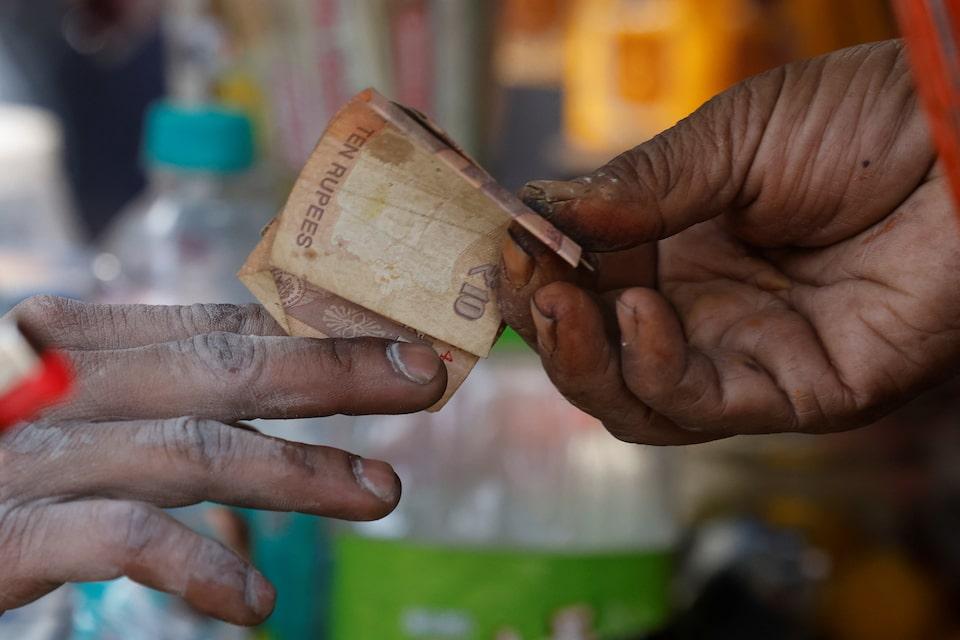
MUMBAI, Jan 29 (Reuters) - The Indian rupee is likely to gradually weaken to 93–94 to the U.S. dollar this year as capital inflows dwindle, highlighting the need for major measures to attract foreign funding, a senior official at DBS Bank India said. The currency slipped to a record low of 91.9850 on Thursday. A fall to 93 would mark a 1% additional decline, while 94 would imply a roughly 2% drop. Sign up here. "Rupee is likely to witness well-anchored depreciation towards 93–94," said Ashhish Vaidya, managing director & treasurer - global financial markets. "The RBI would be comfortable with year-on-year depreciation of 3–4% to reflect the impact of the trade deficit and the inflation differential, especially in the absence of capital flows." Capital outflows pressured the rupee through 2025 and continue to shape its outlook. The currency is already down 2.3% this month, adding to a near 5% decline last year. Foreign investors have withdrawn roughly $4 billion from local equities in January, with bankers noting that external commercial borrowing and net foreign direct investment inflows also remain subdued. As a result, bankers say attention is increasingly turning to other measures to support inflows. "The Reserve Bank of India will need to consider structural measures like an FCNR discount window to incentivise medium‑term inflows, to substitute for the lack of capital inflows," Vaidya said. Reintroducing a Foreign Currency Non-Resident window would allow banks to raise foreign currency deposits from non-resident Indians. The RBI last used this measure in 2013 during the "taper tantrum", when the rupee plunged as foreign investors withdrew capital after the Federal Reserve hinted it could reduce quantitative easing. The FCNR scheme helped bring in $25-$30 billion of inflows and alleviate pressure on the currency at the time. A trade limbo with the United States has compounded challenges to capital inflows, reinforcing foreign investor caution. The rupee has weakened nearly 5% since August, when the U.S. imposed tariffs on Indian exports. "A U.S.–India trade deal could assist in rooting out the negativity priced into rupee, though over the medium term, we would need growth capital to return to provide stability to the rupee," Vaidya said. Vaidya reckons that debt investments are also unlikely to revive in the current environment where global yields are inching higher and the rupee is under pressure. He expects conditions to improve only in the second half of the year, when U.S. rate cuts, combined with relatively higher domestic yields and a more stable currency, could restore the appeal of carry trades. (This story has been refiled to correct a typo in the DBS executive's name to 'Ashhish Vaidya,' not 'Ashishh Vaidya,' in paragraph 3) https://www.reuters.com/world/india/dbs-india-treasurer-sees-rupee-weakening-9394-flags-need-inflow-measures-2026-01-29/
2026-01-29 10:01
Policy rate on hold as expected Riksbank repeats forecast for unchanged rates ahead Says uncertainty has increased STOCKHOLM, Jan 29 (Reuters) - Sweden's central bank kept its key interest rate at 1.75% on Thursday as widely expected and repeated its forecast that no change was likely for the rest of the year. The central bank has been enjoying a rare "Goldilocks" moment where the economy is growing and inflation is close to the 2% target. Sign up here. The Riksbank's main scenario is that the current benign conditions will continue and that the policy rate will be unchanged "for some time to come." Nevertheless the outlook is finely balanced. Geopolitical tensions are running high, growth could disappoint and inflation undershoot. But if the global picture brightens, GDP growth may accelerate. "The uncertainty regarding the outlook for inflation and economic activity has increased," the Riksbank said in a statement. "The Riksbank is vigilant with regard to developments and is prepared to adjust monetary policy if the outlook changes." The Riksbank has cut rates eight times since spring 2024, most recently in September last year, in an effort to get wary consumers to start spending. The economy has started to pick up and the government expects GDP growth of around 3.0% this year after 1.0% in 2025. After being elevated through most of 2025, however, inflation is expected to cool, dropping well below the central bank's 2% target. Analysts' main scenario is for no change in the policy rate until early 2027, when they expect a hike. However, another rate cut has not been completely ruled out. "There are some tentative signs that the Riksbank ... is starting to see risks that inflation is becoming too low," Nordea economist Torbjorn Isaksson said in a note. "We expect the Riksbank to stay on hold at 1.75% in 2026, with risks clearly tilted to a rate cut." Capital Economics said the Riksbank would hike the policy rate in December this year. The central bank will announce its next policy decision on March 19. https://www.reuters.com/business/finance/swedish-central-bank-keeps-rates-hold-175-sees-no-change-ahead-2026-01-29/
2026-01-29 09:54
SINGAPORE, Jan 29 (Reuters) - MSCI (MSCI.N) , opens new tab is a powerhouse within the $139 trillion asset management industry and its decisions are hugely consequential for countries around the world - as Indonesian investors learned this week to their cost. The Jakarta Composite Index plunged by as much as 16.7% in the past two days, after an MSCI warning that a possible downgrade to frontier market status from emerging markets triggered a wave of capital flight. The index recovered later in Thursday's trading session, but still closed down 1.1% to log a second consecutive day of decline. Sign up here. WHAT IS MSCI? Formerly known as Morgan Stanley Capital International, the company's index products are one of the biggest and most important reference points for stock markets around the world. It does no investing of its own, but decisions on which countries and companies to include in its flagship Emerging Markets Index , opens new tab, which tracks some $10 trillion of stocks, can carry enormous weight with global investors. Index compilers, including FTSE Russell and S&P Global, have reshaped the global investment landscape as exchange-traded funds around the world have grown in popularity - and clout. For active fund managers and index trackers alike, MSCI's decisions on which countries and companies to include or exclude can force automatic rebalancing of portfolios and billions of dollars of capital flows. WHAT DID MSCI DO TO INDONESIA AND WHY DID THE MARKET FALL? MSCI said in a statement that clients flagged problems around market data that obscured what proportion of Indonesian companies' shares could be freely traded and how the exchange categorised stock owners. The index provider said its clients pointed to opaque shareholding structures and coordinated trading behaviour by market investors undermined "proper price formation". MSCI has given Indonesia until May to show signs of progress, at which point it will reassess its status. That could result in a lower weighting for Indonesia in its emerging market benchmark, or even a downgrade to frontier market status. It was that threat which caught investors by surprise, and triggered a stampede towards the exits. WHAT HAPPENS IF INDONESIA GETS KICKED OUT OF THE EMERGING MARKET CATEGORY? Upgrades and downgrades by MSCI have had enormous implications for countries and markets in the past and are likely to weigh on Indonesian markets for a while. Goldman Sachs estimates that foreign investor outflow could reach $7.8 billion if Indonesia is downgraded to frontier market, a scenario the investment bank and some investors deem unlikely. Indonesia accounts for about 1% weighting in the MSCI emerging markets, which is dominated by China, Taiwan and India. Whether MSCI's move spurs other index providers remains to be seen. FTSE Russell said it was monitoring the situation closely. WHAT DOES INDONESIA SAY - AND WHAT HAPPENS NEXT? Index reclassification consultations typically take months or years to be made effective, but foreign investors do not have much incentive to hang around when they know that a wave of money is due to roll in - or out. That puts the ball back into the Indonesian government's court. Indonesian financial authorities said on Thursday that the government accepted the index compiler's views as "good input". They added that their communications with MSCI had been positive and they were awaiting a response to proposed measures, which include doubling the free float requirement on listed firms to 15%. The government has shown a willingness to punish foreign firms for downgrading its markets in the past. It penalised JPMorgan Chase & Co in 2015 after the investment bank's research arm recommended a smaller exposure to the country's bonds, and again in 2017 when it issued a similar rating on its stocks. https://www.reuters.com/world/asia-pacific/what-is-msci-what-has-it-done-indonesias-stock-market-2026-01-29/
2026-01-29 09:48
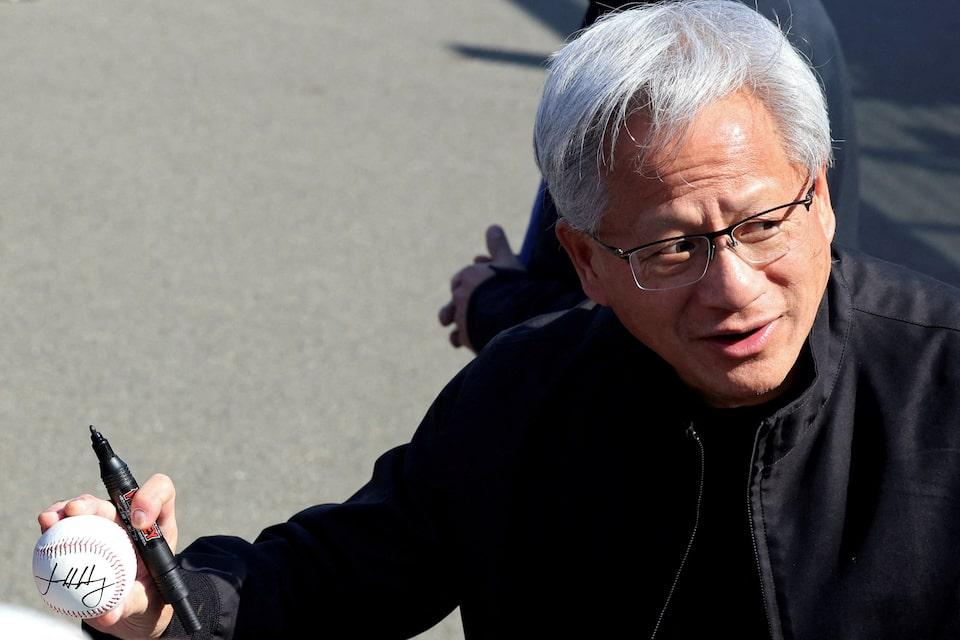
Huang visited China to engage with customers, partners and officials License for H200 chips is being finalised, Huang says Nvidia awaits Chinese decision on H200 chip imports TAIPEI, Jan 29 (Reuters) - Nvidia (NVDA.O) , opens new tab CEO Jensen Huang said on Thursday he hopes China will allow the U.S. technology giant to sell its powerful H200 artificial intelligence chip in the country and that the licence is being finalised. Huang arrived in Taipei after a trip to China where he said he visited customers, partners and government officials. Sign up here. "The H200, the actual license for H200 is being finalised. And I'm hoping that also the Chinese government would allow Nvidia to sell the H200, so they have to decide. And I'm looking forward to a favourable decision," he told reporters at Taipei's downtown Songshan airport. "I think that H200 is very good for American technology leadership. It's also very good for the Chinese market. And the customers would very much like to have H200," he said. "And so I'm looking forward to a good decision. And so we just have to wait patiently," he added. CHINA APPROVES CHIP PURCHASES WITH CONDITIONS Citing sources, Reuters reported on Wednesday that China has given approval to ByteDance, Alibaba (9988.HK) , opens new tab and Tencent (0700.HK) , opens new tab to purchase more than 400,000 H200 chips in total. However, the approvals came with conditions which one source said were too restrictive, with customers not yet converting the approvals to purchase orders. Huang said the company has not received such information and that his understanding was that the Chinese government was still in the process of deciding. He did not elaborate why China was still deciding. China has not given a reason for not quickly approving the imports of H200 into the country, but Beijing has wanted to balance meeting demands of its AI industry against nurturing its domestic semiconductor industry. The H200, Nvidia's second most powerful AI chip, has become a major flashpoint in U.S.-China relations. Despite strong demand from Chinese firms and U.S. approval for exports, Beijing's hesitation to allow imports has been the main barrier to shipments. Huang also said China has many strong chip companies and Nvidia needed to compete quite vigorously. "The first thing that we need is orders. And we have a supply that supports all of our existing customers," Huang said when asked how he would manage packaging capacity, which is already constrained, with manufacturing partner TSMC (2330.TW) , opens new tab. "If H200 is approved, we will work with TSMC to schedule and plan the supply and deliver as fast as we can." HUANG SIGNALS INTEREST IN OPENAI FUNDING ROUND Huang said he would love to invest in OpenAI in response to a question about potential further investment in the ChatGPT creator, without confirming the size of its funding. Nvidia, Amazon (AMZN.O) , opens new tab, and Microsoft (MSFT.O) , opens new tab, are in talks to invest up to $60 billion in OpenAI, with the chip titan providing up to $30 billion, The Information reported on Wednesday. The U.S. chip giant relies heavily on Taiwan’s supply chain, working closely with Taiwan Semiconductor Manufacturing Co (2330.TW) , opens new tab, the world's largest contract chipmaker, and major contract manufacturers including Foxconn (2317.TW) , opens new tab and Wistron (3231.TW) , opens new tab. TSMC is also investing $165 billion in Arizona to build factories to meet growing customer demand there. “My expectation is that the demand for TSMC wafers and capacity will far exceed the amount of energy available in Taiwan,” Huang said. “And so I think that's great for TSMC. TSMC has a global footprint now," the Taiwan-born CEO said, adding he plans to meet TSMC CEO C.C. Wei and other Taiwanese supply chain partners. (This story has been corrected to fix garbled text in paragraph 15) https://www.reuters.com/world/asia-pacific/nvidia-ceo-says-h200-licence-china-is-being-finalised-2026-01-29/
2026-01-29 08:01
Market awaits possible takeover offer from Rio Tinto Glencore aims to increase copper output through new and restarted mines Cobalt output also declines LONDON, Jan 29 (Reuters) - Glencore's (GLEN.L) , opens new tab copper production declined by 11% in 2025, though higher copper grades and recoveries at several mines boosted output in the second half, the company said on Thursday. At 851,600 metric tons, the year's production was at the lower end of an earlier forecast of 850,000-to-875,000 metric tons. Sign up here. The market awaits a possible takeover offer from rival Rio Tinto (RIO.AX) , opens new tab, (RIO.L) , opens new tab for Glencore that is expected to be announced by February 5. The price of copper, needed for the global shift to lower carbon energy, AI, and defence, has hit record levels as traders anticipate tightening supply. LOWER GRADES AND TIGHTER SUPPLY Glencore's copper guidance for this year is between 810,000 tons and 870,000 tons, in part because of lower ore grades and water constraints at Chilean mine Collahuasi, which it co-owns with Anglo American (AAL.L) , opens new tab. This range is in line with its December forecast that had a midpoint of 840,000 tons, down from 930,000 previously. Glencore aims to lift annual copper output to 1.6 million tons by 2035 through a mixture of new and restarted mines. However, if talks with Rio Tinto progress toward creating the world's largest mining group, valued above $200 billion, the company's long-term outlook could shift. Glencore also produces cobalt, another critical mineral for the energy transition, in the Democratic Republic of Congo, which accounts for more than 70% of global mined production. It said it produced 36,100 tons of cobalt last year, down 5% on 2024. The central African country in October launched a system of export quotas. Glencore expects to export 22,800 tons this year. The miner and trader said it expects its full-year marketing earnings before interest and tax at the mid-point of its $2.3 billion to $3.5 billion range. Its 2025 steelmaking coal production increased to 32.5 million tons from 19.9 million tons. Glencore produced 98 million tons of thermal coal in 2025, down from 99.6 million tons in 2024, maintaining its position as one of the world's largest producers and exporters of the fuel. https://www.reuters.com/business/glencore-reports-11-drop-2025-copper-output-2026-01-29/
2026-01-29 07:47
India is a key market for social media companies like Meta Government must consider age-based access limits, adviser says Cheap data plans boost use of social media apps Digital addiction hurts academic performance, adviser says NEW DELHI, Jan 29 (Reuters) - India's chief economic adviser proposed age-based limits on access to social media platforms he said were "predatory" in their approach to keeping users online, signalling a potential blow to Meta and YouTube in their largest user market. Such a shift would pull India in line with a growing global trend, after Australia became the first nation last year to ban social media for children younger than 16. Sign up here. On Monday, France's National Assembly backed legislation to ban children under 15 from social media and Britain, Denmark and Greece are studying the issue. The adviser, V. Anantha Nageswaran, recommended in India's annual economic survey that families promote screen-time limits, device-free hours and shared offline activities. "Policies on age-based access limits may be considered, as younger users are more vulnerable to compulsive use and harmful content," he wrote in the survey, which was published on Thursday. "Platforms should be made responsible for enforcing age verification and age-appropriate defaults." INDIA A HUGE MARKET FOR SOCIAL MEDIA FIRMS The recommendations are not binding, but are reflected in policy discussions in Prime Minister Narendra Modi's government. Past recommendations have prompted tax reforms, easing rules on Chinese investment and stronger digital infrastructure. India, the world's No. 2 smartphone market with 750 million devices and a billion internet users, is a key growth market for social media apps, and does not set a minimum age for access. Research firm DataReportal says YouTube has 500 million users in India, Facebook 403 million, while Instagram has 481 million. Facebook operator Meta (META.O) , opens new tab, YouTube-parent Alphabet (GOOGL.O) , opens new tab and X did not immediately respond to requests for comment. Meta has previously said it backs laws for parental oversight while adding: "Governments considering bans should be careful not to push teens toward less safe, unregulated sites." New Delhi has repeatedly clashed with social media companies like Meta and X over the years over content moderation, local data storage, user safety and not complying with content takedown orders promptly. In a press briefing, Nageswaran on Thursday called the platforms "predatory" in their approach to maximise user engagement and time spent by users, adding that "such algorithms are particularly targeted at youngsters between the ages of 15 and 24." Cheap telecom data plans have boosted use of social media apps in recent years, with 75% of young smartphone users on the apps, the survey report said. "Digital addiction negatively affects academic performance and workplace productivity due to distractions, 'sleep debt', and reduced focus," Nageswaran added. 'CHILDREN SLIPPING INTO RELENTLESS USAGE' The recommendation follows growing efforts among Indian states to rein in screen time for young people. The coastal state of Goa and the southern state of Andhra Pradesh have said they are studying Australia's regulatory framework, with an eye to similar bans for children. "Trust in social media is breaking down," Nara Lokesh, the infotech minister in Andhra Pradesh, wrote on X on Thursday, saying the state would study legal frameworks for age-appropriate access. "Children are slipping into relentless usage, affecting their attention spans and education." Nageswaran said "we are very happy" the two states are considering restrictions for children. Some activists and tech experts have called for measures to help children and parents develop healthy and safe social media usage, saying that age-based curbs do not work as children can bypass them with fake identification documents. https://www.reuters.com/world/india/india-should-consider-age-based-limits-social-media-access-economic-adviser-says-2026-01-29/