2025-08-28 10:22
American Bitcoin expected to trade on Nasdaq in September Gets investment from crypto, traditional investors, Hut 8 says Co-founder Eric Trump focusing on American Bitcoin's strategy HONG KONG, Aug 28 (Reuters) - American Bitcoin, the bitcoin miner backed by two of U.S. President Donald Trump's sons, has locked in crypto and traditional investors to back an all-stock merger that will allow the firm to soon start trading on the Nasdaq, the company's largest investor said. The unlisted firm's merger with Gryphon Digital Mining (GRYP.O) , opens new tab is set to be finalised shortly, and the goal is to start trading in early September, according to Asher Genoot, the CEO of Hut 8 (HUT.O) , opens new tab, which holds 80% of American Bitcoin. Sign up here. Anchor shareholders in the listing have been finalised, he said, adding crypto exchange Gemini's co-founders Tyler and Cameron Winklevoss had invested in the new firm. Gemini did not immediately respond to Reuters' requests for comment. American Bitcoin's co-founder, Eric Trump, his brother Donald Trump Jr and Hut 8 (HUT.O) , opens new tab, will own a combined 98% of the newly formed entity, which will retain the name American Bitcoin and trade under the stock code ABTC. "Instead of going public directly via IPO, we thought that there was a lot more advantages to financing if we had an existing company that already had access to different financing too," Genoot told Reuters at the Bitcoin Asia conference in Hong Kong. Eric Trump is also in Hong Kong and will travel to Tokyo at the weekend for an event for Metaplanet, a Japanese bitcoin treasury firm, Genoot said. American Bitcoin is hunting for crypto assets to buy in Hong Kong and Japan to build out its global business, the Financial Times reported two weeks ago. Genoot said American Bitcoin could take stakes in companies outside the U.S. to give people access to publicly listed bitcoin assets, as some investors were prevented from buying Nasdaq-listed stocks. "Right now it's very early. So we haven’t been committed to anything," he said. Launched in March 2025 by Hut 8, together with Eric Trump and Donald Trump Jr, American Bitcoin has vowed to become "the world’s largest, most efficient pure-play bitcoin miner." The creation of the firm comes as the U.S. accelerates crypto-related legislation to support the growth of the industry under President Donald Trump. Genoot said the new firm would accumulate the cryptocurrency through both mining and buying. "Instead of just a treasury strategy where companies raise money to buy bitcoin or just a mining company... we ebb and flow between which one is the best return at different times," he said. Miami-based Hut 8 was also a crypto miner but has shifted its focus to energy infrastructure and data centers after launching American Bitcoin with the Trump sons. Hut 8 will lease data centers to American Bitcoin, Genoot said. President Trump's critics have accused him of conflicts of interest in promoting the crypto industry at a time when his family is involved in the sector, allegations which the White House has brushed aside. Genoot said American Bitcoin's business had nothing to do with government, and Eric Trump was mainly involved in strategy, such as in relation to bitcoin mining, new site development and treasury strategy. Separately, at the same conference, Nakamoto Holdings, a bitcoin treasury company led by crypto advocate David Bailey, said it was looking across Asia's crypto startup scene and planned to support early-stage companies to grow the crypto ecosystem. "We're also going to be looking at other opportunities where we can incubate and do M&As," said Kevin Zhang, head of Asia at Nakamoto. https://www.reuters.com/world/asia-pacific/american-bitcoin-backed-by-trump-sons-aims-start-trading-september-2025-08-28/

2025-08-28 09:52
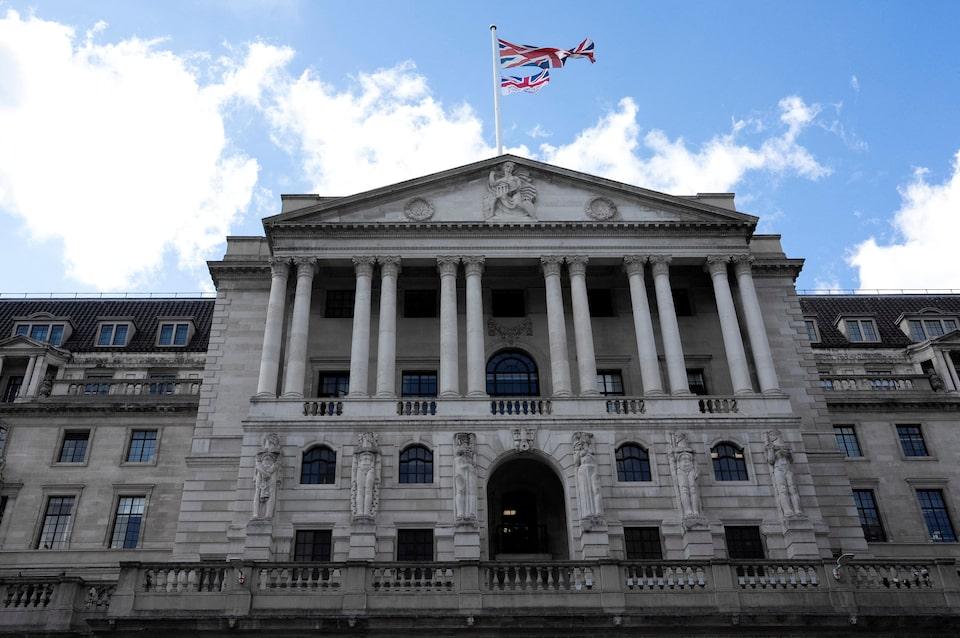
LONDON, Aug 28 (Reuters) - The Bank of England on Thursday allotted a record 75.652 billion pounds ($102.20 billion) in seven-day funds in its weekly short-term repo operation, higher than a previous record of 74.225 billion pounds set in July. The BoE has increasingly used its short-term repo operations as a way to provide banks with reserves as it runs down the stockpile of government bonds which it bought under its quantitative easing programme. Sign up here. ($1 = 0.7402 pounds) https://www.reuters.com/world/uk/bank-england-allots-record-7565-billion-pounds-short-term-repo-operation-2025-08-28/
2025-08-28 08:51
FRANKFURT, Aug 28 (Reuters) - Growth in euro zone bank lending accelerated to a fresh two-year high last month on the back of lower interest rates and a gradual economic recovery, European Central Bank data showed on Thursday. Loans to households grew by 2.4% in July, the biggest increase since April 2023, from 2.2 in June. Credit to companies increased by 2.8% from 2.7%, marking its fastest pace since June 2023. Sign up here. https://www.reuters.com/business/finance/euro-zone-lending-growth-edges-up-new-2-year-high-2025-08-28/
2025-08-28 07:43
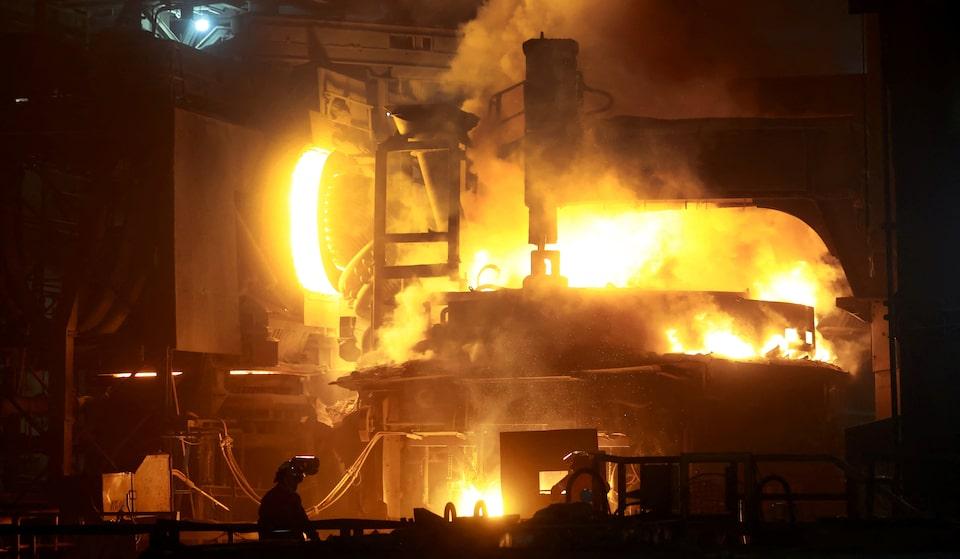
UK industrial electricity costs higher than US, Europe Companies say it is making net zero switch harder High prices also hitting competitiveness, investment levels BRIDGNORTH, England, Aug 28 (Reuters) - In the cradle of the industrial revolution, Britain's only aluminium coil mill has spent millions of pounds to save energy, reduce its carbon footprint and shield itself from some of the highest electricity costs in the world. But when Bridgnorth Aluminium's electricity use slips below the threshold to qualify for a government subsidy that helps businesses with their bills, it cranks everything up again to avoid missing out on the financial payout. Sign up here. "Our finance guy sat us down at the end of the year and said it's okay to leave the lights on a bit more now. Which is kind of weird and counterproductive," Adrian Musgrave, the head of sales at Bridgnorth Aluminium, said. This paradoxical situation stems from Britain's sky-high electricity costs, coupled with the piecemeal support successive governments have given to big industrial power users. According to the International Energy Agency, large energy intensive companies in Britain paid about four times more for electricity last year than U.S. businesses, and more than double competitors in France and Germany. Besides hitting competitiveness and contributing to stubbornly high British inflation rates, power prices have acted more generally as an obstacle to Britain's shift towards cleaner energy and the government's goal of hitting net zero by 2050, according to more than 25 industry figures including business owners, energy managers and policy experts. They said high power costs have stripped companies of the cash to invest in more efficient machinery, deterred them from moving to lower-carbon electricity sources, and prevented some from competing with foreign rivals to make the wind farms, pylons and batteries needed for a net zero future. "This is the number one barrier to delivering net zero in the UK at the moment," said Rachel Solomon Williams, head of the Aldersgate Group, which works with companies and government on policies to help them decarbonise. "It will materially hinder net zero if we can't do something about electricity costs." Britain's new centre-left Labour government sees the energy transition as a way to fuel much-needed economic growth, with the creation of highly skilled manufacturing jobs and innovative companies that can export their expertise. FOSSIL FUEL ROLLERCOASTER Prices are higher in Britain than most countries because even though it generated more than half its electricity last year from cheaper renewables such as wind and solar, the price is almost always set by gas, which is more expensive. Wholesale electricity prices are set every 30 minutes by the cost of the last energy source used to ensure demand is met. So even if wind, solar and nuclear provide 99% of the power needed, if gas-fired plants are needed to hit 100%, then gas sets the wholesale price for every buyer and seller alike. On top of that, part of the cost of building renewables and upgrading the energy network comes from electricity bills, rather than from tax revenues, with levies making up about 40% of the average bill. Other countries in Europe use the same marginal cost pricing structure in wholesale electricity markets but in France, for example, the vast majority of its power comes from nuclear meaning gas sets the price less frequently. To bring costs more in line with big European markets, the British government has proposed removing 90% of grid network charges for the most intensive energy users, up from 60% now. At Bridgnorth, staff have been trained to minimise energy usage, lights dim when part of the factory is not being used, and the design of the furnace fans is being changed so smaller, less energy intensive motors can be used. It gets a chunk of its power from a nearby anaerobic digestion plant that creates clean energy from food waste and would like to build a solar plant on site and take other steps to make its electricity more efficient, but that would push it below the threshold for government support. It would also like to recycle scrap to build a circular economy but high energy costs have curbed its ability to invest. "Our monthly spend on energy is 1 million pounds ($1.35 million), so you quickly understand the importance of factoring energy into our strategic thinking," Musgrave said. Bridgnorth is part of the British Industry Supercharger scheme, where companies making core products such as steel, glass and chemicals - and spending more than 20% of their economic output on power - are exempt from green levies and most network costs. Bridgnorth, which makes large sheets of rolled aluminium, carefully tracks how much it produces, and its energy costs, to avoid dropping below the 20% threshold - and losing 3 million pounds a year in support. A government spokesperson said Britain was investing to get the country "off the rollercoaster of fossil fuel markets". "After a decade of inaction on industrial energy prices, we are slashing the electricity costs for thousands of businesses by up to 25%, making them more competitive and unlocking growth," they said. 'THIS IS JUST BONKERS' Bridgnorth Aluminium is not alone in struggling to stay competitive while navigating the shift to net zero emissions when faced with such high electricity prices. Just over a mile away is Grainger & Worrall, a pioneer in the world of "gigacasting", a technique adopted by electric vehicle makers such as Tesla (TSLA.O) , opens new tab to cast large, lightweight structural parts in one go. It makes casts out of sand and, to eliminate waste, it recycles it, but that takes huge amounts of energy. "It's making us less and less competitive, which is bizarre, but it is the right thing to do," Chief Executive Duncan Eldridge said. "What it means is that we are spending more money on electricity, and less money on capital investment." For Amtico, a flooring company in Coventry also in Britain's historical industrial heartland, energy costs became so high it crunched the numbers to see if it could find alternatives to the grid, Chief Executive Jonathan Duck said. The conclusion? The cheapest option was to build a gas-fired heat and power plant on site - still paying for gas but avoiding many of the fees and levies that make up nearly 60% of electricity bills for industrial users. "I'm kind of scratching my head going, well, this is just bonkers, because the structure of the market is encouraging me to set up my own gas-fired power station, when that shouldn't really be the future," he said. Amtico chose not to build the plant, because it did not feel "morally right". And in the Welsh capital Cardiff, 7 Steel UK, which uses an electric arc furnace to make the low-carbon steel that goes into wind farms and electricity pylons, takes a radical approach. When wholesale prices get too high, it simply switches off its thunderous furnace, sometimes halting production for days at a time. Last year, due to high costs and sluggish demand, the furnace only operated at just over 70% capacity. "Decarbonisation work in the UK is reliant on steel, yet we don't seem to be really grasping that concept," said Gabriella Nizam, 7 Steel's head of sustainability. 'IN SURVIVAL MODE' To stop non fossil fuel power generators making excessive profits from high electricity prices, the government introduced a windfall tax on them in January 2023. It is due to end on March 2028. Successive governments have also looked at how to break the link between gas and electricity prices, including by offering renewable energy directly to consumers in a green power pool rather than through the wholesale market. Michael Grubb, an energy policy expert at University College London, said while the government had acknowledged this could work, it was untried and considered too radical. "Their priority was trying to get maximised investment," he said. Green energy advocates and many policy experts say Britain is in the expensive investment phase of its energy transition, and prices will come down when more renewables come on stream and gas is used less to meet demand. But for now, it is complicating the energy transition. Britain had early success in cutting emissions, building one of the world's biggest offshore wind sectors to phase out coal over the past 15 years. It is now aiming to generate at least 95% of its domestic electricity from low-carbon sources by 2030, with 65% coming from non fossil fuel sources last year, data from Ember showed. To reach net zero, Britain needs its heating, transport and manufacturing industries to switch away from fossil fuels, but these sectors are also deterred by high electricity costs. Japanese carmaker Nissan (7201.T) , opens new tab says its British plant has the highest electricity costs of any of its facilities worldwide, threatening its ability to make EVs there. IHG (IHG.L) , opens new tab, one of the world's biggest hotel companies, says its British hotels have struggled to follow those in Europe and southeast Asia in adopting hot water heat pumps to cut emissions, because the running costs are prohibitive. Many of the companies Reuters spoke to, particularly in heavy industry, question how long they can keep going when high electricity costs prevent them from investing to keep up with international rivals. "We are constantly in survival mode," 7 Steel's Nizam said. "We will eventually get there, but the question is what will be left of the sector by that time?" ($1 = 0.7402 pounds) https://www.reuters.com/sustainability/boards-policy-regulation/sky-high-electricity-costs-hinder-britains-net-zero-mission-2025-08-28/
2025-08-28 07:39
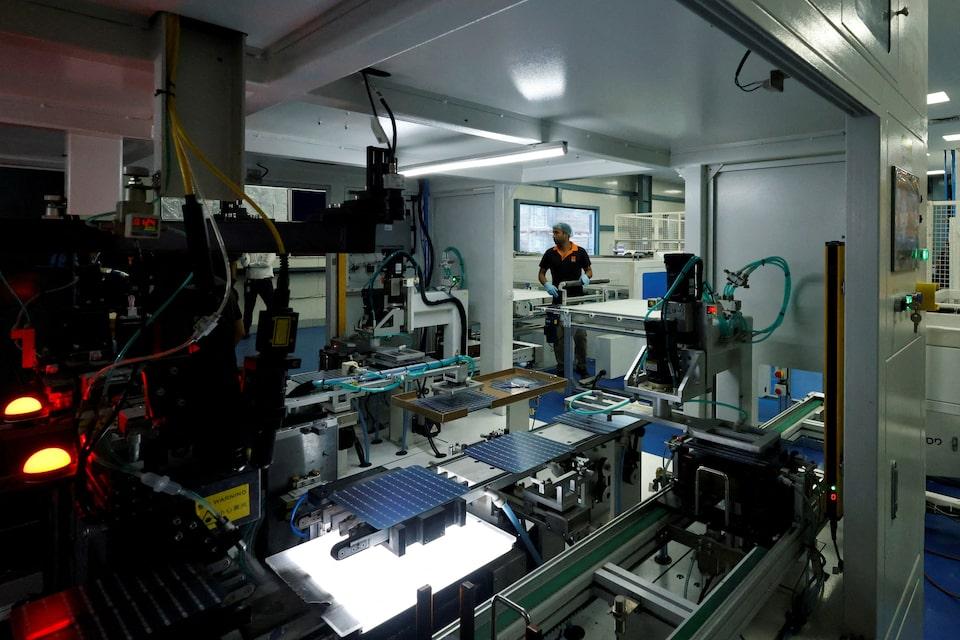
Analysts expect solar panel glut in India by 2026 US tariffs, potential duties to choke Indian exports India using cheap Chinese cells to boost production of panels Local purchase rules for cells by June to drive up panel prices SINGAPORE/NEW DELHI, Aug 28 (Reuters) - High U.S. tariffs and potential anti-dumping duties on Indian solar panel exports will exacerbate a supply glut in India next year as domestic project bidding slows, according to industry officials and analysts. U.S. President Donald Trump's 50% tariffs on shipments from India will choke panel sales to its top overseas market, which accounts for 90% of module exports, they said. Sign up here. The situation could deteriorate further if anti-dumping duties are imposed on some manufacturers following a petition filed on July 17 by U.S. solar companies with the Commerce Department seeking duties on imports from India, Indonesia, and Laos. "The 50% tariff will squeeze margins, and potential anti-dumping duties will make competing in the U.S. even tougher," said Raj Prabhu, CEO of clean energy consultancy Mercom Capital. India's awards of solar generation projects and new tenders slowed dramatically in the quarter ended June, with an adviser to the federal power ministry urging renewable developers to bid cautiously in line with demand growth projections. "We expect that India will enter overcapacity stage already in 2026, which will feel even worse with the loss of the U.S. market," said Wood Mackenzie analyst Yana Hryshko. New Delhi's incentives — including import duties and domestic manufacturing mandates — helped double module production capacity annually to 74 gigawatts by March. State Bank of India Capital Markets projects this will reach 190 GW by 2027. India's solar module factories are already running at only 25% of total capacity on average, said Vinay Rustagi, chief business officer of manufacturer Premier Energies (PEME.NS) , opens new tab. "Some companies are running at 80%-85% like us, others are running at much lower capacity," he said. CHINA CELL IMPORTS If anti-dumping duties are imposed, Indian manufacturers must either find alternative markets or supply domestically, Hryshko noted. Finding new markets will be challenging. Indian solar modules made using Chinese cells are 48% more expensive than China-made modules, while those using Indian cells are roughly 143% more expensive, Mercom data shows. India has capitalised on an 82% decline in prices of Chinese cells since late 2022 and steadily boosted exports of modules, energy think-tank Ember said. The local solar module manufacturing push has helped companies such as Waaree (WAAN.NS) , opens new tab and Adani (ADEL.NS) , opens new tab increase lucrative U.S. exports. But it has also pushed up solar generation costs, which are passed on to debt-laden power retailers. India plans to mandate domestic cell use from June 2026, despite these costing over three times more than Chinese alternatives, according to Fei Chen, an analyst at consultancy Rystad Energy. Analysts say the move may trigger increased Chinese imports before the rules take effect. "Reliance on cell imports is likely to increase in the short term, potentially leading to stockpiling, price spikes, and supply chain pressures," Mercom's Prabhu said. https://www.reuters.com/sustainability/climate-energy/us-tariffs-worsen-india-solar-panel-glut-domestic-bidding-slows-2025-08-28/
2025-08-28 07:32
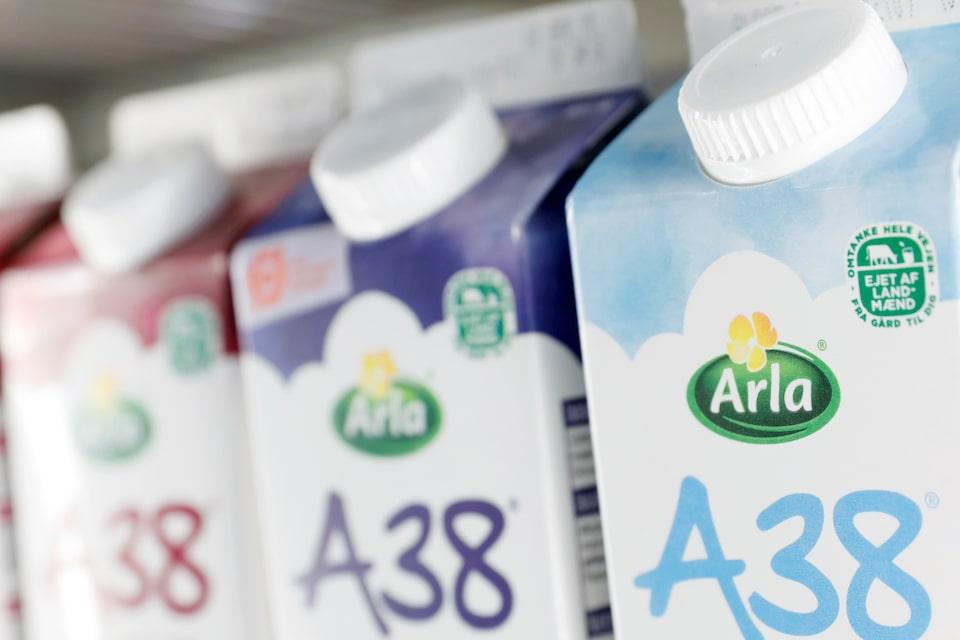
COPENHAGEN, Aug 28 (Reuters) - Dairy producer Arla's sales for the first half of the year rose by 13% though sales of its key products such as Lurpak butter and Castello cheese fell. "High commodity prices and geopolitical uncertainty continued to weigh on consumer sentiment, resulting in a modest decline in branded volumes," Arla CEO Peder Tuborgh said in a statement. Sign up here. Its revenue for the January-June period grew to 7.5 billion euros ($8.78 billion) from 6.6 billion euros last year but the company saw a 1.5% decline in its sales of branded products, which include the Arla brand, Lurpak, Puck, Castello and Starbucks, compared to last year. Arla said it expected the situation to improve in the second half of the year. Global milk production has begun to recover from a slump, Arla said, due to factors such as improved weather conditions, contributing to a slight softening of global dairy commodity prices, it added. Arla, which competes with companies like Danone and Nestle in the dairy industry, is owned by more than 8,000 dairy farmers in Denmark, Sweden, Britain, Germany, Belgium, Luxemburg and the Netherlands. ($1 = 0.8542 euros) https://www.reuters.com/markets/europe/lurpak-maker-arla-says-softer-consumer-sentiment-hits-sales-core-products-2025-08-28/