2025-08-27 21:02
ORLANDO, Florida, Aug 27 (Reuters) - TRADING DAY Making sense of the forces driving global markets Sign up here. By Jamie McGeever, Markets Columnist The S&P 500 hit a record high on Wednesday, as Wall Street rose broadly on expectations the Federal Reserve will lower interest rates next month and on investor confidence that tech giant Nvidia's results would deliver another resounding 'beat'. More on that below. In my column today, I look at examples of where the overt politicization of monetary policy has had severe economic and market consequences. And contrary to perceived wisdom, these have not just been in emerging markets. If you have more time to read, here are a few articles I recommend to help you make sense of what happened in markets today. Today's Key Market Moves Today's Talking Points: * Wings of a dove Investors remain confident that the Fed will cut interest rates next month as the controversy around President Donald Trump's attempts to fire Fed Governor Lisa Cook persists. Traders are putting a near-90% probability on a move next month, and the 2-year Treasury yield fell to its lowest since May. New York Fed President John Williams said rates are probably headed lower, but officials need to see more economic data before deciding if a cut next month is appropriate. * Stock rotation The S&P 500 clocked a new high on Wednesday, led by the energy and healthcare sectors. As August draws to a close, the rotation into small cap and value stocks from tech and growth stocks shows no sign of reversing. The Russell 2000 index has lagged all year but on Wednesday notched a new 2025 high, again outperforming Wall Street's big three indices. Will this continue next month? Much will depend on the impact of Nvidia's Q2 results, and expectations of what the Fed will do on September 17. * China takes stock Chinese stocks have been on a tear, roaring to decade highs earlier this week. But the AI-driven rally sputtered on Wednesday, and the Shanghai Composite slid nearly 2% for its biggest fall since the tariff turmoil of early April. It may just be natural profit-taking as month-end looms. But maybe the rally is stretched - Hong Kong's tech index is up 10% in August and up 60% from the April low, and China's economy is still not out of its funk: China's economic surprises index last week fell to its lowest level this year. Danger ahead! Five examples of risky central bank politicization There is legitimate debate about the actual independence of modern-day central banks, but almost everyone agrees that overt politicization of monetary policy – as we appear to be seeing in the United States – is dangerous. Why is that? Central banks are essentially arms of government, and many worked in close conjunction with national Treasuries in response to the Global Financial Crisis and pandemic, so absolute independence is a bit of a myth. But what U.S. President Donald Trump is currently doing goes well beyond that. By threatening to fire Chair Jerome Powell, actively trying to sack Governor Lisa Cook, and attempting to fill the Board of Governors with appointees sympathetic to his calls for lower interest rates, he is shattering the Fed's veneer of operational independence. Examples of the naked politicization of monetary policy down the years show that it can, to put it mildly, deliver sub-optimal results - loss of credibility, currency weakness, spiking inflation, rising debt, elevated risk premia, and, potentially, much higher borrowing costs. These are certainly far from guaranteed outcomes in the U.S., but they show where excessive political interference in monetary policy can lead. TURKEY "Erdoganomics", the unorthodox economic theories and policies of Recep Tayyip Erdogan, who has been President of Turkey since 2014, are a prime example of politicized monetary policy. Erdogan, an avowed "enemy" of interest rates, is on record as saying high interest rates cause inflation and that the way to reduce inflation is therefore to lower borrowing costs. He fired or replaced five central bank governors between 2019 and 2024, some for hiking interest rates or refusing to cut them. With inflation and interest rates hovering around 20% in late 2021, the central bank succumbed to Erdogan's pressure and slashed borrowing costs. The result? The currency collapsed and inflation soared above 85%. ARGENTINA Few central banks in the modern era have so clearly been de facto arms of government as Argentina's Banco Central de la Republica Argentina. Successive governments have leaned heavily on the BCRA to print money to fund their spending, with predictable results. The country has been in and out of economic crises, and battling high or even hyper-inflation for decades. The tenure of a BCRA president tends to be short: there have been 13 BCRA heads this century. And there were seven in the first seven years of Carlos Menem's Presidency between 1989 and 1996. President Cristina Fernandez de Kirchner also notoriously fired BCRA chief Martin Redrado in 2010 because he opposed her plan to use $6.6 billion in FX reserves to pay down debt. INDIA Pressure on the Reserve Bank of India has intensified under the government of Prime Minister Narendra Modi. In December 2018 RBI Governor Urjit Patel resigned abruptly after just over two years in the job following months of government pressure to ease lending conditions and allow the government more access to reserves to boost spending ahead of national elections. In the months before Patel's departure, Modi also removed RBI board members and appointed his supporters in their place, unnerving investors. This helped push the rupee to a then-record low against the dollar that October, and annual inflation more than trebled over the following year to nearly 8%. JAPAN The situation here is a bit different – given that Japanese leaders have often been actively seeking a weaker currency and higher inflation – but the cozy relationship between the government and the Bank of Japan has still arguably had a negative impact on the country's long-term economic health. The Japanese government and central bank have worked almost as one while completing several FX interventions over the years. The ties deepened with the roll out of "Abenomics" in 2012, the economic reforms introduced by Prime Minister Shinzo Abe, that included the 'three arrows' of fiscal policy, monetary policy, and structural reform. At the heart of Abenomics was unprecedentedly loose monetary policy, even by BOJ standards. The central bank expanded its balance sheet massively - it's still around six times larger than the Fed's as a share of GDP - and deployed negative interest rates for years. Did it work? Many critics argue not, as growth remained sluggish, inequality rose, and Japan is now hamstrung by the world's largest public debt load. UNITED STATES Last is, perhaps surprisingly, the U.S. itself. In the early 1970s, President Richard Nixon pressured then-Fed Chair Arthur Burns to keep monetary policy loose ahead of the 1972 election even though inflationary pressures were building. Nixon also reportedly told Burns , opens new tab in 1969, just after he nominated him, that previous Fed chair Bill Martin was always six months "too late" doing anything. "I'm counting on you, Arthur, to keep us out of a recession," adding: "I know there's the myth of the autonomous Fed..." Burns served as Fed chair for eight years through 1978, during which time inflation exploded and didn't fully come down until the early 1980s. Many observers consider him to be one of the least successful chairs in the Fed's history. It barely needs saying that the U.S. is unlike any other country. Its economy and capital markets dwarf all others, the dollar is the world's reserve currency, and its rates and bond markets are the benchmarks for global borrowing costs. That means that the magnitude of any market or economic impact from Trump's political interference could very well be smaller than the ructions of the past. But America's global heft also means that the worldwide impact of these moves could be much greater. What could move markets tomorrow? Want to receive Trading Day in your inbox every weekday morning? Sign up for my newsletter here. Opinions expressed are those of the author. They do not reflect the views of Reuters News, which, under the Trust Principles , opens new tab, is committed to integrity, independence, and freedom from bias. https://www.reuters.com/business/global-markets-trading-day-graphic-2025-08-27/
2025-08-27 20:25
Follows Trump move to take over capital's policing Washington mayor says city cannot afford to spend billions to rehabilitate the station Amtrak launches next generation of high-speed Amtrak trains NEW YORK, Aug 27 (Reuters) - The Transportation Department plans to reclaim management of Washington's Union Station, one of the country's biggest rail hubs, inPresident Donald Trump's latest move to increase federal control of what he portrays as a run-down capital city. "We think we can manage the property better," Transportation Secretary Sean Duffy said after arriving by train in New York. "We are going to make the investments to make sure that this station isn't dirty and we don't have homelessness in Union Station." Sign up here. The majestic but worn Beaux-Arts style station, which opened in 1907, is owned by the federal government but has been run by a non-profit corporation working with Amtrak, the government-owned passenger rail service. The station faces billions of dollars in delayed maintenance and needed spending on track, parking and other operations. The rail terminal has also contended with homeless people and crime including a February murder in a parking garage. Washington Mayor Muriel Bowser praised the decision, saying the city could not afford $8 billion or more to renovate the station. She said it is appropriate for "the federal government to make the necessary investments in the transformation of Union Station." Declaring without evidence that crime in the District of Columbia was out of control, Trump this month deployed National Guard troops to the city after he took control of the local police department over the objections of local leaders. Duffy, who rode on Amtrak's inaugural service of new high-speed trains on Wednesday, said the plan for Union Station was not a "power play" but intended to attract new tenants and revenue to overhaul the station. Deputy Transportation Secretary Steve Bradbury said a Biden administration $10 billion redevelopment for Union Station would be scrapped and a new plan adopted. Amtrak, which set a new passenger record last year, inaugurated new high-speed Acela trains on Wednesday on the Northeast Corridor that links Boston to Washington, the busiest U.S. rail route with 800,000 daily trips in a region representing 20% of the U.S. economy. At New York's Penn Station, the Transportation Department said Amtrak would replace the city's Metropolitan Transportation Authority as lead on a reconstruction project. Duffy on Wednesday announced a $43 million grant to jump start the multi-billion dollar Penn Station project and planned to name a master developer by May to build an open-air modern station. During his first term, Trump repeatedly sought to cut funding , opens new tab to Amtrak. Congress in March approved $2.42 billion for Amtrak through September 30 in annual funding, on par with recent years. https://www.reuters.com/world/us/trump-administration-take-control-washingtons-union-station-2025-08-27/

2025-08-27 20:23
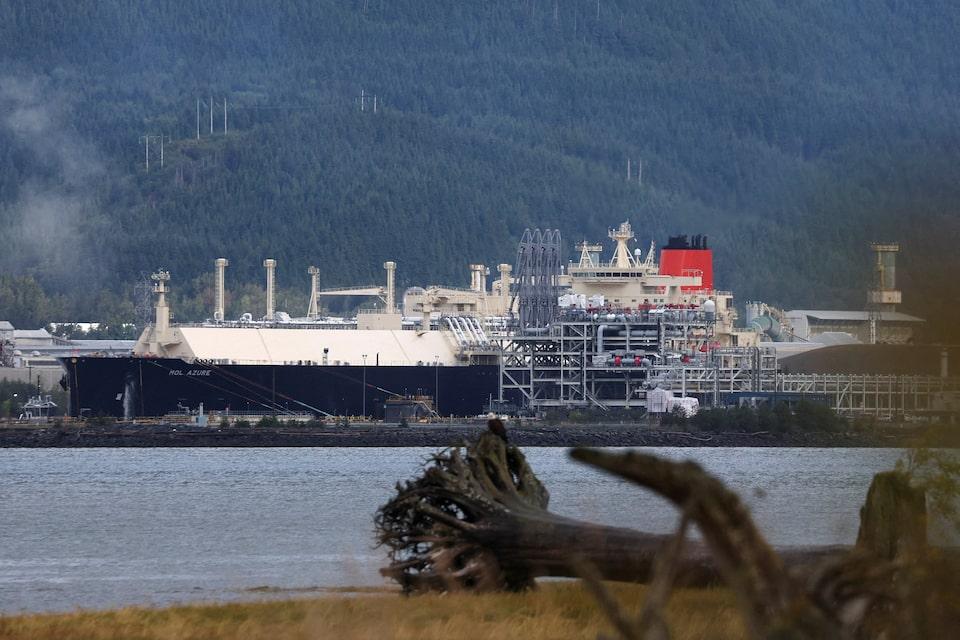
CALGARY, Aug 27 (Reuters) - German companies are looking to buy and swap Canadian LNG cargoes shipped off the Pacific coast to help meet European demand, Canada's Energy and Natural Resources Minister Tim Hodgson said on Wednesday. Canada, the world's fifth-largest natural gas producer, shipped its first-ever liquefied natural gas export cargo in June from the recently constructed LNG Canada facility in British Columbia, which is led by Shell and is the first North American LNG export site with direct access to the Pacific Ocean. Sign up here. The bulk of LNG Canada's exports is expected to ship to Asia, but Hodgson told reporters the cargoes are also drawing interest from European buyers pursuing swap opportunities. "Many of the buyers are prepared to buy LNG off the West Coast of Canada and trade those products in the international market for LNG," Hodgson said at a press conference in Berlin. Canadian Prime Minister Mark Carney said on Tuesday that Canada will discuss ways to provide LNG to Germany. Canada has no LNG export facilities proposed with direct access to the Atlantic Ocean, and any such project would face significant costs and take years to build. But the Carney government's tone is a marked departure from that of former Prime Minister Justin Trudeau, who said there was little business case for Canada to export LNG to Europe. Trudeau cited the cost and difficulties associated with building the pipeline infrastructure required to get the gas from Western Canada to the East Coast. https://www.reuters.com/business/energy/canadas-lng-draws-german-interest-market-swaps-minister-says-2025-08-27/
2025-08-27 19:54
Trump's effort to fire Fed governor sets up legal fight Dollar in holding pattern, but Fed independence worries linger French political developments in focus for euro NEW YORK, Aug 27 (Reuters) - The dollar clung to gains against the euro and the yen on Wednesday, paring much of the strength made earlier in the day as investors focused on upcoming U.S. economic data for policy cues, even as worries persist over the Federal Reserve's independence. The euro touched its weakest level since August 6 and was last down 0.09% at $1.1631. Sterling eased up 0.12% to $1.3496, while the dollar slipped against the Swiss franc 0.14%, and was flat versus the Japanese yen at 147.445. Sign up here. In U.S. afternoon trading, the dollar index , which measures the greenback against a basket of currencies, alternated between gains and losses and was last up 0.02% at 98.227. "Traders are largely in a holding pattern as we await key earnings today from Nvidia and core PCE on Friday," said Michael Boutros, senior technical strategist at StoneX. "Its unlikely traders will want to take on any significant new exposure into the monthly cross until we get through these data points." New York Fed President John Williams said on Wednesday it is likely interest rates can fall at some point, but policymakers will need to see what upcoming data indicate about the economy to decide if it is appropriate to make a cut at next month’s meeting. Although the dollar appears to have shaken off the immediate worries over Fed independence that followed U.S. President Donald Trump's attempt on Monday to fire Governor Lisa Cook, the U.S. Treasury yield curve has steepened. Cook's lawyer later said she would file a lawsuit to prevent her ouster, kicking off what could be a protracted legal fight. "I don't think the markets are very concerned about the drama with Ms. Cook and the Fed. They are a little more concerned about what Donald Trump has been saying about wanting lower rates," said Joseph Trevisani, senior analyst, FX Street. "If the Fed starts to move on interest rates, the U.S. economy will pick up strength, and that is going to end up supporting the dollar." Since his return to the White House this year, Trump has relentlessly pressured the central bank to lower interest rates. Money markets are pricing in a 87.2% chance of a 25 basis point rate cut in September, according to the CME's FedWatch tool. Elsewhere, political developments in France are the focus for the euro as Prime Minister Francois Bayrou battles to save his minority government ahead of a September 8 confidence vote over budget cuts. A majority of French people want new parliamentary and presidential elections, opinion polls showed on Wednesday. "There was a lot of concern about European politics, but I think that the some of those concerns have abated. The market is more comfortable with the politics in Europe than anyone expected even six or eight hours ago," said Steven Englander, head of global G10 FX research, Standard Chartered Bank. Investors will next week examine U.S. labour market and business survey data for clues on the future path of Fed policy. Meanwhile, they will be keeping an eye on U.S. personal consumption expenditure data later this week, which if it "comes in as expected, I'm pretty sure the Fed is going to move (on a rate cut)," said Trevisani. French government bonds steadied on Wednesday, a day after the yield on the 10-year benchmark bond climbed to its highest level in five months. Meanwhile, preliminary data released on Wednesday showed that British producer output price inflation rose to a two-year high of 1.9% in June, up from 1.3% in May, adding to signs of inflationary pressures in the economy. https://www.reuters.com/world/middle-east/forex-dollar-clings-gains-with-focus-fed-policy-french-politics-cloud-euro-2025-08-27/
2025-08-27 19:50
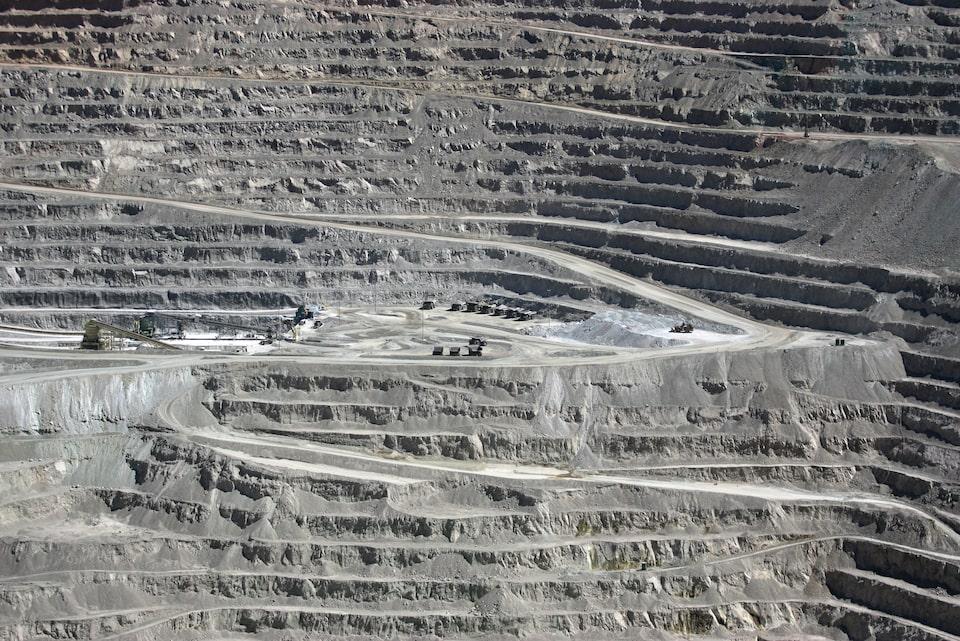
SANTIAGO, Aug 27 (Reuters) - Two recent accidents involving autonomous trucks are raising safety concerns, a workers' union at BHP's (BHP.AX) , opens new tab Escondida mine in Chile, the world's largest copper mine, said in a statement on Wednesday. The union, which has often been critical of BHP and has staged strikes as part of contract negotiations, said that on August 25 an autonomous truck collided with shovel machinery and the week before, another truck overturned. Sign up here. It did not report any injuries. Despite that, the head of the Union Patricio Tapia told Reuters that while workers don't operate the vehicles, they perform other tasks in the area like maintaining roads. In a statement, BHP said it has trained more than 4,800 workers in its automation process and has "totally eliminated" having people exposed when material is moved in the open pit. BHP said that one of the incidents involving the autonomous trucks happened in March. "In the other incident, that involved a mechanical shovel with an autonomous truck, there were no exposed people and it is still under internal investigation," the statement said. The company in July said it had fully implemented autonomous operations for 33 trucks and eight drills at the mine's Escondida Norte unit, completing a five-year rollout. "Less than a month since the announcement, the reality is revealing a huge risk to the safety of workers," the statement said. Escondida produced 1.28 million tons of copper last year. https://www.reuters.com/sustainability/chiles-escondida-mine-union-warns-self-driving-truck-accidents-2025-08-27/
2025-08-27 19:49
Nvidia second-quarter results due after closing bell Dollar recovers even as Fed independence worries linger US stocks higher in afternoon trading NEW YORK, Aug 27 (Reuters) - Major stock indexes rose on Wednesday ahead of results from artificial intelligence leader Nvidia(NVDA.O) , opens new tab, while the dollar recovered from the previous session's drop despite ongoing concerns about the U.S. Federal Reserve's independence. A lawyer for Fed Governor Lisa Cook said she would file a lawsuit against U.S. President Donald Trump after he said he would fire her. Trump's statement left some investors worried about the independence of the U.S. central bank. Sign up here. Interest-rate sensitive two-year U.S. Treasury yields fell to an almost four-month low and the yield curve steepened as traders weighed the chance that Trump may be able to make more dovish appointments to the Fed. Even so, the dollar rebounded from its drop in the previous session and was last up 0.36% at 147.93 Japanese yen , while the euro was down 0.48% at $1.1586. The three major U.S. stock indexes were slightly higher, with Nvidia's second-quarter report, due after the closing bell, seen as a test of the AI optimism that has propelled markets over the past couple of years. This year, strong gains for a number of technology-related stocks exposed to AI have helped power major equity indexes to record highs. "Trump has been on the Fed's back since Day One, and this (Cook firing) is just a continuation of that strategy. The market is completely focused, 100%, on Nvidia," said Jake Dollarhide, CEO of Longbow Asset Management in Tulsa, Oklahoma. Investors are wondering whether Nvidia's results will continue to live up to Wall Street's high expectations, he said. "My expectation is today it will." Nvidia's shares were last down 0.1%. The company is expected to report that second-quarter revenue jumped to $46.06 billion, according to LSEG data, and investors will pay close attention to its business in China after the company agreed to pay the U.S. federal government 15% of the sales it made there in exchange for undefined export licenses. Technology shares, including several AI leaders, with investors pointing to some signs of caution emerging in the sector. The Dow Jones Industrial Average (.DJI) , opens new tab rose 190.54 points, or 0.42%, to 45,608.19, the S&P 500 (.SPX) , opens new tab climbed 20.02 points, or 0.31%, to 6,486.06 and the Nasdaq Composite (.IXIC) , opens new tab gained 55.61 points, or 0.26%, to 21,599.98. European stocks rebounded slightly from the previous day's decline, with investors monitoring political risks in France. Concerns over a potential collapse of French Prime Minister Francois Bayrou's government next month sparked a selloff in French assets on Tuesday. MSCI's gauge of stocks across the globe (.MIWD00000PUS) , opens new tab rose 1.64 points, or 0.17%, to 954.36. The pan-European STOXX 600 (.STOXX) , opens new tab index rose 0.1%. Market watchers interpreted Fed Chair Jerome Powell's comments at the Fed's annual Jackson Hole symposium last week as indicating interest rate cuts could be on the way. Fed funds futures traders are pricing in 84% odds of a cut in September, according to the CME Group's FedWatch Tool. But the outlook for U.S. interest rates will still likely depend on labor market strength and inflation trends. The two-year note yield was last at 3.625%, down around five basis points on the day. The benchmark 10-year note yield fell to 4.236%, the lowest since August 14. The yield curve between two-year and 10-year notes Oil and gold prices rose. Oil gained on a larger-than-expected drop in U.S. crude inventories. U.S. crude rose 90 cents to settle at $64.15 a barrel and Brent gained 83 cents to settle at $68.05. Spot gold rose 0.09% to $3,395.33 an ounce. https://www.reuters.com/world/china/global-markets-wrapup-5-2025-08-27/