2025-08-27 19:39
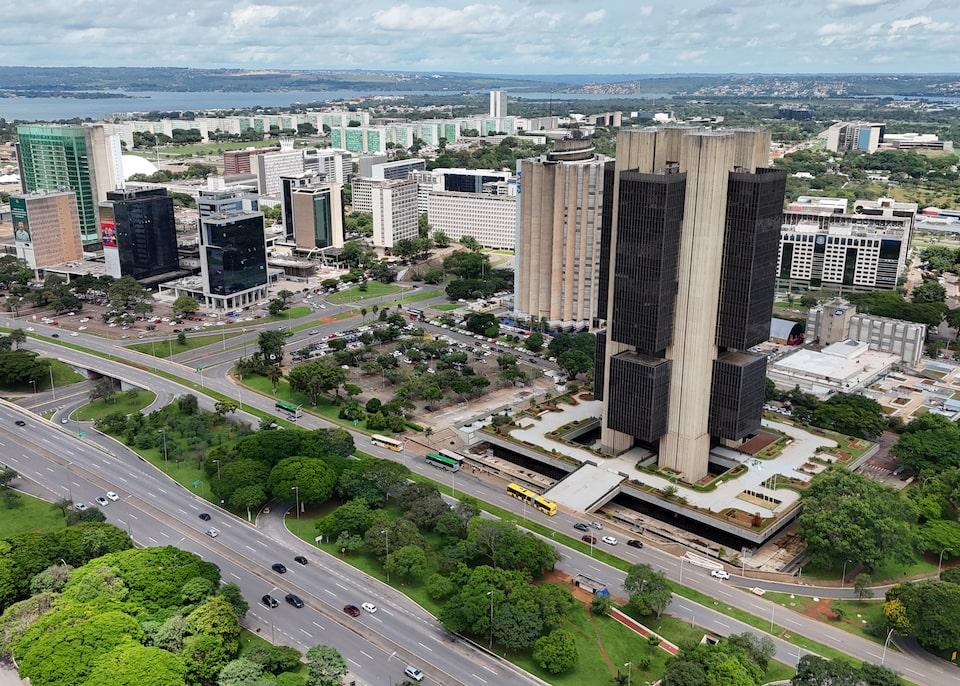
BRASILIA, Aug 27 (Reuters) - Brazil's central bank chief Gabriel Galipolo emphasized on Wednesday the need to keep interest rates at a restrictive level, citing a slow convergence of inflation expectations toward the official target. Speaking at an event in Sao Paulo hosted by vehicle distributor group Fenabrave, Galipolo said policymakers have consistently signaled that the benchmark Selic rate, currently at 15%, should remain unchanged for an extended period. Sign up here. "Expectations and projections from both the central bank and the market (are) still converging slowly toward the inflation target … that is what has required a more restrictive monetary policy," he said. His remarks came after a weekly central bank survey of economists showed a first decline in inflation expectations for 2027, which had been stuck for six months. Inflation expectations for this year and next had already been falling in recent weeks, helped by a stronger local currency amid a global weakening of the U.S. dollar. Even so, market forecasts remain well above the official 3% target, standing at 4.86% for this year, 4.33% for next year and 3.97% in 2027 - a point Galipolo highlighted on Wednesday. The central bank last month held its benchmark Selic rate steady after a 450 basis-point tightening cycle kicked off in September. Galipolo said that even with interest rates at 15%, Brazil's labor market continues to show strong resilience. "And that is probably what is driving, in some cases, stronger demand," he added. https://www.reuters.com/world/americas/brazil-central-bank-chief-flags-still-sluggish-convergence-inflation-2025-08-27/

2025-08-27 19:37
BRASILIA, Aug 27 (Reuters) - Brazil's central bank is not competing with financial or payment institutions through its operation and regulation of the widely used instant payments system Pix, said Renato Gomes, the institution's financial system organization director. In remarks released by the central bank on Wednesday, Gomes said the institution "plays the role of a neutral agent, providing a public digital infrastructure that allows the market to develop more efficiently, inclusively and competitively." Sign up here. Pix is among the Brazilian trade practices under formal investigation by U.S. President Donald Trump's administration in a case opened by the Office of the U.S. Trade Representative (USTR), which views the system as potentially unfair. Launched in late 2020, Pix quickly became Brazil's most used payment method, sharply eroding the share of cash, cards, checks, bank slips and other forms of payment in Latin America's largest economy. By cutting out intermediaries, Pix has squeezed revenue from card networks such as Visa (V.N) , opens new tab and Mastercard (MA.N) , opens new tab, card processors including Cielo, StoneCo (STNE.O) , opens new tab, PagBank (PAGS.N) , opens new tab and Getnet, and banks that once charged more for traditional transfers. Gomes said Pix helped bring 80 million individuals into the financial system until 2023, driving rapid digitalization of the financial and payments industry, which he stressed benefits everyone. "After Pix was implemented, the use of payment cards has continued to grow," he said. According to the director, relying on the private sector to build essential payments infrastructure had failed in Brazil, prompting the central bank to begin this project in 2018 after repeated industry attempts fell short. "The market is good for competition and innovation, but less effective when the goal is to provide a public good through private effort," he noted, emphasizing that the market tends to undersupply interoperability, resulting in concentration, low innovation and high prices. "As the central bank's mandate is to ensure safety, competitiveness and efficiency in payments, and not to profit from Pix, there are no pecuniary interests that could create conflicts," Gomes said. https://www.reuters.com/sustainability/boards-policy-regulation/brazils-central-bank-says-its-pix-system-is-not-threat-payments-companies-2025-08-27/

2025-08-27 19:25
SAO PAULO, Aug 27 (Reuters) - Higher U.S. tariffs on Brazil are expected to reshape global beef trade flows, sparking increased shipments to the U.S. from countries like Mexico and Australia while Brazil seeks alternative markets, analysts said on Wednesday. Brazil is the world's largest beef exporter, with China as its main trading partner. In August, Mexico overtook the U.S. to become its second-largest export destination for the commodity. Sign up here. "It is very likely that countries that can triangulate Brazilian beef will increase their purchases following Mexico's example," Mauricio Nogueira, director of livestock consultancy Athenagro, said in an interview. "If Mexico starts sending beef to the U.S., it will have to buy from someone, it will have to buy from here." Argentina would be another candidate to import and eventually re-export Brazil's beef to the U.S., he added. Nogueira's Athenagro did not change its year-end projection for Brazil's beef exports after Trump's 50% tariffs on the country's products took effect on August 6. His consultancy is projecting a 7.5% increase this year in Brazilian beef exports, to 3.08 million metric tons. Through July, such exports rose more than 13%. Luis Rua, secretary of trade at Brazil's agriculture ministry, said Brazilian beef helps keep Mexican inflation in check. Whether Mexico will re-export supplies from Brazil is unclear. "We send it to Mexico, but we don't know exactly what Mexico will do with the meat," he told Reuters. Economist Thiago de Carvalho confirmed expectations of a shift in global beef flows, with Brazil potentially selling to markets previously served by Australian exporters, for example. Factors such as tight global beef supplies, which the U.S. is facing after its cattle herd hit historical lows, may also direct demand to Brazil, Carvalho added. Japan, which traditionally buys meat from the U.S., may soon open up for Brazilian products, he said. https://www.reuters.com/world/china/us-tariffs-brazil-will-reshape-global-beef-trade-flows-analysts-say-2025-08-27/

2025-08-27 19:20
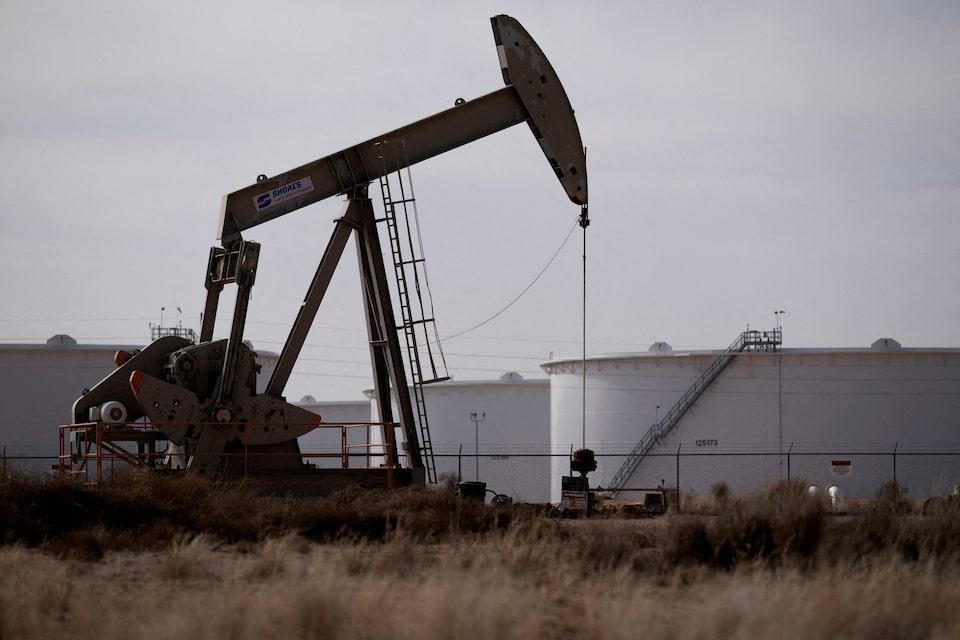
US crude stocks down by 2.4 million barrels: EIA Trump's hefty India tariffs take effect US envoy to meet Ukrainian representatives in New York Russia plans higher August crude exports HOUSTON, Aug 27 (Reuters) - Oil prices settled higher on Wednesday after data showed a larger-than-expected drop in U.S. crude inventories and as investors weighed the potential impact from new U.S. tariffs on India. Brent crude futures were up 83 cents, or 1.2%, at $68.05 a barrel. West Texas Intermediate crude futures gained 90 cents, or 1.4%, to $64.15. Both contracts fell by more than 2% on Tuesday. Sign up here. U.S. crude inventories dropped by 2.4 million barrels to 418.3 million barrels last week, the Energy Information Administration said, compared with analysts' expectations in a Reuters poll for a 1.9-million-barrel draw. U.S. gasoline stocks fell by 1.2 million barrels compared with expectations for a 2.2 million-barrel draw. Distillate stockpiles, which include diesel and heating oil, fell by 1.8 million barrels versus expectations for an 885,000-barrel rise, the EIA data showed. "The gasoline demand number is supportive and shows people are getting ready to travel over the Labor Day weekend. This is the crescendo of the summer driving season, also the last big hurrah for the summertime gasoline blend," said Phil Flynn, senior analyst with Price Futures Group. U.S. President Donald Trump's doubling of tariffs on imports from India to as much as 50% was also in focus. The tariffs in response to India's purchases of Russian oil took effect on Wednesday. There was no sign of supply disruption so far, but uncertainty over whether the U.S. will target the oil flows is deterring some traders from taking new positions, said UBS analyst Giovanni Staunovo. While the immediate impact of U.S. tariffs on Indian exports appears limited, the ripple effects on the economy pose challenges that must be addressed, India's Finance Ministry said in its July monthly economic review, released on Wednesday. Russia and Ukraine have also stepped up attacks on each other's energy infrastructure, worrying traders about supply disruptions. Russia launched a massive drone attack on energy and gas transport infrastructure across six Ukrainian regions overnight, Ukrainian officials said on Wednesday. Ukraine struck Russian oil refineries and exporting infrastructure in recent days. U.S. special envoy Steve Witkoff said on Tuesday he will meet Ukrainian representatives in New York this week and that Washington is also in talks with Russia in an effort to end the war. Russia has made an upward revision to its crude oil export plan from western ports by 200,000 barrels per day in August from the initial schedule after attacks on its refineries last week, three people close to the matter said on Tuesday. New York Federal Reserve Bank President John Williams said on Wednesday that interest rates will likely fall at some point but policymakers will need to see what upcoming data indicate about the economy before deciding whether it is appropriate to make a cut at the September 16-17 meeting. Lower interest rates can reduce consumer borrowing costs and boost economic growth and demand for oil. https://www.reuters.com/business/energy/oil-edges-up-us-crude-stocks-drop-impact-us-tariffs-india-2025-08-27/
2025-08-27 19:07
Fed Governor Lisa Cook to file lawsuit against Trump's firing attempt Markets expect 87% chance of 25-basis point rate cut next month U.S. PCE data due on Friday Aug 27 (Reuters) - Gold was little changed on Wednesday as investors closely awaited upcoming inflation data for clues on interest rate cuts, while concerns about the Federal Reserve's independence lingered after U.S. President Donald Trump tried to fire a Fed governor. Spot gold was up 0.1% to $3,394.49 per ounce at 02:22 p.m. ET (18:22 GMT). U.S. gold futures for December delivery settled 0.5% higher at $3,448.6. Sign up here. U.S. Personal Consumption Expenditures, the Fed's preferred inflation gauge, is due on Friday and could offer cues on the interest-rate path. Economists polled by Reuters expect the PCE price index (USPCEY=ECI) , opens new tab to rise 2.6% in July, matching June's rise. "If (the PCE data) is a miss showing stronger inflation, that might begin to call into question whether the Fed's going to be able to cut interest rates in September," said Jim Wyckoff, senior analyst at Kitco Metals. "I suspect it would take an awfully strong inflation number to preempt the Fed from cutting rates in September." Gold, a zero-yield asset, thrives in a low-interest rate environment and is considered a hedge against uncertainty. Markets are anticipating an over 87% chance of a 25-basis-point rate cut at the Fed's policy meeting next month, according to CME FedWatch Tool , opens new tab. Trump said earlier this week he was removing Federal Reserve Governor Lisa Cook from her position on the Fed's board of directors. Meanwhile, Cook's lawyer said she would file a lawsuit to prevent Trump from firing her, kicking off a potentially protracted legal fight. Gold prices rose to a more than two-week high on Tuesday, following Trump's attempt to fire Cook. Trump threatening to fire a Fed governor is "really negative for the economy, interest rates and the dollar," said Jeffrey Christian, managing partner of CPM Group. "Gold is staying in a relatively narrow range because people are trying to ascertain what it all means for the economy." Elsewhere, spot silver fell 0.1% to $38.57 per ounce, platinum slipped 0.2% to $1,345.66, and palladium dropped 0.3% to $1,091.01. https://www.reuters.com/world/india/gold-little-changed-with-inflation-data-focus-2025-08-27/

2025-08-27 18:15
BRASILIA, Aug 27 (Reuters) - Brazil's economy created a net 129,775 formal jobs in July, data from the Labor Ministry showed on Wednesday, the lowest since March and slightly below the 135,577 expected by economists in a Reuters poll. The data accounts for 2,251,440 jobs opened and 2,121,665 closed during the period, the ministry said. Sign up here. The net result fell short of the 191,373 net jobs created in the same month last year, and marked the lowest for any July since 2020, adjusted data showed. From January to July, 1,347,807 net jobs were created in Brazil, down from 1,503,467 a year earlier, according to adjusted data. https://www.reuters.com/world/americas/brazil-creates-fewer-formal-jobs-than-expected-july-2025-08-27/