2026-02-11 11:16
Higher palm oil for exports as Indonesia caps biodiesel plans Strong Indian buying likely to draw down swollen inventories China demand weakening as cheaper oils replace palm oil Medium-to long-term fundamentals seen supportive, analysts say KUALA LUMPUR, Feb 11 (Reuters) - Indonesia's move to pause biodiesel expansion and expectations of higher production in the coming months are likely to pressure palm oil prices, although strong demand and slowing growth in overall output could limit the downside, analysts said. Palm oil output from Southeast Asia, which supplies nearly 90% of the global market, is expected to rise marginally in 2026 on improved weather in top grower Indonesia, even as production in second-largest grower Malaysia is expected to decline, analysts told an industry conference in Kuala Lumpur this week. Sign up here. More palm oil supply is likely to flood the global market as Indonesia has shelved plans to mandate 50% biodiesel blending. Malaysian palm oil futures are expected to trade range-bound between 3,800 and 4,300 ringgit ($968-$1,096) per metric ton from now until July 2026, barring any new weather-related factors, said analyst Dorab Mistry. "We are today in the leanest period for palm production, and yet, in my opinion, the stock drawdown is not significant," Mistry said. The benchmark Malaysian palm oil futures fell 35 ringgit, or 0.85%, to 4,060 ringgit a metric ton at close on Wednesday. "There may be some downward potential in palm oil prices in the short term, in the next one or two months," said Thomas Mielke, executive director of Hamburg-based forecaster Oil World. "But medium term to longer term, the slowing down of growth, the prospective decline in palm oil stocks, insufficient growth in Indonesian production... should be supportive," Mielke added. Global edible oil consumption in the 2025/2026 season is expected to grow by 7.1 million tons, with production seen expanding 5.3 million tons, Mielke said. Palm oil production in Indonesia is estimated at 48.8 million tons in 2026, while output in Malaysia is seen at 19.7 million tons, he added. STRONG DEMAND GROWTH & LOWER OUTPUT GROWTH Higher Indian buying and slowing growth in production could support prices, analysts said. India, the world's biggest edible oil importer, is likely to buy more palm oil this year, drawing down inventories that had risen to multi-month highs in Malaysia. Indian demand for palm oil is set to rebound this year as prices decline, although competition from Chinese soyoil, an alternative cooking oil, will cap growth, analysts added. However, China's demand for palm oil is expected to further decline in 2026 as the country shifts to cheaper canola and soybean alternatives, palm oil traders and analysts told the conference on Monday. "In China, the outlook for 2026 is dampened by expanded domestic soybean crushing capacity, ample availability of alternative vegetable oils, and continued price-based substitution away from palm oil," said Izzana Salleh, secretary general of Council of Palm Oil Producing Countries (CPOPC). Indonesian authorities' seizures of palm plantations are also likely to take a toll on output due to lower fertiliser application and lack of upkeep, palm oil analysts said. Indonesia's crackdown on the palm oil industry, launched last year and led by a task force consisting of the military, the police and state prosecutors, resulted in the seizure of around 4.1 million hectares, affecting major palm oil companies as well as smallholder farmers. According to authorities, these were operating illegally in forest areas. "If we look at the numbers, we see that imports of fertiliser are being reduced by close to 20%. So this is an indication that at several places, fertiliser applications are being reduced ... And this will have an impact on the yields and on the production," Mielke said. The enforcement campaign is set to expand further this year, with the government looking to seize an additional 4 million to 5 million hectares (12 million acres) of palm plantations. Indonesian crude palm oil output is expected to grow 2% to 3% this year, after rising 8% to 51.98 million metric tons in 2025, according to the Indonesian palm oil producers' association GAPKI. https://www.reuters.com/business/energy/indonesia-biodiesel-pause-rising-output-seen-limiting-palm-oil-gains-2026-02-11/

2026-02-11 11:16
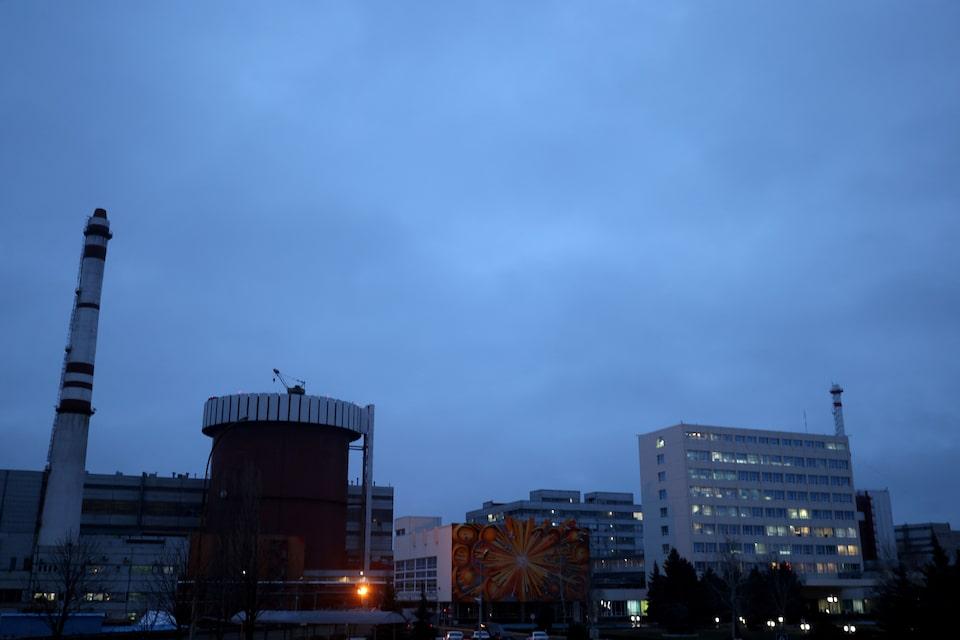
KYIV, Feb 11 (Reuters) - Ukrainian nuclear power plants, which cover two-thirds of the country's energy needs, are still unable to operate at full capacity after Russian attacks last week, the first deputy Ukrainian energy minister said on Wednesday. Last week, Russia once again attacked Ukraine's power system, striking both thermal power plants and key electrical substations, forcing nuclear plants to cut power production. Sign up here. "Restoration is under way at both power stations and high-voltage substations, which supply power from nuclear power plants," Artem Nekrasov said in a televised statement. He said that restrictions on energy supplies continue to be in place across the country for both the population and businesses. Ukraine operates three nuclear power plants with a total capacity of about 8 gigawatts, while the country needs around 18 gigawatts. Almost all thermal power plants, which before the war provided more than a third of consumption, have been destroyed or seriously damaged. The shortfall in generation is covered by maximum possible imports from the EU, insignificant volumes from alternative energy sources, and large-scale blackouts for consumers. https://www.reuters.com/business/energy/ukraines-nuclear-plants-still-work-limited-capacity-after-russian-strikes-2026-02-11/
2026-02-11 11:06
TRIPOLI, Feb 11 (Reuters) - Chevron secured an exploration licence in Libya's Sirte S4 Basin in the country's latest oil and gas bidding round, the National Oil Corporation (NOC) said on Wednesday. A consortium comprising Repsol and Turkey's TOPC also won an exploration licence for Liby's C3 basin, the NOC added. Sign up here. (This story has been refiled to correct the name in the signoff) https://www.reuters.com/business/energy/libya-awards-oil-gas-exploration-blocks-chevron-repsol-topc-consortium-2026-02-11/

2026-02-11 11:05
Trump administration to repeal an Obama-era scientific finding Policy reversal could lead to a surge in 'public nuisance' lawsuits Legal shield created by Supreme Court could unravel Feb 11 (Reuters) - The Trump administration's imminent repeal of an Obama-era scientific finding that greenhouse gases pose a public health threat could open up a new pathway for filing lawsuits against power-plant operators and other companies. Legal experts said the policy reversal could lead to a surge in lawsuits known as "public nuisance" actions, a pathway that had been blocked following a 2011 Supreme Court ruling that regulation of greenhouse gas emissions should be left in the hands of the Environmental Protection Agency instead of the courts. Sign up here. Now that the EPA is abandoning that regulatory effort, the legal shield created by the 2011 decision will likely unravel, legal experts said. "This may be another classic case where overreach by the Trump administration comes back to bite it," said Robert Percival, a University of Maryland environmental law professor. The Environmental Protection Agency is set this week to repeal a 2009 scientific determination known as the endangerment finding, which has been the foundation for federal climate regulations. The endangerment finding is what led the EPA to take action under the Clean Air Act of 1963 to curb emissions of carbon dioxide, methane, and four other heat-trapping air pollutants from vehicles, power plants and other industries. EPA Administrator Lee Zeldin has called the rescission of the endangerment finding "the largest act of deregulation in the history of the United States." Power companies have generally favored President Donald Trump's deregulatory agenda, but have expressed concern about the repeal of the endangerment finding triggering a wave of lawsuits. The Edison Electric Institute, which represents publicly traded electric utilities, said in September that rescinding the endangerment finding comes with the "potential for increased litigation alleging common-law claims, regardless of the merits of those suits." 'NEW FRONT' OPENING U.S. courts have long recognized a legal theory known as "public nuisance," which prohibits activities that unreasonably interfere with the health and safety of a community. Public nuisance lawsuits are typically brought by state and local governments, and seek to make the party responsible for the nuisance pay to abate, or fix, the condition. The cases are hard to win, in part because of difficulties in proving direct causation between a specific defendant's emissions and particular climate harms. But legal experts have said they are one potential tool for environmental activists to hold greenhouse gas emitters liable for climate harms. In a 2004 lawsuit, California and five other states alleged that big power companies had created a public nuisance by contributing to climate change. The defendants included American Electric Power (AEP.O) , opens new tab and Xcel Energy (XEL.O) , opens new tab . The case eventually ended up before the U.S. Supreme Court, which ruled against the six states in a unanimous 2011 decision. Writing for the court, Justice Ruth Bader Ginsburg said regulating greenhouse gases should be left to EPA under the Clean Air Act. That law and subsequent EPA actions like the endangerment finding, Ginsburg wrote, "displace the claims the plaintiffs seek to pursue." That 2011 decision allowed power companies to escape public nuisance lawsuits filed in federal courts, though some cases brought in state court have survived. The policy reversal could give public nuisance cases a new lease on life, legal experts said. "This has the potential to change the stakes of the game," said University of Pennsylvania law professor Sarah Light. "If the Clean Air Act no longer applies to greenhouse gas emissions, then there's no comprehensive statutory scheme in which Congress intended to displace nuisance claims, so they would likely be able to proceed in court." Jenner & Block environmental lawyer Meghan Greenfield agreed that a "new front" for lawsuits may be opening up. "This is an area where things had been settled for the past 15 years, and, especially as the EPA steps out of this space for regulation, you can imagine others wanting to push those fronts ever harder," Greenfield said. https://www.reuters.com/legal/government/trumps-repeal-climate-rule-opens-new-front-litigation-2026-02-11/
2026-02-11 11:04
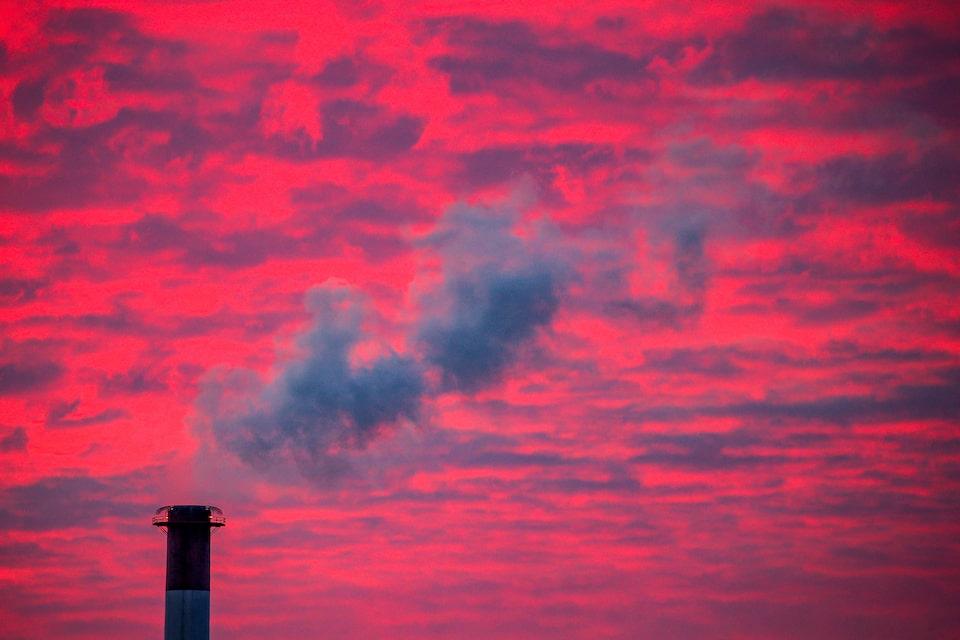
Feb 11 (Reuters) - Solstice Advanced Materials (SOLS.O) , opens new tab forecast full-year 2026 earnings below market estimates on Wednesday, overshadowing solid fourth-quarter sales growth and continued strength in nuclear and electronic materials. The speciality materials maker that spun off from Honeywell (HON.O) , opens new tab in October expects 2026 adjusted earnings per share of $2.45 to $2.75, below analysts' average estimate of $2.93 per share, according to data compiled by LSEG. Sign up here. Solstice expects annual sales of between $3.9 billion and $4.1 billion, compared with an estimate of $3.96 billion. The revenue forecast signals modest growth from 2025, but continued pressure on profitability as the company absorbs higher operating costs and navigates the transition to low-global-warming-potential refrigerants. The product shift, along with plant downtime and other operational headwinds, has weighed on margins even as demand tied to nuclear energy, data centers and artificial intelligence remains strong. Chief Executive David Sewell told Reuters the company now sees the impact of its strategy as a standalone business focused on secular growth trends. Rapid growth in AI-driven data centers is boosting demand for its thermal management and refrigerant products, while advanced computing is driving growth in semiconductor electronic materials. Rising power needs linked to AI and data center expansion also support its nuclear energy business, he said, citing double-digit fourth-quarter growth across those segments. Fourth-quarter net sales rose 8% to $987 million, driven by double-digit growth in Nuclear (Alternative Energy Services), Electronic Materials and refrigerant products and also beat estimates of $923.3 million. However, adjusted standalone EBITDA for the October-December quarter fell nearly 20% to $189 million, with margin narrowing 662 basis points to 19.1%. https://www.reuters.com/sustainability/climate-energy/honeywell-spinoff-solstice-sees-2026-profit-below-estimate-margins-remain-under-2026-02-11/

2026-02-11 11:04
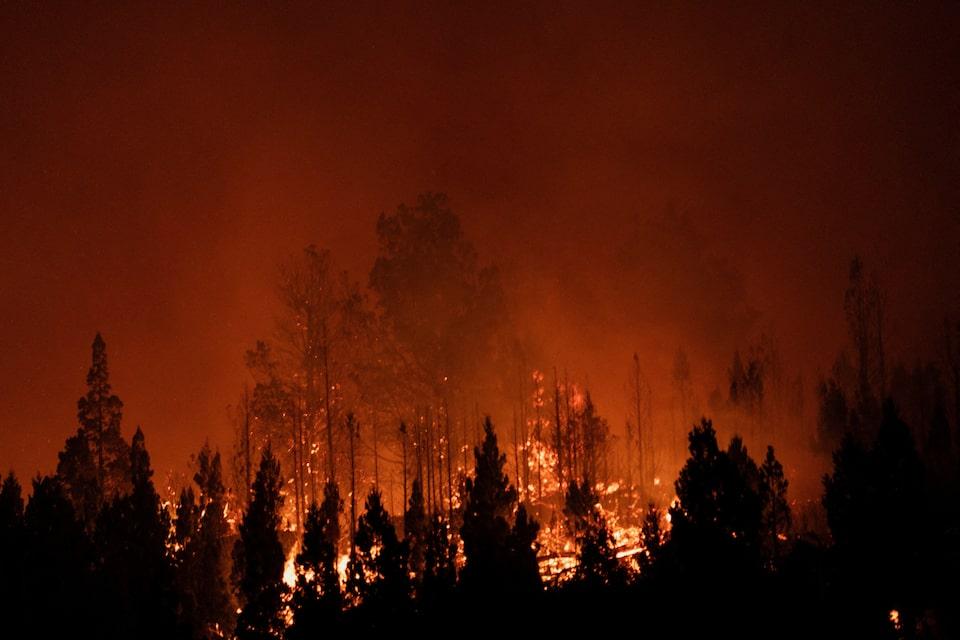
Heat and fires from Argentina to Australia to South Africa The past three years were the hottest on record globally Extremes occur despite cooling influence of a weak La Nina SANTIAGO, Feb 11 (Reuters) - From Argentina to Australia to South Africa, record heat and raging wildfires are rampaging through the Southern Hemisphere at the start of 2026, with scientists predicting that even more extreme temperatures could lie ahead - and possibly another global annual high - after three of the hottest years on record. In January, a record-setting heat dome enveloped Australia, sending temperatures near 50 degrees C (122 degrees F) while heat and catastrophic wildfires gripped parts of South America, setting remote parts of Argentina's Patagonia ablaze and killing 21 people in coastal towns in Chile. In addition, South Africa has been experiencing its worst wildfires in years. Sign up here. The extremes are occurring even as the world remains under the cooling influence of a weak La Nina, a climate cycle marked by cooler waters in the central and eastern Pacific that began in December 2024. Despite this moderating factor, temperatures are reaching record highs in various locales. "This means the effect of human-caused climate change is overwhelming natural variability," said climate scientist Theodore Keeping of Imperial College London and the international research collaboration World Weather Attribution, who specializes in research on wildfires and extreme heat. "As we transition into a neutral or even El Nino phase, we'll expect the incidence of extreme heat events around the world to be further amplified," Keeping added. El Nino typically has the opposite effect of La Nina, warming the central and eastern Pacific and boosting global temperatures. This year is forecast to be about 1.46 degrees C (2.6 degrees F) above pre-industrial levels, which would make it the fourth consecutive year to be higher than 1.4 degrees C (2.5 degrees F) above pre-industrial levels, according to Adam Scaife, head of the long-range prediction at the United Kingdom's national weather and climate service. The 2015 international climate treaty known as the Paris Agreement aimed to keep warming below 1.5 degrees C (2.7 degrees F) above pre-industrial levels. "If a big El Nino were to develop quickly in 2026 then it's still possible 2026 could be a record," Scaife said. The World Meteorological Organization said last month that the past three years were the warmest on record. FIRE RAGES FROM WOODS TO WATER While most wildfires are caused by human activity, they are also a natural part of many ecosystems. Persistent heat, drought and extreme temperatures, however, are turning once-manageable fires into increasingly uncontrollable and destructive events. Many ecosystems are not adapted to such hot, dry conditions, allowing fires to grow larger and more intense, often causing permanent damage, Keeping said. The fires that burned through Argentina's Los Alerces National Park illustrate the shift, according to meteorologist Carolina Vera of the Center for Ocean and Atmospheric Research at the University of Buenos Aires. The park, a UNESCO World Heritage site, is home to trees that have lived more than 3,000 years. Local officials determined that a lightning strike caused the fire. The blaze initially was under control. But Vera said a heat wave and strong winds caused it to spread about 20 km (12 miles) in a single day, making it the worst wildfire there in two decades. The region has been drought-stricken since 2008. Temperatures during the first two weeks of January were about 6 degrees C (11 degrees F) above normal. "These fires used to burn themselves out and form part of the forest's natural dynamics," Vera said. "This is an example of how climate change can alter a natural fire, because it appeared to be caused by lightning," Vera said. There are no towns in that remote area. Fires erupted in the southern part of neighboring Chile later in January and crossed into the greater Concepcion area, the country's third-largest metropolitan region, destroying hundreds of homes and killing 21 people in coastal communities. Keeping said the blazes mirrored recent disasters in places such as Los Angeles, Athens and the Hawaiian island of Maui. "Where there's been the greatest loss of life, it almost always comes down to evacuation being difficult or impossible," Keeping said. "That's particularly true in regions affected by strong downslope winds toward the coast." WHIRLWINDS OF FIRE About 80% of Punta de Parra, a small coastal town in southern Chile surrounded by hills and forests, was destroyed. Punta de Parra residents said they had little time to evacuate. Doralisa Silva, 34, said she heard about a fire in a nearby community the night the blaze reached the town. "Out of nowhere, the forest started burning and all the houses caught fire," Silva said. "The fire was on us in the blink of an eye. There was nothing we could do." Silva said her family was among the last to try to flee because they had no vehicle. Silva said flames blocked their exit as embers rained down as she and her partner Hermes Barrientos fled with their 2-year-old daughter. Barrientos said winds of nearly 70 km per hour (43.5 mph) whipped through the area, creating whirlwinds of fire that spread to the beach and trapped residents. The family and others eventually found refuge in a large dirt field at the center of town, and spent the night watching their community burn. A FUTURE FILLED WITH FIRES Record-breaking heat in southeastern Australia has also fueled the country's worst fires since the deadly 2019-2020 season, when 33 people were killed. In addition, the 2025-2026 fire season has been the most severe in South Africa in a decade, according to officials, killing wildlife and hitting tourist destinations such as Mossel Bay and Franschhoek. "The hot, dry and windy conditions that drive the most extreme wildfires are becoming more intense and more likely," Keeping said. "And it's happening all around the world." The Southern Hemisphere has warmed by about 0.15 to 0.17 degrees C (0.27 to 0.30 degrees F) per decade since the 1970s, compared to 0.25 to 0.30 degrees C (0.45 to 0.54 degrees F) in the Northern Hemisphere - largely because its vast oceans absorb heat more slowly and because of Antarctic meltwater. Still, southern land masses are now warming at similar rates to northern land masses, and contrasts between warming land and cold meltwater can intensify weather patterns, leading to prolonged heat waves, droughts or flooding. Keeping said adaptation is critical, including authorities managing vegetation near cities and developing effective evacuation plans, and builders using fire-resistant materials. Wildfires are inflicting mounting economic damage. A 2026 report by insurance broker Aon (AON.N) , opens new tab estimated global insured wildfire losses at $42 billion in 2025, up from an average of $4 billion annually between 2000 and 2024. The Los Angeles fires last year were the costliest on record. Swiss Re (SRENH.S) , opens new tab, the world's second-largest reinsurer, found that wildfires accounted for about 1% of global insured losses from natural disasters before 2015, but now represent 7%, with economic losses linked to fires rising by about $170 million a year since 1970. "You actually cannot stop a lot of these really large intense wildfires. They're simply too big," Keeping said. The most important way forward, Keeping said, is to "have a serious conversation about limiting future climate change to prevent this issue from worsening." https://www.reuters.com/sustainability/cop/record-heat-raging-fires-ring-2026-across-southern-hemisphere-2026-02-11/