2026-01-29 05:58
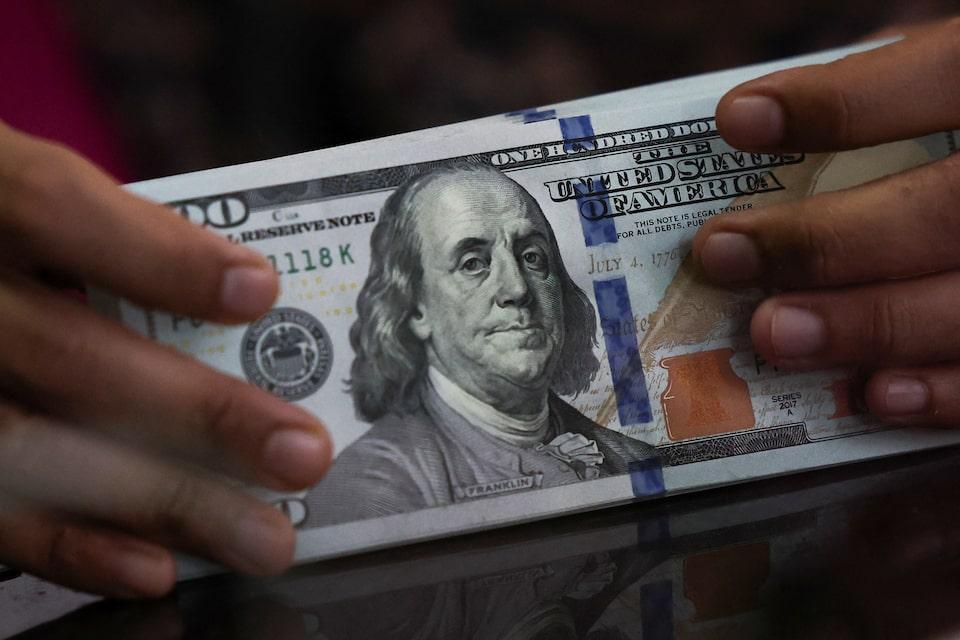
Dollar lower against euro, yen Fed signals prolonged wait before any additional rate cut Euro strength back in ECB spotlight as rate outlook shifts Monetary and fiscal policy remain key for yen despite intervention risk NEW YORK, Jan 29 (Reuters) - The dollar eased against the yen and the euro on Thursday but remained above recent multi-year lows, with investors still jittery about U.S. policy even as a mildly hawkish Federal Reserve provided some support. The dollar has been under pressure for several reasons, including expectations of continued Federal Reserve rate cuts, tariff uncertainty and U.S. policy volatility. Sign up here. The currency ended last week with its biggest fall since last April driven partly by concerns about U.S. policy over Greenland. "Concerns that investors have about trade and geopolitical policies that have been wheeled out in the U.S. at the moment have been potentially negative for the dollar," said Shaun Osborne, chief currency strategist at Scotiabank. Against the yen, dollar slipped 0.2% to 153.055 yen, while the euro rose 0.5% to $1.196. The dollar found some support after the Federal Reserve held interest rates steady on Wednesday against the backdrop of what U.S. central bank chief Jerome Powell described as a solid economy and diminished risks to both inflation and employment. Data on Thursday showed the number of Americans filing new applications for unemployment benefits fell slightly last week, still consistent with a relatively low level of layoffs, though lackluster hiring is stoking anxiety among households over the labor market. President Donald Trump said on Thursday that the U.S. should have substantially lower interest rates now and should have the lowest in the world. Some analysts did not expect cuts soon, however. "While the outlook remains uncertain, particularly given the appointment of a new Fed Chair in coming months, our baseline remains that the rate cutting cycle is complete, as labour improvement lies ahead," said David Doyle, head of economics at Macquarie Group. "We see the next move as a hike, potentially occurring in the fourth quarter of 2026." The dollar came under pressure earlier this week after Trump said on Tuesday the value of the dollar was "great", when asked whether he thought it had declined too much. While Treasury Secretary Scott Bessent reaffirmed the U.S. preference for a strong currency, relieving some of the pressure, investors remain jumpy about further losses for the currency. "We're getting kind of mixed messaging on the dollar from the White House and the Treasury ... that doesn't necessarily instil a lot of confidence," Osborne said. While Thursday's price action showed some signs of the dollar steadying after the sharp slide earlier this week, investors remain concerned about the near-term outlook. "Short-term momentum has turned sharply against the USD without adequate resistance from any of the long-term forces we had expected to support the currency," Steven Englander, global head of G10 FX research and North American macro strategy at Standard Chartered Bank, said in a note. EURO BACK IN THE ECB SPOTLIGHT The euro's recent rise above the key $1.20 level has concerned European Central Bank policymakers, who warned that the currency's rapid appreciation could have deflationary effects. "Although the euro/dollar stayed well above the ECB’s base scenario last year without triggering strong disinflation risk, trade uncertainty persists," said Geoff Yu, EMEA macro strategist at BNY. Economists flagged that the strength of the euro could amplify the deflationary effect of China’s export machine and jolt the ECB out of its "good place" and into more interest rate cuts. ECB board member Isabel Schnabel reiterated on Wednesday monetary policy was in a 'good place' and interest rates are expected to remain at their current levels for an extended period while financial markets are pricing steady rates through early 2027. JAPAN'S FISCAL POLICY STILL IN FOCUS The dollar slide has provided some reprieve for the battered yen . The Japanese currency has tracked around the 152 to 154 per dollar range for most of this week thanks to talk of rate checks from the U.S. and Japan last week - a move often seen as a precursor to intervention. Goldman Sachs said in a note that the prospect of coordinated action by Japan’s Ministry of Finance and the U.S. Treasury should curb near‑term downside pressure on the yen, but warned the impact would only last if backed by disinflation‑friendly fundamentals such as quicker Bank of Japan tightening or fiscal restraint. The Canadian dollar strengthened 0.4% against the greenback on Thursday, a day after the Bank of Canada held its policy rate at 2.25%, as widely expected. Leading cryptocurrency bitcoin fell 6% to $83.563 on Thursday, as riskier assets, including stocks sold off. https://www.reuters.com/world/africa/dollar-whipped-markets-wary-mounting-risks-2026-01-29/
2026-01-29 05:43
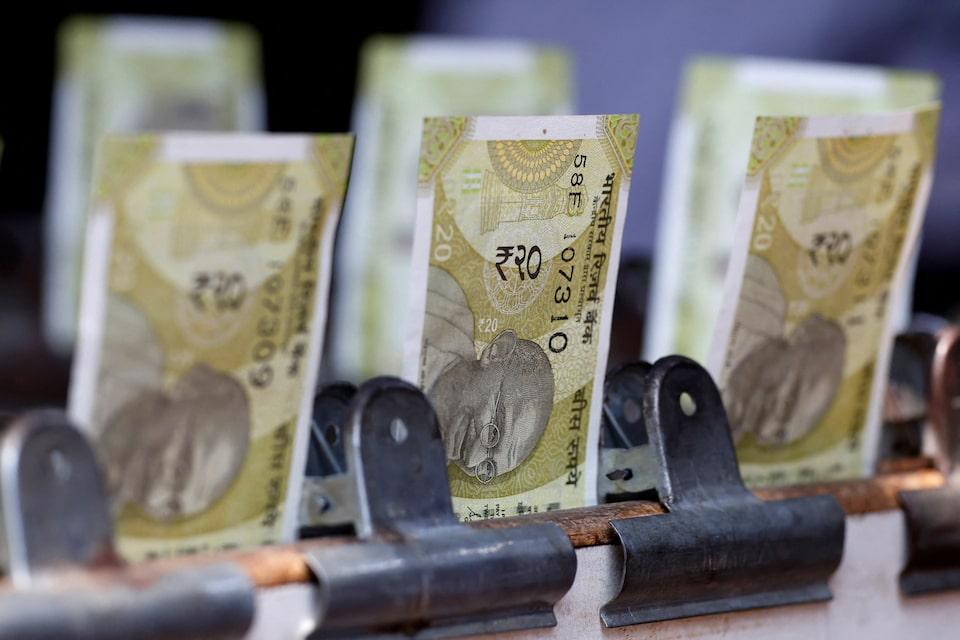
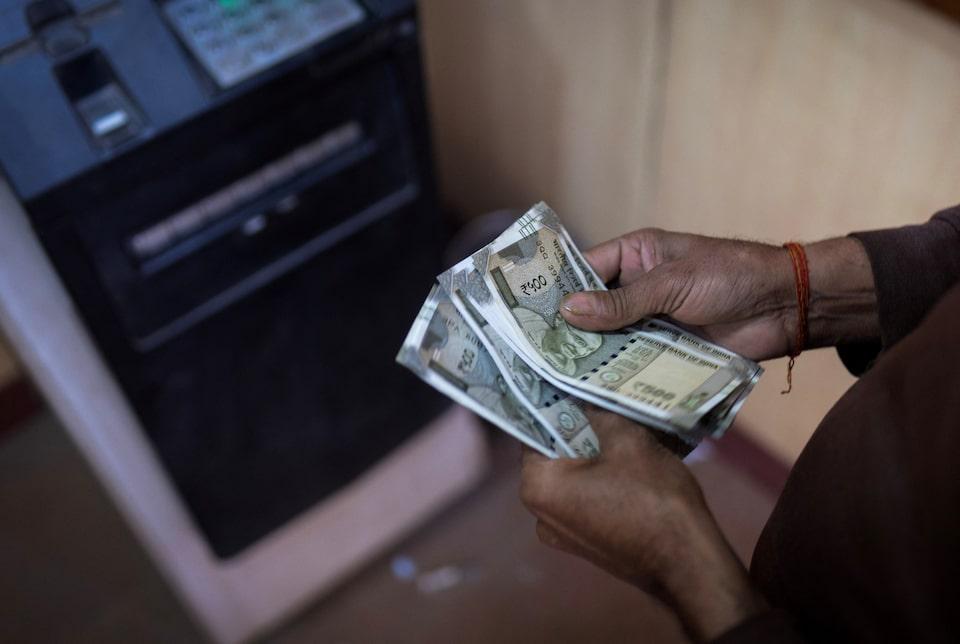
Rupee falls to record low of nearly 92/USD Central bank likely stepped in to curb fall - traders Persistent equity outflows, steep U.S. tariffs drag INR MUMBAI, Jan 29 (Reuters) - The Indian rupee hit an all-time low on Thursday, as continued weakness in foreign capital flows and a rush to hedge against further depreciation overshadowed impulses from a buoyant domestic economy. The rupee declined to 91.9850 per dollar, eclipsing its previous all-time low of 91.9650 hit last week. Sign up here. The currency has declined 2% so far this year and nearly 5% since U.S. President Donald Trump imposed steep tariffs on India's merchandise exports in August. That's even as India's GDP grew 8.2% in the quarter ended September 30, according to official data. "While we anticipate current elevated US tariffs on Indian exports to eventually be lowered, the delay in the meantime remains a drag on India's external balances," analysts at Goldman Sachs said in a note. The firm expects the rupee to fall to 94 per dollar in the next 12 months. The Reserve Bank of India likely intervened before the local spot market opened on Thursday, traders said. The intervention was likely intended to slow the fall as the rupee approached the psychologically important 92 level, a trader at a foreign bank said. The rupee has declined to near 92 levels after breaking past 91 for the first time only six trading sessions earlier. The central bank has maintained it does not target any level or band on the currency and only steps in to curb excessive volatility. PERSISTENT PAIN Besides steep U.S. tariffs, chunky foreign portfolio outflows, a rise in bullion imports and corporate anxiety over the rupee's fortunes driving hedging activity have kept the currency under pressure even as India continues to be the world's fastest growing major economy, recently closing a free trade deal with the European Union. Since the tariffs came into effect, the rupee has declined 7.5% each against the euro and the Chinese yuan too. On a trade-weighted basis, the rupee's real effective exchange rate stood at 95.3 in December, the lowest in a decade, according to central bank data. "RBI is more comfortable allowing flexibility in the INR and will likely replenish FX reserves on USD/INR dips, which should limit INR appreciation," analysts at Goldman Sachs said. THROES OF A TRILEMMA Converging headwinds have left the Indian currency increasingly reliant on the Reserve Bank of India's market interventions. Data shows that the central bank net sold over $21 billion in October and November last year, the most recent months for which data is available. Analysts and traders say dollar sales have continued, but efforts to support the rupee have strained domestic debt markets, as the associated withdrawal of banking system liquidity pushes bond yields higher. A persistent rise in bond yields and concurrent pressure on the currency pose a so-called monetary trilemma for the central bank, which throws up trade-offs between supporting the currency, anchoring borrowing costs and allowing unfettered capital movement. The central bank has sought to address this by conducting open market bond purchases and dollar-rupee buy/sell swaps, another round of which is slated for next month. "Liquidity conditions will remain challenging owing to a likely persistent balance of payments deficit, slower pace of general government fiscal consolidation, steady growth in currency in circulation and recovering credit demand," according to analysts at ANZ. https://www.reuters.com/world/india/rupee-hits-record-low-outflows-importer-anxiety-overshadow-buoyant-economy-2026-01-29/
2026-01-29 05:31
Jan 29 (Reuters) - A look at the day ahead in European and global markets from Wayne Cole. Who knew building AI would cost so much. Results from Microsoft (MSFT.O) , opens new tab and Meta (META.O) , opens new tab showed truly nose-bleeding amounts being spent on capex, with the former splashing out almost $38 billion in the quarter, up two-thirds on the previous year. Meta boosted its capital spending plans for this year by 73% to a range between $115 billion and $135 billion. Sign up here. Yet investors reacted very differently to those plans, knocking $240 billion off Microsoft's market value while lifting Meta by $140 billion. The Microsoft drop was more than the entire capitalisation of Citigroup, but then banks are so last-century. Seems Meta's upgrade to its earnings outlook really wowed investors, while the Redmond-based giant struggled to placate concerns that costs would ultimately outstrip profit growth. Still, one company's costs are another's revenues as shown by a trebling in chip-maker Samsung Electronics' (005930.KS) , opens new tab operating profits. Memory chips used to be a boring part of the market, until there weren't enough to go around. Wednesday's Federal Reserve meeting has also been called boring, though Chair Jerome Powell sounded pretty chipper in his presser. The economy was on a "solid footing" he said several times, with a "clearly improving outlook". There was "broad support" on the committee for holding rates steady, apart from the two that voted for a cut of course. The Fed had already done a lot of "normalising" on rates, he added, and policy was now only "somewhat restrictive", or even "loosely neutral". Markets took that as confirmation an April cut was off the table, with June staying at 61% in part because investors assume President Trump will have found a more dovish replacement as chair by then. Powell, though, would not be drawn on whether he would step down as a Fed governor in May, or stay on until 2028. One reporter wondered why he would want to leave at all given threats to Fed independence, but Powell merely smiled. Over in currencies, the dollar still looked vulnerable despite Treasury Secretary Bessent insisting the U.S. still has a "strong dollar" policy, no matter what Trump might say. More meaningful might be the murmurings from EU and ECB officials about the euro's rise on the dollar being harmful to exports and a downside risk for inflation. Actual intervention from the staid ECB seems highly unlikely, but the Swiss central bank has more form and the flight from the dollar is pushing the franc up broadly, including against the euro. Indeed, the franc has broken below huge chart support that must have the Swiss worried. Intervention by the SNB can be messy for markets as it usually sells francs for euros, and then spreads some of those euros out among dollars, sterling etc, causing cross-currents in a range of currencies. Key developments that could influence markets on Thursday: - Euro zone consumer confidence, business sentiment for January - Riksbank policy meeting, ECB board member Piero Cipollone speaks - U.S. November trade data, weekly jobless claims https://www.reuters.com/world/china/global-markets-view-europe-2026-01-29/

2026-01-29 04:45
Microsoft tumbles after earnings, weighing on stocks Apple results awaited Oil jumps on US-Iran tensions Gold pulls back after hitting record NEW YORK, Jan 29 (Reuters) - Global shares dipped on Thursday and were poised to snap a six-session streak of gains, weighed down by a plunge in Microsoft after its quarterly results, while oil prices jumped on U.S.-Iran tensions. On Wall Street, the S&P 500 and Nasdaq fell, dragged lower by a drop of 10% in Microsoft shares (MSFT.O) , opens new tab, its biggest daily percentage drop since March 2020, as investors were unnerved by record spending on artificial intelligence last quarter, which also fueled weakness in other tech stocks. Sign up here. That overshadowed a 10.4% gain in Meta Platforms (META.O) , opens new tab after its quarterly results and illustrated how investors are willing to forgive massive AI spending as long as it is accompanied by strong growth. Fellow "Magnificent Seven" member Tesla (TSLA.O) , opens new tab lost 3.5% after reporting earnings while Apple (AAPL.O) , opens new tab is scheduled to post results after the closing bell. "Microsoft disappointed and there are some genuine concerns that AI investments will eat the software companies' lunches," said John Praveen, managing director, Paleo Leon in Princeton, New Jersey. The Dow Jones Industrial Average (.DJI) , opens new tab rose 55.96 points, or 0.11%, to 49,071.56, the S&P 500 (.SPX) , opens new tab fell 9.02 points, or 0.13%, to 6,969.01 and the Nasdaq Composite (.IXIC) , opens new tab fell 172.33 points, or 0.72%, to 23,685.12. Of the 133 companies in the S&P 500 that have reported earnings, 74.4% have topped expectations, according to LSEG data, above the 67% beat rate since 1994 but below the 78% over the past four quarters. MSCI's gauge of stocks across the globe (.MIWD00000PUS) , opens new tab slipped 0.87 point, or 0.08%, to 1,050.80, its first decline after six sessions of gains, while the pan-European STOXX 600 (.STOXX) , opens new tab index closed down 0.23% as a drop in technology (.SX8P) , opens new tab names outweighed gains in mining (.SXPP) , opens new tab and energy (.SXEP) , opens new tab stocks due to a 16% plummet in SAP (SAPG.DE) , opens new tab as its cloud revenue forecast fell short of expectations. "So the momentum is completely out of tech and people are looking elsewhere, right now it's metals in terms of pure momentum, but if you're focused on valuation, there's just a ton of opportunities," said Jay Hatfield, CEO and CIO of Infrastructure Capital Advisors in New York. The dollar index , which measures the greenback against a basket of currencies, edged up 0.06% to 96.22, its second straight daily advance after a recent bout of weakness, with the euro up 0.08% at $1.1962. The dollar was supported in part by Wednesday's decision by the Federal Reserve to leave interest rates unchanged, with Chair Jerome Powell citing a solid economy and lowered risks to both inflation and employment, indicating the central bank could have a long runway before cutting rates again. U.S. economic data on Thursday showed weekly initial jobless claims fell, indicating layoffs remained low, although soft hiring kept consumers pessimistic about the labor market. Oil prices surged, with U.S. crude settled up 3.5% to $65.42 a barrel and Brent jumped to settle at $70.71 per barrel, up 3.38% on the day after climbing more than 5% on concerns about possible U.S. military strikes on Iran. The geopolitical tensions helped keep upward pressure on gold, which hit a record of $5,594.82 an ounce, its ninth straight record high. Gains faded as investors took profits after the run higher. Spot gold was last off 0.18% to $5,389.19 an ounce, but still on pace for its biggest monthly percentage gain since 1980. https://www.reuters.com/world/china/global-markets-global-markets-2026-01-29/
2026-01-29 03:46
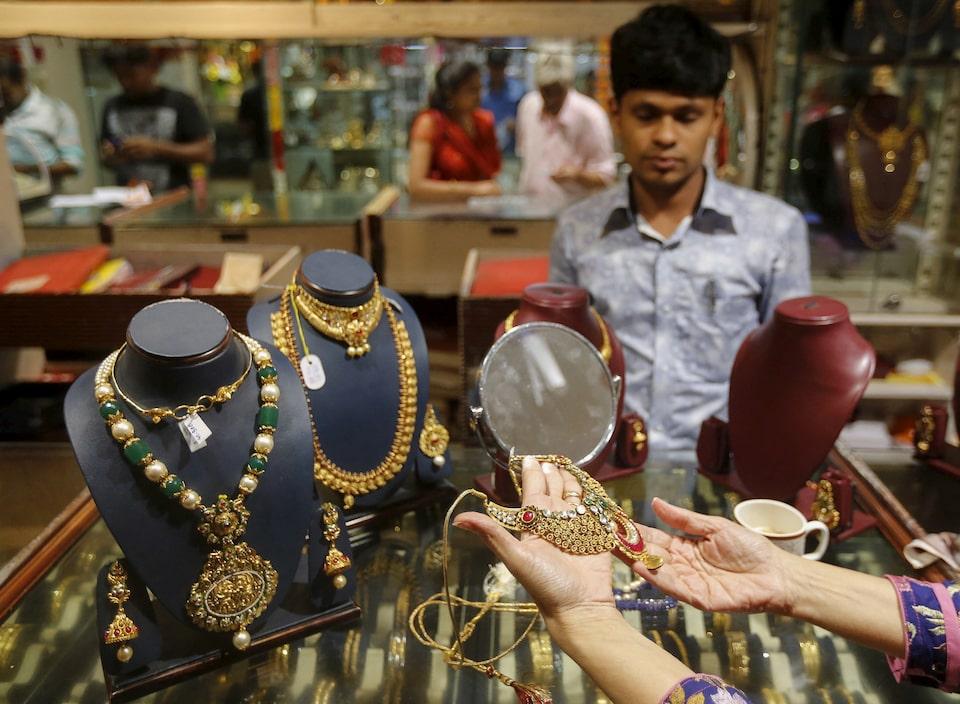
MUMBAI, Jan 29 (Reuters) - Indian gold and silver futures jumped 6% to record highs in early trade on Thursday, tracking gains in overseas prices and supported by a slide in the rupee to an almost all-time low, dealers said. Domestic gold futures jumped 6% to a record 175,869 rupees per 10 grams in early trade, while silver futures jumped 6% to an all-time high of 407,456 rupees per kg. Sign up here. https://www.reuters.com/world/india/indian-gold-silver-extend-rally-record-highs-2026-01-29/
2026-01-29 03:37
MUMBAI, Jan 29 (Reuters) - The Indian central bank likely sold dollars before the local spot market opened on Thursday to support the rupee, three traders said, after the non-deliverable forward markets signalled a potential break past the 92-per-dollar level. The 1-month NDF had indicted that rupee will weaken past 92 at the open versus the dollar. The currency was quoting at 91.9825 at 09.01 am IST. Sign up here. https://www.reuters.com/world/india/indias-rbi-likely-sold-dollars-ahead-open-support-rupee-traders-say-2026-01-29/