2025-08-26 06:56
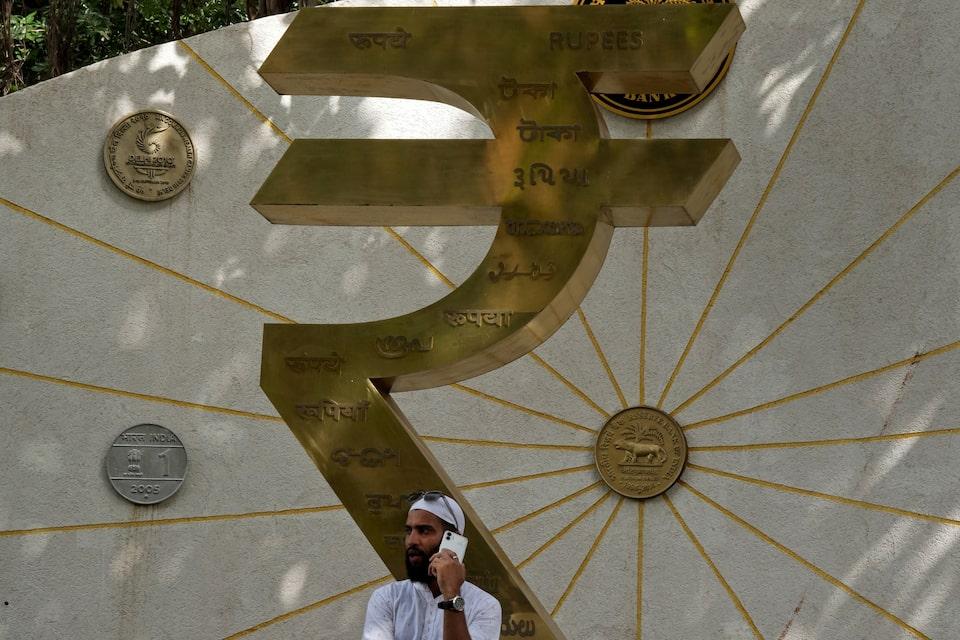
MUMBAI, Aug 26 (Reuters) - The Reserve Bank of India is reportedly selling dollars via state-run banks to stabilize the rupee, which has come under pressure on worries about the fallout from potential steep U.S. tariffs, three traders said. The rupee was trading at 87.7350 to the dollar, down 0.18% on the day and off an intraday low of 87.80. Sign up here. "It looks like the RBI is defending 87.80 for now," said a currency trader at a mid-sized private bank. "How long they can or will hold is anyone's guess." https://www.reuters.com/world/india/indian-central-bank-likely-intervening-cushion-rupee-against-us-tariff-risks-2025-08-26/
2025-08-26 06:35
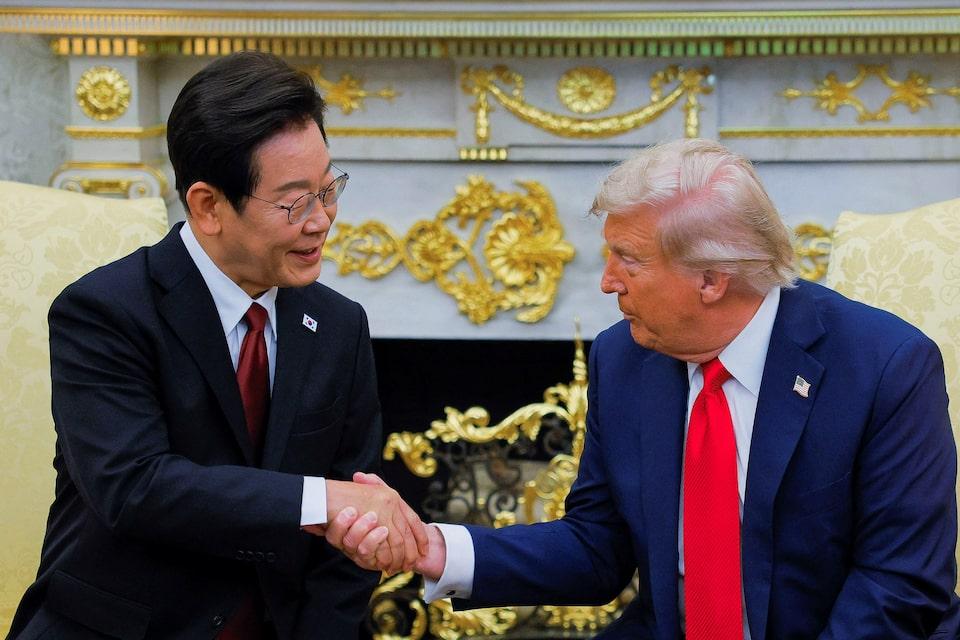
SEOUL, Aug 26 (Reuters) - South Korea touted a broad range of U.S. investment plans by its companies at Monday's summit between U.S. President Donald Trump and South Korean President Lee Jae Myung, spanning shipbuilding, nuclear energy, aerospace, energy and critical minerals. While South Korean companies pledged at the summit $150 billion in U.S. investments, the countries also agreed to establish a non-binding agreement to steer $350 billion of investment funds proposed by Seoul in July as part of a trade deal to cut threatened U.S. tariffs on Korean goods. Sign up here. Here are some of the investment plans announced as part of the summit. $150 BILLION IN INVESTMENTS South Korea's business lobby group said companies would invest $150 billion in areas such as artificial intelligence, chips, biotechnology, shipbuilding and nuclear power. The group did not give a breakdown or timeframe for the investments. The investments by South Korean companies, already among the leading investors in the United States, would be equivalent to about six times their U.S. foreign direct investment in 2024 if pushed through. Presidential adviser Kim Yong-beom previously said the investments would include some previously announced projects such as Samsung Electronics' (005930.KS) , opens new tab new chip factory in Texas and Hyundai Motor's (005380.KS) , opens new tab car factory in Georgia, as well as Hanwha's plan to expand its U.S. shipyard. AEROSPACE Korean Air (003490.KS) , opens new tab, South Korea's biggest carrier, announced the purchase of 103 Boeing (BA.N) , opens new tab aircraft worth $36.2 billion, alongside a $13.7 billion agreement with GE Aerospace for engines and maintenance services. The deal is the largest single contract in the airline's history, and separate from an order it signalled in March for up to 50 Boeing jets and GE (GE.N) , opens new tab engines. HYUNDAI MOTOR GROUP Hyundai Motor Group announced it will boost its U.S. investment to $26 billion from a previously announced $21 billion between 2025 and 2028. The plan includes building a new steel mill in Louisiana, expanding Hyundai Motor (005380.KS) , opens new tab and Kia Corp’s (000270.KS) , opens new tab U.S. auto production capacity, and establishing a robotics hub with an annual output of 30,000 units. SHIPBUILDING Trump said during the summit the U.S. would work with South Korea to revive the struggling U.S. shipbuilding industry, saying the U.S. would buy ships from South Korea but also get support to make ships in the country. South Korea's HD Hyundai (267250.KS) , opens new tab, together with Korea Development Bank, signed a memorandum of understanding with U.S. investment firm Cerberus Capital to create a multibillion-dollar joint fund aimed at strengthening U.S. maritime capacity, including shipbuilding. Samsung Heavy Industries (010140.KS) , opens new tab and Vigor Marine Group also inked a preliminary deal covering maintenance and overhaul of U.S. Navy support ships, shipyard modernization and joint vessel construction. LNG State-run Korea Gas Corp (036460.KS) , opens new tab reached long-term agreements with commodity trader Trafigura among others to import 3.3 million tonnes of liquefied natural gas annually for about 10 years starting in 2028, mainly sourced from the United States. The long-term contracted LNG volumes are set to be supplied by Cheniere, the largest U.S. LNG exporter, among others. NUCLEAR ENERGY Korea Hydro & Nuclear Power and Doosan Enerbility (034020.KS) , opens new tab joined with U.S. partners X-energy and Amazon Web Services to cooperate on small modular reactor design, construction and supply chains. Doosan Enerbility also struck an agreement with Fermi America to supply nuclear and SMR equipment for a Texas-based AI project, while KHNP and Samsung C&T (028260.KS) , opens new tab signed a separate MOU with Fermi on the project’s construction. In addition, KHNP agreed with Centrus a joint investment in a U.S. uranium enrichment facility. CRITICAL MINERALS Korea Zinc (010130.KS) , opens new tab agreed with Lockheed Martin (LMT.N) , opens new tab to supply germanium from 2028 under a long-term deal and to deepen supply chain cooperation in rare metals. NON-BINDING DEAL ON $350 BILLION FUND South Korea last month agreed on a trade deal to cut tariffs in exchange for pledging to make separate $350 billion investments, with the two sides deferring over details about the fund. Kim said on Monday that South Korea plans to pursue a "non-binding" deal on the structure and operation of the fund. The "financial package" would be used to support strategic industries such as key minerals, batteries, chips, pharmaceutical products, AI and quantum computing, he said. https://www.reuters.com/business/aerospace-defense/south-korean-firms-pledge-150-billion-us-investments-summit-2025-08-26/
2025-08-26 06:16
Dollar stumbles after Trump's announcement Markets recalibrate, rate cuts seen more likely Cook's removal intensifies worries over Fed independence SINGAPORE, Aug 26 (Reuters) - The dollar skidded in a volatile session on Tuesday after U.S. President Donald Trump said he was removing Federal Reserve Governor Lisa Cook from her position, seen by markets as a fresh jab at the central bank's independence. The dollar index fell as much as 0.4% before recovering after Trump made the announcement in a letter to Cook that he posted on social media. Sign up here. An index measuring the greenback's strength against a basket of six currencies was last 0.1% lower at 98.368. The pullback came after the U.S. currency had registered its biggest daily gain of the month on Monday. "Markets aren't panicking, but they are recalibrating, earlier rate cuts look more likely after Cook’s removal," said Charu Chanana, chief investment strategist at Saxo in Singapore. "But this isn’t just about rate cuts, it’s about Fed independence and the growing institutional risks in the U.S." Trump said in the letter to Cook he was firing the governor over alleged improprieties in obtaining mortgage loans. In response, Cook said Trump has no authority to fire her from the central bank, and she will not resign. The unprecedented move marks a sharp escalation of Trump's battle against the Fed, which he blames for not lowering interest rates quickly, and intensifies investor worries about the U.S. central bank's independence. "Trump's move to fire Lisa Cook will cast a pall on Fed independence and could weigh on the dollar and U.S. Treasuries," said Vasu Menon, managing director of investment strategy at OCBC. "However, don't expect major market moves as Trump's action is somewhat unprecedented and may be challenged in U.S. courts," he added. The yield on the two-year U.S. Treasury bond was last down 1.3 basis points to 3.717% after the move, while the yield on long-dated 30-year bonds rose 4.7 basis points to 4.936%. The interest rate differential between two- and 10-year Treasury bonds hit a one-month high of positive 58.7 basis points. Traders are pricing in an 83.3% probability of a cut at the Fed's September meeting, little changed from a week ago, according to the CME Group's FedWatch tool. Against the yen, the dollar traded at 147.845 yen , in line with late U.S. levels. The euro tacked on 0.1% in Asia, last fetching $1.1629 , reversing some losses after France's main opposition parties said they would not back a confidence vote, over Prime Minister Francois Bayrou's planned budget cuts, increasing the prospect of political instability. The offshore yuan changed hands at 7.1547 yuan per dollar , appreciating just shy of 0.1% and trading near the strongest level in a month, as a Chinese stock rally gathered steam. The Australian dollar slipped 0.1%, fetching $0.6479 , after the Reserve Bank of Australia's minutes for its August meeting said the central bank judged further policy easing would likely be needed over the coming year. The kiwi slipped 0.2% to $0.5839 . Sterling traded at $1.3453 in volatile trade, giving up early gains made after news of Trumps's move against the Fed broke. Cryptocurrencies fluctuated between gains and losses after several days of choppy trading, with bitcoin last up 0.5% and attempting to break a three-day losing streak, while ether climbed 1.9%. https://www.reuters.com/world/middle-east/dollar-jolted-lower-after-trump-fires-feds-cook-2025-08-26/
2025-08-26 06:14
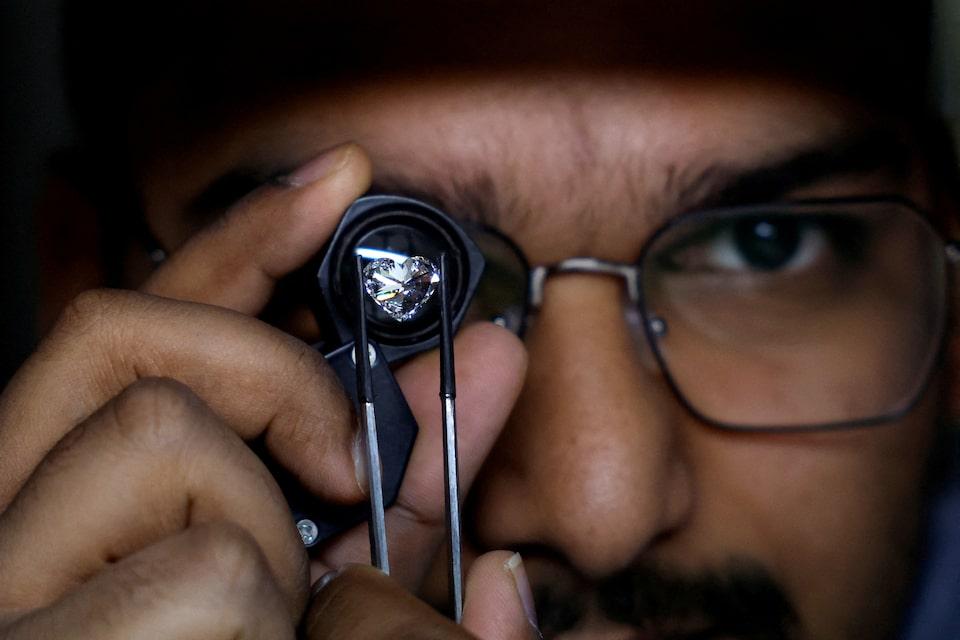
Small businesses offer steep discounts, shed staff amid slowdown Some big diamond traders consider moving operations to Botswana Exporters slash rough diamond purchases, run on minimal stocks SURAT, India, Aug 26 (Reuters) - The Surat Diamond Bourse, billed as the world's largest office complex - surpassing even the Pentagon in size and symbolising India's growing trade ambitions, stands eerily quiet, with only a few traders at work. The reason: business is sluggish and the outlook is grim. Sign up here. Exports by India's diamond industry have already hit a two-decade low on weak Chinese demand, and now higher tariffs under U.S. President Donald Trump threaten to sever access to its largest market, which accounts for nearly a third of its $28.5 billion annual shipments of gem and jewellery. In Surat, where more than 80% of the world's rough diamonds are cut and polished, orders have started drying up with looming U.S. tariffs shaking buyer confidence. While smaller exporters have fewer options to cushion the blow, some bigger players plan to shift part of their operations to countries like Botswana, which faces a lower 15% U.S. tariff. India's current 25% tariff is set to double on Aug. 27. "We are in a wait-and-watch mode until the end of August but may increase production in Botswana if this continues," said Hitesh Patel, managing director of Dharmanandan Diamonds, which expects U.S. tariffs to slash its annual revenue by 20–25%. Shaunak Parikh, vice chairman of the Gem and Jewellery Export Promotion Council (GJEPC), said the industry was also responding to slower demand by cutting working days and hours. At the Surat Diamond Bourse, more than 4,700 offices have been sold, but less than 250 are in use with several companies rethinking their plans to move in, a bourse official said on condition of anonymity. The owner of a Mumbai-based diamond firm, who bought space at the bourse last year, said he had shelved relocation plans. "U.S. tariffs have already shaken our business, and we don't want the added hassle of moving from Mumbai to Surat," he said, requesting anonymity to avoid naming his company. In December 2023, while inaugurating the Surat Diamond Bourse - built over 6.7 million square feet, surpassing the Pentagon's 6.5 million - Prime Minister Narendra Modi had hailed it as a symbol of "new India's strength and new resolve". Comprising nine interconnected towers, each with 15 floors and gleaming glass facades, the sprawling bourse houses banks, customs offices, secure vaults, and a jewellery mall, designed as a one-stop hub for the global diamond industry. LITTLE SPARKLE DESPITE PEAK SEASON At this time of year, workers in Surat typically ramp up production to meet a surge in orders from the United States ahead of Christmas and New Year. This year, however, many artisans are uncertain whether they will even have work. "Demand has slumped so badly that the diamond packets I sold for 25,000 rupees ($285.84) last year now barely fetch 18,000," said Shailesh Mangukiya, who runs a cutting and polishing unit in Surat, the second-largest city in Modi's home state of Gujarat in India's west. Mangukiya said he had halved his staff strength to 125. GJEPC's Parikh said that in the absence of a trade deal between India and the U.S. to lower tariffs, 150,000 to 200,000 workers could lose their jobs. Stung by tariffs, U.S. buyers are likely to source diamonds from countries such as Israel, Belgium and Botswana, industry officials said. India's diamond exporters are trying to boost sales to Asia, Europe and the Middle East to offset U.S. losses, but finding new diamond buyers is not easy, exporters said. The industry is cutting rough diamond purchases and operating with minimal inventories to preserve cash flow, while cash-strapped smaller units have begun offering deep discounts to stay afloat, exporters said. The only silver lining is India's domestic demand. Demand for diamonds in India, which recently overtook China as the world's second-largest market, continues to show growth, said Hitesh Shah, a partner at Venus Jewel, which supplies global luxury brands such as Tiffany & Co. and Harry Winston. "Our sale for the last 10-15 days has slowed down a little but not that much because the loss of American demand is being compensated by some good demand in the Indian market," Shah said. ($1 = 87.46 rupees) https://www.reuters.com/world/india/empty-offices-lost-orders-indias-diamond-hub-stands-idle-steep-us-tariffs-loom-2025-08-26/
2025-08-26 06:11
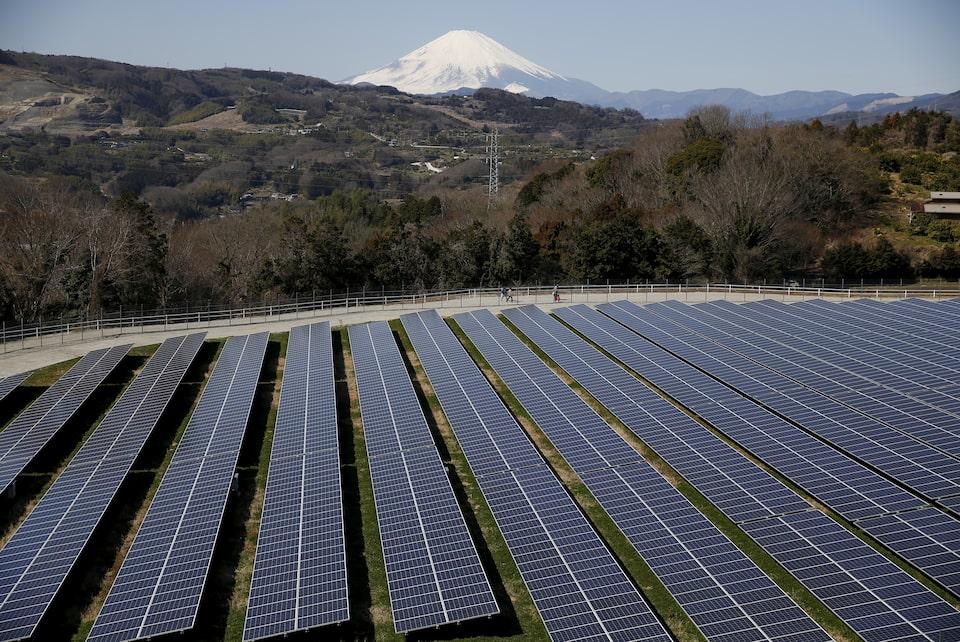
LITTLETON, Colorado, Aug 26 (Reuters) - Fossil fuels generated a record low share of Japan's utility-scale electricity supplies over the first half of 2025, marking an important milestone in the energy transition momentum of one of the world's largest fossil fuel consumers. Japan is a top-10 consumer and importer of coal, natural gas and crude oil, which are used to generate a majority of the energy needed in the world's fourth-largest economy. Sign up here. However, the share of fossil fuels has steadily declined within Japan's electricity generation, and accounted for less than 60% of utility-scale electricity supplies for the first time during January to June, data from Ember shows. Clean energy sources - especially solar farms and nuclear power plants - have supplied the remaining electricity, and have sharply outpaced the growth in fossil fuel power sources so far this decade. If clean electricity supplies continue to expand at the average rate seen since 2019, and fossil fuel supplies continue to contract at the pace seen over that same period, then clean electricity will surpass fossil electricity supplies by 2033. The prospect of home-grown clean energy sources supplying a majority of Japan's electricity within the next decade will be a cause for concern for fossil fuel exporters, who have relied heavily on Japan's demand growth for decades. CLEAN RECOVERY Japan's clean electricity supplies during January to June totalled 188 terawatt hours (TWh), Ember data shows. That total is 47% more than during the same months in 2019, and marks the highest clean supply output level during the opening half of the year in over a decade. However, clean electricity supplies remain well below their all-time peak set in the early 2000s due to the still-diminished level of nuclear power generation in the country following the 2011 Fukushima disaster. Worries about the safety of nuclear power sparked widespread shuttering of Japan's nuclear fleet since 2011, and nuclear electricity supplies in 2024 remained roughly 70% below where they were in 2010, the year before the Fukushima meltdown. However, while nuclear has remained largely sidelined, Japanese utilities have rapidly lifted generation from other clean sources over the past decade or so. Since 2010, solar generation has scored a 25-fold rise, while output from wind farms and bioenergy power plants has more than doubled. These clean power additions have allowed non-nuclear clean electricity supplies to scale new records in eight of the past 10 years, and lifted clean electricity's share of the total generation mix to 31% in 2024 from just 12% in 2012. That clean generation share has jumped to an average of 41% for the first half of 2025, thanks to record output from wind farms and bioenergy plants, and a continuing recovery in nuclear plants as reactors gradually return to service. FOSSIL FIX Japan's utilities have made cuts to fossil fuel use in electricity generation as they have boosted supplies of clean power. The total amount of electricity generated from natural gas plants during January to June of 2025 was the lowest for that six-month period since at least 2019, as high natural gas prices stifled gas use in the country. Coal-fired generation climbed by around 4% from the same months in 2024 to make up the drop in gas power, and overall fossil fuel electricity supplies were largely flat compared to a year ago. The cuts to fossil fuel use are more evident compared to the generation levels seen during the first half of 2019. Coal-fired electricity supplies in the first half of 2025 were 9% below those of the first half of 2019, while gas-fired electricity output was 25% lower. Given Japan's ambitions to cut greenhouse gas emissions by 46% by 2030 from 2013 levels - when there was a surge of fossil fuel power generation - additional reductions to coal and gas-fired power are expected in the coming years, alongside the shuttering of outdated fossil power plants. Between 2019 and 2024 Japan's fossil fuel electricity supplies contracted by an average of 3% a year, which if sustained would result in a 30% drop in fossil generation by around 2040. At the same time, clean electricity supplies have expanded by around 6% a year since 2019, which if sustained would result in a doubling in clean electricity supplies by around 2036. More importantly for climate trackers, that growth pace would mean that clean electricity supplies would likely account for a majority share of Japan's electricity from 2033 onwards. For fossil fuel exporters, however, the diminishing role of coal and gas in the electricity system of such a major economy represents a threat to their long-term prospects, especially as other major economies also phase out fossil fuel use. The opinions expressed here are those of the author, a columnist for Reuters. Enjoying this column? Check out Reuters Open Interest (ROI), your essential new source for global financial commentary. ROI delivers thought-provoking, data-driven analysis of everything from swap rates to soybeans. Markets are moving faster than ever. ROI can help you keep up. Follow ROI on LinkedIn , opens new tab and X , opens new tab. https://www.reuters.com/markets/commodities/japans-utilities-cut-fossil-fuel-electricity-share-new-lows-2025-08-26/
2025-08-26 06:05
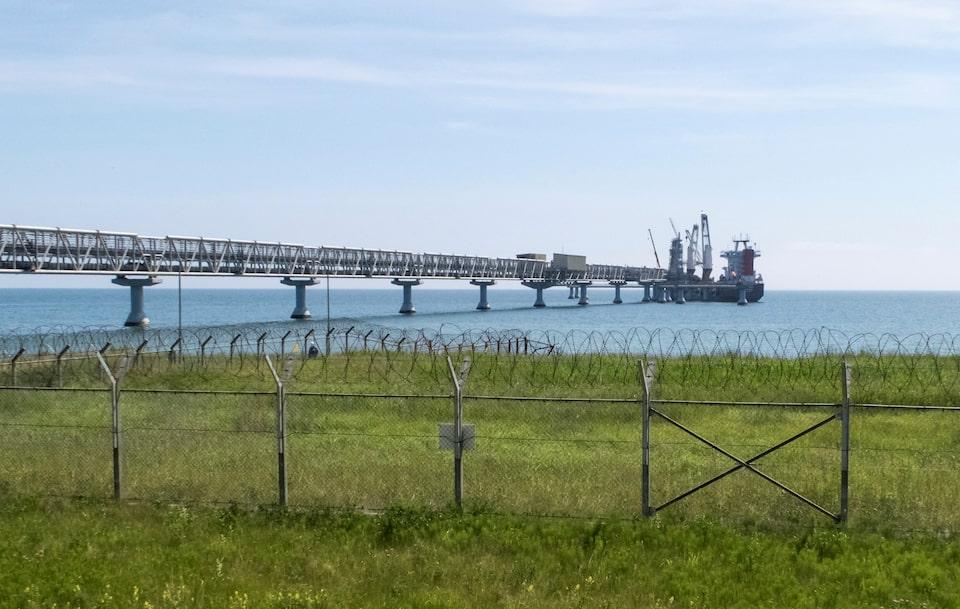
Discussions included whether Exxon Mobil would re-enter Sakhalin-1 project Talks also covered Russia's possible purchase of US equipment Possible deals were also discussed inside the White House LONDON, Aug 26 (Reuters) - U.S. and Russian government officials discussed several energy deals on the sidelines of negotiations this month that sought to achieve peace in Ukraine, according to five sources familiar with the talks. These deals were put forward as incentives to encourage the Kremlin to agree to peace in Ukraine and for Washington to ease sanctions on Russia, they said. Sign up here. Russia has been cut off from most international investment in its energy sector and from striking major deals due to sanctions following the Ukraine invasion that began in February 2022. The officials discussed the possibility of Exxon Mobil (XOM.N) , opens new tab re-entering Russia’s Sakhalin-1 oil and gas project, three of the sources said. Exxon, the top U.S. oil producer, has held numerous discussions with Russian state-controlled oil firm Rosneft about re-entering the project after receiving approval from the U.S. Office of Foreign Assets Control under the administrations of both former President Joe Biden and President Donald Trump, said a separate source familiar with the matter. Government officials also raised the prospect of Russia purchasing U.S. equipment for its LNG projects, such as Arctic LNG 2, which is under western sanctions, four sources said. None of the sources could be named because they were not authorised to speak publicly on the negotiations. Another idea was for the U.S. to purchase nuclear-powered icebreaker vessels from Russia, Reuters reported on August 15. The talks were held during U.S. envoy Steve Witkoff’s trip to Moscow earlier this month when he met with Russian President Vladimir Putin and his investment envoy Kirill Dmitriev, three of the sources said. They were also discussed within the White House with Trump, two of the sources said. These deals were also briefly discussed at the Alaska summit on August 15, one source said. “The White House really wanted to put out a headline after the Alaska summit, announcing a big investment deal,” said one of the sources. “This is how Trump feels like he’s achieved something.” Trump and his national security team continue to engage with Russian and Ukrainian officials towards a bilateral meeting to stop the killing and end the war, a White House official said in response to questions about the deals. It is not in the national interest to further negotiate these issues publicly, the official said. A spokesperson for Dmitriev declined to comment. Exxon Mobil declined to comment. Rosneft and Novatek did not respond to requests for comment. TALKS COINCIDE WITH THREATS Trump has threatened to impose more sanctions on Russia unless peace talks make progress and to place harsh tariffs on India, a major buyer of Russian oil. Those measures would make it difficult for Russia to maintain the same level of oil exports. Trump’s dealmaking style of politics has been on display before in the Ukraine talks, when earlier this year the same officials explored ways for the U.S. to revive Russian gas flows to Europe. These plans have been stalled by Brussels, which put forward proposals to fully phase out Russian gas imports by 2027. The latest discussions have shifted to bilateral deals between the U.S. and Russia, pivoting away from the European Union, which, as a bloc, has been steadfast in its support for Ukraine. On the same day as the Alaska summit, Putin signed a decree that could allow foreign investors, including Exxon Mobil, to regain shares in the Sakhalin-1 project. It is conditional on the foreign shareholders taking action to support the lifting of Western sanctions on Russia. Exxon exited its Russian business in 2022 after the Ukraine invasion, taking a $4.6 billion impairment charge. Its 30% operator share in the Sakhalin-1 project in Russia's far east was seized by the Kremlin that year. The U.S. has placed several waves of sanctions on Russia’s Arctic LNG 2 project, starting in 2022 and cutting off access to ice-class ships that are needed to operate in that region for most of the year. The project is majority-owned by Novatek, which started working with lobbyists in Washington last year to try to rebuild relations and lift the sanctions. The Arctic LNG 2 plant resumed natural gas processing in April, albeit at a low rate, Reuters reported. Five cargoes have been loaded from the project this year onto tankers under sanctions. A production train was previously shut down due to the difficulties in exporting given the sanctions. This project was intended to have three LNG processing trains. The third is in planning stages, with technology expected to be supplied by China. Washington is seeking to prompt Russia to buy U.S. technology rather than Chinese as part of a broader strategy to alienate China and weaken relations between Beijing and Moscow, one of the sources said. China and Russia declared a "no limits" strategic partnership days before Putin sent troops into Ukraine. Xi has met Putin over 40 times in the last decade and Putin in recent months described China as an ally. https://www.reuters.com/business/energy/us-russian-officials-discussed-energy-deals-alongside-latest-ukraine-peace-talks-2025-08-26/