2025-08-25 19:04
Wall Street stocks end lower Traders price in 84% odds of Fed rate cut in September Dollar strengthens after Friday's fall NEW YORK, Aug 25 (Reuters) - Major stock indexes eased on Monday after gaining on Friday when U.S. Federal Reserve Chair Jerome Powell indicated that a September interest rate cut was likely but not certain, while the dollar gained. The dollar fell last week following Powell's remarks at the Fed's annual symposium in Jackson Hole, Wyoming. U.S. Treasury yields were higher on Monday. Sign up here. Major brokerages, including Barclays, BNP Paribas and Deutsche Bank, now expect a 25-basis-point Fed rate cut in September. Fed funds futures traders are pricing in 84% odds of a September cut, according to the CME Group’s FedWatch Tool. "On Friday there was a lot of enthusiasm about Powell basically indicating that there would likely be a rate cut. The market may have overreacted to his comments," Peter Cardillo, chief market economist at Spartan Capital Securities in New York, said. "I do believe we will get a rate cut, but I don't think it will be more than 25 basis points, and a lot depends on this Friday's PCE price inflation index." Data for August due before the Fed’s September 16-17 meeting could still sway Fed policy. The U.S. personal consumption prices reading, due on Friday, is considered the Fed's preferred inflation gauge. Hotter-than-expected U.S. producer price data last month raised some questions over the certainty of a cut. Investors are also keen to hear from AI chipmaker Nvidia (NVDA.O) , opens new tab, whose results are expected on Wednesday. The Dow Jones Industrial Average (.DJI) , opens new tab fell 349.27 points, or 0.77%, to 45,282.47, the S&P 500 (.SPX) , opens new tab fell 27.59 points, or 0.43%, to 6,439.32 and the Nasdaq Composite (.IXIC) , opens new tab fell 47.24 points, or 0.22%, to 21,449.29. Nvidia is among the last of the S&P 500 companies to report on the most recent quarter. Overall results so far have been much better than expected and have helped to support stocks. Year-over-year estimated earnings growth for the S&P 500 was at 12.9% as of Friday, sharply higher than 5.8% on July 1, according to LSEG. MSCI's gauge of stocks across the globe (.MIWD00000PUS) , opens new tab fell 2.33 points, or 0.24%, to 952.96. The pan-European STOXX 600 (.STOXX) , opens new tab index fell 0.44%. In deal news, U.S. soft drinks giant Keurig Dr Pepper (KDP.O) , opens new tab is set to create a global coffee giant to rival market leader Nestle (NESN.S) , opens new tab with an $18 billion takeover of JDE Peet's (JDEP.AS) , opens new tab, Europe's largest acquisition in more than two years. London markets were closed for a holiday, thinning overall trading volumes in Europe. On the trade front, U.S. President Donald Trump said on Monday he wanted to meet with North Korean leader Kim Jong Un this year and that he was open to further trade talks with South Korea even as he criticized the visiting Asian ally. The Korean won weakened 0.5% against the dollar. The dollar index , which measures the greenback against a basket of currencies, rose 0.56% to 98.39, with the euro down 0.79% at $1.1623. Against the Japanese yen , the dollar strengthened 0.5% to 147.67. U.S. Treasury yields also rose as traders prepared for auctions this week. The Treasury will sell short- and intermediate-dated debt this week. The yield on benchmark U.S. 10-year notes rose 1.9 basis points to 4.277%. Earlier, euro zone bond yields also rose, reversing their fall from late Friday. Oil prices extended last week's gains as traders anticipated more U.S. sanctions on Russian oil and Ukrainian attacks on Russian energy infrastructure that could disrupt supplies. U.S. crude futures gained $1.14 to settle at $64.80 a barrel, while Brent futures gained $1.07 to $68.80. Spot gold fell 0.21% to $3,364.47 an ounce. https://www.reuters.com/world/china/global-markets-wrapup-8-graphic-2025-08-25/
2025-08-25 16:35
Argentina's stock market benchmark drops over 3% 2038 bond falls to lowest level in over four months Milei's popularity and economic agenda could be affected, analyst says BUENOS AIRES, Aug 25 (Reuters) - Argentina's international dollar bonds fell on Monday as corruption allegations threatened to embroil figures close to President Javier Milei, with the 2038 issue down over 4 cents. Local media published audio recordings last week in which a voice that sounds like that of then-head of the disability agency, Diego Spagnuolo, can be heard discussing bribery within the agency. He alludes to Karina Milei, the president's sister and chief of staff, as receiving bribery payments. Sign up here. Spagnuolo was later fired by the president. Government officials have not confirmed the authenticity of the audio and Milei has not commented publicly on the issue. His sister has also made no public comment. Cabinet chief Guillermo Francos has said that, according to Milei, Spagnuolo had never mentioned the alleged bribery. Opposition legislators on Monday called for the chief of Argentina's health ministry, which oversees the disability agency, to answer questions about the matter in Congress. Late on Friday, various properties including Spagnuolo's residence were raided as part of a government investigation. The 2038 note fell 4.1 cents on Monday to 65.71 cents on the dollar, its lowest level in over four months according to LSEG data. The 2041 issue also fell over 4 cents. Argentina's stock market benchmark (.MERV) , opens new tab fell more than 3% on Monday following a 3.8% decline last week. The peso was down over 2% against the U.S. dollar . Marcelo Garcia, director for the Americas at New York-based risk consultancy Horizon Engage, said foreign investors worry a potential decline in Milei’s popularity would get in the way of his economic agenda. “It affects the government’s capacity to be reputable enough to continue to introduce tough reform in the next two years,” Garcia said. “The Milei political strategy of continued confrontation with everyone requires him to be very popular.” Garcia said the disability bribery scandal is particularly sensitive because it hits at the stigma that Milei "doesn’t care for the weak and the poor.” A spokesperson for Milei's government did not respond to a request for comment. The allegations come weeks ahead of a key local election in the Buenos Aires province and national midterm elections in October, where Milei's party is hoping to increase its presence in the opposition-controlled Congress. The libertarian president's popularity has been resilient even as his policies forced spending cuts and initially increased poverty levels across the country. https://www.reuters.com/world/americas/argentinas-international-dollar-bonds-tumble-amid-government-corruption-2025-08-25/
2025-08-25 16:27
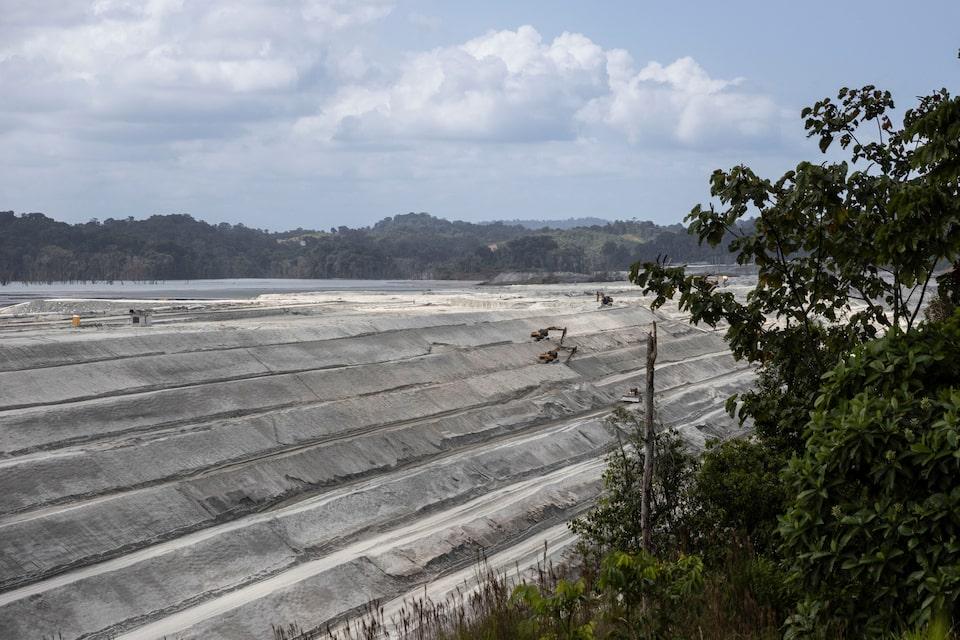
Aug 25 (Reuters) - Panama's economy is expected to grow this year as the impact from the closure in late 2023 of First Quantum Minerals' (FM.TO) , opens new tab Cobre Panama copper mine fades, and non-mining sectors continue to grow, the International Monetary Fund's executive board said on Monday. WHY IT IS IMPORTANT Panama's economy is recovering after the Cobre Panama mine, one of the world's largest open-pit copper deposits, was shut in 2023 following protests from local residents over tax contributions and its environmental impact. Sign up here. BY THE NUMBERS The IMF expects Panama's economy to grow 4.5% in 2025 and to keep growing 4% yearly through 2030. As a comparison, the Central American country's economy grew 2.9% in 2024. KEY QUOTES "The economy is recovering from the impact of the Cobre Panama mine closure," the IMF said in a statement. It added the country's economy "is expected to continue its recovery, but the outlook is subject to significant downside risks and a high degree of uncertainty." The IMF also said a spending reduction plan approved by the cabinet, if fully implemented, could bring the government’s 2025 fiscal target within reach. CONTEXT The closure of Cobre Panama, which had contributed 1% to global copper production, impacted both Panama's and First Quantum's financial prospects. Panama, one of the world's fastest-growing economies in the last decade, recorded a significant slowdown in gross domestic product growth in 2024 from the previous year's 7.4% expansion, as the copper mine closed and air transport declined. https://www.reuters.com/world/americas/imf-sees-panama-gdp-up-45-this-year-rebound-copper-mine-closure-2025-08-25/
2025-08-25 14:00
Currency appreciation against the dollar pressures European exports to US US tariff hit also seen eating into revenues Service sector firms also monitoring impact of currency moves Aug 25 (Reuters) - U.S. tariffs and an appreciation in European currencies caused by dollar weakness have eroded companies' top line performance in the second quarter, increasing pressure on them to relocate operations or put jobs into the United States. Earlier this month, U.S. President Donald Trump put a 39% tariff rate on Swiss firms, prompting some to say they could consider moving operations stateside, adding to cases in the European Union and Britain facing tariffs of 15% or 10%. Sign up here. The euro and the Swiss franc have jumped around 13% this year while sterling is up about 8% as uncertainty over Trump's policies and concern about rising U.S. debt hit the dollar. "The tariffs, the trade negotiations, etcetera, that's where we're seeing the bigger picture," UBS equity strategist Sutanya Chedda said. "When we look at things like revenue misses ... a lot of it has been due to the underestimation of the FX impact." Reuters reviewed more than 30 European corporate results for the second quarter and found that tariffs and currency moves were repeatedly mentioned as headwinds by companies. Chedda and her team estimate Europe could suffer a 1.5% decline in revenues generated in developed markets this year compared to 2024 because of currency movements. Deutsche Telekom (DTEGn.DE) , opens new tab said its second quarter earnings were around 400 million euros ($467.88 million) lower from converting primarily dollars into euros. The German telecoms giant depends heavily on its U.S. business T-Mobile (TMUS.O) , opens new tab. Dutch paint maker AkzoNobel (AKZO.NS) , opens new tab and Swiss freight forwarder Kuehne + Nagel (KNIN.S) , opens new tab both cut their full year guidance because of negative currency effects. Meanwhile, to limit tariff exposure, several European companies say they will consider moving production to the U.S., including German premium carmakers, Swiss army knife maker Victorinox and Italian premium coffee maker Illycaffe. Some Swiss companies are also considering moving operations within Europe to reduce exposure to tariffs or the Swiss franc. Swiss medical technology company Ypsomed signalled it could shift some production to Germany to avoid tariffs. Swiss banks with major franc costs are also considering moving jobs. Swiss private bank Julius Baer (BAER.S) , opens new tab said its assets under management (AUM) in the first half of 2025 registered a negative currency impact of 37.7 billion Swiss francs. With 53% of its costs in francs and 14% in euros, and 52% of its AUM in dollars, the bank is addressing the mismatch by shifting some operations to service centres in Spain and India, chief financial officer Evie Kostakis said last month. Meanwhile wealth manager EFG International (EFGN.S) , opens new tab said in July a 10% fall in the dollar-franc exchange rate worsened its cost income ratio by 2.2%, and that it could potentially shift part of its cost base to help compensate. Switzerland is still negotiating with Washington in the hope it can reduce its tariff burden. While uncertainty persists, companies such as aircraft manufacturer Pilatus have simply opted to halt exports to the United States. ($1 = 0.8549 euros) https://www.reuters.com/business/finance/currency-spikes-trump-tariffs-take-bite-out-european-results-2025-08-25/

2025-08-25 12:47
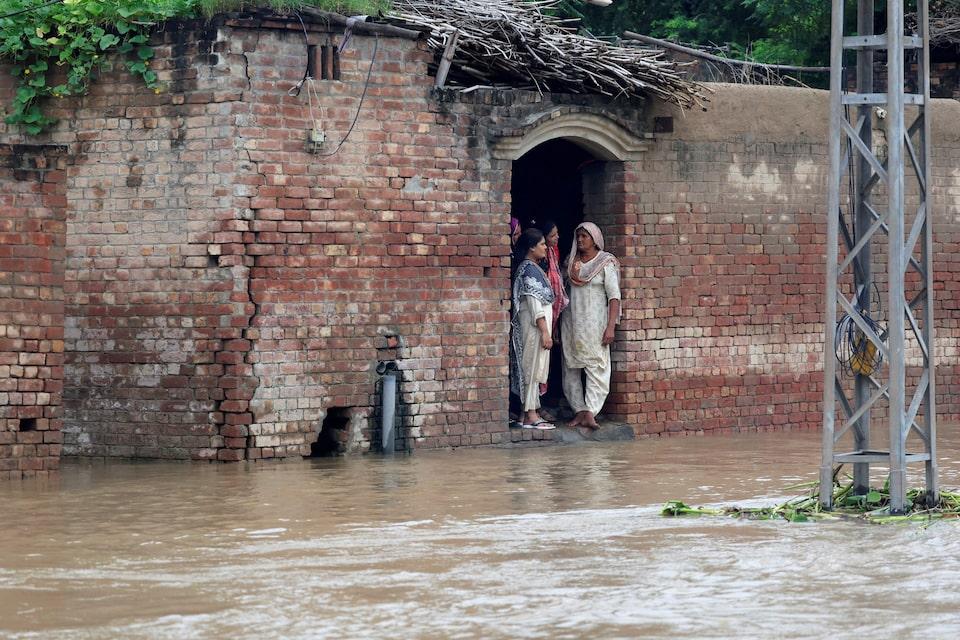
Alert issued outside water treaty suspended by India in April Deadly floods kill 60 in Indian Kashmir in August, hundreds across Pakistan Pakistan fears surge in Sutlej, Ravi, Chenab rivers due to rains and potential Indian releases NEW DELHI/ISLAMABAD, Aug 25 (Reuters) - India has shared a warning on possible cross-border flooding with neighbour Pakistan, Pakistani officials and a source in New Delhi said on Monday, as the arch enemies grapple with deadly floods and relentless monsoon rains. The information-sharing has come as a surprise because New Delhi put a decades-old treaty with Islamabad on water access in "abeyance" in April after linking a deadly attack on Hindu tourists in Indian Kashmir to Pakistan. Islamabad denied any involvement. The tensions escalated in May to the worst military clash between the nuclear-armed rivals in decades. Sign up here. India's high commission in Islamabad shared the warning on Sunday with Pakistan's foreign ministry on "humanitarian grounds" and not under the 1960 Indus Waters Treaty, the Indian source said, following heavy rains in the Jammu and Kashmir region bordering Pakistan. The source, citing government rules, declined to be named. India's foreign ministry did not respond to a request for comment. Pakistan's foreign ministry said the warning was issued through diplomatic channels "rather than through the Indus Waters Commission as required under the Indus Waters Treaty". This month floods in India's northern territory of Jammu and Kashmir have killed at least 60 people and nearly 400 more in northwest Pakistan. In total, the floods have killed 799 people in Pakistan since the monsoon started in late June, Pakistan's National Disaster Management Authority said, warning of more heavy rain until September 10. Mazhar Hussain, a disaster management official in the Pakistani province of Punjab, said the information shared by India included a warning about a possible surge in the Tawi river, which becomes the Sutlej when it crosses into Pakistan. "It has not indicated the scale of water but has warned about high flooding in the river," Hussain said. "Moreover, heavy rains across the border have filled the Indian dams, which would force India to release water. Heavy rains in Pakistan and the water released by India would cause high floods in Sutlej, Ravi, and Chenab in Punjab." WATER SUPPLY Under the 1960 treaty, three rivers that flow westwards from India were awarded to Pakistan and three eastern-flowing rivers were granted to India. Pakistan fears India could choke its main water supply, putting at risk most of its agriculture and hydro-power. In its statement on Monday, Pakistan's foreign ministry reiterated its call on India to comply with all provisions of the Indus Waters Treaty. "India’s unilateral declaration to hold the Treaty in abeyance constitutes a serious violation of international law and could have significant negative consequences for peace and stability in South Asia." https://www.reuters.com/sustainability/land-use-biodiversity/india-warns-foe-pakistan-potential-flooding-both-battle-torrential-rains-2025-08-25/
2025-08-25 12:37
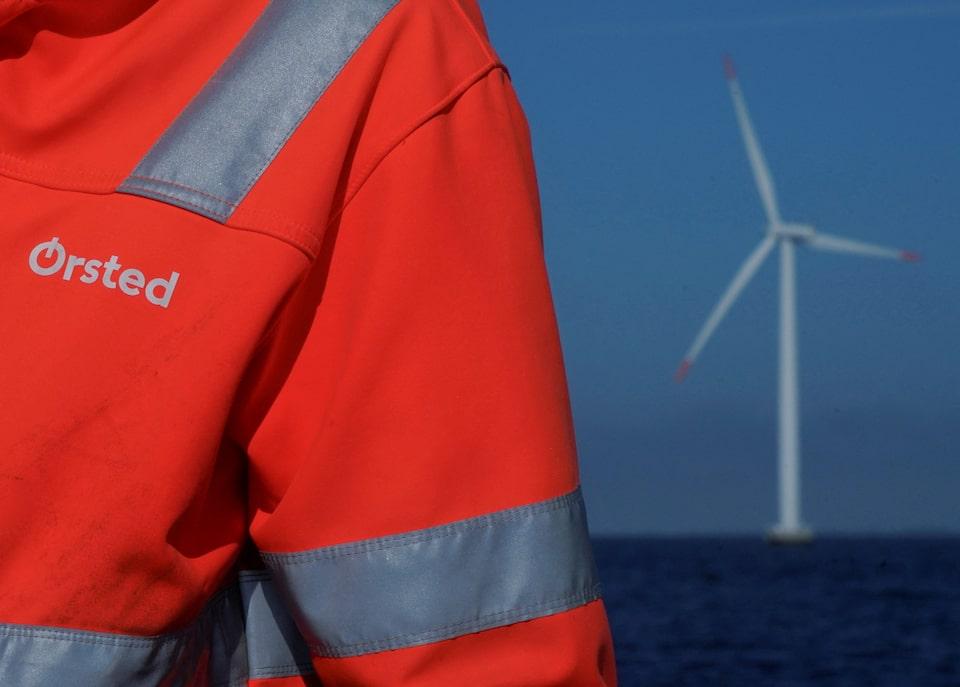
Orsted shares drop 17% after US halts wind farm project Orsted's project was 80% complete Orsted plans $9.4 billion rights issue despite setback Denmark's strained US relations may hinder diplomatic efforts Governors criticize suspension, pledge to reverse order COPENHAGEN, Aug 25 (Reuters) - Shares in Orsted (ORSTED.CO) , opens new tab plunged 17% on Monday after the U.S. halted the Danish company's Revolution Wind project off Rhode Island amid President Donald Trump’s pushback on renewable energy investments. Orsted, the world's biggest offshore wind farm developer, has already faced mounting challenges, including rising costs, higher interest rates, and supply chain disruptions, leading to delays and cancellations in the U.S. and other markets. The company's market value has plummeted 87% since its January 2021 peak. Sign up here. The U.S. Bureau of Ocean Energy Management (BOEM) issued a work-stop order late on Friday for the $1.5 billion Revolution Wind project, which was 80% complete, with 45 out of 65 turbines installed. The wind farm was expected to supply electricity to 350,000 homes in Rhode Island and Connecticut starting next year. It was BOEM's second major suspension of an offshore wind project this year, following its halt of Norwegian energy firm Equinor's (EQNR.OL) , opens new tab Empire Wind 1 project off New York in April. Trump has repeatedly criticised wind energy as costly and unreliable, suspending new offshore wind leases pending environmental and economic reviews. Despite the setback, Orsted, which is 50.1% owned by the Danish state, reiterated plans for a $9.4 billion emergency announced earlier this month, signalling it remains committed to its U.S. projects. The rights issue is intended to strengthen the company's capital structure amid "material adverse developments in the U.S. offshore wind market." The company also recently cancelled the partial divestment of its Sunrise Wind project off New York. The Danish finance ministry, which supports the rights issue, said in an emailed statement that the work-stop order was within the expected risk profile underpinning its participation in the capital raise. Orsted's shares, already down 30% since the rights issue was announced on August 11, hit a record low of 173.4 Danish crowns ($27.15) and were trading 15.9% lower at 180 crowns at 1158 GMT on Monday. Analysts said the suspension of Revolution Wind could be reversed, citing Equinor's Empire Wind 1 project, which resumed operations after diplomatic efforts by Norway's government. "The most likely scenario is that this will be solved in Orsted's favour, either with political help or in courtrooms," Sydbank analyst Jacob Pedersen said. However, Denmark's strained relations with the U.S. following Trump's comments about wanting the U.S. to take over Greenland could complicate diplomatic efforts. On Friday, Denmark's Foreign Minister Lars Lokke Rasmussen signed an agreement in California to strengthen ties with Governor Gavin Newsom, who has openly criticized Trump. Opposition lawmakers in Denmark questioned the government's support for Orsted's rights issue. Lars-Christian Brask, foreign policy spokesperson for The Liberal Alliance, suggested diplomatic efforts should be pursued but noted legal proceedings might offer the best chance for resolution. "There's always a risk that Greenland will come up in the dialogue if the government goes directly to Trump," he told Reuters. Equinor, which holds a 10% stake in Orsted, declined to comment but previously stated it would carefully evaluate the rights issue. AlphaValue analyst Pierre-Alexandre Ramondenc said the U.S. administration's move could undermine Orsted's rights issue, calling the decision "political hostage-taking" given the project's advanced stage. Governors Ned Lamont of Connecticut and Dan McKee of Rhode Island criticized the suspension in a joint statement, pledging to explore "every avenue" to reverse the order. "This political move by the Trump administration will drive up the cost of electricity bills and contradicts everything the administration has told us," they said. ($1 = 6.3869 Danish crowns) https://www.reuters.com/sustainability/climate-energy/orsted-shares-sink-record-lows-us-halts-wind-farm-off-rhode-island-2025-08-25/