2025-08-25 12:36
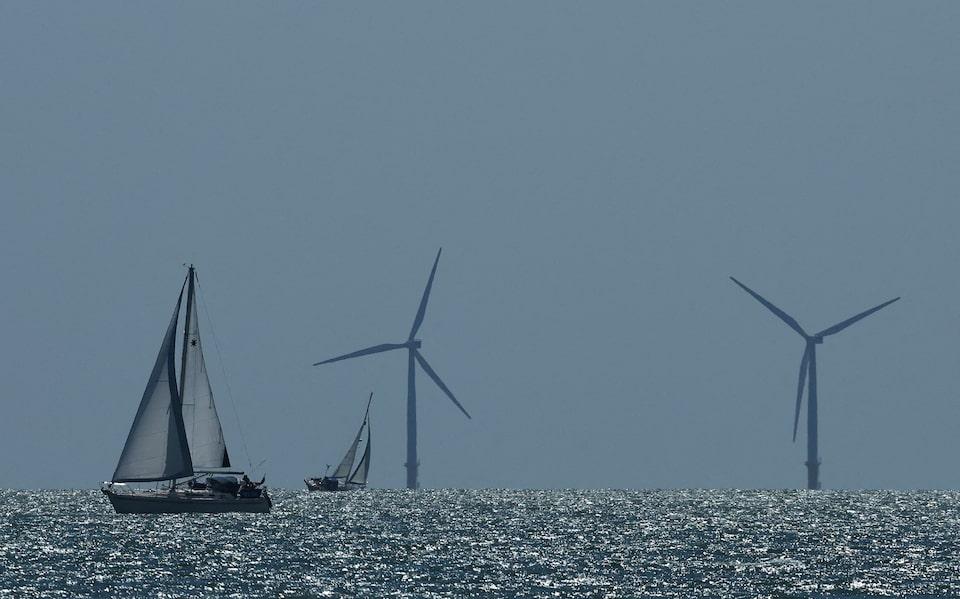
BERLIN, Aug 25 (Reuters) - Germany's Luxcara said on Monday it may switch to Siemens Gamesa turbines for its 300-megawatt Waterkant wind farm, potentially scrapping a deal with a Chinese company that had drawn political scrutiny and criticism from European turbine manufacturers. Hamburg-based asset manager Luxcara said it had reserved capacity for 19 Siemens Gamesa turbines, a subsidiary of Germany's Siemens Energy, using the same type already secured for its neighbouring 1.5-gigawatt Waterekke project - its largest offshore wind project to date in the German North Sea. Sign up here. They would replace the turbines that China's Ming Yang Smart Energy was due to produce for the project under a deal announced last year. Luxcara said it was considering the change to ensure economic efficiency by bundling procurement processes and contracts, conducting joint installation campaigns and coordinating operations for both projects. "This would allow us to align the development, construction, and operation of both projects even more closely," Holger Matthiesen, managing director of both project companies, said in a statement. Waterkant, to be built in Germany's North Sea, is scheduled to connect to the grid by the end of 2028 and is expected to generate enough power for about 400,000 households. Dispatching Chinese-made turbines for the project drew close scrutiny by Germany's former economy minister and criticism from Europe's wind turbine industry, which said the deal would give China access to critical infrastructure. The Ming Yang deal came after the European Commission last year launched a review of possible market distortions by Chinese wind turbine makers in five European Union countries, a move that China called "discriminatory". Luxcara said it had informed the relevant authorities and project partners about the possible switch in turbine supplier. It did not say whether the political and regulatory scrutiny played a role in that decision. Siemens Gamesa, Ming Yang Smart Energy and Germany's Economy Ministry did not immediately respond to requests for comment. https://www.reuters.com/sustainability/climate-energy/germanys-luxcara-may-drop-chinese-turbine-deal-north-sea-wind-farm-2025-08-25/
2025-08-25 12:32
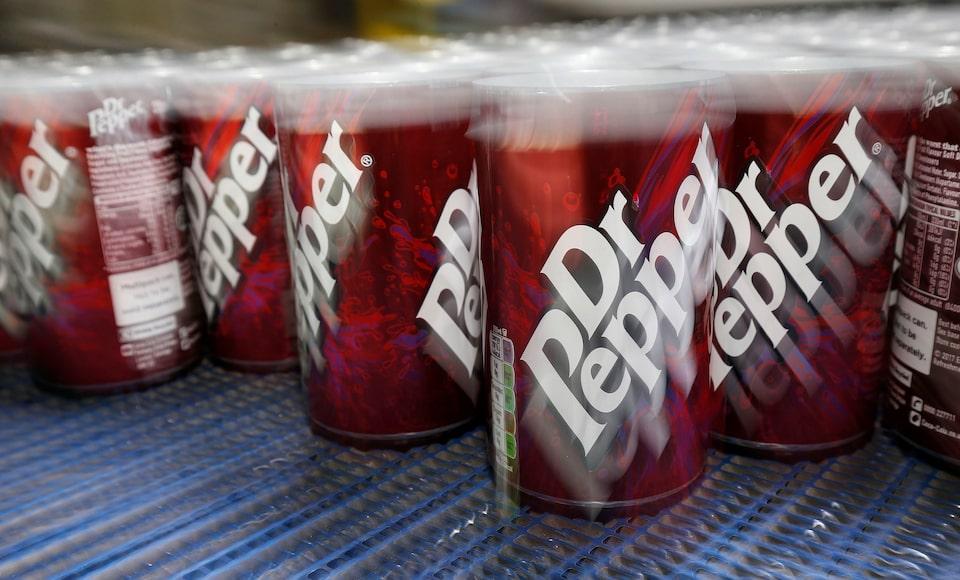
Deal represents 20% premium to JDE Peet's Friday's close KDP plans to split coffee from beverages, form two listed companies after transaction JDE Peet's shares up 18%, KDP's Frankfurt shares down 1.3% New coffee unit would rival Nestle's coffee business Aug 25 (Reuters) - U.S. soft drinks giant Keurig Dr Pepper (KDP.O) , opens new tab is set to create a global coffee giant to rival market leader Nestle (NESN.S) , opens new tab with an $18 billion takeover of JDE Peet's (JDEP.AS) , opens new tab, Europe's largest acquisition in more than two years. The deal, announced on Monday and offering a 20% premium to JDE Peet's closing market price on Friday, proposes splitting the merged entity’s coffee operations and other beverage businesses into two separate publicly U.S.-listed companies, as the Dutch company would be delisted from the Amsterdam stock exchange. Sign up here. The transaction, which comes as the global trade war intensifies corporate action in the consumer goods sector, aims to create $400 million in annual cost savings, allowing the new entities to better fare against rising U.S. tariffs against coffee-producing nations and other trade rivals. "The new Coffee entity will be somewhat similar in size to the coffee business of Nestlé... The two would each have a market share of around 20% in the global CPG (coffee and tea consumer packaged goods) coffee market" ING analysts Maxime Stranart told Reuters. The deal comes amid record high prices for global coffee, driven by droughts in top producers Brazil and Vietnam and following U.S. President Donald Trump's decision to impose 50% duties on beans imported from Brazil. "Rolling the two coffee businesses together makes sense, reducing the European-centric and commoditised nature of most of JDE Peet’s business, and giving Keurig international exposure," said Jon Cox of Kepler Cheuvreux. POST-CLOSE SEPARATION The transaction announced on Monday would partly reverse a 2018 merger that created Keurig Dr Pepper by combining Keurig Green Mountain and Dr Pepper Snapple, allowing investors to focus on one single segment rather than a bundle of diverse products. The new entities, called Beverage Co., and Global Coffee Co., will be led by Keurig's CEO Cofer and CFO Sudhanshu Priyadarshi, respectively. Keurig said that Global Coffee Co., with around $16 billion in combined annual net sales, will be well positioned to profit from the world's $400 billion coffee market, while Beverage Co., with more than $11 billion in yearly net sales, will focus on North America's $300 billion refreshment beverage market. Shares of JDE Peet's surged 18% in early trading, marking their strongest day on record, while Frankfurt-listed shares of Keurig Dr Pepper fell 1.3% as of 1057 GMT. JDE Peet's, with brands including Jacobs, L’Or, Tassimo and Douwe Egberts, was valued at 12.76 billion euros at Friday's market close, while Keurig's worth stood at around $48 billion, according to LSEG data. Its shares have risen nearly 10% this year on strong beverage sales, while the Dutch coffee maker's almost doubled, supported by stable revenues and focus shift towards shareholders' remuneration. JDE Peet's is majority-owned by Germany’s JAB, which also holds a significant minority stake in Keurig Dr Pepper, according to LSEG data. ($1 = 0.8544 euros) https://www.reuters.com/business/keurig-dr-pepper-takes-shot-nestle-with-18-bln-takeover-dutch-coffee-giant-jde-2025-08-25/
2025-08-25 12:09
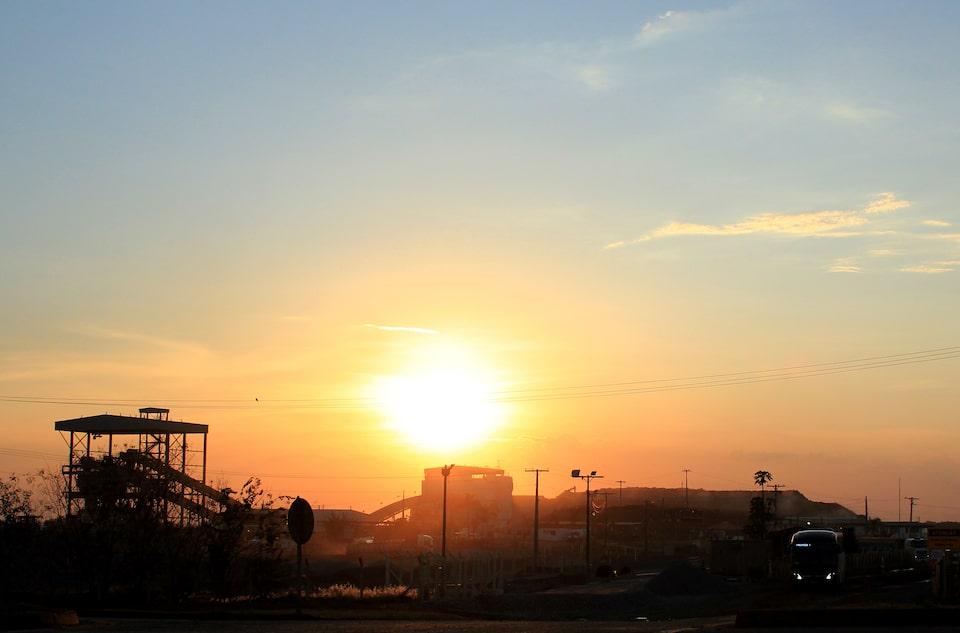
BEIJING, Aug 25 (Reuters) - China's CMOC GROUP (603993.SS) , opens new tab said on Monday that it was looking for more merger and acquisition opportunities. "We are actively finding and negotiating projects in resource rich countries and regions including Africa and South America," Liu Jianfeng, CMOC's chairman said at an earnings briefing, without indicating any targets. Sign up here. CMOC acquired , opens new tab Canada-listed Lumina Gold in the first half of this year. CMOC is also considering expanding its molybdenum and tungsten assets and is looking for the right time to do this, Liu added. The company reported a 60.1% rise in first-half net profit late on Friday, sending its shares 8.7% higher to 12.08 yuan on Monday. https://www.reuters.com/markets/commodities/chinas-cmoc-eyes-more-ma-opportunities-africa-south-america-2025-08-25/
2025-08-25 12:05
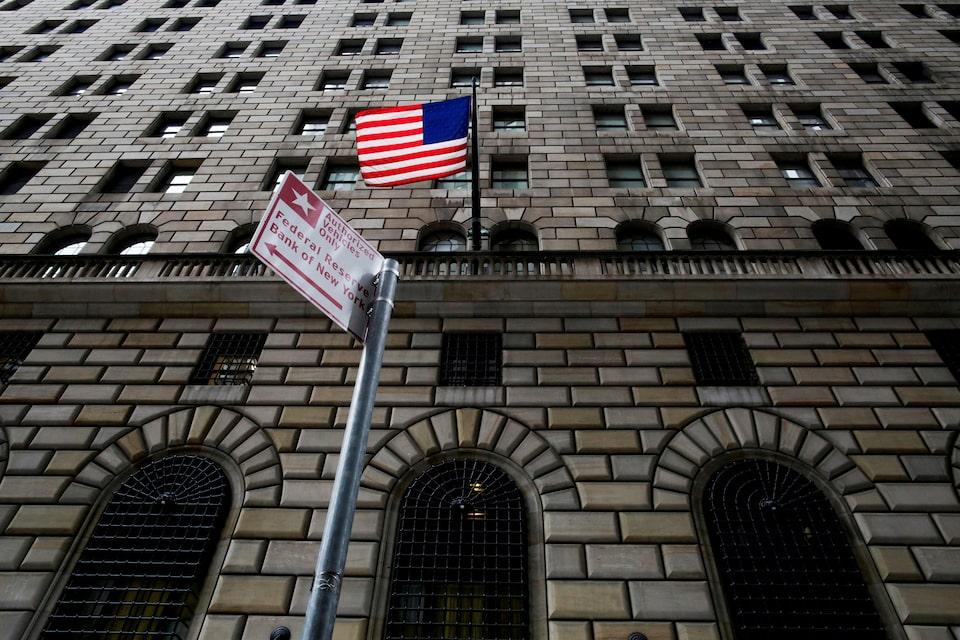
Powell's Jackson Hole speech raised prospect of September cut Odds of Fed cut next month at 85% Euro expected to extend 13% year-to-date gain as Fed cuts near Focus on US inflation, labour market data MUMBAI, Aug 25 (Reuters) - The dollar nudged higher against major currencies on Monday, stabilising after a steep fall last week that followed remarks from Federal Reserve Chair Jerome Powell that raised expectations of a rate cut next month. The euro declined 0.2% to $1.1693, pulling back from a four-week high of $1.174225 touched on Friday. Sterling and the Swiss franc were each down 0.1%. Sign up here. Major brokerages, including Barclays, BNP Paribas and Deutsche Bank, expect a 25-basis-point Fed rate cut in September following Powell's remarks. Expectations of policy easing and a slowing U.S. economy, alongside lingering worries about the U.S. fiscal position, are likely to exert pressure on the U.S. dollar, said Samy Chaar, chief economist at Lombard Odier. Traders price in 85% odds of a quarter-point cut on September 17, up from around 70% before Powell delivered his speech, according to CME's FedWatch tool. Measured against a basket of six major currencies , the dollar has weakened by more than 9.5% so far this year. The single currency has been the lead gainer in the basket with a near 13% rise on the year. Chaar expects the euro to strengthen to about $1.20-$1.22 over the next six-to-12 months. Meanwhile, eurozone bond yields moved higher on Monday, reversing a fall from late last week as traders reassessed their expectations for the U.S. Federal Reserve and the impact on Europe. They also processed data showing an uptick in German business morale. Germany's 10-year bond yield, the benchmark for the euro zone, rose 5 basis points to 2.77%, nearing a five-month peak of 2.787% hit last week. U.S. Treasury yields were also slightly higher across the curve as traders calibrated positioning. The two-year Treasury yield , especially sensitive to interest rate expectations, was last up 2 basis points at 3.71%. Apart from the Fed's policy path, investors are likely to stay focused on U.S. President Donald Trump's attacks on Powell and other Fed policymakers, which have raised concerns about the central bank's independence. "Renewed efforts to reshape the Fed present a potential challenge to longer maturities," analysts at Goldman Sachs said in a note. The 30-year U.S. Treasury yield was last at 4.9050%. Upcoming data points include the Fed's preferred inflation gauge, the PCE deflator, on Friday, and monthly payrolls figures for August, due a week later. Elsewhere, the Chinese yuan leapt to the strongest level in a month, boosted by broad weakness in the dollar. In cryptocurrencies, ether fell 5% on Monday after touching a record high of $4,955.14 over the weekend. Bitcoin was down about 1.5% to $111,197. https://www.reuters.com/world/africa/dollar-edges-higher-after-slump-powells-dovish-surprise-2025-08-25/

2025-08-25 12:02
Nikkei gains, China blue chips hit three-year top Market implies 84% chance of Fed rate cut in Sept Dollar and yields steady after Friday's fall LONDON, Aug 25 (Reuters) - Euphoria over the September prospect of a U.S. interest rate cut petered out on Monday, sending U.S. share futures lower during pre-market trading as investors refocused on the broader economic picture. S&P 500 inched 0.2% lower and Nasdaq futures fell 0.3% pointing towards a lower Wall Street open, as of 1258 BST. Sign up here. Powell's dovish change of course has prompted futures to price in an 84% chance of a quarter-point rate cut in September, and at least 100 basis points of easing to 3.25-3.5% by the middle of next year. MSCI's broadest index of world shares (.MIWD00000PUS) , opens new tab rose 0.1% and held near Friday's record highs, while in Asia Chinese blue chips closed up over 2% at their highest level since 2022 (.CSI300) , opens new tab and Japan's Nikkei shut 0.4% higher. The pan-European STOXX 600 (.STOXX) , opens new tab index was also 0.2% lower, dragged down by Europe's renewable stocks after the U.S. government ordered Denmark's Orsted (ORSTED.CO) , opens new tab to halt construction of an offshore wind project near Rhode Island. The move, deepening woes for the industry and putting Orsted's plans to raise capital at risk, sent the company's share price down around a record 17%. London markets were closed for a holiday, thinning overall trading volumes in Europe. Shares in Amsterdam-listed JDE Peet's (JDEP.AS) , opens new tab meanwhile surged roughly 17% after Keurig Dr Pepper (KDP.O) , opens new tab agreed a deal to buy the company for 15.7 billion euros ($18.36 billion), a 20% premium to Friday's closing price. The European Central Bank is expected to hold rates unchanged in September, sources told Reuters at the weekend. Discussions about further cuts may resume in the autumn if the economy weakens. "As an investor, you lose an enemy whenever the Federal Reserve pivots because it gives valuations room to become ever more expensive," said Florian Ielpo, Lombard Odier Investment Managers' head of multi-assets. But looking at inventory data for manufacturers, wholesalers and retailers, Lombard Odier's Ielpo said that while manufacturers had stocked up amid tariff announcements, retailers held little inventory further down the economic food chain. Companies returning to replenish items from now will discover the true costs of U.S. tariffs, which will likely turn up in third-quarter results, said Ielpo. Switzerland soon hopes to finalise a new business offer for Washington to ease its tariff burden, which will likely include more defence spending and greater access for U.S. energy interests, two people familiar with the matter said. Switzerland was stunned when U.S. President Donald Trump this month hit it with 39% tariff rates, some of the highest worldwide. The Swiss franc crept up 0.1% against a basket of currencies. In broader currency markets, the dollar gained around 0.3% to 147.31 yen after falling 1% on Friday. The euro lost 0.2% to $1.1705 , having bounced from a trough of $1.1583 on Friday. The dollar ticked higher , , flattering the outlook for corporate earnings, although increased rate-cut bets also imply policymakers now see more danger of a downturn in employment and the economy. Euro zone bond yields rose, reversing their fall from late Friday as traders reassessed that Fed-driven move and its impact on Europe. U.S. cash treasuries did not trade in London on Monday due to the bank holiday. Market optimism will be tested by a reading on U.S. personal consumption prices on Friday that is expected to show core inflation creeping up to its highest since late 2023 at 2.9%. Any upside surprise to inflation would also challenge the rally in longer-dated Treasuries, especially given that a whopping $183 billion in new debt is being sold this week. The influential head of the New York Fed, John Williams, is due to speak later on Monday, and markets will be keen to hear whether he shares Powell's outlook on policy. NVIDIA WATCH Focus is turning to Nvidia's (NVDA.O) , opens new tab results on Wednesday, when it is forecast to announce a 48% rise in earnings per share on revenue of $45.9 billion for its second fiscal quarter. Analysts will be keen to hear more on the outlook for shipments to China and details of the deal with President Donald Trump to pay the U.S. government 15% of the revenue from sales of some advanced chips in the Asian giant. Trump said on Friday the U.S. would also purchase a 9.9% stake in Intel (INTC.O) , opens new tab for $8.9 billion, or $20.47 per share, which represents a discount of about $4 from Intel's closing share price of $24.80. Gold steadied as the dollar strengthened, and was last slightly lower at $3,368 an ounce after jumping 1% late last week. Oil prices were further supported by the lack of progress on talks between Russia and Ukraine, which keeps sanctions on Russian supplies. Brent rose 43 cents to $68.16 a barrel, while U.S. crude added 25 cents to $64.13 per barrel. https://www.reuters.com/world/china/global-markets-wrapup-5-2025-08-25/
2025-08-25 12:00
LAUNCESTON, Australia, Aug 25 (Reuters) - China's imports of seaborne thermal coal are poised to climb to the most this year in August while those of fellow top buyer India slump to a 3 1/2-year low. The diverging trends in the world's two biggest importers of the fuel - used mainly to generate electricity - largely reflect the interplay in their domestic markets of coal production and the rising deployment of renewable energy. Sign up here. China's seaborne imports of thermal coal are estimated to rise to 25.63 million metric tons in August, up from 22.77 million in July and the most since December last year, according to data compiled by commodity analysts Kpler. Imports from top thermal coal exporter Indonesia are on track to reach a five-month high of 16.13 million tons, while those from second-ranked Australia are expected to rise for a third consecutive month to 5.84 million. The increase in China's imports of seaborne thermal coal at first glance appears incongruous with official data showing thermal power generation easing 1.3% over the January-to-July period, amid rising hydropower and renewable output. But thermal power generation, which in China is overwhelmingly coal-fired with only a small contribution from natural gas, rose 4.3% in July from the same month a year earlier, according to data released on August 15. At the same time, China's domestic coal production was slipping with July output of 380.99 million tons being down 3.8% from the same month last year and the lowest since April 2024. The higher thermal generation and lower coal output was enough to spark buying interest from China, while low prices for seaborne thermal coal also helped boost demand for imports. Indonesian coal with an energy content of 4,200 kilocalories per kilogram (kcal/kg) , as assessed by commodity price reporting agency Argus, dropped to a four-year low of $40.45 a ton in the week to July 4. The stronger buying interest from China has led to a mild recovery in the price, which rose to a two-month high of $43.33 a ton in the week to August 22. A similar dynamic is underway in the main grade of Australian coal sought by China, which has an energy content of 5,500 kcal/kg . This grade ended at a five-month high of $71.92 a ton in the week to August 22, having risen 9.4% from a four-year low of $65.72 in the week ended June 6. INDIA IMPORTS SLIP The recent rise in prices would appear to be almost entirely a China-led factor, as India's imports of thermal coal have been weakening. August arrivals are forecast by Kpler to come in at 9.74 million tons, down from 11.99 million in July and the lowest since February 2023. They are also down almost by half from May's 17.96 million tons, which was the peak so far this year. The slump in India's thermal coal imports comes as coal's share in India's electricity dropped to a five-year low in July, and was down 4.2% from the same month a year earlier, according to an analysis of data from federal grid regulator Grid-India. At the same time, output from hydropower rose 22.4% and renewables increased by 14.4%, which was more than enough to cover the 1.8% growth in overall power generation. India is also increasing domestic coal output as more private miners start to operate and sell fuel with analysts expecting production in the fiscal year that started on April 1 to rise to around 1.15 billion tons, eclipsing the record of 1.05 billion in the prior fiscal year. What are the key implications of the contrasting fortunes of seaborne thermal coal imports in China and India in recent months? The short-term takeaway is that domestic coal production remains key to demand and prices in the seaborne market, and that China is still the main driver. The longer-term implication is that both China and India are installing renewable generation capacity at rapid rates while also increasing domestic coal output. This makes it more likely that over time their demand for imported thermal coal will trend lower, even allowing for periods of heightened demand when domestic supplies dip or coal-fired generation increases. Enjoying this column? Check out Reuters Open Interest (ROI), your essential new source for global financial commentary. ROI delivers thought-provoking, data-driven analysis of everything from swap rates to soybeans. Markets are moving faster than ever. ROI can help you keep up. Follow ROI on LinkedIn , opens new tab and X , opens new tab. The views expressed here are those of the author, a columnist for Reuters. https://www.reuters.com/business/energy/chinas-seaborne-thermal-coal-imports-jump-indias-stumble-2025-08-25/