2025-08-25 11:49
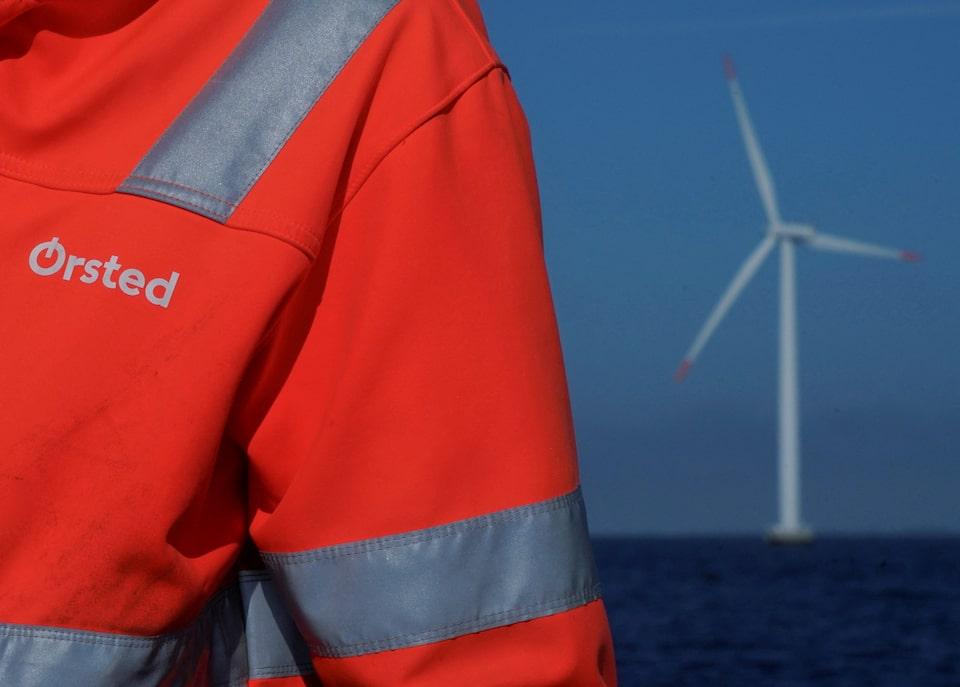
Aug 25 (Reuters) - Russian oil supplies to Slovakia through the Druzhba pipeline, interrupted last Thursday after a Ukrainian attack in Russia, may resume as soon as Monday under the best-case scenario, Slovak Economy Minister Denisa Sakova said. Russia and Ukraine have stepped up attacks on each other's energy infrastructure, hitting Ukrainian domestic heating supplies, Russia's Druzhba pipeline and other facilities, over the past few weeks. Sign up here. Slovakia and Hungary said on Friday that their supplies of Russian oil could be suspended for at least five days after a Ukrainian strike on a facility in Russia. "According to the latest information, this is an outage for four-five days," Sakova said in an emailed response to Reuters questions. "We can, in an optimum case, expect resumption of supplies to Slovakia already on Monday." She said supplies to customers were not under threat, given the country's 90-day reserves of oil and oil products. The European Union reduced energy supplies from Russia after its full-scale invasion of Ukraine in 2022 and is seeking to phase out Russian oil and gas by the end of 2027. Slovakia and Hungary have maintained relations with Russian President Vladimir Putin and opposed sanctions against Russia that Ukraine says are vital to make Moscow drop war demands it terms unacceptable. They also oppose the phase-out of Russian energy supplies via the Druzhba pipeline, saying they cannot rely on an alternative pipeline from Croatia's Adriatic coast. Slovakia and Hungary called on the European Commission on Friday to help guarantee security of supplies. A Commission spokesperson said on Monday the Commission was in touch with member states to assess the situation, adding that supply security was a priority. The Ukrainian strike on Thursday was the second time last week that Russian oil supplies have been cut to Hungary and Slovakia. Ukraine's military said late on Thursday it had struck the Unecha oil pumping station, a critical part of the Europe-bound pipeline. https://www.reuters.com/business/energy/russian-oil-supplies-slovakia-may-resume-soon-today-slovak-minister-says-2025-08-25/
2025-08-25 11:42
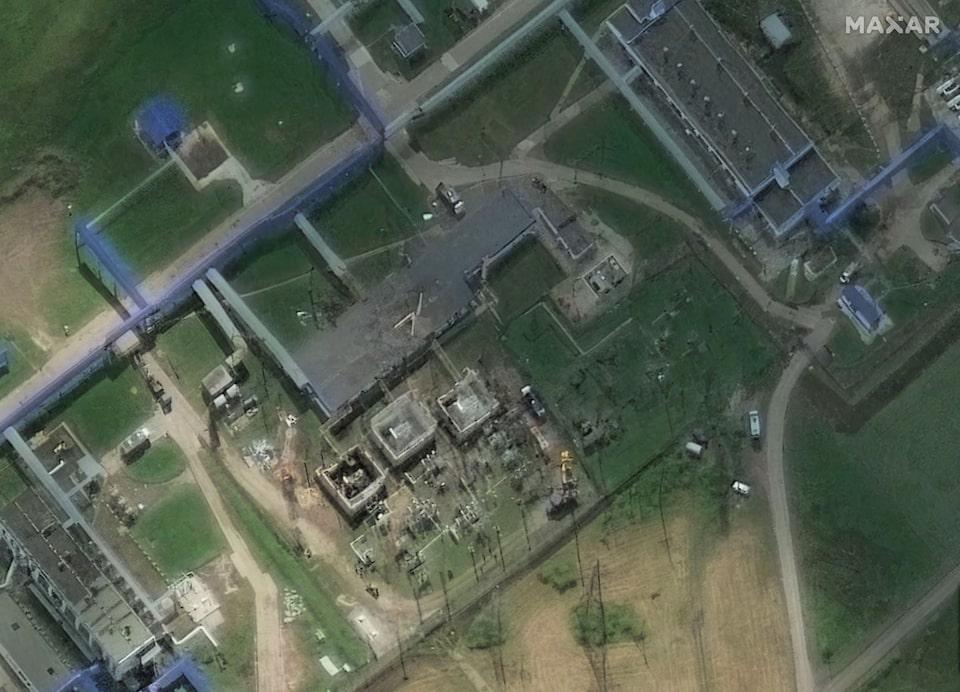
Aug 25 (Reuters) - U.S. oil and gas producer Crescent Energy will buy smaller peer Vital Energy in an all-stock transaction valued at $3.1 billion, including debt, Crescent said on Monday. The deal gives Crescent a significant foothold in the Permian shale basin of Texas and New Mexico. As the most productive U.S. oilfield, it continues to draw investor interest despite a broader slowdown in dealmaking activity in the sector. Sign up here. Greater scale should also make the company more attractive to investors, analysts said. "This sector has been mostly out of favor for many years, and scale gets you relevance with investors," said Tim Rezvan, analyst at KeyBanc Capital Markets. "Now, (Crescent) becomes a much more prominent company." Reuters first reported on Friday that the companies were in advanced talks. The transaction calls for Vital shareholders to get 1.9062 shares of Crescent common stock for each of their shares, making the offer worth $18.95 per share, a 20% premium to Vital's closing share price on Friday. However, Crescent's stock fell more than 4.8% to $9.47 on Monday. At that level, the deal would net Vital shareholders around $18.05 per share, while Vital's shares were last up over 15.5% to $18.24. The offer hardly feels like a win for Vital, Capital One Securities analysts said in a note, highlighting a nearly 50% slump in the company's stock so far this year. "There's room for higher valued competitors with nearby assets to outbid Crescent with more obvious synergies and strategic value," said Josh Young, chief investment officer at Bison Interests, which owns shares of Vital. Young did not disclose the size of his ownership. The deal, expected to close by the end of 2025, will generate $90 million to $100 million in immediate annual cost savings and will boost cash flow, Crescent said. Crescent, which will assume about $2.3 billion of Vital's debt, has lined up a $1 billion pipeline of non-core asset sales to help improve the balance sheet, it said. Going forward, Crescent's core focus areas are likely to be the Permian basin, the Eagle Ford basin of south Texas and the Uinta basin of Utah, so assets outside those areas should be considered potential divestments, Enverus analyst Andrew Dittmar said. Crescent shareholders will own about 77% of the combined company and Vital stockholders will own the rest, Crescent said. https://www.reuters.com/legal/transactional/crescent-energy-acquire-vital-energy-31-billion-shale-deal-2025-08-25/

2025-08-25 11:38
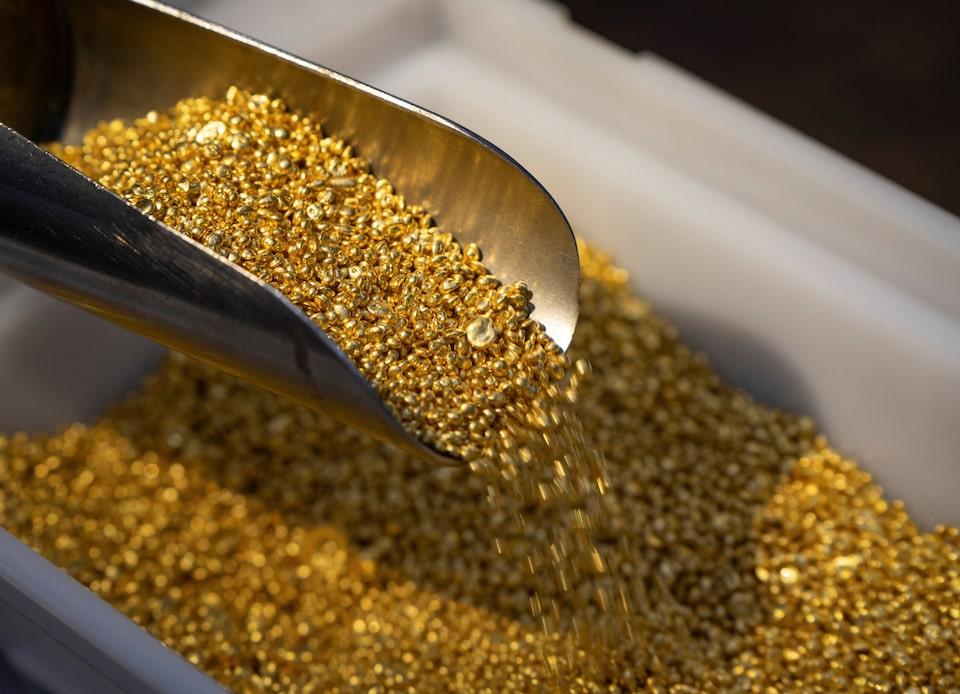
Gold hit two-week peak on Friday Powell's comments point to possible Sept rate cut US dollar rises from four-week low Aug 25 (Reuters) - Gold ticked down on Monday as the dollar firmed, easing from a two-week high hit in the previous session after comments from U.S. Federal Reserve Chair Jerome Powell bolstered bets on interest rate cuts. Spot gold inched down 0.1% at $3,367.51 per ounce, as of 1127 GMT, after touching its highest since August 11 on Friday. U.S. gold futures for December delivery eased 0.2% to $3,412.30. Sign up here. The dollar index (.DXY) , opens new tab was up 0.2%, making gold more expensive for other currency holders. Powell on Friday signalled a possible rate cut at the Fed's meeting next month, saying that risks to the job market were rising but inflation remained a threat, and that a decision wasn't set in stone. "Powell only indicated in my view a 25-bps cut for September, so there is some adjustment based on that, supporting the dollar and weighing on gold," said UBS analyst Giovanni Staunovo. Markets are now pricing in an 87% chance of a quarter-point rate cut at the September policy meeting - compared to nearly 90% after Powell's comments on Friday - and a cumulative reduction of 48 basis points by this year-end, according to the CME FedWatch Tool. "I expect spot gold to post fresh record highs above $3,500, assuming the Fed doesn't deviate from its easing path, while the precious metal should also enjoy ample support from sustained central bank purchases," said Han Tan, chief market analyst at investment trading platform Nemo.Money. Investors are awaiting U.S. personal consumption prices data on Friday that are expected to show core inflation creeping up to its highest since late 2023 at 2.9%. Gold tends to appreciate in a low-interest-rate environment, which reduces the opportunity cost of holding non-yielding bullion. Elsewhere, spot silver lost 0.3% to $38.72 per ounce, platinum fell 1.1% to $1,346.21 and palladium was down 1% at $1,115.07. https://www.reuters.com/world/china/gold-inches-down-two-week-high-dollar-strength-2025-08-25/
2025-08-25 11:31
NEW DELHI, Aug 25 (Reuters) - India shared a warning on possible cross-border flooding with neighbour Pakistan on "humanitarian grounds" and not under the water-sharing Indus Waters Treaty between the old enemies, an Indian government source told Reuters on Monday. India's high commission in Islamabad shared the warning on Sunday, the source said, following heavy rains in the Jammu and Kashmir region bordering Pakistan. India's foreign ministry did not immediately respond to a request for comment. Sign up here. The source declined to be named as they are not authorised to speak to the media. India put the Indus treaty in "abeyance" in April after linking a deadly attack on Hindu tourists in Kashmir to Pakistan. The tensions escalated in May to the worst military clash between the nuclear-armed rivals in decades. Under the 1960 Indus Waters Treaty, three rivers that flow westwards from India were awarded to Pakistan, with India getting three eastern-flowing rivers. Pakistan fears India could choke its main water supply, putting at risk most of its agriculture and hydro-power. Floods in Jammu and Kashmir killed at least 60 people this month. https://www.reuters.com/sustainability/land-use-biodiversity/india-shares-flood-warning-with-foe-pakistan-humanitarian-grounds-says-source-2025-08-25/

2025-08-25 10:59
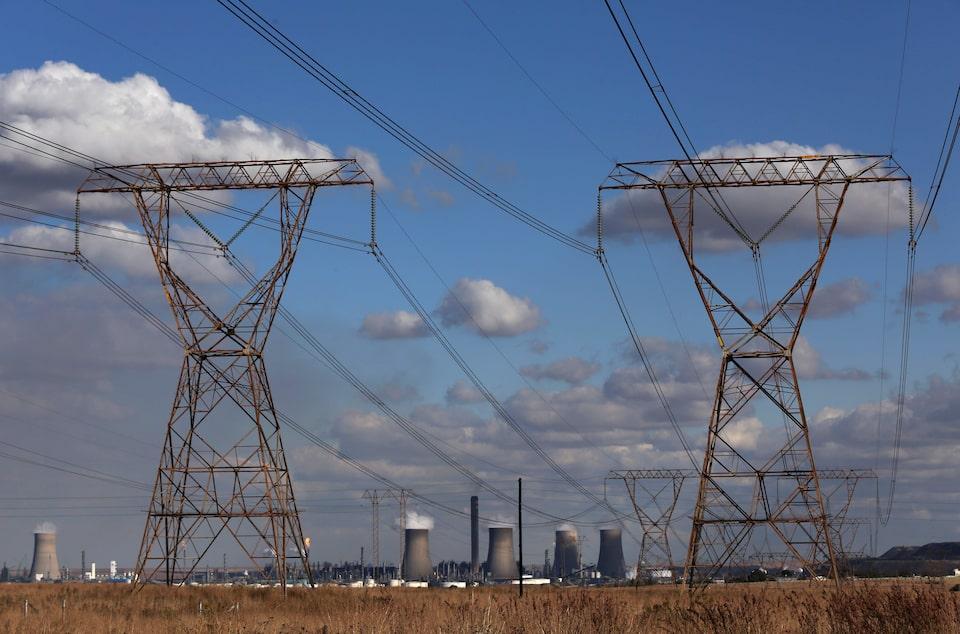
U.S tariffs could impact $80 million in chemical exports Sasol swings back to profit Aug 25 (Reuters) - South African petrochemical firm Sasol (SOLJ.J) , opens new tab is working to contain the impact of higher tariffs on its chemical exports to the U.S., Chief Financial Officer Walt Bruns said on Monday, saying they could affect $80 million worth of sales. A 30% tariff imposed by President Donald Trump on South Africa came into effect this month, threatening the viability of billions of exports from Africa's most advanced economy into the U.S. Sign up here. Sasol, which operates a chemicals business in the U.S., also exports about 10% of its South African chemicals production into the world's biggest economy. "We estimate the impact on our business to be around $80 million, of which we believe we can mitigate at least $20 to $30 million," Bruns told Reuters in an interview. "Some of our customers are willing to allow us to pass on the higher cost to them. If not, then we can re-allocate some of the product to Asia, so there'll be a bit of a shift from a supply chain point of view," he added. Sasol CEO Simon Baloyi told analysts that the U.S tariffs were not a major threat to the company. "We produce what we sell in the U.S. mainly in the U.S.," Baloyi said. Earlier on Monday, Sasol posted basic earnings per share of 10.60 rand ($0.6070) for the year ended June 30 compared to a 69.94 rand loss per share the previous year, on the back of higher chemicals prices, tighter cost controls and lower asset writedowns. Sasol also benefited from a 4.3 billion rand payout from Transnet, after it claimed in a legal suit the state-owned logistics firm had overcharged for oil transportation over several years. The company also recorded significantly lower impairments of 20.7 billion rand, compared with 74.9 billion rand in the previous year. The asset writedowns were related to its Secunda and Sasolburg liquid fuels refinery operations, Mozambique gas production sharing agreement and exploration project, and Italian chemicals business. Sasol once again skipped dividend payments as its $3.7 billion net debt remained above the $3 billion debt cap in terms of its dividend policy. ($1 = 17.4620 rand) https://www.reuters.com/business/energy/sasol-seeks-soften-us-tariff-blow-south-african-exports-2025-08-25/
2025-08-25 10:57
Orsted shares drop 17% after US halts wind farm project Orsted's project was 80% complete Orsted plans $9.4 billion rights issue despite setback Denmark's strained US relations may hinder diplomatic efforts Governors criticize suspension, pledge to reverse order COPENHAGEN, Aug 25 (Reuters) - Shares in Orsted (ORSTED.CO) , opens new tab slid 17% on Monday after the U.S. halted the Danish company's Revolution Wind project off Rhode Island, adding to concerns about the future of the U.S. offshore wind market as President Donald Trump curbs investment in renewable energy. Orsted, the world's biggest offshore wind farm developer, had already been struggling with project delays and cancellations in the United States and elsewhere due to rising costs, higher interest rates, and supply chain problems. It has lost 87% of its market value since its peak in January 2021. Sign up here. The U.S. Bureau of Ocean Energy Management (BOEM) issued a work-stop order late on Friday on Orsted's $1.5 billion project, which is 80% complete with 45 out of 65 turbines installed. The wind farm was expected to supply electricity to 350,000 homes in Rhode Island and Connecticut starting next year. It was the second major suspension this year by BOEM, which halted Norwegian energy company Equinor's (EQNR.OL) , opens new tab Empire Wind 1 project off the coast of New York in April. President Trump has repeatedly criticised wind energy as ugly, unreliable and expensive and has suspended new offshore wind leasing pending environmental and economic review of projects. Despite the setback, Orsted, which is 50.1% owned by the Danish state, reiterated on Monday plans for a $9.4 billion emergency announced earlier this month, signalling it remains committed to its U.S. projects. The rights issue is intended to strengthen the company's capital structure amid "material adverse developments in the U.S. offshore wind market", which also led to the cancellation this month of a partial divestment of its other U.S. project, Sunrise Wind off New York. Orsted's shares, already down 30% since the rights issue was announced on August 11, hit a record low of 173.4 Danish crowns ($27.15) and were trading 16.3% lower at 179.9 crowns at 1036 GMT on Monday. Analysts said the suspension of the Revolution Wind project could be reversed, as was the case with Equinor's Empire Wind 1 project following diplomatic efforts by Norway's government. "The most likely scenario is that this will be solved in Orsted's favour, either with political help or in courtrooms," Sydbank analyst Jacob Pedersen said. However, Denmark's strained relations with the U.S., including Trump's controversial comments about Greenland, could complicate diplomatic efforts. On Friday, Denmark's Foreign Minister Lars Lokke Rasmussen signed an agreement in California to strengthen ties with Governor Gavin Newsom, who has recently criticized Trump publicly. Bernstein analysts expect Orsted and the Danish government to engage with the U.S. administration and pursue legal channels, while Citi analysts anticipate a resolution similar to Equinor's case. Equinor, which holds a 10% stake in Orsted, declined to comment but previously said it would carefully assess the rights issue. AlphaValue analyst Pierre-Alexandre Ramondenc warned the U.S. administration's move could undermine Orsted's rights issue, calling the decision "political hostage-taking" given the project's advanced stage. Governors Ned Lamont of Connecticut and Dan McKee of Rhode Island criticized the suspension in a joint statement, pledging to explore "every avenue" to reverse the order. "This political move by the Trump administration will drive up the cost of electricity bills and contradicts everything the administration has told us," they said. ($1 = 6.3869 Danish crowns) https://www.reuters.com/sustainability/climate-energy/orsted-shares-sink-record-lows-after-us-halts-near-complete-offshore-wind-farm-2025-08-25/